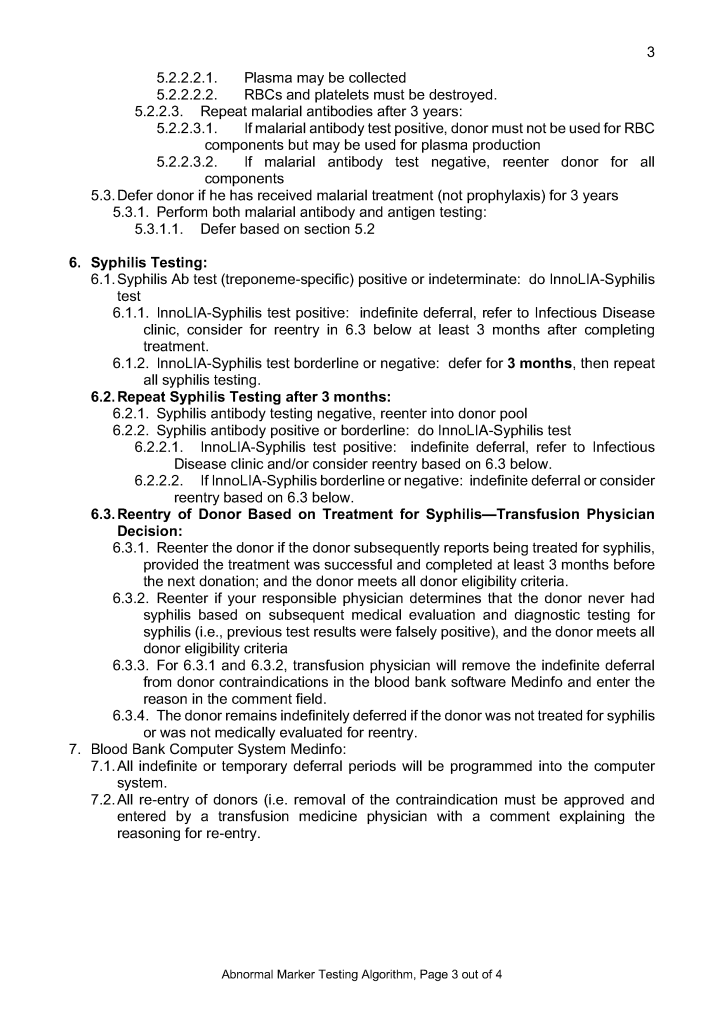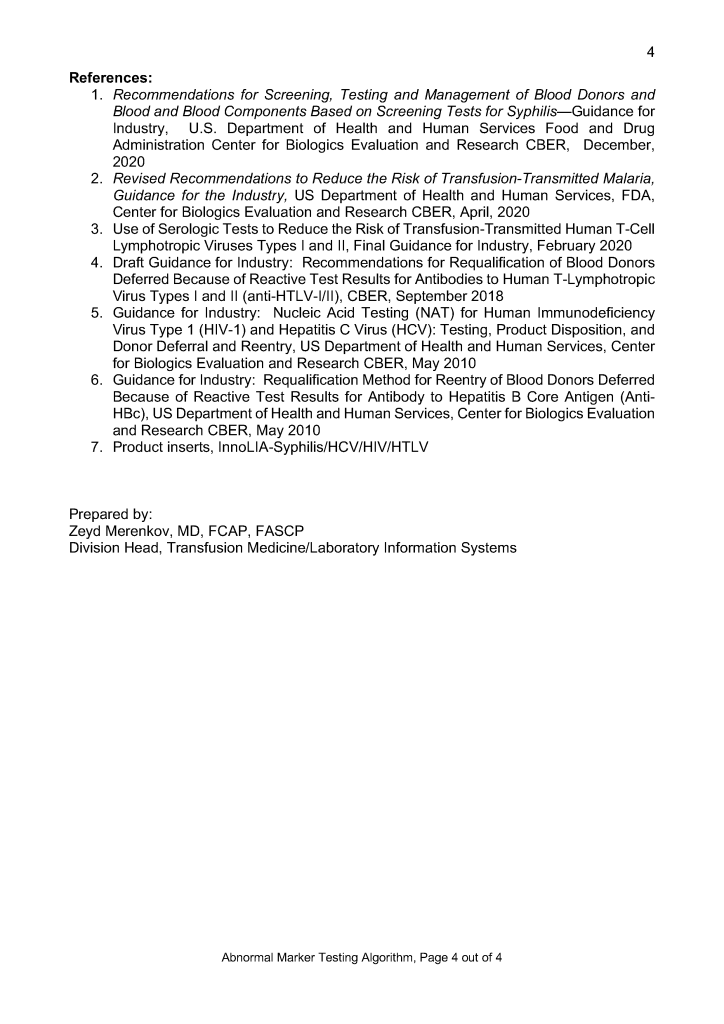
Inter-Depot Transfer, Blood Delivery, Type and Antigen Matching

This is an update of a previous post.

The final components from the component preparation center may be sent to various depots (freestanding location and/or hospital blood banks.  There should be complete traceability for every step (from donor reception, collection, testing, and processing) transport between locations, and finally the exact storage site, which might include which refrigerator/freezer/incubator and even shelf/position number for each component is stored.  The end of that document showed rules for type/antigen matching.

For disaster planning, rapid inventory enumeration by type is very important.  This can be very time-consuming manually.  With our Medinfo Hematos blood bank system, we could quickly get total inventory across the Qatar or by hospital in less than one minute.  We could also quickly find antigen-matched units across the system and reserve it at any one site for another if necessary.

Smart blood bank dispensing refrigerators, as offered by Haemonetics and Angelatoni, may also serve as depots and take the place of a hospital blood bank for some dispensing.  These solutions can also capture vital information about the storage conditions of the components and prevent release if the storage criteria are not met.  They can also interface with blood bank computer systems and use the main system’s logic for the dispensation rules.

Upon receipt at the hospitals from the blood processing center, the forward ABO and D typing must be confirmed.  We used D reagents which detected partial D so we would call such donor units as D-positive.  However, if a patient type reagent insensitive to partial D types is used, it is possible for a unit to be typed as D-negative whereas in the donor center it might be D-positive.  Sometimes, nothing types consistently as D-positive:  all you can say is that with a particular reagent and lot number, there is or isn’t reactivity.

The greatest complexity is for RBCs since potentially so many antigens exist.  Criteria for matching/ignoring certain antigens must be made.  Critically significant antibodies such as the Kell, Duffy, Kidd, and certain Rh (D and c) must be antigen matched.  A robust blood bank computer system can enforce these rules.

For other components, antigen/typing may be less important.  In fact, in most situations, any type of platelets can be given to anyone (except neonates).  Despite the potentially incompatible plasma, there is rarely significant hemolysis.  In fact, if pooling platelets without regard to blood types is done, a platelet transfusion is a common cause of a positive direct antiglobulin test DAT—something that is not clinically significant.  No one died of a positive DAT by itself for this reason.

Specific rules for compatible plasma types are important, but nowadays, low-anti-B-titer group A plasma may be used like universal AB plasma.  The challenge is to be able to perform the ABO titration (specifically anti-B) quickly—titration can be a slow process, even with automated equipment.  A similar situation for low-titer, universal group O whole blood requires both anti-A and anti-B titration (I will return to this topic in a future post).

Process: Donor Collection

Process:  Donor Collection

Zeyd Merenkov, MD, FCAP, FASCP

Independent Consultant in Transfusion Medicine

5.4.1 PROCESS DONOR COLLECTION:

Process:

  1. Donors must pass and complete all previous processes in the donor workflow (registration, questionnaire, and physical examination) before the collection process begins.
  2. The donor is positively identified by a designated picture ID and Hematos donor consent form with specimen/encounter number and barcode.
  3. Donor staff checks and prepares a suitable vein
  4. Donor staff collects/labels specimens and the whole blood or apheresis components AT THE DONOR’S BEDSIDE.
  5. Donor reactions are assessed and treated as they occur.
  6. Donors are observed in a post-donation area and given post-donation instructions before discharge.
  7. All processes are documented in Hematos IIG.
  8. Donor units and specimens are sent to component processing and donor marker testing.
  9. The collection workstation and equipment are cleaned before starting a new donor collection.

References:

  1. HMC 1001 Setting Specification, Version 1.5, Hematos IIG, Medinfo
  2. Standards for Blood Banks and Transfusion Services, Current Edition, AABB, Bethesda, Maryland, USA

Policy: Donor Collection

5.4 POLICY: DONOR COLLECTION

Policy:

  1. All donors will be positively identified with a picture ID and by their Hematos identifiers (donor ID and session registration/specimen number).
  2. All previous processes (registration, donor deferral database check, questionnaire, and physical examination) must pass.
  3. The donor’s arm veins will be inspected for a suitable donation site and prepared by a suitable aseptic technique.
  4. Whole Blood:
    1. Only whole blood units collected within the specified time interval may be used for component processing.
  5. Apheresis:
    1. Apheresis units will be collected at frequencies to keep the total RBC loss below 200 in any 8-week period.
    2. Only apheresis units collected within the specified time interval may be used for component processing.
  6. Donors will be treated for adverse reactions as needed.
  7. All specimens and donor units will be labeled at the donor’s bedside before starting a new donor collection.
  8. Donors will be monitored post-donation for a reasonable interval before discharge.
  9. All processes will be documented in the Hematos blood bank computer system.
  10. All equipment and supplies will be used according to manufacturer’s instructions.
  11. The collection workstation and equipment will be cleaned before starting the next donor.
  12. All policies, processes, and procedures must comply with Qatari, HMC, and applicable accreditation standards (i.e. AABB, CAP, and JCI).

References:

  1. HMC 1001 Setting Specification, Version 1.5, Hematos IIG, Medinfo
  2. Standards for Blood Banks and Transfusion Services, Current Edition, AABB, Bethesda, Maryland, USA, October 2013

Product Delivery in Medinfo 1

This is the start of a series of posts on how Medinfo blood bank software was designed for product delivery in the HMC system in Doha.

The overall process was:

  1. Transfer blood components (all types) from the Blood Donor using the Interdepot Transfer process (see that post for details) to the Hamad General Hospital HGH General Delivery Deposit.
  2. Release components to individual HMC system hospitals and client blood banks from the HGH General Delivery Deposit,.

It was also possible to release blood components directly from the Blood Donor Center to HMC hospital blood banks as a contingency.  Client hospitals outside the HMC system still had to obtain their components from HGH General Delivery Deposit.

Process: Donor Physical Examination

This is a sample process document for donor physical examination. Compare it to the previous post Policy: Donor Physical Examination.

5.3.1 PROCESS DONOR PHYSICAL EXAMINATION:

Process:

  1. The donor is positively identified by a designated picture ID and Hematos donor consent form with specimen/encounter number and barcode.
  2. Donor staff measures vital signs of donor and enters results into Hematos IIG.
  3. Donor staff inspects donor arms for suitable veins and checks for concurrent skin diseases and/or scarring.
  4. Medinfo Hematos IIG determines donor eligibility to collect components.

References:

  1. HMC 1001 Setting Specification, Version 1.5, Hematos IIG, Medinfo
  2. Standards for Blood Banks and Transfusion Services, Current Edition, AABB, Bethesda, Maryland, USA

Policy: Donor Physical Examination

This is another example of a short concise policy statement. The process example will follow:

5.3 POLICY: DONOR PHYSICAL EXAM

Policy:

  1. All donors will be positively identified with a picture ID and by their Hematos identifiers (donor ID and session registration/specimen number).
  2. The donor’s vital signs (BP, pulse, temperature, respiratory rate) will be measured by designated Donor Center staff.
  3. The donor’s arm veins will be inspected for a suitable donation site and evidence of scarring.
  4. Donor eligibility for actual collection will be determined by the Hematos IIG algorithms based on this data.
  5. All policies, processes, and procedures must comply with Qatari, HMC, and applicable accreditation standards (i.e. AABB, CAP, and JCI).

References:

  1. HMC 1001 Setting Specification, Version 1.5, Hematos IIG, Medinfo
  2. Standards for Blood Banks and Transfusion Services, Current Edition, AABB, Bethesda, Maryland, USA

Process: Donor Medical Questionnaire

This is one of a series of posts comparing policies and processes in the blood bank.

PROCESS:  5.2.1 DONOR QUESTIONNAIRE

Process:

  1. The donor is positively identified by a designated picture ID and Medinfo Hematos donor consent form with specimen/encounter number and barcode.
  2. Donor is taken to a private area for the interview.
  3. Donor is asked ALL questions by Donor Center staff using the Hematos IIG questionnaire.
  4. Hematos IIG determines if any contraindications apply.
  5. Questionnaire will be referred to transfusion medicine physician for any questions requiring physician review.
  6. Donors without contraindication are sent for donor physical examination.

References:

  1. HMC 1001 Setting Specification, Version 1.5, Hematos IIG, Medinfo
  2. Standards for Blood Banks and Transfusion Services, Current Edition, AABB, Bethesda, Maryland, USA

Policy: Donor Medical Questionnaire

This is one of a series of posts on blood bank operations, comparing the process and policy documents.

5.2 POLICY:  DONOR MEDICAL QUESTIONNAIRE

Policy:

  1. All policies, processes, and procedures must comply with Qatari, HMC, and applicable accreditation standards (i.e. AABB, CAP, and JCI).
  2. All donors will be positively identified with a picture ID and by their Medinfo Hematos identifiers (donor ID and session registration/specimen number).
  3. Donors will be assessed confidentially in a private area.
  4. Donors will be asked questions based on the latest Uniform Donor Questionnaire with additional localization questions for Qatar using Medinfo Hematos IIG software.
  5. Donor must understand either English or Arabic.
    1. Otherwise, they cannot be accepted for donation.
  6. Donors passing the donor questionnaire will be processed for the donor physical examination.

References:

  1. HMC 1001 Setting Specification, Version 1.5, Hematos IIG, Medinfo
  2. Standards for Blood Banks and Transfusion Services, Latest Edition, AABB, Bethesda, Maryland, USA