Management of Acute Transfusion Reactions

This was a teaching document for medical students and residents I made for NGHA Riyadh. I have updated it for leukodepleted components and platelet additive solution.

Immediate Steps for All Reactions:

  1. Stop Transfusion.
  2. Keep IV Open with 0.9% NaCl.
  3. Verify correct unit was given to correct patient.
  4. Notify attending physician and blood bank

After Transfusion is Terminated (except mild allergic, see below):

  1. Send report of reaction, freshly collected blood, and urine samples with blood unit and administration set to blood bank.
Reaction TypeSigns and SymptomsEtiologyClinical Action
Allergic (mild)Pruritus, urticaria (hives)Antibodies to plasma proteinsSteps 1-3 above; administer antihistamines (PO, IM, or IV); resume transfusion if improved; if no improvement in 30 minutes treat as below.
Allergic (moderate to severe)Hives, dyspnea, abdominal pain, hypotension, nausea, anaphylaxisAntibodies to plasma proteins, including IgA (patient has anti-IgA antibodies)Steps 1-5 above; administer antihistamines, epinephrine, vasopressors, and corticosteroids as needed; avoid future reactions by premedication and consider use of washed red cells if refractory.
Febrile (mild to moderate)Fever, chills, rigors, anxiety, mild dyspneaAntibodies to leukocyte antigens, (mostly HLA): cytokinesSteps 1-5 above; mild—administer antipyretics as needed; avoid future reactions by premedication and use of leukodepleted red cells and platelets
Acute lung injuryFever, chills, dyspnea, respiratory failureAntibodies form donor plasma to recipient WBCs; less commonly recipient antibodies to donor WBCsSupportive therapy for respiratory failure, oxygen, mechanical ventilation, leukodepleted blood components, consider use of solvent detergent plasma, minimize plasma transfusions (use platelets in additive solution and leukodepleted RBCs in additive solution).
Acute hemolyticAnxiety, chest pain, flank pain, dyspnea, chills, fever, shock, unexplained bleeding, hemoglobinemia/ hemoglobinuria, cardiac arrestHemolytic transfusion reaction; usually due to ABO incompatibilitySteps 1-5 above; treat shock with vasopressors, IV fluids, corticosteroids as needed; maintain airway; increase renal blood flow (IV fluids; furosemide); maintain a brisk diuresis; monitor renal status for acute renal failure. Monitor coagulation status for DIC; administer blood components as needed after etiology is clear.
Septic / toxicChills, fever, hypotensionBacteria in contaminated bloodSteps 1-5 above; treat shock with vasopressors, IV fluids, culture patient and blood bag,antibiotics.

Process Donor Medical Questionnaire

5.2.1 PROCESS:  DONOR QUESTIONNAIRE

Process:

  1. Donor passes donor deferral database screening.
  2. Donor is taken to a private area for the interview.
  3. The donor is positively identified by a designated picture ID and Hematos donor consent form with specimen/encounter number and barcode.
  4. Donor is asked ALL questions by trained Donor Center staff using the Medinfo Hematos IIG questionnaire.
  5. Hematos IIG determines if any contraindications apply.
  6. Donor responses are reviewed by the transfusion medicine physician as indicated in the questionnaire.
  7. Donors without contraindication are sent for donor physical examination.
  8. Donors passing transfusion medicine physician review are sent for donor physicial examination.

References:

  1. HMC 1001 Setting Specification, Version 1.5, Hematos IIG, Medinfo, Nice, France
  2. Standards for Blood Banks and Transfusion Services, Current Edition, AABB, Bethesda, Maryland, USA

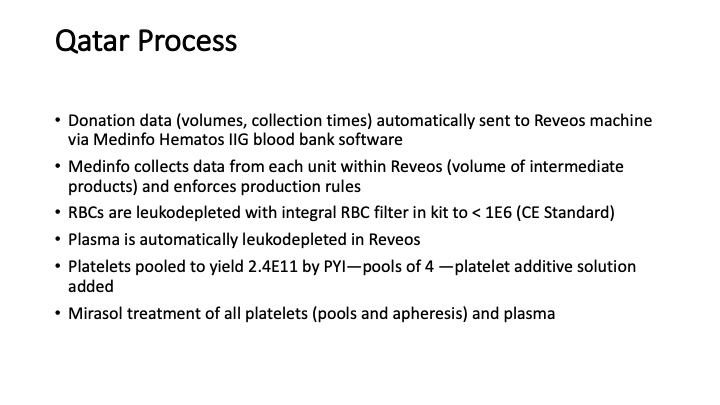
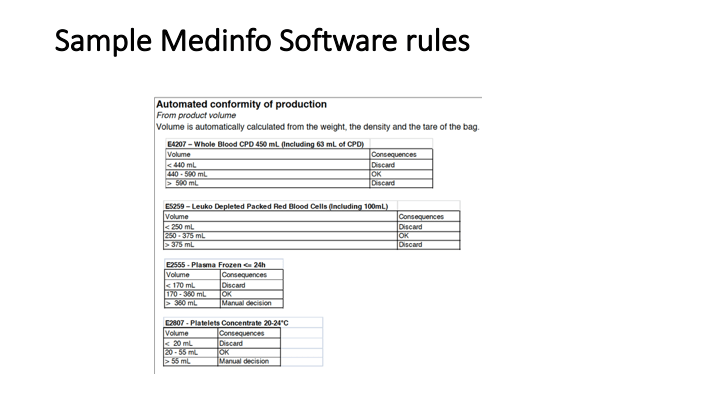
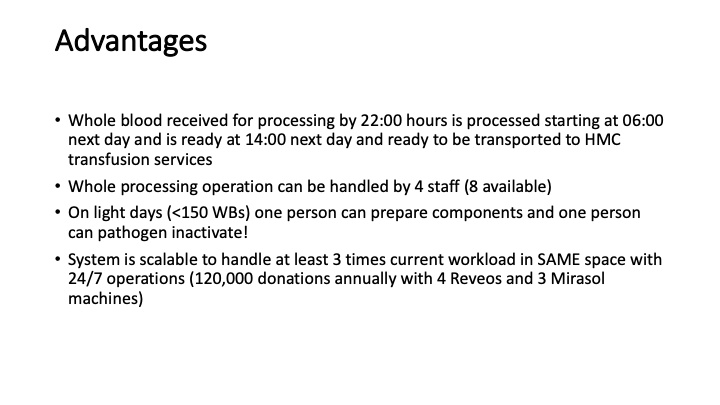
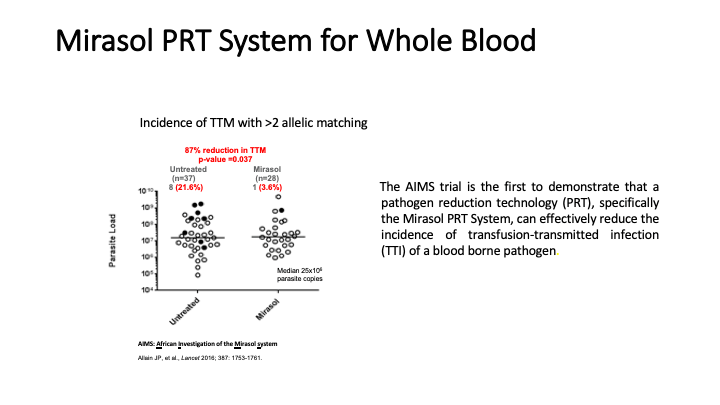
Automation and Synergism: Joint Use of Reveos and Mirasol

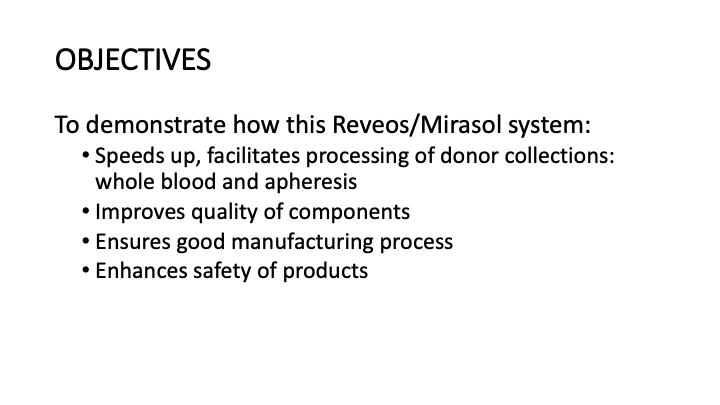
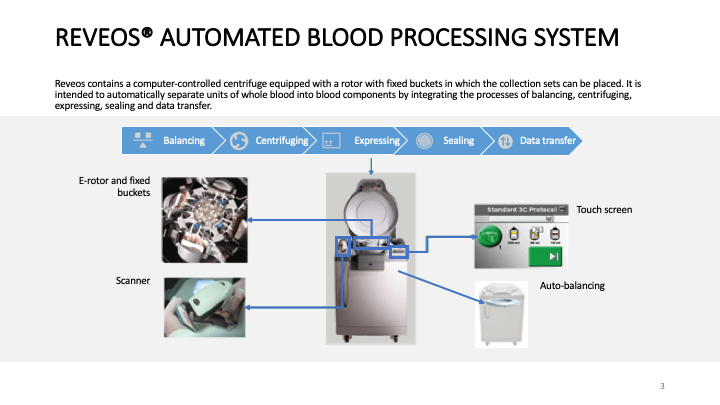
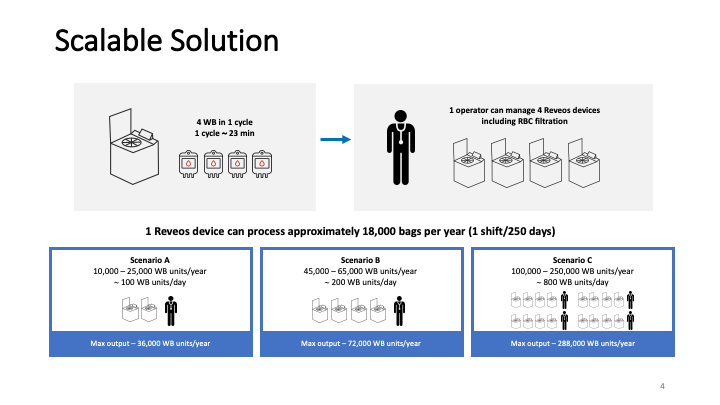
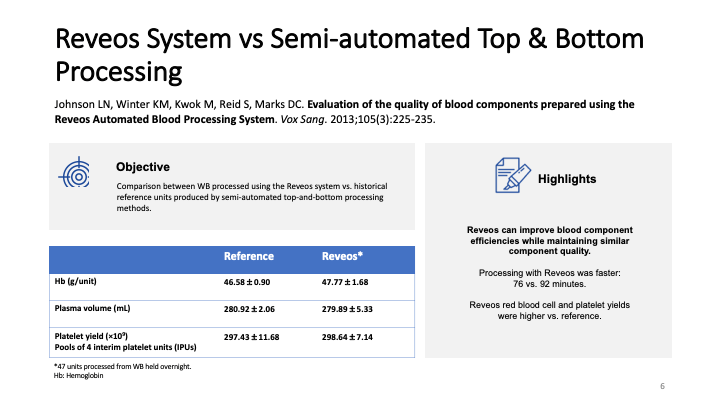
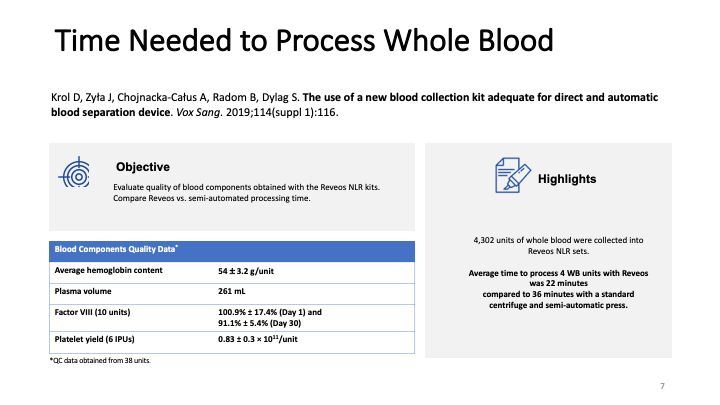
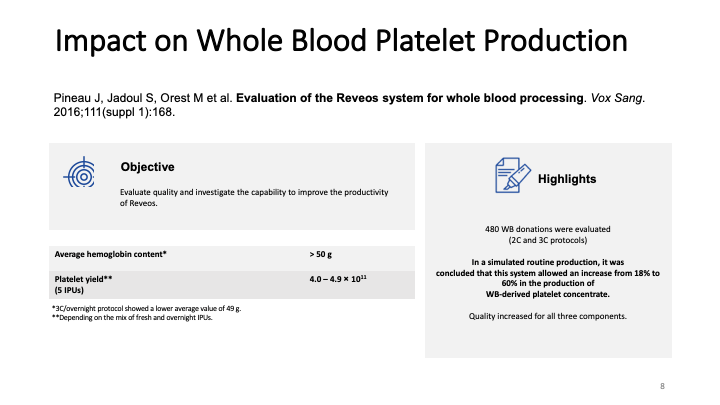
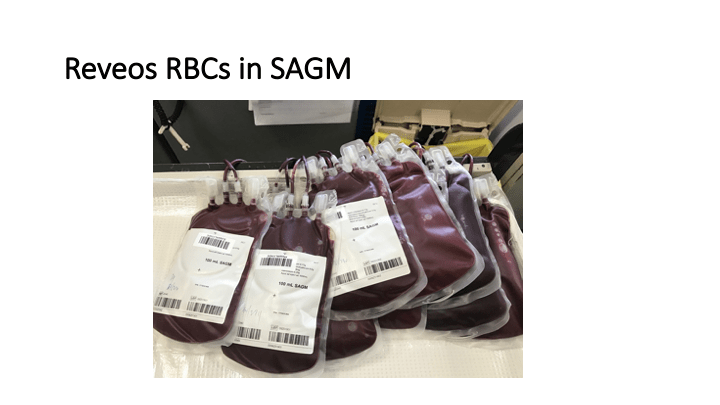
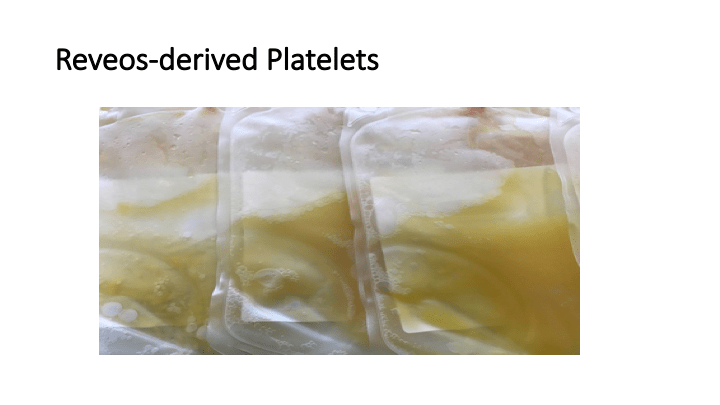
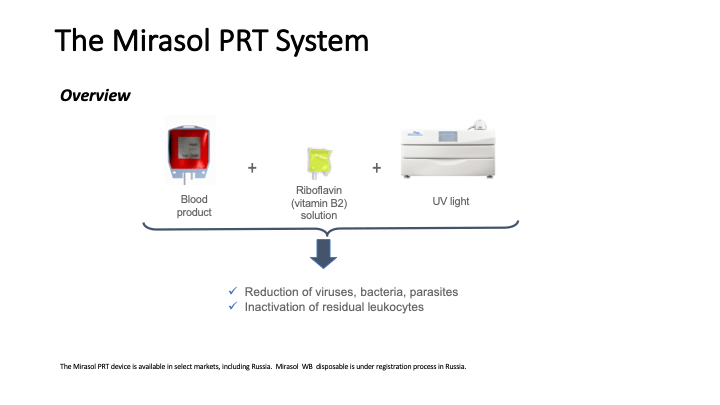
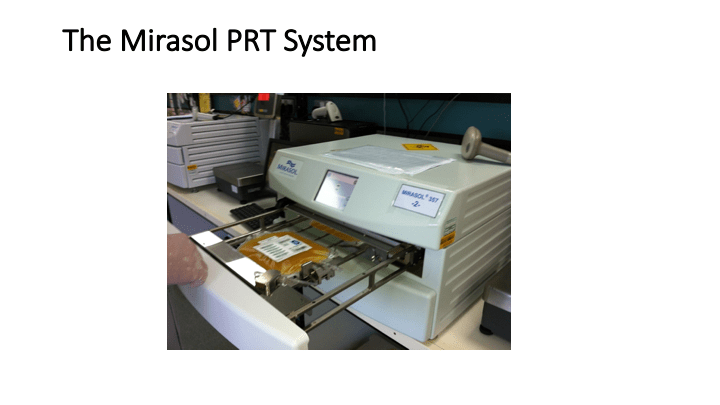
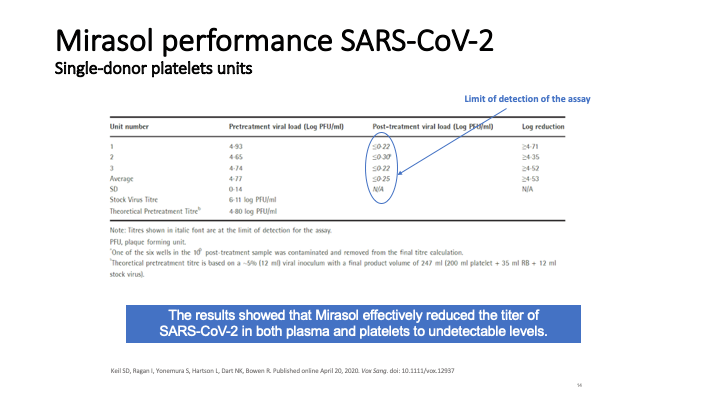
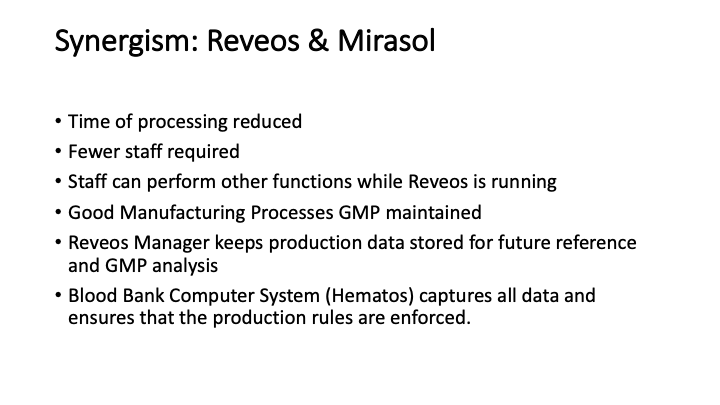
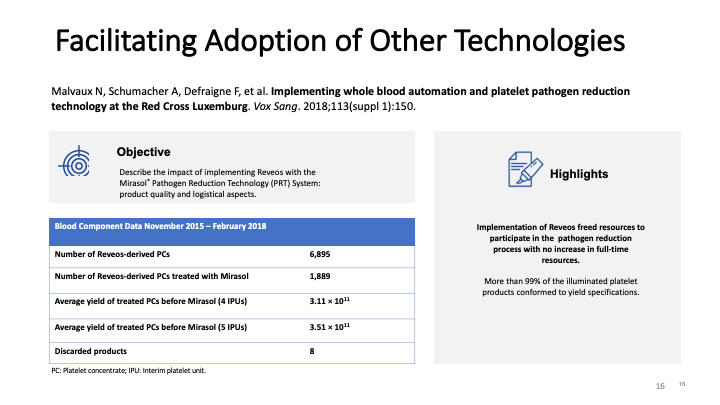
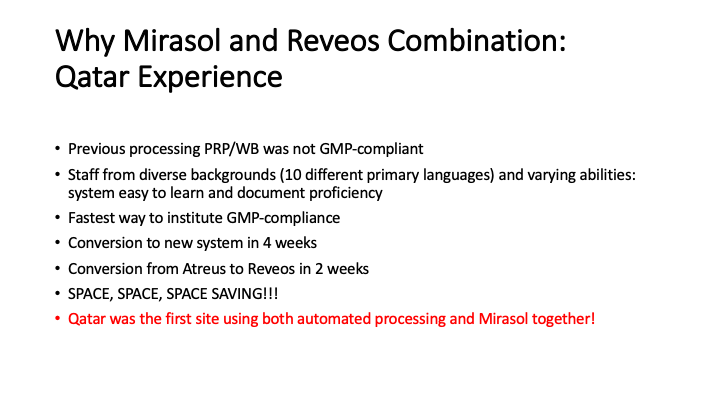
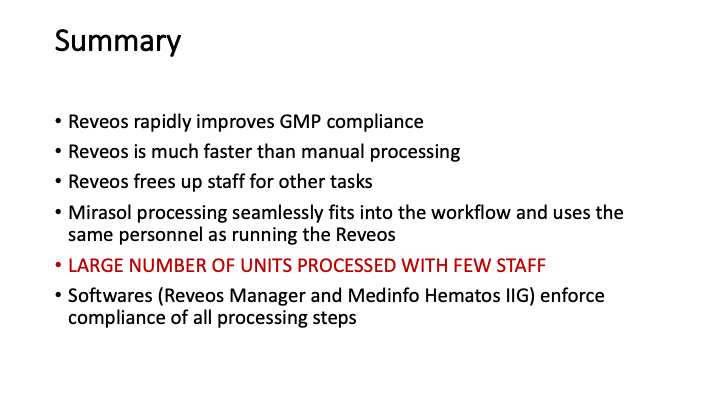
This is the virtual talk I gave at the Russian Transfusion Congress in Moscow on 13 May. It gives a brief description of automated component processing and riboflavin-based pathogen inactivation and then discusses the use of these technologies together to free up labor and enhance the quality of products, i.e. improved GMP, especially if a dedicated blood bank computer system is used to enforce production rules.

Policy Donor Medical Questionnaire

Policy Donor Medical Questionnaire

5.2 POLICY:  DONOR MEDICAL QUESTIONNAIRE

Policy:

  1. All policies, processes, and procedures must comply with local, national, and applicable accreditation standards (i.e. AABB, CAP, and JCI).
  2. All donors will be positively identified with a picture ID and by their Medinfo Hematos software identifiers (donor ID and session registration/specimen number).
  3. Donors will be assessed confidentially in a private area.
  4. Donors will be asked questions based on the latest Uniform Donor Questionnaire with additional localization questions for Qatar.
  5. Donor must understand either English or Arabic.
    1. Otherwise, they cannot be accepted for donation.
  6. Donors passing the donor questionnaire will be processed for the donor physical examination.

References:

  1. HMC 1001 Setting Specifications, Version 1.5, Hematos IIG, Medinfo, Nice France
  2. Standards for Blood Banks and Transfusion Services, Current Edition, AABB, Bethesda, Maryland, USA

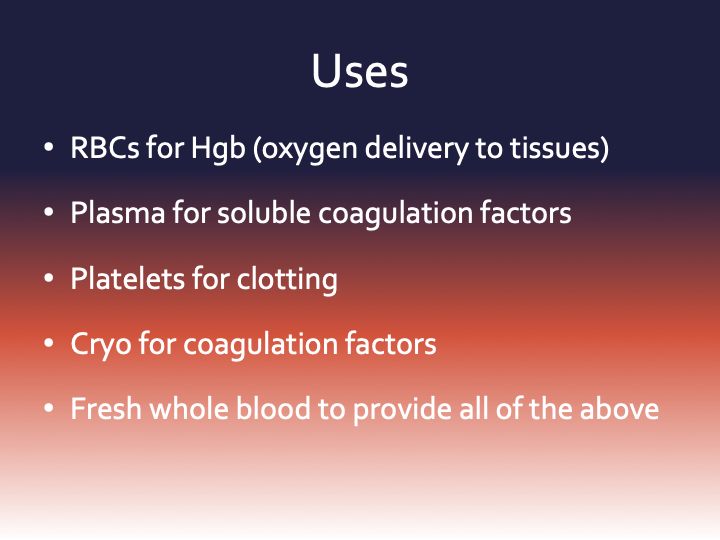
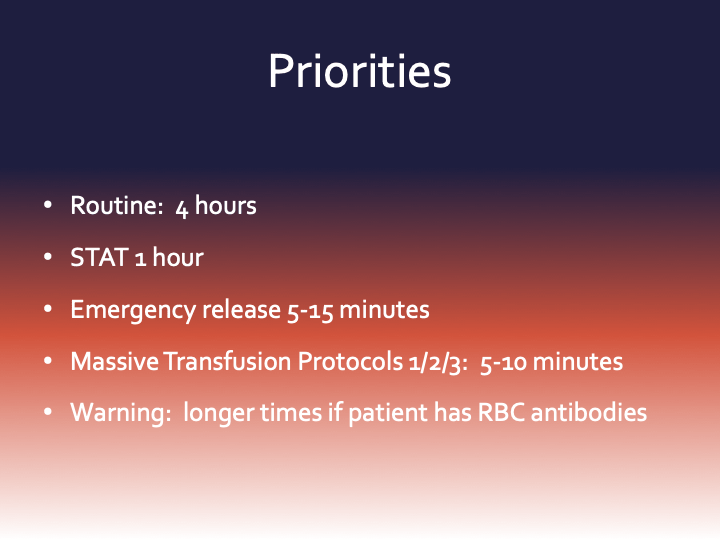
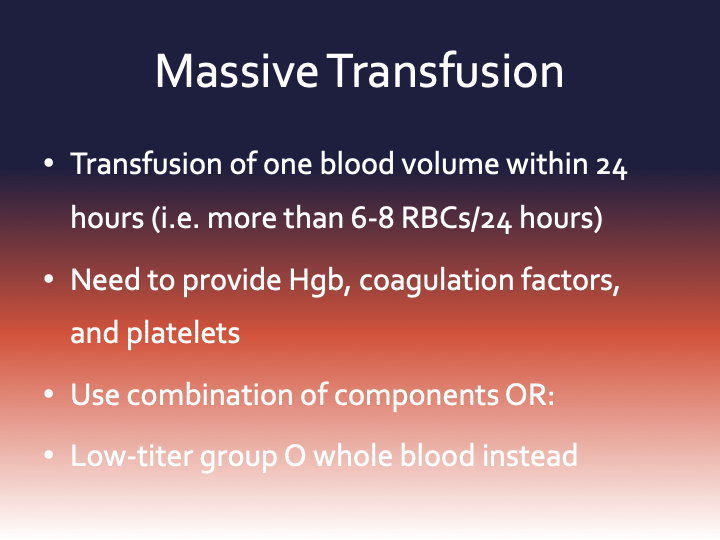
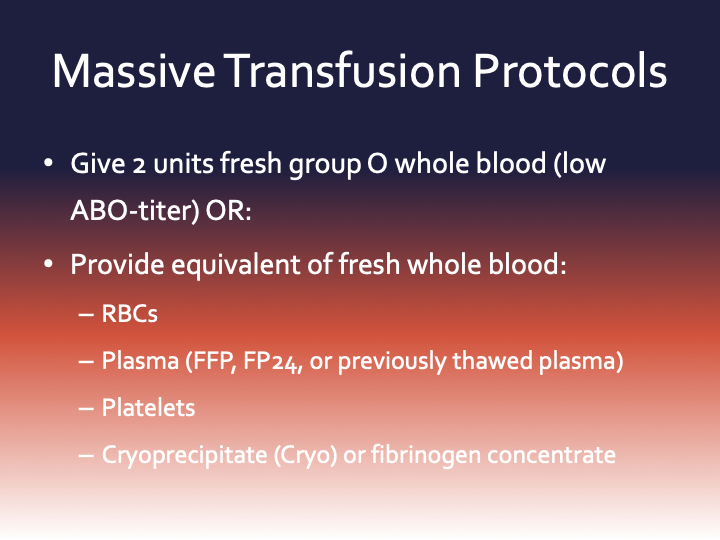
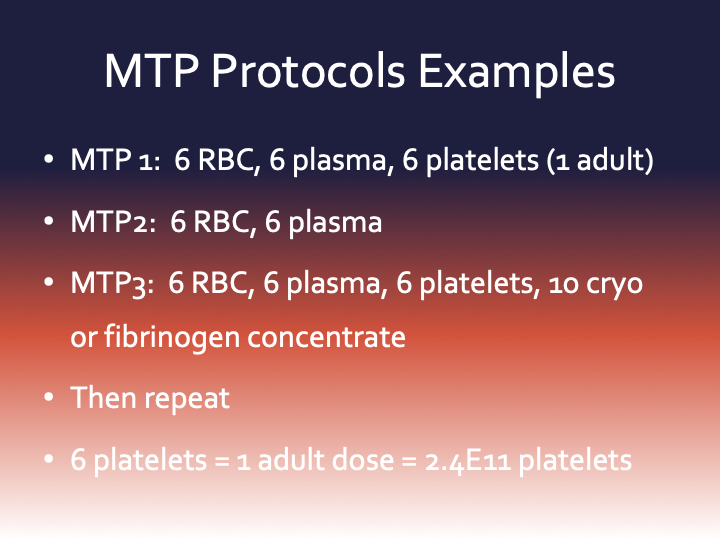
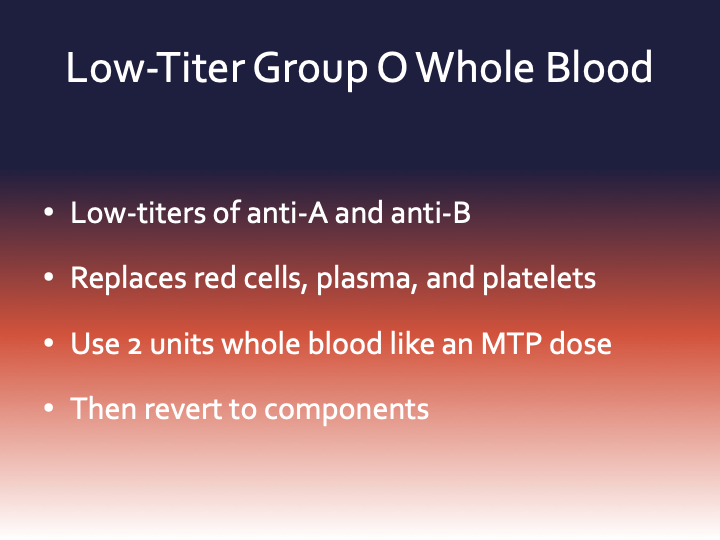
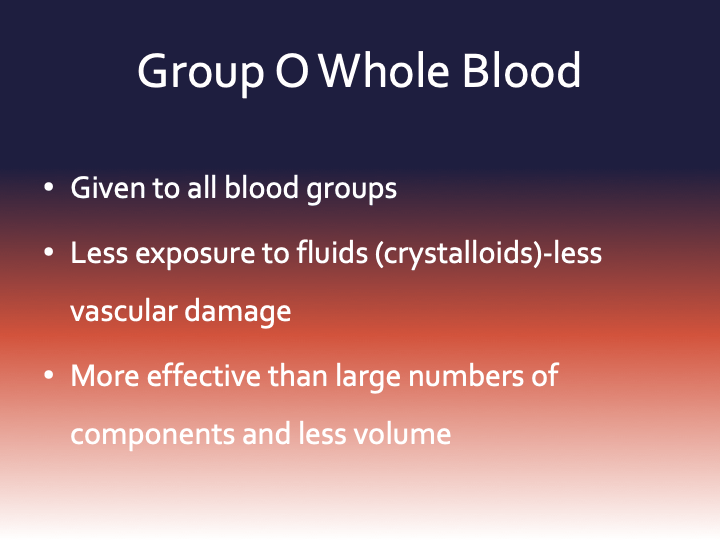
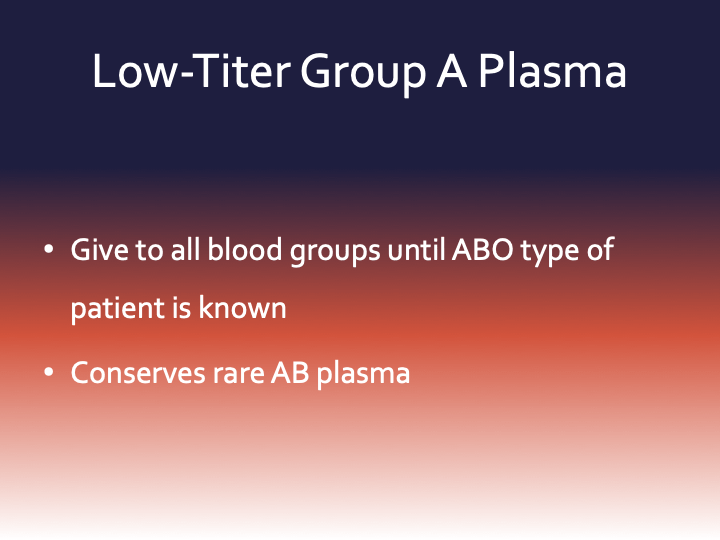
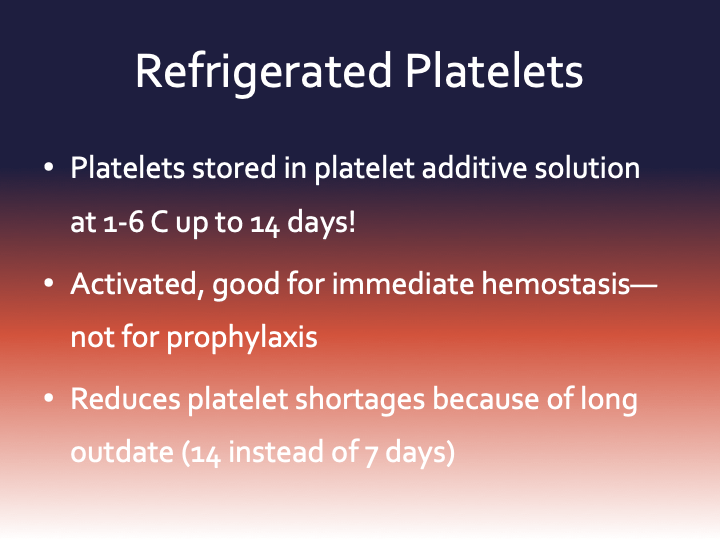
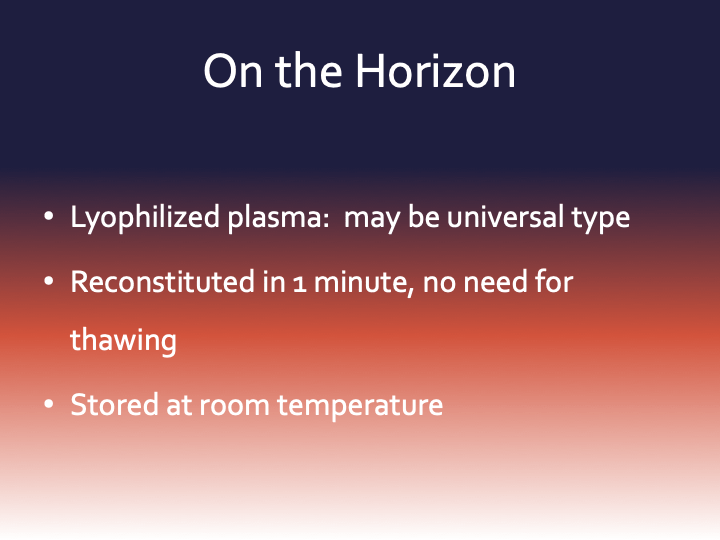
Blood Components in Emergencies

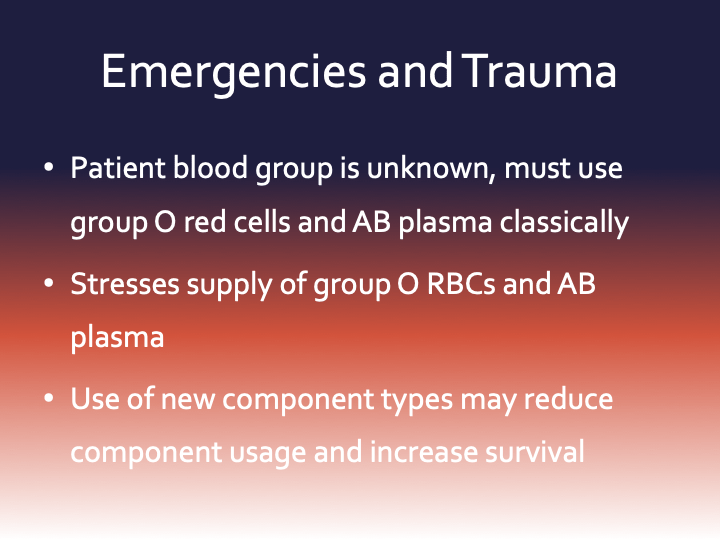
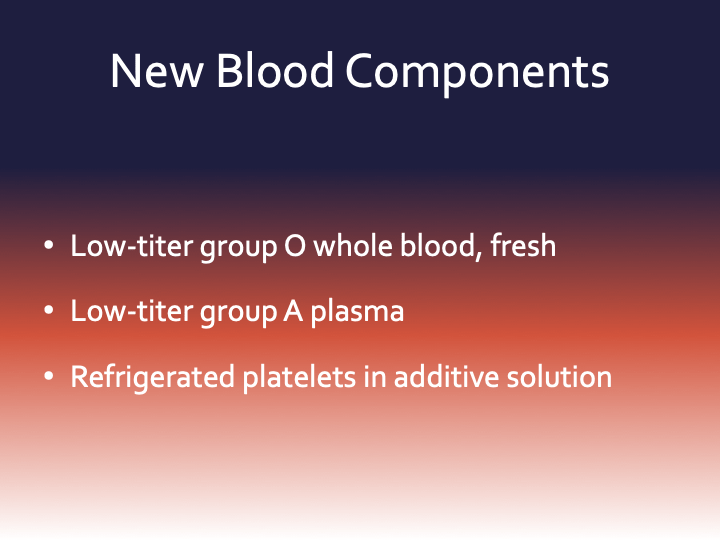
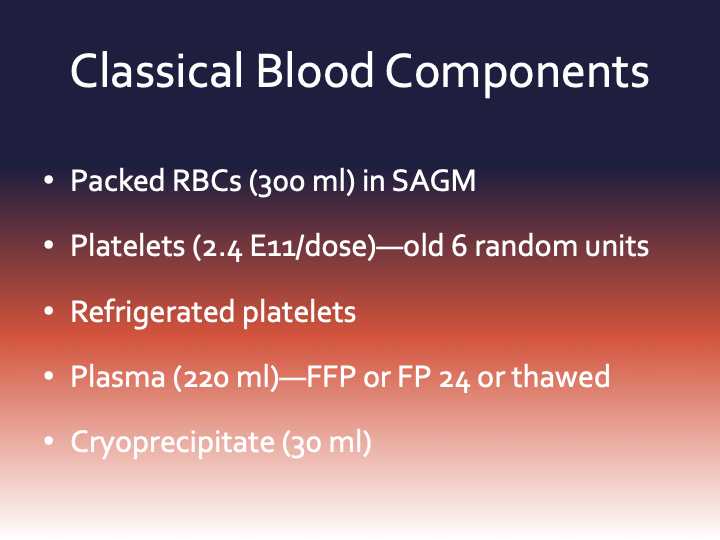
This is an updated version of a lecture I gave to medical students at National Guard Health Affairs in Riyadh. I have included new blood component types such as universal low-titer group O whole blood, universal low-titer group A plasma, and refrigerated platelets.

Processes and Software Building 4: Super Users

Super-Users:  Engaging Laboratory Staff in Computer Operations

This is an update of a previous post.

It is critical to engage the technical, medical , and (blood bank) nursing staff in this process,  That is why it is so important to identify a core of computer-literate users to help with the building and testing/validation.

I don’t mean finding staff who can already program or code.  Rather, I mean staff that are astute with knowing their work processes and who had good skills with Microsoft Office and Windows or equivalent.  I did not expect them to understand database structure or use structured query language.  They were chosen for their ability to learn quickly and their meticulousness.

For our blood bank system, I chose computer-literate technical staff to be involved in the build from the very beginning.  They learned how to test each module and to some degree support it.  These became my Super-Users and to this day support the system for many tasks.  These staff served as the system administrators and worked directly with me as the Division Head for Laboratory Information Systems.  They were not full-time and still had their other clinical/technical duties.  They liaised with the software vendors engineers.

Our blood bank system was NOT a turnkey system.  It was custom designed according to our workflows.  There were NO default settings!!  We had to be remember, ‘Be careful what you ask for, you might get it!’  In some countries, approved systems are turnkey and may allow only few changes to the core structure and thus may not be this optimized for the needed workflow;  often only cosmetic changes are permitted.

When we built our first dedicated blood bank computer system, the company would take a module and completely map out the current processes collaboratively with me.  After this, I analyzed the critical control points and started to map out the improved computer processes that would take over.  After that we would build that those processes in the software and test it.  If it failed, we would correct it and test again…and again if necessary.  Fortunately, the blood bank vendor did not charge us when we made mistakes.

Sadly, another vendor (non-blood bank), only gave limited opportunities to make settings.  If wrong, there might be additional charges to make corrections.  This other vendor really pushed the client to accept the default settings regardless whether or not they actually fit.  End-users were selected to make and approve the settings, but they were only minimally trained on how to make the settings.  It was a journey of the end-users being led to the slaughter—and being blamed for their settings when they accepted the vendor’s recommendations—they usually selected the defaults.  There wasn’t enough time for trial and error and correction.

The blood bank system Super Users were an important part of our process.  They were an integral part of the implement team and could propose workflows, changes, etc.—subject to my approval.  They learned the system from the start and developed invaluable skills that allowed them to support the system after the build.  Also, they could serve to validate the system according to the protocols I prepared.  Moreover, I took responsibilities for their activities and they were not left out to hang.

Every hospital blood bank location and the blood donor center had Super-Users.  These included:

  1. Blood Donor Center:
    1. Administrative Clerk for donor registration, consent, ISBT specimen labels, creation of new donors and patients for validation purposes
    1. Apheresis/Donor Nurse for donor questionnaire, donor physical examination, and donor collection
    1. Medical technologist for donor marker testing
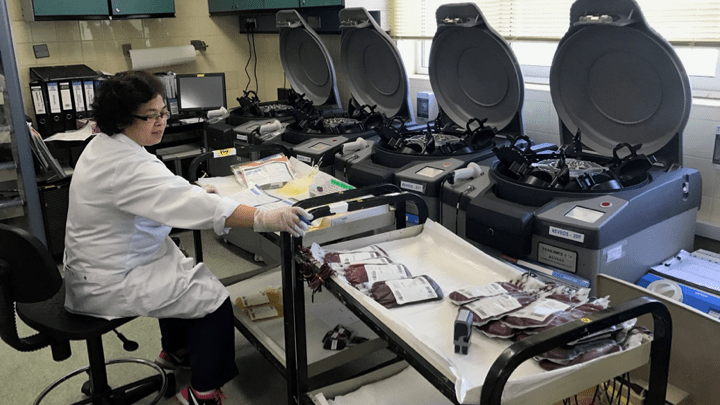
    1. Medical technologists for blood component production including Reveos, Mirasol, platelet additive solution, pooling, and leukodepletion
    1. Medical technologist for donor immunohematology testing
    1. Medical technologist for inter-depot transfer of blood components
  2. Hospital Blood Banks and Transfusion Centers:
    1. At least one technologist at each site for inter-depot transfer, component medication (washing, irradiating, aliquoting, reconstituted whole blood), immunohematology testing, component allocation and release

The cost of using these staff?  They were paid overtime and were relieved of other duties when working on Super User duties.  This was much cheaper than hiring outside consultants who may or may not know our system well enough to perform these tasks.

By having a Super User at each site, I in effect had an immediate local contact person for troubleshooting problems who could work with the technical/nursing staff.  We did not rely on the corporate IT department for support and worked directly with the software vendor.  Response time was excellent this way.

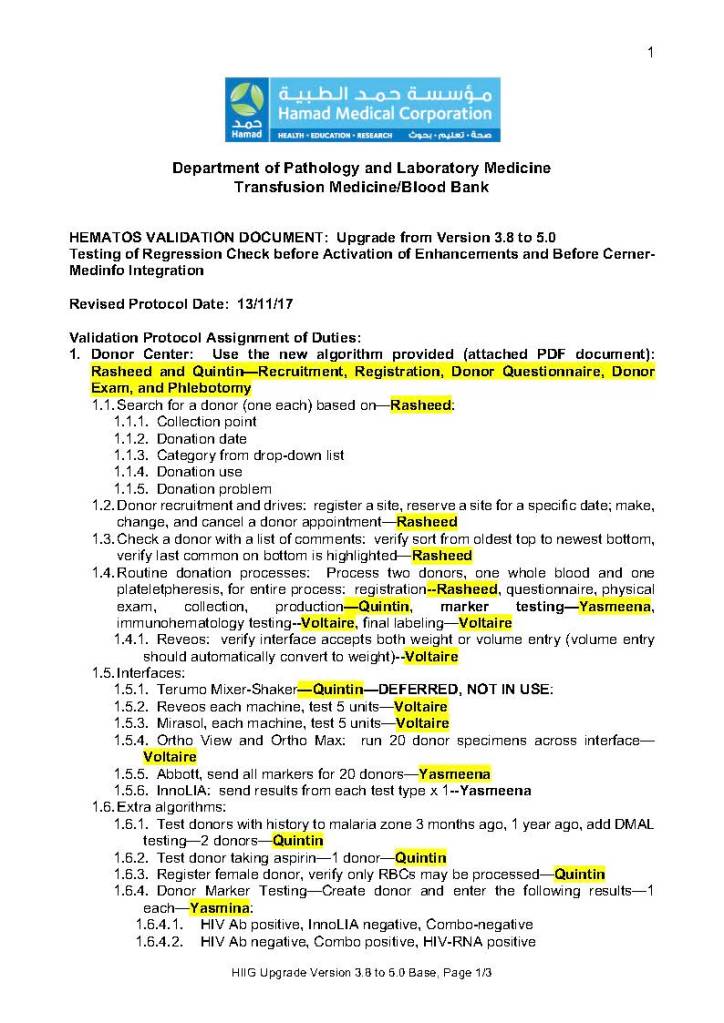
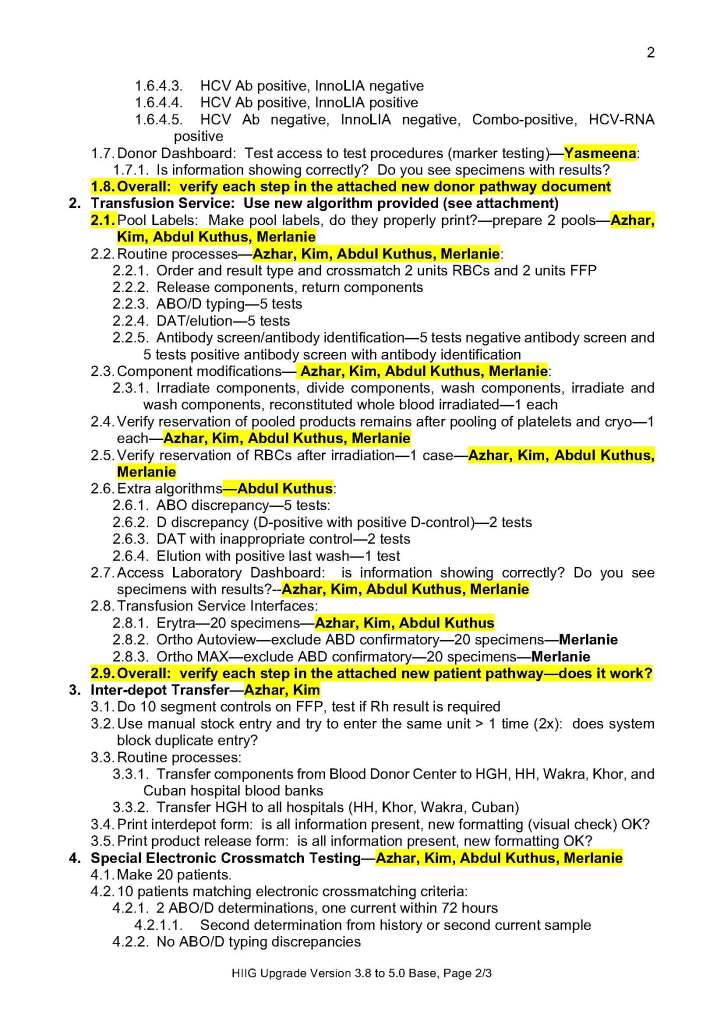
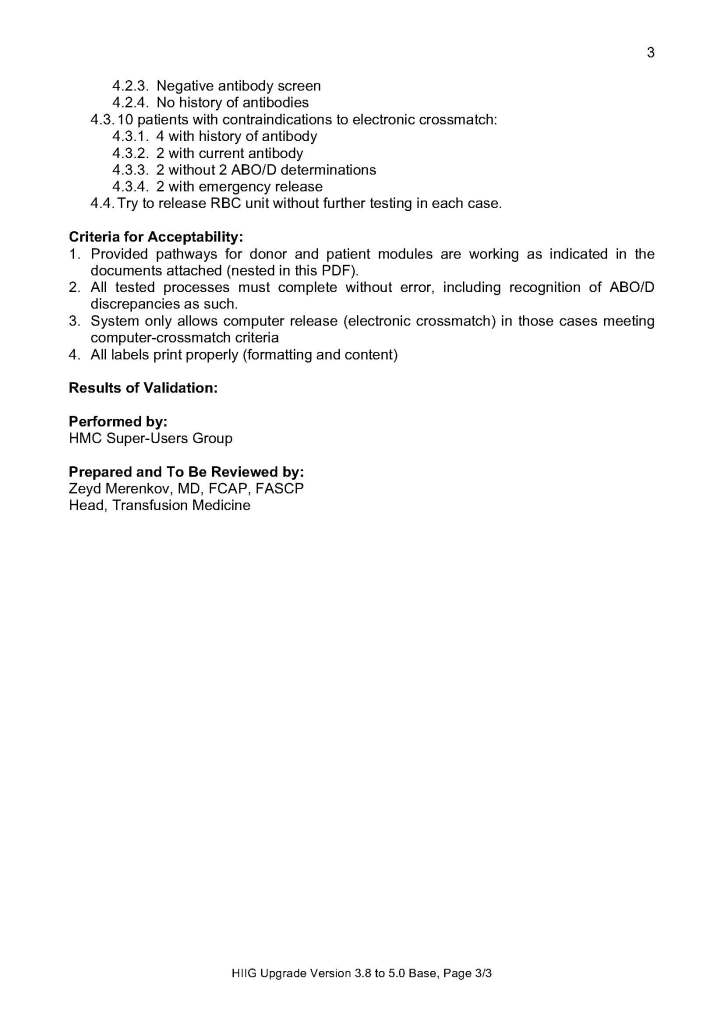
The following document is a sample document of the assigned Super User duties during a validation.

Donor Registration Process

5.1.1 PROCESS:  Donor Registration

Process:

  1. Donor presents acceptable picture ID with a unique alphanumeric identifier.
  2. Donors without Qatari ID must be approved by the Coordinator, Donor Recruitment, a donor center physician, or Head, Transfusion Medicine.
  3. Donor ID is scanned into Hematos IIG.
  4. Donor is assigned Hematos IIG Donor ID if not already in the system.
    1. Donors with previous ID will be given a Hematos ID
    1. All donors are registered only using the Hematos ID
  5. Medinfo Hematos IIG software checks donor deferral database
  6. Donor is accepted for medical questionnaire only if he has no contraindications.

References:

  1. HMC 1001 Setting Specification, Version 1.5, Hematos IIG, Medinfo
  2. Standards for Blood Banks and Transfusion Services, Current Edition, AABB, Bethesda, Maryland, USA

Donor Registration Policy

Number:  5.1

Policy:

  1. All policies, processes, and procedures must comply with Qatari, HMC, and applicable accreditation standards (i.e. AABB, CAP, ISO, and JCI).
  2. All prospective donors must show an approved identity document with picture (e.g., Qatari ID, other GCC ID, passport) that confirms their identity with a unique alphanumeric identifier.
  3. All positively identified candidates will be assigned a Hematos donor ID if they do not already have one.
  4. All donors with the previous old donor ID will be assigned a Hematos donor ID.  All future donations will be done using the Hematos ID.
  5. All positively identified candidates must be checked in the donor deferral database.
    1. Only those without contraindications may be accepted for further processing.

References:

  1. HMC 1001 Setting Specification, Version 1.5, Hematos IIG, Medinfo
  2. Standards for Blood Banks and Transfusion Services, Current Edition, AABB, Bethesda, Maryland, USA

Donor Recruitment and Campaigns Process

5.0.1 PROCESS:  Donor Recruitment and Campaigns

Process:

  1. Company or organization contacts Coordinator, Donor Recruitment to schedule donation OR:
  2. Coordinator, Donor Recruitment contacts companies or organizations to schedule donations.
  3. The Coordinator, Donor Affairs, is responsible for all recruitment activities:
    1. Serves as initial contact point for organizations and companies desiring to have a donor campaign.
    2. Schedules donor campaigns in advance, arranges for emergency collections as needed.
    3. Assigns donor recruitment staff to visit and inspect prospective donation sites.
    4. Arranges logistics of resources for donor campaigns (personnel, equipment, vehicles, supplies)
    5. Coordinates with HMC Public Relations and the media
    6. Prepares news media to encourage donation
  4. All contacts and schedules are entered into Hematos IIG.
  5. Donor recruitment materials are left at donation site to encourage donation and provide means for donors to schedule their donations during the campaign.
  6. Donor recruitment staff prepare the donation site at time of donation.
  7. Donation processes are conducted in accordance to policies, processes, and procedures for registration, donor questionnaire, physical examination, and collection.
  8. Hematos IIG is accessed by either wireless connection (VPN) or off-line data dump to check donor against donor deferral database.
  9. Blood is stored at suitable temperatures at collection site and in transit back to Donor Center.
  10. Campaign blood components and specimens are received in Donor Center and transferred for further processing and testing.

References:

  1. HMC 1001 Setting Specification, Version 1.5, Hematos IIG, Medinfo
  2. Standards for Blood Banks and Transfusion Services, Current Edition, AABB, Bethesda, Maryland, USA

Donor Recruitment and Campaigns Policy

5.0 Donor Recruitment and Campaigns Policy

Policy:

  1. All policies, processes, and procedures must comply with local, national, and applicable international accreditation standards (i.e. AABB, CAP, ISO, and JCI).
  2. All recruitment information must be entered into Hematos IIG.
  3. The Coordinator, Donor Affairs, is responsible for all recruitment activities.
  4. Donor recruitment staff will visit scheduled donation sites in advance and assess their suitability and prepare them for use before the start of each campaign.
  5. Donor recruitment materials and announcements will be left at each location during the inspection visit.
  6. Collected blood will be stored at room temperature during the collection on-site and transported back to the Donor Center in suitable validated containers to maintain storage at desirable temperature.
  7. The processes and procedures for normal donation, e.g. registration, donor questionnaire, physical examination, and collection apply.

References:

  1. HMC 1001 Setting Specification, Version 1.5, Hematos IIG, Medinfo
  2. Standards for Blood Banks and Transfusion Services, Current Edition, AABB, Bethesda, Maryland, USA