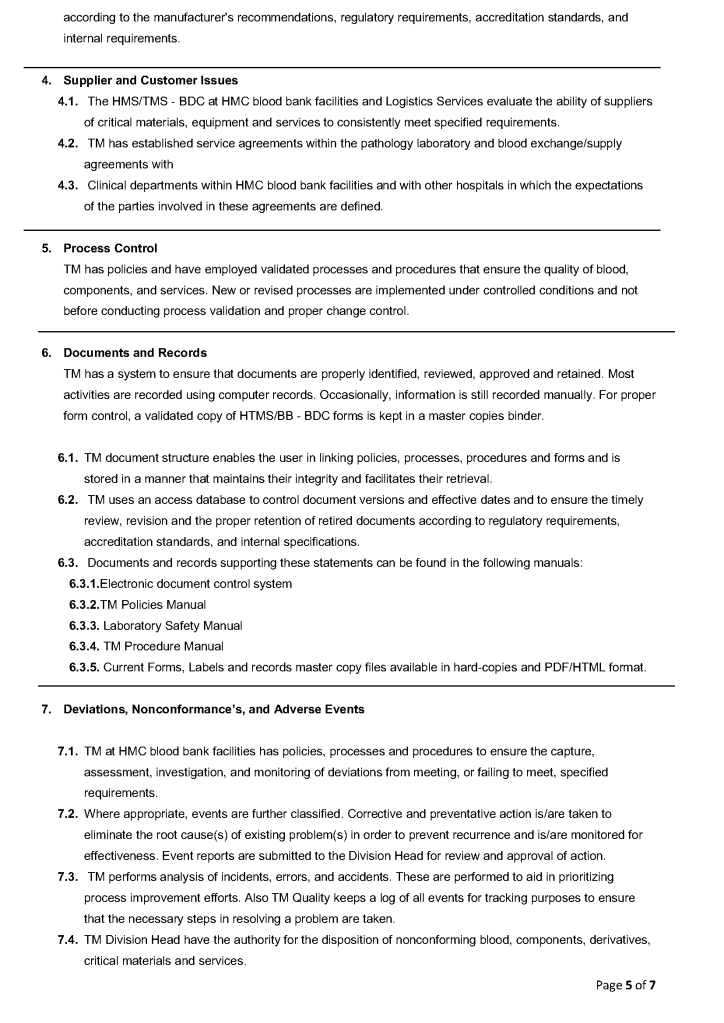
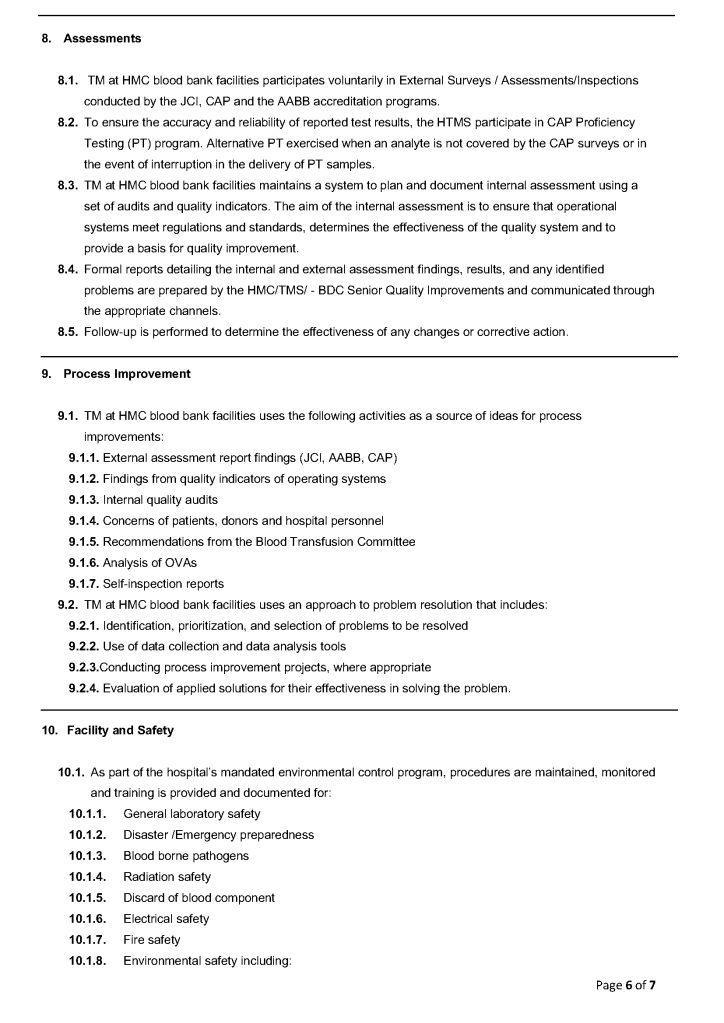
This is the last quality plan overview my Quality Manager Editha Durante and I prepared. It may be useful to others as a simple template to meet AABB accreditation standards:
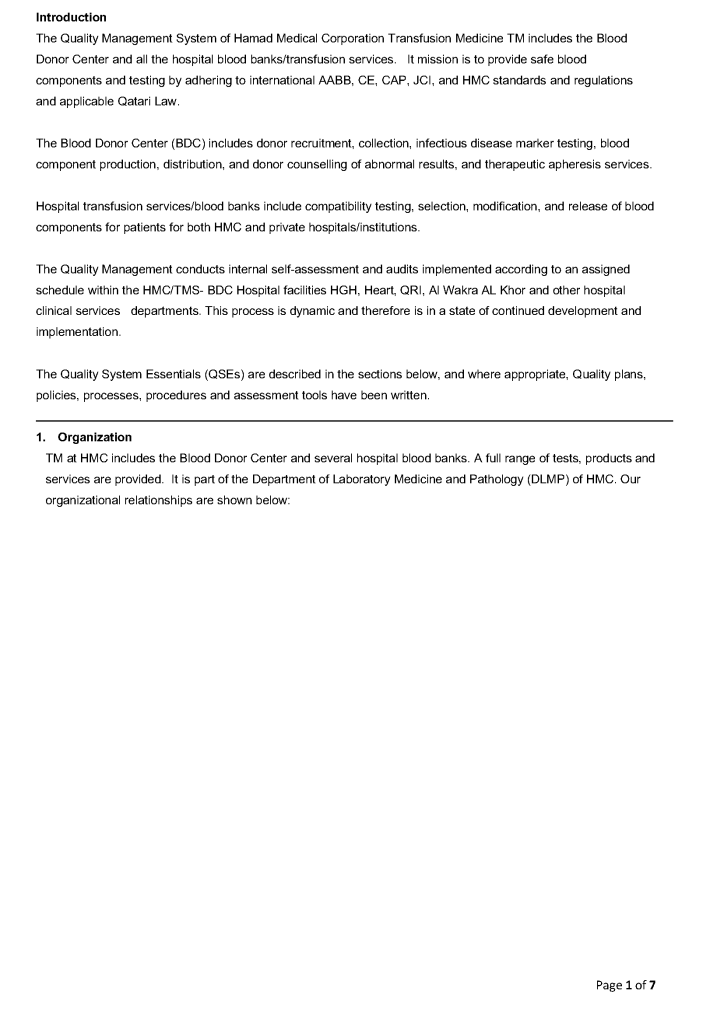
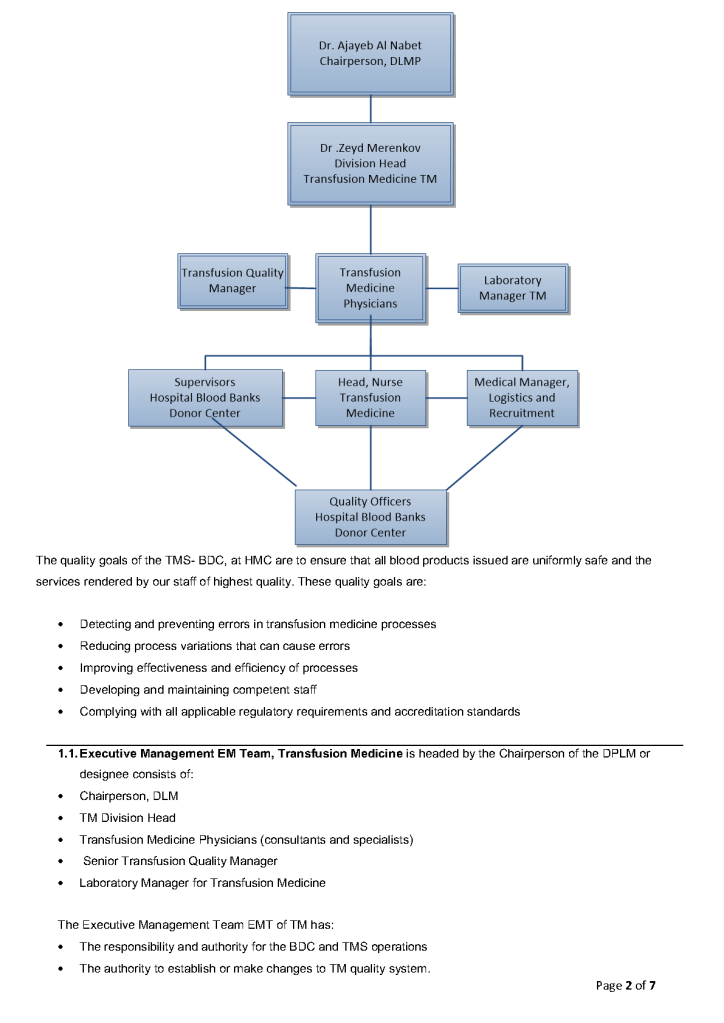
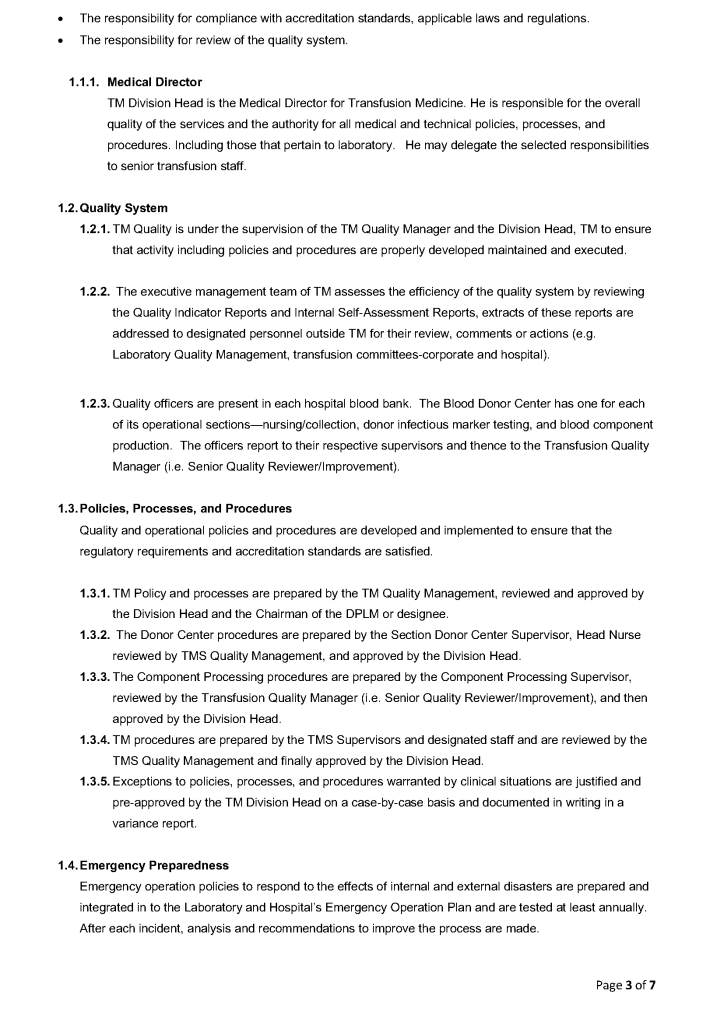
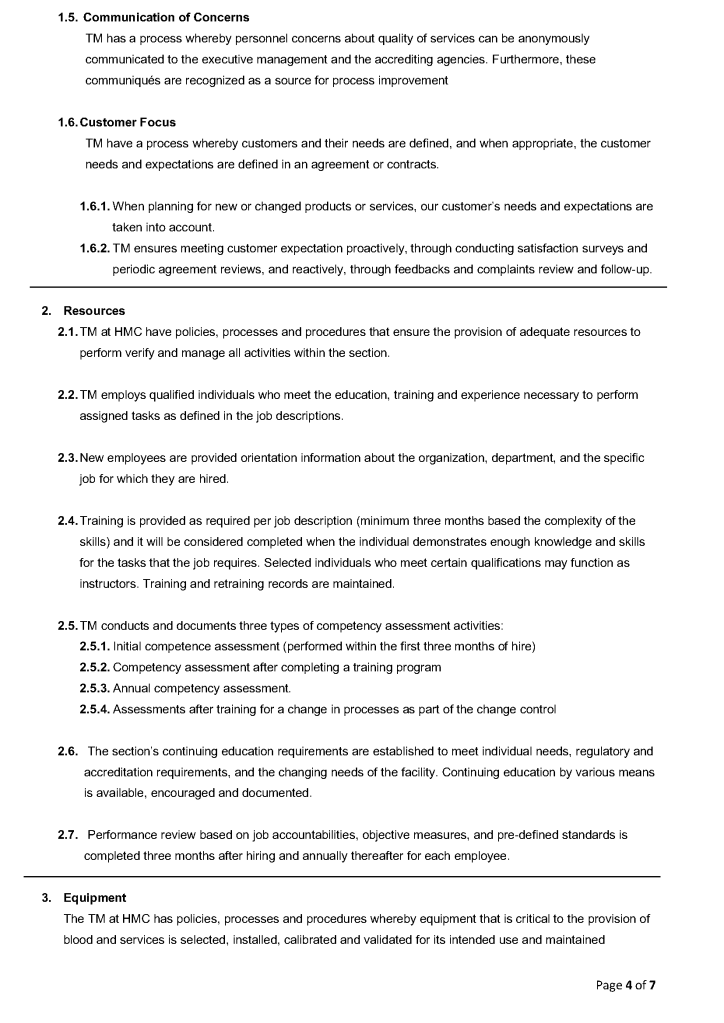


Includes patient, donor, apheresis and related IT topics
This is the last quality plan overview my Quality Manager Editha Durante and I prepared. It may be useful to others as a simple template to meet AABB accreditation standards:
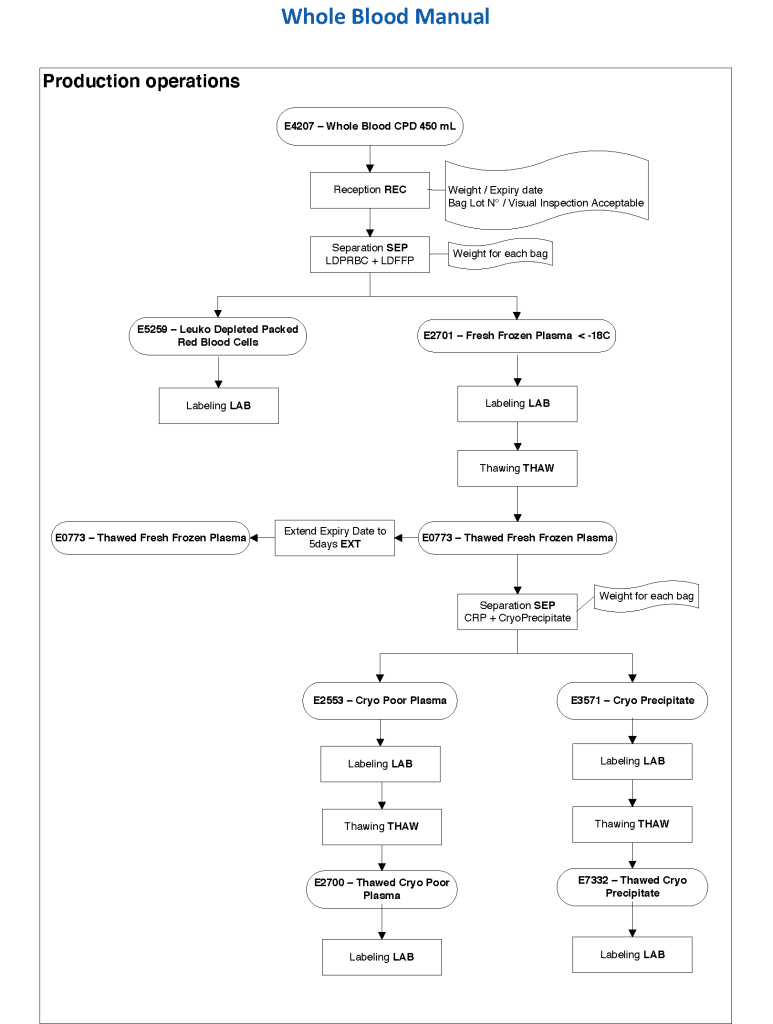
This was the HMC methodology for manual whole blood processing to prepare packed RBCs, plasma, cryoprecipitate, and cryo-poor plasma using blood bank centrifuges (not Reveos). It did not include preparing platelets since we did not have manual buffy coat processing equipment. In this algorithm we did not specifically release whole blood as a final product (although we did have the capability of activating this in emergency situations).
10/9/20
Principle:
Maintaining an adequate blood supply and expedited compatibility testing are critical in disaster planning. This plan is assuming that the Blood Donor Center is functional and can process donors and make components.
Medinfo Hematos IIG System is critical to monitoring inventory, preparing blood components expeditiously using Good Manufacturing Processes, and distributing blood components in a timely controlled manner.
Policy:
References:
Revised 10/9/20
As a transfusion medicine physician, I must know if I can trust my staff’s interpretation of immunohematology testing. I may be called at night and they will provide me with results and I must use these to make a medical judgment. If their interpretation is flawed, I might make a decision that harms the patient.
I really don’t like multiple-choice questions, but nowadays this is often the norm. For my staff, especially senior staff and those who want to be promoted to senior staff, I have developed a series of projective exercises to help me understand their thought processes.
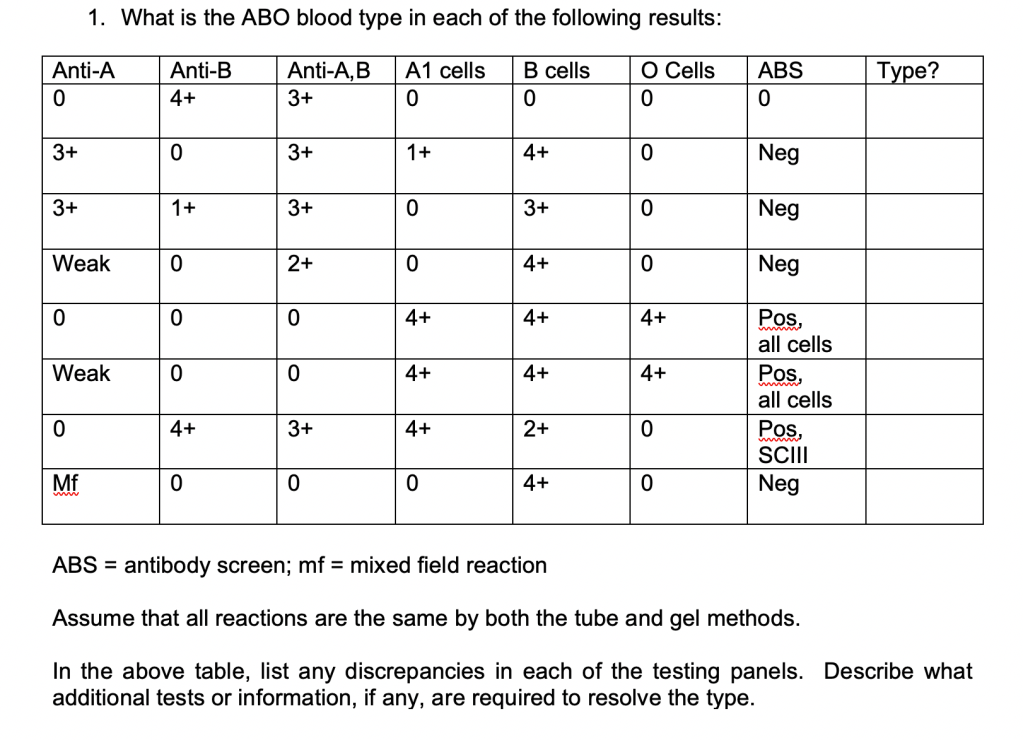
Here is another series of exercises, usually given to advanced technologists and supervisor candidates. I want them to tell me what they need to assess each scenario. Can they definitively diagnose solely on the information provided?
These are open-ended and may have more than one possible interpretation:
9/9/20
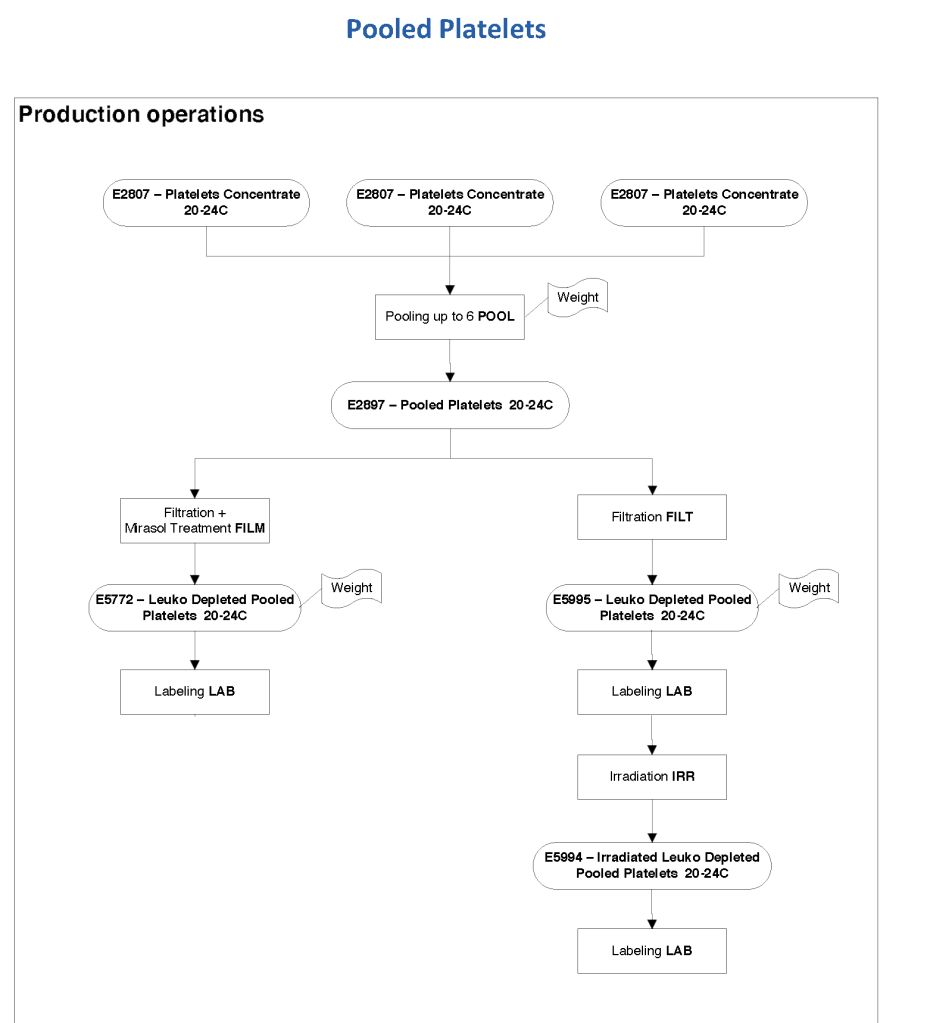
Outside the USA, platelet pools stored at room temperature may be valid for up to 7 days, especially if pathogen-inactivation is used. The following workflow shows both Mirasol pathogen-inactivated and standard platelets. The standard platelets are then irradiated. Both types can be aliquoted.
A major advantage in using a specific blood bank computer software is to enforce the Good Manufacturing Process. Medinfo is merciless: there are no exceptions without authorization and that is restricted by the security policies.
In the recent Reveos post, the upper and lower platelet volume specifications were discussed. The platelets are weighed and the volume is calculated. If a manual or another method for preparing platelets is used, then the according values can be specified.
To Be Continued: 8/9/20
Principle:
HMC Blood Donor Center is implementing a policy to limit or help limit iron deficiency in its blood donors (whole blood and/or apheresis). The reasons for this are:
Definition:
Donors high-risk for iron loss include:
Policy:
References:
AABB Association Bulletin #17-02, Updated Strategies to Limit or Prevent Iron Deficiency in Blood Donors, 26/3/17
Updated 6/9/20
Principle:
Normally, outside donor campaigns still connect to the main server via wireless 4G/5G with a VPN. However, if there is a “dead” spot, Medinfo can provide a local area network using one of the PCs/laptops to serve as a server. The local server receives an uploaded image of the donor database. Upon return to the donor center, the local server’s data is uploaded and synchronized.
When you cannot establish a direct link to the live Medinfo program, you must arrange for Medinfo/VHT to create a local server that will have the current Medinfo donor database for use at outside campaigns where the internet connection cannot be used. This can also be used if for some reason the Blood Donor Center link is down in order to register donors and check the donor deferral database.
Policy:
7/9/20
This is a policy I made for NGHA Jeddah many years ago but is still useful today.
Principle:
All technical staff are required to read and understand the manufacturer package inserts that apply to the procedures that they perform. This policy establishes a means of documenting compliance with this requirement.
Policy Details:
Insert Review Form
| Type of Insert: New Revised |
| Product Name: |
| Date of Insert: |
I have read this insert and understand its contents and accept responsibility for following its instructions and directions.
| Staff Name & Badge #–PRINT! | Signature | Date |
As a transfusion medicine physician, I must know if I can trust my staff’s interpretation of immunohematology testing. I may be called at night and they will provide me with results and I must use these to make a medical judgment. If their interpretation is flawed, I might make a decision that harms the patient.
I really don’t like multiple-choice questions, but nowadays this is often the norm. For my staff, especially senior staff and those who want to be promoted to senior staff, I have developed a series of projective exercises to help me understand their thought processes.
Here is another exercise, usually given to physicians. I give them the following scenario:
There is a major trauma on an unidentified young adult male patient. We do not know the transfusion, medical, or medication history. They need six units RBCs STAT.
What blood type do you select? How do you release the blood?
You give the 6 units and receive a specimen back. The patient’s typing reactions are:
Forward type: Anti-A, anti-B both negative
Reverse type: 4+ reaction with A1 and B cells
About 15 minutes later, your technologist tells you that the antibody screen is 4+ in all cells and all panel cells react 4+ both at AHG and enzyme phases. What do you tell the treating clinician? What do you do?
The technologist in panic has been performing AHG crossmatches but all 4+ incompatible.
Here is the panel:
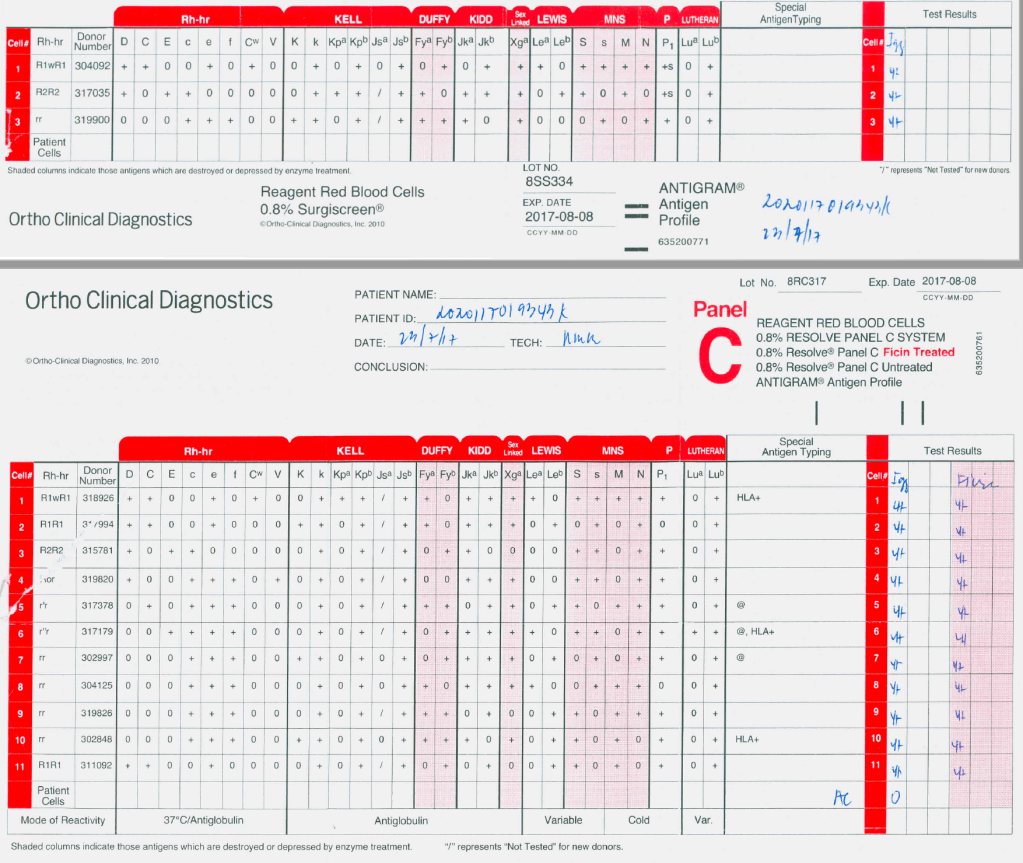
I have them review this panel and tell me to interpret it
The smart ones will ask for a full extended phenotype (e.g. Diamed/Biorad’s three profile cards) and for anti-H.
I tell them the clinician is very angry and demands you release more group O blood immediately? How do you respond?
5/9/20
Reading Assignments:
Study Questions:
Revised:
29/8/20
 Dr. Zeyd Merenkov