Release of COVID-19 Convalescent Plasma CCP

Principle:

Testing, allocation, release, and transfusion of this special plasma will be similar to normal blood components except that the storage, modification, and release will handled at special quarantine location(s).  Release and modification of components is to be handled separately from the regular hospital blood bank/transfusion service.

Abbreviations:

CCP:  COVID-19 convalescent plasma

ID:  Infectious Disease Department (clinical COVID19 treatment unit)

QHBBB:  Quarantine hospital blood bank (which stores, thaws, and releases CCP)

Policy:

  1. Any potential recipient for CCP must have a CURRENT type and screen test (< 72 hours old.)
    1. A repeat type and screen should be ordered every 3 days during the time that CCP may be used.
  2. All CCP orders must be submitted to the ID senior consultant for triage.
  3. If the order is accepted by that authority, then an order and a doctor’s prescription for CCP must be both prepared and submitted to the QHBB.
  4. QHBB will allocate ABO-compatible CCP units and attached blood bank computer-generated release labels and forms to it.
  5. Designated ward staff will pick-up the CCP at the QHBB.
  6. Allow 1 hour for the plasma to be thawed.
  7. Only order when the transfusion is scheduled—1 hour before the intended transfusion date/time.
    1. Sign-out will follow normal procedures, same as other blood components.
    2. Ward staff must provide a doctor’s prescription for CCP and a fully completed request.
    3. Ward staff will directly transport the CCP to the intended transfusion site.  They should immediately transport it to the patient transfusion site.
  8. Transfusion will be performed according to standard procedures:
    1. Positively identify the patient.
    2. Use a standard 180 micron blood filter.
    3. Transfusion should be done as quickly as possible to avoid potency loss
    4. Fill out the transfusion record and return a copy to the QHBB.

Example of Dealing with HIS Interface Issues to Dedicated Blood Bank Software

The following is an actual working document for interactions between the Medinfo HIIG system and a monolithic hospital information system covering nursing, laboratory, ADT, etc.  For the purpose of this post, I shall name it B*.

In a previous position, I was in charge of the Laboratory Information Systems and worked both with Medinfo for donor and patient hospital blood bank processes AND B* for the general laboratory.  It was my decision NOT to use B* for the hospital blood bank because there would be no integration between the donor module in Medinfo and patient blood bank module in B*.  Also, B* had limited handling of complex immunology algorithms and fewer safeguards than Medinfo.

B* could not directly read ISBT product labels from the ISBT dictionary and required hard-coding the links for each and every type of blood component and modification.  It was also slow to order blood components so in emergency situations, I allowed physicians to bypass B* and order directly if they felt in their clinical judgment that the delay in using B* might harm the patient.

The non-transfusion physicians had to directly order blood components in B* except for emergencies as stated above.  They were only allowed to order a limited number of basic tests such as ABO/D type, direct antiglobulin test DAT, or antibody screen.  Based on those tests, we would use algorithms in Medinfo’s patient module.  Example:  an outside doctor could not order a Jka typing—that could only be done according to our internal Medinfo algorithms.  Doctors could only order antibody screens, not antibody identifications, elutions, or titrations.

Sadly, most physicians had no specific training in blood component or blood component therapy so they made many mistakes in ordering manually before the computer system.  I had requested offering training sessions for the doctors but this had never been approved by the medical administration.

Thus, my decision was to place the responsibility for the correct ordering of blood components and testing directly by Transfusion Medicine.  The non-transfusion doctors were only ordering preferences for components—the actual selection was made in Medinfo by my blood bank staff under my order.  We decided whether to irradiate.  All platelet and plasma components were pathogen-inactivated.  All components were leukodepleted to < 1E6 according to CE Standards.

In Medinfo we could thus modify or even cancel requests without having to deal with the B* system.  B* would accept Medinfo cancellations directly.

During the frequent B* downtimes, all processes would be limited to using Medinfo.  There was no way to initiate orders in Medinfo and send them back to B*.  Thus during downtimes, the only way to retrieve results was to use Medinfo.

The following is the process for the interface as was used during my tenure at that institution:

Medinfo-B* Interface Process

Principle:

Limited ordering of components and basic transfusion testing may be initiated on the B* side.  All component orders and all test results will pass into B*, including those which can only be ordered by blood bank staff.  All blood bank processes will continue to be performed within Medinfo.  Transfusion Medicine is not responsible for training physicians and nurses on how to use the B* interface.

Abbreviations:

NTMP:  Non-Transfusion Medicine physicians

TM:  Transfusion Medicine

B*:  A hospital information system including laboratory module (not used by Transfusion Medicine for either patient blood bank or donor issues)—NOT MEDINFO!!

THE FOLLOWING POLICY SUPERCEDES ANY AND ALL PROCESSES CURRENTLY DOCUMENTED IN TRANSFUSION MEDICINE.  The processes are currently being updated to reflect the Medinfo-B* interface issues.

Policy:

  1. For our hospitals, B* ordering must be used unless B* is non-functional or there is a life-threatening clinical emergency that cannot be met expeditiously by ordering in B* e.g. MTP)
  2. NTMP must place all component orders (RBC, plasma, and platelet) and the limited test menu (type and screen, transfusion reaction, ABO/D type, direct antiglobulin test, cord blood) in B*.
    1. The ordering physician must DIRECTLY enter the order, not list the transfusion as a nursing task in the B* system.
  3. NTMP may indicate a preference to the type of component and number/amount requested, but the actual selection and release will be based on internal TM algorithms under the order of the Division Head, Transfusion Medicine.
  4. Tests not listed in the B* menu cannot be directly ordered by the NTMP.
  5. It is the responsibility of TM staff to periodically check the interface from Medinfo to import requests.
  6. Transfusion service/hospital blood bank staff will integrate those order requests which are currently needed for patient care.
    1. Other requests will be kept in the B*-Medinfo queue until they are needed and will be automatically cancelled after 3 days.
  7. Internal Hospital Transfusion Service/Blood Bank Processes:
    1. All Transfusion Medicine work processes will be performed within Medinfo, nothing within B*.
    2. B* Functioning (non-MTP):
    3. Transfusion Medicine staff will accept signed specimens without requisition.
      1. The specimen bar code will provide the two unique identifiers for patient identification.
        1. We will accept even if name is truncated on the B*-generated label, relying on the full name and HC number visible on the screen
      2. Internal processes and algorithms in Medinfo are to be used for selection and reservation of components, component modification, and all testing.
    4. Documentation of work:
      1. Routine specimens (type and screen, ABO/D typings, DAT, negative cord bloods) will be paperless.
      2. Non-routine specimens require paper documentation.  These include:
        1. Abnormal Results that needs supervisor /TRM physician review
        2. If the analyzer is not interfaced to Medinfo
        3. If a manual tube technique is performed
        4. Requests received from any site not ordering through the Medinfo-B* interface
    5. Massive transfusion protocols:
      1. The ordering physician will decide whether to order in B*:  if he decides that ordering in B* will adversely affect the patient outcome, he may revert to the old system (e.g. call the blood bank hotline and request blood and then send paper requisitions and samples to blood bank as conditions permit)
      2. Physicians who use the B* interface must order each wave of the MTP separately (e.g. MTP1, MTP2, MTP3) and adjust the quantities accordingly.
        1. The B*-Medinfo interface does not include ordering for non-blood-bank items (e.g. medications) in the massive transfusion protocol.
  8. B* Results and Statuses:
    1. All results and statuses of tests and components will be available in B* for those sites using the Medinfo-B* interface.
      1. This includes non-B* orderables for components and tests.
    2. Formatting of tests and other requests are limited to the B* build’s capabilities:
      1. NTMP may see test results in the Medinfo Viewer if they prefer.
    3. During B* downtime, TM will revert to Medinfo-only processes including ordering, test-requesting, resulting, and release of components.
      1. There will be NO recovery post-down-time in B*:   test results will be viewable in the Medinfo Viewer only.  There will be no component information in the Medinfo Viewer.
  9. Downtimes and recovery:
    1. B* Downtimes:
      1. Revert to 100% Medinfo processes.
      2. Manual requisitions and specimens will be sent:  complete concordance between specimen tube and requisition is required for the specimen to be used for the purpose of selecting components.
      3. Medinfo accession numbers will be used.
      4. There will be no B* ordering recovery.
      5. Test results will be viewable in Medinfo Viewer only.
      6. No statuses will be available.
    2. Medinfo Downtimes (B* available):
      1. Paper downtime procedures will be in effect.
      2. After restoration:
        1. Retrieve orders from B* interface and proceed OR:
        2. Others use paper requisitions and order/process in Medinfo only.
  10. Training of Clinical Staff:
    1. Training of physicians and nurses to use the B* interface is the responsibility of the Hospital Information System HIS staff, NOT TRANSFUSION MEDICINE!!
    2. All questions for clinical usage should be referred to the hospital’s HIS Help Desk.
    3. Transfusion Medicine will NOT provide B* support!!!

References:

  1. Medinfo interface documentation for B* Integration, January, 2019
  2. Standards for Blood Banks and Transfusion Services, Current Edition, AABB, Bethesda, MD, USA

QC of Reagents for Antibody Screening and Identification

Principle:

This policy is a reiteration of current policy to QC reagents used for antibody screening and identification to document how current practice meets these requirements.  This policy is NOT a change from current practice.

Policy:

  1. Each cell used for antibody detection must be checked each day of use for reactivity of at least one antigen using antisera of 1+ or greater avidity:
    1. We will use reactivity encountered during the daily antibody testing:  reactions of 1+ in each screening cell will be deemed acceptable.  For panel cells, reactions of 1+ or greater for any specificity will be deemed acceptable.
  2. Typing reagents such as anti-D, anti-K, anti-Fya, etc. must be checked each day of use.
    1. Already defined explicitly in SOPs
  3. Anti-IgG reactivity of antiglobulin reagents may be checked during antibody screening and crossmatching:
    1. Currently performed as per manufacturer’s instructions (e.g., Immunocor, Biorad, Grifols, Ortho) for gel and tube reagents.
  4. Typing sera and reagent cells must be checked for reactivity and specificity on each day of use, including a check against known positive and negative cells or antisera:
    1. Already defined explicitly in SOPs

Reference:

  1. Standards for Blood Banks and Transfusion Services, Current Edition, AABB, Bethesda, MD, USA
  2. Guidelines to the Preparation, Use, and Quality Assurance of Blood Components, European Committee (Partial Agreement) on Blood Transfusion (CD-P-TS), Current Edition
  3. TRM.31400, CAP Checklist, current version

Assessment of External Technical Qualifications

Principle:

The development of Transfusion Medicine will include recruitment of technical staff with external qualifications, often higher or more advanced than current on-site staff who normally would make their competency assessment.  This policy addresses an interim approach to making a fair, unbiased assessment of these highly qualified staff and avoid conflicts.

Definitions:

External Qualifications:  BB(ASCP), SBB(ASCP), MT(ASCP), MLS(ASCP), RT, ART, AIMLS, FIBLS, or equivalent

Designated Assessor:  Supervisor, SBB, Specialist Physician, or other staff designated by the Head, Transfusion Medicine to perform the assessment

Scope:

This policy applies to all initial (probationary), annual, and all other competency assessments across ALL HMC transfusion services and the Donor Center.

Policy:

  1. Technical Issues:
    1. All staff with external competencies as defined above will have a special assessment for technical skills if there is not a senior staff member with at least the same or higher technical external qualification (e.g. SBB(ASCP), FIBLS, ART for BB(ASCP), RT, or AIMLS).
    2. Senior staff (e.g. SBBs, specialist physicians at outlying hospitals) other than the direct supervisor may perform this technical evaluation if so designated by the Head, Transfusion Medicine.
    3. The supervisor or other designated assessor will liaise with the Head, Transfusion Medicine to develop this assessment for technical skills.
    4. The final arbiter for the content of the assessment will be the Head, Transfusion Medicine.
    5. All such evaluations will be sent by the designated assessor to the Head, Transfusion Medicine for his review and approval.
    6. NO evaluations will be submitted to Laboratory Administration until they have been reviewed, accepted, and signed (with stamp) by the Head, Transfusion Medicine.
  2. Non-Technical Issues:
    1. Non-technical and administrative skills assessment will continue to be conducted by the Supervisor or Specialist Physician of the corresponding transfusion service.  New staff must become proficient in both technical and non-technical issues as described in the job description.
  3. Utilization for Special Procedures:
    1. The Head, Transfusion Medicine reserves the right to utilize such staff for performing special investigations, (e.g. antibodies and other complex immunohematologic testing) even before their full competency assessments and reviews are complete.
      1. In such situations, the Head, Transfusion Medicine assumes full responsibility for such actions.

References:

Standard 1.1.1. and Section 2, Standards for Blood Banks and Transfusion Services, 30th Edition, AABB.

Training Future Transfusion Medicine Physicians: Need for Technical-Medical Expertise

In a previous post, I discussed transfusion training for hematology fellows and general pathology residents.  I have no expectations that most of them have any interest in the field so I suggested concentrating on the interpretation of the direct antiglobulin test DAT and turn-around-times for services.

In contrast, the transfusion medicine physician in-training needs to understand in detail all processes, donor and patient—especially test interpretation so that he/she can make medical decisions and variances.

During my training, I was fortunate to be in a residency training program that also had an American Specialist-in-Blood Bank SBB training program.  To a large extent, I attended the SBB program and even worked on the “wet” specimens.

I had no delusions that I would ever function as technologist or SBB in the blood bank.  However, that extended blood bank training has made me the physician I am.  I can correlate advanced, even reference, procedures to my medical knowledge and thus provide a unique offering.  In contrast, even the SBB is not a physician and cannot make the medical correlations.  Recently, I was flattered at an AABB meeting when the speaker thought that I was an SBB.

In certain regions where reference immunohematology laboratories and SBBs or equivalent are rare, the transfusion medicine should have sufficient technical background to help fill this gap.  In my practice, I review all antibody and DAT workups and make interpretative comments for the physicians and nursing staff.  These comments are entered into the blood bank computer system.

I personally tutor the trainees and make certain that they understand potentially dangerous patterns such as antibodies to high-incidence antigens, significance of the autocontrol in panreactivity, and assessing for fatal acute transfusion reactions—both hemolytic and non-hemolytic.

It also helps when I can discuss with my technical staff my interpretations and choices for clinical management.  They get a better idea how important their work is for patient care and understand how any errors may adversely affect the patient.

In regions where there are good immunohematology reference laboratories, some of this may be less necessary.  I lament that transfusion medicine physicians may not maintain these skills and must rely on others to their detriment.  Even if one is comfortable with this, the physician is still ultimately responsible for making the clinical decision.

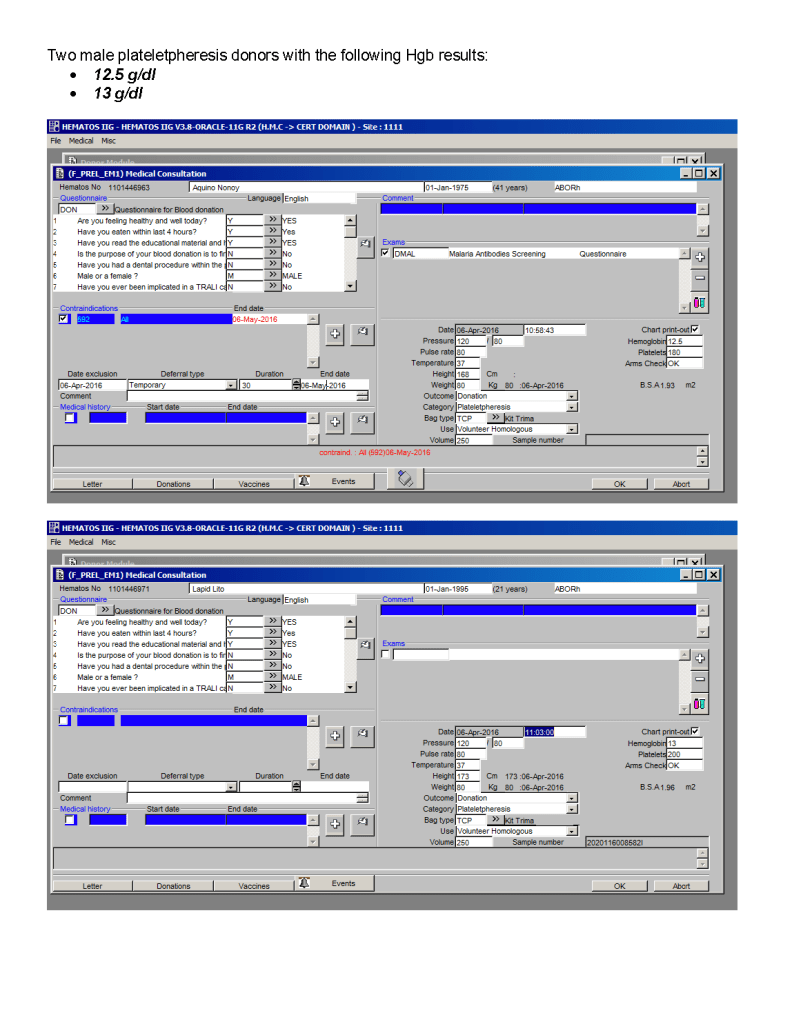
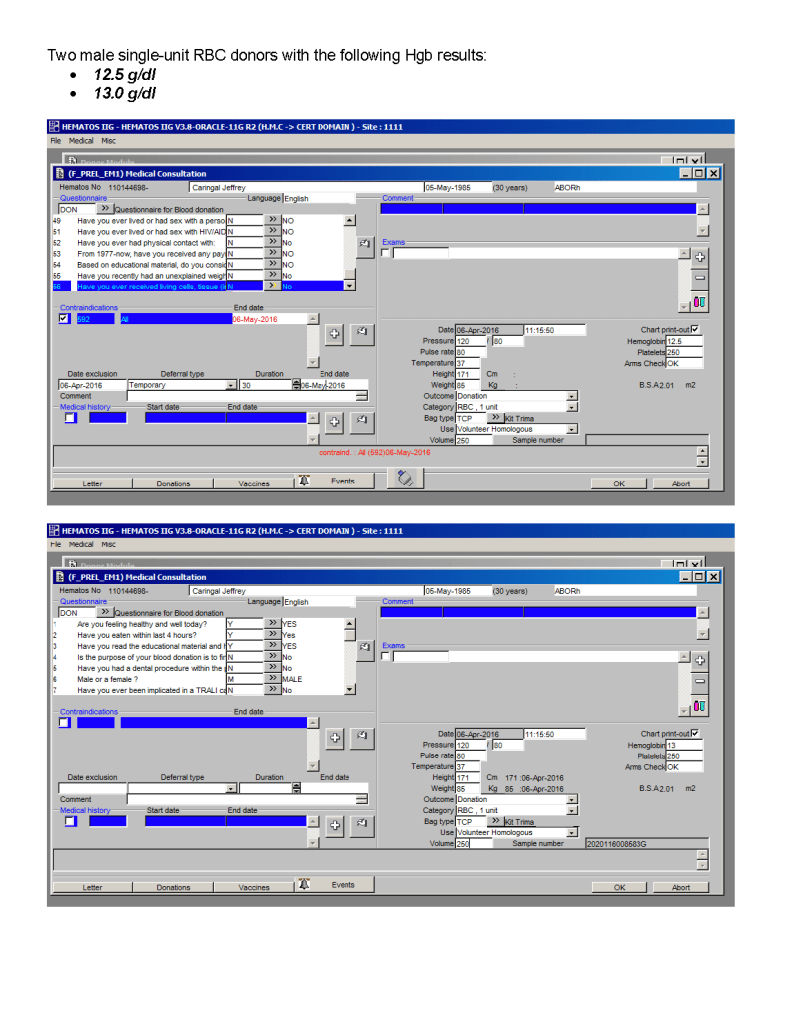
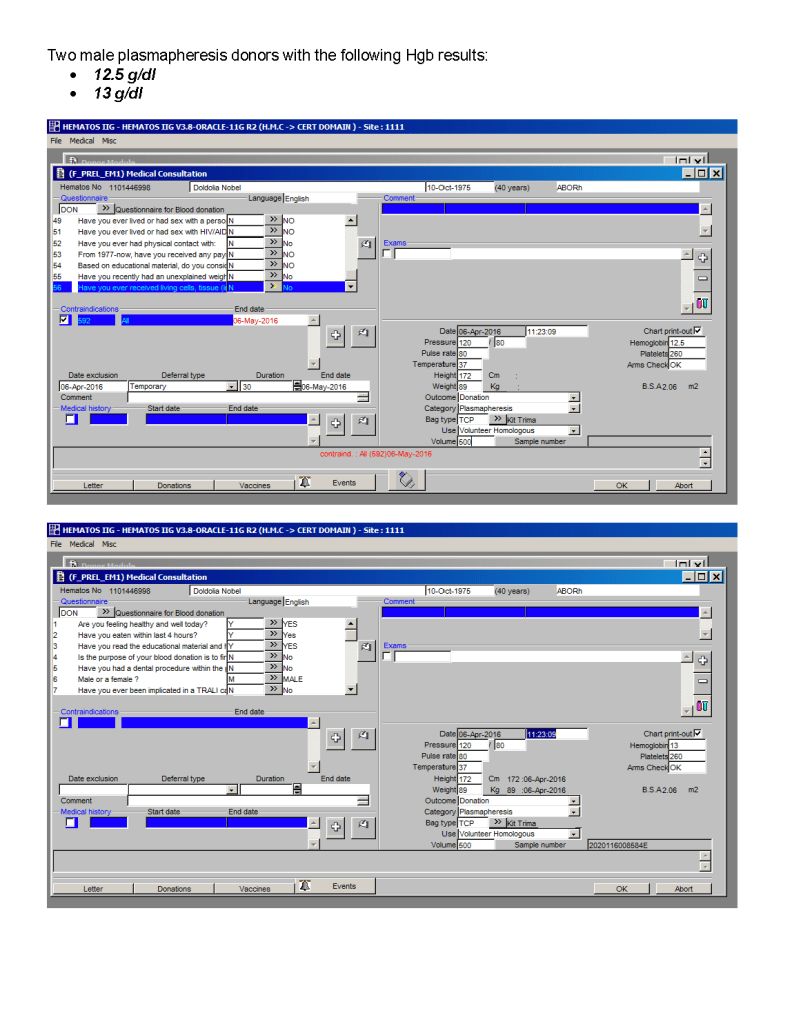
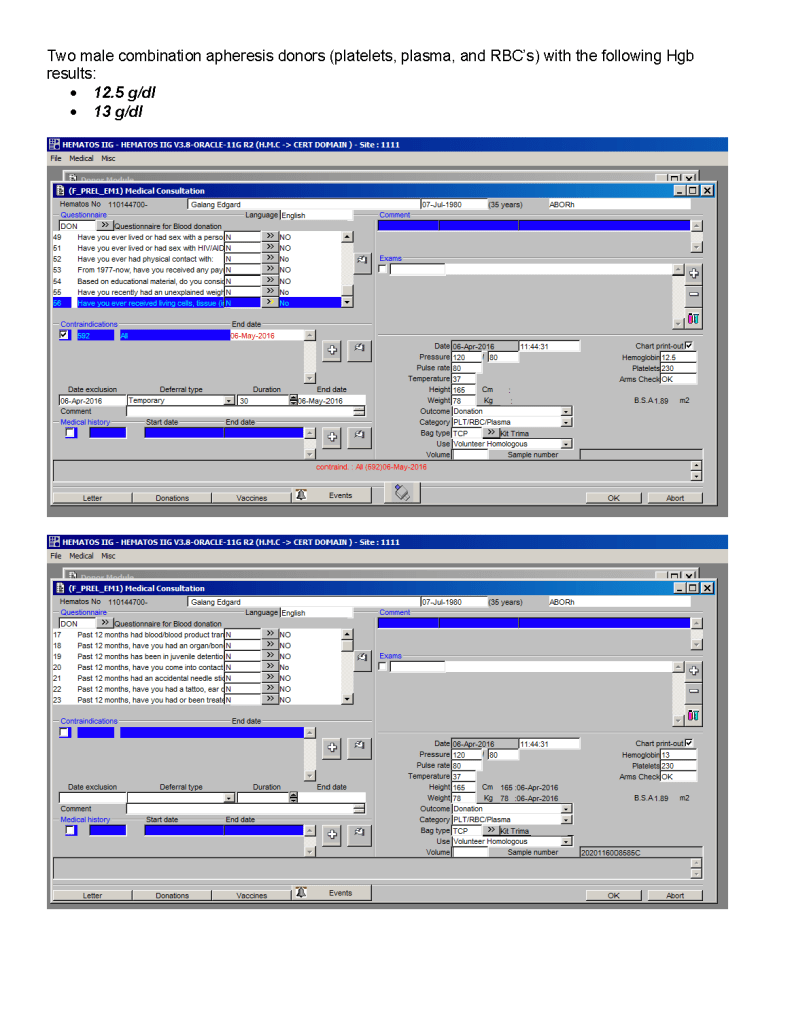
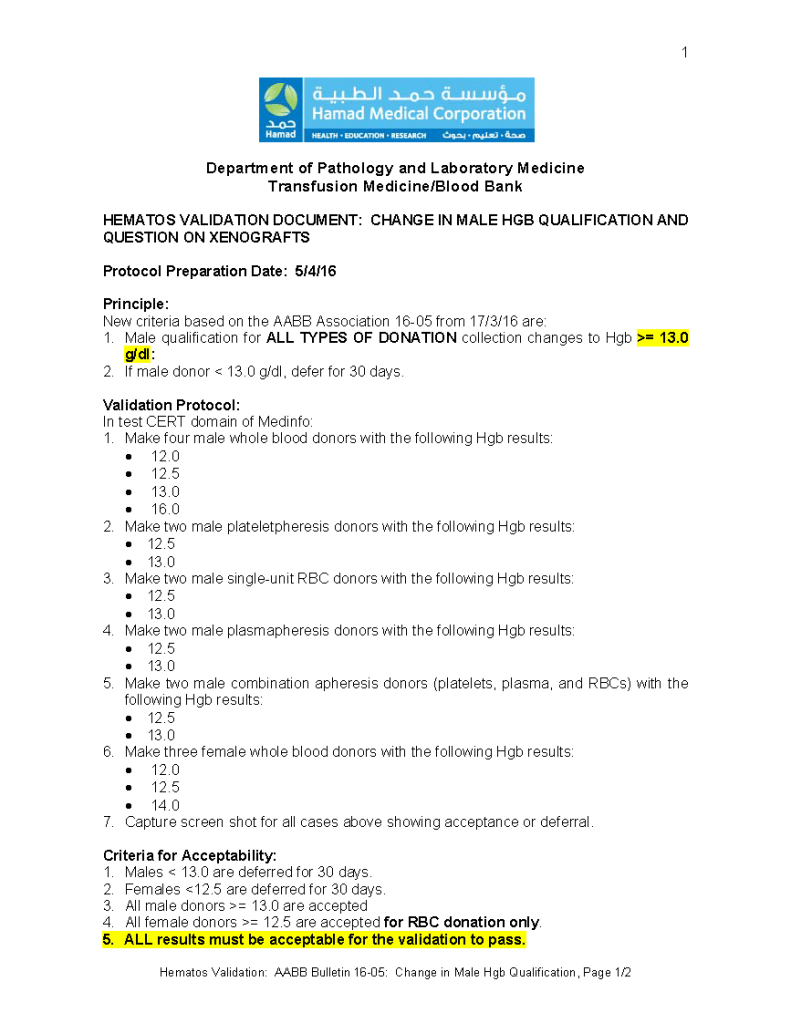
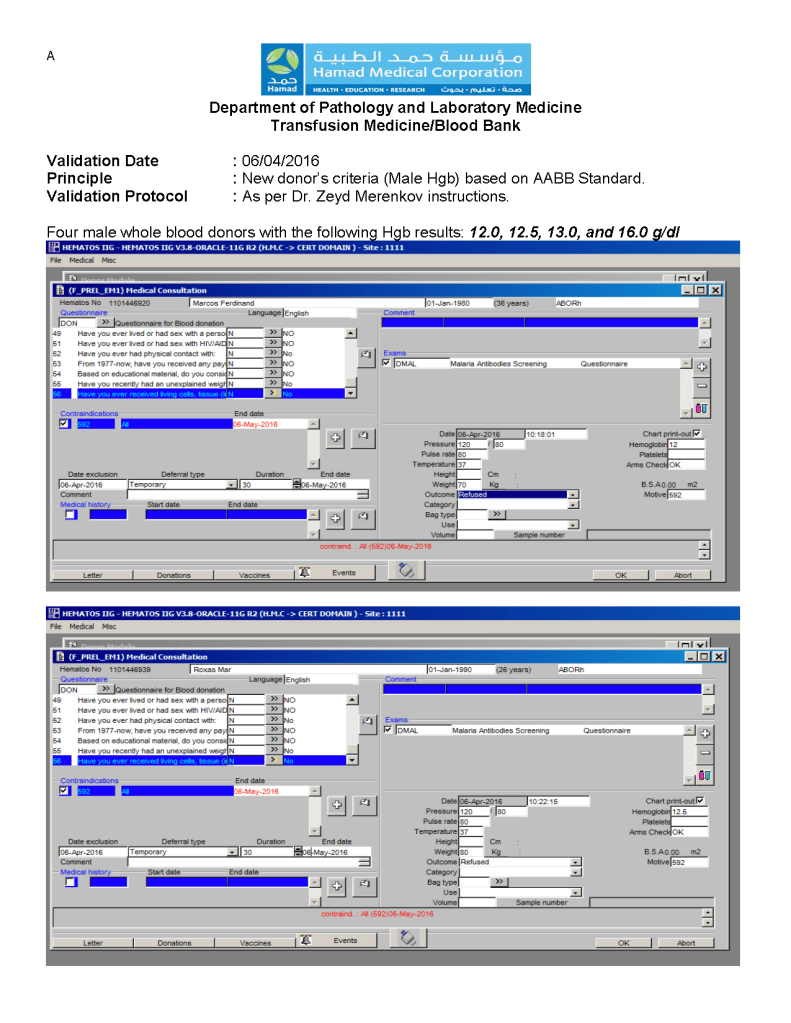
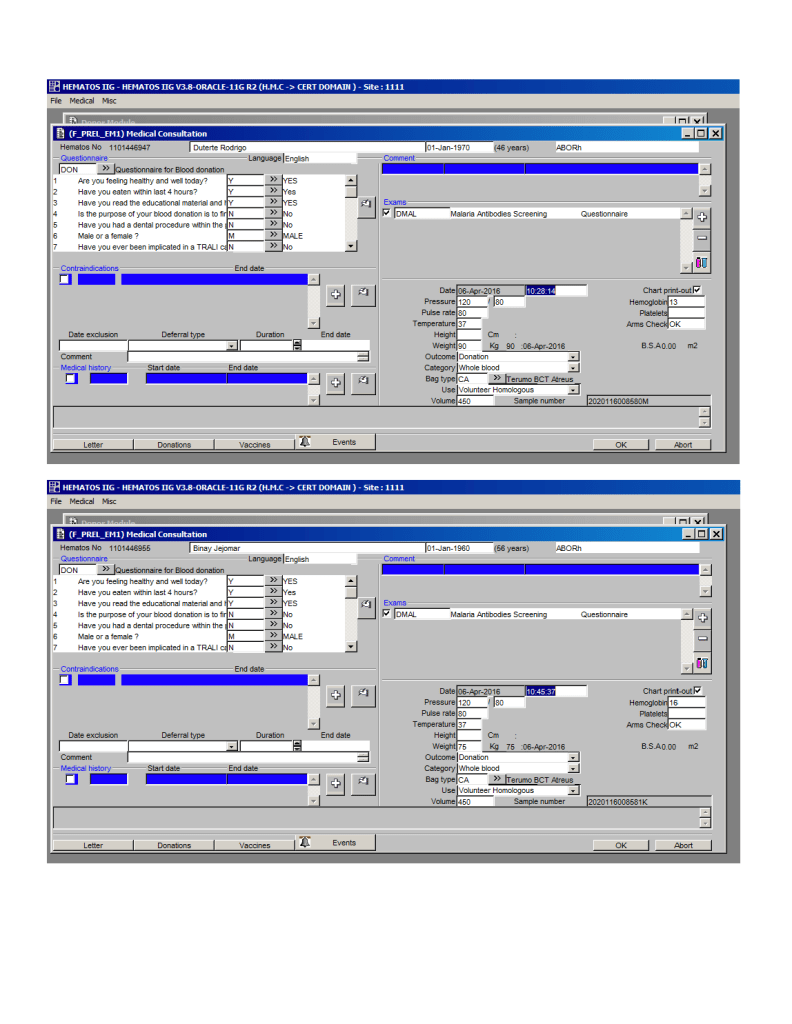
Sample Validation Change Protocol: Donor Hgb Levels

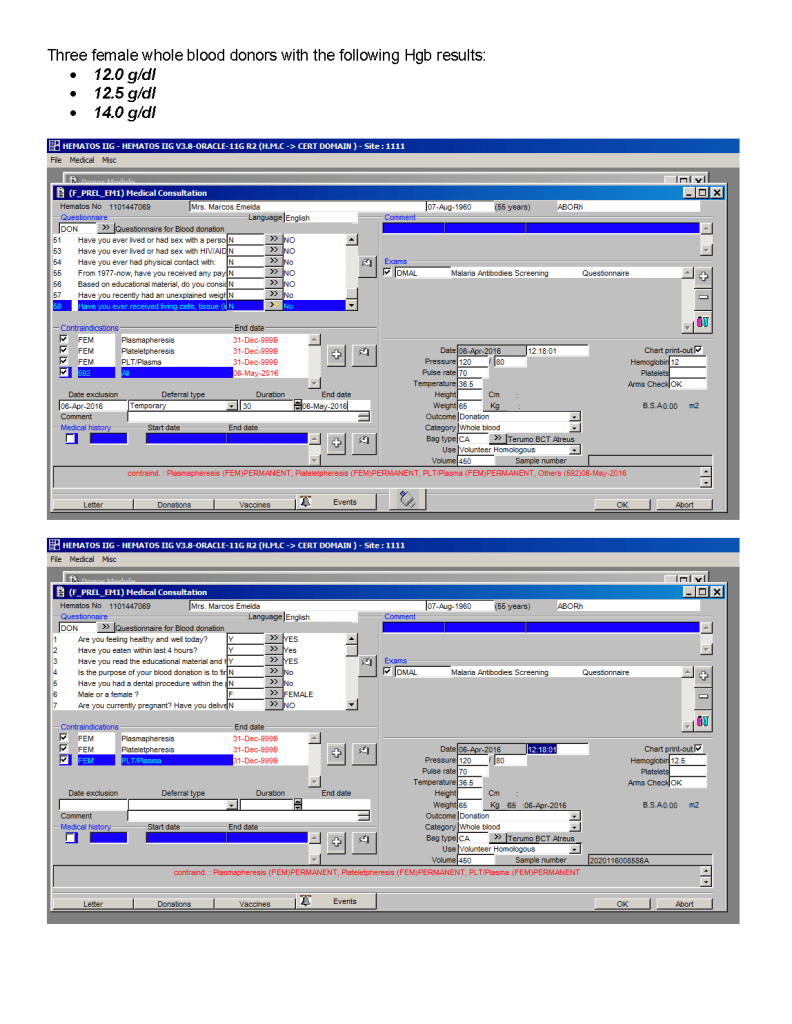
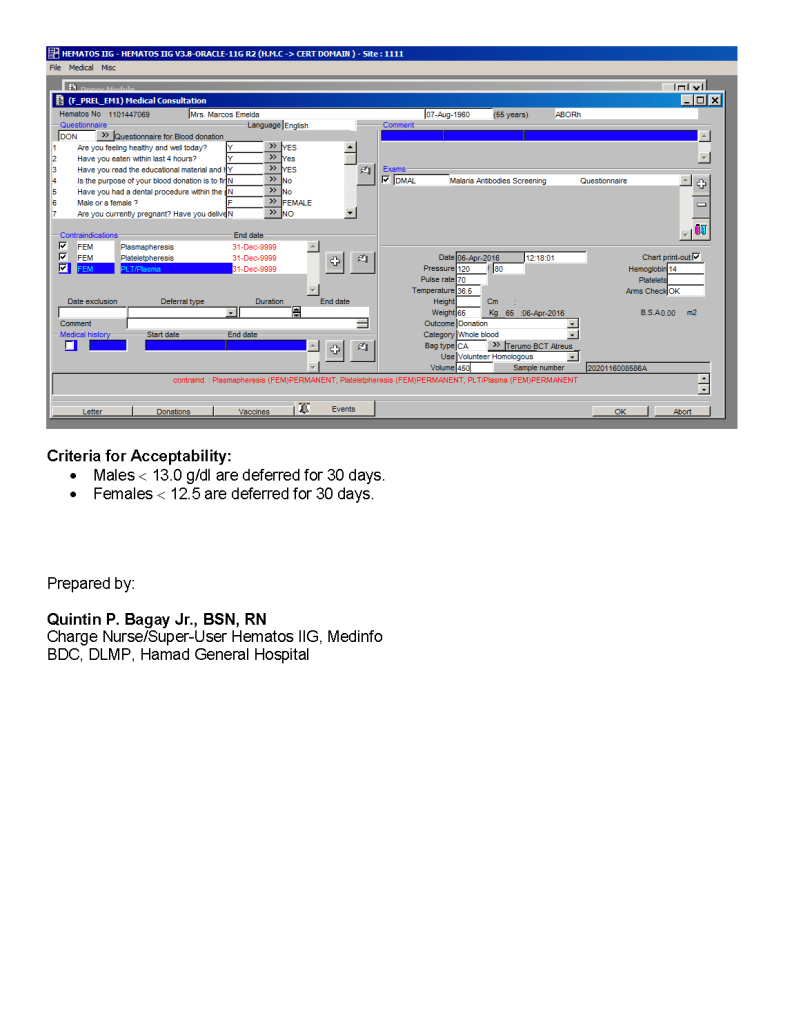
Changes to donor criteria can occur at any time.  This example is the change in donor criteria for males to 13.0 g/dl based on AABB Bulletin #16-05.

I made a validation protocol, which was subsequently performed by a Donor Center Medinfo Super-User.   The data was then sent to me for review and then accepted.

Note that females were included in the testing for regression purposes.  Females were only permitted to donate RBCs—all other components were discarded in production. Contraindication information appears in RED.

Biologic Product Deviations

Principle:

Any nonconforming product that is released for patient use must be reported through the official channels.  Since there is no equivalent to the US CBER, this policy outlines the process for the HMC organization, the only provider of blood components for the State of  Qatar.

Definition:

Nonconforming Blood Component:  Any blood component not meeting the production criteria set in the policies, processes, or procedures of Transfusion Medicine.  Some examples include:

  • Low-volume RBC or FFP/FP24 units
  • Reduced yield platelet units
  • Units made with materials/supplies that have been recalled by the manufacturer
  • Units produced on equipment or tested with reagents that the manufacturer has recalled from use
  • Units contaminated during the production process

Policy:

  1. Nonconforming components must not be released unless they are reviewed and approved by the Head, Transfusion Medicine.
    1. Full written documentation of the review and the reasons for acceptance must be recorded.
    2. Such acceptance must be exceptional—there must be emergency reasons to resort to using such components.
      1. Minor nonconformances such as units with low volume or reduced platelet levels may be considered for use at times of critical shortage of blood components if they otherwise meet acceptability criteria.
  2. If anyone suspects there has been release of a nonconforming blood component, they should immediately contact the Division Head, Transfusion Medicine.
  3. The Division Head, Transfusion Medicine will conduct an immediate investigation to determine the veracity of the allegation.
  4. If the suspicion is confirmed, the Division Head, Transfusion Medicine will immediately contact the Chairperson, Pathology and Laboratory Medicine.
  5. The Chairperson in conjunction with Head, Transfusion Medicine, will inform the Medical Director and other senior administrative officials as indicated.
  6. A lookback will be initiated to determine if any patients have received the nonconforming components.
  7. The results of the lookback will be reported to the Chairperson, Pathology and Laboratory Medicine and the Medical Director.

References:

  1. Standards for Blood Banks and Transfusion Services, Current Edition, AABB, Bethesda MD, USA
  2. Guidelines to the Preparation, Use, and Quality Assurance of Blood Components, European Committee (Partial Agreement) on Blood Transfusion (CD-P-TS), Current Edition

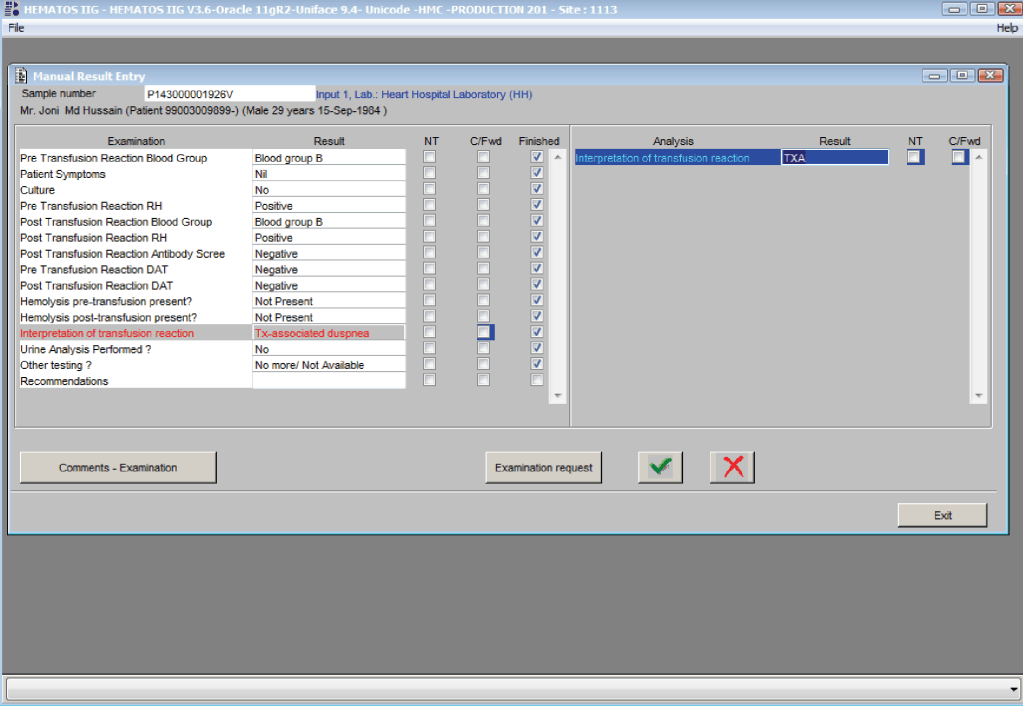
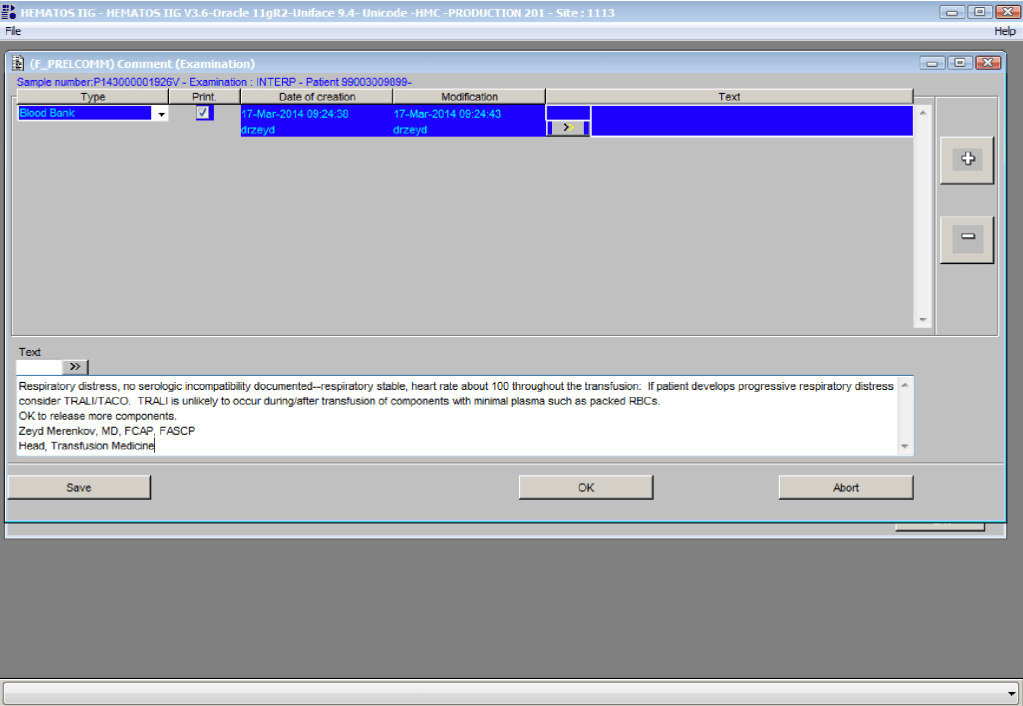
Physician Review and Data Entry of Transfusion Reactions

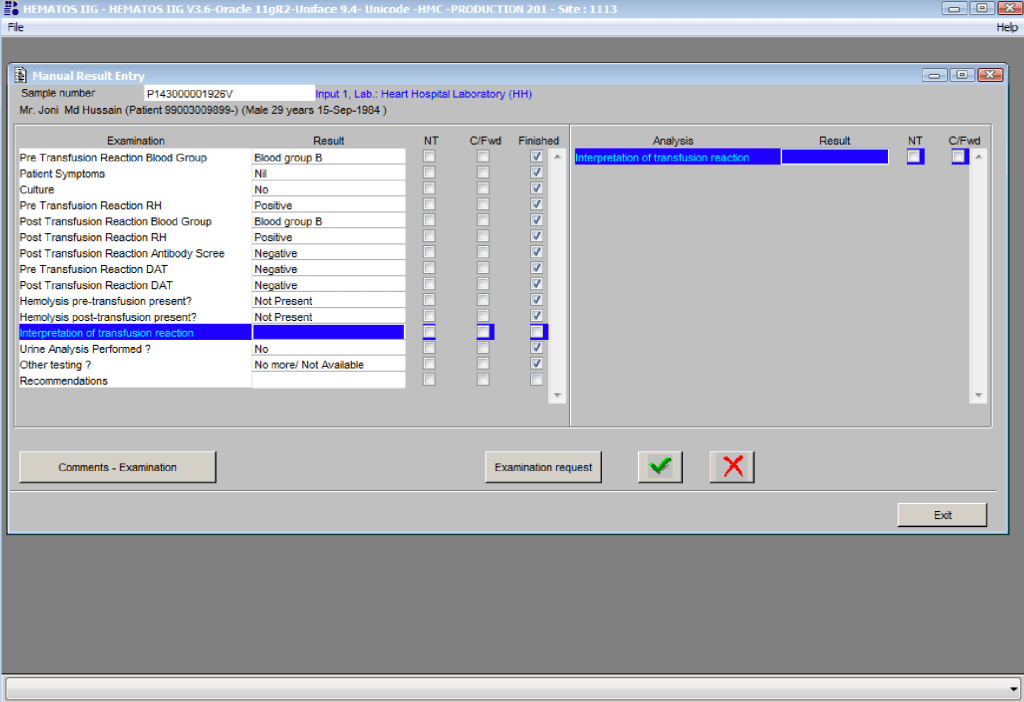
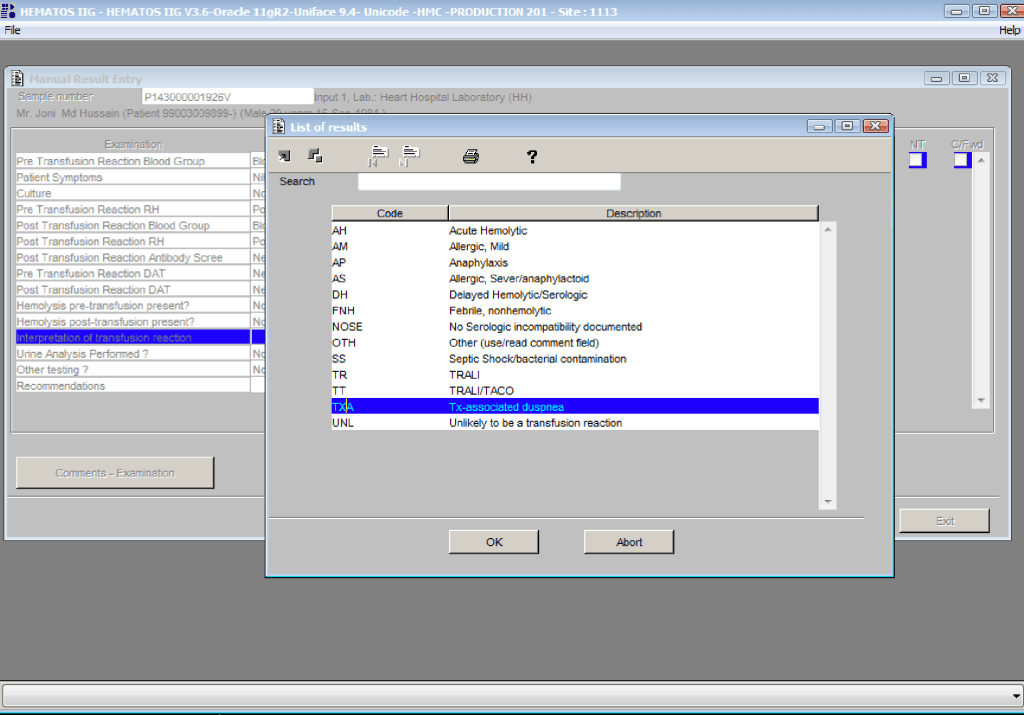
Physicians must enter their interpretations and recommendations for each transfusion reaction review.  In addition, they may enter comments against any of the data.  This post shows the process used in Medinfo Hematos IIG.

By highlighting Interpretation (left side), they then click on the Result Field (right side) and select their interpretation from the drop-down menu.  They can also select other and then enter a comment.

References:

  1. Standards for Blood Banks and Transfusion Services, Current Edition, AABB, Bethesda, MD, USA

  2. Guidelines to the Preparation, Use, and Quality Assurance of Blood Components, European Committee (Partial Agreement) on Blood Transfusion (CD-P-TS), Current Edition

Clarification on Quality Control of Reagents for Antibody Screening and Identification

Principle:

This policy is a reiteration of current policy to QC reagents used for antibody screening and identification to document how current practice meets these requirements.  This policy is NOT a change from current practice.

Policy:

  1. Each cell used for antibody detection must be checked each day of use for reactivity of at least one antigen using antisera of 1+ or greater avidity:
    1. We will use reactivity encountered during the daily antibody testing:  reactions of 1+ in each screening cell will be deemed acceptable.  For panel cells, reactions of 1+ or greater for any specificity will be deemed acceptable.
  2. Typing reagents such as anti-D, anti-K, anti-Fya, etc. must be checked each day of use.
    1. Already defined explicitly in SOPs
  3. Anti-IgG reactivity of antiglobulin reagents may be checked during antibody screening and crossmatching:
    1. Currently performed as per manufacturer’s instructions (e.g., Immunocor, Biorad, Grifols, Ortho) for gel and tube reagents.
  4. Typing sera and reagent cells must be checked for reactivity and specificity on each day of use, including a check against known positive and negative cells or antisera:
    1. Already defined explicitly in SOPs

References:

  1. Standards for Blood Banks and Transfusion Services, Current Edition, AABB, Bethesda, MD, USA
  2. Guidelines to the Preparation, Use, and Quality Assurance of Blood Components, European Committee (Partial Agreement) on Blood Transfusion (CD-P-TS), Current Edition
  3. TRM.31400, CAP Checklist, current version

External Disaster Plan, Simplified

Principle:

Maintaining an adequate blood supply and expedited compatibility testing are critical in disaster planning.  Medinfo Hematos IIG allows us to get dynamic updates of our blood supply and dynamically reallocate blood components as needed.

Policy:

  1. Determinate total available blood supply across all locations by using the Cumulative Stock Display program in Medinfo Hematos IIG.
    1. Recheck stock at least every hour during the disaster.
  2. At each transfusion service site, in conjunction with a Transfusion Medicine Consultant:
    1. Cancel reservations for elective surgical and non-emergency medical cases of affected ABO/D types.
    2. Retain reservations for antigen-matched, oncology, NICU, and high-risk obstetrical cases.
  3. Inform Donor Recruitment/Logistics to send SMS, radio, and television messages for blood donors—all types.
  4. Contact ALL staff and have them report to duty.
    1. At the Blood Donor Center, the Head Nurse, Recruitment, Supervisor, Component Processing, and Supervisor, Marker Testing will contact staff.
    2. At hospital transfusion services, the site supervisor will contact all staff.
  5. Process blood components using automated component technology (Reveos).
  6. Perform all donor marker testing including single-well NAT.
    1. Abbreviation of donor marker testing is only at the discretion of the Division Head, Transfusion Medicine.
  7. Transfusion Services:
    1. Release blood component according to the various protocols as needed:
      1. Massive Transfusion Protocols
      2. Emergency release
      3. STAT
      4. Priority
      5. Routine
  8. Compatibility testing will be electronic, immediate-spin, or full AHG as per our protocols.

References:

  1. Standards for Blood Banks and Transfusion Services, Current Edition, AABB, Bethesda, MD, USA
  2. Guidelines to the Preparation, Use, and Quality Assurance of Blood Components, European Committee (Partial Agreement) on Blood Transfusion (CD-P-TS), Current Edition