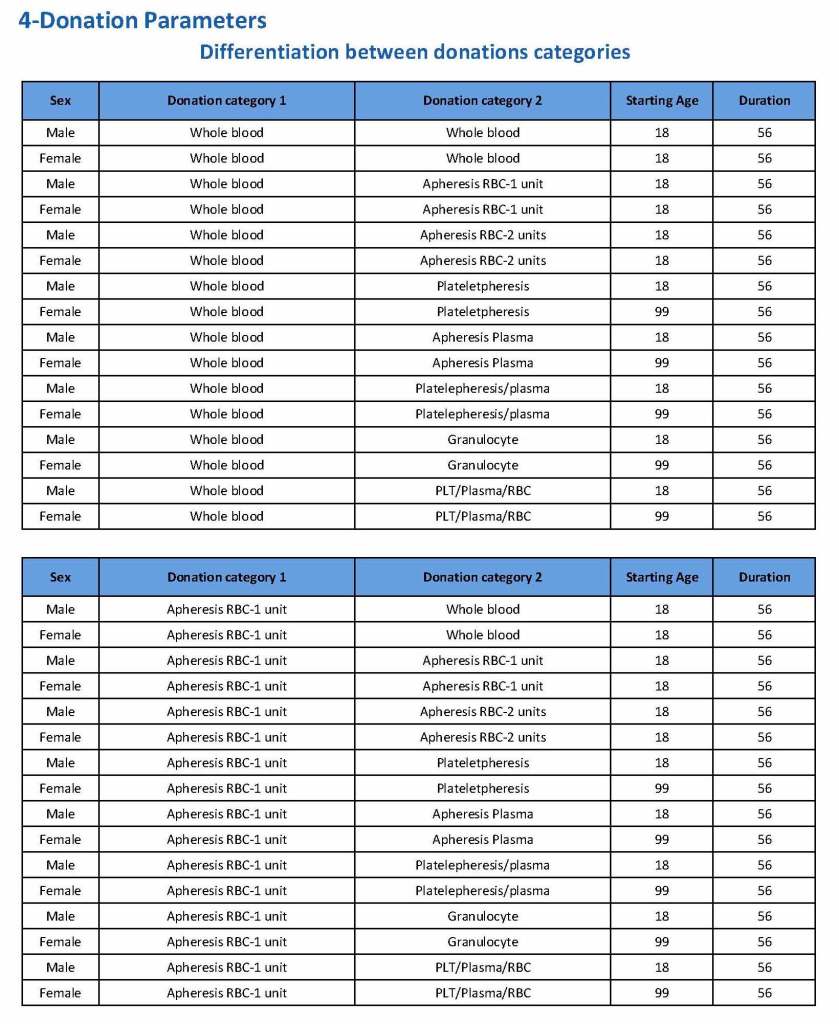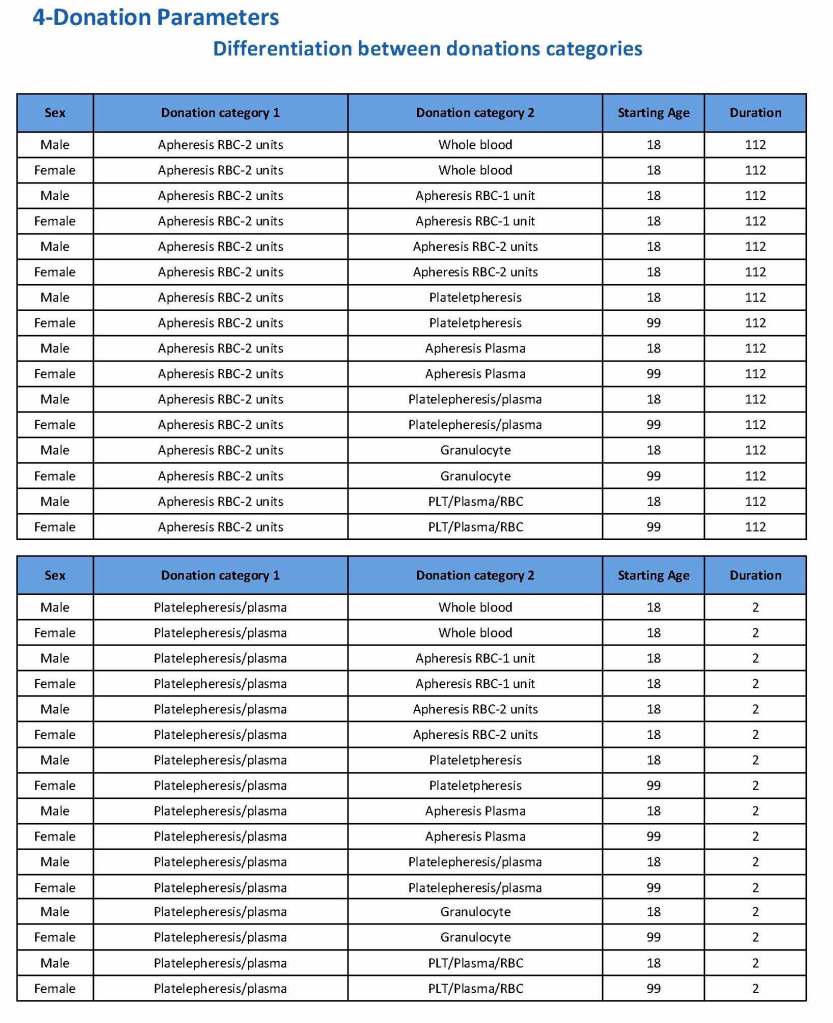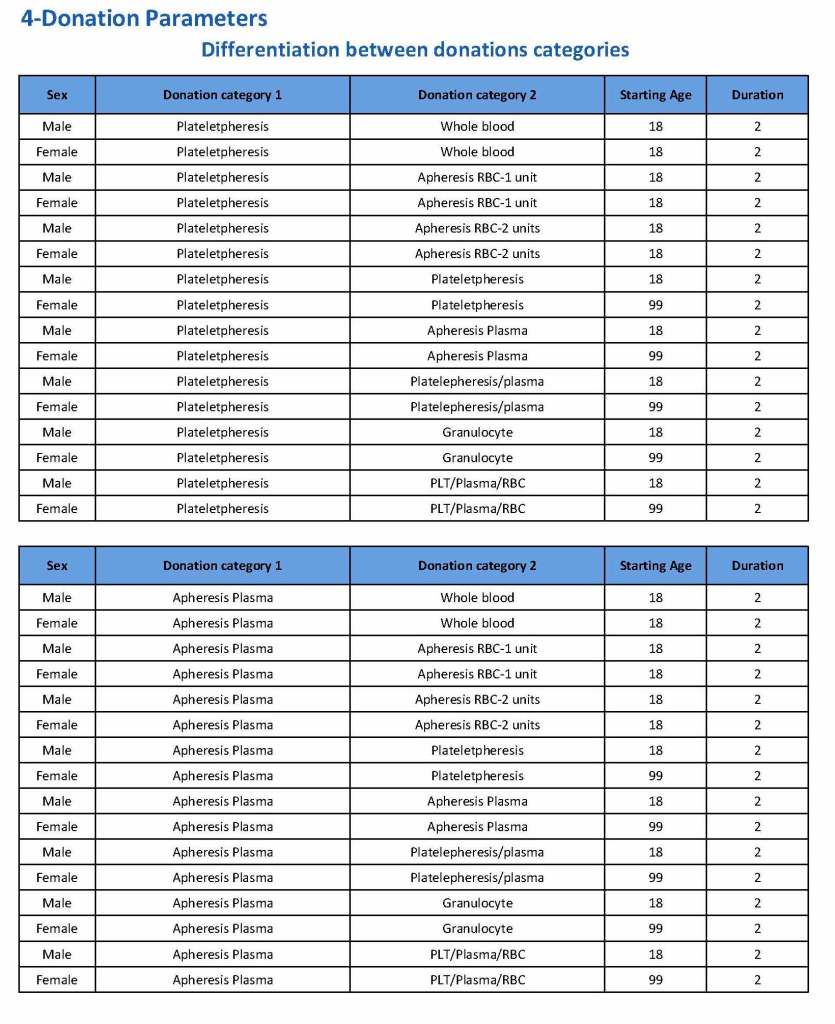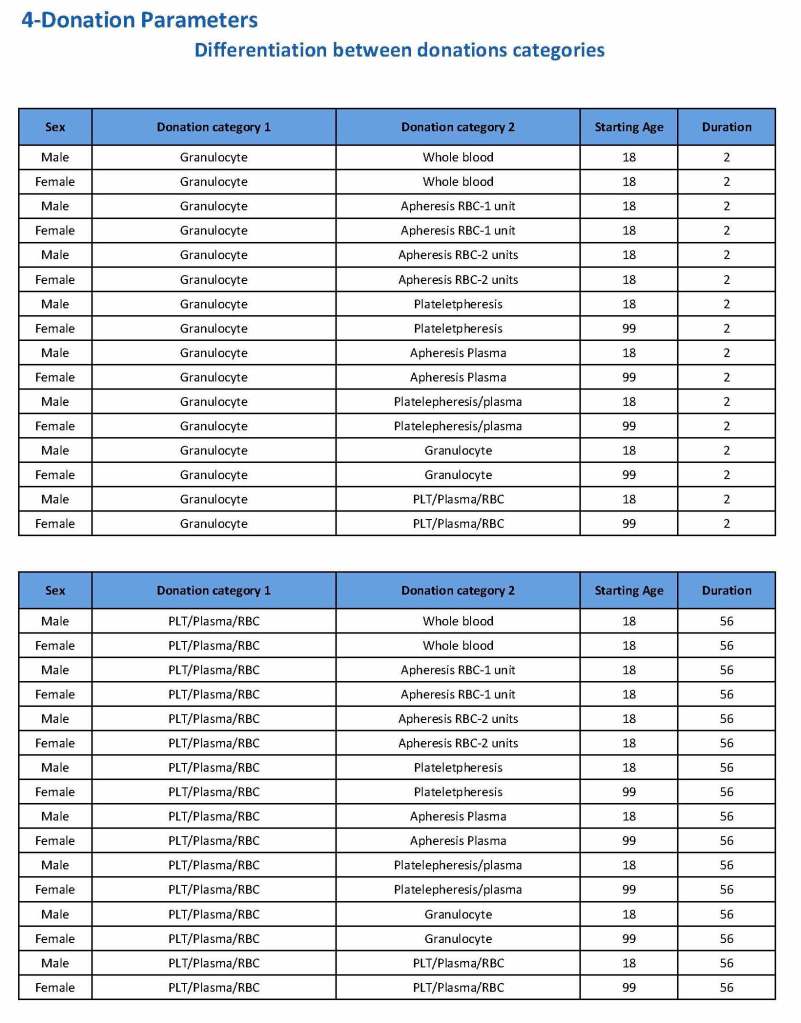
RBC Antigen Matching

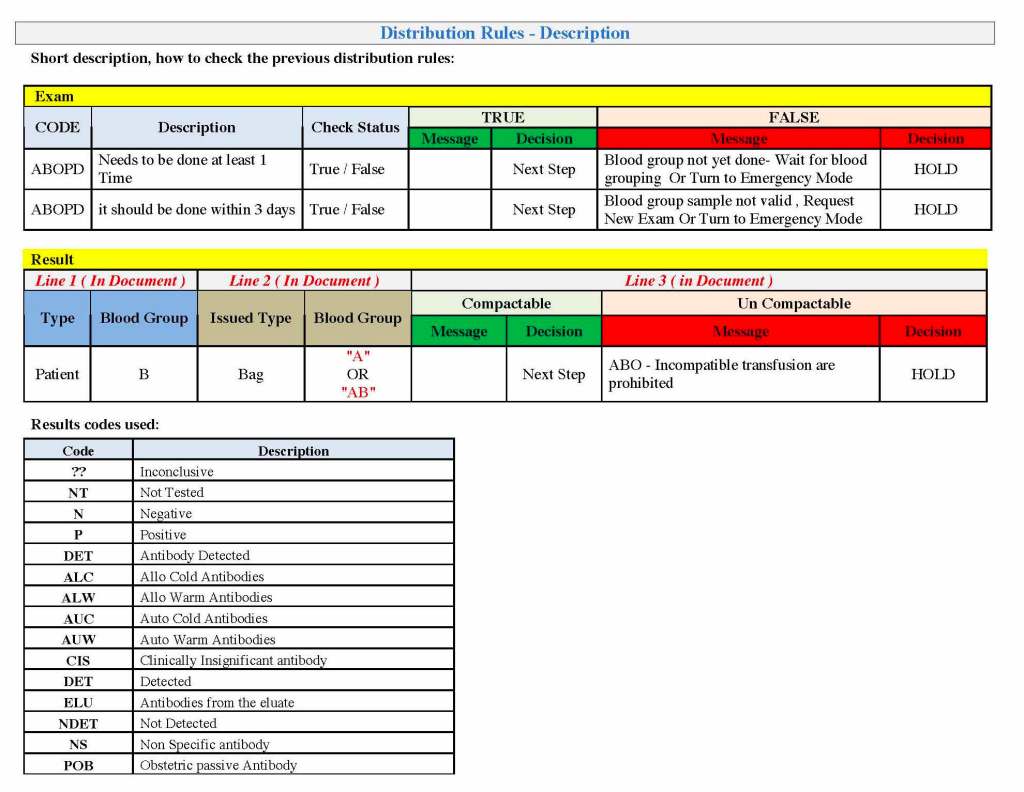
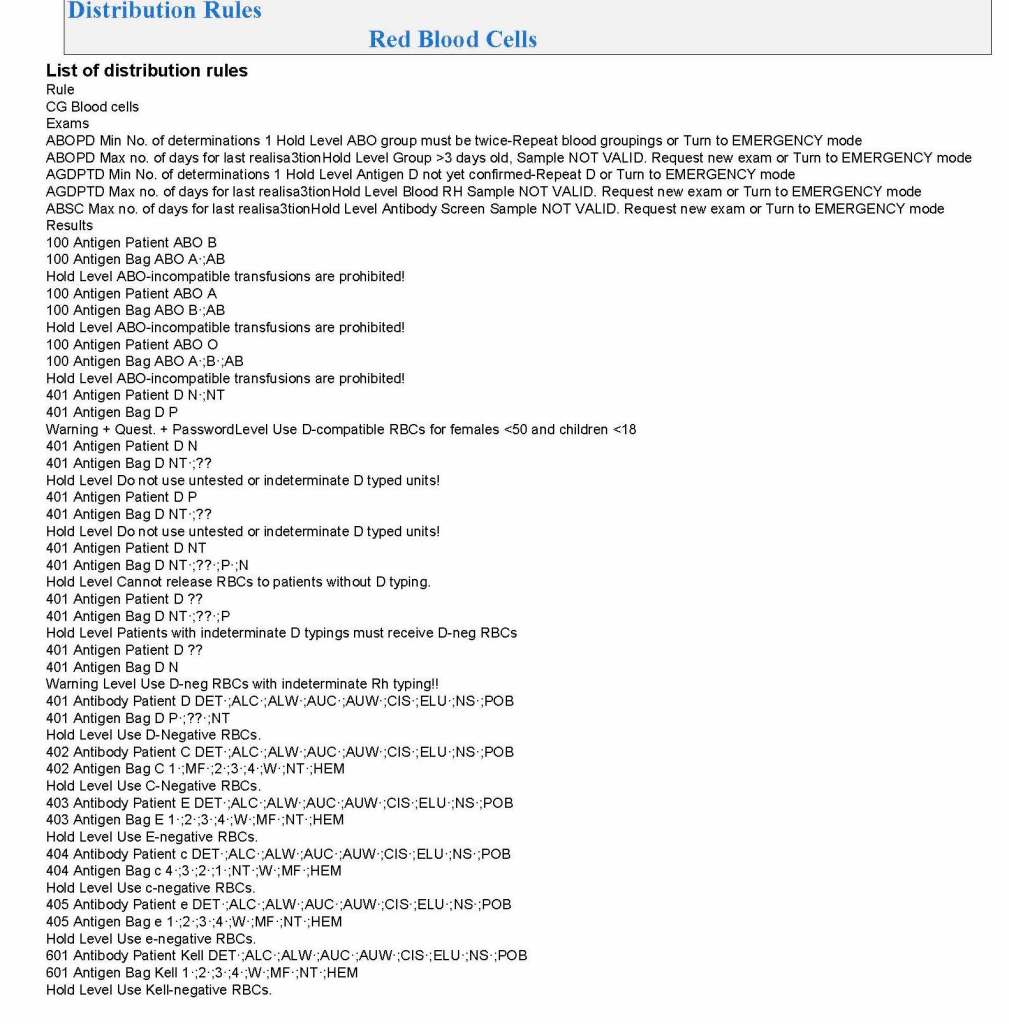
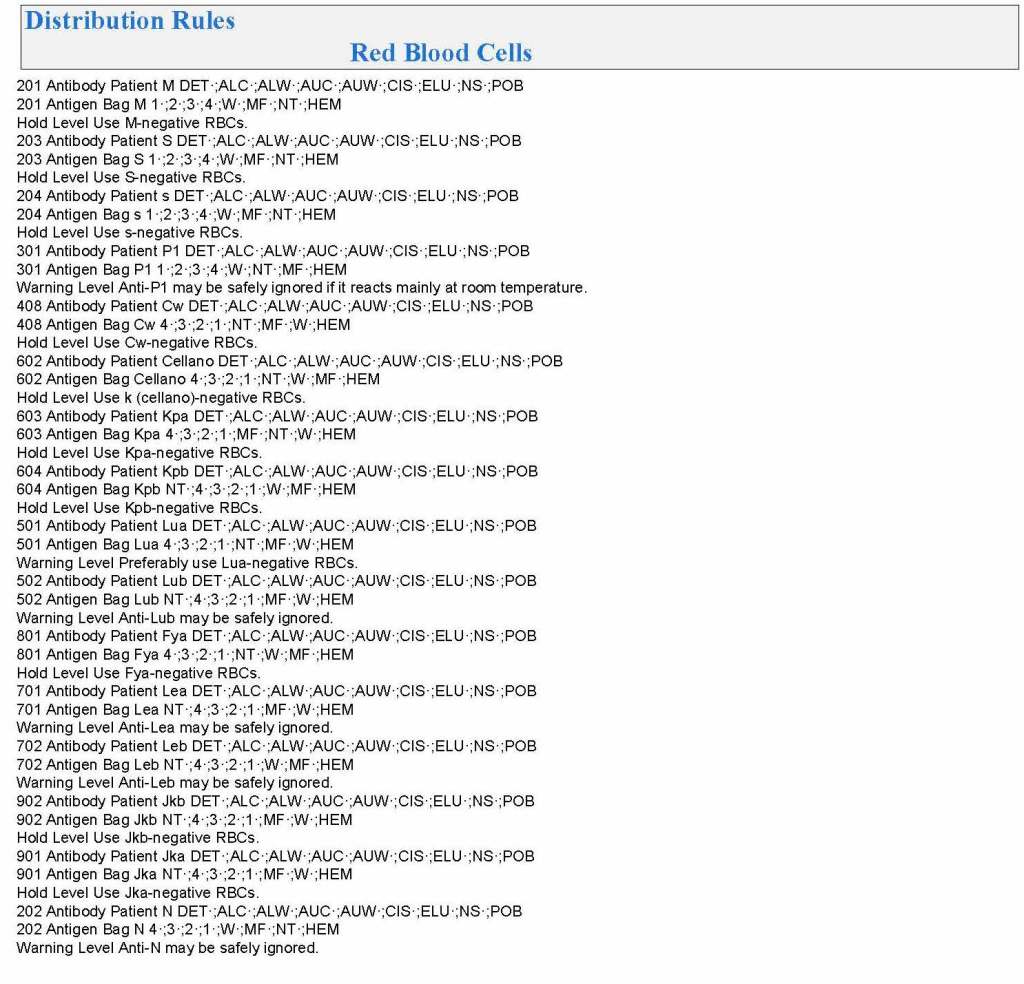
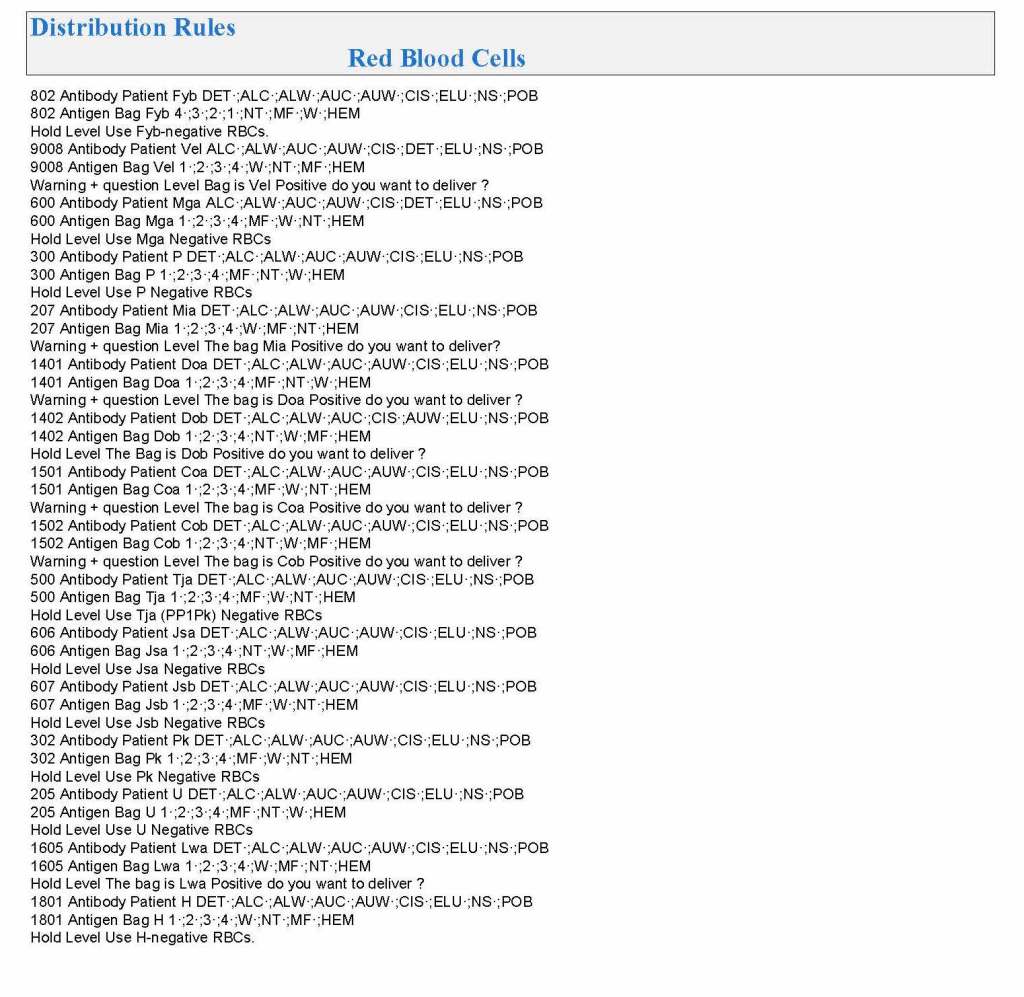
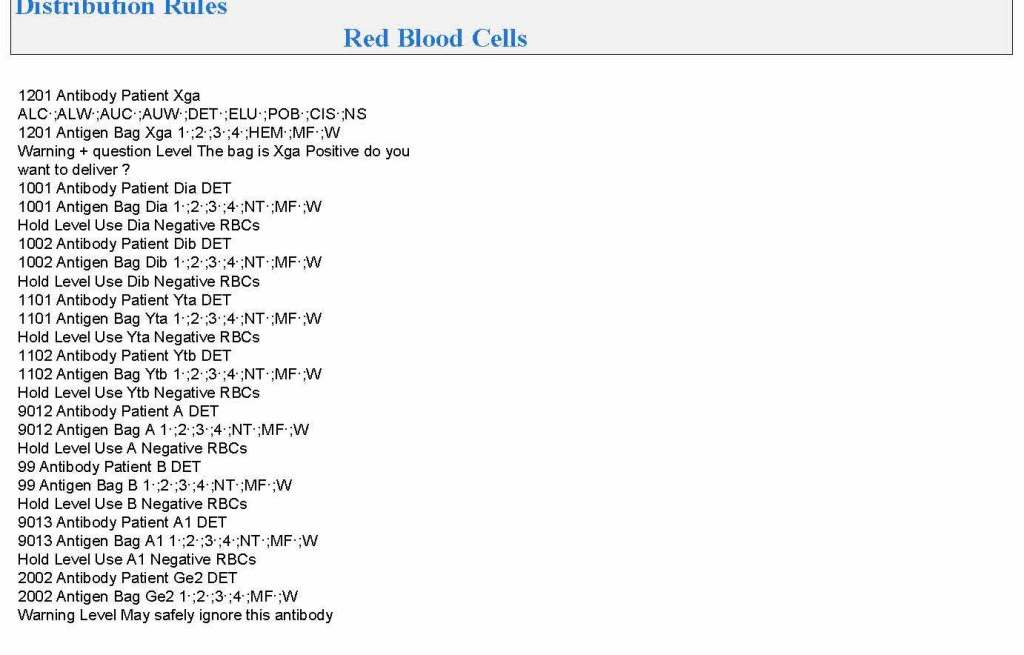
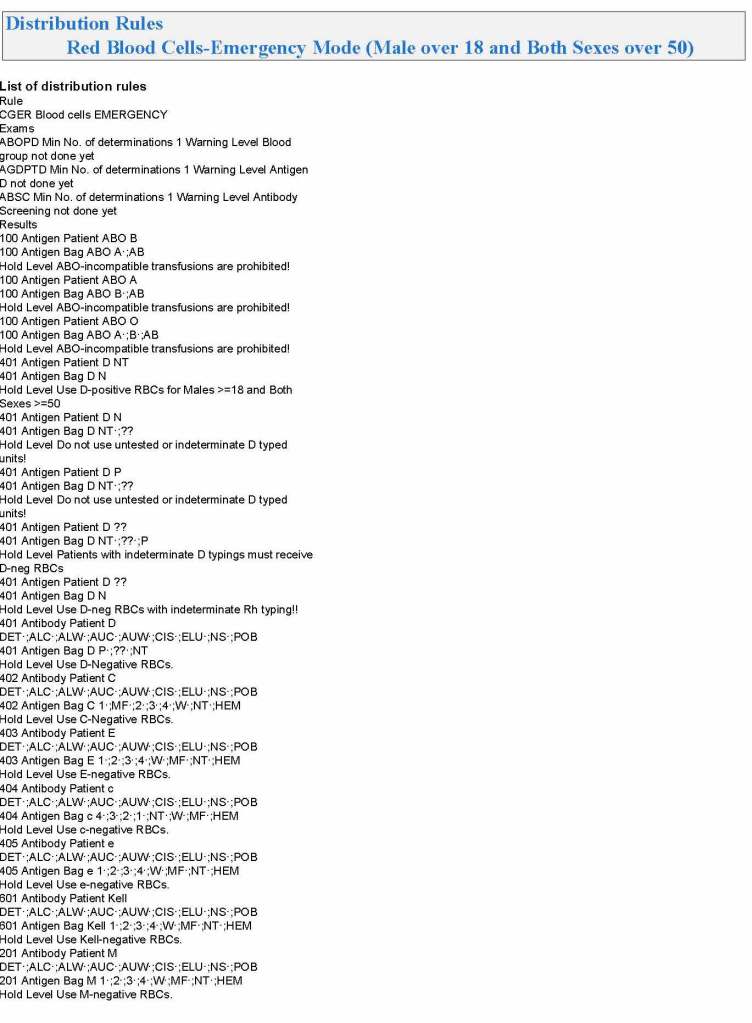
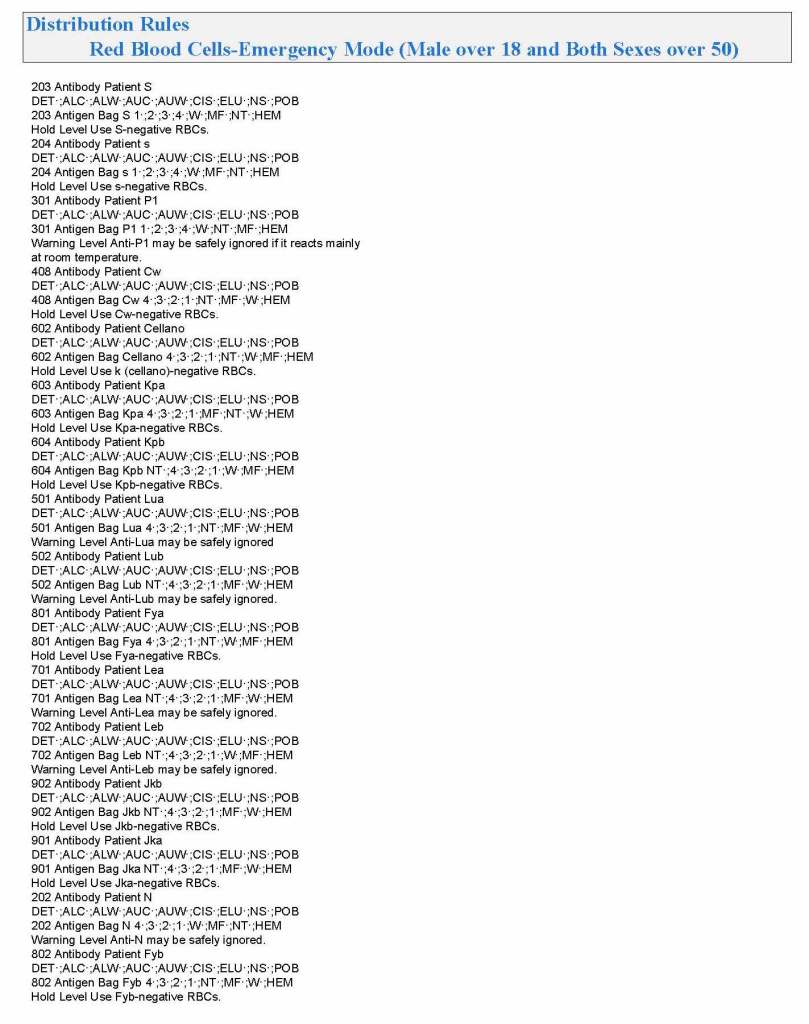
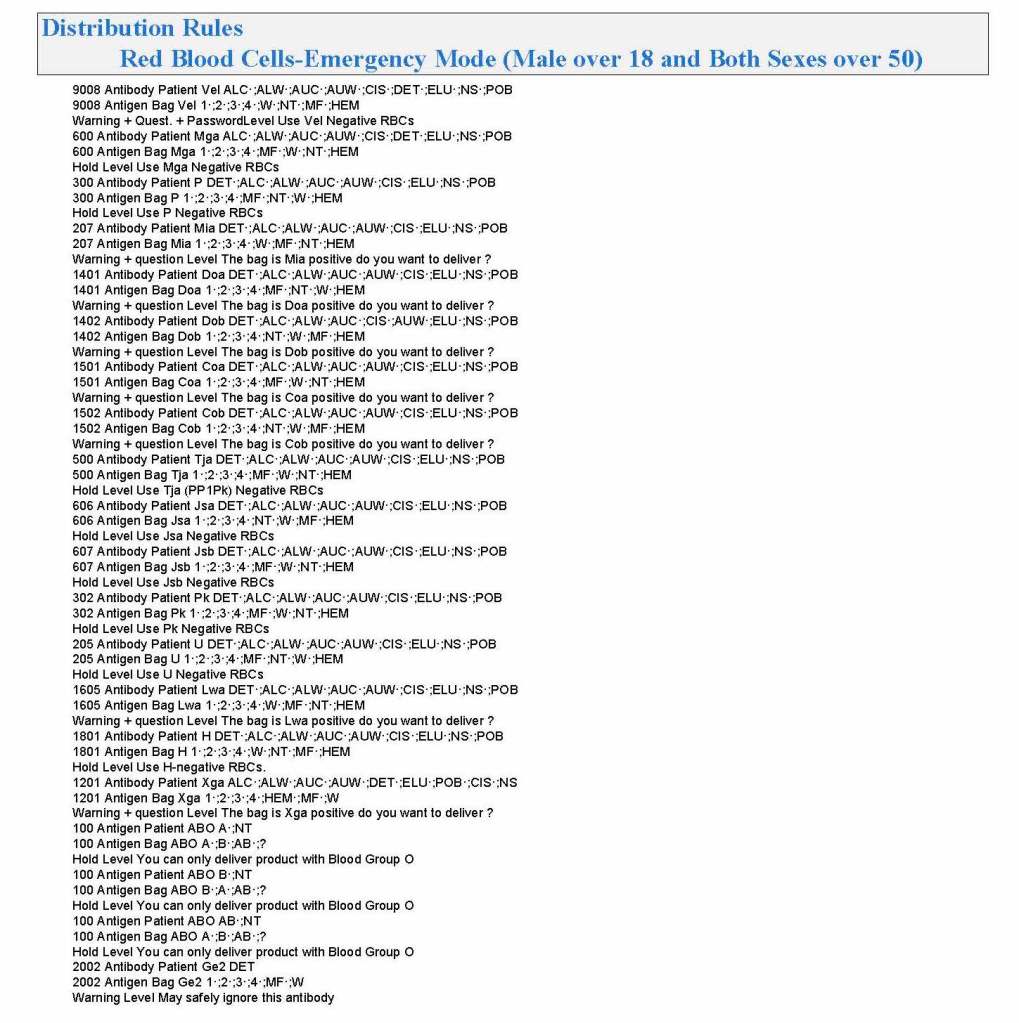
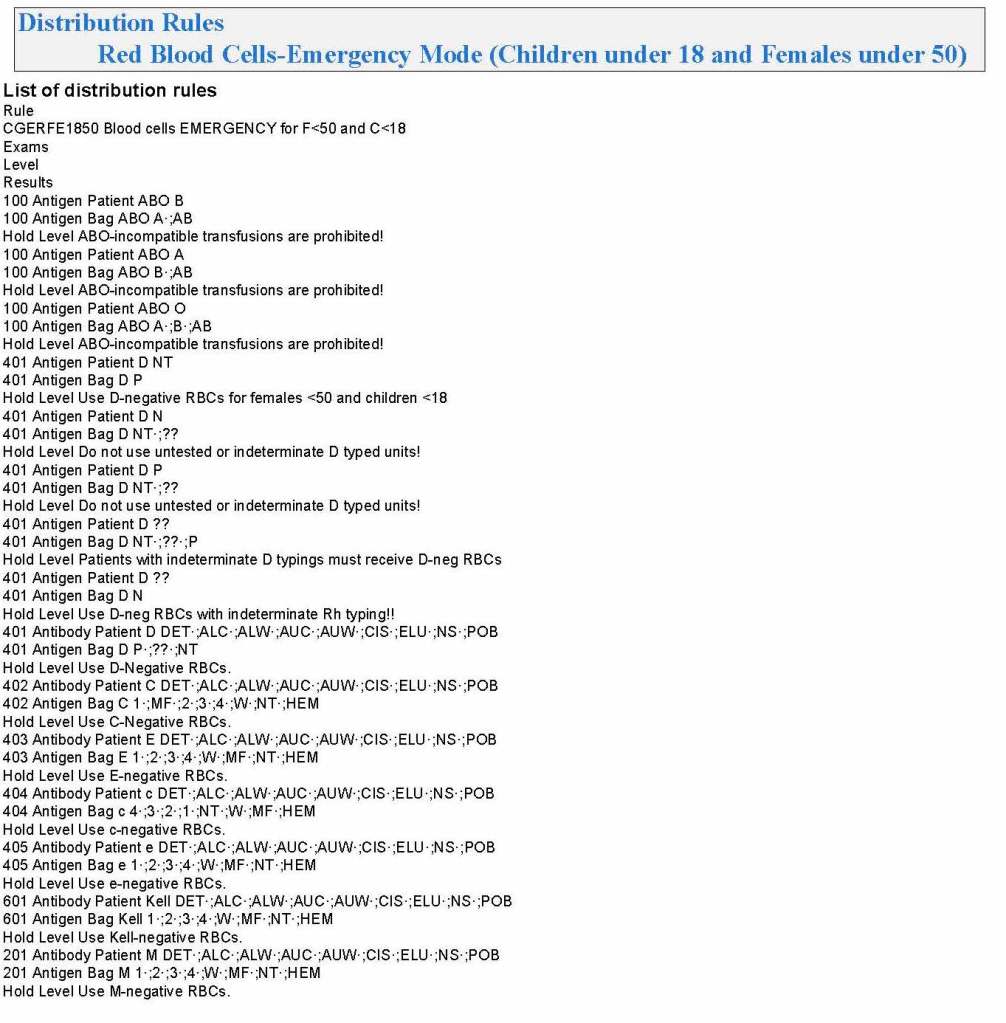
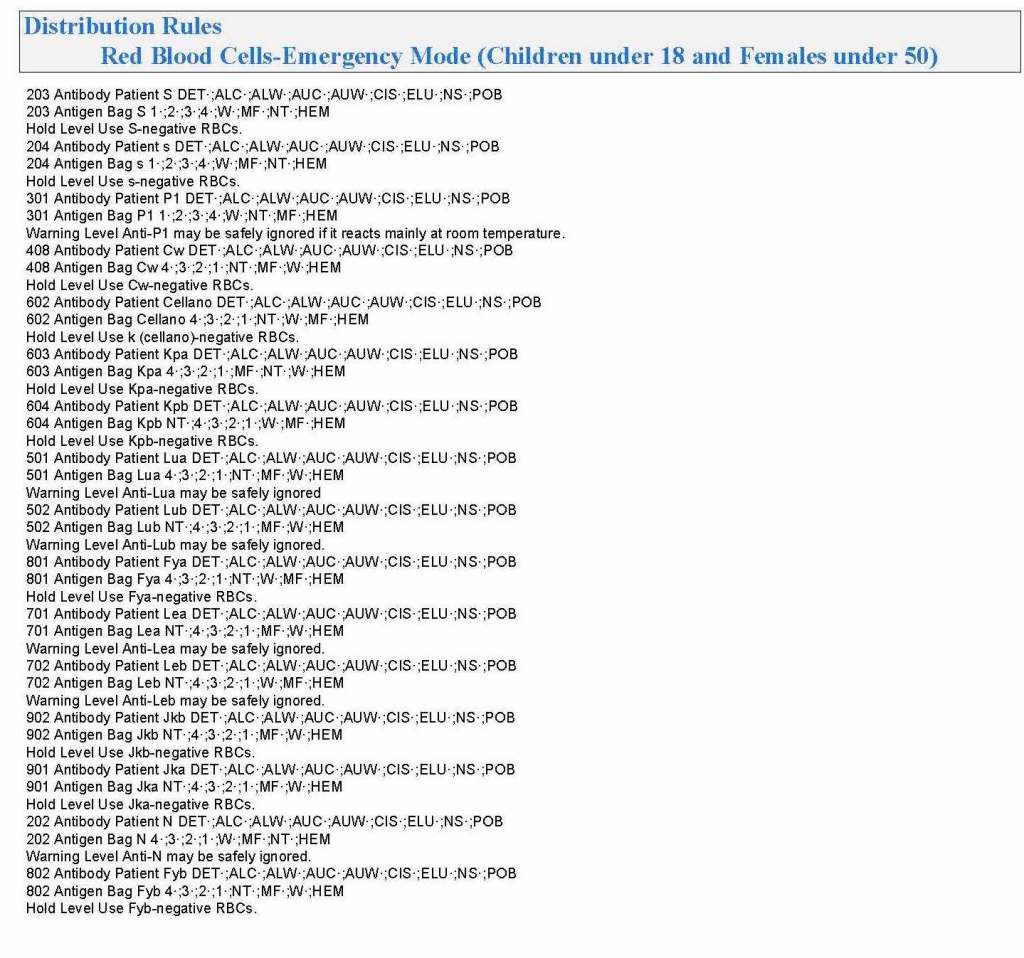
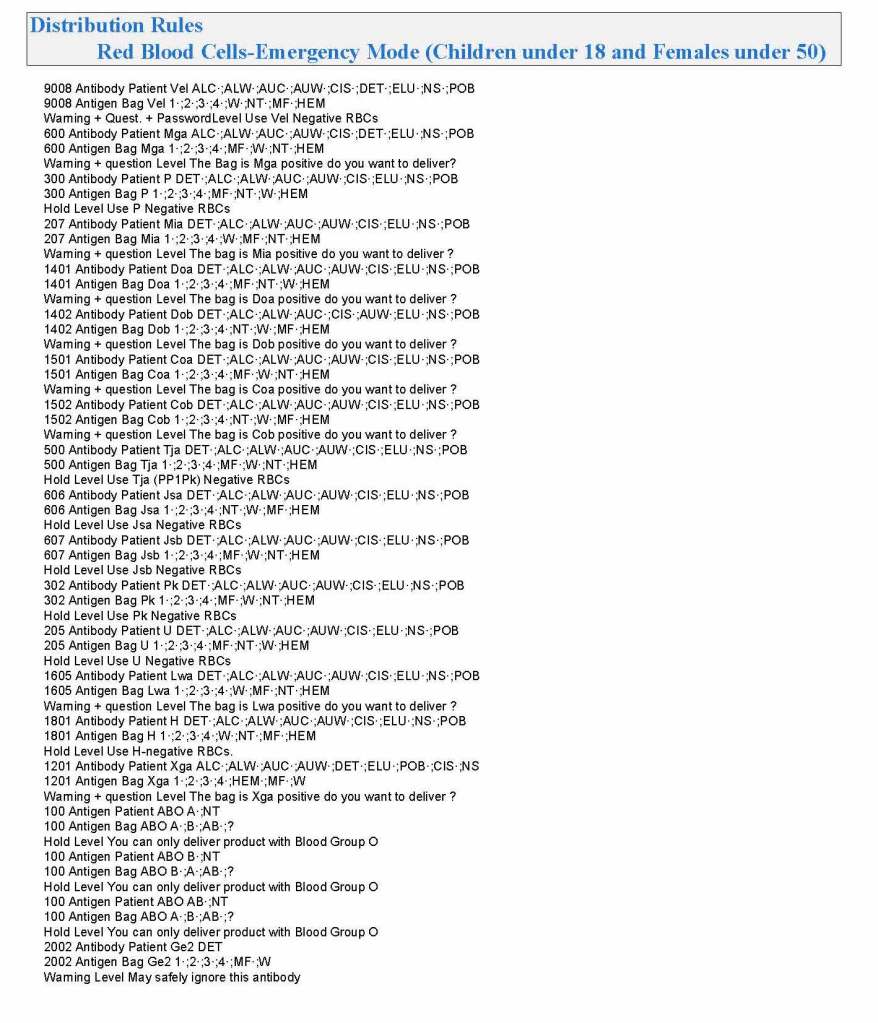
In the previous post, the Medinfo document for Inter-Depot transfer had many pages of rules for matching RBC antigens.  Multiple actions were available:

  1. Forced Match, no release of untested or antigen-mismatch (e.g. anti-Kell requires specifically tested K-negative RBCs).
  2. Match Optional (e.g. anti-Lea/Leb does not require Lewis-matched blood):  system would flag a comment showing the antibody specificity, user would respond Y/N, and select units
  3. Least-Incompatible (e.g. WAIHA):  requires sufficient privilege (senior technical or transfusion physician) to authorize release
  4. Permitted Incompatible (e.g. give C-positive to patient with anti-C in times of shortage or complex multiple antibodies without fully matched blood available):  requires sufficient privilege to release
  5. Fully Allowed (e.g. group O RBCs to group A, AB, B patients)—no flagging, allocation of units permitted
  6. Prohibited Under Any Circumstance—NO Override Permitted (e.g. group O for Bombay Oh, c-positive for anti-c, K-positive for anti-K)

To avoid mistakes, the blood bank computer system enforced the rules.  There was no mercy.  Only specific individuals could override this( in many cases, but certain allocations (e.g. group O RBCs to a Bombay Oh patient) were not permitted under any circumstances.

Prophylactic Antigen Matching:

Please also refer to my prophylactic antigen matching post made last week for the rules I selected for Qatar.

Prophylactic antigen matching is common in Europe.  I have been doing this during the many years I have worked in the Middle East.  Most patients were not local nationals but transient.  They would return to their home countries where blood bank testing (antibody screening/identification/antigen matching) or intrauterine exchanges might not be always available.

For pregnant patients, we would prophylactically match K-negative and c-negative—regardless if there were antibodies detected—R1R1 units for R1R1 patients.  At the end of my time in Qatar, we had several pregnant women with various Rh deletions, so we added routine extended Rh(D) and Kell typing to all.

For sickle cell patients, especially African type, I would prophylactically match Rh antigens (D, C, c, E, e) and Kell because of the polymorphisms in the CE gene, some of which may lead to pan-Rh antibodies.

I would consider selective prophylactic antigen matching in chronically transfused populations, again regardless if clinically significant antibodies were detected.

If a patient makes any antibody, regardless if is clinically significant or not, I would consider that patient as a candidate for prophylactic antigen matching (but NOT necessarily for a clinically insignificant antibody).

In Qatar, blood bank services (testing and components) were not charged to the patient.  In many other parts of the world, blood bank is a cost center.  No prophylactic antigen matching may be routinely performed.  If it is done, it must be charged to the patient or the hospital must assume the cost.  I have gone to conferences in such locales where not even R1R1 patients were not matched and subsequently developed anti-c, which complicated management.  It would have been cheaper to do the antigen matching than to pay for the consequences of the alloimmunization.
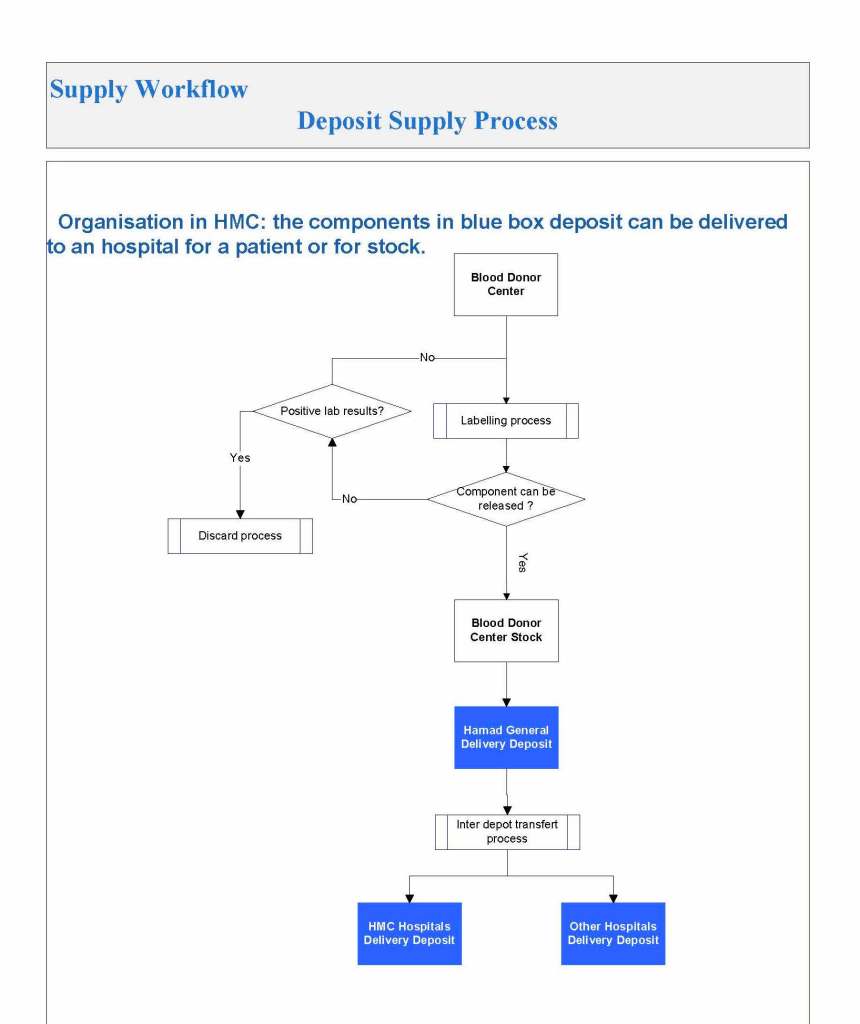
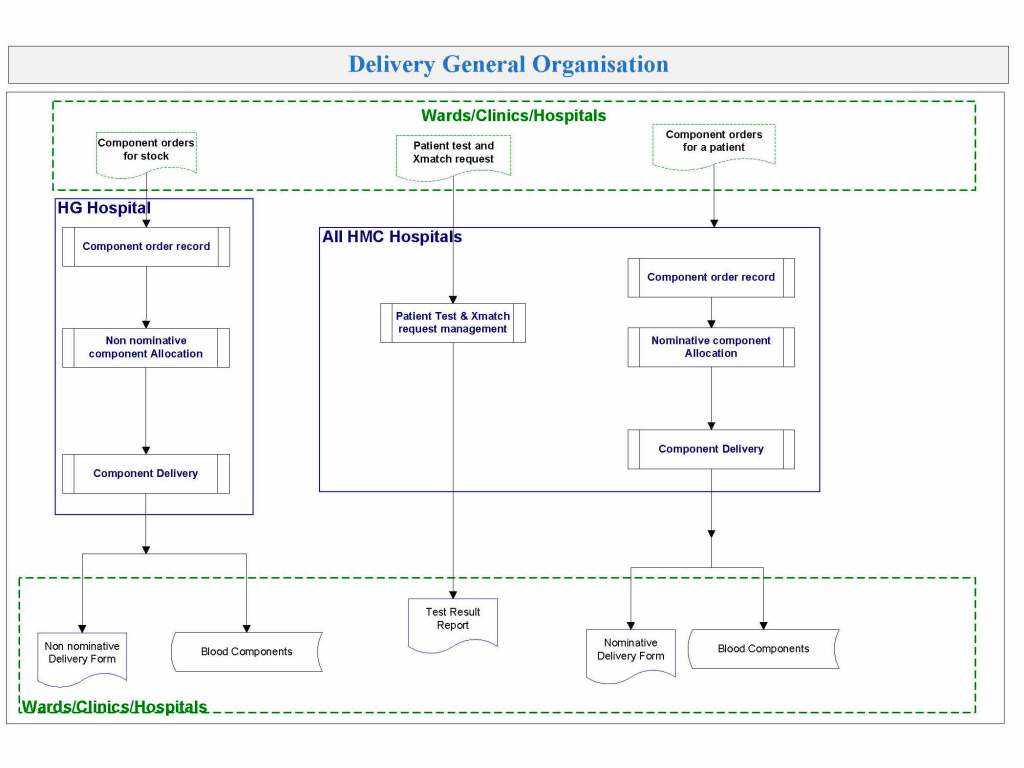
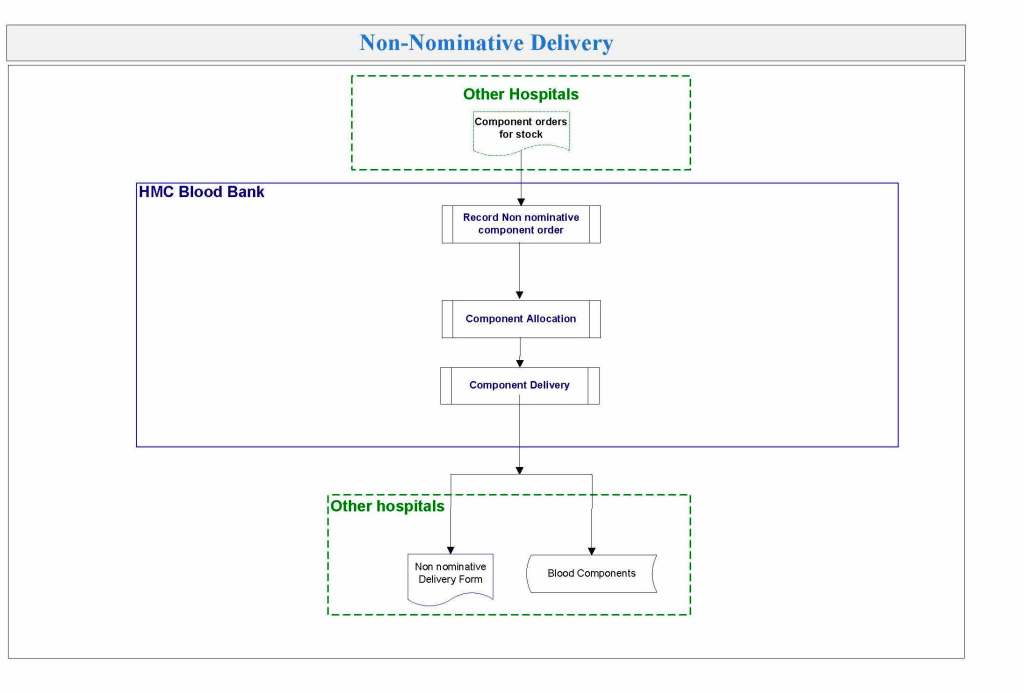
Overview: Inter-Depot Transfer and Allocation of Blood Components

While I was working in Qatar, this was the overall process for transfer and allocation of blood components. Once they were finally labelled (only possible if all criteria had been meet), they were transferred from the Blood Donor Center BDC to Hamad General Hospital Blood Bank, from which they were distributed to all hospital blood banks in Qatar. Similarly, units could be transferred between the various hospital blood banks.

One could track components as being in:

  1. BDC
  2. Transit BDC to HGHBB
  3. HGHBB inventory
  4. Transit HGHBB to another hospital blood bank
  5. Transit between any two hospital blood banks

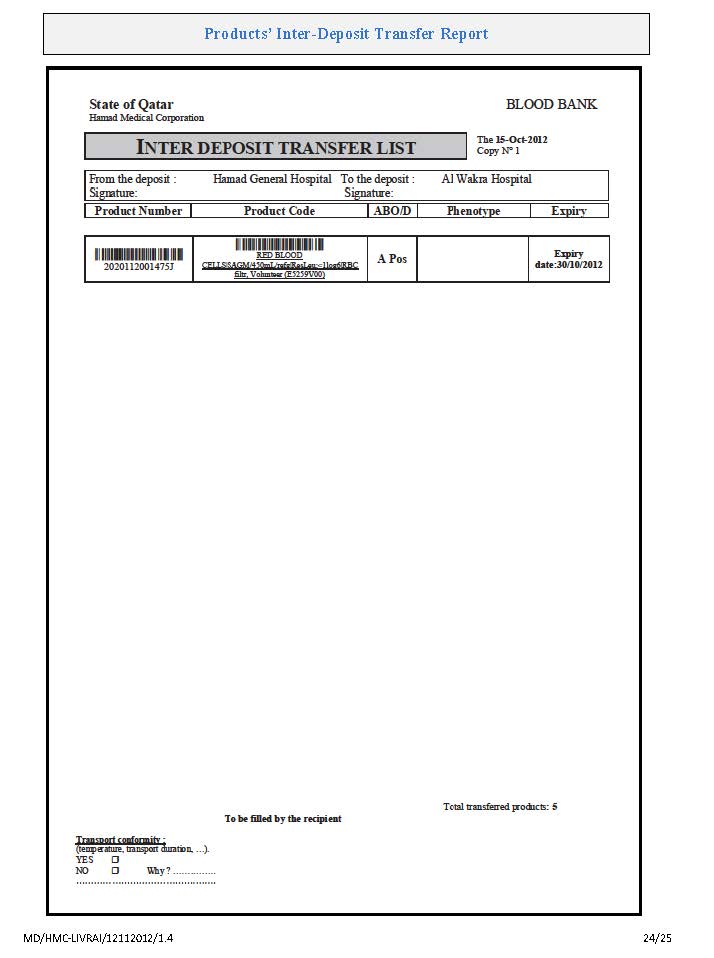
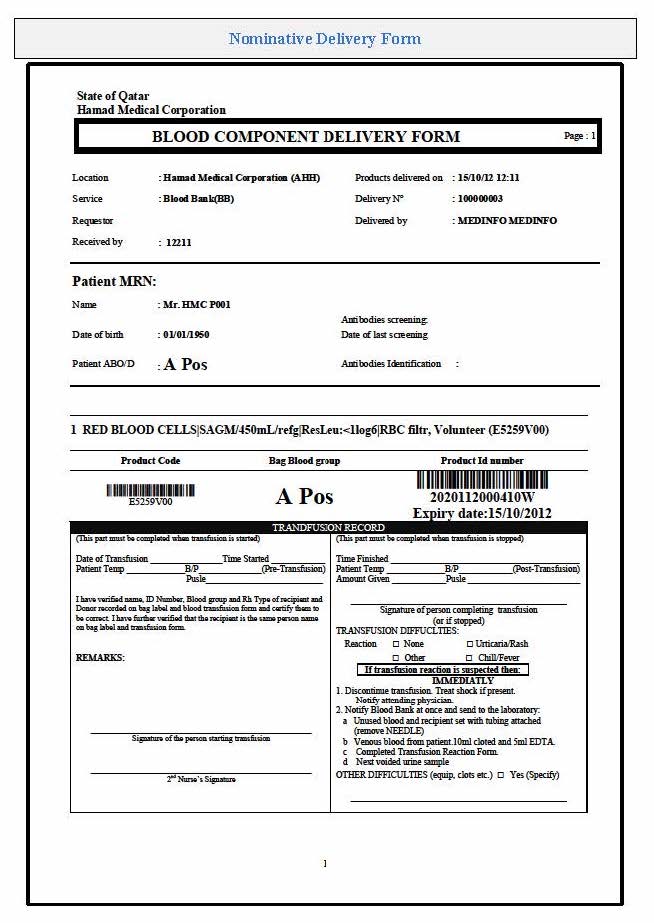
An inventory manifest would be printed to show all transferred units.

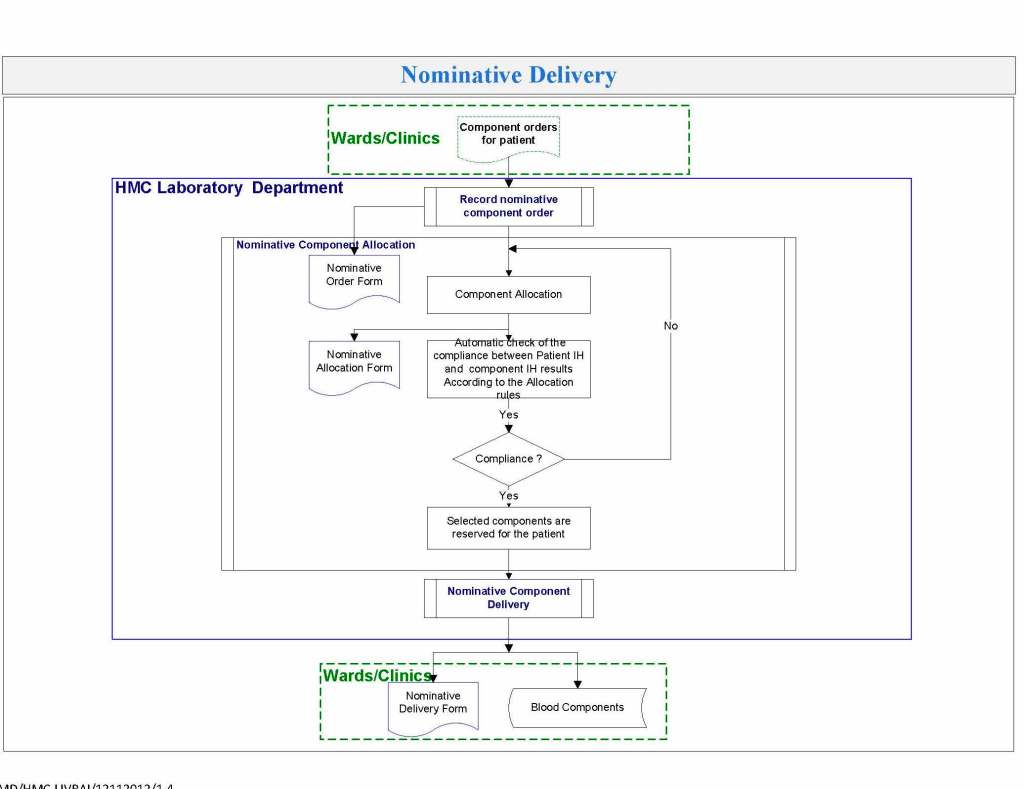
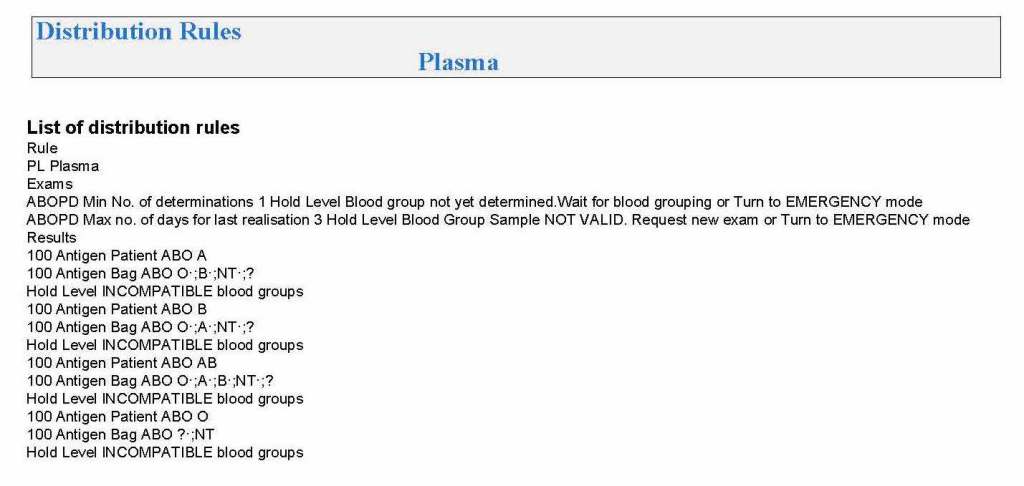
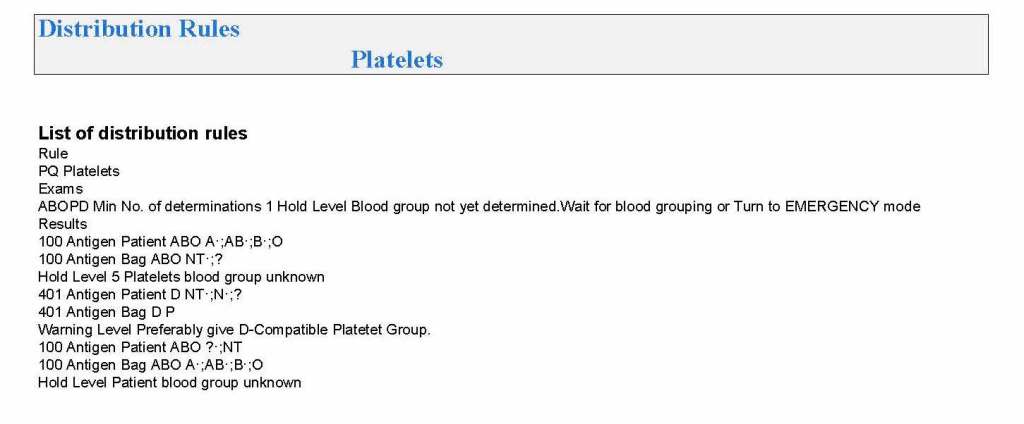
For patient use, allocation rules applied which would determine if an electronic or a full antiglobulin-phase crossmatch could be used and whether specific antigen-matched components were required.

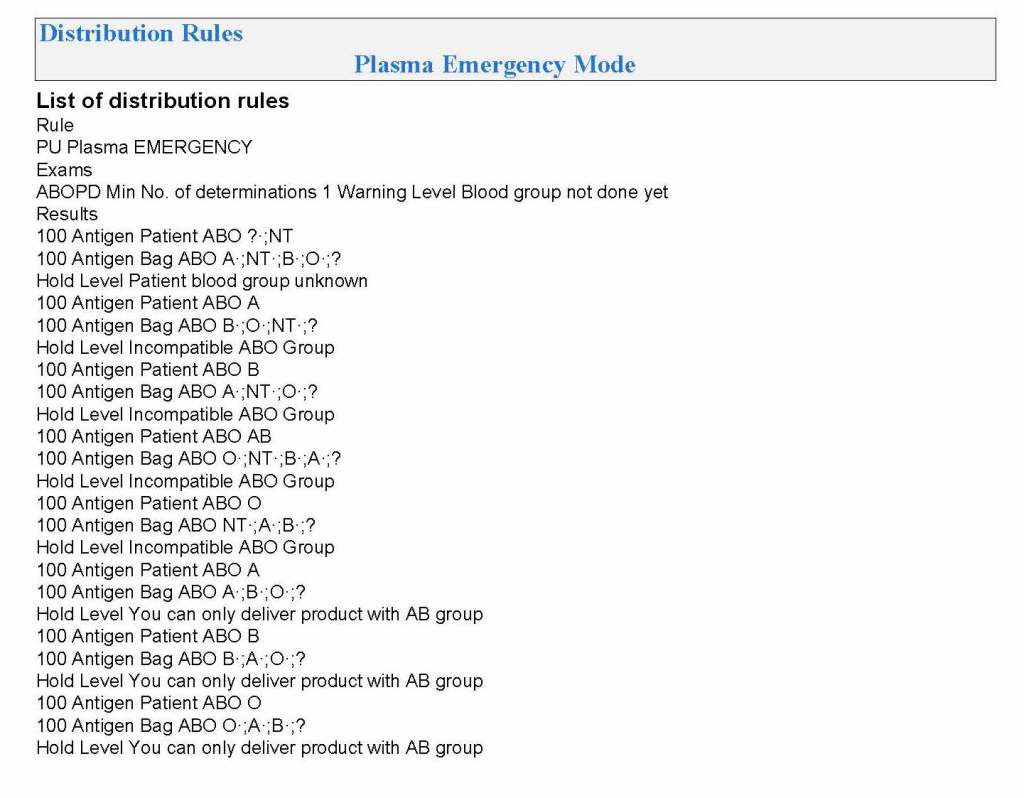
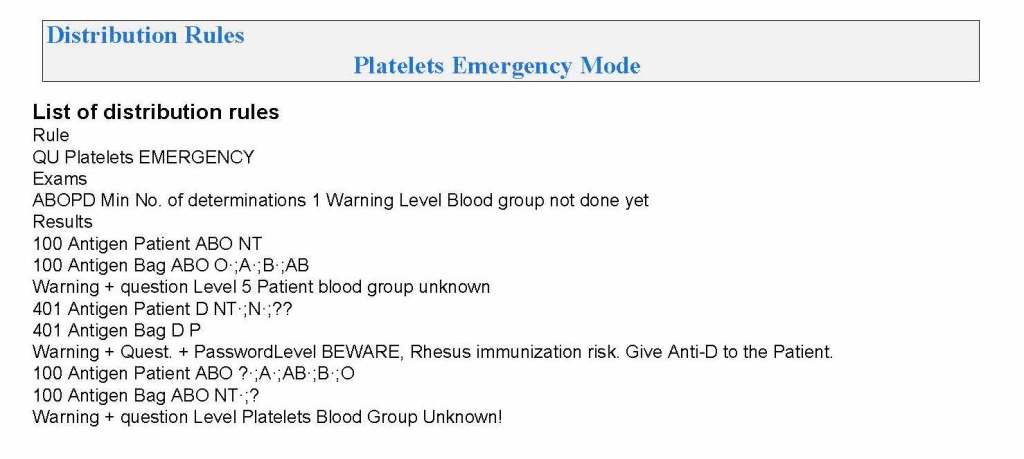
There were also separate rules for emergency release if the standard criteria could not be met.

Plasma Fractionation Project Considerations

I have been involved with planning for several plasma fractionation projects in the Middle East.

Many clients expressed the interest in using local plasma to make plasma derivatives (e.g. factor concentrates, intravenous gamma globulin, albumin), feeling that local plasma was safer than using imported plasma.  Some of these are in short supply in the world market so the only way to ensure their uninterrupted availability is to consider manufacture them for local consumption.

Still, the major issue today is that it is difficult for any country in the region to collect enough plasma to make such a project feasible.  When I first considered such planning, we were looking for as much as 250,000 liters annually.  Since then, there are newer technologies that allow much smaller batches to be cost-effective.  Alternatively, one could charge higher prices for using smaller batches from local plasma.

Still, it is likely that plasma must be imported to sustain a plant.  There are different regulations for plasma donor qualification country-to-country.  Many of these jurisdictions may do less screening and testing than is done for normal blood and apheresis donors.  Other countries use their blood donors with the same requirement for both commercial plasma and blood donations.

In this era of emerging infectious diseases, I personally favor using the stringent blood donor criteria—same as routine collections.  It is not what we know, but the unknown pathogens that are potentially the most dangerous.

In addition to building a fractionation plant, one must train staff for this highly technical operation.  This may require developing a special curriculum to prepare students for these jobs.
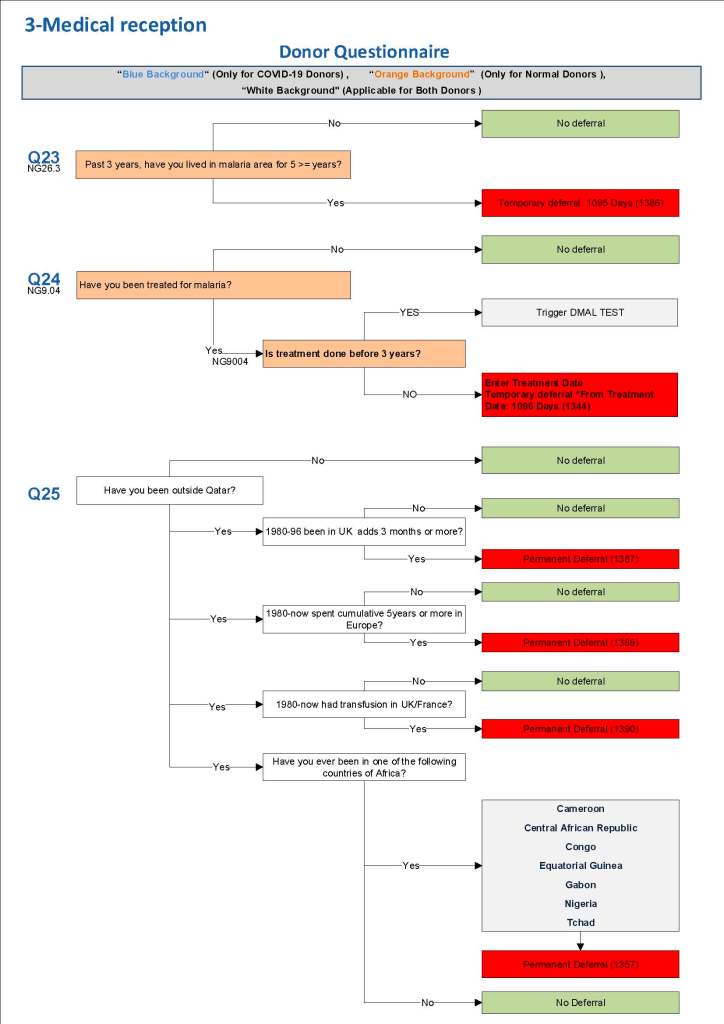
To export the plasma to certain regions, one may have to use plasma quarantine.  This requires a robust blood bank production software such as Medinfo to track serial donations

There are other processes to consider:  how to develop a transport network to keep plasma frozen at minus 80C viable in a region that reaches very high ambient temperatures.

I would recommend a graded approach to develop such an industry.  First I would negotiate a plasma self-sufficiency arrangement followed by recruiting neighboring countries to participate in a manufacturing plant.  Technology for such a plant is complex so establishing a joint venture with one of the plasma industry companies is essential.  Some manufacturers are very keen to develop extra capacity since there is a world-wide shortage of plasma fractionation and are even willing to help obtain external plasma sources for such a plant.

Such a plant is an excellent way to develop local talent to run such a plant, including training of local staff to be the industrial engineers in the plasma fractionation process.  It would take approximately two years of training to prepare engineers on-site at a plasma fractionation site if they have studied the necessary science and mathematics subjects.

Such a program would take several years of planning and development.  Some of the major steps needed include:

  1. Acquiring software for a blood center with plasma brokering capabilities.
  2. Passing accreditations such as international AABB and CE for transfusion medicine to allow export of our plasma to the external manufacturing site in the initial plasma self-sufficiency phase
  3. Identifying extended sources of plasma to feed a manufacturing plant.
  4. Preparing a curriculum suitable for training local nationals as staff for the plant.
  5. Establishing a joint venture to share technology with a major plasma company to design, build, and operate a plasma fractionation plant.

I would be glad to discuss the matter in more detail if there is further interest.

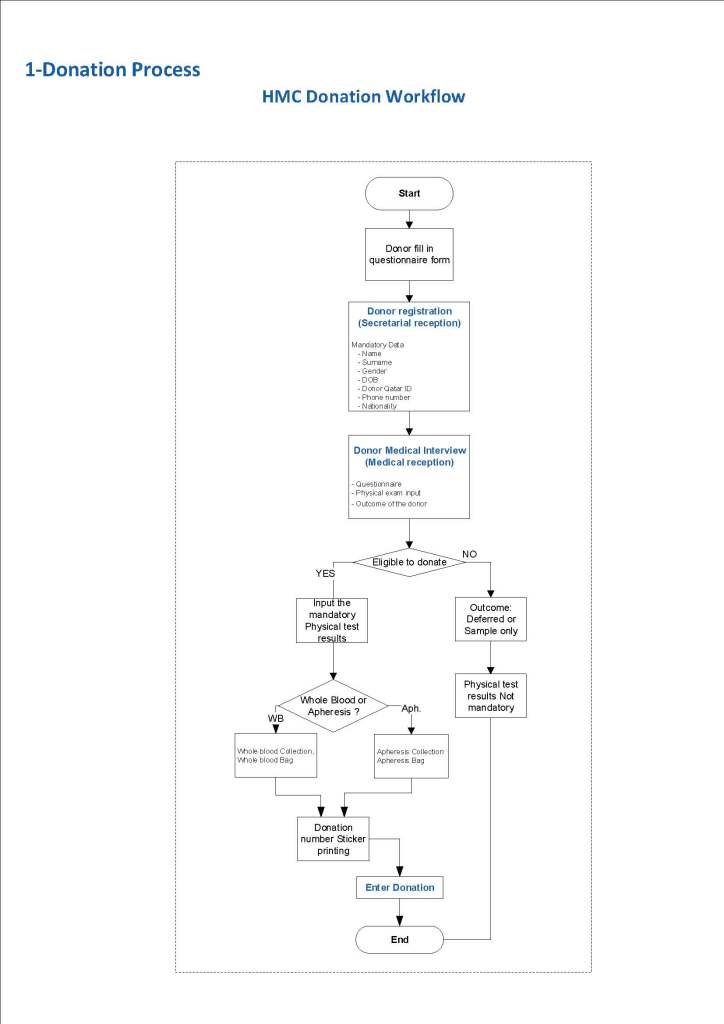
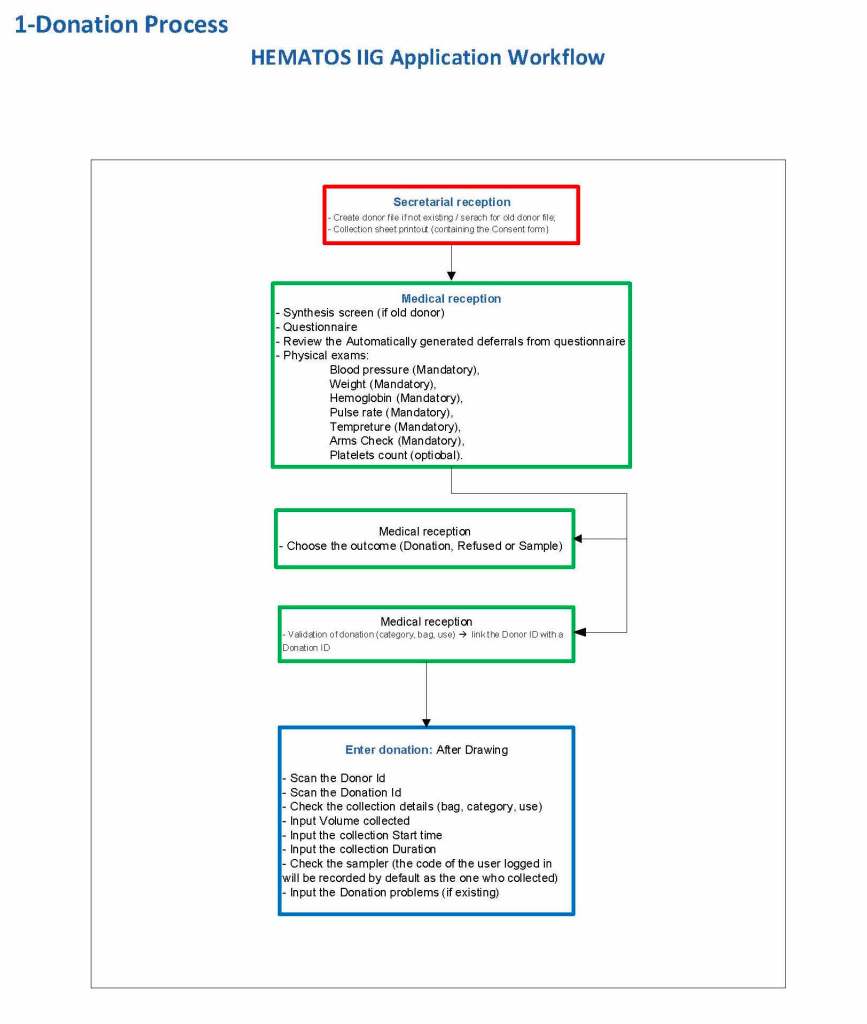
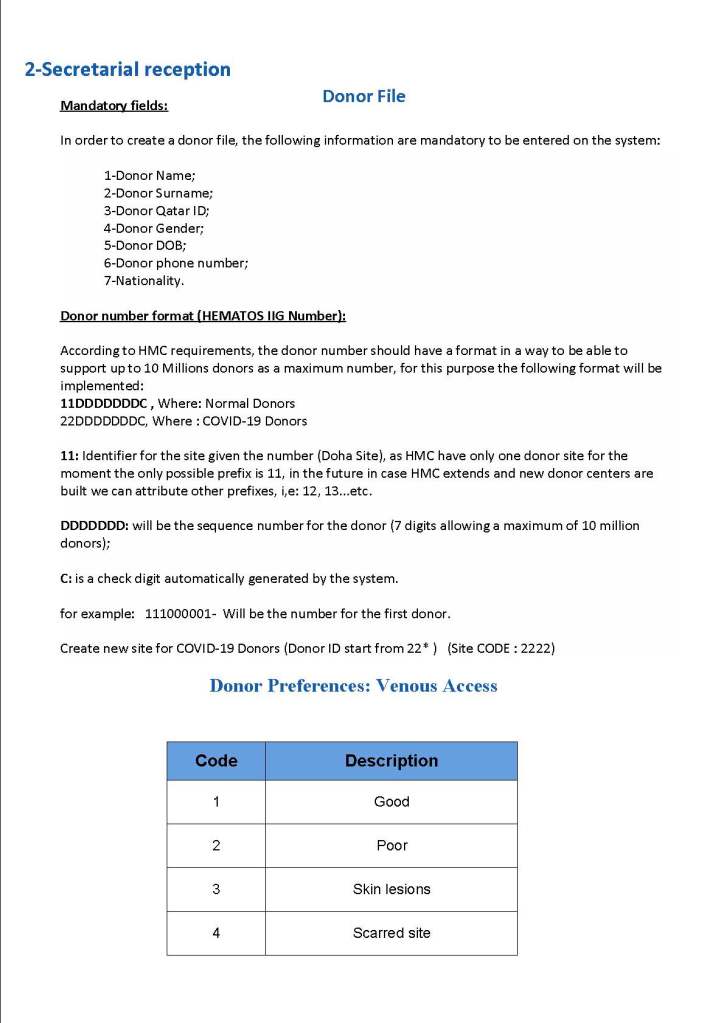
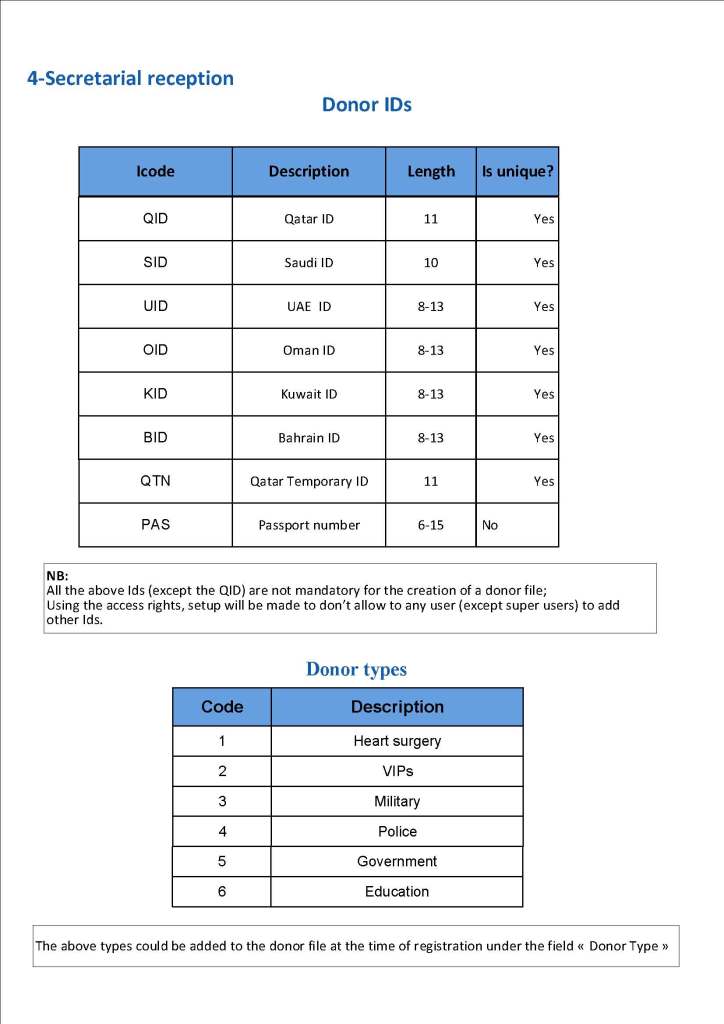
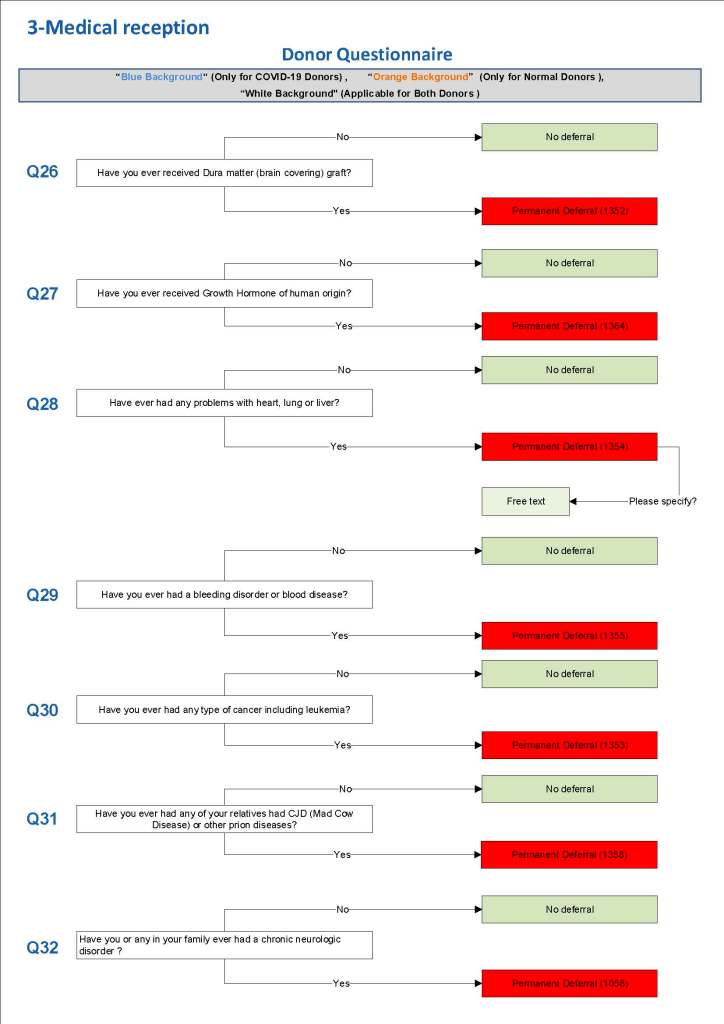
Blood Donation Process Overview

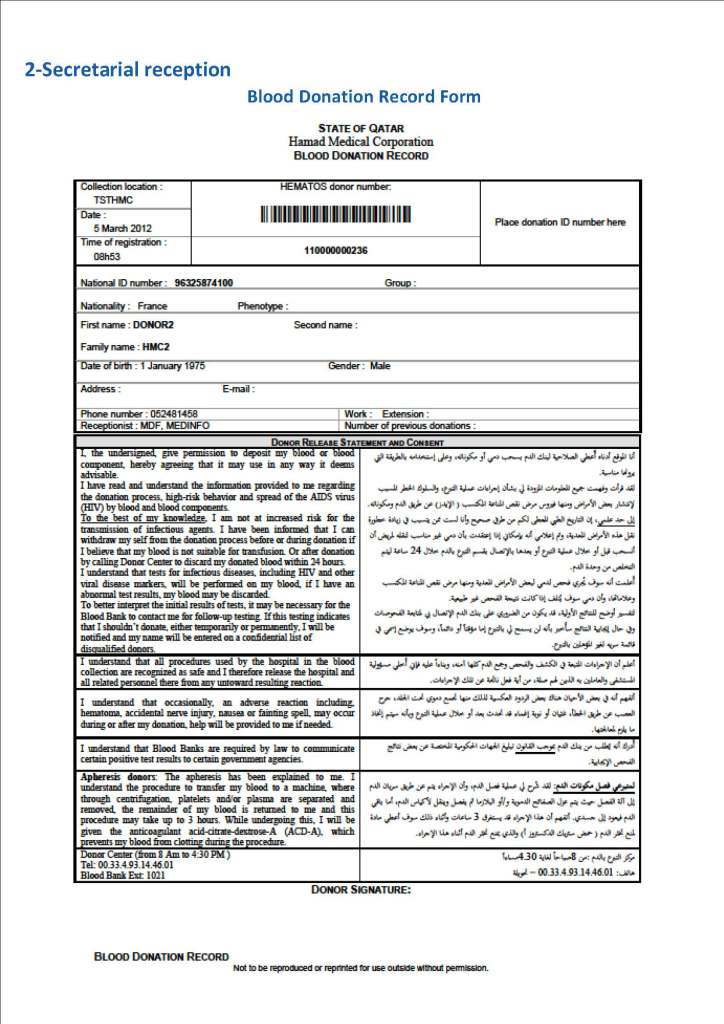
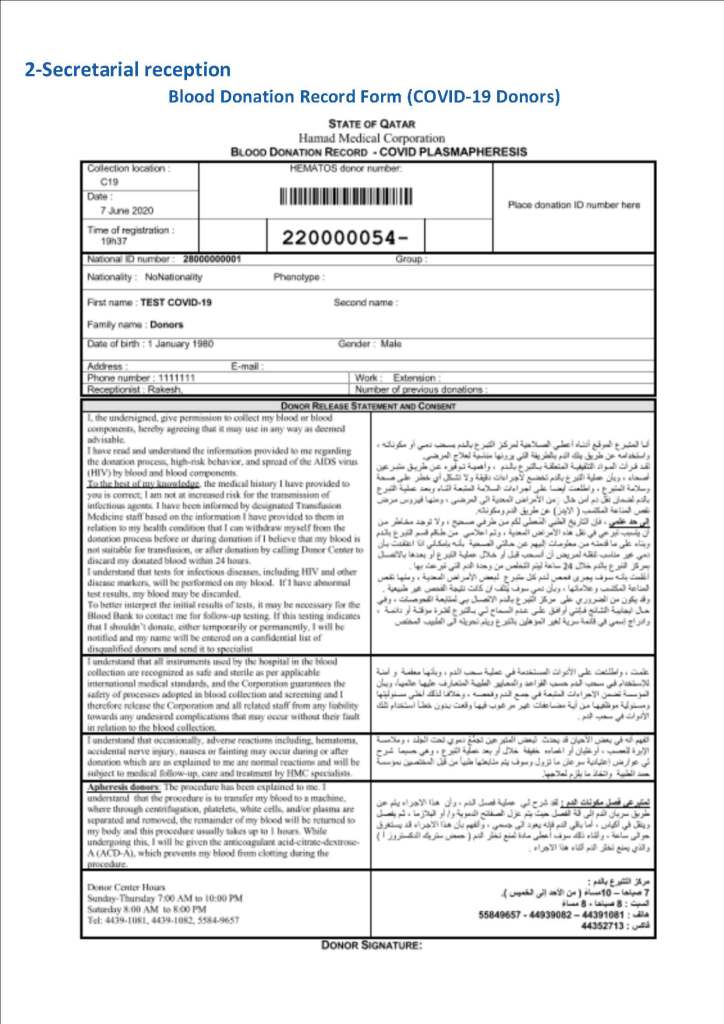
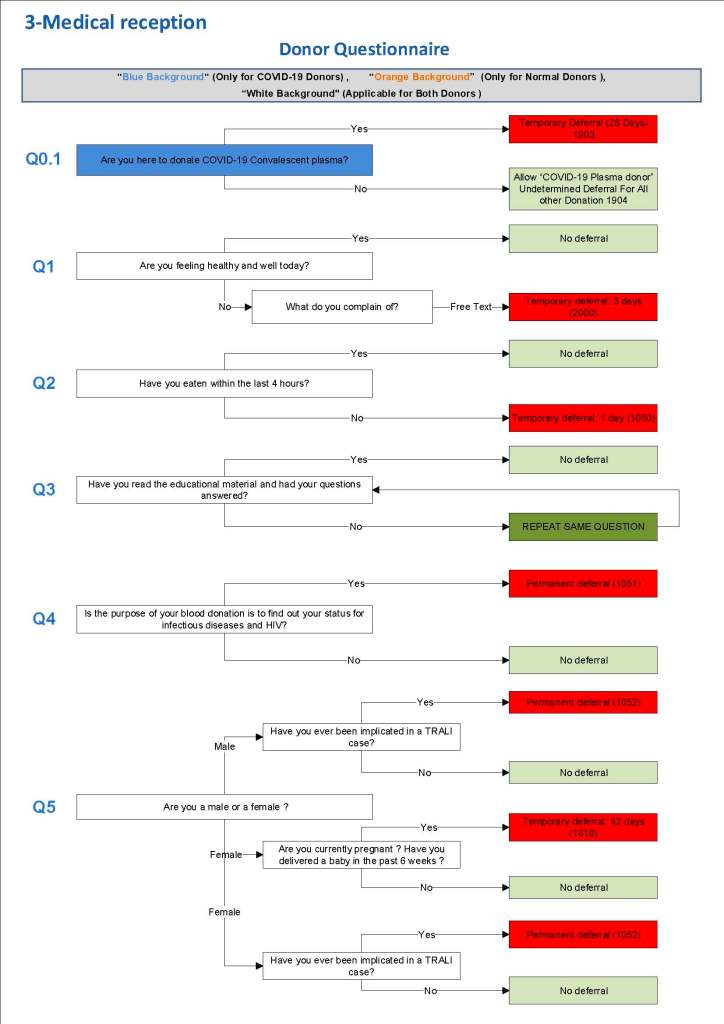
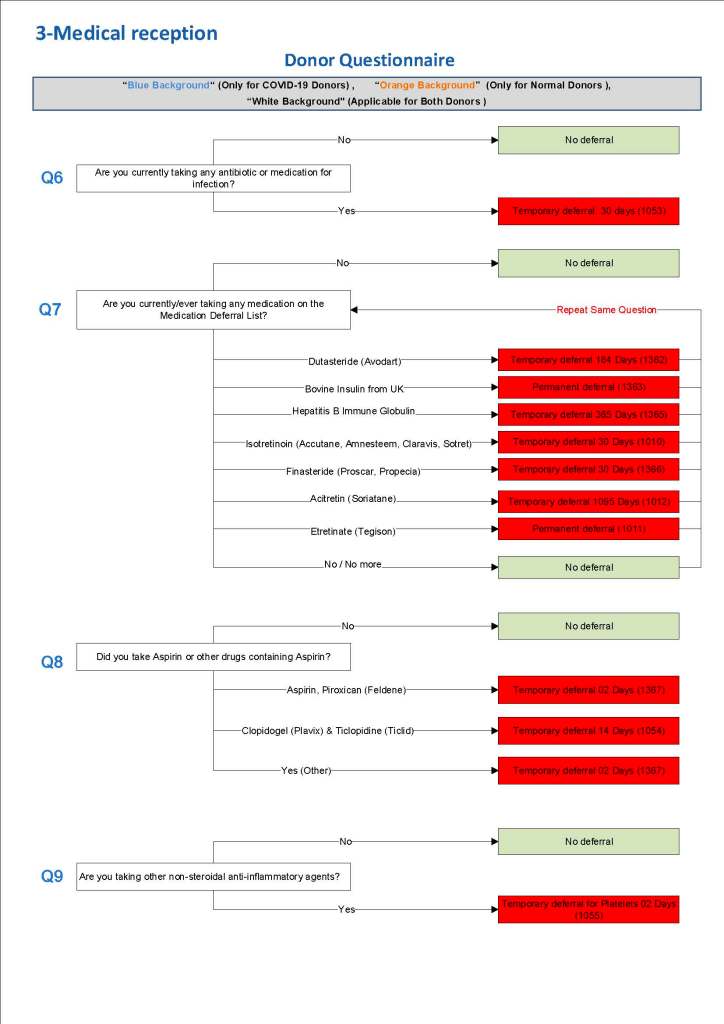
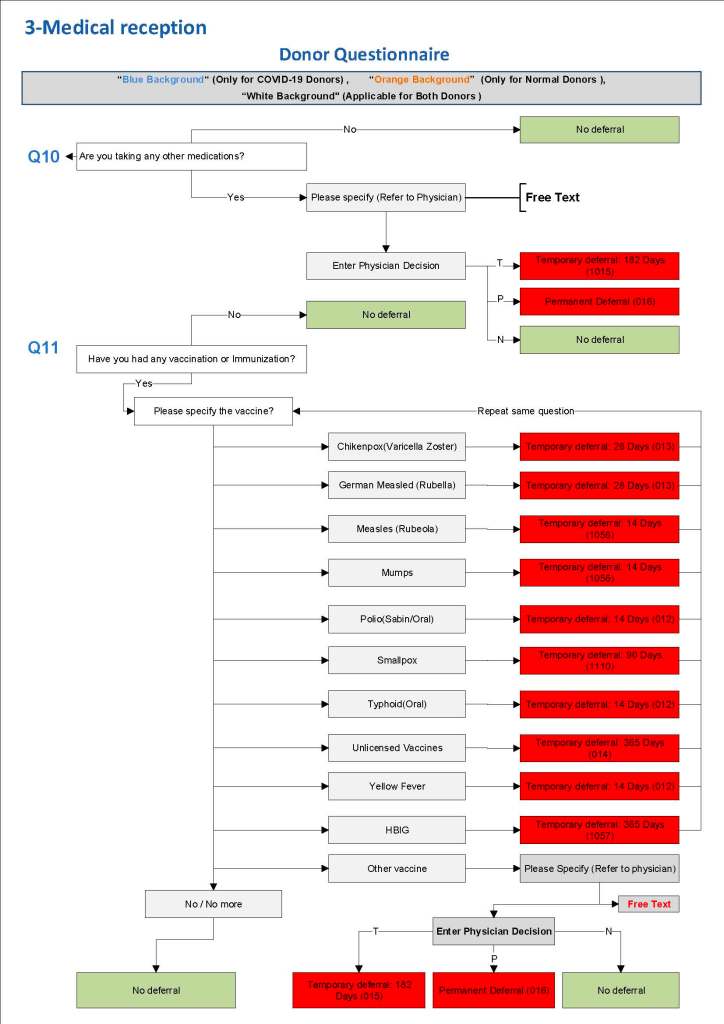
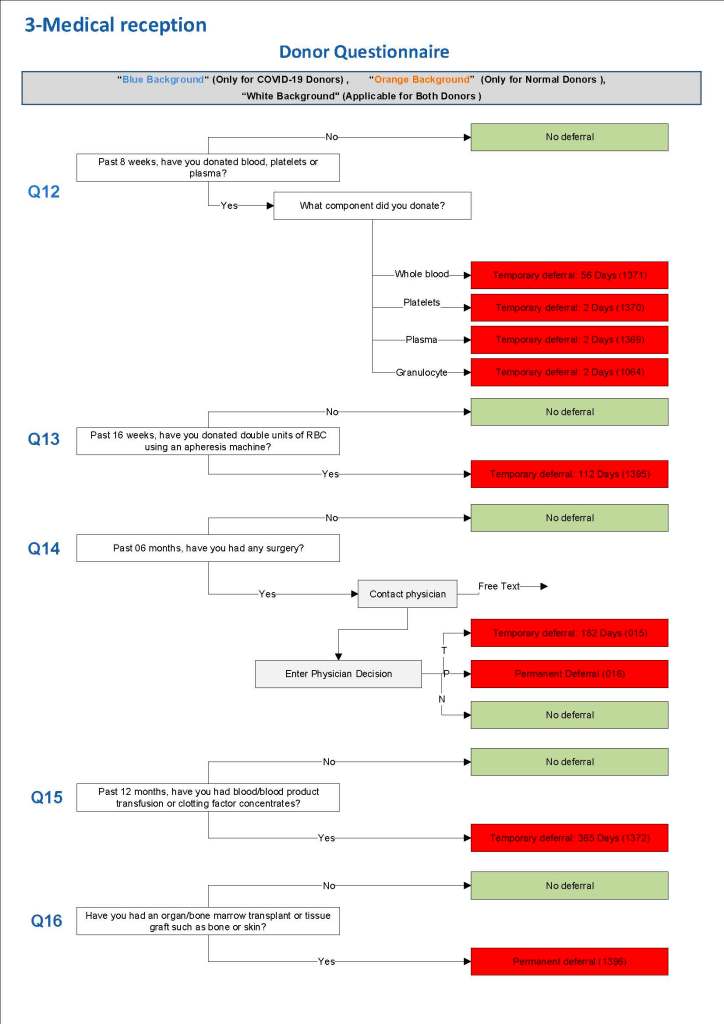
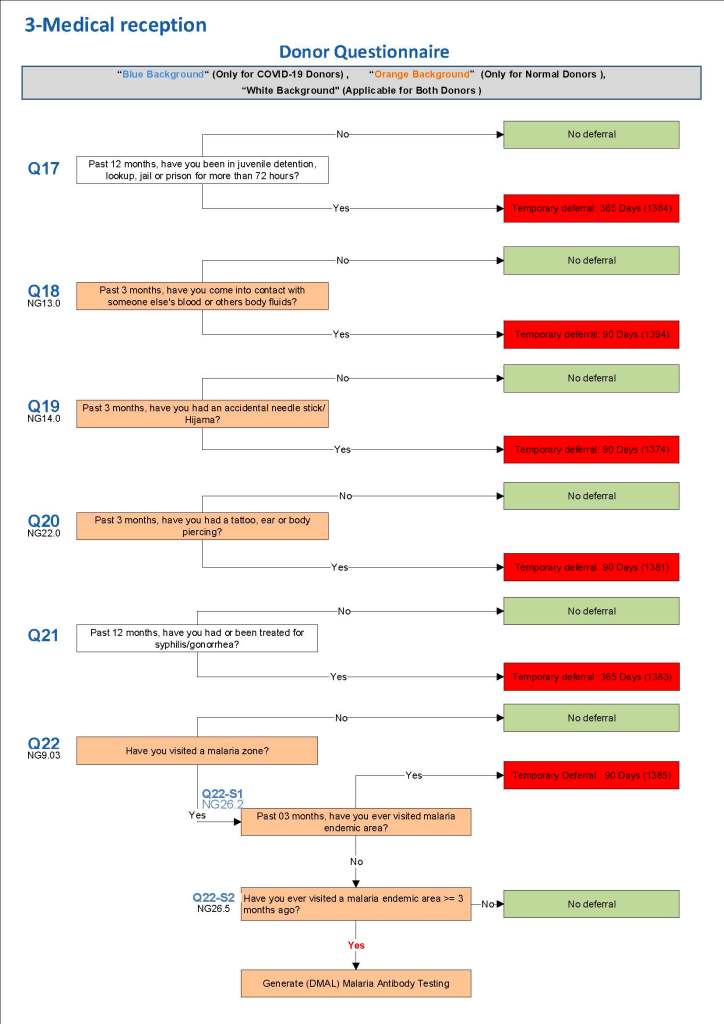
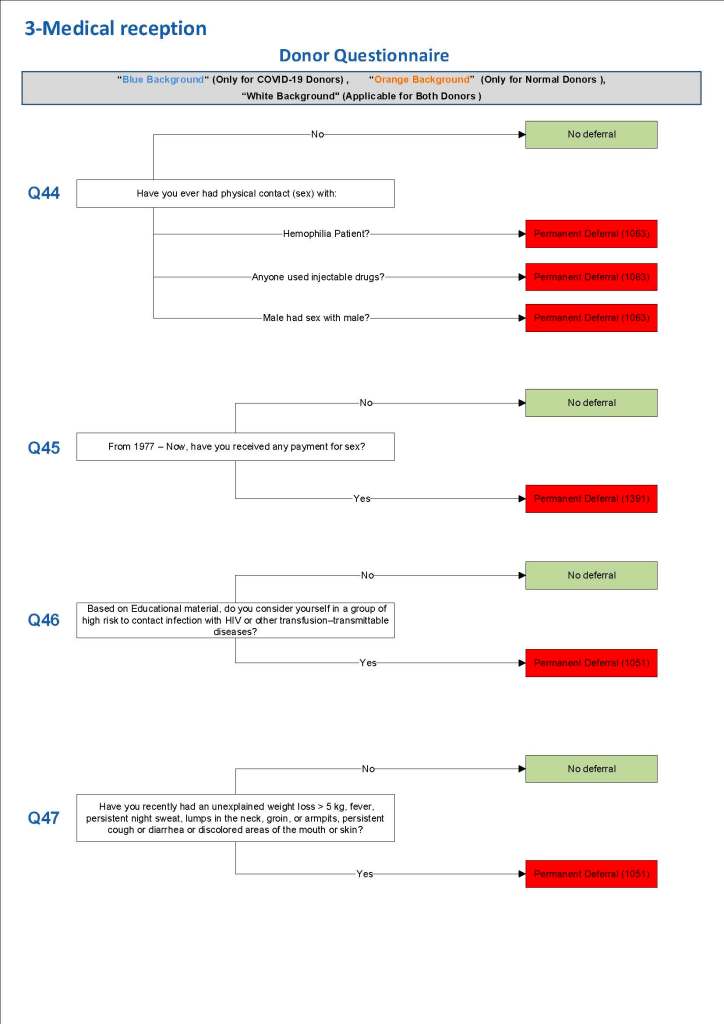
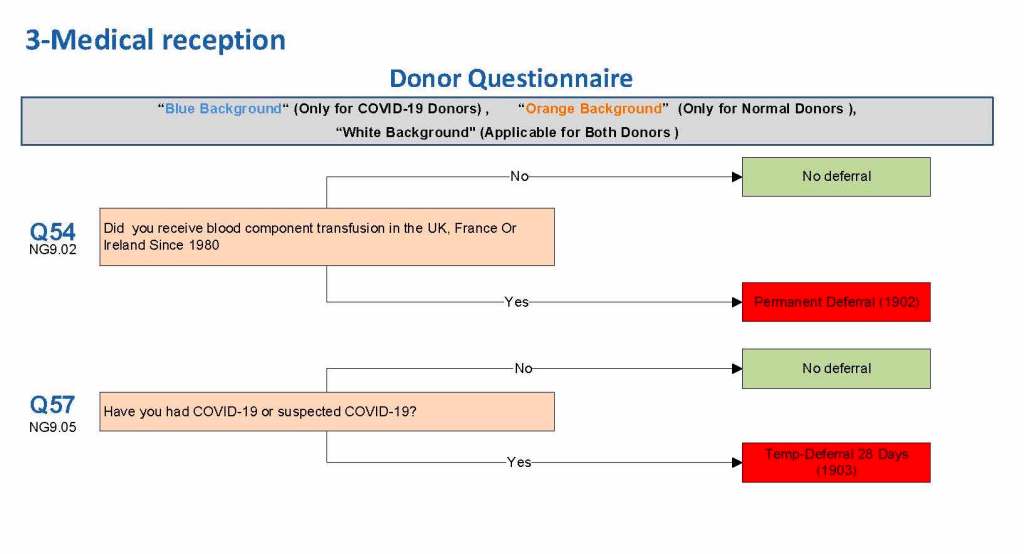
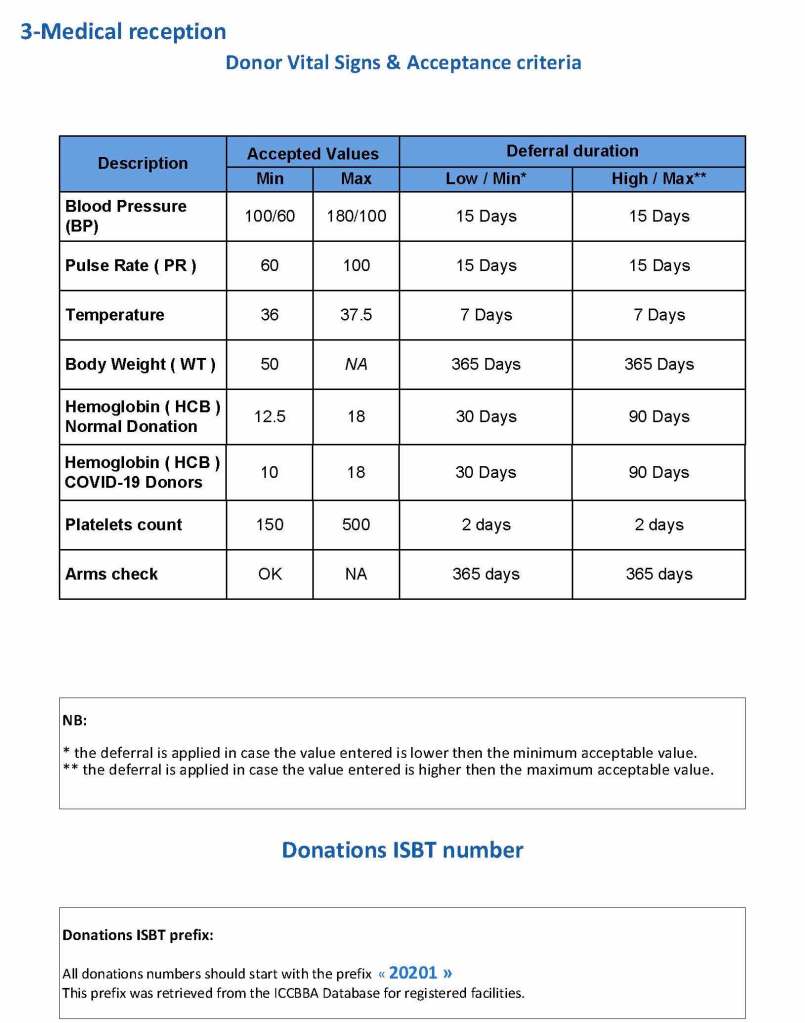
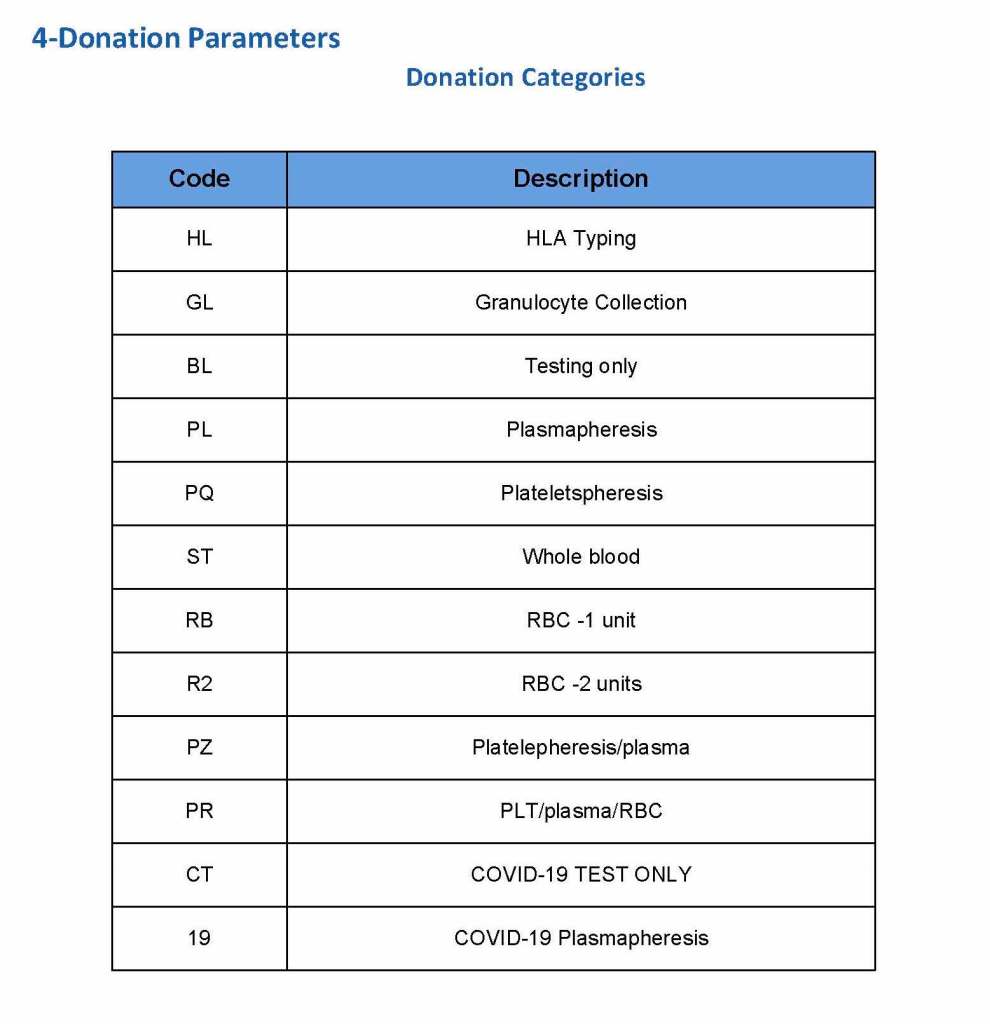
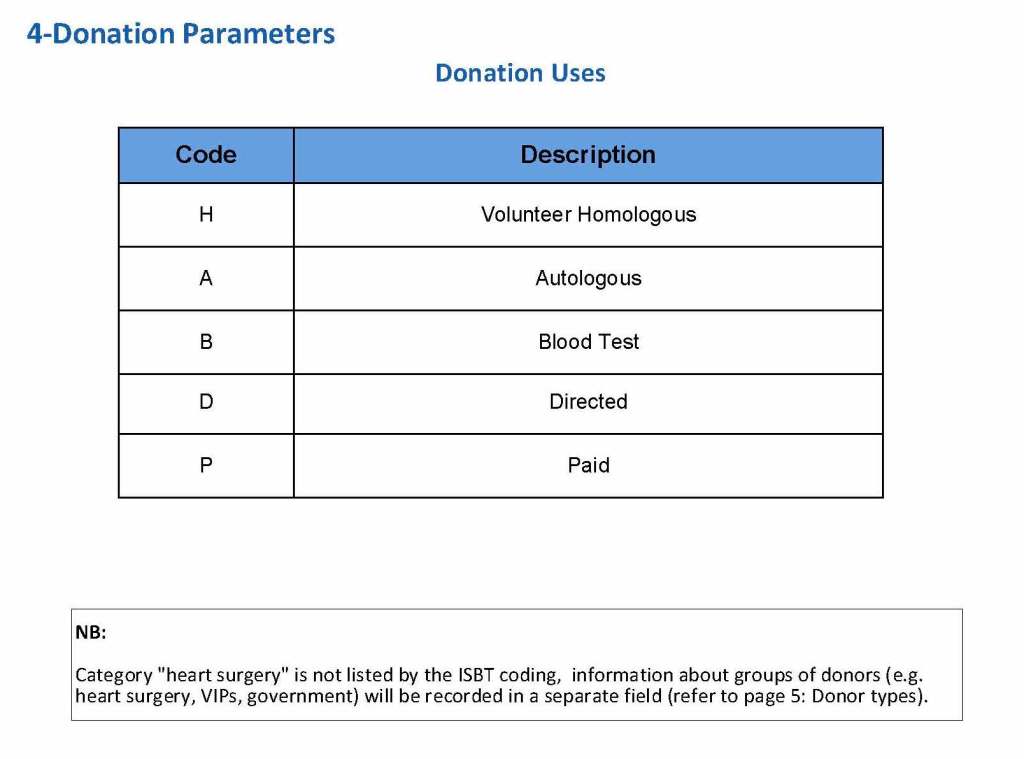
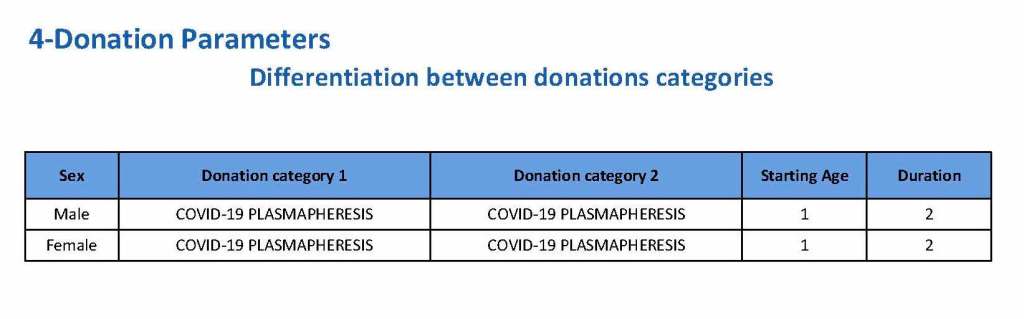
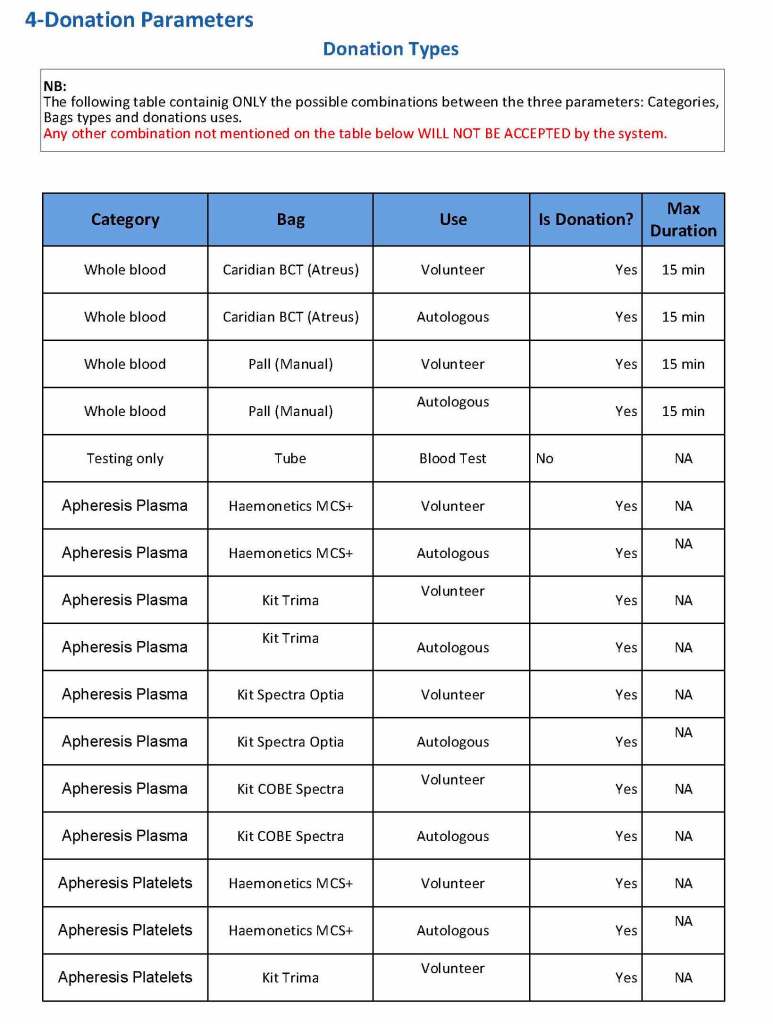
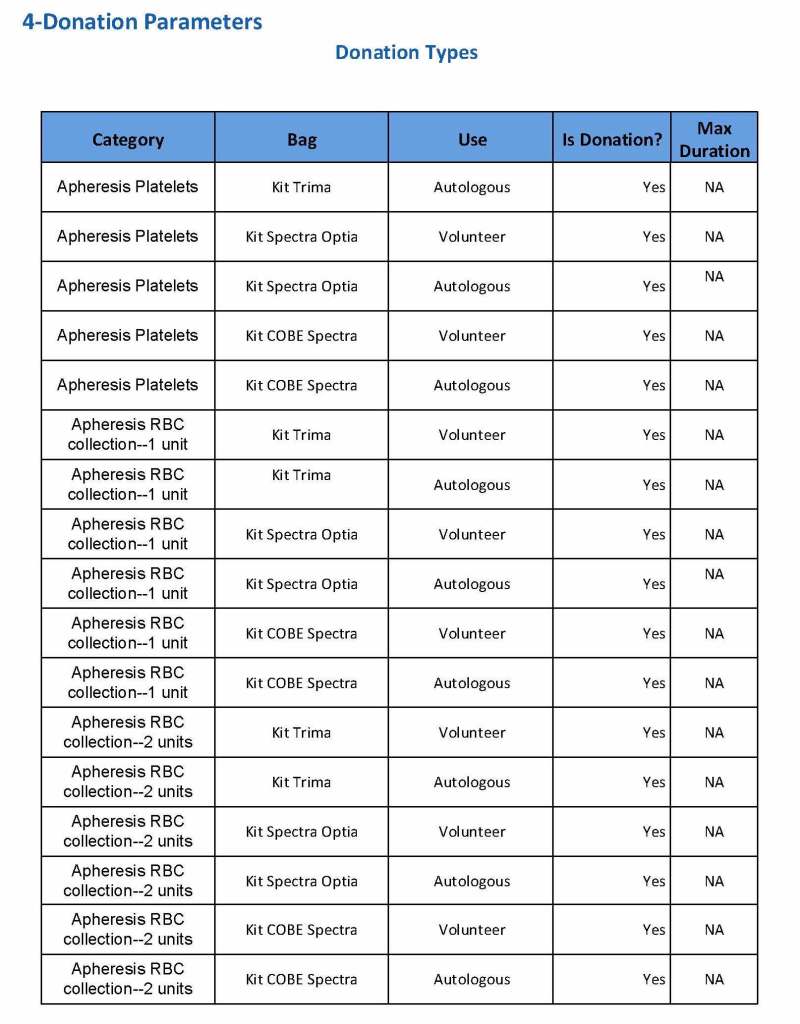
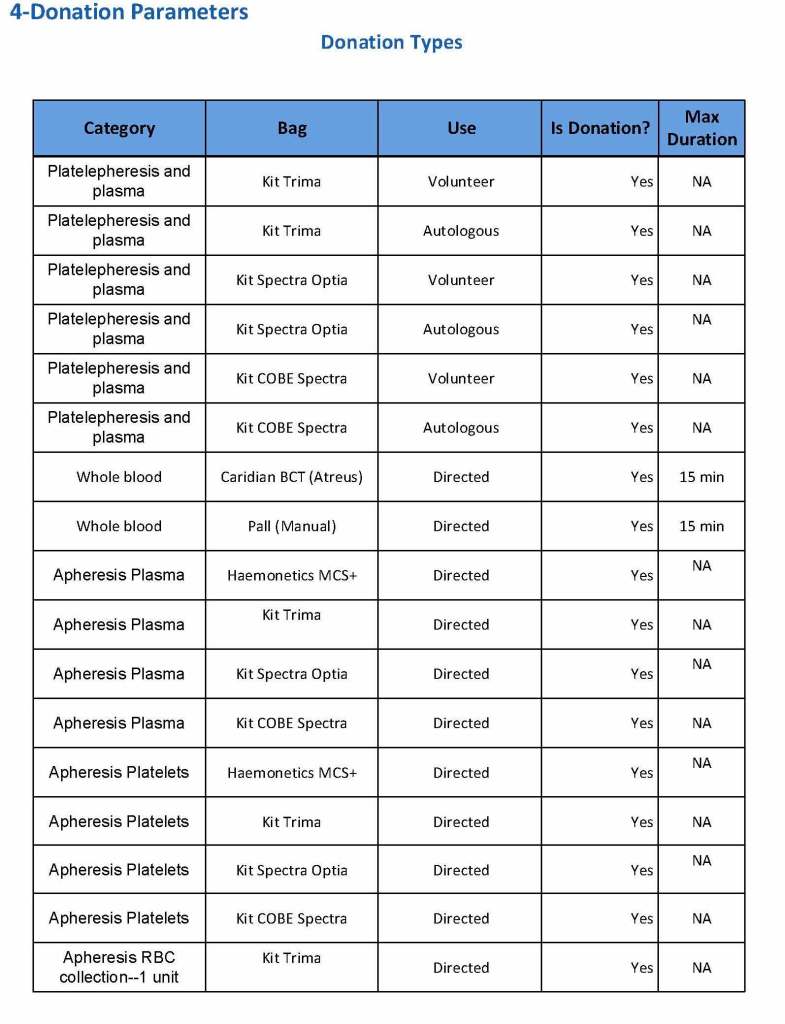
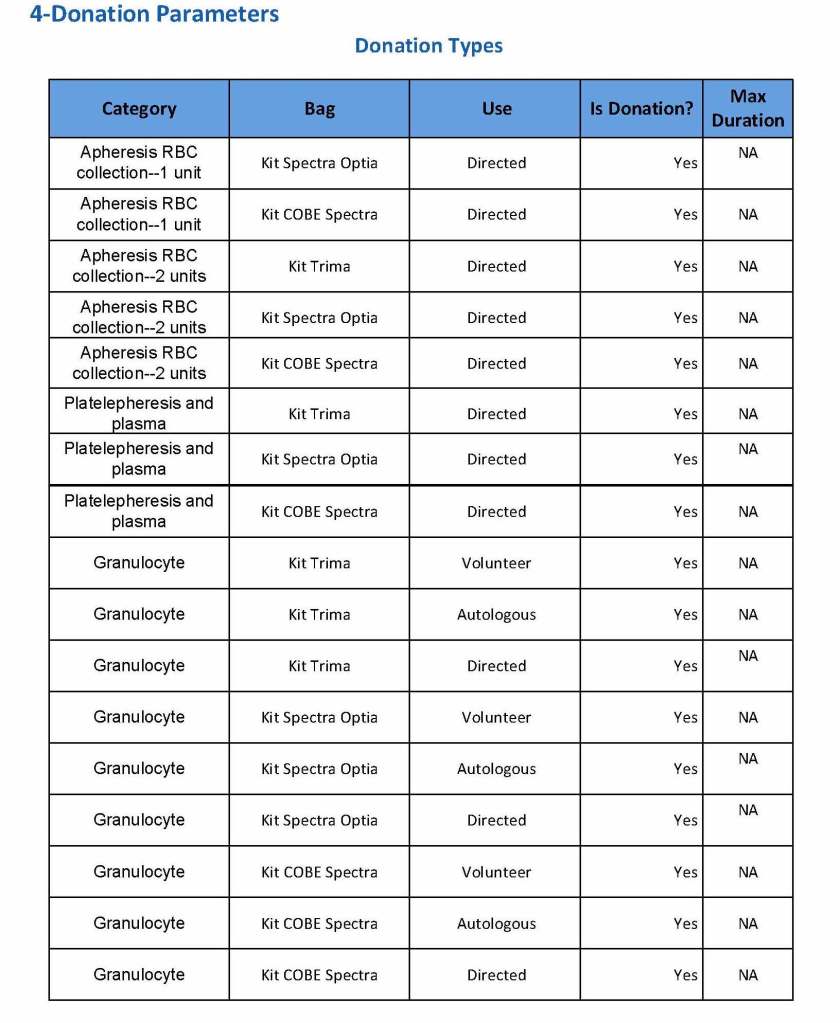
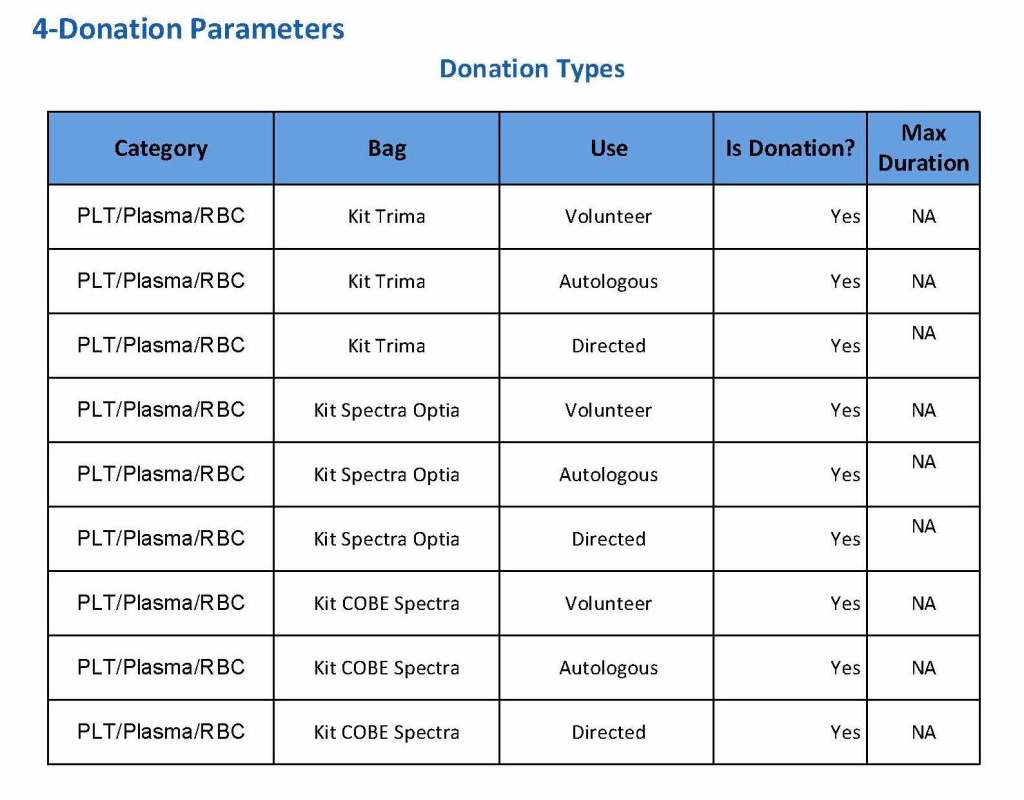
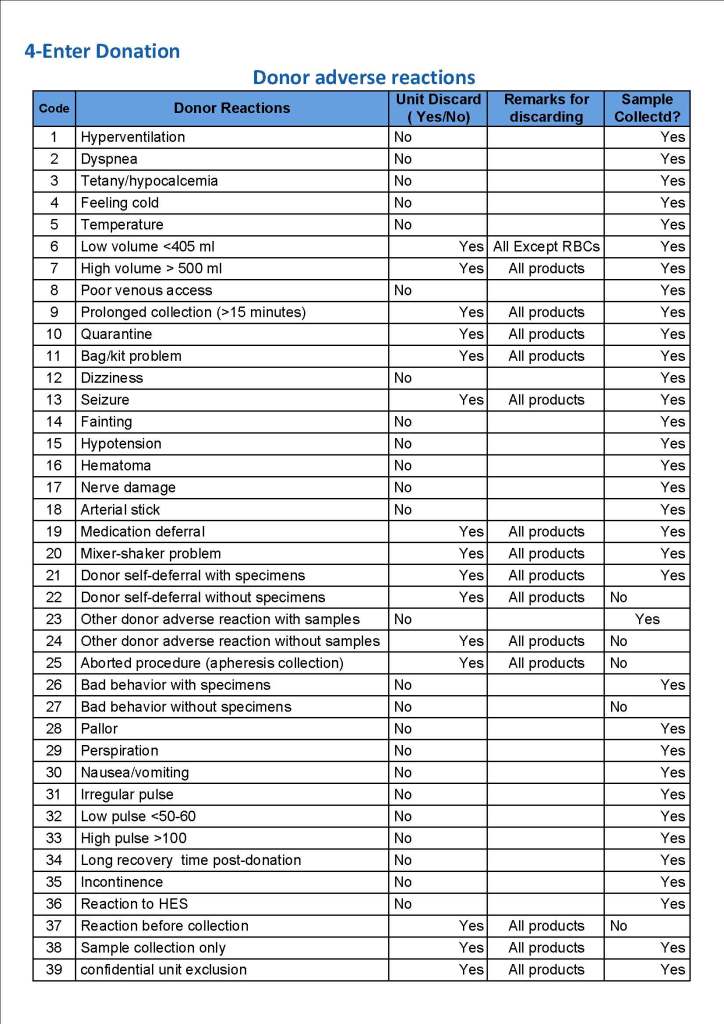
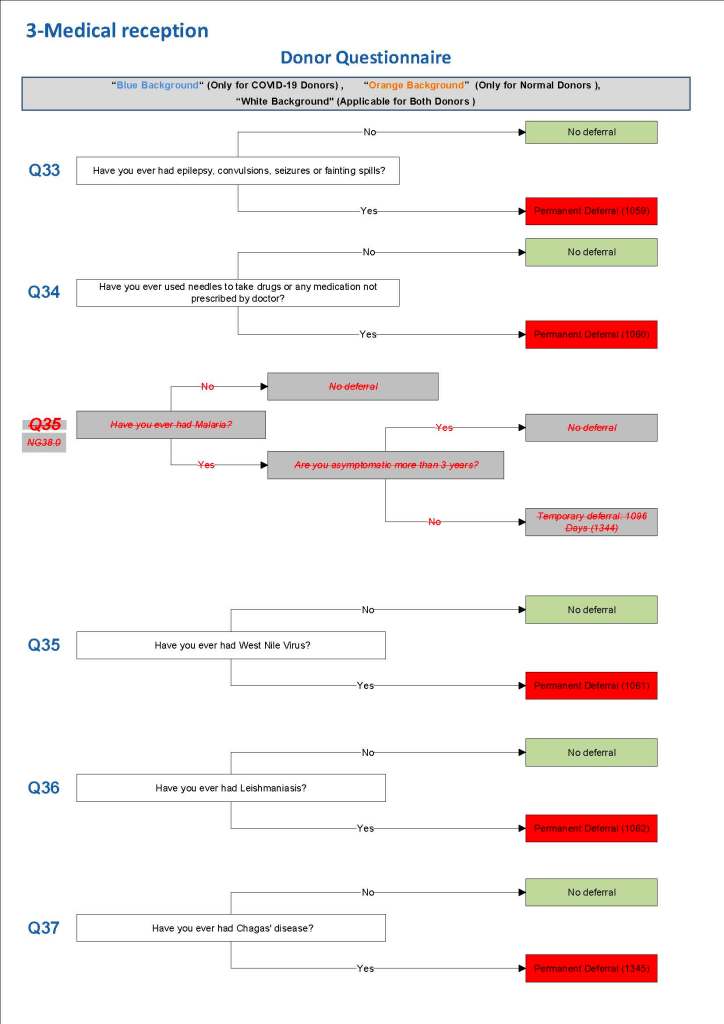
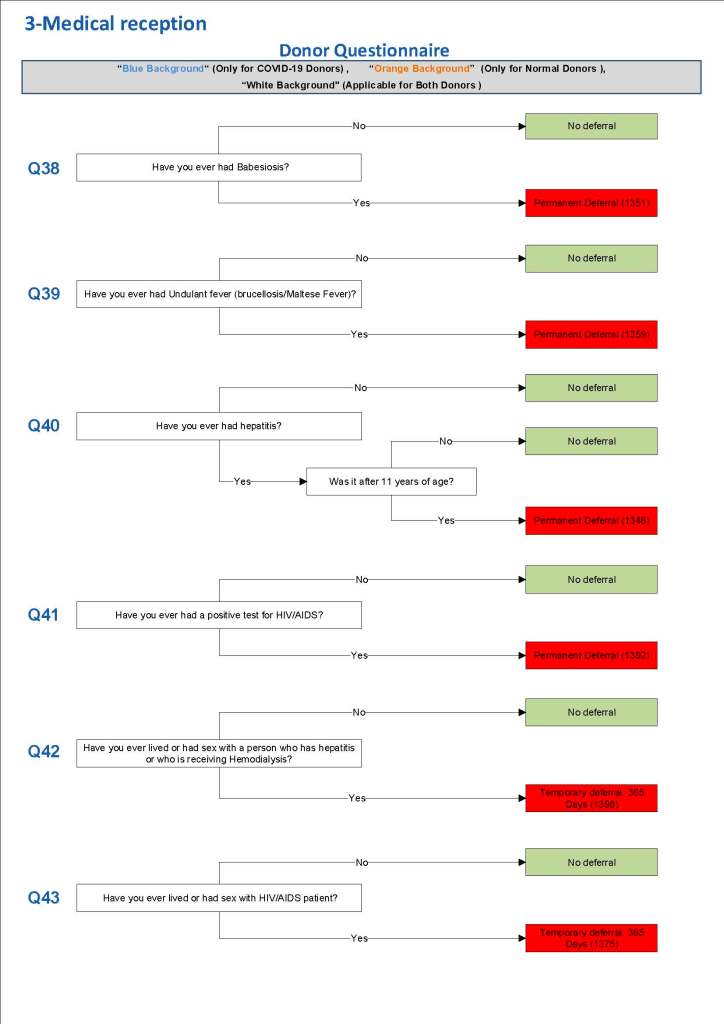
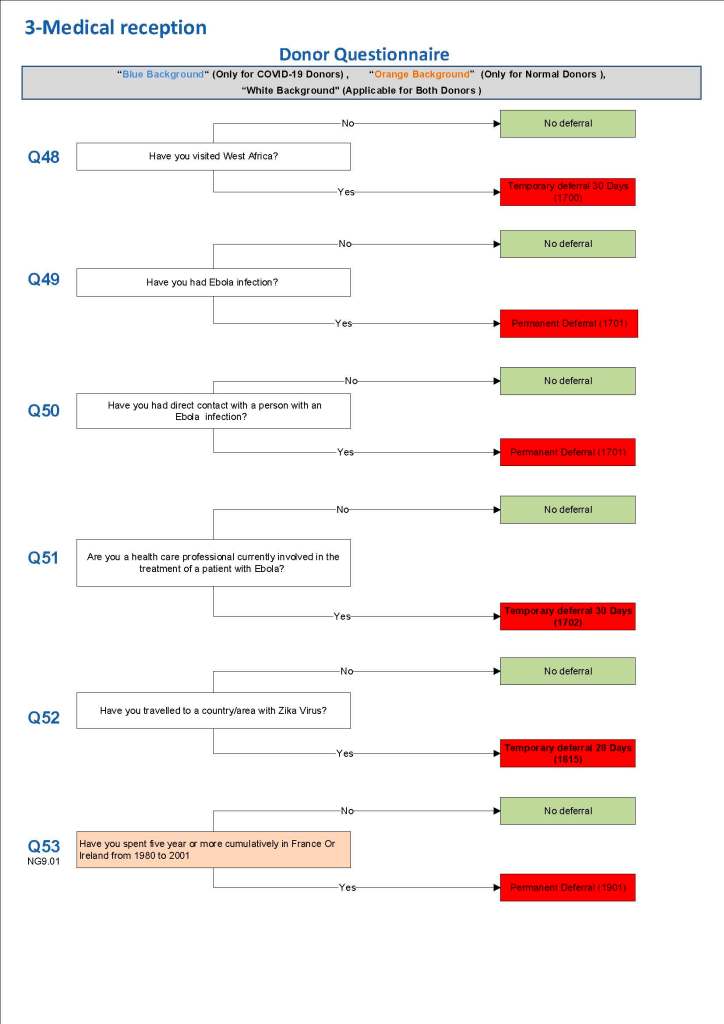
This is a sample Medinfo overview document for the blood collection process for HMC Doha that I designed in conjunction with Medinfo France and Medinfo Doha. This includes, registration, donor consent, questionnaire, physical examination, and collection.
COVID-19 Convalescent Plasma Project, Winter 2020

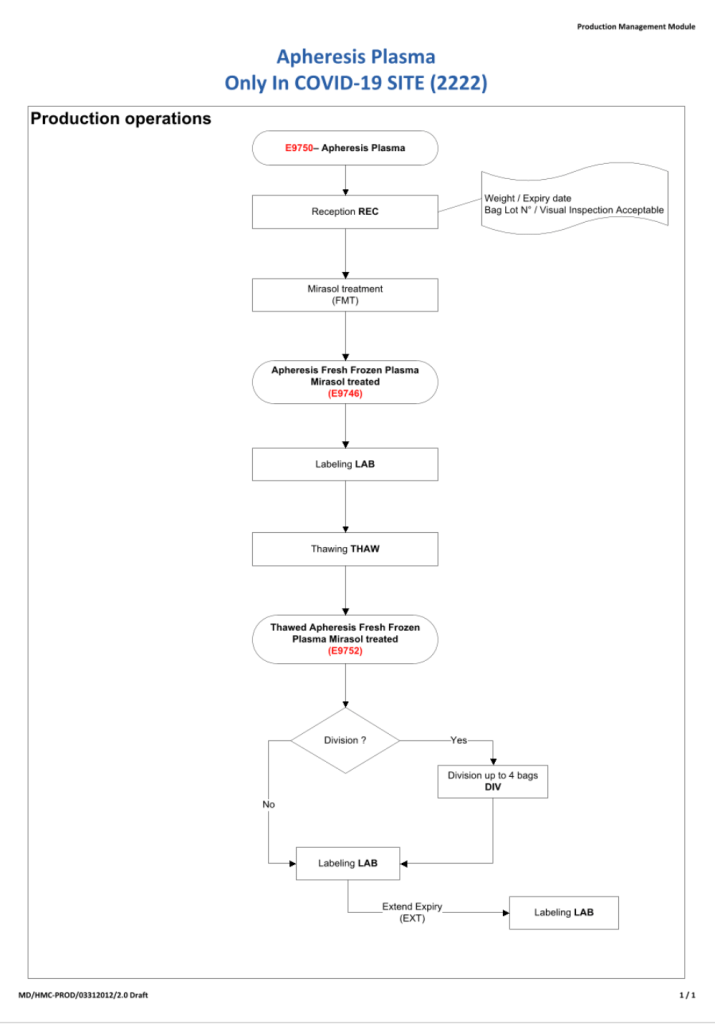
While I was still associated with HMC Doha, I developed and set up an expedited setup for COVID-19 convalescent plasma production, initially manual and then fully integrated into the Medinfo blood bank computer system.

Specifically, I built a customized version of our Medinfo blood bank system to replace the manual system and increase safety the safety and production throughput while maintaining good manufacturing practices GMP. The full system (manual first, then computerized) was implemented within two weeks including a completely separate quarantine convalescent COVID donor screening, collections, processing, and release.

Subsequent posts will detail my processes.

Now An Independent Consultant

I am an independent consultant in Transfusion Medicine. Effective 16 April 2020, I am no longer associated with Hamad Medical Corporation or the State of Qatar.

I am willing to consider other opportunities in Transfusion Medicine (donor, patient, apheresis) and blood bank informatics.

Just before leaving HMC, I established the COVID19 convalescent plasma program with full good manufacturing practices using Medinfo Hematos IIG blood bank software.

I have 10 year’s experience in pathogen inactivation and blood component automated production. I established the first site using Terumo Atreus (later Reveos) with Mirasol pathogen inactivation AND platelet additive solution. I established Medinfo interfaces with all production equipment to achieve GMP.
I have worked with laboratory information systems, especially but not limited to blood bank systems (donor, component processing, donor marker testing, pathogen inactivation, platelet additive solutions) and serve as the Head of the Medinfo IIG (Nice, France) Software Users Group.

I was involved with planning for the national plasma fractionation project in Saudi Arabia. I have worked with this industry while I was practicing in the United States.

It is my philosophy to start with an international framework (e.g.FDA, CE) and localize it for the country’s particular needs. My operation sites have served as international reference sites for combined IT and medical/technical processes.