Processes and Software Building 49: Donor Automated ABO Typing

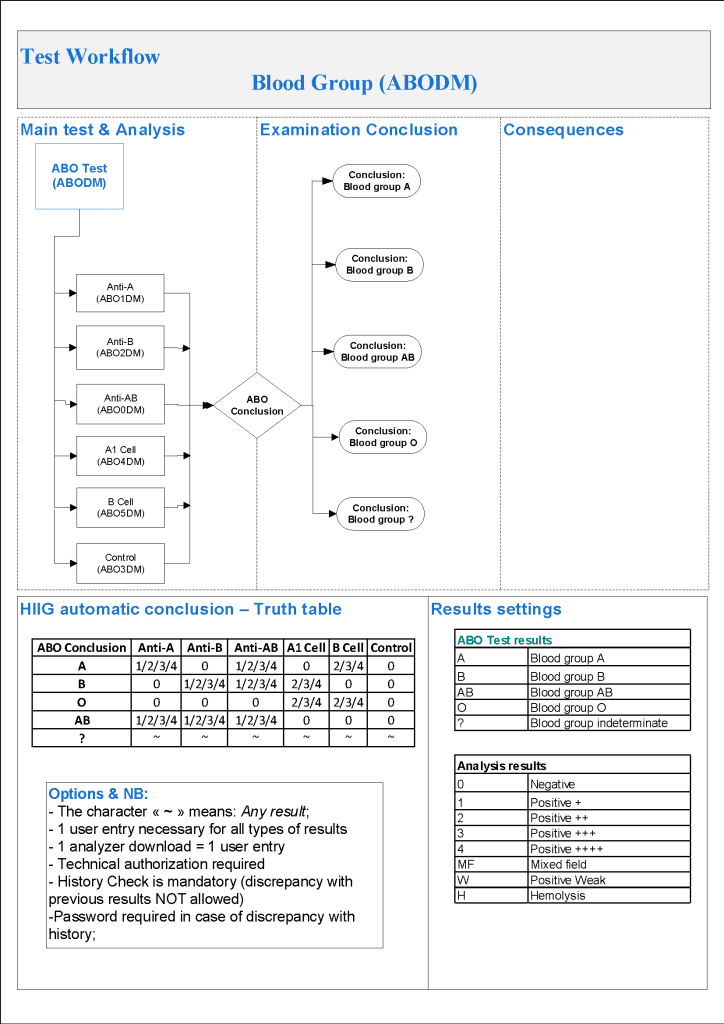
For donor ABO typing, I always had both automated and manual methods set up on the blood bank computer system Medinfo Hematos IIG.  The automated method had a bidirectional interface between Medinfo and the instrument.   Medinfo did not need a separate middleware.  A truth table was prepared for acceptable results for automatic interpretation.  Other results had to be manually interpreted by someone with the appropriate security level.

The manufacturer’s recommendations for the particular reagents in use were strictly followed.  One used the range {0, 1, 2, 3, 4} as acceptable.  Another used {0, 2, 3, 4}.  Controls were included.  Refer to the following flow diagram.

Most importantly, Medinfo could be configured for any set of reagent values.

2/10/20
Processes and Software Building 48: Donor Immunohematology Testing

Donor immunohematology testing of components in progress is similar to patient immunohematology testing.  The tests include:

ABO forward and reverse testing

D typing by multiple monoclonal cocktails

ABO/D confirmatory testing

Antibody screening

Antibody identification

Truth tables are prepared for each test type with interpretations.  Results falling outside these ranges will require manual review and manual interpretation by a user with an appropriate level of privilege (usually senior technologist, supervisor, or transfusion physician.)

Unlike patient D typing, we want to detect partial or variant D types as D-positive since theoretically even a few epitopes of D present may be immunogenic to the patient.  In patient D typing, we can call partial D types as D-negative and use D-negative RBCs.  We don’t want to use partial D RBCs for D-negative women of child-bearing age!

This series will show several different test algorithms including both manual and automated methods.  The criteria for acceptability of the reactions are based on the manufacturers’ recommendations. 

Reflex ordering of antibody identification will occur if the antibody screen is non-negative.

28/9/20

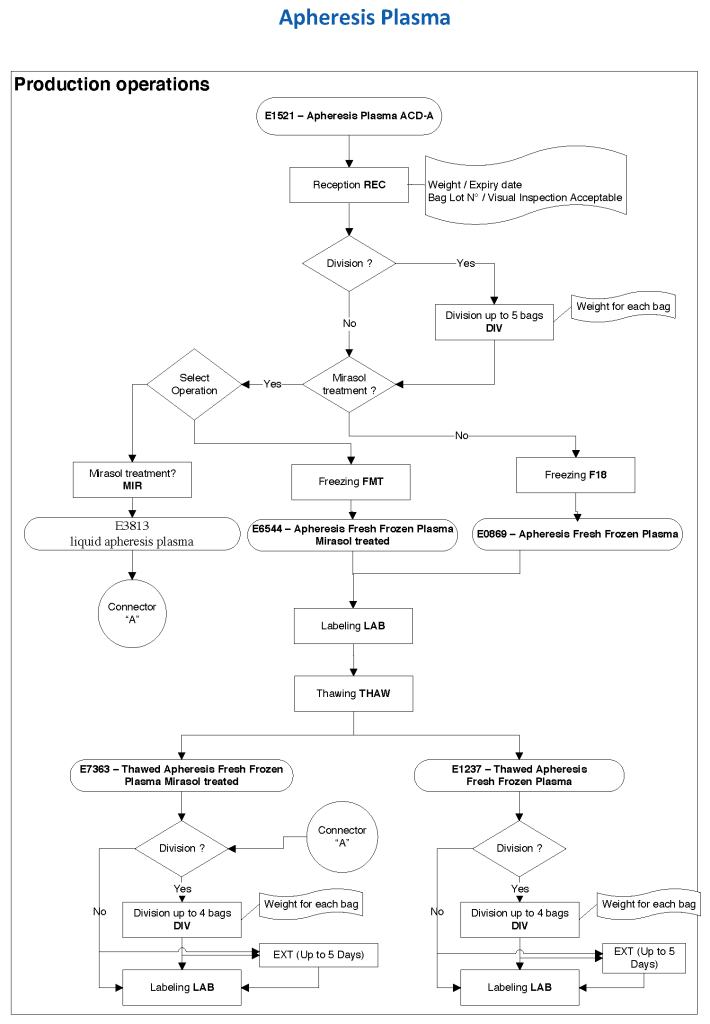
Processes and Software Building 47: Apheresis Plasma

At HMC during my tenure, all plasma products—whole-blood and apheresis-derived were pathogen inactivated with riboflavin (Mirasol).  In our software processes, I had options to release both Mirasol-treated and untreated (the latter in emergencies) and to aliquot either as needed.  The same processes applied to COVID-19 convalescent plasma CCP except that they were performed in a quarantine production area.  There were specific ISBT codes for CCP.

24/9/20

Processes and Software Building 56: RBC Distribution Rules

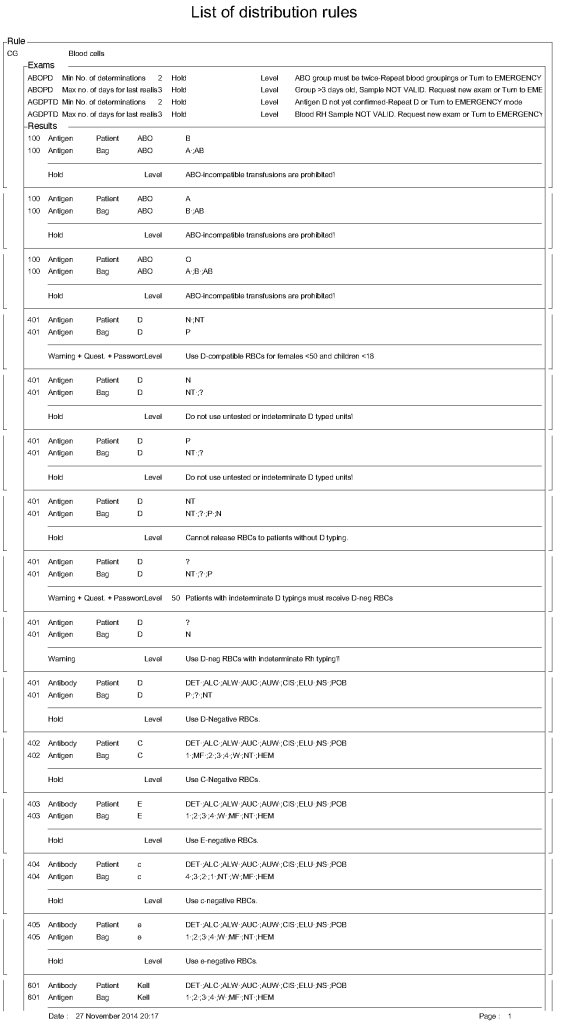
In Medinfo HIIG, one sets parameters to determine which antigens must be matched to allow a RBC product to be released.  These criteria may include:

Number of and timing of ABO/D typings

Permissible ABO/D substitutions

Emergency release

Required antigen matches

Optional antigen matches

Exact wording of conditional and blocked combinations

For ABO/D typing, a minimum of two typings must be on record for routine release and the last typing done within 72 hours.  If not, emergency release must be selected.  ABO-incompatible selections must be blocked.  For D-negative patients, only D-typed units may be selected.  D-incompatible transfusions will trigger a message to use D-compatible for females <50 years.

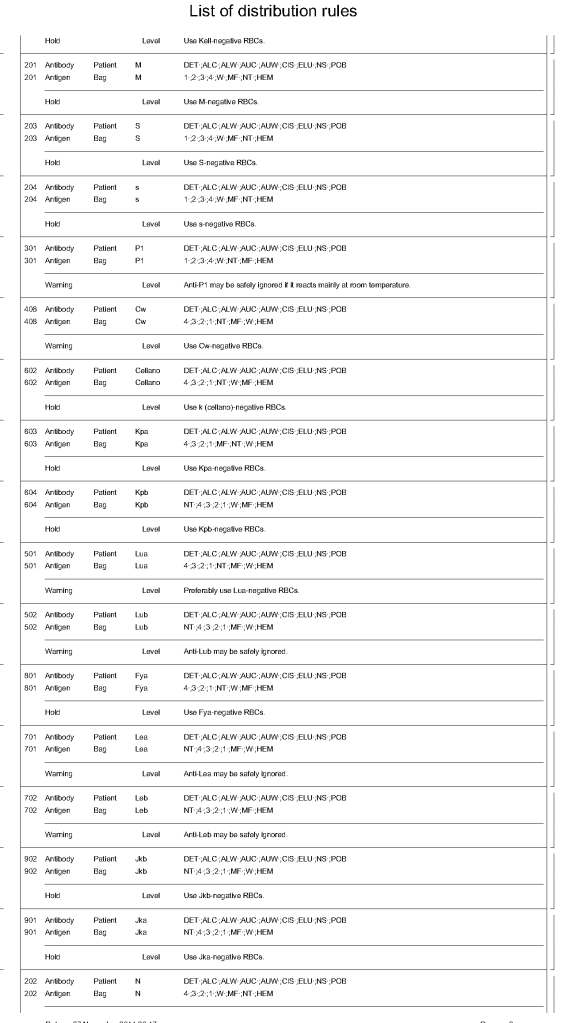
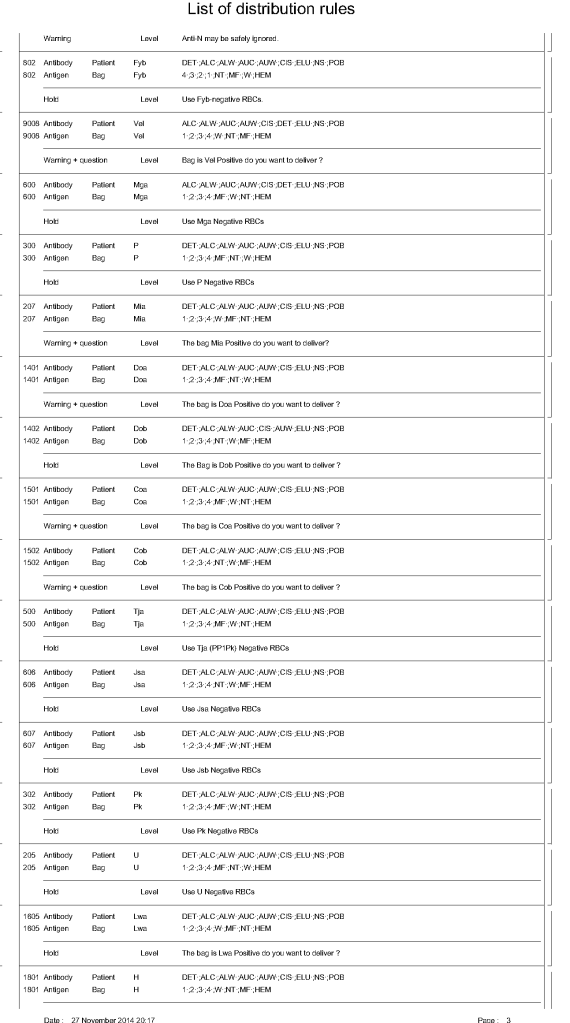
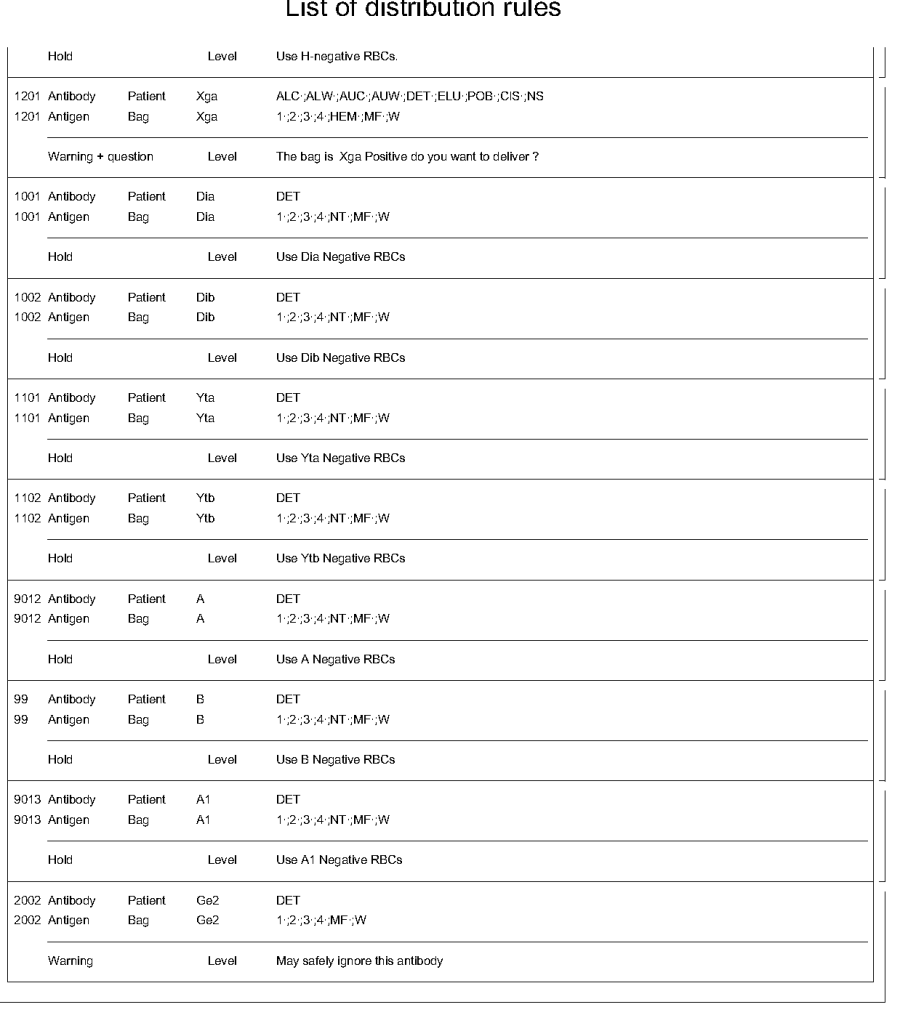
Required antigen typings include using antigen-negative for patients having antibodies against the specified antigen, e.g. D-negative RBCs for patients with active anti-D, c-negative for patients with anti-c, K-negative for anti-K, etc.

Certain antibodies will trigger a message to flag the use of unmatched units but not block the release.

The attached document shows sample settings for RBC release.  Note that these rules are user-definable.

31/10/20

Processes and Software Building 46: Reconstituted Whole Blood

Exchange transfusions using reconstituted whole blood were much more common in the past.  Much of the time IVIG now takes care of hemolytic disease of the fetus/newborn HDFN.

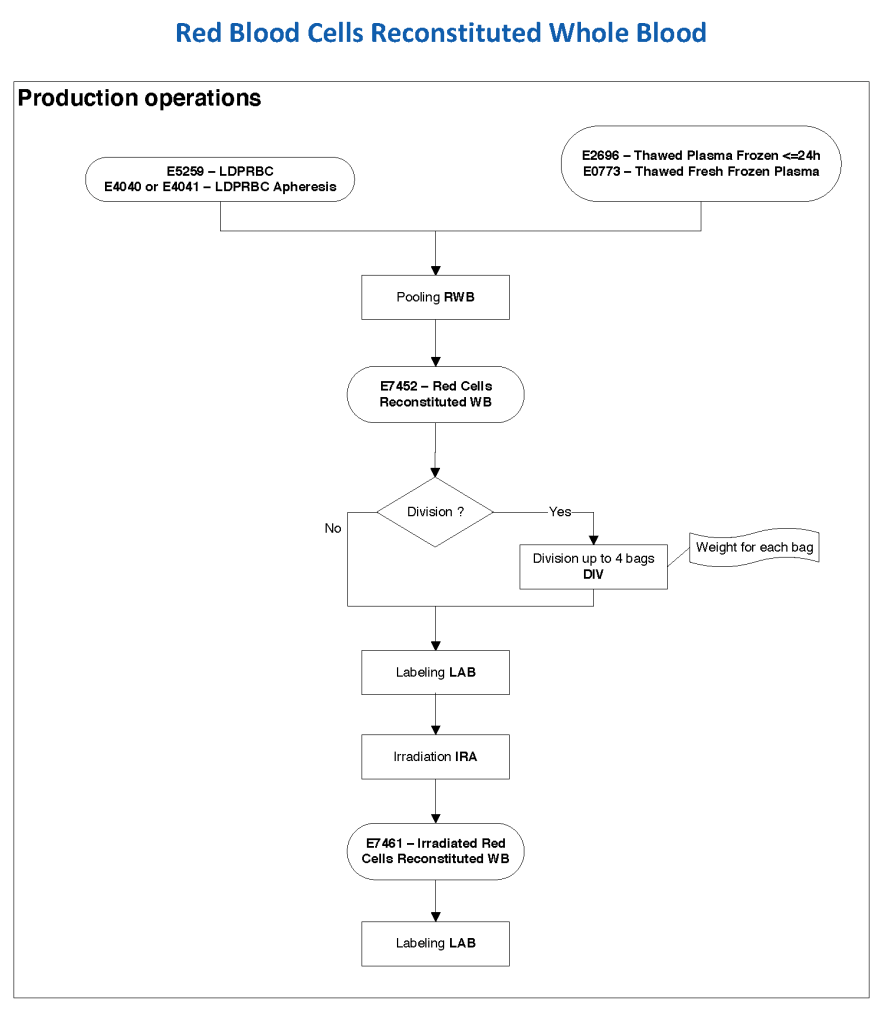
In Medinfo, we took a fresh (<= 14 day old) packed RBC in SAGM, group O, Rh-compatible and mixed it with a unit of group AB plasma—the desired hematocrit could be achieved by adjusting the amount thawed plasma that we added.  The product could then be aliquoted and irradiated.  Note that I medically chose to use either FP24 or FFP.

Here is the Medinfo process:

19/9/20

Processes and Software Building 45: Modifying RBC Components

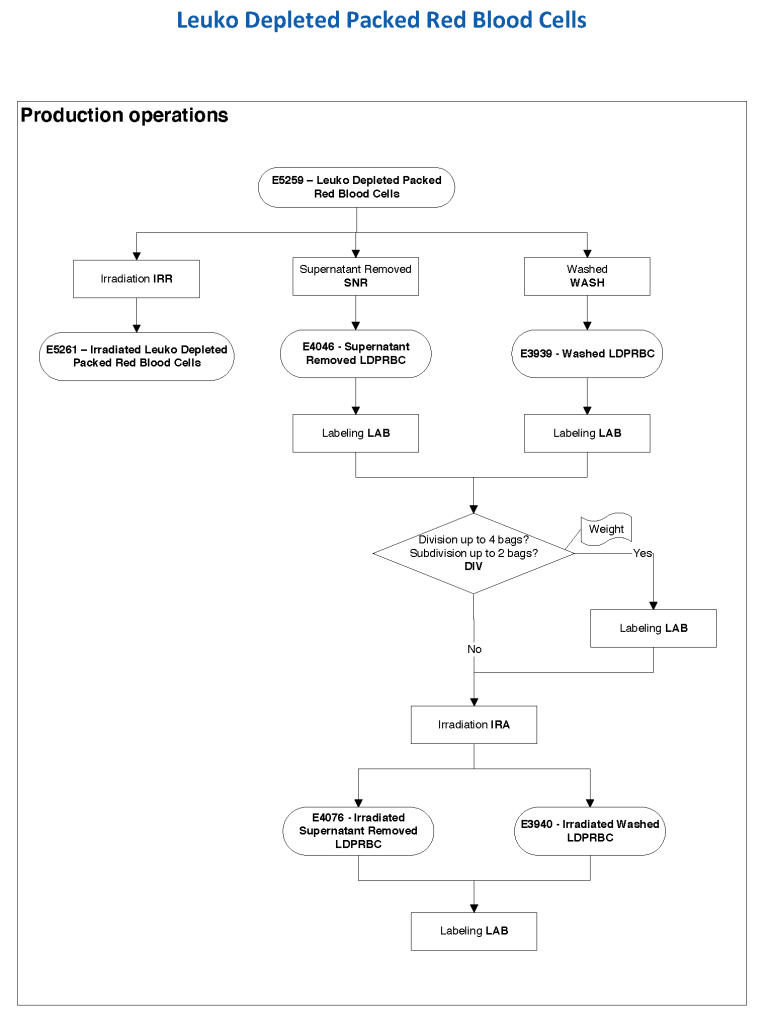
Components may be modified either in the Blood Donor Center or in the hospital blood bank.  In either case, they use the PRODUCTION section of Medinfo to perform these operations.

These operations may include:

  • Irradiation
  • Tight-packing (removal of the supernatant, especially for intrauterine or neonatal transfusions)
  • Washing
  • Aliquoting (division of the primary RBC bag and possibly further division of one of the secondary bags)
  • Final labelling of the modified component

The weight of the component is converted to the volume by the software.

The end-user can specify which modified components were available.  As with any ISBT-labelled products, any changes will trigger a new ISBT E code and label.

16/9/20

Processes and Software Building 44: Pooling Components

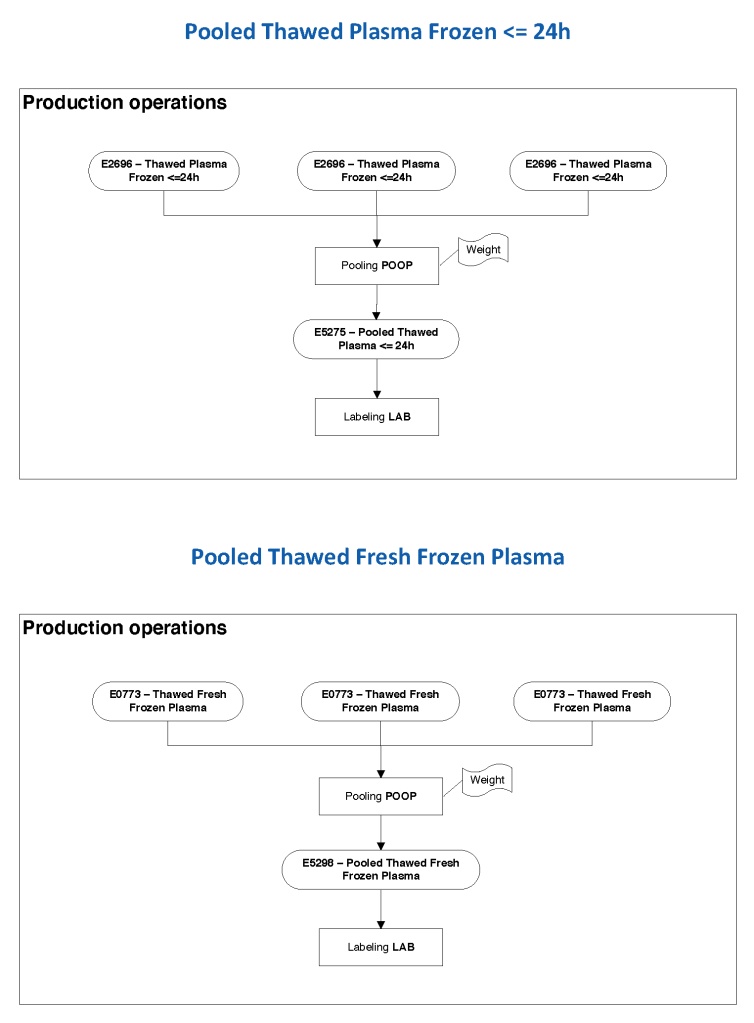
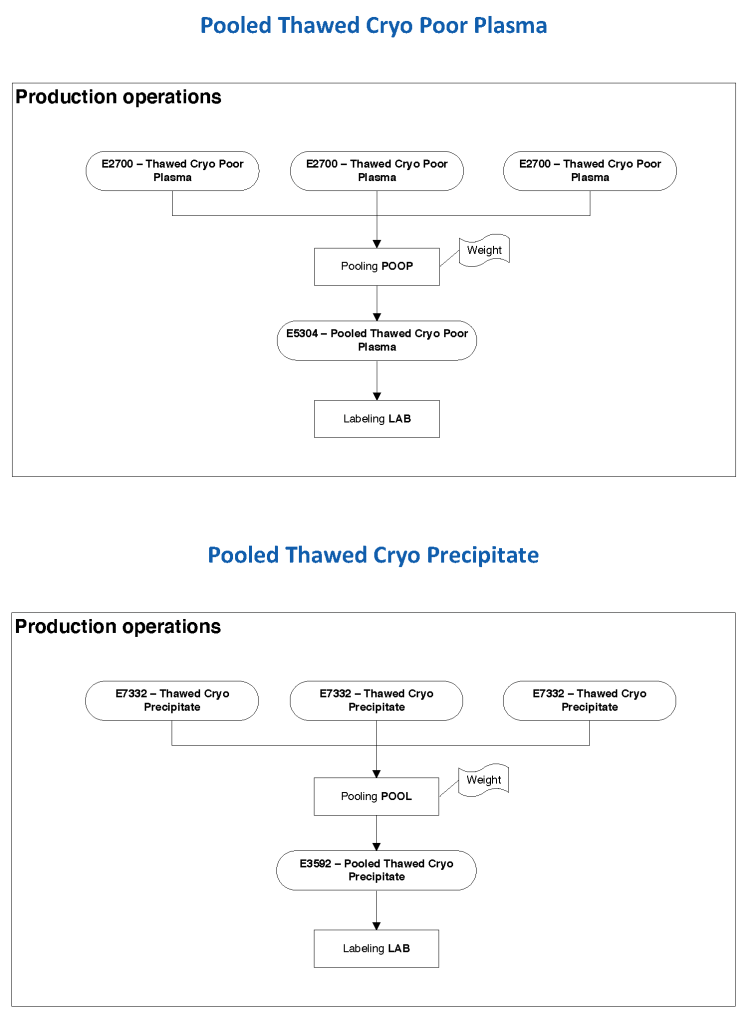
Medinfo Hematos IIG has a pooling operation that can be used for pooling platelets, plasma, cryoprecipitate, etc.  It is a one-step operation.  In the set-up, one specifies the maximum number of components to pool together for each component type.  In general, they are of the same ABO type;  however, at HMC Doha I did allow mixed ABO platelet pools to avoid wastage of platelets that would otherwise be discarded—this may not be allowed in all jurisdictions.

The following examples show pooling of FFP, FP24, cryoprecipitate, and cryo-poor plasma:

13/9/20

Processes and Software Building 43: Manual Whole Blood Processing

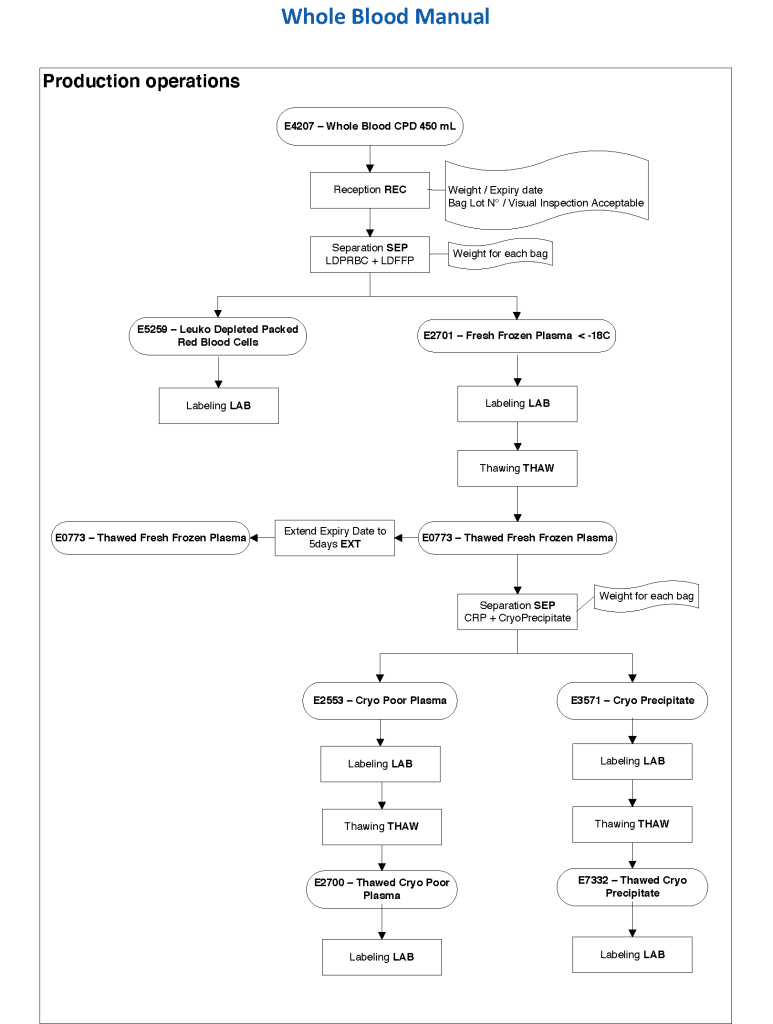
This was the HMC methodology for manual whole blood processing to prepare packed RBCs, plasma, cryoprecipitate, and cryo-poor plasma using blood bank centrifuges (not Reveos).  It did not include preparing platelets since we did not have manual buffy coat processing equipment.  In this algorithm we did not specifically release whole blood as a final product (although we did have the capability of activating this in emergency situations).

10/9/20

External Disaster Plan

Principle:

Maintaining an adequate blood supply and expedited compatibility testing are critical in disaster planning.  This plan is assuming that the Blood Donor Center is functional and can process donors and make components.

Medinfo Hematos IIG System is critical to monitoring inventory, preparing blood components expeditiously using Good Manufacturing Processes, and distributing blood components in a timely controlled manner.

Policy:

  1. Determinate total available blood supply across all locations by using the Cumulative Stock Display program in Medinfo Hematos IIG.
    1. Recheck stock at least every hour during the disaster.
  2. At each transfusion service site, in conjunction with the Transfusion Medicine Consultant:
    1. Cancel reservations for elective surgical and non-emergency medical cases of affected ABO/D types.
    2. Retain reservations for antigen-matched, oncology, NICU, and high-risk obstetrical cases.
  3. Inform Manager for Donor Recruitment/Logistics to send SMS, radio, and television messages for blood donors—all types.
  4. Contact ALL staff and have them report to duty.
    1. At Blood Donor Center, the Head Nurse, Recruitment Manager, Supervisor, Component Processing, and Supervisor, Marker Testing will contact their respective staff.
    2. At various hospital blood bank transfusion services, the site supervisor will contact all staff.
  5. Process blood components using automated component technology (Reveos).
  6. Perform all donor marker testing including single-well NAT.
    1. Abbreviation of donor testing is only at the discretion of the Head, Transfusion Medicine.
  7. Send blood components using Inter-Depot Transfer function of Medinfo.
  8. Transfusion Services:
    1. Release blood component according to the various protocols as needed:
      1. Massive transfusion protocol
      2. Emergency release
      3. STAT
      4. Priority
      5. Routine
  9. Compatibility testing will be electronic, immediate-spin, or full AHG as per our protocols.

References:

  1. Standards for Blood Banks and Transfusion Services, Current Edition, AABB, Bethesda, MD, USA
  2. Guidelines to the Preparation, Use, and Quality Assurance of Blood Components, European Committee (Partial Agreement) on Blood Transfusion (CD-P-TS), Current Edition

Revised 10/9/20

Processes and Software Building 42: Platelet Pooling

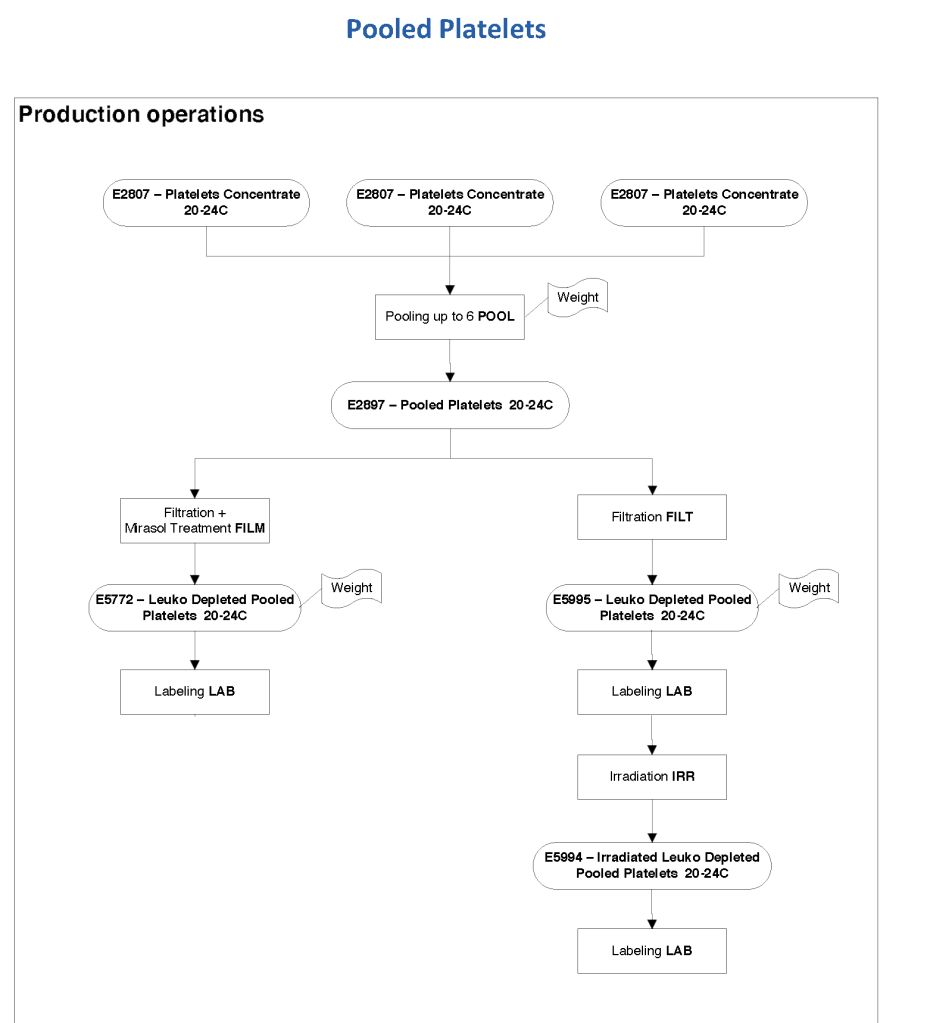
Outside the USA, platelet pools stored at room temperature may be valid for up to 7 days, especially if pathogen-inactivation is used.  The following workflow shows both Mirasol pathogen-inactivated and standard platelets.  The standard platelets are then irradiated.  Both types can be aliquoted.

A major advantage in using a specific blood bank computer software is to enforce the Good Manufacturing Process.  Medinfo is merciless:  there are no exceptions without authorization and that is restricted by the security policies.

In the recent Reveos post, the upper and lower platelet volume specifications were discussed.  The platelets are weighed and the volume is calculated.  If a manual or another method for preparing platelets is used, then the according values can be specified.

To Be Continued:  8/9/20