Irradiation of Blood Components

Principle:

The use of irradiated components is to inactivate antigen-processing cells, which have been implicated in transfusion-associated graft versus host disease (TAGVHD).  This condition is may be fatal and has been reported in a variety of clinical settings, both in immunocompromised and immunocompetent hosts.

Since we pathogen-inactivate platelet components, we are only irradiating RBC components.  There is no need to irradiate any plasma components (e.g. FP24, thawed plasma, cryoprecipitate, or cryo-poor plasma.)

WARNING:  Do not irradiate stem cell units!!

Policy:

  1. Irradiation of packed RBCs will be given to the following patients:
    1. All candidates for stem cell transplantation SCT or patients post-SCT
    1. All severely immunosuppressed, excluding AIDS patients including:
      1. Congenital immunodeficiency states
      1. Intrauterine (i.e. fetal) transfusions
      1. Premature (less than 1500 grams or 28 weeks gestation) infant transfusions
    1. Neonatal Intensive Care Unit patients
    1. All hematopoietic tumors, including
      1. Hodgkin’s disease/lymphoma
      1. Non-Hodgkin’s lymphomas
      1. All acute leukemias
      1. Myelodysplastic states
      1. Myeloproliferative states
      1. Histiocytosis X, Langerhans histiocytosis
      1. Aplastic anemia
    1. All recipients of directed donations of any type, i.e. apheresis or components prepared from whole blood
    1. Recipients of HLA-selected platelets or platelets known to be HLA homozygous
  2. Irradiation Specification:
    1. Irradiate just prior to release if possible to minimize potassium leakage.
    1. Target 2500 cGy (rads) of gamma irradiation to the mid-plane of the canister of a free-standing irradiator is used or to the central mid-plane of the irradiation field if a radiotherapy instrument is used
  3. Using returned irradiated RBCs:
    1. If an irradiated unit is returned and otherwise meets re-release criteria, it may be used for up to 28 days after the irradiation or the normal outdate limit, whichever is less.
    1. For pediatric use (< 20 kg.), if the component was irradiated more than 24 hours previously, wash it prior to transfusion.

If you are uncertain whether to irradiate, ask the supervisor or the transfusion medicine physician.

References:

  1. Standards for Blood Banks and Transfusion Services, Current Edition, American Association of Blood Banks, Bethesda, MD, USA.
  2. Guidelines to the Preparation, Use, and Quality Assurance of Blood Components, European Committee (Partial Agreement) on Blood Transfusion (CD-P-TS), Current Edition

4/11/20
Blood Bank Software is Dynamic, NOT Static

I was recently talking with one of the hospital software system administrators from my previous site.  He had originally worked on building the Medinfo system, but was then reassigned to the laboratory modules of the hospital information system.

His alarming comment to me was that the Medinfo build was completed so there was no need to worry about it now—it was finished.  I guess he was looking from the perspective of the general laboratory software.  There is no need to make major changes to the build, just update interfaces and troubleshoot.

I was surprised.  He had no idea of how many times we have to update the structure for new rules and regulations, and changes in blood bank practice—let alone emerging pathogens such as ZIKA, dengue, Chikungunya, and most recently, COVID-19.

My daily morning routine was to survey several blood bank websites with changes to blood donor criteria including US FDA CBER, read the transfusion journals (Transfusion, Vox Sanguis, etc.), AABB, and ASFA.  If there were any changes pertinent to our organization, I had to make interim policies and procedures, and finally prepare specifications for changes in the Medinfo software.

The Medinfo engineers would prepare flow charts of the proposed changes and implement them in a test environment for the Super-Users to test.  I had to prepare validation protocols for the testing, and then review the validation results and finally approve the adoption of the changes.

I cannot remember even a month going by without some revision in the donor protocols.  When COVID-19 came, I had to prepare a parallel, but separate, processing and allocation/release system.

This was a never-ending story that kept the Super Users and the local Medinfo engineers busy.  I always reminded the hospital information system staff that playing with blood bank software was like playing with fire:  there is a good chance you will get burned if you do not set it up properly.

31/10/20

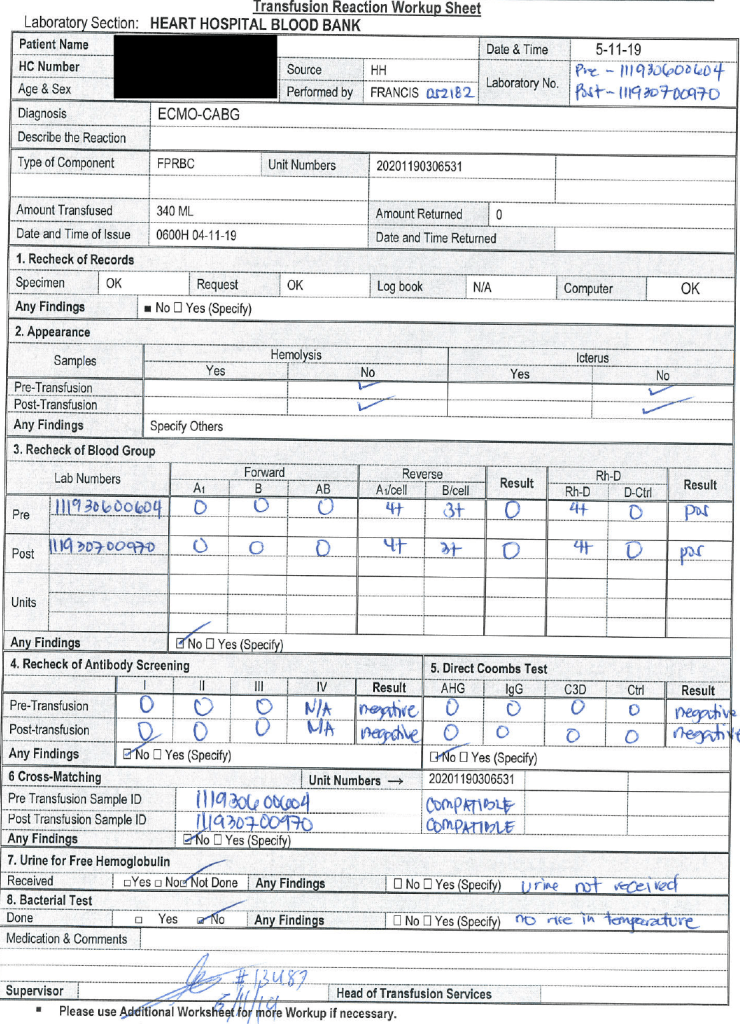
Transfusion Reaction Manual Data Collection Form

In my opinion, the key to using data effectively is to organize it efficiently.  A modern blood bank software like Medinfo is a great help;  however, a good manual system—if nothing else but a manual form during a computer downtime—is essential.  Also, a good manual system allows you to build an even better software!

Over the years of my practice at sites in the United States and the Middle East, the following form has emerged.  It started as a manual reporting form and was repeatedly updated to all the changes in the AABB Standards.  At my last site, it was used as a data collection form to present to the Transfusion Medicine Physician reviewing the final transfusion reaction workup.  Antibody results, elution, microbiology cultures, etc. would be attached as needed.  .   The actual transfusion vital signs and patient symptoms on a separate transfusion data sheet were also provided.

Like the computer system, this form enforces a consist set of testing be performed before submitting it for the final disposition for the case.  However, like all transfusion reaction workups, the transfusion physician is called with the data of the clinical symptoms, clerical check, DAT, repeat ABO/D typing, antibody screen, visual pre- and post-hemolysis findings so that within one hour the physician can rule out life-threatening hemolysis.

In a future post, I will explore the data entry and interpretative reporting performed in Medinfo.

26/10/20

Minimizing Plasma Wastage

Principle:

Plasma products (FFP, FP24, thawed plasma) are only available in limited quantities so wastage must be minimized.  Thawed plasma has full factor activity for 24 hours; after 24 hours, all factors are still present at near normal levels except factors VIII and V.  AABB Standards permit continued usage of thawed plasma stored between 1-6 Celsius as the component, “thawed plasma” for 5 days.

Thawed plasma may also be prepared directly at the time of production (i.e. without freezing) for certain cases (MTP, liver transplant protocol, plasma exchange) to shorten the release time.  It is called liquid plasma since it was never frozen but should be considered equivalent to thawed FP24 if used within 24 hours or thawed plasma if used between 24 and 120 hours.

Liquid plasma, as we use here, is prepared directly from plasma treated with Mirasol and generally used within 5 days;  however, in Medinfo HIIG, this plasma may have an outdate of 26 days in accordance with 21CFR610.53, but it is not used beyond five days except if approved by the Senior Consultant/Division Head of Transfusion Medicine.  Since it is used within 5 days, it is equivalent to thawed plasma.

Definitions:

Responsible blood bank physician: specialist or consultant physician on-call at the time the discrepancy is detected

Policy Details:

  1. Plasma is dispensed without regard to the Rh(D) of the donor.
  2. Check if thawed plasma or liquid plasma (<5 days) is available first.
  3. Do not thaw plasma until the clinical service is ready to transfuse it.
    1. Tell clinical service to contact transfusion service 2-3 hours before intended transfusion time.
    2. Exceptions: liver transplant surgery, massive transfusion protocol, therapeutic apheresis, class 1 emergency requests
  4. If thawed plasma or liquid plasma is kept in the blood bank but not  used:
    1. Reassign to another patient of compatible ABO type as thawed FFP/FFP24 if < 24 hours post-thaw or <24 hours of production if liquid plasma (see attached table).
    2. If thawed > 24 hours or liquid plasma between 24 and 120 hours post processing, reassign component as thawed plasma and use for up to 5 days.  It is preferable to use thawed plasma < 24 hours old for neonates.
  5. Thawed >120 hours post-thawing and/or liquid plasma > 120 hours post-production should be discarded.
  6. Plasma usage and wastage will be monitored and reported to the Transfusion Committee.

Note:

Thawed plasma released from transfusion service should be discarded if returned.

References:

  1. Technical Manual, Current Edition, Bethesda, MD, USA
  2. Standards for Blood Banks and Transfusion Services Current Edition, AABB, Bethesda, MD, USA
  3. 21CFR610.531(c):  Whole Blood and Blood Components Storage Temperatures and Dating Periods, Current Version

PERMISSIBLE FFP/FP24/THAWED PLASMA SUBSTITUTIONS

PATIENT BLOOD TYPEUSE THE FOLLOWING:
  
OALL BLOOD TYPES
AA or AB
BB or AB
ABAB

24/10/20

Policy: ISBT Component Label Usage

Principle:

Blood components will only receive final ISBT labels for the purpose of transfusion upon completion of the production processes specific for that component and will be specifically prepared by the Medinfo Hematos IIG software in accordance to Council of Europe CE Standards.

An improper label, be it for the wrong unit, or improper designation can have catastrophic results to the recipient.  This is why this is such a CONTROLLED process under Medinfo Hematos IIG.  There are label-printing softwares available that do not follow these rules, but I consider them dangerous to use since these safeguards are not enforce—they are NOT permitted here.

Policy:

  1. The formatting of ISBT labels is addressed in the Interim Policy: ISBT Labels (a previous post).
  2. The selection of the ISBT E codes will be made by the Division Head, Transfusion Medicine and Laboratory Information Systems.
  3. Blood component labels, either final or in-process are ISBT-specific and may only be generated by the Hematos IIG computer system.
  4. The ISBT specimen are generated at the time of donor registration.
    1. ISBT specimen labels are of limited number and cannot be reprinted by operational staff.
      1. Reprinting is only allowed by Transfusion LIS with approval of the Division Head, Transfusion Medicine/Laboratory Information System
  5. Final ISBT blood component labels may only be attached at the successful completion of component processing according to the HIIG workflow processes specific for each component.
  6. ISBT labels are also generated and attached after component modification (washing, irradiating, aliquoting, pooling) in accordance with the respective HIIG workflow processes.
    1. Multiple modifications may be performed before the final ISBT label is generated by HIIG.
  7. No modifications of the HIIG-generated ISBT labels is permitted.
  8. No manual corrections or attachment of additional, non-ISBT labels is permitted.
  9. During computer down-times, manual (non-ISBT) labels may be generated internally and will be replaced by the formal ISBT label using Manual Stock Entry after resumption of HIIG.
  10. For solvent-detergent-treated plasma SDP (e.g. Octaplas), the following applies:
    1. SDP (Octaplus) ISBT labels are prepared and attached by the manufacturer Octapharma during the manufacturing process and will be used/read as such.
    2. Thawed SDP will receive a new ISBT label at the time of thawing.

References:

  1. HIIG Workflows, Component Processing, 1002
  2. Standards for Blood Banks and Transfusion Services, Current Edition, AABB, Bethesda, MD, USA
  3. Policy:  ISBT Labels, Current Edition—previously posted
  4. TRM.43625 CAP Checklist

20/10/20

Base Medical Technologist Assessment Examination

Background:

I prepared this exam for base transfusion service technologists and candidates. For prospective new staff, I would be more lenient and use it as a projective exercise in the potential abilities. However, for staff working one year in my blood bank, I expected a higher score. Each and every problem is based on issues they would actually encounter at work–nothing esoteric.

Answer the following questions:

  1. What is the blood type in each of the following results:
Anti-AAnti-BA1 cellsB cellsType?  
  4+  0  0  3+ 
  0  4+  3+  0 
ABO Typing Problems
  1. You are signing out a unit of FFP, Group A Pos, Unit #23556 for Mohd Ahmad Ali Al Harbi, MRN# 729887 in Ward 21.  The nurse comes with the requisition to pick up the thawed unit.  The requisition says to pick up the thawed FFP for Mohd Ali Ahmad Al Harbi, MRN# 728987 in Ward 21.  Can you release the unit?  Explain.
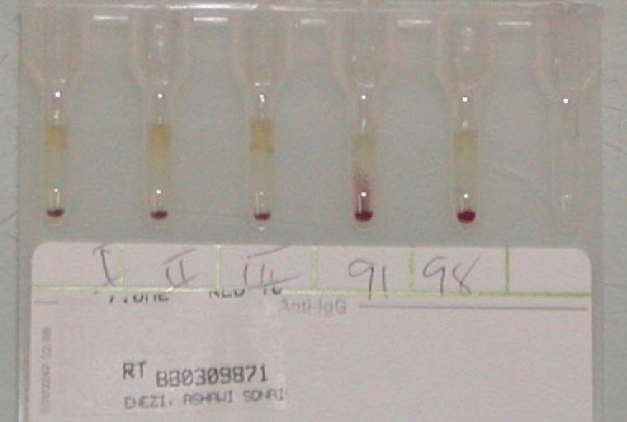
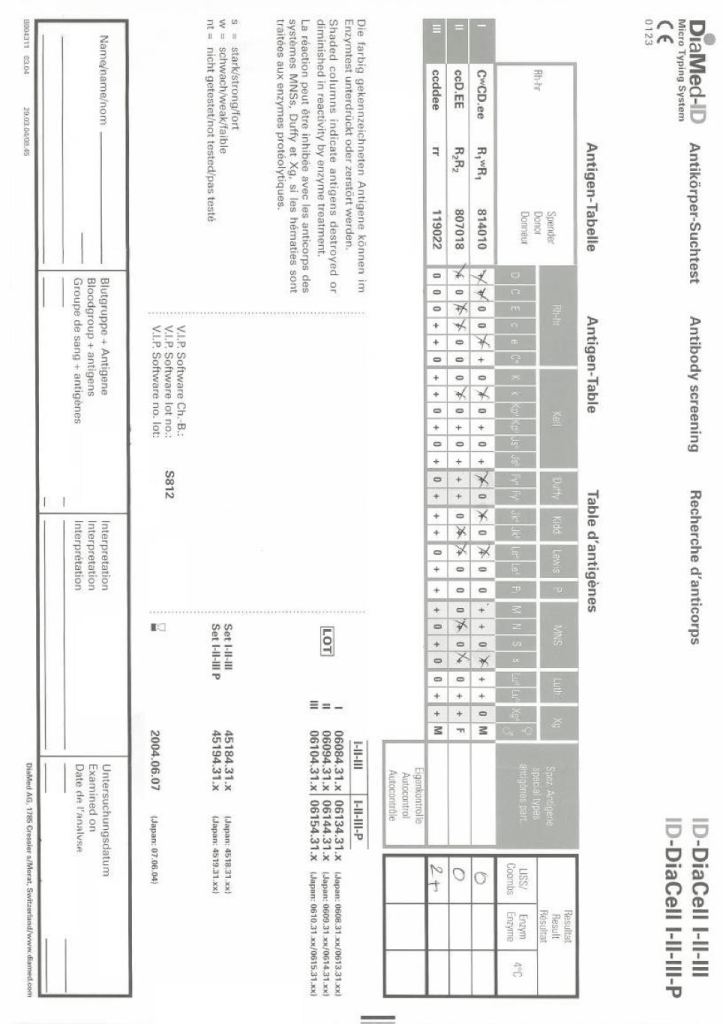
  1. The antibody screen and crossmatch results are shown on the following IgG Coombs card (Biorad):

The reactions I-II-III are the antibody screen results.  Note the crossmatches # 91 and 98.  Which one(s) is/are compatible?

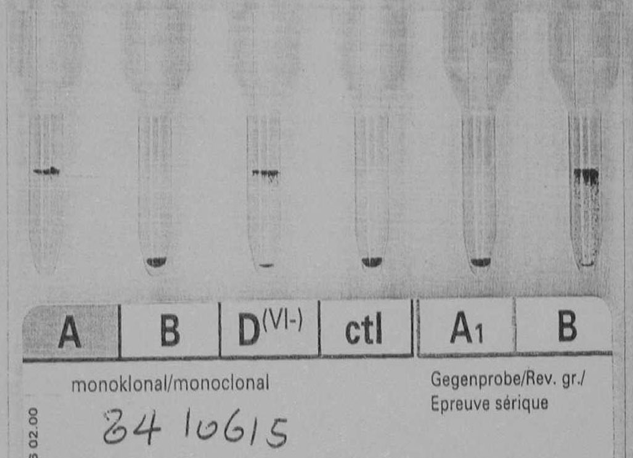
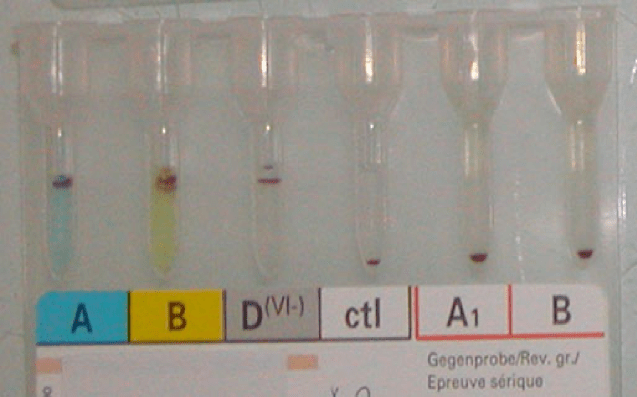
  1. The following are actual ABO/D typing results with the Diamed (Biorad) reagents.  What are the ABO/D types?
  1. The Blood Bank is severely short of AB packed cells and AB plasma.  What other blood types can you safely issue?

Request for AB packed RBCs:  Permissible substitutions are:

Request for AB plasma:  Permissible substitutions are:

  1. A specimen for crossmatching is drawn at 7:30 a.m. on 26/10/20.  When does it expire?
  1. Emergency blood, group O positive is issued for a 30 year-old male victim of a traffic accident.  You receive the specimen and complete the crossmatching.  You find the unit is incompatible.  What do you do?
  2. A patient has anti-C antibody.  How do select the appropriate type of blood to give?  Select any or all that apply:
    1. First crossmatch the requested number of units, then if compatible, release them.
    2. First crossmatch the requested number of units, then antigen type them for “C”, release only the ones that are C-negative.
    3. First screen for C-negative units, then crossmatch and release compatible units.
    4. None of the above
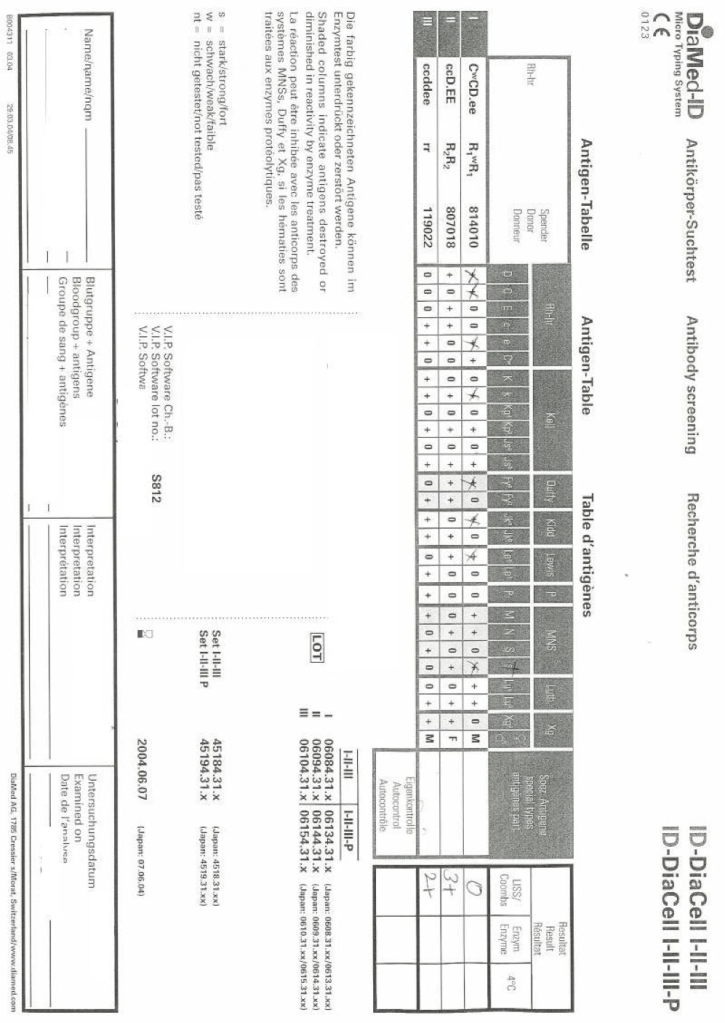
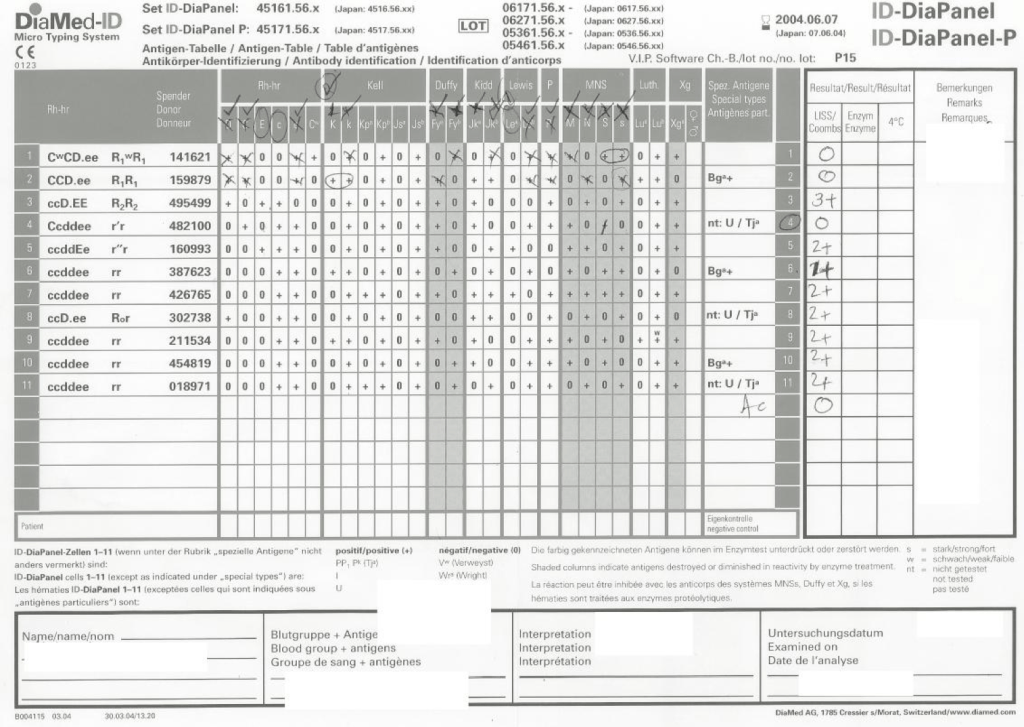
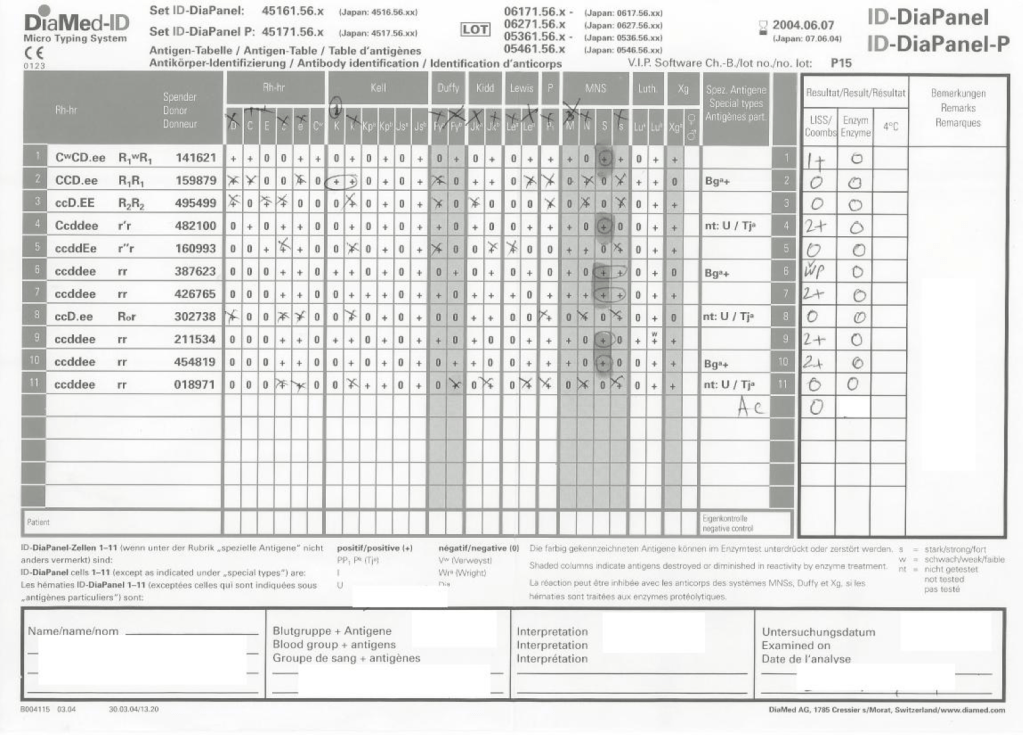
  3. Evaluate the attached antibody screening and panel results:

37 year old pregnant female, no previous history:

26 year old G3P3 pregnant female in labor, O-positive, no previous transfusion or antibody history:

19/10/20

Opinion: Vendor Compatibility with ISBT Codes

While I was  Division Head, Laboratory Information Systems LIS elsewhere, we serviced a client hospital not using Medinfo for its patient hospital blood/transfusion services.  It used the blood bank module of a hospital information system’s laboratory system.

In their service level agreement, they wanted a complete list of all the ISBT product E codes that we used.  I found this strange and told them their system must have access to the ISBT database so they should have no problem in reading our codes directly.

The same hospital system was in use for our hospital system (excluding our blood banks, which used Medinfo and had no such problems.)  I discovered that this hospital system could NOT read any ISBT codes natively for the end-users, e.g. departments outside the blood bank.  Without informing us, the nursing staff were manually entering “something” into their system.   That something could be anything:  the system would accept any series of alphanumeric characters.  They could select any type for each component (e.g. RBC for a platelet, plasma for an RBC, etc.).  They had no reliable record of transfusion!

In fact, in that hospital information system, ISBT codes could only be read in their blood bank module, which we did not use at all.  That vendor subsequently purchased another software to read the labels, but I discovered that the new “solution” software still could not directly access the ISBT database!!  They still had no functionality to read ISBT labels on the wards!!  You still had to hard-code it into their system.

Thus, we were forced to give the new client a list of our current E codes.  I warned them that we did change these codes (e.g. when we adopted platelet additive solution).  It was their responsibility to change the “hard code” into their blood bank module of that vendor.

As regards our hospital information system, we had to “hard code” the ISBT codes into the order requests so they could use that to document the transfusion.  We also had to provide the descriptor for each and every code.

To this day, I am astounded that a modern hospital system still cannot read ISBT codes natively.  Surely, they could license a copy of the ISBT database—or at least let the end-user client license it and upload it into their system.

I am skeptical of a “one-size-fits-all” comprehensive, Swiss Army Knife like software that has some limited functionalities but lacks the details needed for actually using blood components.  I wonder if the compromises made to build this system make it similarly mediocre for other functionalities outside the blood bank sphere.

I consider myself very fortunate to have elected NOT to use this patient transfusion service module and go with a full-feature blood bank system.

Conclusion:

Be careful about trusting the vendor’s promises.  Check to see how they handle the ISBT labels.

17/10/20

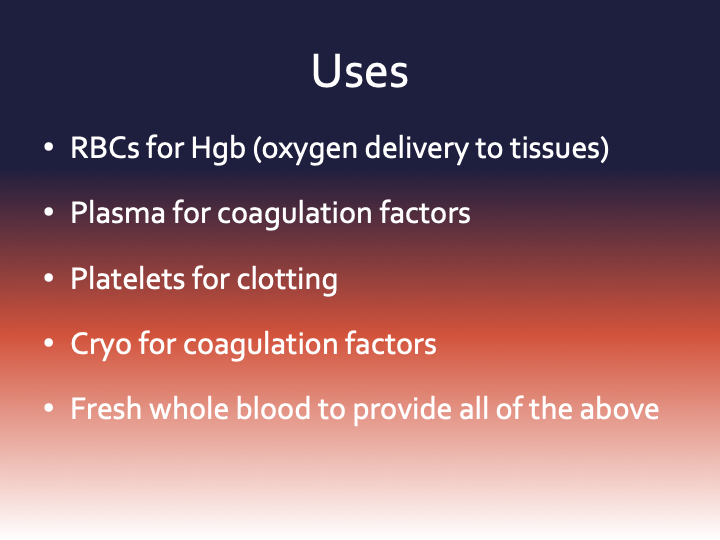
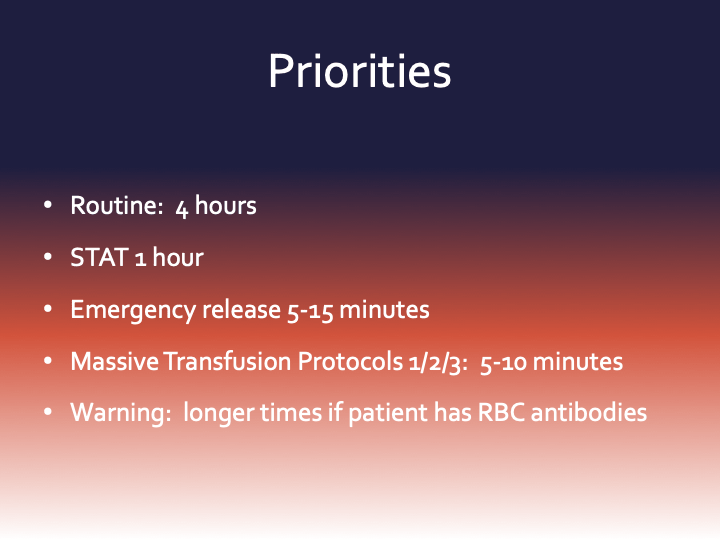
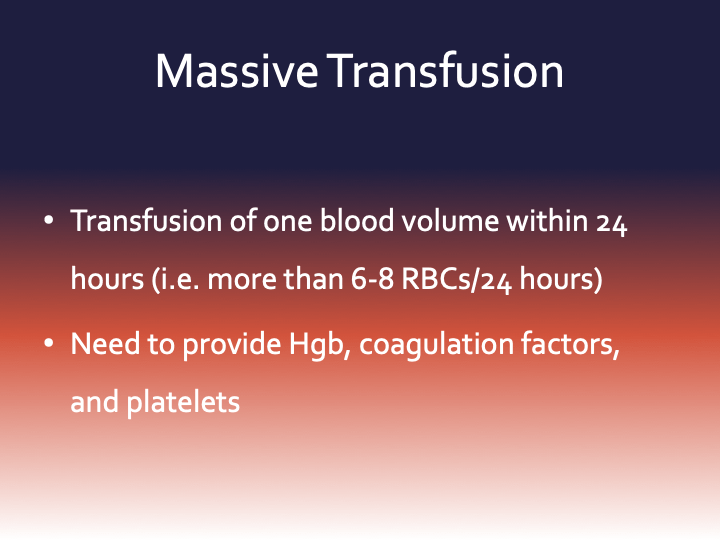
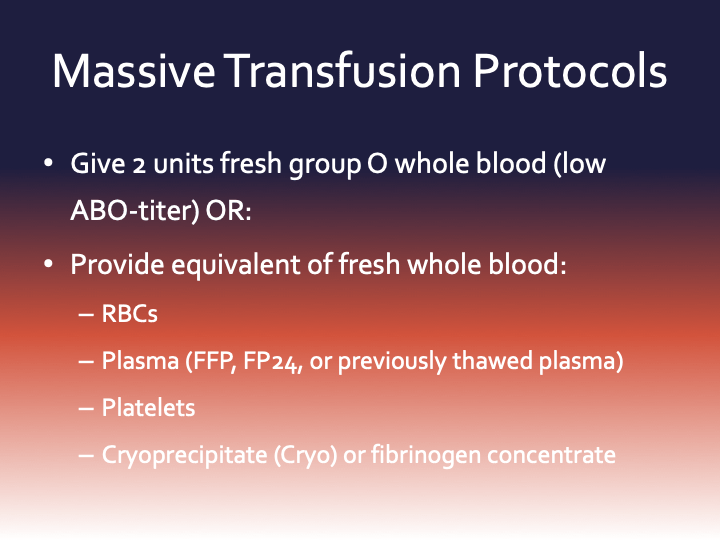
Massive Transfusion Protocols

This is a sample massive transfusion protocol originally prepared at HMC Doha with my input and Division Head, Transfusion Medicine. I have updated it to include use of fibrinogen concentrate and the option to use fresh whole blood (group O, < 14 day old in SAGM, low ABO titer IgM < 1:256).

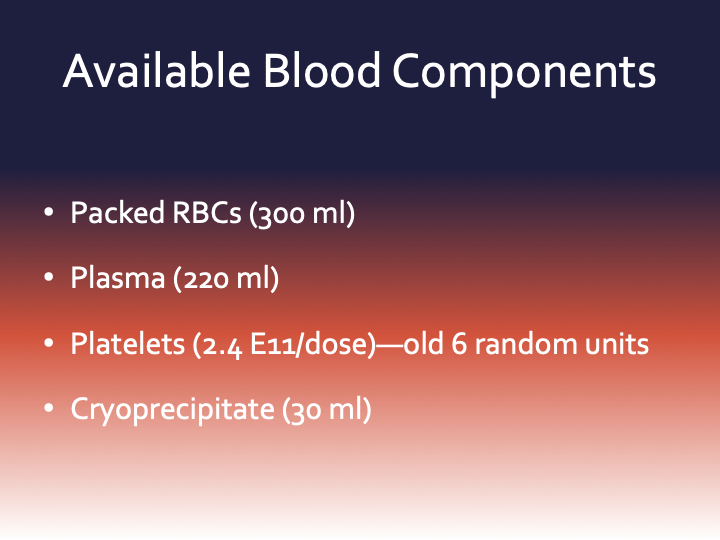
The volumes for blood components is based on our automated production system Reveos with the RBCs in SAGM, platelets in Mirasol and additive solution, and plasma in Mirasol.

Transfusion Reaction Workup Form

It is easy to regurgitate data, but the key to using it successfully is to organize to maximize pattern recognition.  Once a transfusion reaction has been called, the transfusion blood bank staff must expeditiously (STAT) perform testing to rule out acute hemolysis—one of the four fatal transfusion reactions (others being anaphylaxis, septic shock, TRALI/TACO).

The attached form was designed by my staff and me based on my experiences at several institutions.  It organizes the workup and helps ensure that all the testing and checks are performed.  The clinical area calling the reaction will provide a transfusion form that includes the vital signs (pre-, post-, and during the transfusion) as well as the symptoms.

With these forms, life-threatening hemolysis can be ruled out and further studies made to rule out other serious adverse reactions.

The data on this worksheet are entered into the Medinfo Hematos IIG Patient Module. The transfusion physician reviewing the workup will enter the type of reaction and recommendations. This will document the transfusion reaction for accreditation purposes.

10/10/20

Contacting the Transfusion Physician with Transfusion Reaction Workup Results

Principle:

The physician on-call for the blood bank requires a certain minimum amount of data to determine the significance of a suspected transfusion reaction and to decide if further testing is required.

Policy:

  1. DO NOT call the transfusion physician about a transfusion reaction until the following data is ready:
    1. Patient name and hospital number
    2. Patient age and diagnosis and location
    3. Previous transfusion history including antibodies and previous transfusion reactions
    4. Vital signs (BP, temperature, pulse, and respiratory rate) before AND after the transfusion
    5. Clinical symptoms (e.g. fever, chills, rash, urticaria, dyspnea, hematuria, etc.)
    6. Repeat ABO and D type on the post-transfusion specimen
    7. Direct antiglobulin/Coombs test (DAT) on the post-transfusion specimen
    8. DAT on the pretransfusion specimen if the post-transfusion specimen is DAT-positive
    9. Results of hemolysis check on pre- and post-transfusion plasma/serum
  2. The transfusion physician may order additional testing based on the above results.