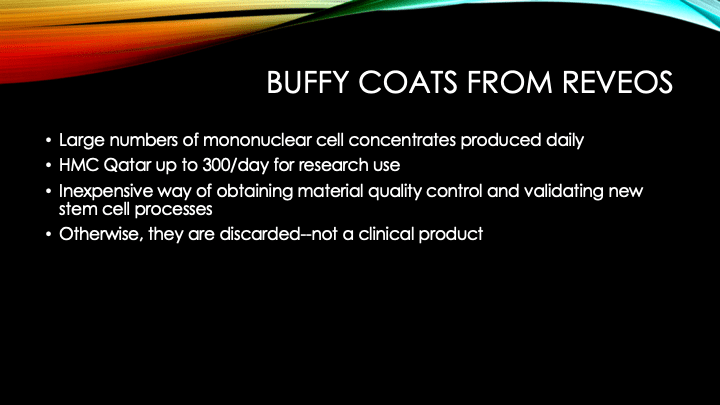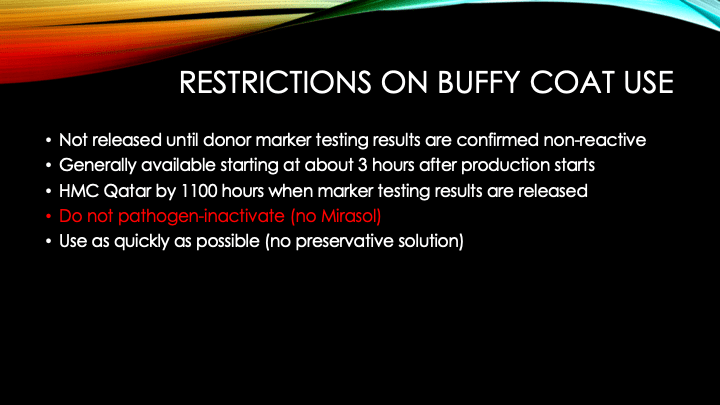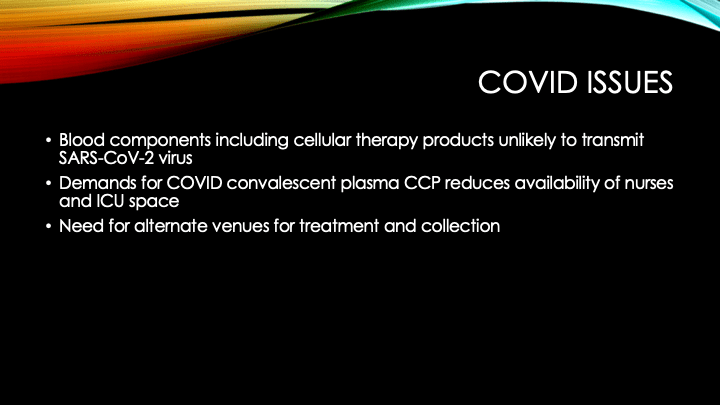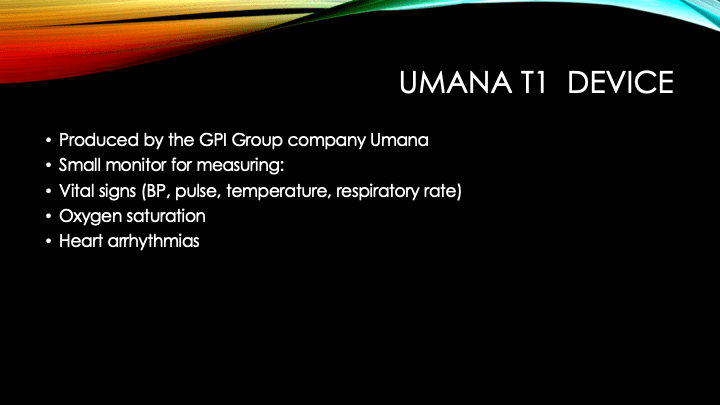
Projective Exercise 5: Antibody to a Public Antigen

As a transfusion medicine physician, I must know if I can trust my staff’s interpretation of immunohematology testing.  I may be called at night and they will provide me with results and I must use these to make a medical judgment.  If their interpretation is flawed, I might make a decision that harms the patient.

I really don’t like multiple-choice questions, but nowadays this is often the norm.  For my staff, especially senior staff and those who want to be promoted to senior staff, I have developed a series of projective exercises to help me understand their thought processes.

Here is another exercise, usually given to physicians.  I give them the following scenario:

There is a major trauma on an unidentified young adult male patient.  We do not know the transfusion, medical, or medication history.  They need six units RBCs STAT.

What blood type do you select?  How do you release the blood?

You give the 6 units and receive a specimen back.  The patient’s typing reactions are:

Forward type:  Anti-A, anti-B both negative

Reverse type:  4+ reaction with A1 and B cells

About 15 minutes later, your technologist tells you that the antibody screen is 4+ in all cells and all panel cells react 4+ both at AHG and enzyme phases.  What do you tell the treating clinician?  What do you do?

The technologist in panic has been performing AHG crossmatches but all 4+ incompatible.

Here is the panel:

I have them review this panel and tell me to interpret it

  1. What further testing would you do, if any?
  2. What blood type do you release now?
  3. What is the significance of the negative autocontrol when there is panreactivity?
  4. What if the enzyme panel results are all negative?
  5. What if the autocontrol is 4+?

The smart ones will ask for a full extended phenotype (e.g. Diamed/Biorad’s three profile cards) and for anti-H.

I tell them the clinician is very angry and demands you release more group O blood immediately?  How do you respond?

5/9/20

Sample Resident Examination for Donor Center

Reading Assignments:

  • Chapters 5-9:  Blood Donation and Collection in Technical Manual, 16th Edition
  • Standards for Blood Banks and Transfusion Services, AABB, 25th Edition

Study Questions:

  1. Which of the following candidates is acceptable for donation?
    1. Saudi, visited Sudan 11 months ago as part of National Guard exchange
    2. Saudi former student lived in UK for 2 years from 1993-95
    3. Normotensive taking amlodipine and valsartan
    4. Psoriatic using Tegison
    5. Male adult using ibuprofen for lower back pain
    6. Female 4 weeks post-partum
    7. Husband of patient with recent onset of hepatitis B infection
    8. Male stopped taking ampicillin one week ago for acute pharyngitis
    9. Donor with WBC count 12000/cmm but otherwise normal
  2. Which of the following donors is suitable for autologous donation?
    1. Cataract surgery patient
    2. Well, but had gastroenteritis 3 days ago
    3. Pregnant with Hgb 11 g/dl
    4. CGL patient with Hgb 13 g/dl
    5. Hodgkin’s disease patient Hgb 12 for exploratory laparotomy
    6. Patient with rare antibody anti-Tja, Hgb 13 for cholecystecomy
  3. How do you handle the following events?
    1. Donor draw fills bag with bright red blood in 30 seconds
    2. Donor faints when needle is shown
    3. Lipemic serum during donor plateletpheresis session
    4. Donor with numbness and tingling of extremities during donor apheresis session
  4. How would you handle the following therapeutic phlebotomy requests?
    1. Hgb 22 g/dl, suspected polycythemia rubra vera
    2. Hgb 13, suspected hemochromatosis patient
    3. Hgb 16, renal failure patient post-erythropoietin treatment
    4. Unstable angina, Hgb 9
  5. What is the final volume of each of the following blood components?
    1. Whole blood
    2. Packed RBCs—state hematocrit as well
    3. Washed RBCs
    4. Irradiated packed cells
    5. Platelet pool—state number of platelets
    6. FFP
    7. Cryo-poor plasma
    8. Cryoprecipitate
  6. What are the outdates of each of the following components?
    1. Packed RBCs
    2. Platelet pool
    3. FFP frozen at -35C
    4. Granulocyte concentrate
  7. Which donor units are acceptable for transfusion?
    1. HBsAg negative, HBcAb positive, HBsAb > 20 IU/liter
    2. HCV Ab positive, RIBA-3 negative, HCV-RNA negative
    3. Syphilis positive, FTA-ABS negative

Revised:

29/8/20

Advanced Hematology Resident Training in Immunohematology

Objectives:

  1. Theoretical:
    1. ABO system and discrepancies
    2. Rh system and discrepancies
    3. Other blood groups (Kell, Kidd, Duffy, MNSs, Gerbich)
    4. Direct antiglobulin test
    5. Comparison of gel and tube methodologies
    6. Transfusion reactions
    7. Drug-related hemolysis
    8. Inventory management
    9. Emergency blood release
    10. Massive transfusion
    11. Hemolytic disease of the newborn
    12. Transfusion-transmitted diseases and look-back
    13. Filtration
    14. Irradiation
  2. Practical:
    1. ABO/D typing
    2. Antibody screen
    3. Crossmatch
      1. Immediate-spin
      2. AHG-phase
  1. DAT
  2. Elution
  3. Antibody identification
  4. ZZAP

Clinical Responsibilities (after proven competence):

  1. Evaluation of DAT results
  2. Evaluation of antibody workups
  3. Transfusion reaction workups
  4. Component substitutions for inventory management (excluding Rh-incompatible)

Assessments:

  1. ABO typing and discrepancies
  2. Rh(D) typing and discrepancies
  3. Antibody identification
  4. DAT and drug-related hemolysis evaluations
  5. Transfusion reaction assessments
  6. Post-training

Working Hours:

  1. 0900-1700, Saturday through Wednesday
  2. Must carry pager for clinical responsibilities

Original Date:  26/6/06 for NGHA Riyadh, Reviewed 27/8/20

Advanced Hematology Resident Training in Donor Center and Apheresis

Objectives:

  1. Donor criteria based on AABB standards
    1. Is it safe for the donor to donate?
    2. Medical history
      1. Current medical conditions
      2. Past medical conditions
  2. Medications
  3. Vaccinations
  4. Travel history
  5. High-risk behaviors
  6. SARS/MERS
  7. COVID-19 convalescent plasma CCP
  8. Prion diseases
  9. Donor medical examination
  10. Is it safe for the recipient to receive the donor’s blood?
  11. Donor registration issues
    1. Positive identification
    2. Donor deferral database
  12. Donor phlebotomy
    1. Safe volume to donate
    2. Anticoagulant-preservative solutions
    3. Time limit for phlebotomy
    4. Post-donation care
  13. Donor reactions—Dx and Rx of the following:
    1. Vasovagal
    2. Seizures
    3. Air embolism
    4. Arterial stick
    5. Hematoma
  14. Donor Apheresis
    1. Plateletpheresis
    2. Plasmapheresis
    3. Plateletpheresis with concurrent plasma collection
    4. RBC collection
    5. Combined platelet, plasma, and RBC collection
  15. Autologous donation
    1. Predeposit
    2. Perioperative
    3. Intraoperative
    4. Postoperative
  16. Donor self-deferral
  17. Therapeutic Phlebotomy
  18. Therapeutic Apheresis
    1. Therapeutic plasma exchange/plasmapheresis
    2. Leukapheresis
    3. Thrombapheresis
    4. Red cell exchange
    5. Stem cell collection
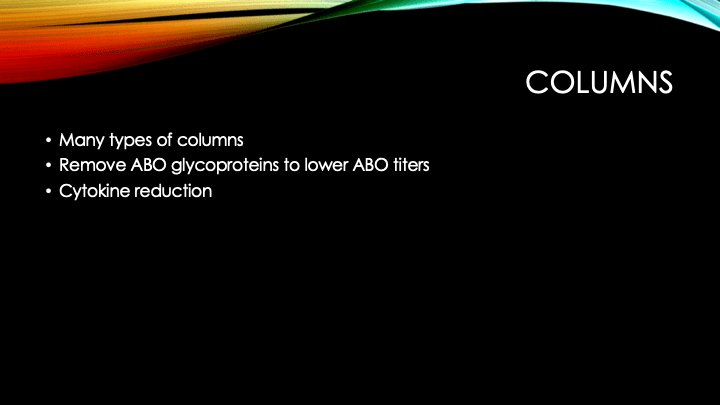
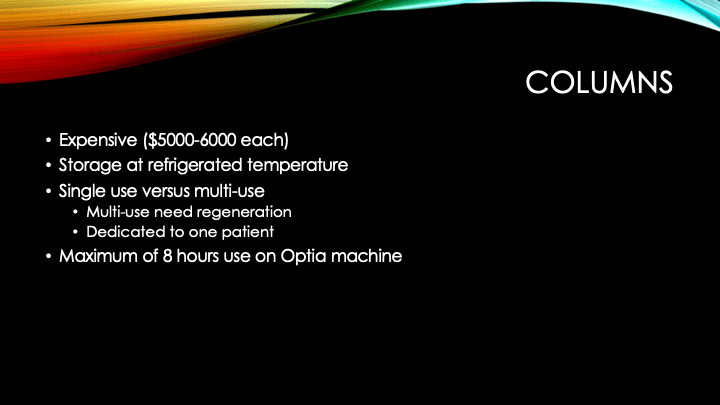
    6. Column absorption technologies
    7. Clinical indications
    8. Writing orders for above procedures
  19. Component Processing:
    1. Manual
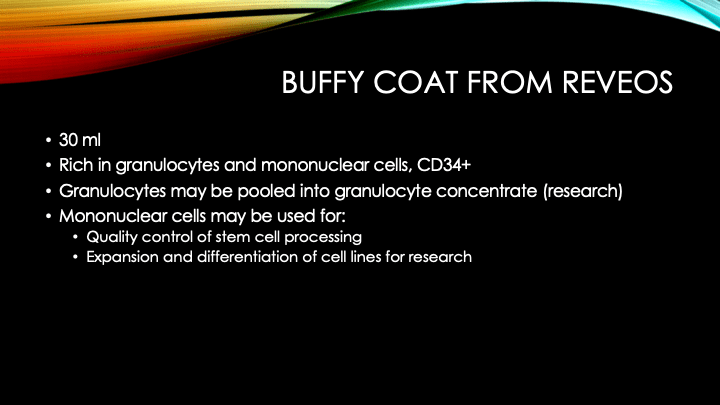
    2. Automated—Reveos
    3. Pathogen Inactivation Mirasol
    4. Buffy coat vs classic platelet-rich plasma platelets and pools
    5. Platelet Additive Solution PAS
    6. FFP, FP24, thawed plasma
    7. Cryoprecipitate
    8. Cryo-poor plasma (plasma, cryoprecipitate-removed)
    9. COVID-19 convalescent plasma CCP

Clinical Responsibilities (after proven competence):

  1. Triage of donor requests
  2. Handling of donor reactions
  3. Approval of therapeutic phlebotomies
  4. Assistance with therapeutic apheresis

Assessments:

  1. Pre-training/baseline
  2. Competency documentation for clinical responsibilities (#11 above)
  3. Post-training

Working Hours:

  1. 0900-1700, Saturday through Wednesday
  2. Must carry pager for clinical responsibilities

Reviewed 17/8/20

Basic Hematology Fellowship Rotation in Transfusion Medicine

Objectives:

  1. Donor Center
    1. Donor eligibility criteria
    2. Whole blood collection
    3. Donor apheresis (platelets, plasma, dual-RBC)
    4. Donor reactions
  2. Therapeutic Apheresis
    1. Plasma exchange
    2. Leukocyte reduction—stem cell collection
    3. Reductive thrombapheresis
    4. RBC exchange
    5. Column-absorption procedures including phototherapy
  3. Component Preparation
    1. Preparation and release issues
  4. Transfusion Service:
    1. Blood component therapy
    2. RBC blood groups
    3. Compatibility Testing
    4. Antibody Identification and clinical significance
    5. Transfusion reactions
    6. Direct antiglobulin test clinical significance
    7. Drug-related hemolysis

Venue:

TMS Donor and Transfusion Services

Conducted by:  Head, TMS, and senior TMS technical staff

Evaluation:

Discussion of topics with TMS Head and written final examination

Source Materials:

  1. Technical Manual, AABB
  2. Standards for Blood Banks and Transfusion Services, AABB
  3. Apheresis, Principles and Practice, AABB

This is a full-time, one-month rotation—attendance in mandatory.  Vacations should NOT be taken during this rotation.

Originally Prepared for NGHA Riyadh 31/3/09

Reviewed 26/8/20

Projective Assessment 4

As a transfusion medicine physician, I must know if I can trust my staff’s interpretation of immunohematology testing.  I may be called at night and they will provide me with results and I must use these to make a medical judgment.  If their interpretation is flawed, I might make a decision that harms the patient.

I really don’t like multiple-choice questions, but nowadays this is often the norm.  For my staff, especially senior staff and those who want to be promoted to senior staff, I have developed a series of projective exercises to help me understand their thought processes.

Here is another exercise, usually given to base medical technologists.  I have the staff review this panel and tell me to interpret it:

You just can’t solve this without the enzyme panel.  Will the staff member ask for this?  Will he note that the one cell reacting is homozygous for E?  Will he ask for extended antigen typing (the patient is R1R1)?

Projective Assessment 3

As a transfusion medicine physician, I must know if I can trust my staff’s interpretation of immunohematology testing.  I may be called at night and they will provide me with results and I must use these to make a medical judgment.  If their interpretation is flawed, I might make a decision that harms the patient.

I really don’t like multiple-choice questions, but nowadays this is often the norm.  For my staff, especially senior staff and those who want to be promoted to senior staff, I have developed a series of projective exercises to help me understand their thought processes.

Here is another exercise, usually given to base medical technologists.  I have the staff review this panel and tell me to interpret it:

Everyone reports this is anti-S, enzyme-labile, but relatively few bother to ask for the S phenotype.  All were trained to check the phenotype as part of the workup.  I also had a version of this examination in which I only showed the AHG results.  Many did not ask to perform enzyme.

The proper answer was probable anti-S, enzyme-labile, but request S phenotype. If the enzyme had not been performed, then the enzyme panel results should be requested.

Projective Exercise 2

As a transfusion medicine physician, I must know if I can trust my staff’s interpretation of immunohematology testing.  I may be called at night and they will provide me with results and I must use these to make a medical judgment.  If their interpretation is flawed, I might make a decision that harms the patient.

I really don’t like multiple-choice questions, but nowadays this is often the norm.  For my staff, especially senior staff and those who want to be promoted to senior staff, I have developed a series of projective exercises to help me understand their thought processes.

Here is another exercise, usually given to base medical technologists.  I have the staff review this panel and tell me to interpret it:

Many staff called this anti-E and anti-c.  They did not note that there is no E-positive c-negative cell.  Also, many did not see that one c-positive cell had no reaction—they did not notice that the c was heterozygous (C+c+ not c+c+).

A medical technologist must not be sloppy, but rather very meticulous.  If there are discrepancies in the panel, they must rule out dosage, zygosity, etc.  They should not name an antibody specificity with only one antigen-positive cell.

To Be Continued:

22/8/20

Projective Exercise 1

As a transfusion medicine physician, I must know if I can trust my staff’s interpretation of immunohematology testing.  I may be called at night and they will provide me with results and I must use these to make a medical judgment.  If their interpretation is flawed, I might make a decision that harms the patient.

I really don’t like multiple-choice questions, but nowadays this is often the norm.  For my staff, especially senior staff and those who want to be promoted to senior staff, I have developed a series of projective exercises to help me understand their thought processes.

Here is a sample exercise.  I have the staff review this panel and tell me to interpret it:

Most of them answer that this is an anti-Cw without hesitation.  However, they are basing that on only one Cw-positive cell.

More astute ones indicate it might be anti-Cw but ask to test additional Cw-positive cells and perform an enzyme panel.  These are the ones that I will consider for promotion now.