Opinion: Transfusion Education for Physicians

Although there are resources allocated for nursing transfusion proficiencies, the training for physicians and medical students may not be as developed.

In medical school in the United States, I had one hour dedicated to transfusion medicine and it did not discuss the actual proficiencies necessary to select and physically transfuse patients.  In my clinical rotations, especially surgery, I was given “cookbook formulae” on what to order for different procedures—without any explanation.

I had considerable training in transfusion medicine during my pathology residency, and I took it seriously.  Many/most pathology residents are not interested in the topic and use the rotation for vacations and other business.  They learn what is necessary to pass the pathology board examinations and do not intend to practice this at all.  Actually, I sense that many practicing pathologists are afraid of blood bank and minimize their activities there.

What about the non-pathology residency training?  In the Middle East, some centers rotate the hematology, surgical, and obstetrics-gynecology residents through the blood bank.  In other posts, I have discussed some training plans I have used for each group.

Sadly, however, most practicing physicians do not well understand how to select and order blood components or administer components.  I try to tell them that they should at least know if the blood components being used for their family members are correct.

In a previous position, there were mandatory training programs for physicians including infection control, fire,  and disaster training.  There was even a program on handwashing!  Yet, there was no required training for transfusion practices.  I had offered to make such a training program but there was little interest.

Minimally, such a proficiency program should be offered to all physicians who might order a transfusion.  It should include:

  • Indications for transfusion of each component type including the institution’s transfusion triggers
  • Indications for modified components, e.g. irradiated, aliquoted, etc.
  • How to order blood components—manually and in the institution’s computer system
  • How to administer blood components, including the maximum transfusion times (e.g. four hours for RBC components), use of filters, etc.
  • Recognition and treatment of transfusion reactions and other adverse effects

In my career, I received blood component orders with many errors.  In the pre-computer, paper era, the blood bank staff automatically corrected these under the direction of the blood bank medical director.  Nowadays, with computer systems, it may not be possible for the blood bank staff to “autocorrect” the orders.

In my Middle Eastern practice, we could still correct the orders—even after adopting a blood bank computer system.  That will be the subject of a future post.

Training Future Transfusion Medicine Physicians: Need for Technical-Medical Expertise

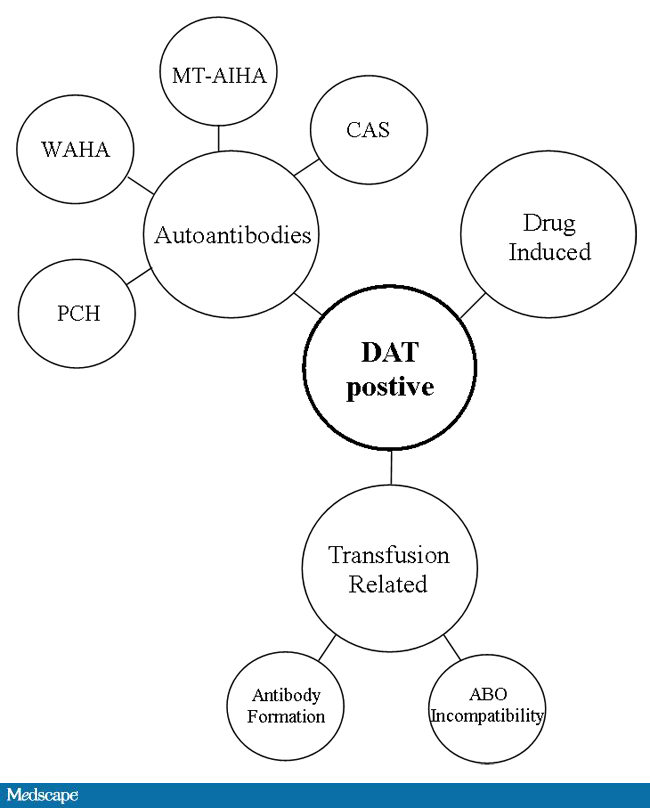
In a previous post, I discussed transfusion training for hematology fellows and general pathology residents.  I have no expectations that most of them have any interest in the field so I suggested concentrating on the interpretation of the direct antiglobulin test DAT and turn-around-times for services.

In contrast, the transfusion medicine physician in-training needs to understand in detail all processes, donor and patient—especially test interpretation so that he/she can make medical decisions and variances.

During my training, I was fortunate to be in a residency training program that also had an American Specialist-in-Blood Bank SBB training program.  To a large extent, I attended the SBB program and even worked on the “wet” specimens.

I had no delusions that I would ever function as technologist or SBB in the blood bank.  However, that extended blood bank training has made me the physician I am.  I can correlate advanced, even reference, procedures to my medical knowledge and thus provide a unique offering.  In contrast, even the SBB is not a physician and cannot make the medical correlations.  Recently, I was flattered at an AABB meeting when the speaker thought that I was an SBB.

In certain regions where reference immunohematology laboratories and SBBs or equivalent are rare, the transfusion medicine should have sufficient technical background to help fill this gap.  In my practice, I review all antibody and DAT workups and make interpretative comments for the physicians and nursing staff.  These comments are entered into the blood bank computer system.

I personally tutor the trainees and make certain that they understand potentially dangerous patterns such as antibodies to high-incidence antigens, significance of the autocontrol in panreactivity, and assessing for fatal acute transfusion reactions—both hemolytic and non-hemolytic.

It also helps when I can discuss with my technical staff my interpretations and choices for clinical management.  They get a better idea how important their work is for patient care and understand how any errors may adversely affect the patient.

In regions where there are good immunohematology reference laboratories, some of this may be less necessary.  I lament that transfusion medicine physicians may not maintain these skills and must rely on others to their detriment.  Even if one is comfortable with this, the physician is still ultimately responsible for making the clinical decision.

Therapeutic Apheresis Volume Calculations

You can get the values off the therapeutic apheresis machine, but in the middle of the night when you have to write orders, it is convenient to estimate the volumes (whole blood, plasma, RBCs).  These are the values from my lectures to hematology fellows while I was at HMC Doha:

Whole Blood:

Weight in kg X 70 ml/kg = whole (whole) blood volume adult

Weight in kg X 85 ml/kg =whole blood volume for child (prepubertal)

Weight in kg X 100 ml/kg = whole blood volume for neonates/premature

Example:  70 kg adult has 4900 ml blood volume (I round up to 5 liters)

Plasmacrit + hematocrit = 1.00 in fractions (100%), ignore buffy coat volume

Plasmacrit = 1- hematocrit

Plasma volume:

Plasma volume = whole blood volume x plasmacrit = whole blood volume X (1-hematocrit)

RBC volume:

RBC volume = whole blood volume x hematocrit

Estimates for blood components:

The volumes will depend on the original amount collected (e.g. 450 vs 500 ml),  original preservative solution used (e.g. CPD), use of automated component production such as Terumo Atreus or Reveos, use of RBC additive solution (e.g. SAGM), leukodepletion, platelet additive solution, pathogen inactivation.

At HMC Doha, the average values were:

300 ml for leukodepleted RBCs in SAGM prepared by Reveos

300 ml for platelet pools in Mirasol and platelet additive solution (residual WBC < 1E6)

300 ml for plateletpheresis concentrate (2.4E11) in Mirasol and platelet additive solution

250 ml for leukodepleted, pathogen inactivated plasma

Opinion: International Perspective

In all my years practicing medicine outside the United States, I have come to appreciate working with a diverse group of health care professionals from many countries and cultures and with many different primary languages.

I learned that there are many different international standards and not all agree with each other.  Yet, despite the apparent contradictions, they all work to improve patient care and were generally successful.  It made me reconsider my roots and think less dogmatically and be willing to learn from other perspectives.

This applies in many ways.  First, which English should we use?  Most people are at least somewhat aware of American English, but there are differences with British, Australian, and international English—even the term “blood bank” may have different meanings:  is it a hospital transfusion service, is it a donor center, or some combination of the two?

I have worked at many sites where I was the only person native in English.  I always tried to conceive how difficult it could be for someone non-native to understand and communicate in a highly technical and highly Germanic structured language.  I considered the scenario where I had to work in another language exclusively and perform all my tasks—I highly respect my staff having to cope with this.

English technical writing includes a lot of passive voice, subjunctive mode, perfect tenses, and participles.  How formidable a barrier are these to staff whose native languages may not use these structures?

I am not saying that English is the best language to perform the work in, but it is most prevalent one so everyone must cope with it.  I told many of my staff to learn German to better understand English grammar.

What bothers me is that certain software vendors and visiting lectures send speakers and staff who ONLY think in American English and American culture.  I can think of several anecdotes:

One speaker was talking about hyperlipidemia and used non-SI units.  He kept stating cholesterol > 200 and LDL-cholesterol > 120 to an audience who only used SI units.  Could the audience quickly convert to cholesterol > 5 and LDL > 3?  Did they know what a temperature of 104 F was 40 C?

Another speaker for a software company used an analogy of collecting maple sap and making maple syrup—in a presentation in the Middle East.  How many in the audience even knew what maple syrup is?

In building a series of software modules, some company staff used 24-hour clock and others used 12-hour clock.  It was chaos trying to define a 24-hour interval between the different modules.

Finally, I think of the Aesop’s fable about the mother who gave birth to a very ugly child, but to her, he was the most beautiful child in the world—so much so that she entered him into a beauty contest.  Well, each of us is the “mother” to our documents and memos.  The writing looks good to us and is perfect, but do our staff interpret it the same way we do?

I had my staff read my documents and then explain back to me what I was trying to say.  I was shocked at the differences in many cases.  After this, I always included a validation step to have other people read and interpret what I was saying—and correct any misconceptions in the writing before I finally released the document.

In summary, it is a whole new world outside the United States.  Don’t assume everyone thinks the same way or uses the same criteria to accomplish goals.  Be open to this and you will have a rewarding international career.

30/10/20

Base Medical Technologist Assessment Examination

Background:

I prepared this exam for base transfusion service technologists and candidates. For prospective new staff, I would be more lenient and use it as a projective exercise in the potential abilities. However, for staff working one year in my blood bank, I expected a higher score. Each and every problem is based on issues they would actually encounter at work–nothing esoteric.

Answer the following questions:

  1. What is the blood type in each of the following results:
Anti-AAnti-BA1 cellsB cellsType?  
  4+  0  0  3+ 
  0  4+  3+  0 
ABO Typing Problems
  1. You are signing out a unit of FFP, Group A Pos, Unit #23556 for Mohd Ahmad Ali Al Harbi, MRN# 729887 in Ward 21.  The nurse comes with the requisition to pick up the thawed unit.  The requisition says to pick up the thawed FFP for Mohd Ali Ahmad Al Harbi, MRN# 728987 in Ward 21.  Can you release the unit?  Explain.
  1. The antibody screen and crossmatch results are shown on the following IgG Coombs card (Biorad):

The reactions I-II-III are the antibody screen results.  Note the crossmatches # 91 and 98.  Which one(s) is/are compatible?

  1. The following are actual ABO/D typing results with the Diamed (Biorad) reagents.  What are the ABO/D types?
  1. The Blood Bank is severely short of AB packed cells and AB plasma.  What other blood types can you safely issue?

Request for AB packed RBCs:  Permissible substitutions are:

Request for AB plasma:  Permissible substitutions are:

  1. A specimen for crossmatching is drawn at 7:30 a.m. on 26/10/20.  When does it expire?
  1. Emergency blood, group O positive is issued for a 30 year-old male victim of a traffic accident.  You receive the specimen and complete the crossmatching.  You find the unit is incompatible.  What do you do?
  2. A patient has anti-C antibody.  How do select the appropriate type of blood to give?  Select any or all that apply:
    1. First crossmatch the requested number of units, then if compatible, release them.
    2. First crossmatch the requested number of units, then antigen type them for “C”, release only the ones that are C-negative.
    3. First screen for C-negative units, then crossmatch and release compatible units.
    4. None of the above
  3. Evaluate the attached antibody screening and panel results:

37 year old pregnant female, no previous history:

26 year old G3P3 pregnant female in labor, O-positive, no previous transfusion or antibody history:

19/10/20

Projective Exercise 8 Solution: D-positive with anti-D

Some Possible Explanations:

Always review the transfusion history of all component types, medication history, and the clinical history!! Start with this first.

  1. Receipt of plasma with anti-D (RhIG, IVIG, etc.)–passive antibodies
  2. Partial D with anti-D:
    1. Partial or mosaic D patient who received D positive RBCs and made anti-D directed against its missing epitopes
  3. Anti-G:
    1. Not all anti-G is anti-C and anti-D:  It is really a separate specificity.  It is possible that anti-G may be made even though the patient is C-positive.
  4. Anti-LW:
    1. However, it is unlikely to show such strong reactions

Can you think of other explanations?

3/10/20

Projective Exercise 8

As a transfusion medicine physician, I must know if I can trust my staff’s interpretation of immunohematology testing.  I may be called at night and they will provide me with results and I must use these to make a medical judgment.  If their interpretation is flawed, I might make a decision that harms the patient.

I really don’t like multiple-choice questions, but nowadays this is often the norm.  For my staff, especially senior staff and those who want to be promoted to senior staff, I have developed a series of projective exercises to help me understand their thought processes.  I emphasize that I do not want a mere regurgitation of isolated facts:  I want integration of the facts into useful information!!

The following is my favorite assessment, offered to advanced staff and candidates for senior technologist, supervisors, and technical manager positions.  Usually, these staff have SBB, ART, FIBLS or equivalent qualifications.

You are reviewing abnormal test results and receive the following case:

Anti-A:           4+

Anti-B:           0

Anti-A,B        4+

A1 cells         0

B cells           3+

Anti-D            3+

D-control      0

Antibody Screen:  3+ in SC1 (R1R1), 4+ in SC2 (R2R2), 0 in SC3 (rr)

Antibody Identification:  Anti-D

Give possible explanation(s) for this situation.  Request any additional information you need.

What blood type will you transfuse?

Solution will follow in a subsequent post.

30/9/20

Projective Exercise 7

As a transfusion medicine physician, I must know if I can trust my staff’s interpretation of immunohematology testing.  I may be called at night and they will provide me with results and I must use these to make a medical judgment.  If their interpretation is flawed, I might make a decision that harms the patient.

I really don’t like multiple-choice questions, but nowadays this is often the norm.  For my staff, especially senior staff and those who want to be promoted to senior staff, I have developed a series of projective exercises to help me understand their thought processes.

Here is another exercise for ABO discrepancies.  I offered this to senior technologist and supervisory candidates:

Can they name the conditions that give these results?

23/9/20

Projective Exercise 6

Projective Assessment Exercise 6

Zeyd Merenkov, MD, FCAP, FASCP

Independent Consultant in Transfusion Medicine

As a transfusion medicine physician, I must know if I can trust my staff’s interpretation of immunohematology testing.  I may be called at night and they will provide me with results and I must use these to make a medical judgment.  If their interpretation is flawed, I might make a decision that harms the patient.

I really don’t like multiple-choice questions, but nowadays this is often the norm.  For my staff, especially senior staff and those who want to be promoted to senior staff, I have developed a series of projective exercises to help me understand their thought processes.

Here is another exercise using elution:

Will they know to get the medication history?  What are the mechanisms by which a drug may cause a positive DAT?

21/9/20

Projective Exercise 6: ABO Discrepancies

As a transfusion medicine physician, I must know if I can trust my staff’s interpretation of immunohematology testing.  I may be called at night and they will provide me with results and I must use these to make a medical judgment.  If their interpretation is flawed, I might make a decision that harms the patient.

I really don’t like multiple-choice questions, but nowadays this is often the norm.  For my staff, especially senior staff and those who want to be promoted to senior staff, I have developed a series of projective exercises to help me understand their thought processes.

Here is another series of exercises, usually given to advanced technologists and supervisor candidates.  I want them to tell me what they need to assess each scenario.  Can they definitively diagnose solely on the information provided?

These are open-ended and may have more than one possible interpretation:

9/9/20