

Issues with Labels

You can have the most sophisticated blood bank software, but if you can’t read the labels or if they fall off, you have a disaster.  These are my thoughts from implementing our blood bank computer system back in 2013.

Check Digits:

Both ISBT specimen and product labels have an internal system to verify that they have been read correctly.  Within the blood bank software, this should not be a problem.  However, can your third party such as a hospital information system HIS read them?

ISBT Compatibility:

The institution’s HIS could not read the component labels.  To this date, the problem has not been fixed.  As a workaround, we sent them the ISBT label codes directly from the blood bank software.  The only complete transfusion record was in the dedicated blood bank computer system, not the HIS.  You could not rely on the bedside nursing entry at all.

The HIS did not use the ISBT database and had no values for the E codes.  Again, we had no choice but to send an abbreviated E-code descriptor to them.  We did not use their transfusion module at all, but one of our clients did.  They had to hard code the list of E codes in use with their descriptors into their HIS.

Label Adhesive

We tested candidate labels at room temperature, 1-6, minus 18, and minus 80 C.  We found that most of the labels’ adhesive were not sticking at minus 80.  For some, you could literally blow on the blood bag and the label fell off.  I imagined a scenario in which I opened a freezer and saw the blood bag labels all lying separately at the bottom.

RFID Tags:

Do you use an RFID tag integrally attached to the ISBT label OR do you stick a separate RFID tag?  If the latter, how do you ensure that you put the proper tag on the proper bag?

Readability:

Readability:  Can all your blood bank devices read your printed labels?  Do you have to adjust the printers for this?  Whose responsibility is it to do this? 

Labels printed outside the blood bank:

If you receive patient specimens from outside the blood bank, can your devices read them?  Who is responsible to adjust the printers in the wards and clinics?

Validations:

Who validated that the HIS prints the accurate complete label for the right patient?  We discovered that this was not the case with our HIS and needed correction by them.  Remember that any processes affecting Transfusion Medicine should be assessed by Transfusion Medicine.  Do not accept verbal assurances from anyone, not even your HIS.

2/2/21

Teaching Document: Validation Process

This is a teaching document for medical technology and transfusion fellows to explain the general structure of a validation.

Principle:

All validations must be planned.  A validation protocol must be prepared with specific criteria for acceptance.  All validations with attached evidence must approved by the Head, Transfusion Medicine.

Policy:

  1. A written validation protocol must be prepared in the advance and at least including the following:
    1. Specific parameters and number of iterations to be performed
    1. Designated staff to perform validation
    1. Documentary evidence of the testing
    1. Specific acceptability criteria
  2. The completed validation protocol must be submitted to the Division Head, Transfusion Medicine, or designee for review.
  3. Once the validation plan has been reviewed, it must be performed by the designated staff.
    1. Software validations will be performed in a specific test environment, not in the live, production system.
  4. The completed validation document, including screenshots of the software functionality if applicable, must be submitted to the Division Head, Transfusion Medicine for review.
  5. The equipment or software may only be used if the acceptability are met AND the validation is approved by the Division Head, Transfusion Medicine or designee.
  6. The completed validation protocol will be stored in the document control system.

Reference:

Standards for Blood Banks and Transfusion Services, Current Edition, Bethesda, MD, USA

Blood Component Variances

Principle:

AABB Standards requires that all variances are documented and investigated and corrective actions taken when necessary.  Any time a blood component is found to be defective (e.g. broken seal, leaking, discoloration, clots, etc.), mislabeled, or testing results incomplete or not documented,  the cause should be investigated by the Donor Center and reported back to the initiator of the report in writing.

Policy:

  1. All transfusion services must inspect all blood components upon receipt (e.g. for leakage, broken seals, improper temperature, clots, discoloration, gas, etc.).
  2. Labels must be compared to the consignment sheet for complete concordance.
  3. If units are found that are not listed or mislabeled, they must be reported in writing to the Donor Center and returned as-is for investigations.
    1. If the unit is leaking or broken, ensure standard/universal precautions are taking to minimize contact with the fluids.
    2. Damaged blood components must not be used.  Units with mislabelings or other discrepancies between the labels and the consignment sheets may be used when such errors are corrected and officially reported by the Donor Center.
  4. Use the standard incident (occurrence variance) report form (OVA) for each and every variance.
  5. The submitting location should keep a copy of the OVA and immediately forward the original to the Transfusion Quality Section.
  6. The Donor Center should investigate the variance and prepare a written investigative report and submit to the Division Head, Transfusion Medicine.
    1. Donor Center investigations should be completed within one calendar week.
  7. The Donor Center should forward a copy of the completed written investigation to the transfusion service which initiated the investigation.
  8. The copy of the investigation report should be attached to the OVA and kept at the local site.
  9. Transfusion Quality shall include these variances in its monthly reports.

References:

Standards for Blood Banks and Transfusion Services, Current Edition, AABB, Bethesda, Maryland, USA

Washed RBCs

Note:  This is an updated version of a previous post.

Principle:

Washing RBCs removes plasma and reduces the leukocyte count only by 1 log.  For leukodepletion, we must rely on filtration to reduce the WBCs to less than 1 x 10⁶ per unit according to CE rules.  Red cells or platelets in additive solution contain only minimal plasma (about 35 ml).  There are few definite indications for washing RBCs and it should be rarely necessary.

Policy:

Washing RBCs should only be done in the following circumstances:

  1. Deglycerolization of frozen RBCs.
  2. Severe allergic or anaphylactic reactions to plasma proteins
  3. IgA deficiency with anti-IgA
  4. Paroxysmal nocturnal hemoglobinuria PNH—relative indication (often these patients receive RBCs before the diagnosis of PNH is confirmed)
  5. Transfusing a previously irradiated RBC unit for pediatric use if more than 24 hours has passed since it was irradiated.
  6. Any other time when so designated by a transfusion medicine consultant.

Note:

  1. If anyone requests washed RBCs and it does not fit into one of the above categories, contact the transfusion medicine consultant.
  2. Washed RBCs are NO substitute for leukodepleting RBCs by filtration NOR can they be used in place of irradiation for prophylaxis against transfusion-associated-graft-versus-host disease TAGVHD.  Using the Reveos automated component processing system, all components are leukodepleted—RBCs are released in SAGM.

Reference:

Standards for Blood Banks and Transfusion Services, Current Edition, AABB, Bethesda, MD, USA

Opinion: Ready after Fellowship?

I was recently interviewing a candidate for consultant in Transfusion Medicine.  Several months previously he had completed a fellowship in Transfusion Medicine in the United States.  He was applying for a position in my hospital in Qatar, which included seven hospitals and a blood donor center.  He had no training in donor management or therapeutic apheresis.

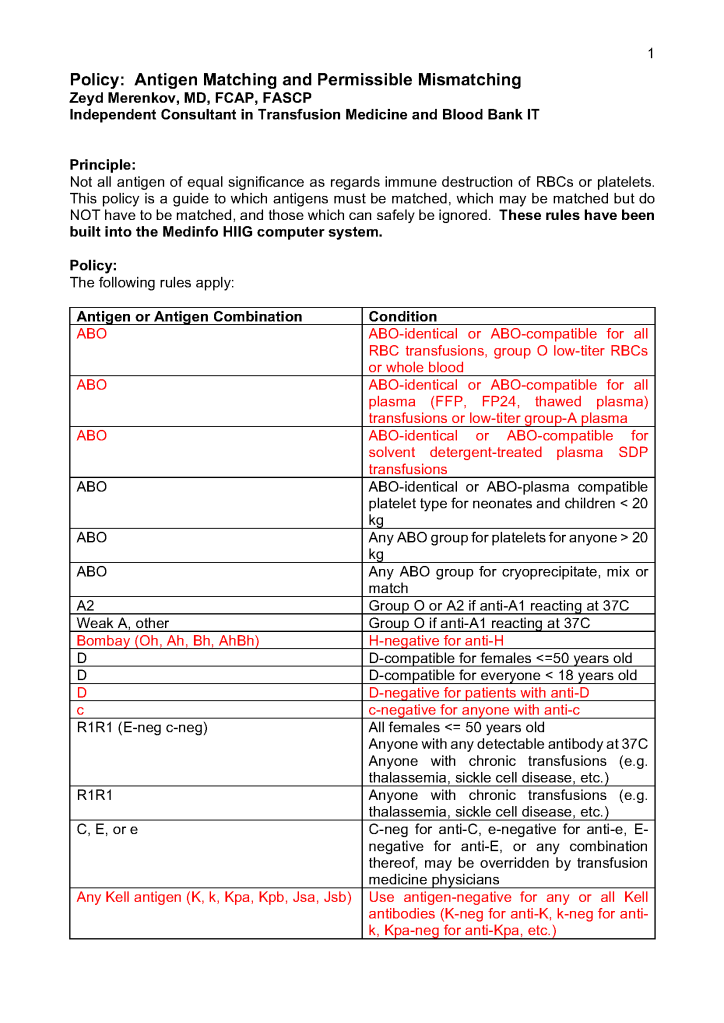
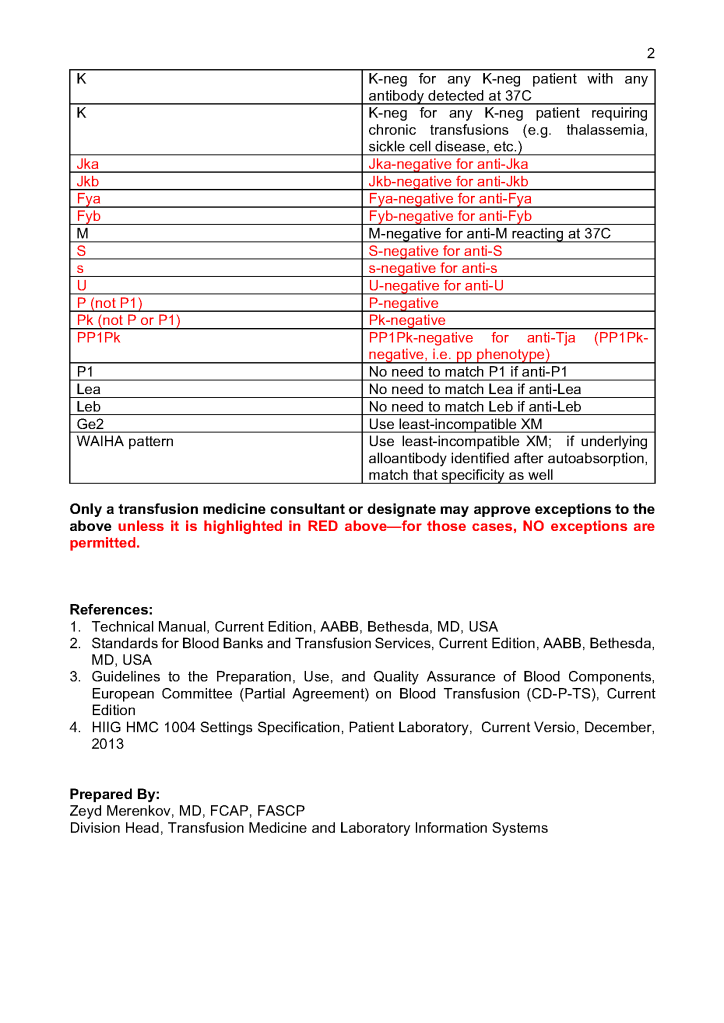
The successful candidate was to rotate on-call to cover all hospitals and the blood donor center.  He had never worked outside the United States.  Routinely, he did not review antibody panels since those workups were usually sent to the local blood provider there.  In his training, he had strictly followed US FDA and American version of AABB Standards.  His training center did not routinely do extended phenotypes (C, c, E, e, and Kell).  Extra testing and phenotyping had to be explicitly ordered by the clinician to get reimbursement.  Thus, there was no prophylactic antigen matching done on patients.  He did not feel comfortable reviewing antibody panels.

He had no experience with universal leukodepletion, pathogen-inactivation, platelet additive solutions, or automated component production such as the Terumo BCT Reveos.  He did not interpret donor marker testing results.

On the contrary in our organization, the transfusion medicine physician had to review all antibody panels (usually he was the most knowledgeable person for this).  We followed the Council of Europe CE and other practices that did prophylactic antigen matching.  We were also in charge of donor qualification and therapeutic apheresis and reviewed any product deviations from the Reveos and donor marker testing.

Clearly, this candidate did not practice transfusion medicine in the way that was necessary for our operations.  We could not cut him loose and make him responsible for a hospital transfusion service or the blood donor center.

Let us contrast this candidate for one being recruited for anatomic pathology/histopathology.  Grossing specimens, performing frozen sections, reading slides, diagnosing cases are the same everywhere in the world.  After completing his American certification, he could perform his profession almost anywhere in the world.

Transfusion medicine practices need to be localized and the selection of blood components and donor qualification are different.  Most of the world does not follow US FDA and has access to blood components, tests, and other technology that is different and maybe more advanced than his training in the USA.

I gave him a clinical scenario to interpret.  An AB patient with anti-K needs to be transfused with plasma.  Are there any special requirements for the plasma?  What if the only AB donor had anti-K would you use it?  What if the only RBCs available had not been phenotyped for Kell?  What would you do?

He did not know that we discard plasma with clinically significant alloantibodies routinely.  He did not want to phenotype the RBC unit for this patient since this had not been explicitly ordered by the clinician.

My recommendation was not to hire this candidate if there were others who had worked in European or similar systems to our own practices.  In effect, to use this physician, he would have to undergo a mini-fellowship to learn our practices since they were contrary to ours.  Unfortunately, we were very short-staffed and did not have resources to offer this training.

In summary, blood bank practices are very localized.  If you are considering to hire staff from other countries not following your standards, you must assess if the candidate is flexible to change his practices and/or whether you have the resources to train the physician.

Stem Cell Collection Logistics

Everyone is excited at the potential of using stem cells for research and therapy. Below is my presentation of the logistics necessary to get those stem collected in an orderly manner, especially in this time of the COVID-19 pandemic. It will also consider blood bank software logistics.

Clinical Significance of a Negative DAT

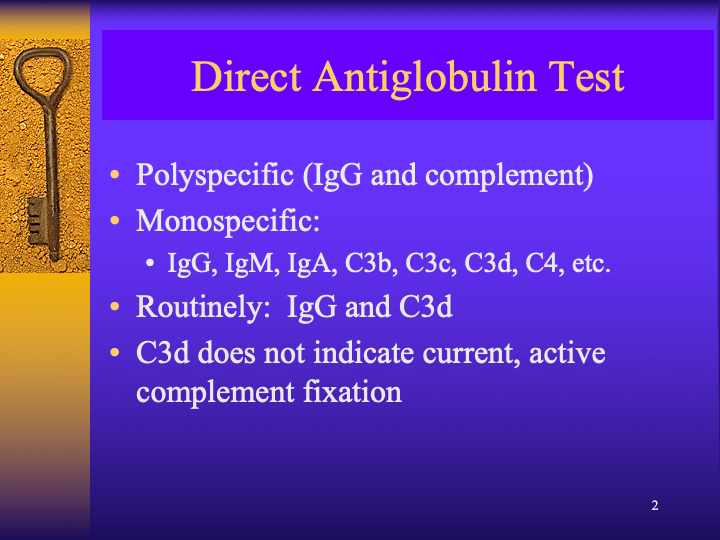
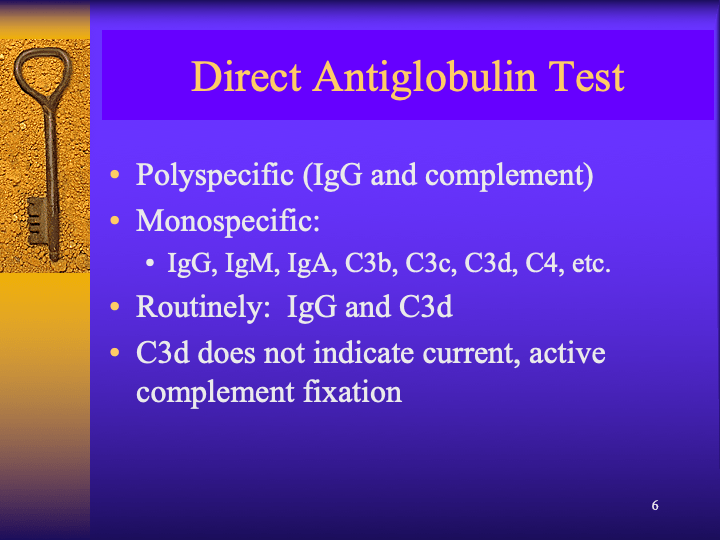
In my opinion, the direct antiglobulin test is the most important concept that a transfusion medicine physician or technologist must understand in interpreting complex serology patterns.

Like all other testing, the DAT must not be interpreted alone but rather in the context of other laboratory and clinical results.  Still, it is very important to understand the significance of the DAT in hemolysis.

The mere presence of immunoglobulin on the RBC surface does not necessarily mean severe hemolysis.  The DAT strength increases with increased immunoglobulin coating of the RBCs but does not necessarily indicate how quickly the RBCs will be cleared.  That depends on the class and subclass of the antibody, whether and if so, how avidly it fixes complement, etc.

One trick question I give in my lessons to staff is, “What is the clinical significance of a negative DAT?”

In my career, I have seen severe hemolysis with either negative or weak DAT, the latter especially if there is weak C3 staining.  The DAT can be negative because there is no significant antibody OR there is a highly destructive antibody causing massive hemolysis, leaving only the antigen-negative cells (and in that case, there is still the possibility of innocent bystander hemolysis).

I show them the following case of an ABO-incompatible acute hemolytic transfusion reaction:

OLYMPUS DIGITAL CAMERA

In this case, a group A patient received a group B RBC unit intended for a patient with a similar name who was group B and was in a bed next to him.

Notice the patient’s complete loss of the reaction to group B cells in the reverse type and the supernatant hemolysis.  The DAT was negative.  The transfused B cells were not even present in the post-transfusion gel.

Here is the urine specimen from that case showing gross hematuria:

OLYMPUS DIGITAL CAMERA

So, in severe, life-threatening hemolysis, even antibody-mediated, you may have a negative DAT.  DAT negativity may also be seen in non-immune hemolysis.  I will discuss causes of DAT-negative hemolytic anemia is a future post.

In summary when doing a hemolysis investigation, a negative DAT does not mean everything is all right.  Everything must be interpreted in the context of the clinical and other laboratory findings.

DAT-Negative Hemolytic Anemias

This is a summary diagram for the causes of DAT-negative hemolytic anemia, both immune and non-immune. For immune cases, a negative DAT may indicate “not-detected” with the amount of immunoglobulin on the RBC being below the threshold of the test methodology being used. Also rare IgA associated cases will not be detected unless a specific alpha-heavy chain monospecific reagent is used.

Opinion: Laboratory Software Issues from Hell

In my career, I have dealt with many different laboratory software vendors.  Regretfully, not all encounters have been straight-forward.  Since ultimately these products are used for patient care, I had hoped that there would be a sacred trust to do what is best.

Things that bother me:

  1. Current state:  whoever prepared it for the client, didn’t care or understand the local processes and came up with a generic:  Order it, collect it, receive it, do it, report it for each and every test.
  2. No training for super users:  more like lambs being led to the slaughter.  They will obey the vendor out of fear of making a mistake.
  3. No discussion of options:  pushing us to take the default setting—not even offering the available options.  The only way you find out there are available options is because other staff have used the same software at other institutions which used these options.
  4. Corrections to build:  only giving one shot to do it right, further corrections cost $$
  5. Scenarios:  vendor shows specially crafted scenarios that “work” but when you ask the vendor to do a random, non-scripted scenario, it crashes.
  6. Scalability:  limited scalability on client’s chosen platform.  That may force a rebuilding of the software when the limit is reached.
  7. Reference site does not match the test volume or activities of the client, uses different platform, and thus you cannot make a valid assessment.
  8. Performance issues:  if you don’t know why the system is slow, you can add more hardware (RAM, disk space, etc.) and try again—it can’t be due to the software design!
  9. Handling of requests:  does not permit your local IT staff to make changes, must send it back to the vendor for $$
  10. Waiting until hell freezes over:  will we get the corrected/updated package during this reincarnation?
  11. Interfaces:  an acceptable communication link is when one side speaks Sanskrit and the other Algonquin and they both hear each other, but who cares if they understand?
  12. Waiting for Godot:  God forbid if your equipment needs an interface not currently available:  how many cycles of the big bang can you wait?
  13. Champions or Heroes:  make a class of users who are to be evangelists for the new system and have them undergo sensitivity training including actions that are culturally irrelevant.  Don’t tailor it to local sensitivities or customs.  Will this convince the staff how useful the software is?
  14. Relevance of vendor experts:  Assume everyone understands what maple syrup is or comes from Kansas.  The expert assumes everyone has the same background as his/hers.  Who in the Middle East has seen maple syrup being made?  How can that analogy be useful for building software?
  15. Describe all reference units in feet/pounds/inches/furlongs/fortnights—no metric.  Do not use SI.
  16. Mix 24-hour clock with 12-hour clock:  what does 12:00 mean?  How do you measure time intervals?
  17. Consulting companies:  They are supposed to assist the client with the settings, but do they have the client’s best interests at heart?  Some are good spin-doctors and transfer blame to the client’s software staff when it is really their responsibility for the build.
  18. Rush, rush, rush:  Administrative powers who just want everything done quickly whether or not it is correct or validated properly, who cares if the processes built are right?