Handling of Placenta Previa in the Blood Bank

The following protocol is the one I made for National Guard Health Affairs in Riyadh and has been updated to include the use of a blood bank computer system.

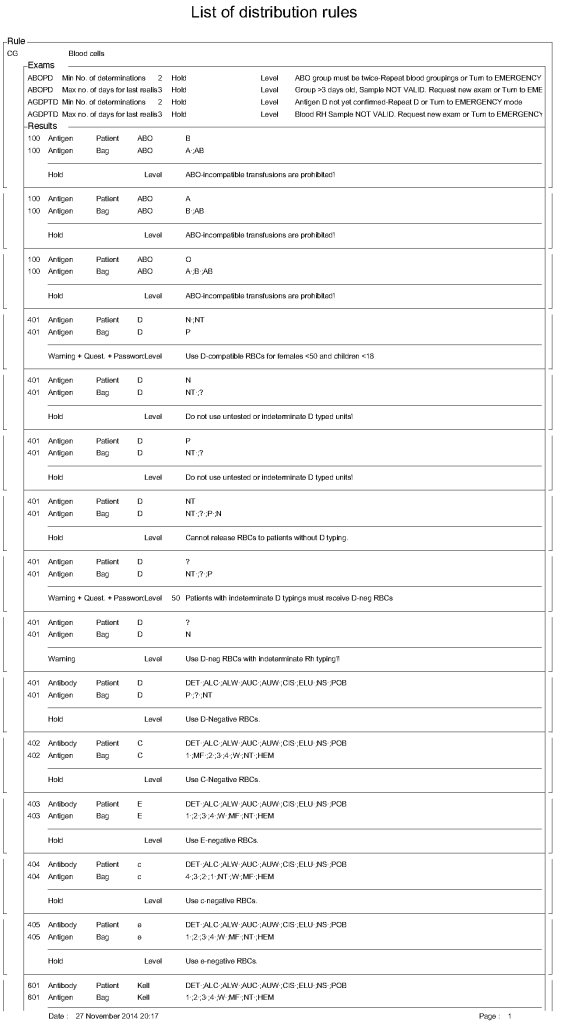
Medinfo has an emergency mode that facilitates release of blood components even if all the usual testing is not available

If Medinfo software is used, one can write a protocol based on the diagnosis of placenta previa to automatically allocate the blood and keep it on hold at all times.

Ward Responsibilities:

  1. As soon as a patient with high-risk placenta previa is identified, order type and crossmatch for 4 units PRBCs.
  2. Immediately forward the specimen and its requisition to the blood bank for expedited processing.  BE CERTAIN TO INDICATE ON THE FORM AND/OR IN THE COMPUTER SYSTEM THAT THIS IS A PLACENTA PREVIA CASE!!
  3. Send a new specimen for crossmatching every 3 days until delivery.
  4. Phone the blood bank immediately when blood is needed for the patient before coming to the Blood Bank.  DO THIS BEFORE SENDING SOMEONE TO THE BLOOD BANK TO PICK UP THE BLOOD!

Blood Bank Responsibilities:

  1. Check the order comments for placenta previa.
  2. Handle all such requests as emergency or STAT.
  3. Enter a comment in the computer that this is a placenta previa case.
  4. Verify that the specimen has been properly collected and labelled.
  5. If the specimen is not acceptable, request new specimen.
  6. In emergencies, use emergency release/emergency mode in Medinfo.
  7. If specimen valid:
    1. Perform ABO/Rh typing and antibody screen if one is not available within the past 3 days.
    1. Check for previous history of ABO/Rh typing and antibodies—performed by blood bank computer system.
  8. Allocate 4 units, electronic crossmatch or full AHG as indicated by our rules.
    1. Provide antigen-matched units accordingly.
  9. When the ward calls that a placenta previa patient needs blood, immediately prepare the blood for release.  This is an emergency request of the highest priority.  VERBAL REQUESTS FOR BLOOD IN THESE CASES ARE ACCEPTABLE.
    1. Use emergency mode/emergency release in Medinfo if all the testing is not done or current.

My Opinion: Separate Transfusion Medicine from the Laboratory

Transfusion Medicine includes laboratory and non-laboratory functions.  The non-laboratory and purely clinical functions are unique and have no analogy within the general laboratory.

The transfusion service/hospital blood bank laboratory is the closest to a laboratory operation, but there is component modification and complex manual testing, especially for reference immunohematology testing.  The staff must make detailed manual decisions, the errors for which could be life-threatening for the patient.

The blood donor center manufactures a pharmaceutical, i.e. blood components with collection, donor qualification, donor abnormal results review, infectious disease marker testing, component production, and donor immunohematology testing—all subject to Good Manufacturing Practices.  Never forget:  Blood is a drug!!

No other laboratory section is directly responsible for treatment of critically ill patients.  Therapeutic apheresis is essential for organ and stem-cell transplants, nephrology, neurology, etc.  No other laboratory section is directly responsible for treatment of critically ill patients.  Transfusion Medicine physicians are functioning as intensivists.  There is no hiding in the laboratory from clinical medicine.

There may also be an industrial manufacturing plant to extract various blood derivatives (e.g. factor concentrates, albumin, Rh immune globulin, etc.)  This is pharmaceutical manufacturing on a large-scale basis.  There is medical, technical, and special administrative expertise.

Many functions may operate 24/7.  The transfusion medicine physician may be on-call for donor issues and review of complex immunohematology problems to acutely decide which blood component (and phenotype) should be given as well as review all adverse reactions to transfusion.

The unique blend of clinical skills is unlike anything else in the laboratory.  Also, those outside the blood bank rarely have the skills or judgments for the best course of action for transfusion medicine or for its operations.

The clinical transfusion medicine physician must make acute, life-threatening decisions unlike anyone else in the laboratory.  The blood bank technologist is at the cutting edge of the battle with his testing and interpretations.  No other area of the laboratory is at such risk for injuring or even killing the patient.  There is high stress and burn-out.

I have talked with many blood bankers and many seem to share the exasperation that the laboratory does not understand us.  The latter looks at blood bank testing like that coming off a hematology or chemistry analyzer—although patients rarely would have severe morbidity or mortality like the blood bank from errors in those analyzers.

No laboratory pathologist has the pressure of the blood bank physician on-call.  It really is 24/7 and requires a broad, clinical background to make the right decisions.  It is very stressful and does not permit a good night’s sleep.

Thus, I make my case to separate us from the laboratory.  We can form our own more effective administrative organization and optimize our own planning.  Regretfully, I have never worked in such an administrative structure.  I also am a realist that cost-containment nowadays makes it much less likely high administration would permit this change for a mere cost center.  This will probably never happen during my career.

Finally, Transfusion Medicine is an essential service.  Blood components are essential drugs.  The operations and staff must be free of political influences.  This is a service for the entire region or country like the fire department, civil defense, etc.

8/8/20

Neonate Born to Bombay Oh Mother

We had a mother (R1R1 K-neg) from Tamil Nadu who had several visits to our hospital.  Anti-H lectin was negative.  Here is a summary of her workup:

Mother’s ABO/D Typing:

Mother’s Antibody Screen:

Mother’s Antibody Identification:

She gave birth to a baby girl, group B, R1R1 K-neg.  This is the neonate’s workup:

Despite the weakly positive IgG DAT, the eluate was negative.  The neonate was asymptomatic.

Anti-H is mainly an IgM antibody and does not cross the placenta, thus no HDFN was noted.

6/8/20

Time: Appreciating How Long Testing Takes

I have had many medical students, residents, and fellows rotate through my Transfusion Medicine department.  Hardly anyone has had any interest in making my discipline his/her career.  It is a required rotation or an “easy” rotation during which the trainee may take his vacation.  The trainee will cram for the examination and then promptly forget it.

I left practice in the USA in 1990, in what I consider the golden age of laboratory medicine.  We had supervisors for each laboratory section.  In the blood bank, we had many staff with SBBs or who were SBB students.  We were very self-sufficient in handling immunohematology problems except for rare blood types or antibodies to high incidence/prevalence antigens.

When I returned to visit my old laboratory.  I sensed a deprofessionalization of the laboratory and blood bank in particular.  Blood Bank now is a cost center, not an area of revenue.  Why hire experienced blood bankers for most hospitals?  Send the antibody workups to the Blood Center.  There are limited jobs for transfusion medicine consultants.  Minimize testing, don’t do extended antigen typings, etc.

Nowadays, I feel like one of the dinosaurs marching into oblivion as in Walt Disney’s Fantasia film, the section called The Rite of Spring.  Who will replace those of us retiring?  Have you ever noted the average age of attendees at the AABB annual convention?  I feel young when I go there (and don’t worry about the gray hair!)

I want to attract new doctors and scientists to Transfusion Medicine.  I really try, but most have no interest and look on their rotations as a necessary evil.

I have lowered my expectations for most medical trainees in Transfusion Medicine.  They don’t like it, they just want to pass it, and move on.  What must I impress them with for their future careers?  What is essential for them to remember?

I have had both pathology and non-pathology trainees.  Surgical and ob/gyn doctors used to spend one month whereas the hematology and pathology residents/fellows spent on average three months.  The few interested in the field might do multiple rotations.

I still gave them lectures on a variety of topics, especially how to transfuse blood components, basic ABO/Rh antigens, compatibility testing, and direct antiglobulin testing.  They would forget most of this, but I wanted them to remember TURN-AROUND-TIMES:

How long does it take to perform the test?

Find compatible blood?

Thaw the plasma?

Release a massive transfusion protocol shipment?

Complete a transfusion reaction workup before releasing more blood?

I am not discouraging people from entering the field, but I am a realist to know that few will share my passion for serology or want to take call on difficult immunohematology cases.  At least if they understand the pressure the technical staff are in and these turn-around-times this will make both their work as clinicians and mine as transfusion medicine more congenial.

Daratumumab Anti-CD38 Interference with Compatibility Testing

Principle:

Daratumumab is a monoclonal antibody that binds to CD38 antigen, which is expressed weakly on the surface of all RBCs.  It may thus cause a positive direct antiglobulin test DAT and so interfere with compatibility testing if an antiglobulin phase is required.

This effect may persist up to 6 months after discontinuing the drug.  The monoclonal antibody does not interfere with routine ABO/D typing.

Special techniques (neutralization of CD38 antibodies by CD38 anti-idiotypic antibodies, or soluble CD38 antigen) may remove the panreactivity but are not generally available.  DTT, a sulfhydryl reagent may denature the native CD38 antigen on RBCs but it should be used under a biologic hood.

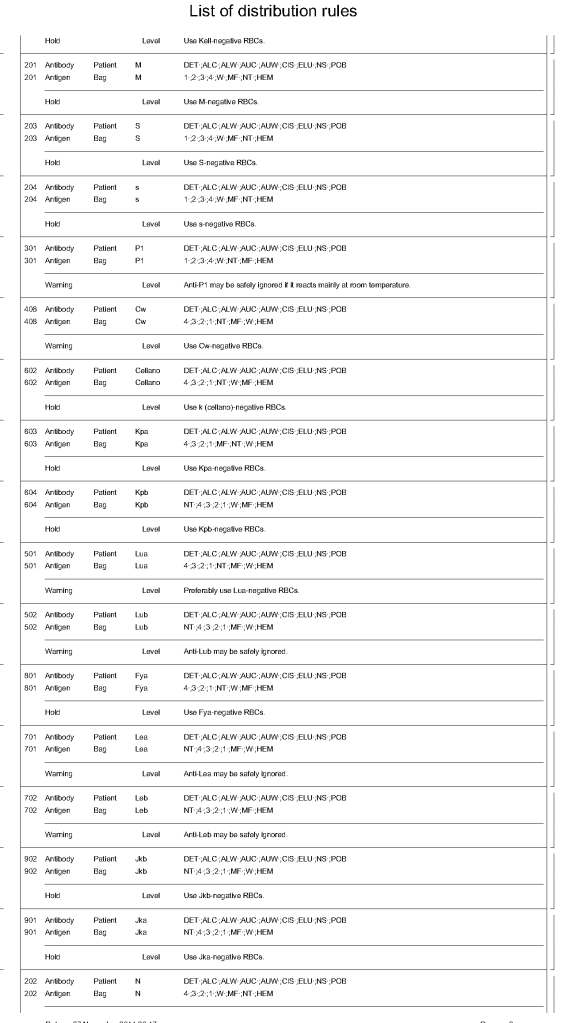
Kell antigens will be denatured so Kell antibodies cannot be detected after treatment so Kell-negative RBCs should be used.  In the Gulf Area, this is about 72% of RBCs. In the Medinfo software a rule to require K-negative RBCs has been built.

Policy:

  1. The clinical services must inform Transfusion Medicine of patients who will be receiving daratumumab therapy BEFORE treatment is started.
  2. Transfusion Medicine staff will enter a general comment (i.e. not associated with a particular result) in the patients Medinfo HIIG record:  PATIENT ON DARATUMUMAB.
  3. If not already done, Transfusion Medicine staff will perform an extended antigen typing:  at least C, c, E, e, K, k, Kpa, Jka, Jkb, Fya, Fyb ,M, N, S, s, Lea, Leb, P1—even if no antibodies are currently identified.
  4. Transfusion Medicine staff will send each such patient’s record to a Transfusion Medicine Physician to determine the blood type including extended antigens to match for future transfusions.
  5. When compatibility testing is requested, perform it as per our SOPs.
  6. If available, prepare DTT-treated cells for testing but realize that this will denature Kell antigens.  Use K-nell RBCs.
    1. Medinfo has a rule to automatically require K-negative RBCs if this medication is used.
  7. Release least “incompatible” RBCs must be approved by the Transfusion Medicine Physician.
  8. When the DAT becomes negative (i.e. up to SIX months after cessation of Daratumumab therapy), routine compatibility testing and RBC selection will apply.

References:

Trick or Treatment, Anti-CD38 Reactivity and How to Treat It, AABB Satellite Symposium transcript, U. Cincinnati and RedMedEd, October, 2015 (attachment)

Processes and Software Building 24: Data Entry Verification

Principle:

This policy outlines steps taken to minimize the risk of data entry errors and is based on a dualistic approach:  review of results by a senior technologist and/or supervisor and various computer safeguards built into the Medinfo Hematos IIG blood bank computer HIIG system.  This policy also discusses the verification (here called authorization) and purge processes of HIIG.

Policy:

  1. Review by senior technical, supervisory, or transfusion medical staff:
    1. Designated test procedures require review by a second technologist before authorization.
    2. Complex immunohematology testing and specimens showing aberrant results (e.g. ABO/D discrepancies) are reviewed by the supervisors or designates and ultimately a transfusion medicine physician before authorization.
  2. Computer system HIIG rules:
    1. Privileges:
      1. System restricts which staff can perform specific tests
    2. Patient/donor identity:
      1. System asks end-users to verify patient/donor identity before starting any access to the patient/donor record.
      2. System performs historical database checking and flags any inconsistencies (e.g. historical ABO/D typing differences, etc.)
    3. Testing:
      1. Only selected staff have privileges to authorize or purge.
      2. ABO/D testing algorithms require entry of reactions, not interpretation of results and are compared to a truth table.
        1. Aberrant results require special review before ABO/D typing results can be authorized/purged.
        2. D-controls must be negative to allow D typing results to be authorized for liquid D-typing reagents.
      3. DAT results require appropriate controls to meet truth-table criteria.
      4. Eluates require last wash to be negative before authorization
    4. Blood components:
      1. Selection of RBC or plasma units requires two independent sample determinations within 72 hours of each other.
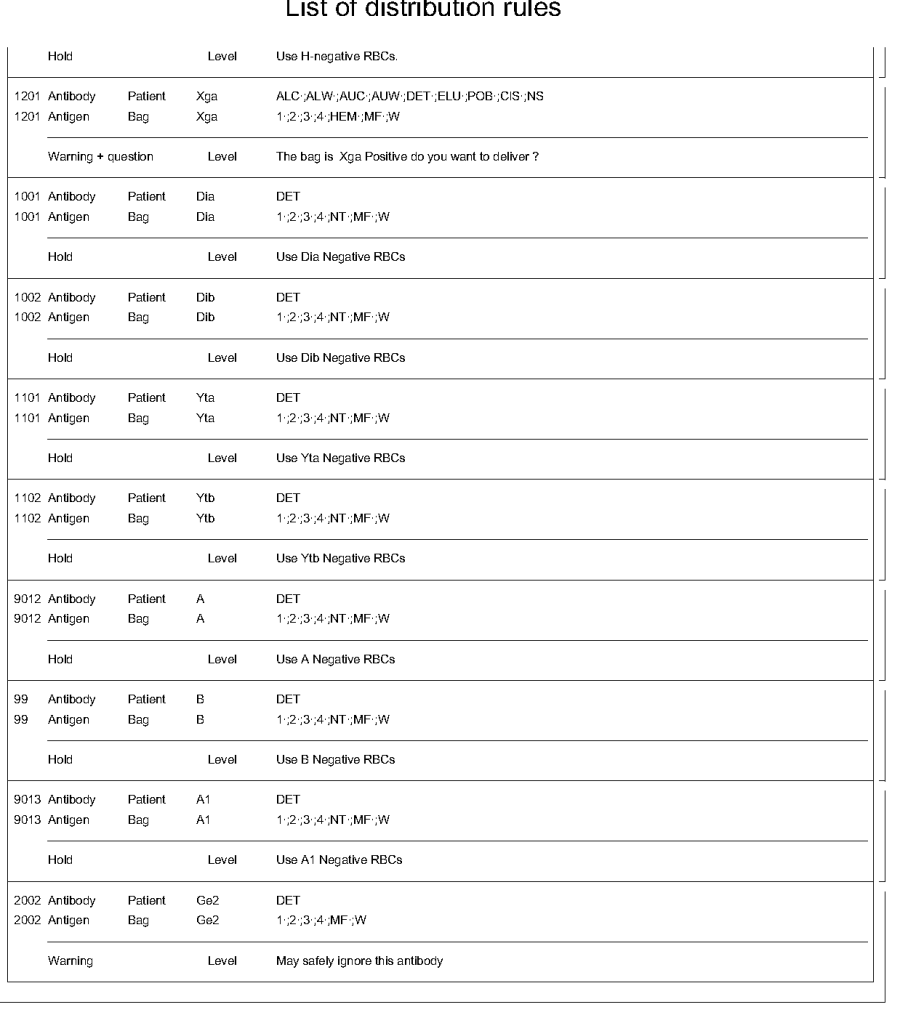
      2. ABO-incompatible RBC or FFP/FP24 transfusions are not allowed.
      3. Donors with any detectable antibodies are permanently deferred.
      4. Depending on the patient’s antibody history, release of RBC units may require antigen-matched units.  Examples:
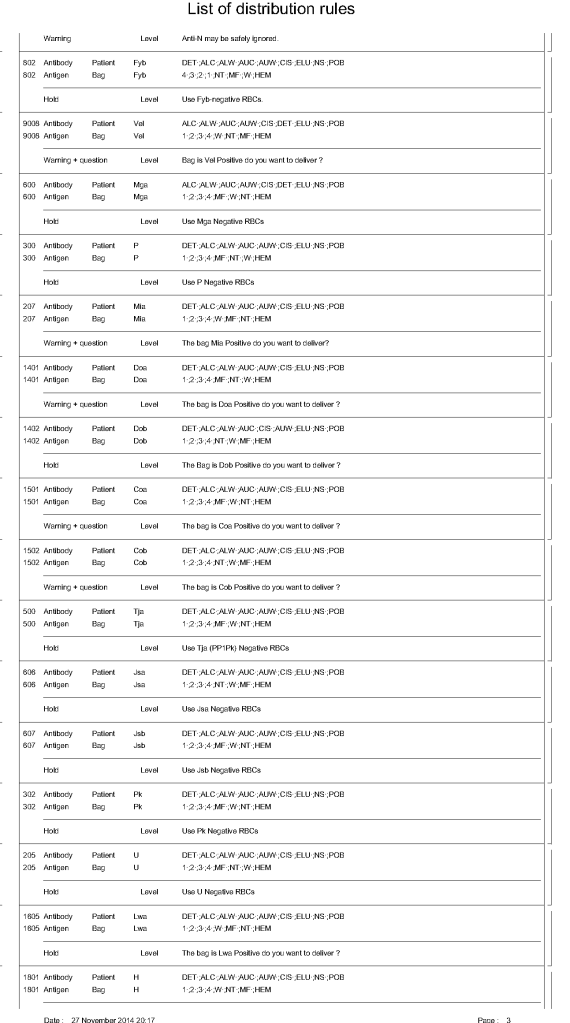
        1. Mandatory matching (only antigen negative matched units allowed—no antigen positive or antigen-untyped units):  Antibodies against H, D, c, K, k, Kpa, Kpb, Jsa, Jsb, Jka, Jkb antigens, anti-PP1Pk
        2. Priority matching (incompatible or untested can be approved by a transfusion medicine physician):  C,E, e, Fya, Fyb, M, S, s
        3. Antigen matching not required:  Lea, Leb, N
      5. Least-incompatible crossmatch require special authorization to release
      6. Protocols to force irradiation or other modified components can be setup in HIIG.
    5. Donors:
      1. Donor tests have same criteria as the same test used in patient testing for controls, etc.
      2. Donor demographics are read directly from the Ministry of Interior database—no manual entry (bar code only used).

References:

  1. Workflows for Hematos IIG (1001 through 1005), 2013
  2. Standards for Blood Banks and Transfusion Services, Current Edition, AABB, Bethesda, MD, USA
  3. Guidelines to the Preparation, Use, and Quality Assurance of Blood Components, European Committee (Partial Agreement) on Blood Transfusion (CD-P-TS), Current Edition
Case Report: Blocking Anti-B

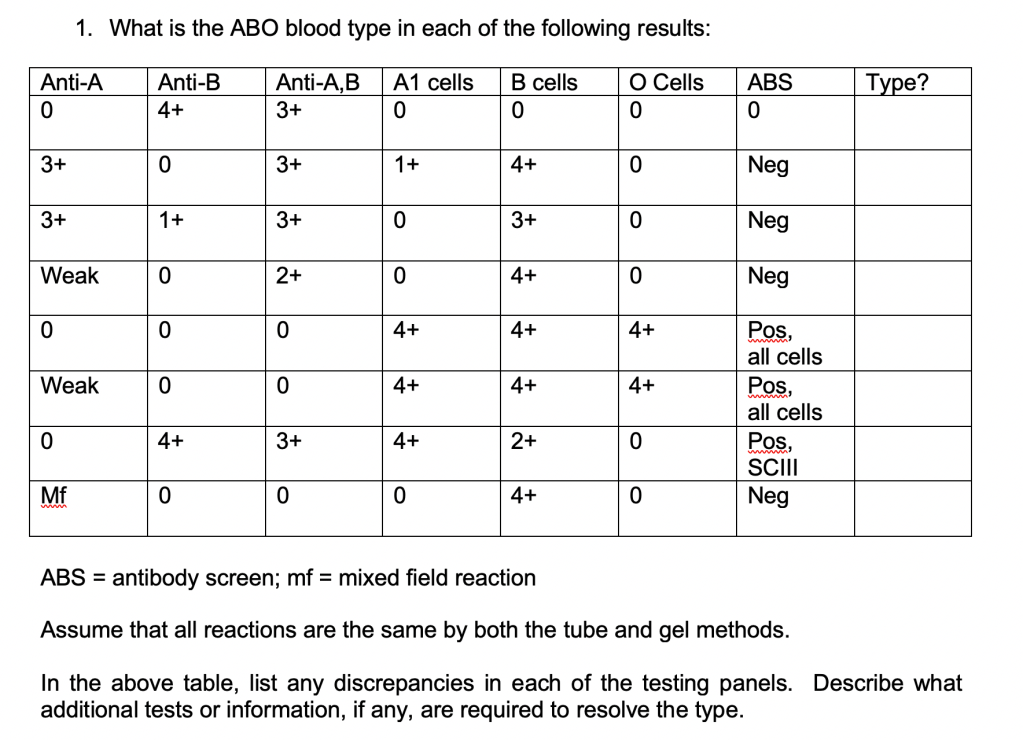
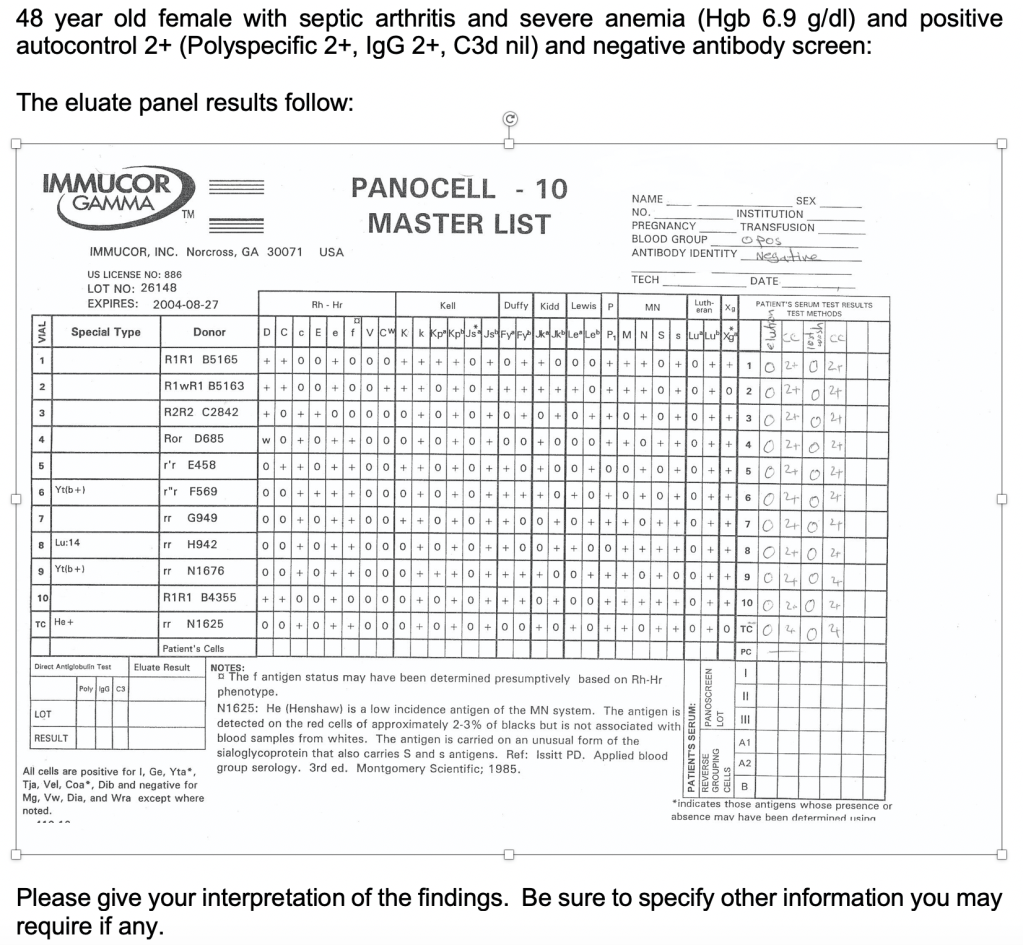
Recently, I had a case where the blocking antibody was not an anti-D, but rather an anti-B in a case of ABO hemolytic disease of the fetus/newborn HDFN.  The D typing result was weak but the D control in the gel was positive so the result was indeterminate.  DAT was 3+ IgG and anti-B was identified in the eluate (mother was antibody screen negative, regular elution panels (group O cells) were negative.  Some of the actual workup follows:

29/7/20

Blocking Antibodies

If there is strong antibody binding to an RBC, this may interfere with a typing reagent attaching to the cell and cause a false-negative, i.e. a “blocking” antibody.  Such cells may interfere with the indirect antiglobulin test IAT, i.e. the antibody screen.  The autocontrol and direct antiglobulin test DAT will be strongly positive.

The manufacturer’s instructions should be strictly followed for using its reagents in the presence of a strongly positive DAT.  If there is no reaction with the typing reagent, the result must be indeterminate.

One could try a (relatively) nondestructive elution method such as gentle-heat elution to remove some of the antibody and then retype the cells.  I have found this to be a simple and effective method for my staff to use.  Just remember that despite being “gentle,” there will still be some hemolysis present, but here it is the cells we are trying to save.

Usually, we find this situation in a neonate born of a mother with anti-D.  The baby has a strong DAT but the D typing is negative.  Check the D control carefully:  if it is positive, the result is indeterminate, try another method.  Usually gel/glass bead methods are subject to less interference.  Finally, there is always the classic saline anti-D!

In Medinfo software with a blocking antibody, a nonnegative control will trigger a manual review of the results. There will be no automatic release.

Here is my process for handling blocking antibodies, which I set up for HMC Doha:

INTERIM POLICY:  ANTIGEN TYPINGS IN PRESENCE OF STRONGLY POSITIVE DIRECT ANTIGLOBULIN TEST (DAT):  RULE OUT BLOCKING ANTIBODY

Principle:

Antigen typing of cells with large amounts of coating antibody (i.e. strongly positive DAT 3-4+) may not always be possible because the bound antibody may block available antigen sites.  This policy is to clarify how to recognize and handle such situations.

Policy:

  1. Always follow the manufacturer’s instructions for the use of the typing reagent.
    1. In particular, note whether a control must be run with the test (e.g. D-control, D-diluent, etc.) or if it is included in the gel or glass bead card.
      1. If a control is required, use exactly what the manufacturer recommends.
      2. DO NOT SUBSTITUTE ANYTHING ELSE AS THE CONTROL!!
  2. Interpret the reactions exactly as the manufacturer indicates.
  3. If the test is invalid because of the control or any other reason, report the antigen typing as indeterminate and send for Transfusion Medicine Physician review.
  4. If the DAT is 3-4+ and the antigen typing shows no reaction (apparent negative), send the case to the Transfusion Medicine Physician for review and final interpretation.  DO NOT ENTER THE RESULT AS NEGATIVE UNLESS THE TMP INSTRUCTS YOU TO DO THIS!!
  5. To rule out a blocking antibody, a special elution to gently remove the coating antibody may be needed so that the RBCs can then be typed (not acid glycine technique—rather, gentle heat elution.)  The Transfusion Medicine Physician will decide whether to do this additional testing.

References:

  1. Standards for Blood Banks and Transfusion Services, Current Edition, AABB, Bethesda, MD, USA
  2. Technical Manual, Current Edition, AABB, Bethesda, MD, USA
  3. Guidelines to the Preparation, Use, and Quality Assurance of Blood Components, European Committee (Partial Agreement) on Blood Transfusion (CD-P-TS), Current Edition