

Includes patient, donor, apheresis and related IT topics
Everyone is excited at the potential of using stem cells for research and therapy. Below is my presentation of the logistics necessary to get those stem collected in an orderly manner, especially in this time of the COVID-19 pandemic. It will also consider blood bank software logistics.








I am a co-author on this paper just being released titled The impact of COVID-19 Pandemic on Blood Supplies and Transfusion Services in the Eastern Mediterranean Region. It compares the responses made by different countries in the region.
This is a part of a series of posts on the actual Medinfo design of the CCP donation and release processes. The site and donor registrations were covered in a recent previous post.
Donor Questionnaire and Physical Examination:
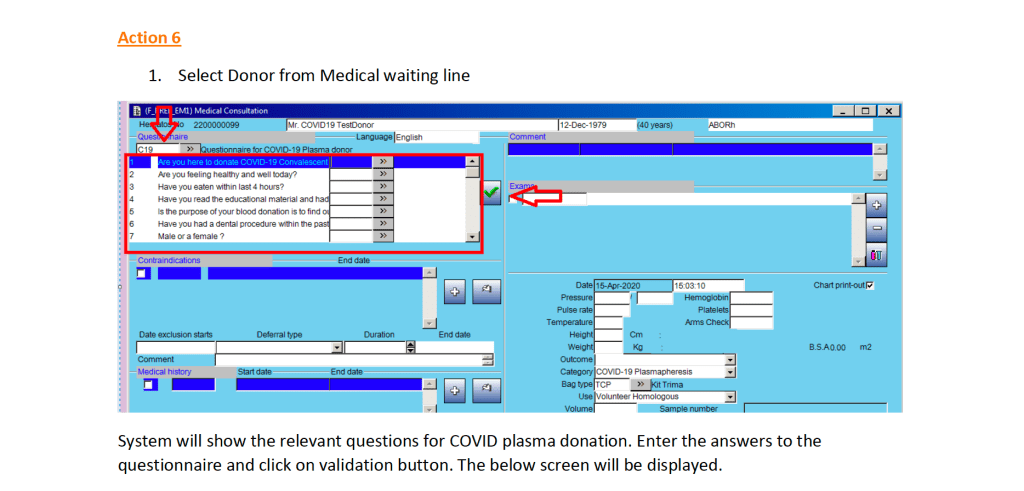
After registration, there is the online CCP donor questionnaire and vital signs entry.
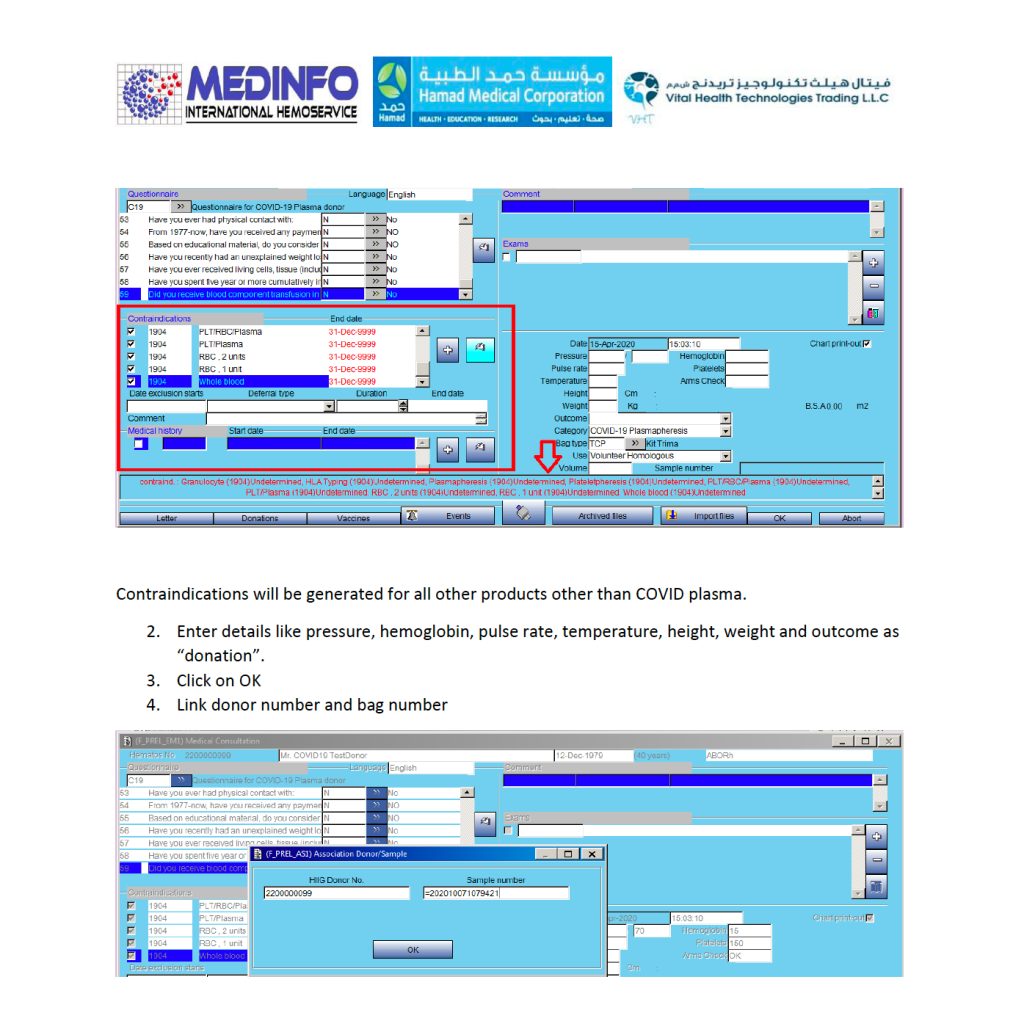
Note that the CCP donor will automatically be excluded from other types of donation. All other types will appear as contraindications in RED below.
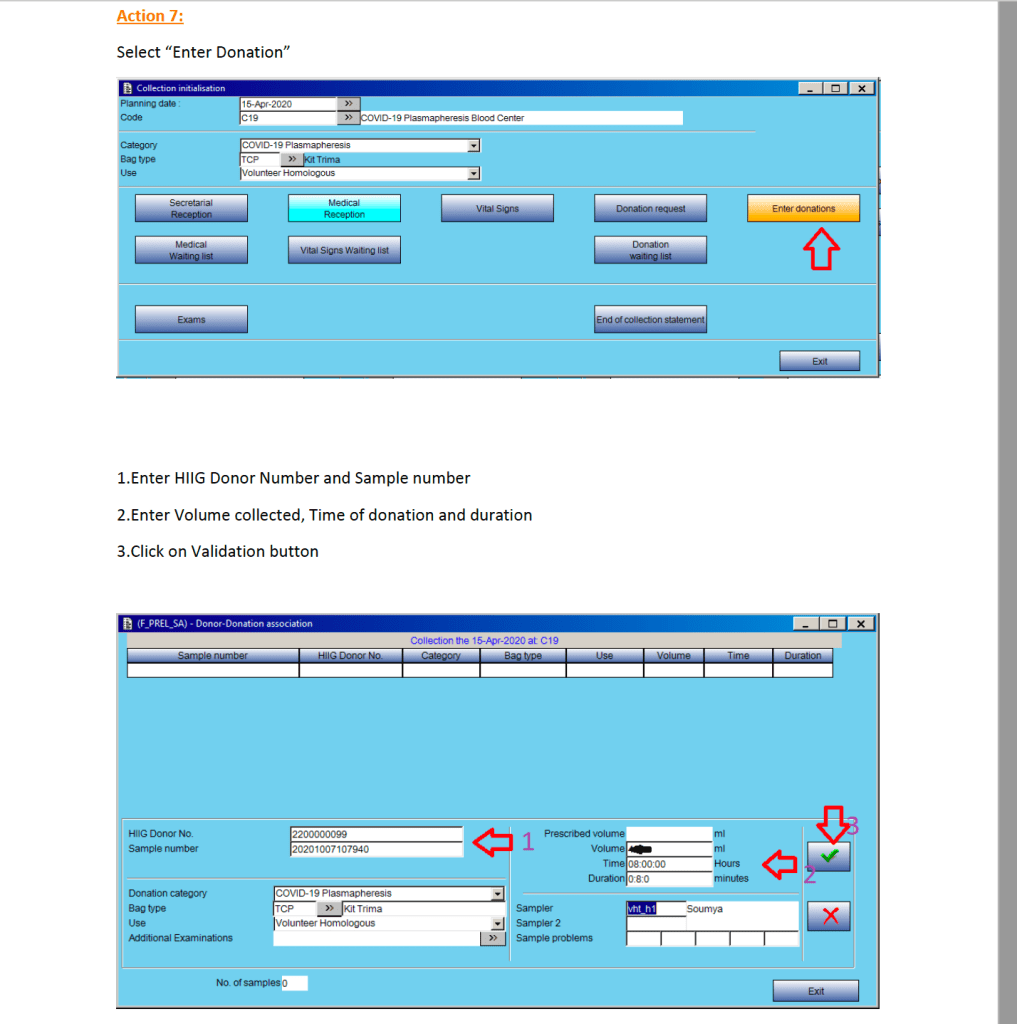
Donor Apheresis Collection:
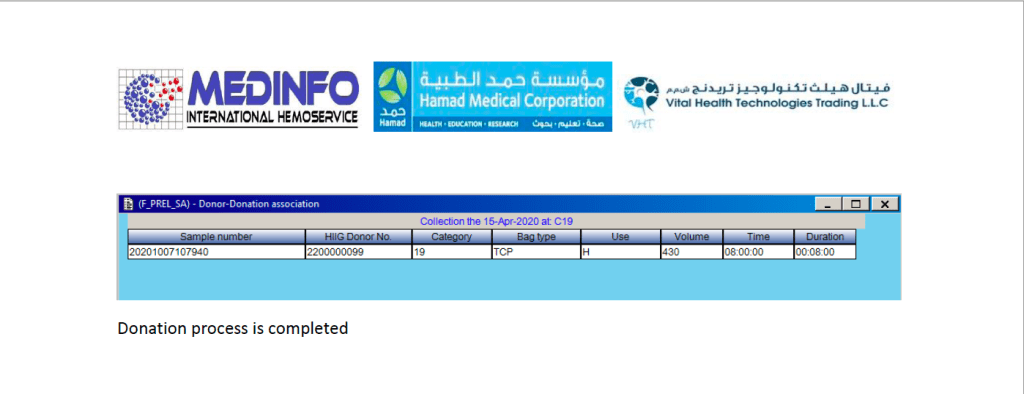
The actual donation process is the same as for plasmapheresis donors:
In my opinion, the direct antiglobulin test is the most important concept that a transfusion medicine physician or technologist must understand in interpreting complex serology patterns.
Like all other testing, the DAT must not be interpreted alone but rather in the context of other laboratory and clinical results. Still, it is very important to understand the significance of the DAT in hemolysis.
The mere presence of immunoglobulin on the RBC surface does not necessarily mean severe hemolysis. The DAT strength increases with increased immunoglobulin coating of the RBCs but does not necessarily indicate how quickly the RBCs will be cleared. That depends on the class and subclass of the antibody, whether and if so, how avidly it fixes complement, etc.
One trick question I give in my lessons to staff is, “What is the clinical significance of a negative DAT?”
In my career, I have seen severe hemolysis with either negative or weak DAT, the latter especially if there is weak C3 staining. The DAT can be negative because there is no significant antibody OR there is a highly destructive antibody causing massive hemolysis, leaving only the antigen-negative cells (and in that case, there is still the possibility of innocent bystander hemolysis).
I show them the following case of an ABO-incompatible acute hemolytic transfusion reaction:
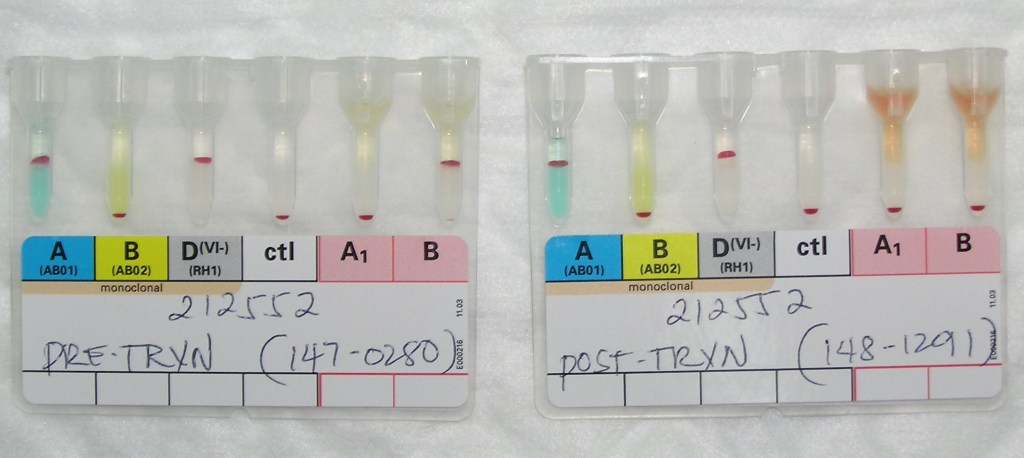
In this case, a group A patient received a group B RBC unit intended for a patient with a similar name who was group B and was in a bed next to him.
Notice the patient’s complete loss of the reaction to group B cells in the reverse type and the supernatant hemolysis. The DAT was negative. The transfused B cells were not even present in the post-transfusion gel.
Here is the urine specimen from that case showing gross hematuria:
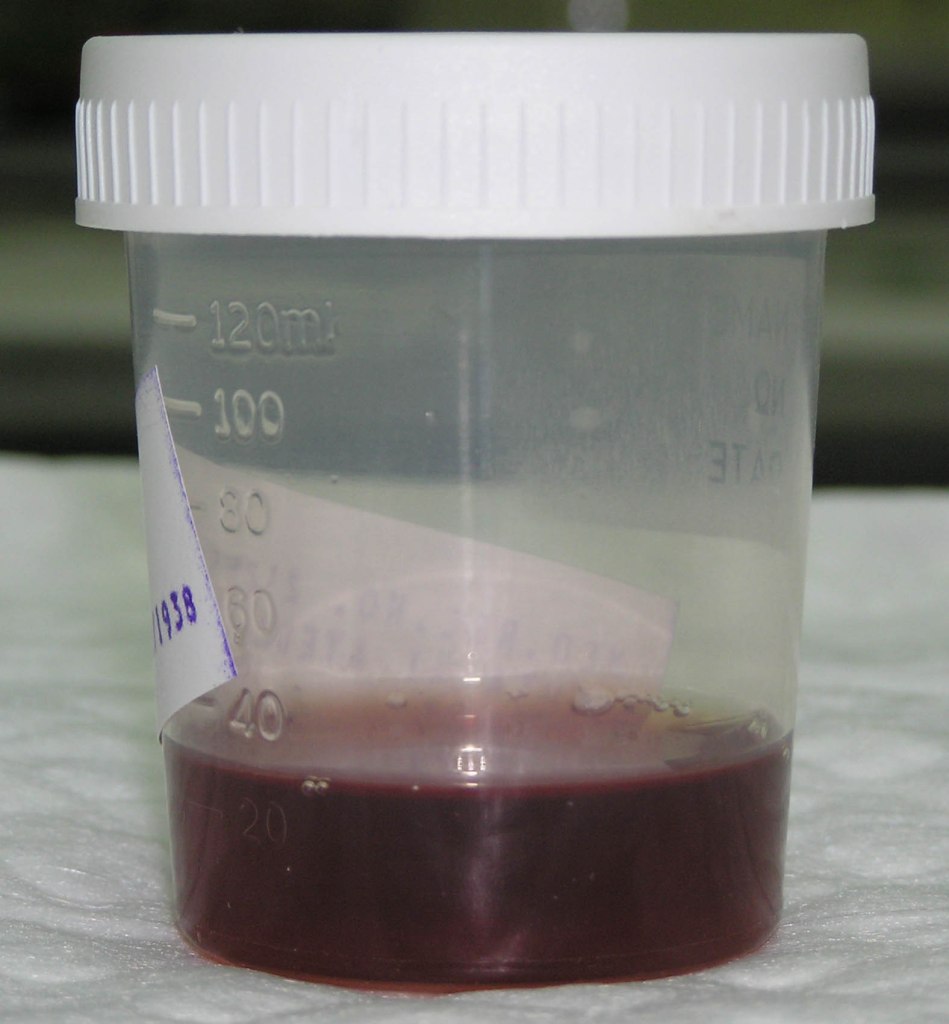
So, in severe, life-threatening hemolysis, even antibody-mediated, you may have a negative DAT. DAT negativity may also be seen in non-immune hemolysis. I will discuss causes of DAT-negative hemolytic anemia is a future post.
In summary when doing a hemolysis investigation, a negative DAT does not mean everything is all right. Everything must be interpreted in the context of the clinical and other laboratory findings.
At HMC Doha, we had a limited bidirectional interface between Medinfo Hematos IIG blood bank software donor and patient modules and the hospital information system HIS Cerner Millennium for blood component and limited blood bank testing ordering and return of the blood component ordering statuses and all blood bank test results.
For the purpose of COVID Convalescent Plasma CCP, the following specifications applied:
Note: Bedside documentation of the component transfusion was the NOT the responsibility of Transfusion Medicine or Medinfo Hematos IIG.
Principle:
Syphilis, caused by the spirochete Treponema pallidum (T. pallidum), is most often acquired after sexual contact with an infected individual. Syphilis can also be transmitted from mother to child or, rarely, transmitted by transfusion of blood or blood components from donors with active syphilis.
There are two different types of serologic assays for syphilis: nontreponemal assays and treponemal assays:
Nontreponemal assays (e.g. VDRL, RPR, ART) are nonspecific and detect “reagin” antibodies directed against an antigen called cardiolipin that is present in a variety of tissues. Antibodies to cardiolipin appear in the serum of persons with active syphilis or with other medical conditions. However, some individuals who were previously infected with syphilis but successfully treated maintain low levels of antibody to cardiolipin for a long time.
Treponemal assays include enzyme immunoassays (EIA), fluorescent treponemal antibody “absorbed” assays (FTA-ABS), Treponema pallidum microhemagglutination assays (MHA-TPA) and Treponema pallidum particle agglutination assays (TP-PA). Treponemal assays test for antibodies to antigens that are specific to treponemes. Treponemal assays are most useful in identifying recent and past syphilis infections. They are not generally useful in monitoring the response to antibiotic therapy. With some exceptions, positive results of tests for specific treponemal antibodies remain positive throughout an individual’s life regardless of whether the individual is currently infected or has been cured following successful treatment. Retesting sera that are reactive in nontreponemal assays using a specific treponemal test is valuable in distinguishing true-positive results that indicate active syphilis infection from biological false-positive results due to other conditions.
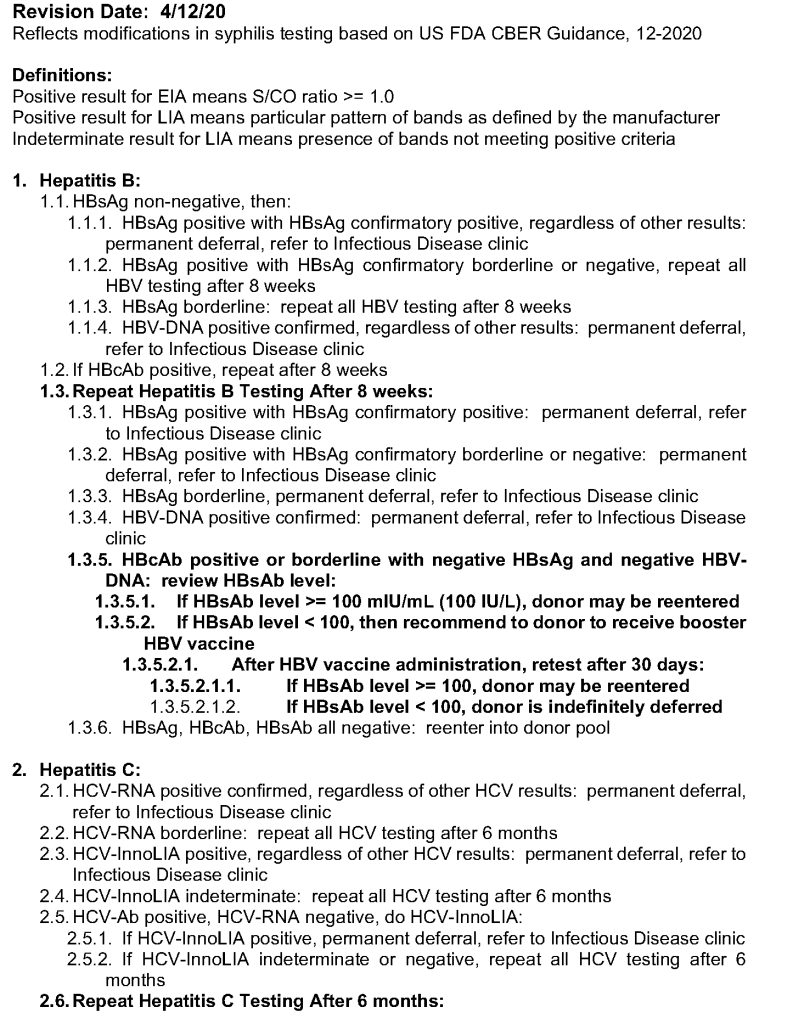
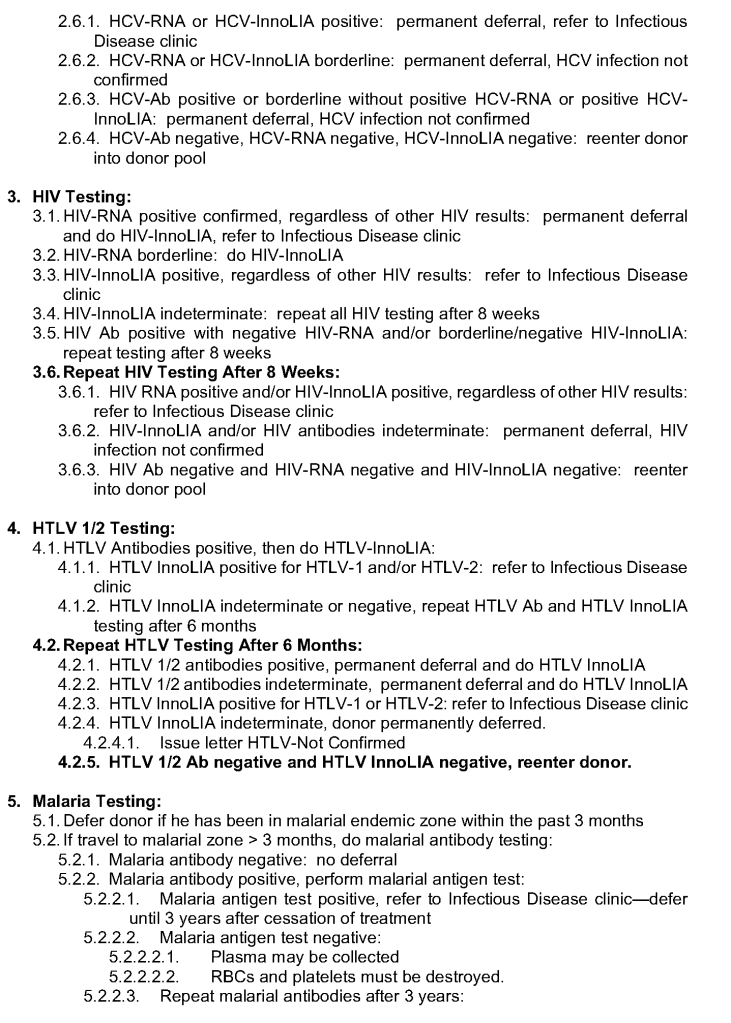
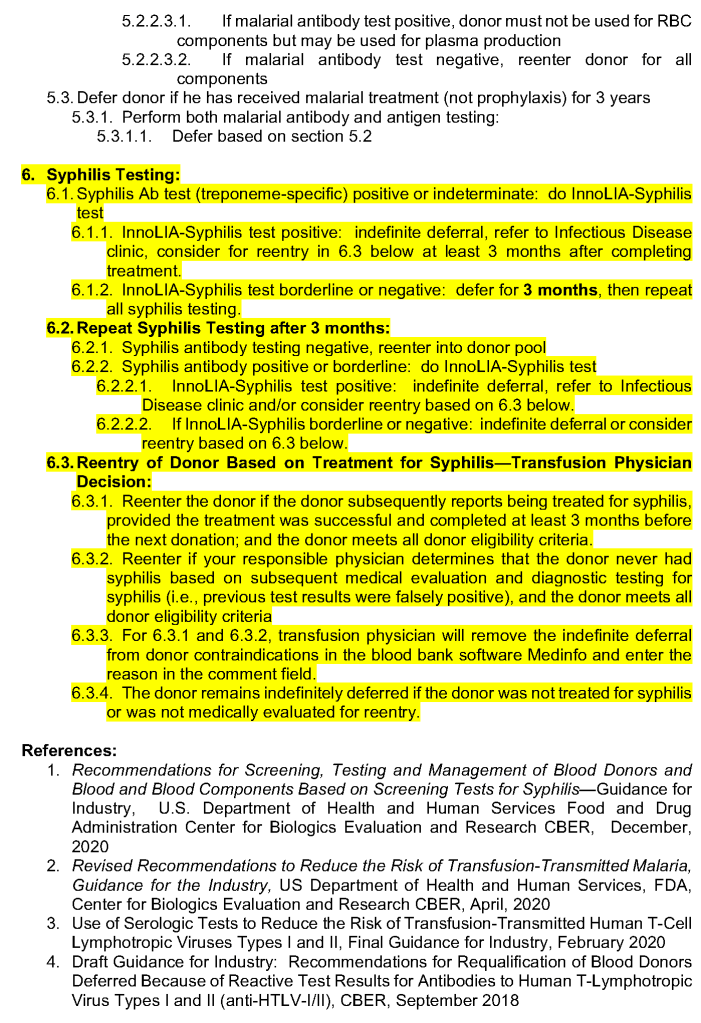
Current testing requirements for syphilis are found in 21 CFR 610.40(a)(2). Individuals who test reactive with a screening test for syphilis must be deferred (21 CFR 610.41(a)) and notified of their deferral (21 CFR 630.40). You must further test each donation found to be reactive by a donor screening test, except you are not required to perform further testing of a donation found to be reactive by a treponemal screening test for syphilis
Policy:
Reference:
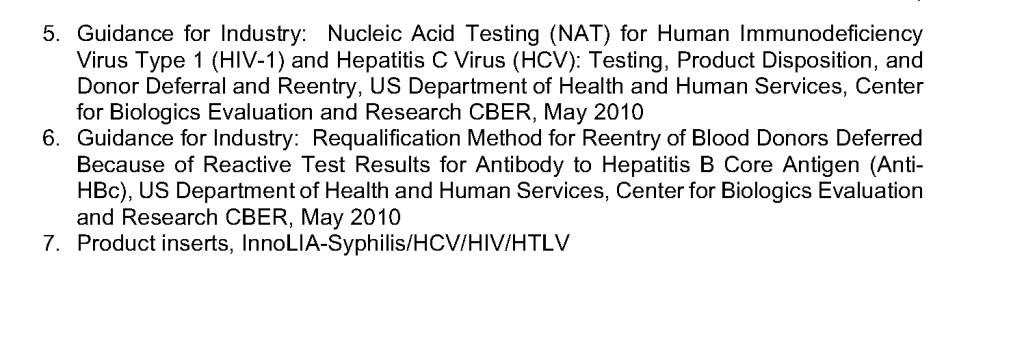
Recommendations for Screening, Testing and Management of Blood Donors and Blood and Blood Components Based on Screening Tests for Syphilis—Guidance for Industry, U.S. Department of Health and Human Services Food and Drug Administration Center for Biologics Evaluation and Research CBER, December, 2020
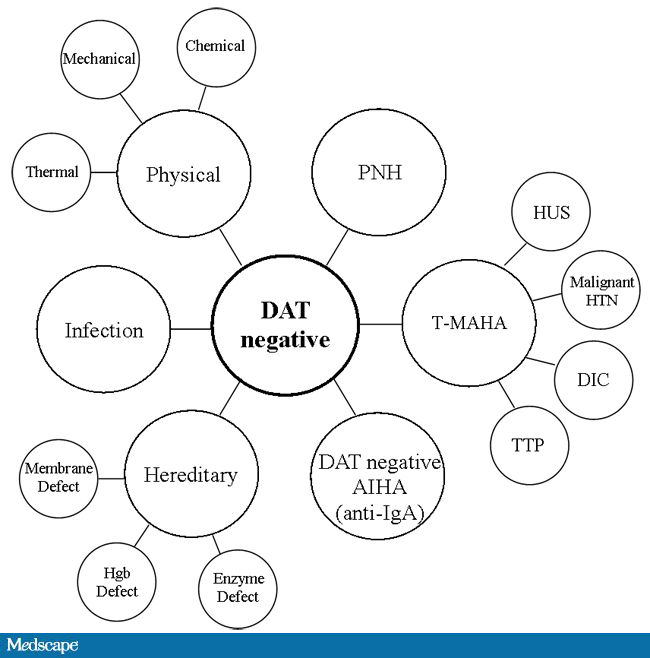
This is a summary diagram for the causes of DAT-negative hemolytic anemia, both immune and non-immune. For immune cases, a negative DAT may indicate “not-detected” with the amount of immunoglobulin on the RBC being below the threshold of the test methodology being used. Also rare IgA associated cases will not be detected unless a specific alpha-heavy chain monospecific reagent is used.
This is non-binding CBER guidance is a complicated algorithm that involves using treponemal and non-treponemal assays. Re-entry pathway options are also provided. I will be posting a summary and its implementation into my previous donor marker testing algorithms. Please see attached PDF link.
 Dr. Zeyd Merenkov