Syphilis and Gonorrhea Donor Deferrals

Principle:

Syphilis, caused by the spirochete Treponema pallidum (T. pallidum), is most often acquired after sexual contact with an infected individual.  Syphilis can also be transmitted from mother to child or, rarely, transmitted by transfusion of blood or blood components from donors with active syphilis.

There are two different types of serologic assays for syphilis:  nontreponemal assays and treponemal assays:

Nontreponemal assays (e.g. VDRL, RPR, ART) are nonspecific and detect “reagin” antibodies directed against an antigen called cardiolipin that is present in a variety of tissues.  Antibodies to cardiolipin appear in the serum of persons with active syphilis or with other medical conditions. However, some individuals who were previously infected with syphilis but successfully treated maintain low levels of antibody to cardiolipin for a long time.

Treponemal assays include enzyme immunoassays (EIA), fluorescent treponemal antibody “absorbed” assays (FTA-ABS), Treponema pallidum microhemagglutination assays (MHA-TPA) and Treponema pallidum particle agglutination assays (TP-PA).  Treponemal assays test for antibodies to antigens that are specific to treponemes.  Treponemal assays are most useful in identifying recent and past syphilis infections.  They are not generally useful in monitoring the response to antibiotic therapy.  With some exceptions, positive results of tests for specific treponemal antibodies remain positive throughout an individual’s life regardless of whether the individual is currently infected or has been cured following successful treatment.  Retesting sera that are reactive in nontreponemal assays using a specific treponemal test is valuable in distinguishing true-positive results that indicate active syphilis infection from biological false-positive results due to other conditions.

Current testing requirements for syphilis are found in 21 CFR 610.40(a)(2).  Individuals who test reactive with a screening test for syphilis must be deferred (21 CFR 610.41(a)) and notified of their deferral (21 CFR 630.40).  You must further test each donation found to be reactive by a donor screening test, except you are not required to perform further testing of a donation found to be reactive by a treponemal screening test for syphilis

Policy:

  1. Assess donors for a history of syphilis or gonorrhea or treatment for syphilis or gonorrhea in the past 3 months.
  2. Defer for 3 months after completion of treatment, an individual with a history of syphilis or gonorrhea or treatment for syphilis or gonorrhea in the past 3 months.
  3. After this 3-month period, the individual may be eligible to donate provided the individual meets all donor eligibility criteria.
  4. Testing and Management if a nontreponemal assay is used to screen for syphilis:
    1. If the nontreponemal screening test is nonreactive, the donor is considered to be negative for syphilis infection.  You may use the donation, provided it meets all other donation suitability requirements
    2. If the nontreponemal screening test is reactive, you must defer the donor indefinitely unless evaluated for reentry.
    3. Reentry from reactive nontreponemal test:
      1. Perform testing using a treponemal assay:
        1. If treponemal assay is negative, then reenter donor.
        2. If treponemal assay is positive, consider as an indefinite deferral.
      2. You may reenter the donor if the donor subsequently reports being treated for syphilis, provided that the treatment was successful and completed at least 3 months before the next donation; and the donor meets all donor eligibility criteria.
      3. Alternatively, the donor may be reentered without treatment if your responsible physician determines that the donor never had syphilis based on subsequent medical evaluation and diagnostic testing for syphilis (i.e., the screening results were falsely positive), and the donor meets all donor eligibility criteria.
      4. You may use either an FDA-cleared nontreponemal screening test or an FDA-cleared treponemal screening test to test the reentered donor’s subsequent donations.
      5. The donor remains indefinitely deferred if the donor was not treated for syphilis or was not medically evaluated for reentry.
  5. Testing and Management if a treponemal assay is used to screen for syphilis:
    1. If the treponemal screening test is nonreactive, the donor is considered to be negative for syphilis infection and you may release the donation, provided it meets all donation suitability requirements, and retain the donor.
    2. If the treponemal screening test is reactive, further testing is not required, and you must defer the donor indefinitely unless evaluated for reentry.
    3. Reentry if a reactive treponemal assay is used to screen for syphilis:
      1. Perform another treponemal screening test that is different from the initial treponemal screening test used.
      2. If negative, reenter the donor.
      3. If positive, defer the donor indefinitely unless the following applies:
        1. Test the sample from the donor which was positive on the additional treponemal screening test using a nontreponemal screening test to assess whether the donor has an active infection.
          1. If the nontreponemal screening test result is negative, the results are consistent with recovery or cure from a previous syphilis infection.
          2.  If the nontreponemal screening test is positive, the results are consistent with an active or recently treated syphilis infection.
          3. In either case, you may reenter the donor if the donor subsequently reports being treated for syphilis, provided the treatment was successful and completed at least 3 months before the next donation; and the donor meets all donor eligibility criteria.
        2. Alternatively, the donor may be reentered if your responsible physician determines that the donor never had syphilis based on subsequent medical evaluation and diagnostic testing for syphilis (i.e., previous test results were falsely positive), and the donor meets all donor eligibility criteria.
        3. You may use either a nontreponemal screening test or a treponemal screening test that has been cleared by FDA for such intended use to test the reentered donor’s subsequent donations.
        4. The donor remains indefinitely deferred if the donor was not treated for syphilis or was not medically evaluated for reentry.

Reference:

Recommendations for Screening, Testing and Management of Blood Donors and Blood and Blood Components Based on Screening Tests for Syphilis—Guidance for Industry,  U.S. Department of Health and Human Services Food and Drug Administration Center for Biologics Evaluation and Research CBER,  December, 2020

New US CBER Guidance for Syphilis and Gonorrhea: December 2020

This is non-binding CBER guidance is a complicated algorithm that involves using treponemal and non-treponemal assays.  Re-entry pathway options are also provided.  I will be posting a summary and its implementation into my previous donor marker testing algorithms. Please see attached PDF link.

CBER Guidance Syphilis and Gonorrhea, December 2020

COVID-19 Convalescent Plasma CCP Donor Registration

I designed a completely quarantined process for collection, processing, and release of CCP at HMC Doha.  This document shows the Medinfo process for donor registration as a separate donor center code.

Check donor history and donor deferral database.  If there is no previous encounter, generate a new donor file:

At the completion of this action, the Blood Donation Record with the donor unit number (in this example 2200000099) and consent form in English and Arabic is generated.

CCP could only be collected at this special site and only the apheresis bag could be used for collection.  Regular donation options were not available at this CCP site nor was CCP collection an option at the regular donation sites.

8/1/21

Further Thoughts on Inter-Depot Transfer, Blood Delivery, Type and Antigen Matching

In my recent post, I provided sample flows and parameter mapping for delivery of blood components.  The final components from the component preparation center may be sent to various depots (freestanding location and/or hospital blood banks.  There should be complete traceability for every step (from donor reception, collection, testing, and processing) transport between locations, and finally the exact storage site, which might include which refrigerator/freezer/incubator and even shelf/position number for each component is stored.  The end of that document showed rules for type/antigen matching.

For disaster planning, rapid inventory enumeration by type is very important.  This can be very time-consuming manually.  With our Medinfo Hematos blood bank system, we could quickly get total inventory across the Qatar or by hospital in less than one minute.  We could also quickly find antigen-matched units across the system and reserve it at any one site for another if necessary.

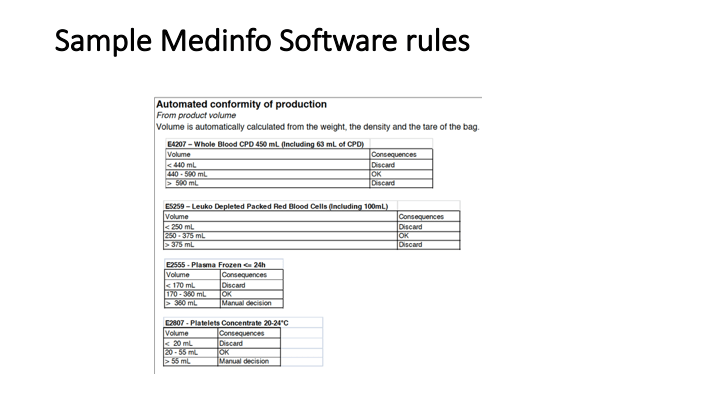
Smart blood bank dispensing refrigerators, as offered by Haemonetics and Angelatoni, may also serve as depots and take the place of a hospital blood bank for some dispensing.  These solutions can also capture vital information about the storage conditions of the components and prevent release if the storage criteria are not met.  They can also interface with blood bank computer systems and use the main system’s logic for the dispensation rules.  In Medinfo, they can be added as a hospital blood bank site.

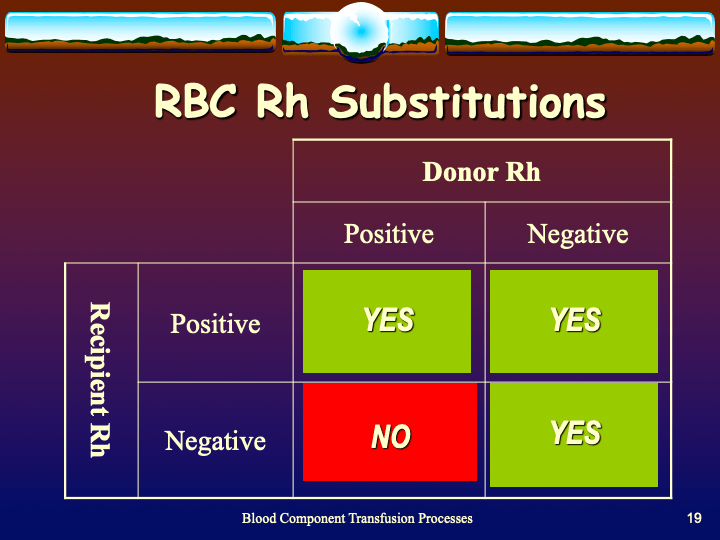
Upon receipt at the hospitals from the blood processing center, the forward ABO and D typing must be confirmed.  We used D reagents which detected partial D so we would call such donor units as D-positive.  However, if a patient type reagent insensitive to partial D types is used, it is possible for a unit to be typed as D-negative whereas in the donor center it might be D-positive.  Sometimes, nothing types consistently as D-positive:  all you can say is that with a particular reagent and lot number, there is or isn’t reactivity.

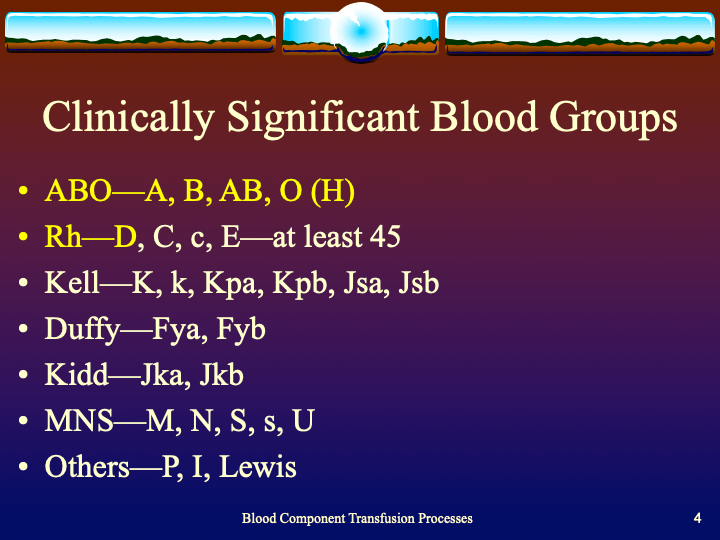
The greatest complexity is for RBCs since potentially so many antigens exist.  Criteria for matching/ignoring certain antigens must be made.  Critically significant antibodies such as the Kell, Duffy, Kidd, and certain Rh (D and c) must be antigen matched.  A robust blood bank computer system can enforce these rules.

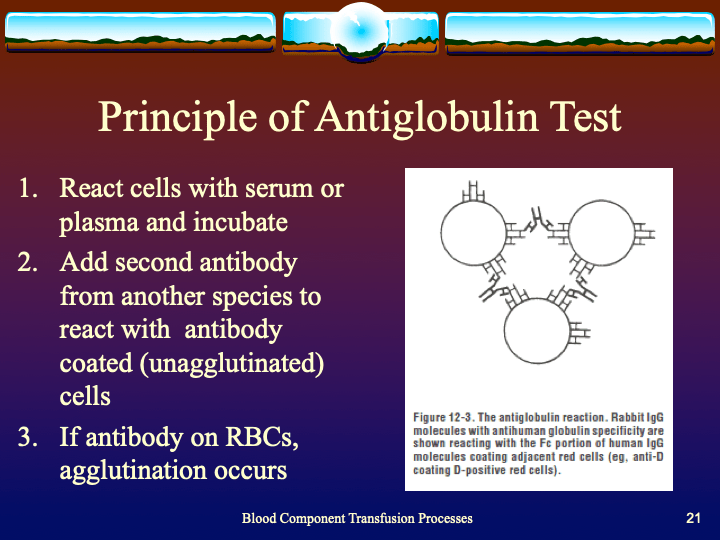
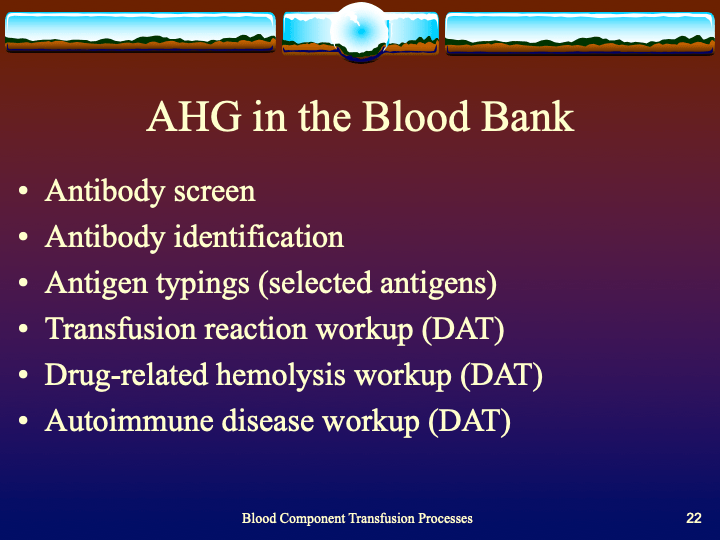
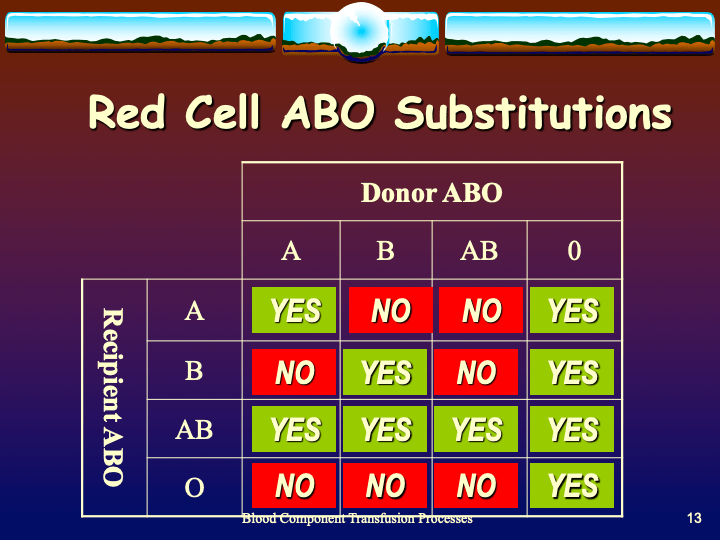
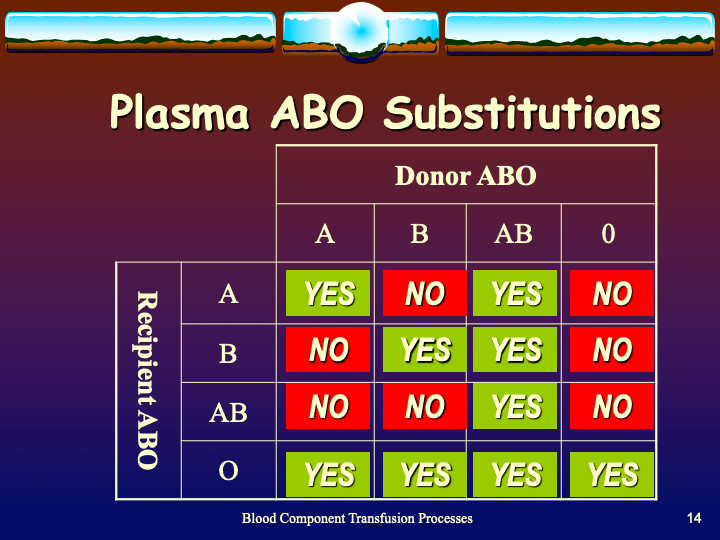
For other components, antigen/typing may be less important.  In fact, in most situations, any type of platelets can be given to anyone (except neonates).  Despite the potentially incompatible plasma, there is rarely significant hemolysis.  In fact, if pooling platelets without regard to blood types is done, a platelet transfusion is a common cause of a positive direct antiglobulin test DAT—something that is not clinically significant.  No one died of a positive DAT by itself for this reason.

Specific rules for compatible plasma types are important, but nowadays, low-titer group A plasma may be used like universal AB plasma.  The challenge is to be able to perform the ABO titration (specifically anti-B) quickly—titration can be a slow process, even with automated equipment.  A similar situation for low-titer, universal group O whole blood requires both anti-A and anti-B titration (I will return to this topic in a future post).  With Medinfo, I can define rules (e.g. IgM titer < 1:64) to accept these units as a universal type for all ABO groups.

Special rules can be built into the software so that production, transfer, storage, and release of COVID convalescent plasma CCP are only performed at special quarantine sites by designated personnel.  This means there can be dedicated transport pathways built into the inter-depot transfer process to keep this inventory separate at all times.

Logistics and Processes for a COVID-19 Convalescent Plasma Program

I prepared the following plan for a CCP program for HMC Qatar in March, 2020.  The workflow is divided into four (4) modules:

  1. Registration/Interview/Physical Examination/Apheresis Collection
  2. Donor Marker Testing and Immunohematology Testing
  3. Production/Aliquoting/Pathogen-Inactivation/Storage
  4. Product Thawing/Product Release

Module 1:

  1. Collection/registration/screening must be in a separate area from regular blood and apheresis donations.
  2. Donors must provide consent.
  3. ISBT specimen labels must be used on each tube collected.
  4. We need a minimum of two apheresis nurses, one for the registration/screening/post-donation observation and one for the actual apheresis procedure.
  5. If there will be multiple serial donors, then we need a waiting area (each donor at least 2 meters apart).
  6. Donor screening must be in sound-proof area so that other waiting donors cannot hear the interview/questionnaire process.
  7. Amount that can be collected depends on body weight:  500 ml for <80 kg and 600 ml for >= 80 kg, collection may occur twice per week
  8. Collection time includes 15 minutes for registration/interview/physical examination, 60-75 minutes and 15 minutes for cleanup/disinfection before the next case, approximately 2 hours per donation.
  9. A post-donation observation area (minimum 15 minutes after collection) with apheresis nurse nearby in case of reactions is needed if there will be multiple donors.
  10. Specimens will

Module 2:

  1. Donor testing and donor immunohematology will be done with other donor specimens in our regular location

Module 3:

  1. Apheresis collection must be processed and stored separately from regular blood/apheresis donations.
  2. Processing will occur only after the results are shown to meet all criteria.
  3. Pre-collection testing (test-only donation) would permit processing without waiting for results.
  4. Storage at minus 80C may be for a minimum of six (6) years but this may be extended if needed.
  5. All acceptable components will have a final ISBT label—no products without the ISBT label will be transfused.  The ISBT label indicates that the unit meets all donor criteria for convalescent plasma.

Module 4:

  1. Product modification (thawing) and release (sign out from blood bank) must be in a separate area(s) from the regular hospital blood bank.
  2. Release of convalescent plasma follows the same process as regular component release
  3. Transfusion of convalescent plasma at the patient’s bedside follows same process as regular component transfusion
  4. Nursing and other staff performing the transfusion must pass competency assessment.
  5. Plasma will be transfused as ABO-identical or compatible unless low ABO-titer group A is used.
  6. Plasma must be free of clinically significant antibodies

Workflow Considerations:

  1. Donors must be restricted to the waiting, collection, or post-donation observation areas.
  2. Donors must NOT pass through production, testing, or component release areas (just as they are currently restricted in the Blood Donor Center and HMC hospital blood banks/transfusion services).

Logistics:

  1. Throughput is a maximum of 4 donors (2000 to 2400 ml plasma) per eight-hour shift with one apheresis nurse and one donor apheresis (Trima) machine.
  2. The processes are scalable with additional staff and machines (e.g. with 3 machines and nurses, then 12 donors and 6000 to 7200 ml of plasma collected).
  3. Thawing of 1-2 units of plasma takes up to one hour.  Contact the quarantine blood bank at least one hour before the desired pick-up time.
  4. The four modules above can be in separate areas not adjacent to one another.  Modules 1, 3, and 4 must be quarantine areas where access is limited.  Module 2 can be performed with regular donor specimens using standard precautions.
  5. We can provide training for transfusion of blood components and competency assessment to any location transfusing this product.

Information Technology:

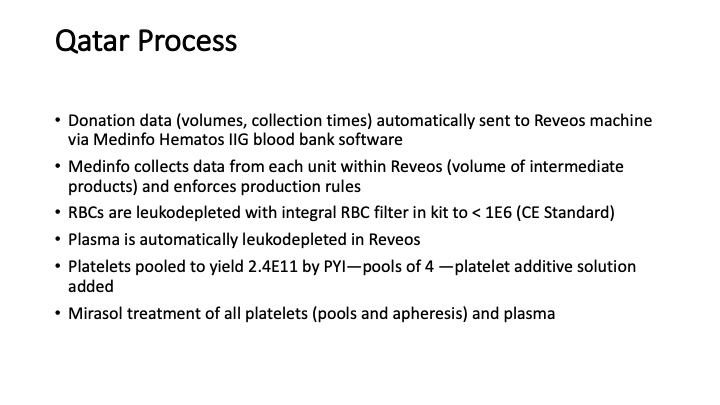
  1. All modules will be connected to the Medinfo Hematos IIG dedicated blood bank computer system.
  2. All records of collection/production/testing/storage/modification/release will be stored therein.
  3. All ordering of convalescent plasma components will be through Medinfo.
  4. External test results (e.g. future antibody titering) can be added to the component information.
  5. Links to the Hospital Information System (Cerner) may be considered after the Medinfo processes are fully functional.

COVID-19 Convalescent Plasma CCP Site Registration

I designed a completely quarantined process for collection, processing, and release of CCP at HMC Doha.  This document shows the Medinfo process for site registration as a separate donor center code.

CCP could only be collected at this special site and only the apheresis bag could be used for collection.  Regular donation options were not available at this CCP site nor was CCP collection an option at the regular donation sites.

4/1/21

International Perspective

When I first moved overseas from the United States, I brought the perspective of my American training and experience.  I saw everything in my new blood bank through those eyes.

Yet, most of my staff were not American or even North American.  Few were even native in English, and most of those  were not American.  They had different qualifications, many of which would not have been accepted by the American schemes.  Still, they functioned well.

I also worked with the US military technologist staff during Gulf War One.  Some did not even have a Bachelor’s degree;  yet, they performed the work well.

I used many technologies that were not yet (or never) US FDA approved such as gel or glass bead typings and pooled buffy coat platelet production.  There were rare reagents I could buy off the shelf (e.g. anti-Tja/PP1Pk).

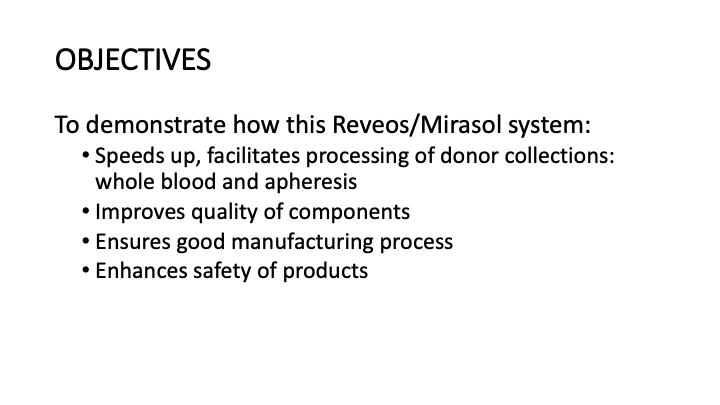
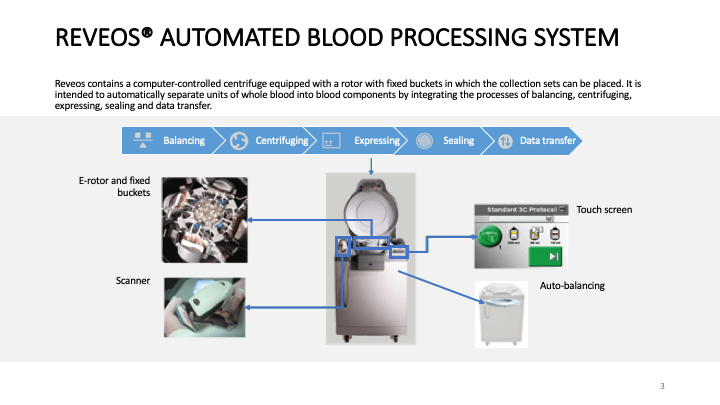
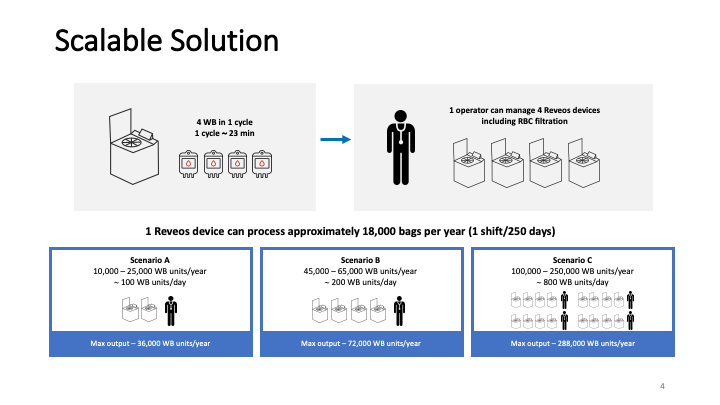
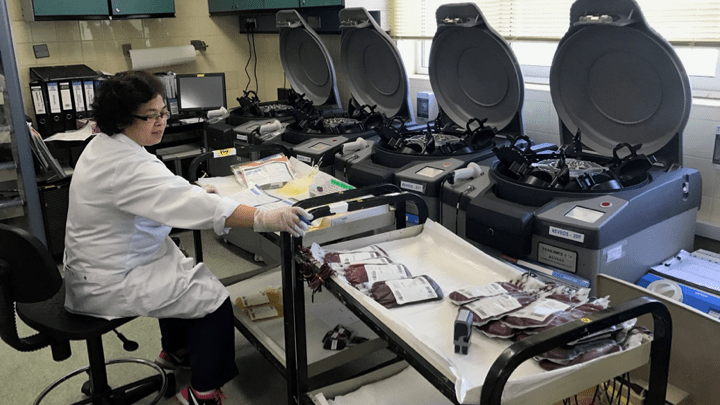
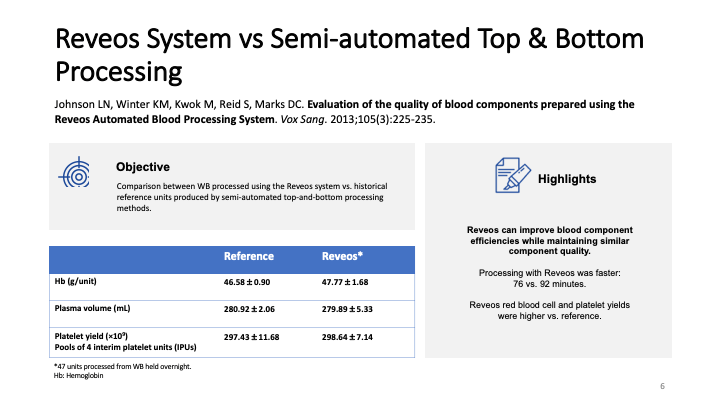
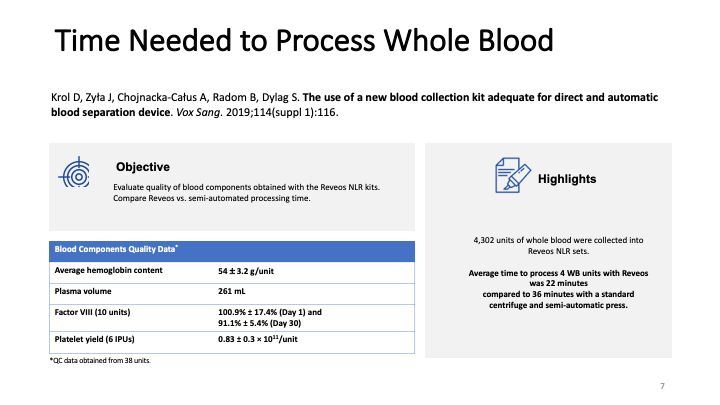
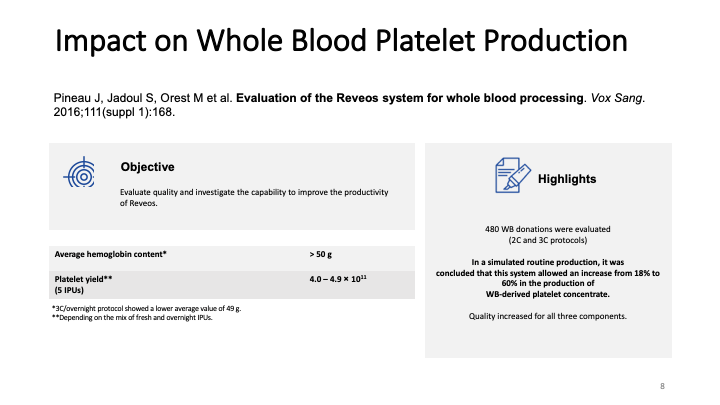
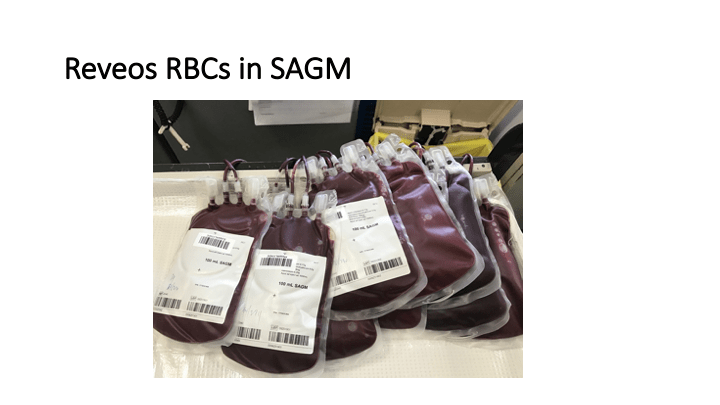
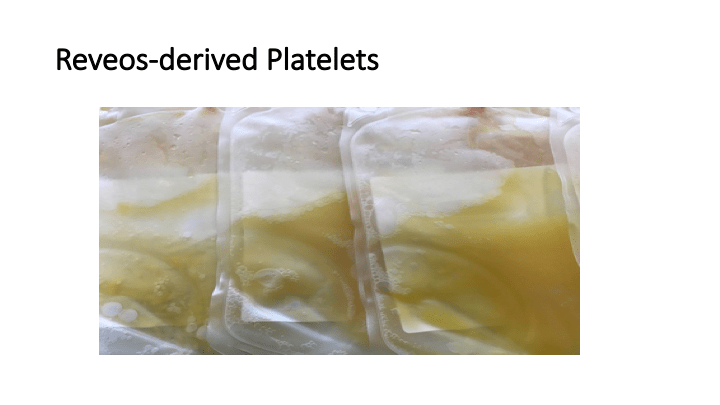
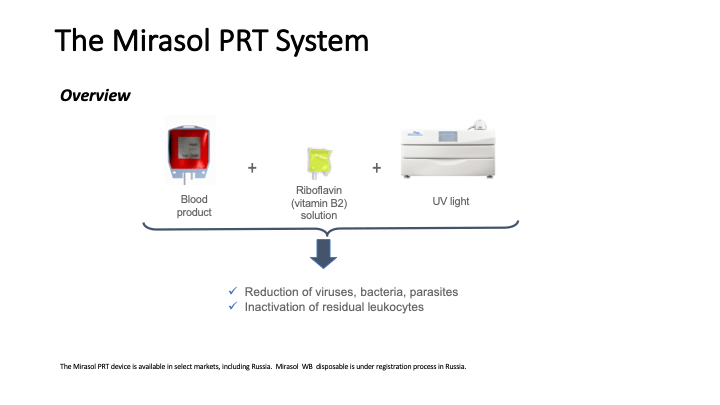
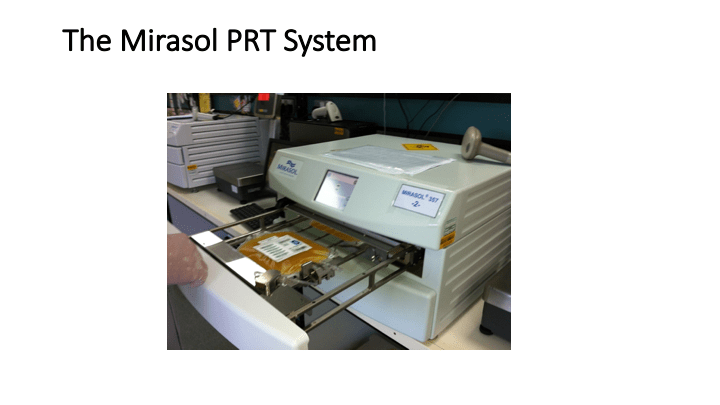
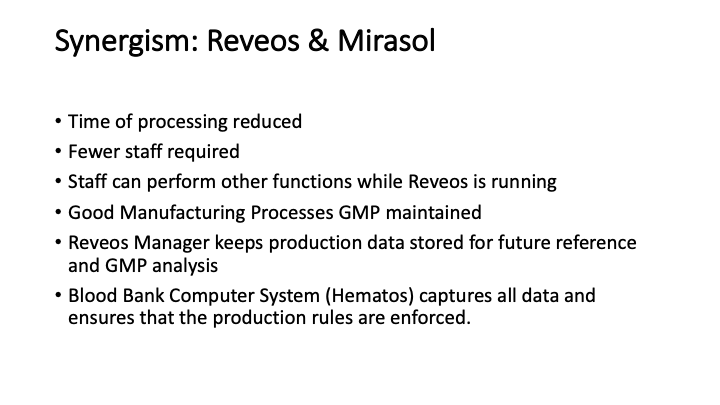
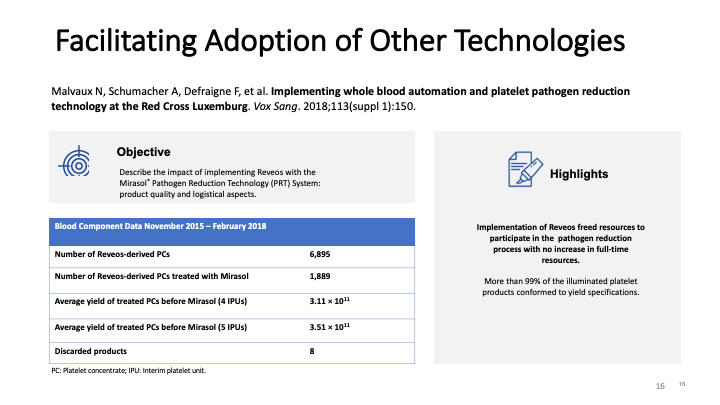
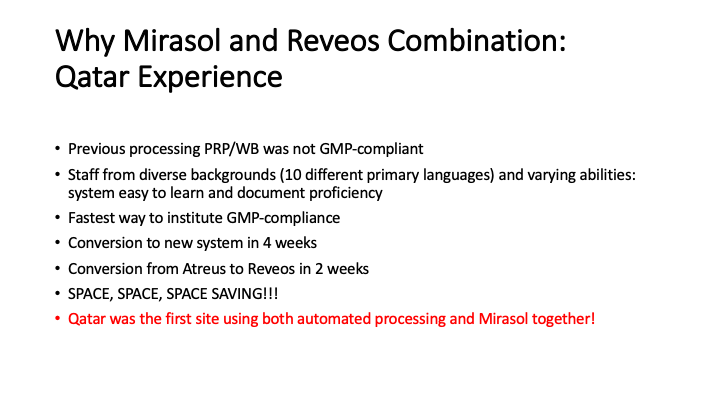
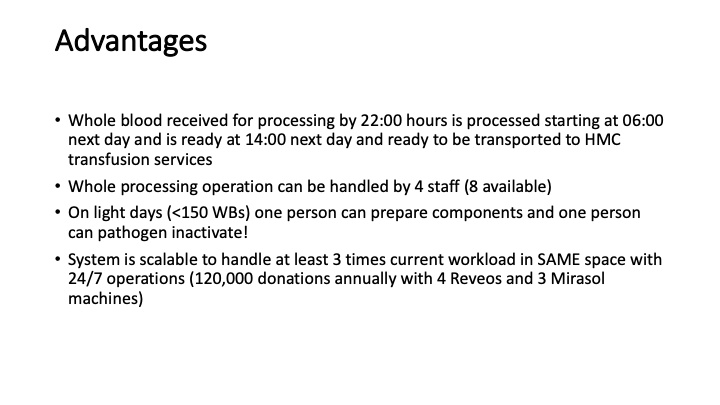
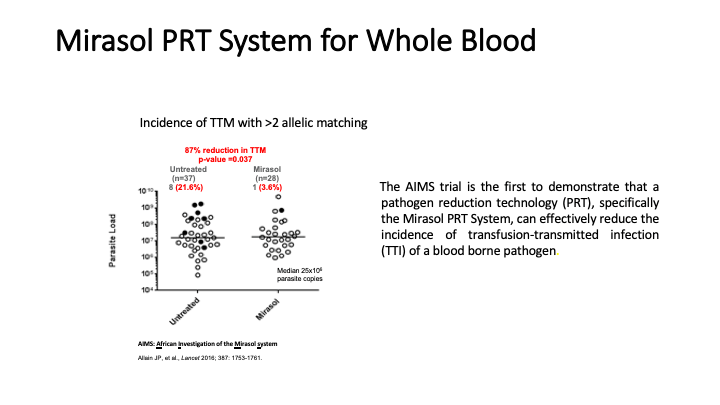
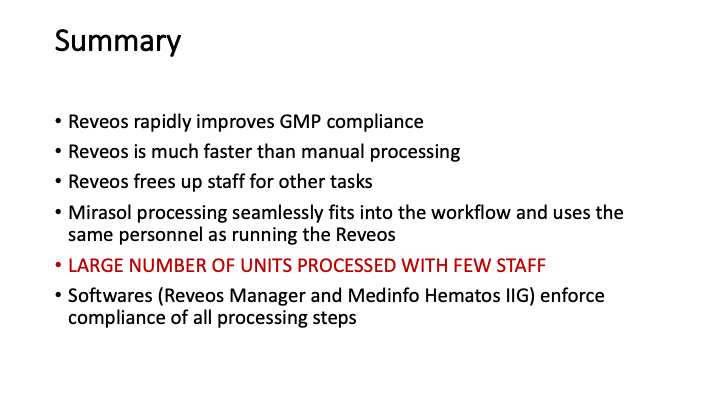
Later, I adopted pathogen-reduction technology (Mirasol), automated component production (Atreus then Reveos), and platelet additive solution.  I achieve a level of good manufacturing practice that would have been difficult to achieve by the FDA-approved methods.

My perspective had changed.  In the Middle East, I studied many frameworks and came to the conclusion that the best approach was to customize them to our local needs.  My particular experience was to start with one framework, i.e. Council of Europe CE, and then localize it.

To do this, I could not use an American turnkey blood bank software for either the donor or patient operations.  I needed a flexible system that could be customized to my needs.  Again, I chose a CE-marked system, Medinfo Hematos IIG that had already been adapted to many frameworks.

It is much easier to work solely within one system such as FDA.  However, if I had done that, I would have lost so much flexibility and not had a system optimized for local conditions.  I would not have used Mirasol, Reveos, Diamed, and many other reagents.

One big disappointment at such international meetings is the perspective by one country’s regulatory agency that they feel its regulations and framework will work well overseas.  I would wager that those people were not well acquainted with international conditions.

Another frustration was attending another international meeting in which the presenters apologized for the source of information since it came from a foreign country (France) and not their own (United States).

No country has a monopoly on what is best for everyone.  To share our experiences and compare is so valuable.  No one assume his way is the best.  In my career, I have had the richest experiences studying other perspectives and my organizations have benefited greatly from the exchange.  We can all learn from each other.  We are citizens of the world.

Reposted: Granulocyte Concentrates Prepared from Reveos Buffy Coats

The Reveos buffy coat is not approved for clinical use.  In my laboratory, I have offered this discard product to the stem cell laboratory and researchers as a quality control QC and a substrate to extract CD34+ cells for expansion and modification.

In this article (abstract attached) from Transfusion and Apheresis Science 59 (2020) 102682, the authors study pools of ABO-identical Reveos buffy coats for their granulocyte functionality and as a possible emergency replacement for granulocyte concentrates when the latter are not available.

I want to thank Terumo BCT (Brussels, Belgium) for referring me to this article and to the authors for a very interesting paper.

1/1/21