Teaching Document: Validation Process

This is a teaching document for medical technology and transfusion fellows to explain the general structure of a validation.

Principle:

All validations must be planned.  A validation protocol must be prepared with specific criteria for acceptance.  All validations with attached evidence must approved by the Head, Transfusion Medicine.

Policy:

  1. A written validation protocol must be prepared in the advance and at least including the following:
    1. Specific parameters and number of iterations to be performed
    1. Designated staff to perform validation
    1. Documentary evidence of the testing
    1. Specific acceptability criteria
  2. The completed validation protocol must be submitted to the Division Head, Transfusion Medicine, or designee for review.
  3. Once the validation plan has been reviewed, it must be performed by the designated staff.
    1. Software validations will be performed in a specific test environment, not in the live, production system.
  4. The completed validation document, including screenshots of the software functionality if applicable, must be submitted to the Division Head, Transfusion Medicine for review.
  5. The equipment or software may only be used if the acceptability are met AND the validation is approved by the Division Head, Transfusion Medicine or designee.
  6. The completed validation protocol will be stored in the document control system.

Reference:

Standards for Blood Banks and Transfusion Services, Current Edition, Bethesda, MD, USA
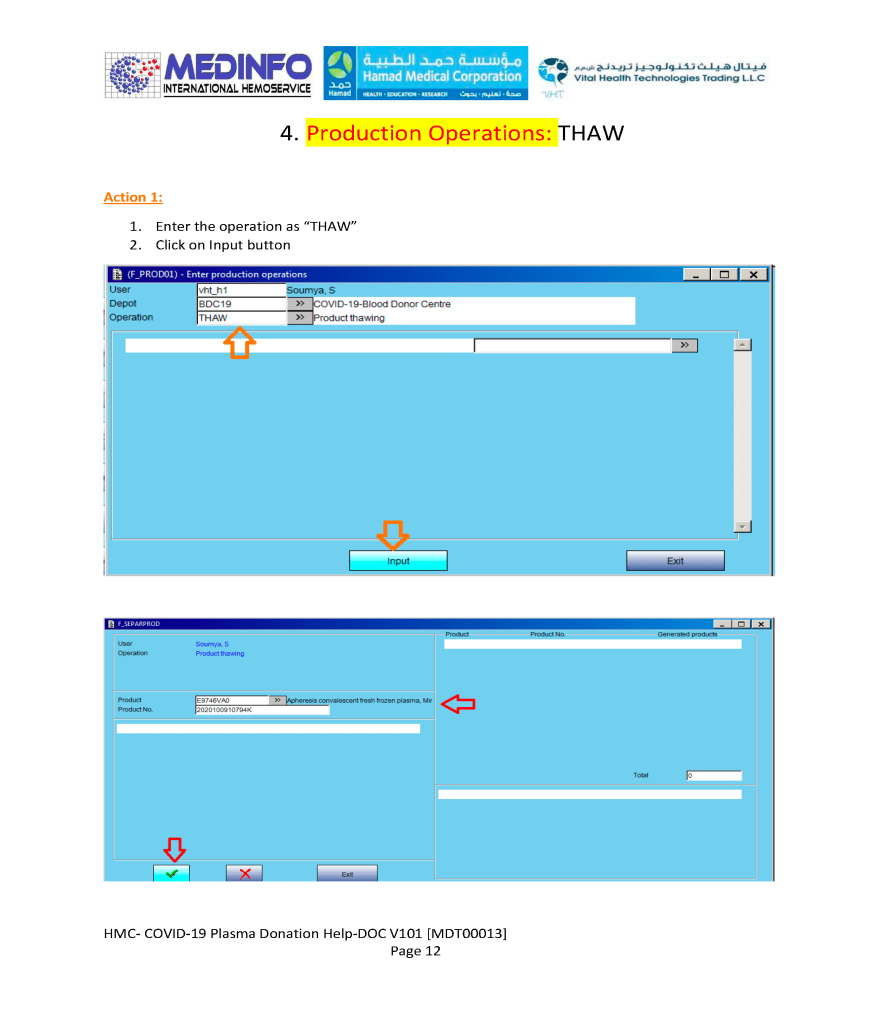
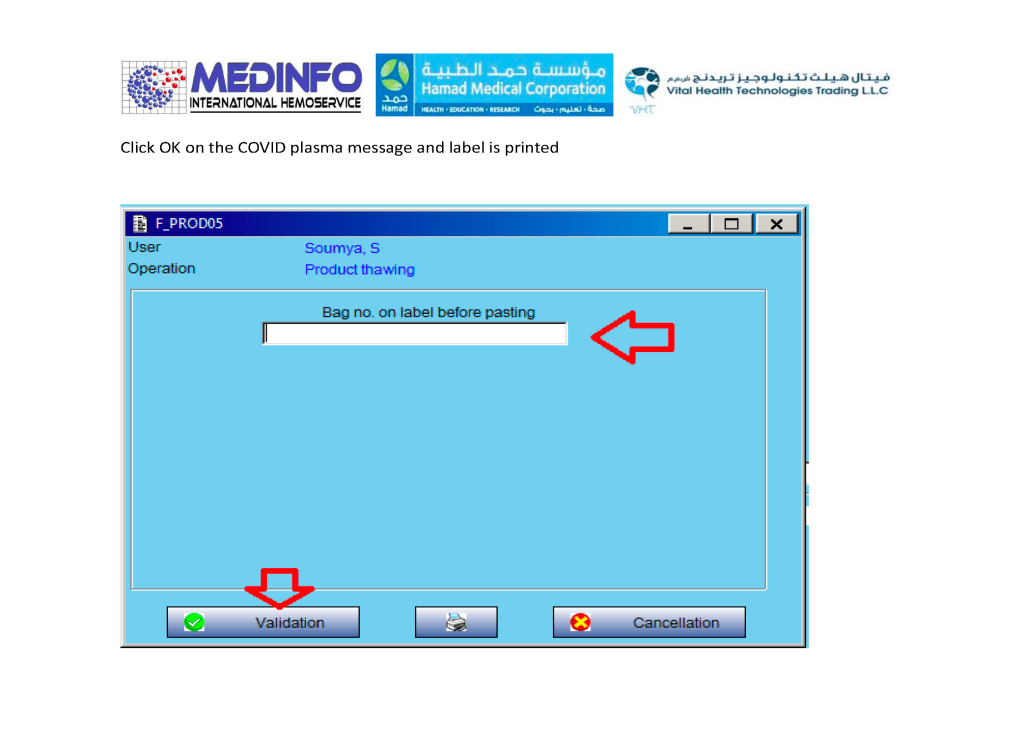
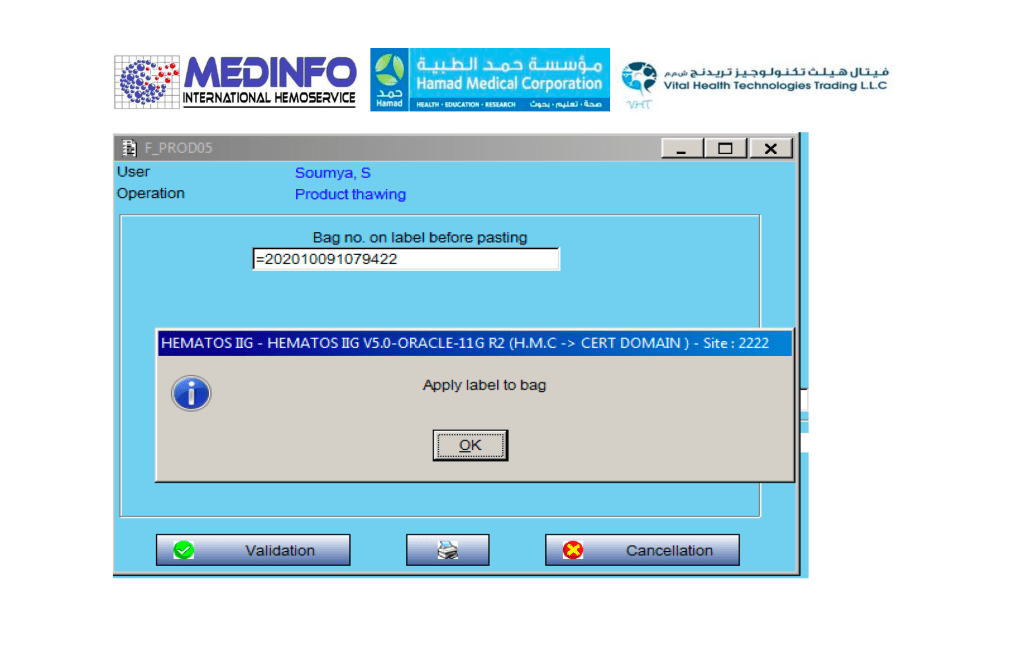
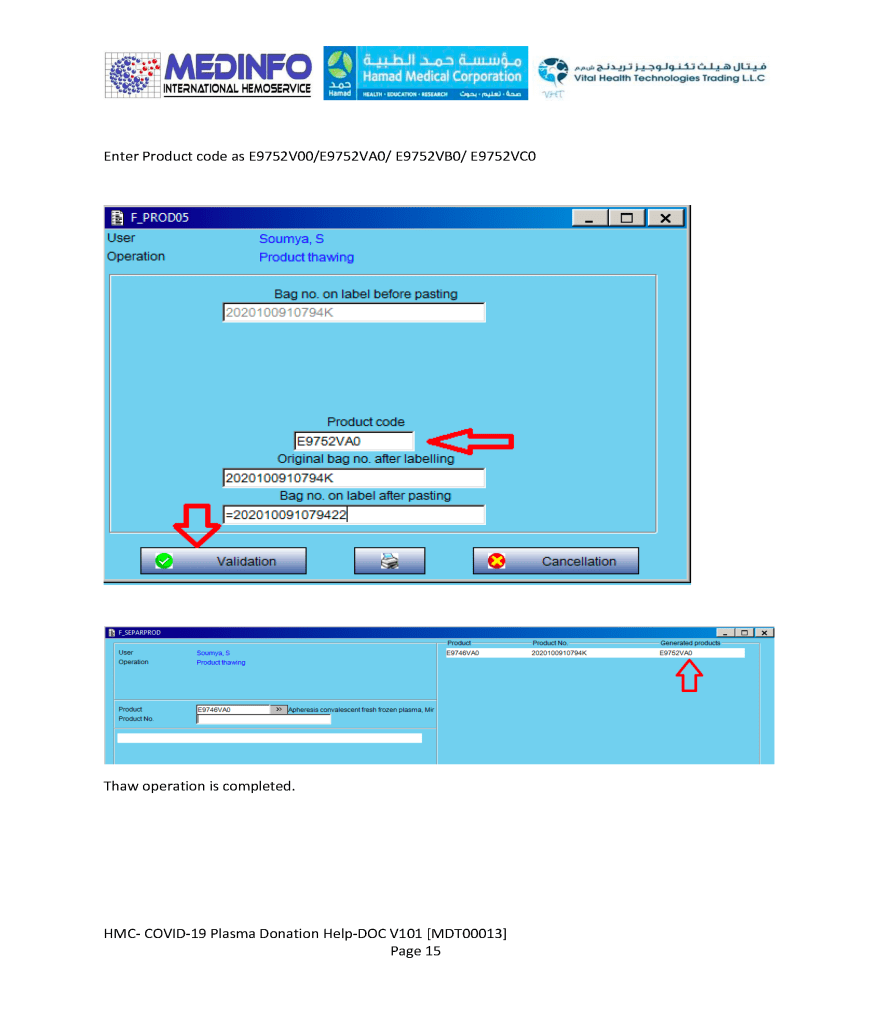
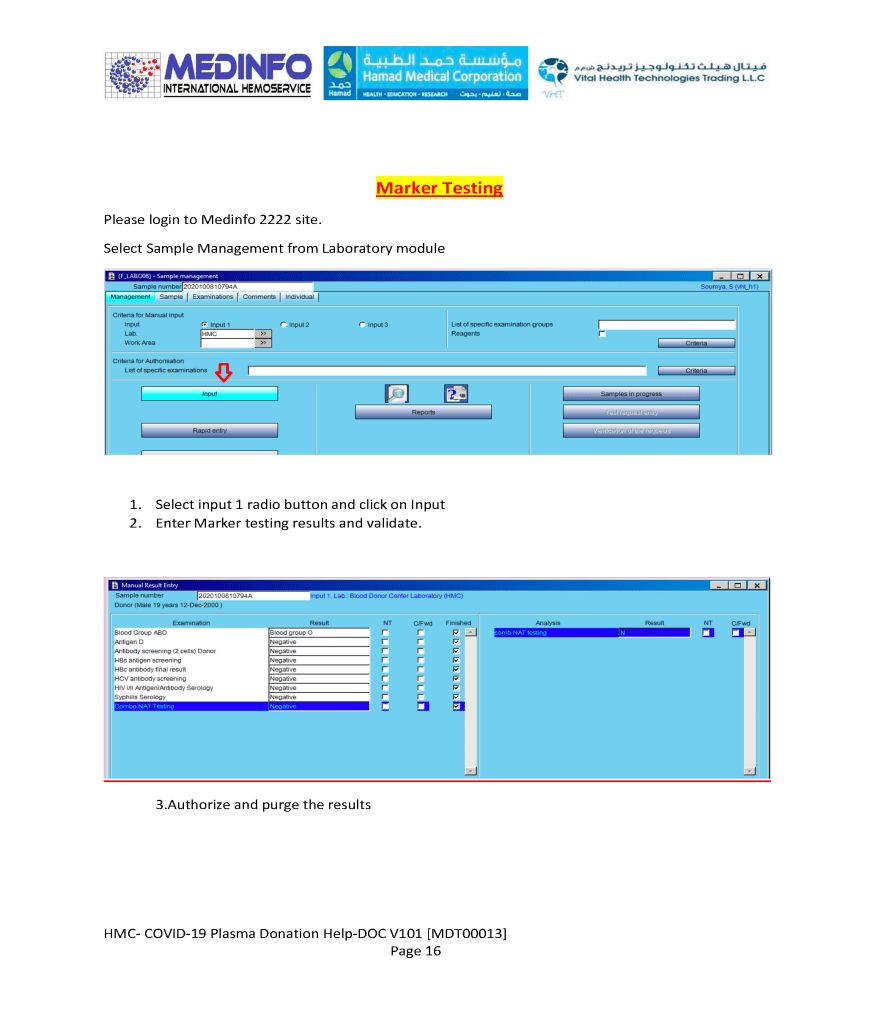
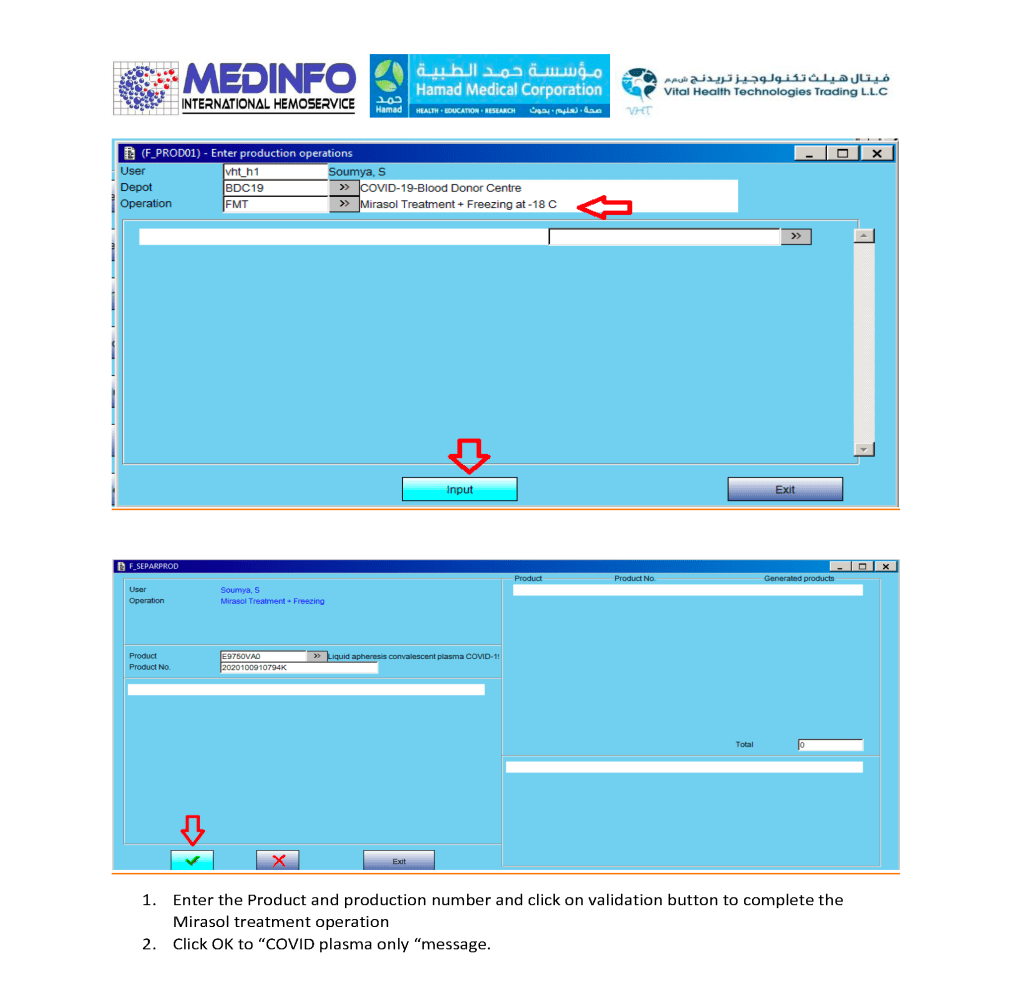
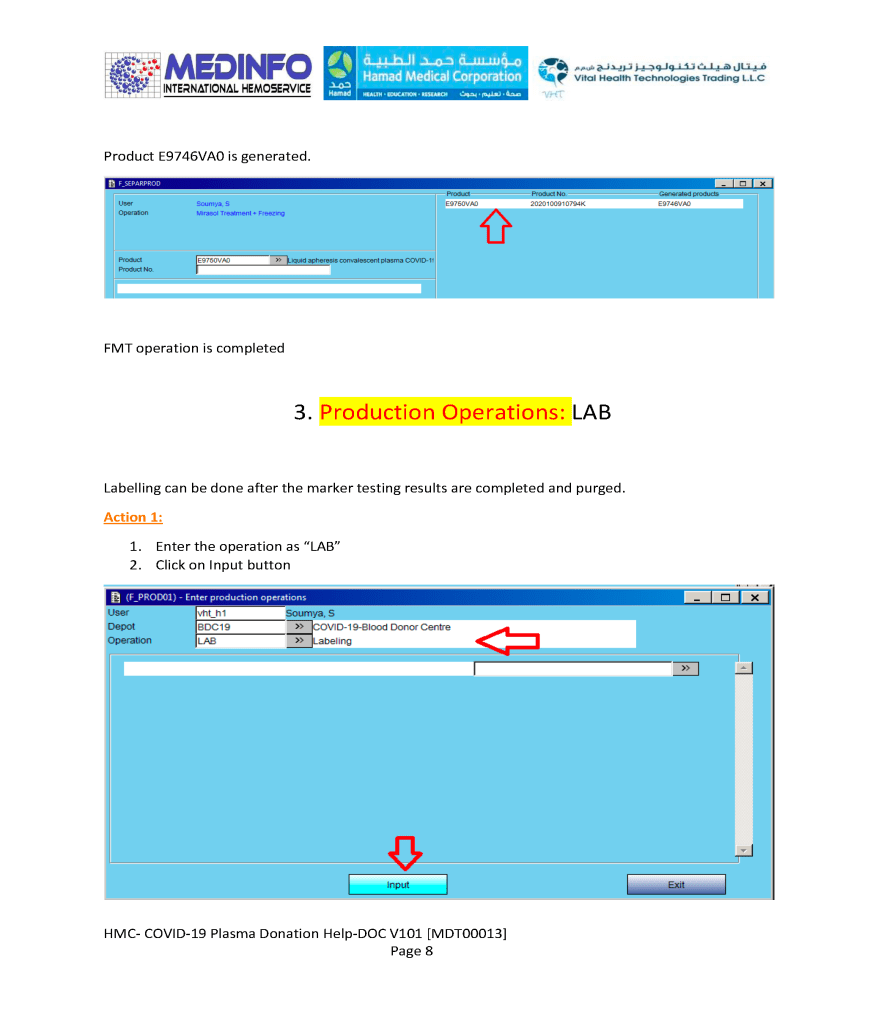
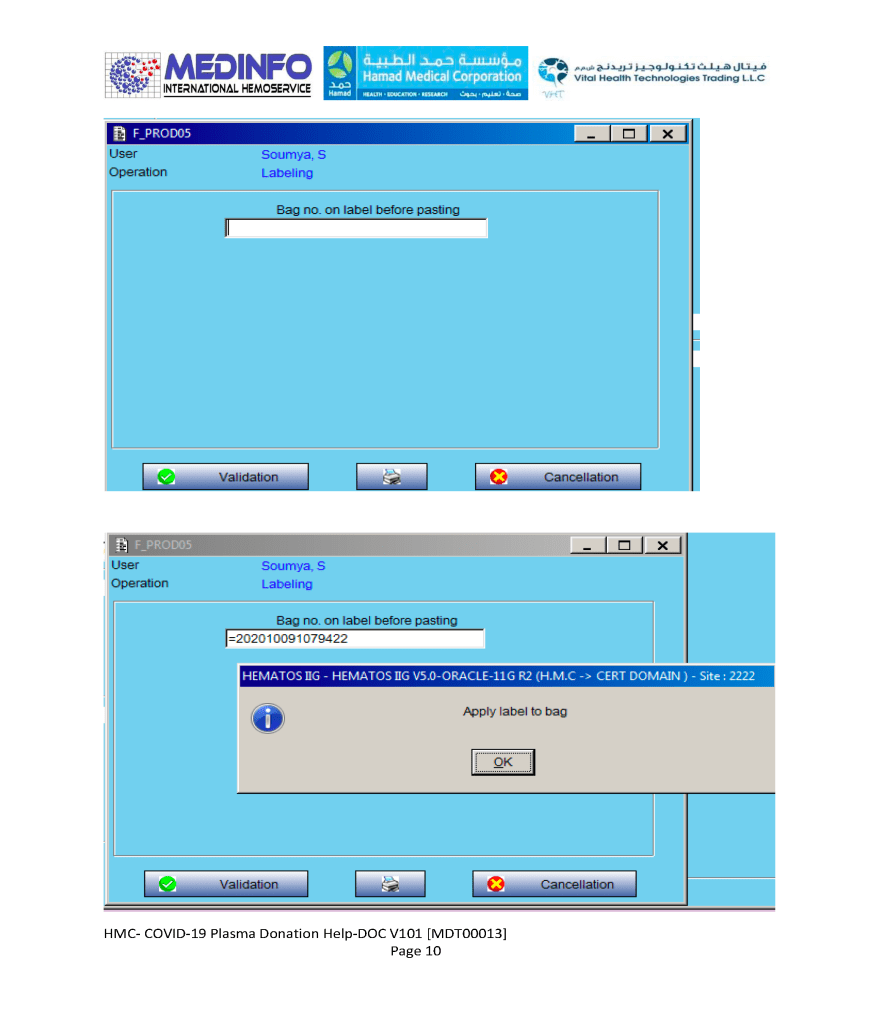
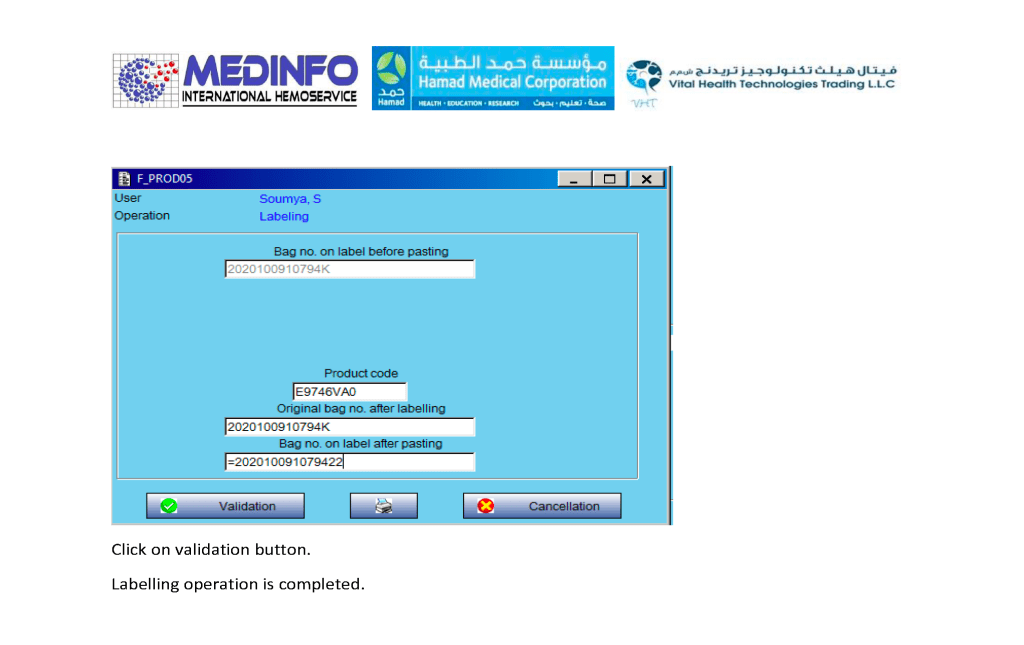
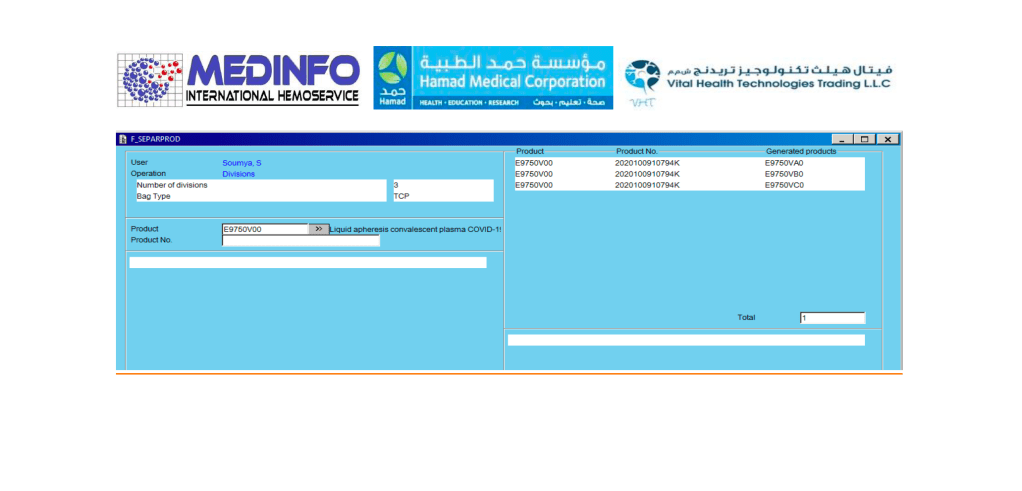
COVID-19 Convalescent Plasma CCP Thawing and Marker Testing

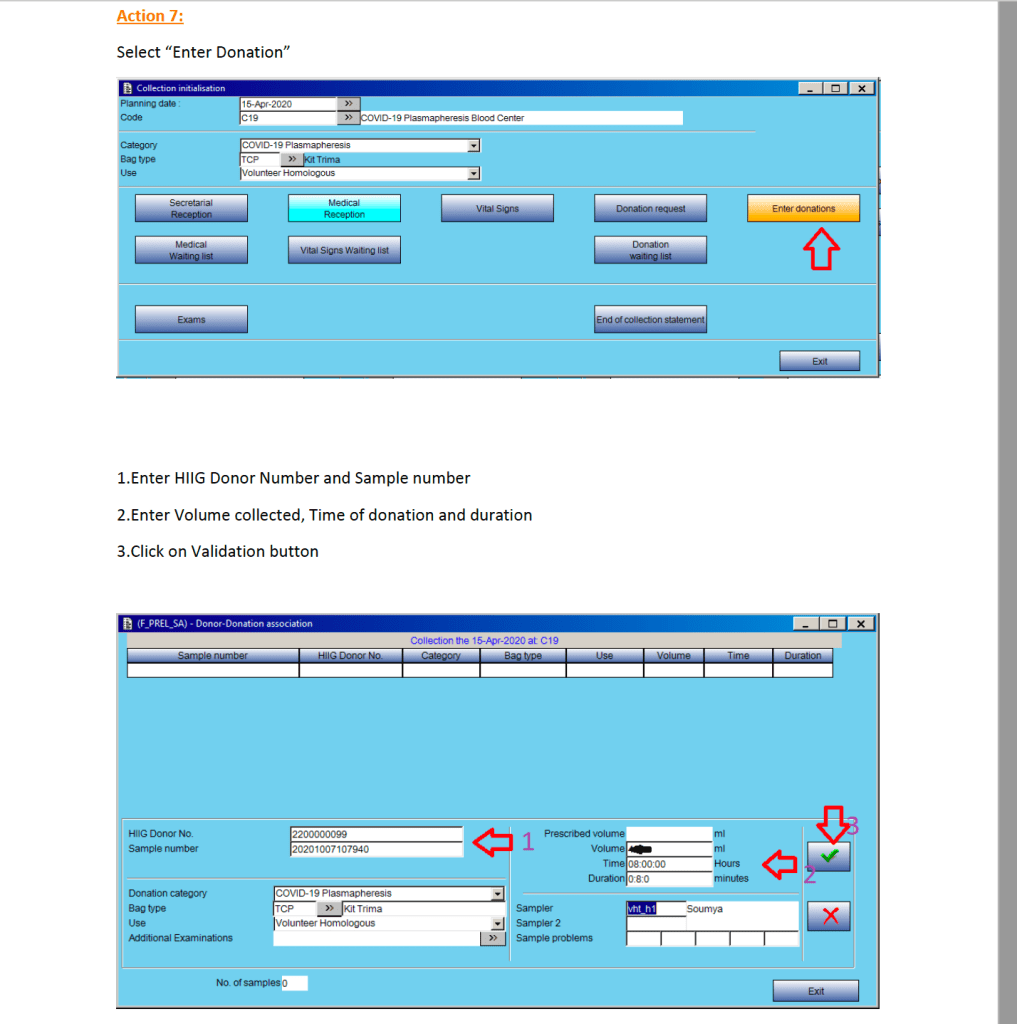
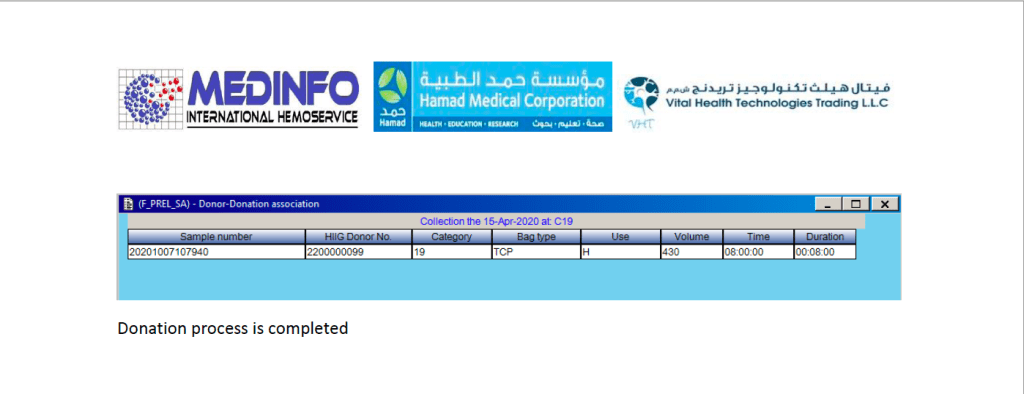
This is a part of a continuing series of posts on the actual Medinfo design of the CCP donation and release processes and covers CCP plasma thawing/labelling and donor marker testing.  It highlights specific changes made for the parallel CCP system.

Thus, the machine interfaces for testing are the same as for regular testing and are not included in this document. Likewise, donor immunohematology testing is the same as for regular donors and is not addressed here

Bedside Monitoring of Transfusion

Once the blood component has left the hospital blood bank, it should be directed transported to the patient’s bedside for immediate transfusion.

At the bedside, the transfusionist (usually a nurse or doctor) must verify the information on the blood component labels (both the ISBT and specific reservation one for the patient).  With a bedside device, this includes:

  1. Scan the patient armband for hospital number
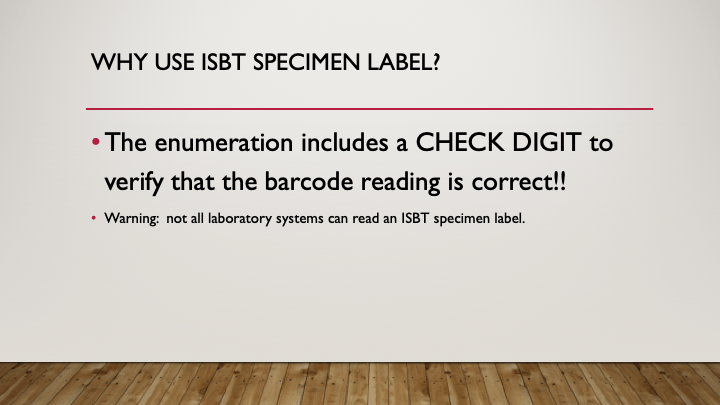
  2. Scan ISBT label:
    1. ABO/D type and any other antigen typings
    2. Blood component type (RBCs, platelets, plasma, etc.)
    3. Expiration date/time of the component
  3. Verify Reservation Label (on back of unit)— centrally performed in blood bank computer system based on #1 and #2 above:
    1. Intended recipient name and hospital number
    2. Compatibility status (compatible, least-incompatible, etc.)
    3. Expiration date/time of the compatibility testing/crossmatch
  4. Record Documentation During Transfusion:
    1. Physical inspection of the unit
    2. Time stamp of transfusion start
    3. Vital signs before starting transfusion
    4. Periodic vital signs during transfusion
    5. Time stamp of stopping transfusion
    6. Any adverse effects during the transfusion
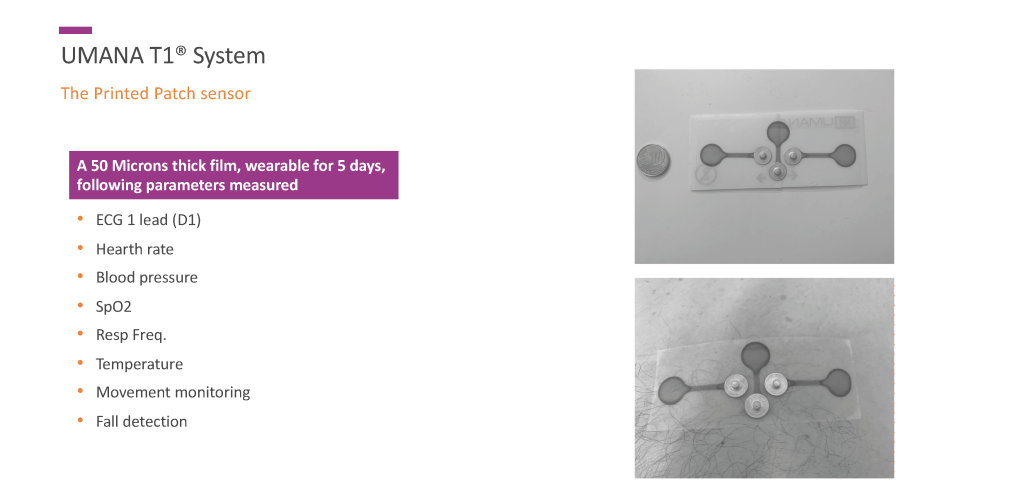
    7. Any adverse effects after the transfusion (remote vital signs, oxygen saturation, EKG lead—if appropriate monitoring device attached to patient (e.g. Umana T1 device).

All of these parameters can be entered into a hand-held device that transmits them to the blood bank computer system (e.g. Medinfo Hemotrace.)

The Blood bank computer system (patient module) should verify that this is the proper unit for the intended recipient and that the transfusion is starting within the reservation limit of the unit and serves to verify the information on the reservation label attached on the back of the blood unit.

With a device such as  the new Umana T1 device from the GPI group, the vital signs together with an EKG lead and oxygen saturation can be automatically uploaded into the handheld device that feeds into the blood bank computer system such as Medinfo Hematos IIG and/or directly transmitted to the blood bank software.  This device can continuously record this information for several days and detect post-transfusion adverse effects such as TRALI/TACO and delayed hemolytic transfusion reactions.

Note:

Some other nursing hand-held devices are available for recording patient data but many cannot read the ISBT unit number or descriptor information.  They also do not check with the blood bank computer system to check if the right unit of blood is being offered to the patient during the validity of the transfusion period (four hours after leaving the blood bank).

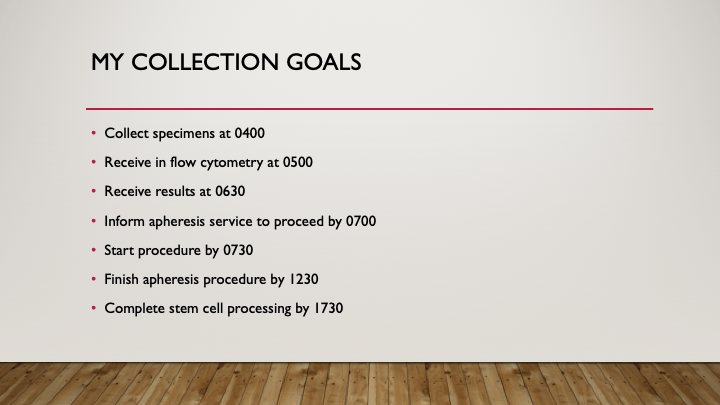
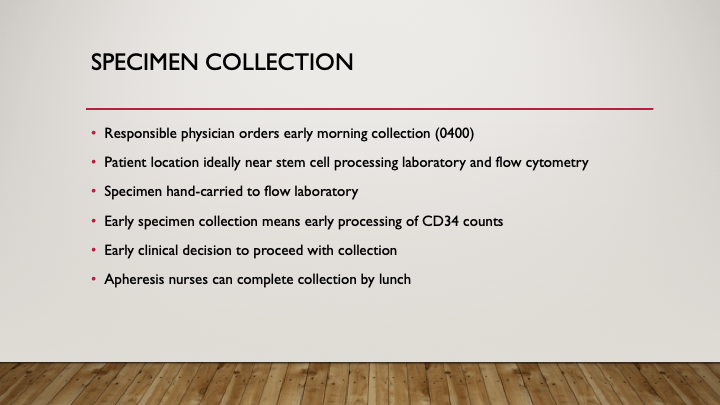
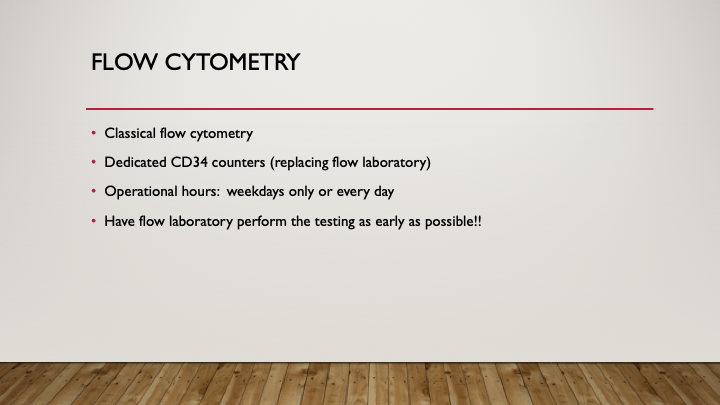
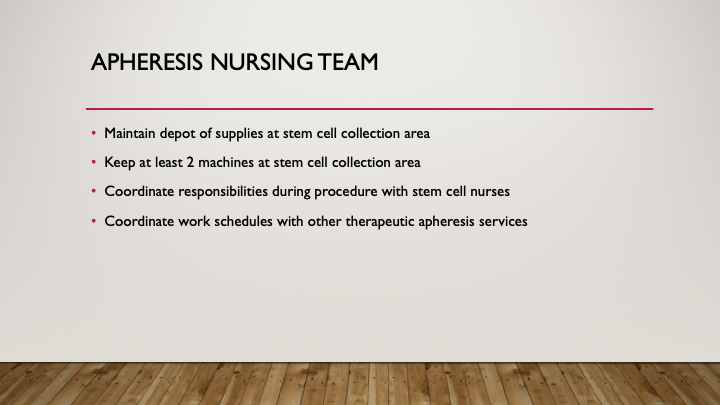
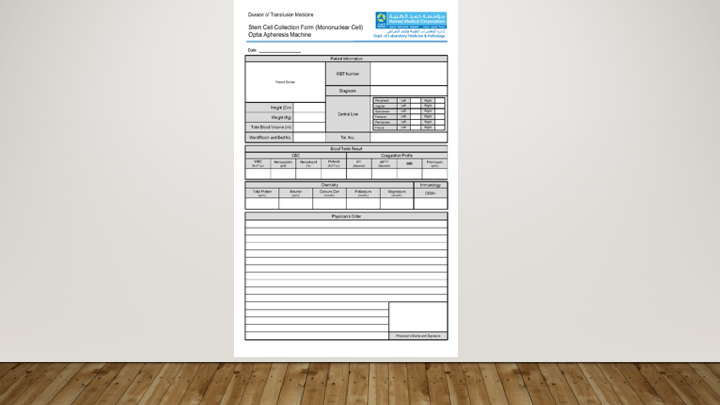
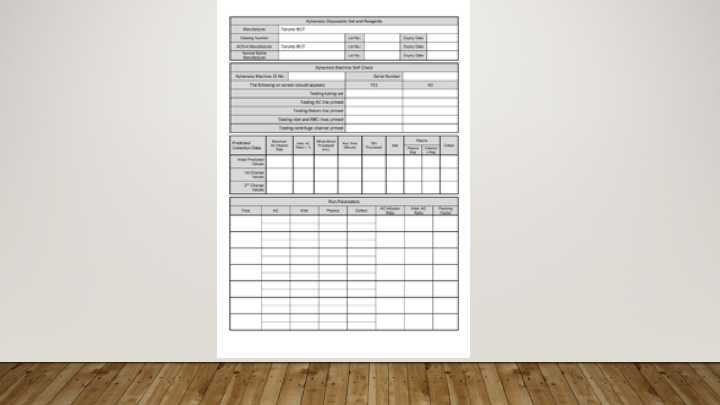
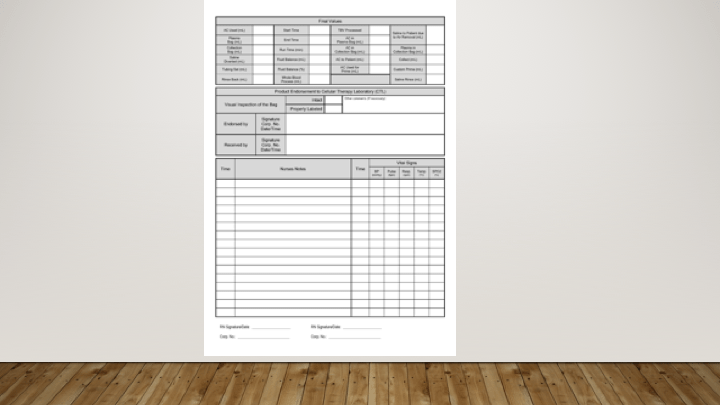
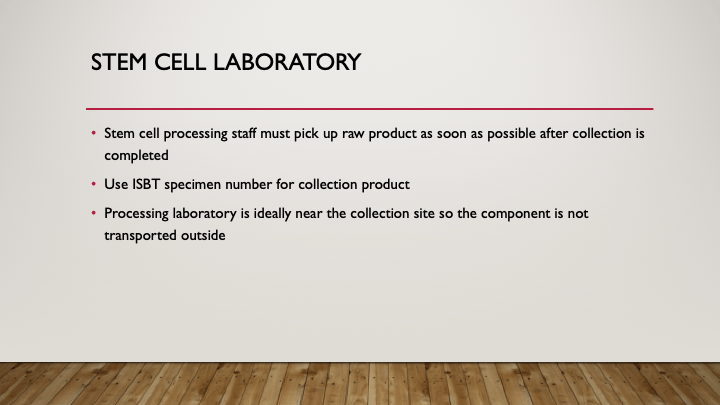
Stem Cell Collection Logistics

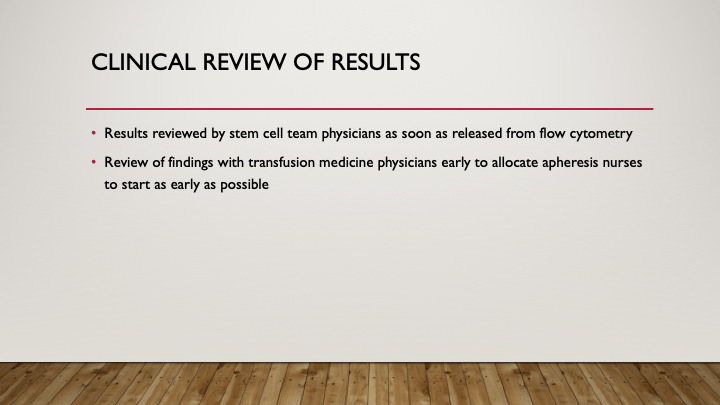
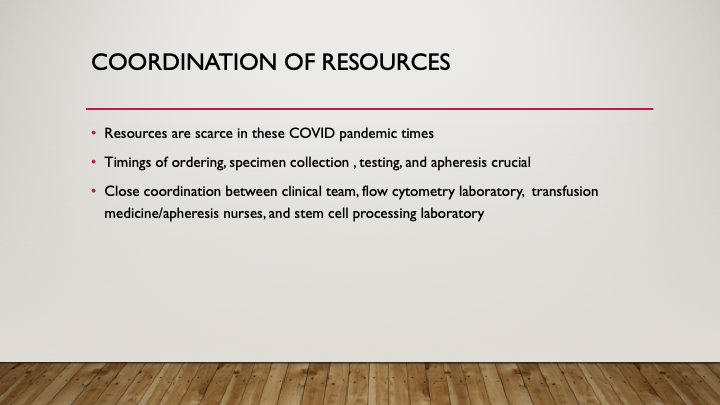
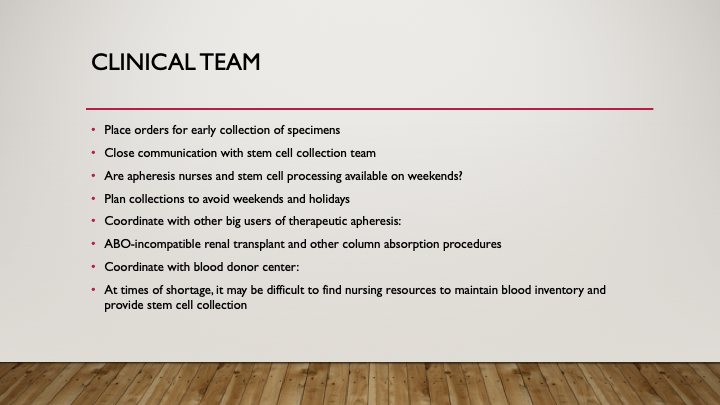
Everyone is excited at the potential of using stem cells for research and therapy. Below is my presentation of the logistics necessary to get those stem collected in an orderly manner, especially in this time of the COVID-19 pandemic. It will also consider blood bank software logistics.

COVID-19 Convalescent Plasma CCP Donor Questionnaire and Collection

This is a part of a series of posts on the actual Medinfo design of the CCP donation and release processes.  The site and donor registrations were covered in a recent previous post.

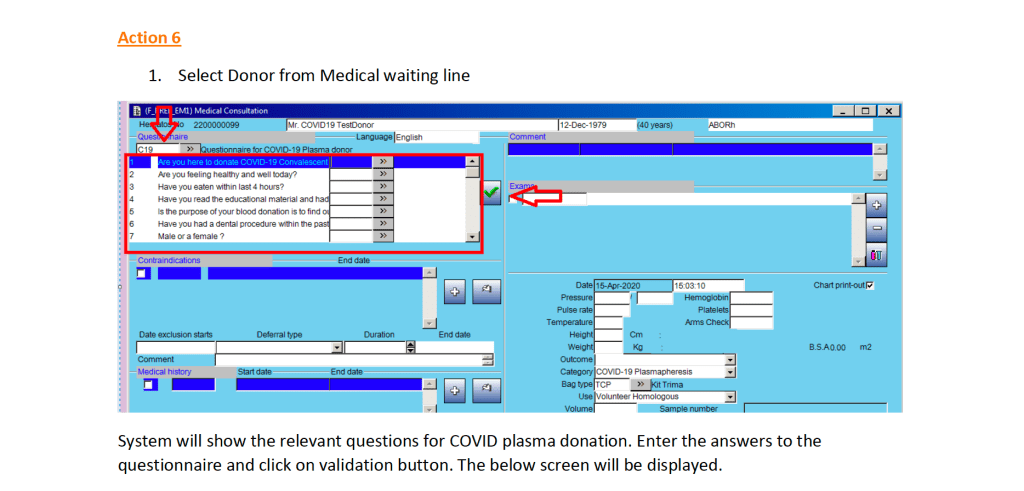
Donor Questionnaire and Physical Examination:

After registration, there is the online CCP donor questionnaire and vital signs entry.

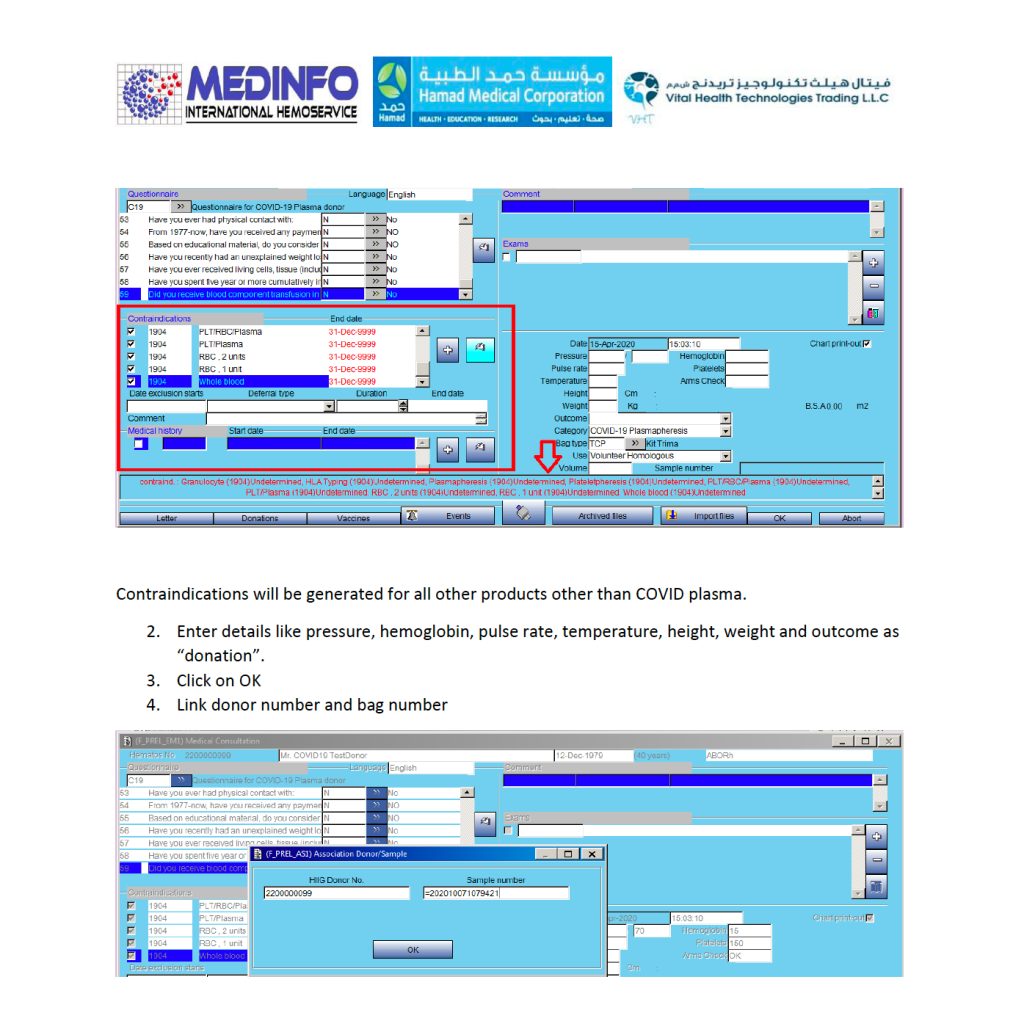
Note that the CCP donor will automatically be excluded from other types of donation.  All other types will appear as contraindications in RED below.

Donor Apheresis Collection:

The actual donation process is the same as for plasmapheresis donors:

Specifications for the CCP Blood Bank-Hospital Information System Interface

At HMC Doha, we had a limited bidirectional interface between Medinfo Hematos IIG blood bank software donor and patient modules and the hospital information system HIS Cerner Millennium for blood component and limited blood bank testing ordering and return of the blood component ordering statuses and all blood bank test results.

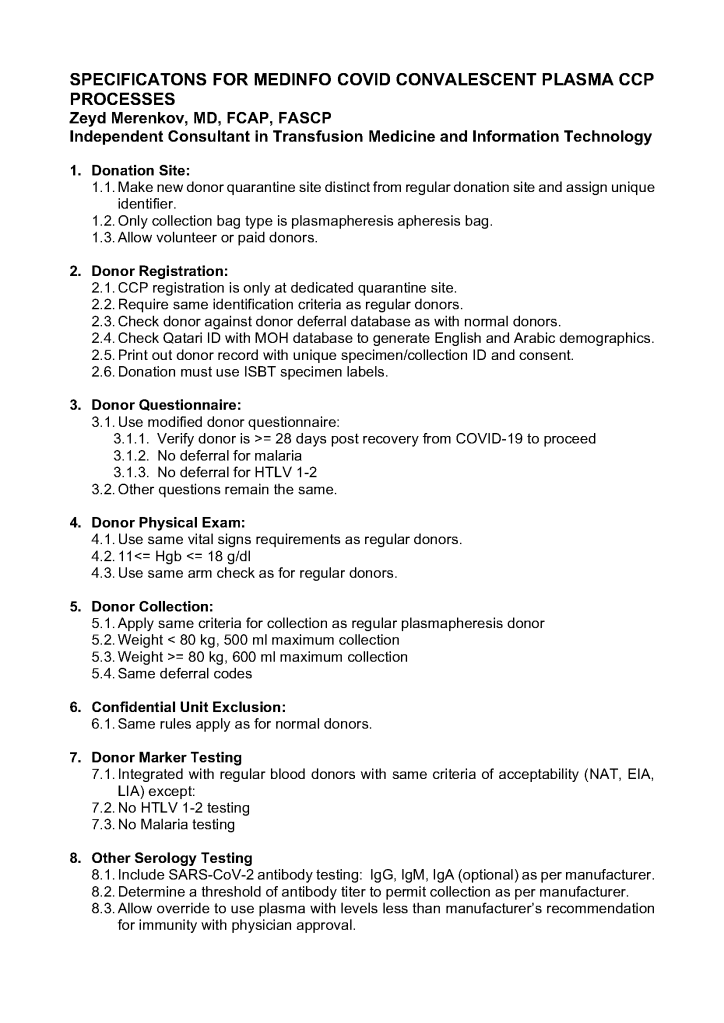
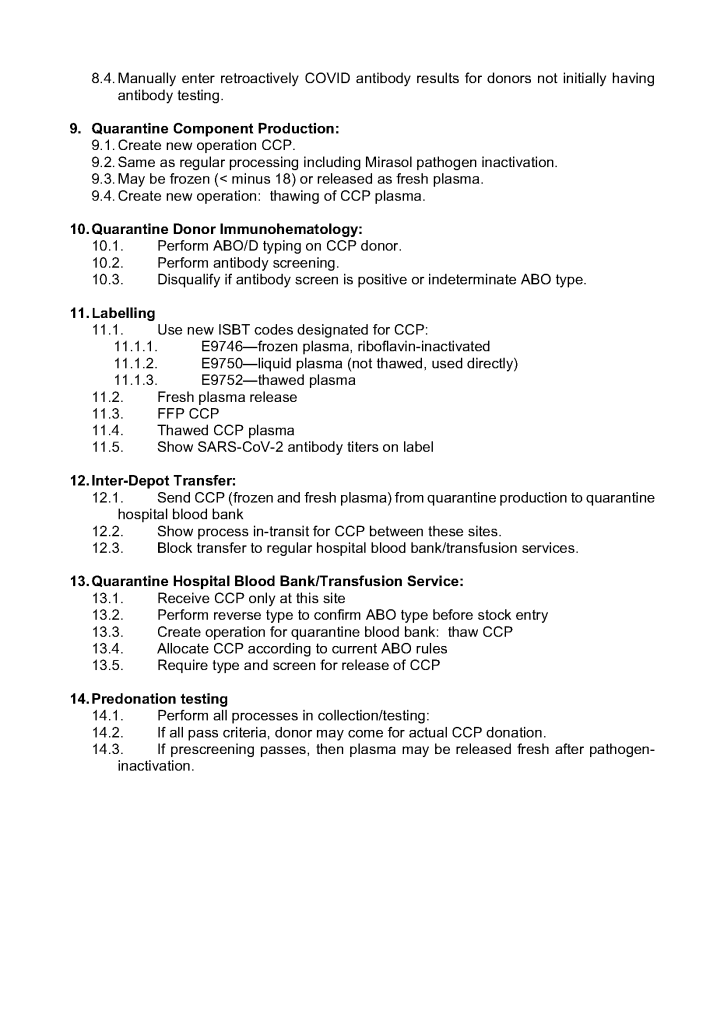
For the purpose of COVID Convalescent Plasma CCP, the following specifications applied:

  1. Ordering of CCP was either by number of units (average 220 ml each) or volume in ml (up to 200 ml).
    1. Maximum order was 2 units.
  2. Only designated physicians could order CCP.
  3. A valid type and screen (72 hour maximal validity) had to be in effect to place an order for CCP.
    1. If not valid, a new type and screen must be ordered before ordering CCP.
  4. Selection of the ABO type of CCP was at the discretion of blood bank using its standard algorithms.
  5. Status of order (ordered, received in blood bank, in process in blood bank, or released) would show in the HIS.

Note:  Bedside documentation of the component transfusion was the NOT the responsibility of Transfusion Medicine or Medinfo Hematos IIG.