Minimizing Iron Deficiency in Blood Donors

Principle:

HMC Blood Donor Center is implementing a policy to limit or help limit iron deficiency in its blood donors (whole blood and/or apheresis).  The reasons for this are:

  1. Development of iron deficiency in some donors
  2. Progression of iron deficiency that occurs with frequent blood donation
  3. Potential adverse effects of iron deficiency

Definition:

Donors high-risk for iron loss include:

  1. Females—all, regardless of age
  2. Males donating three or more times within a 12-month period
  3. Apheresis donors giving 5 sessions in an 8-week period
  4. Donors after one RBC apheresis dual-unit donation
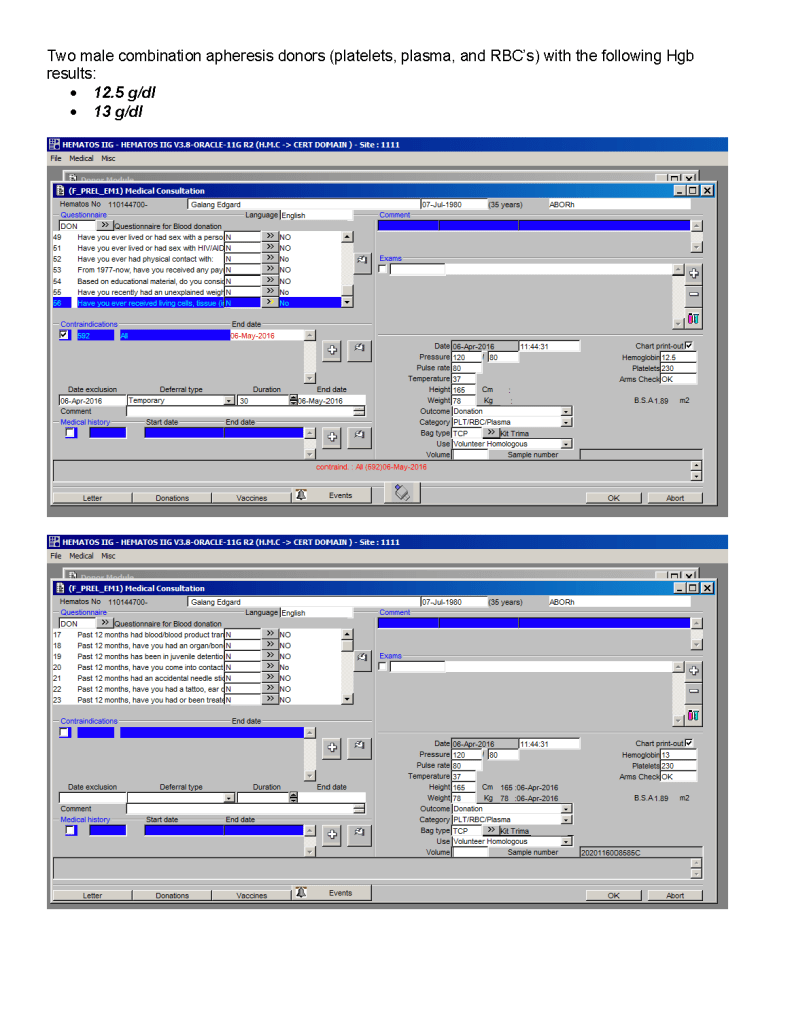
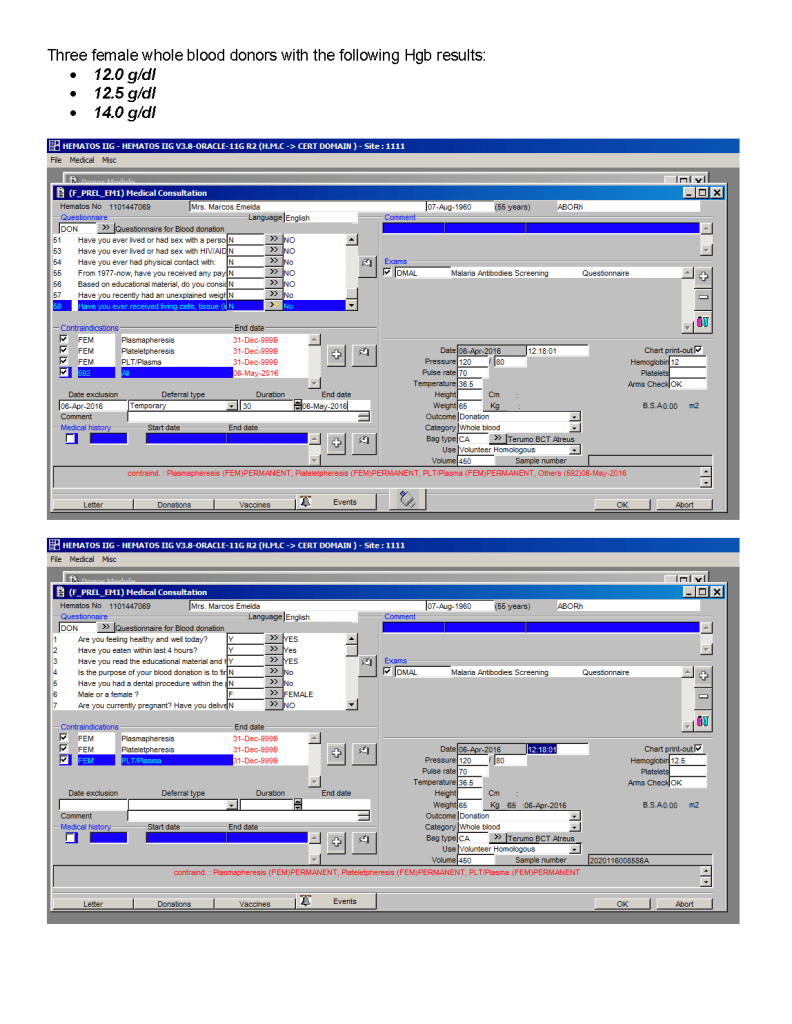
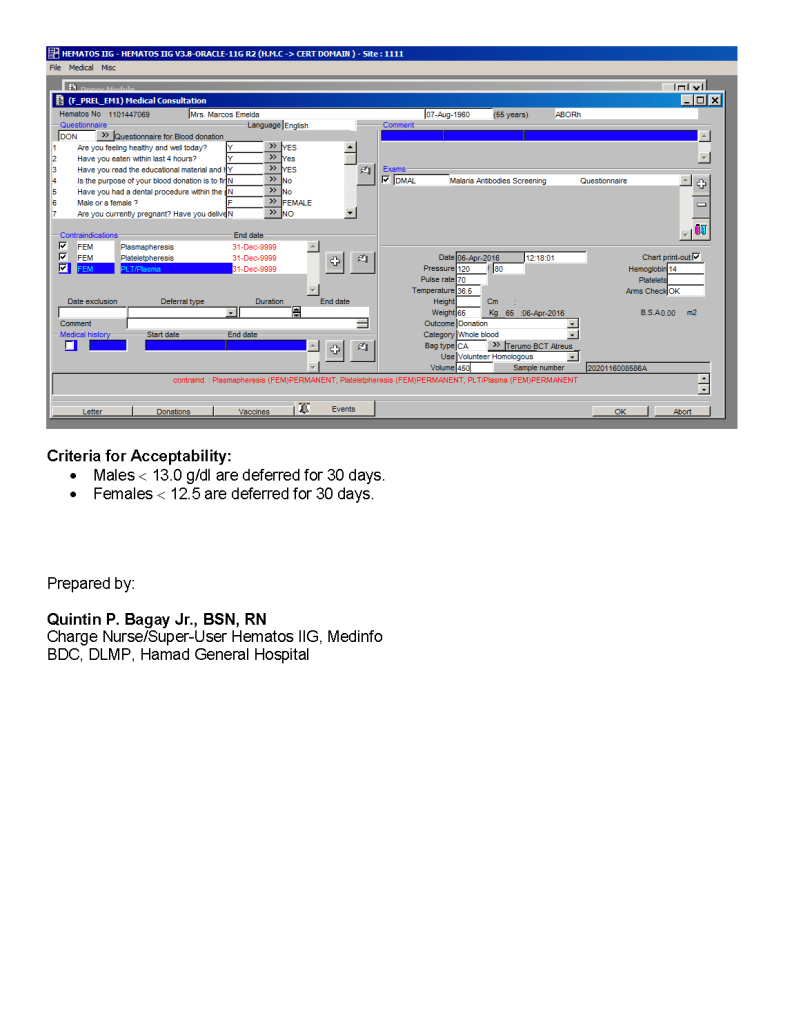
  5. Males and females with borderline low hemoglobin levels:
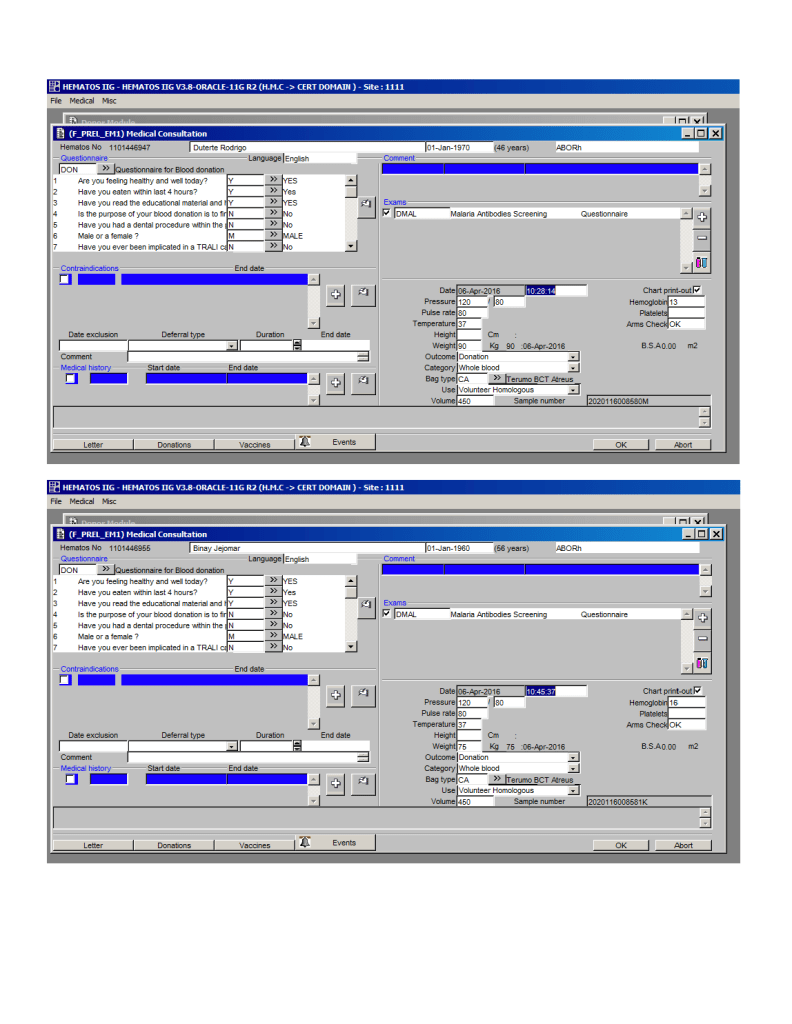
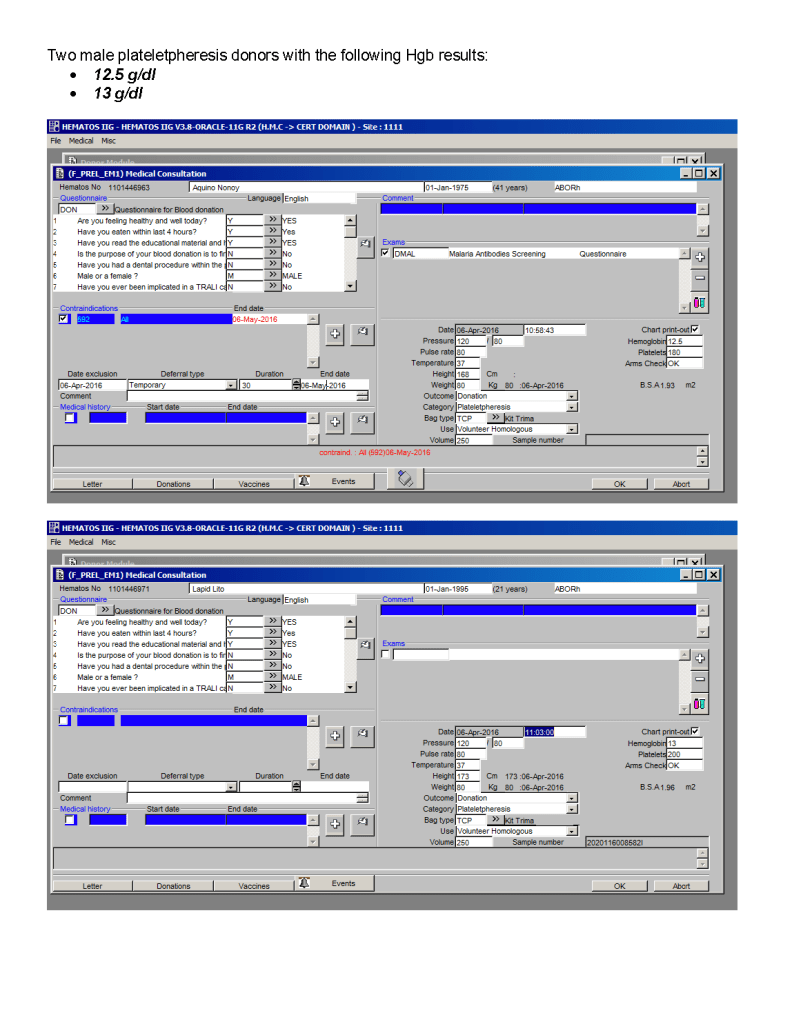
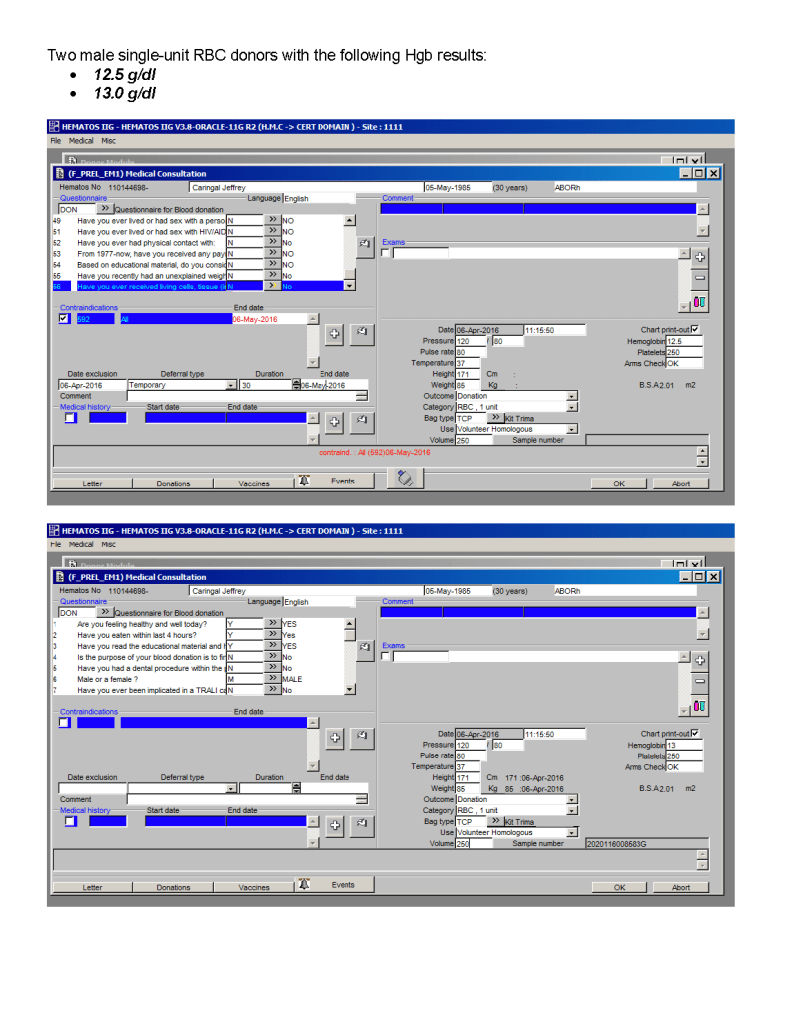
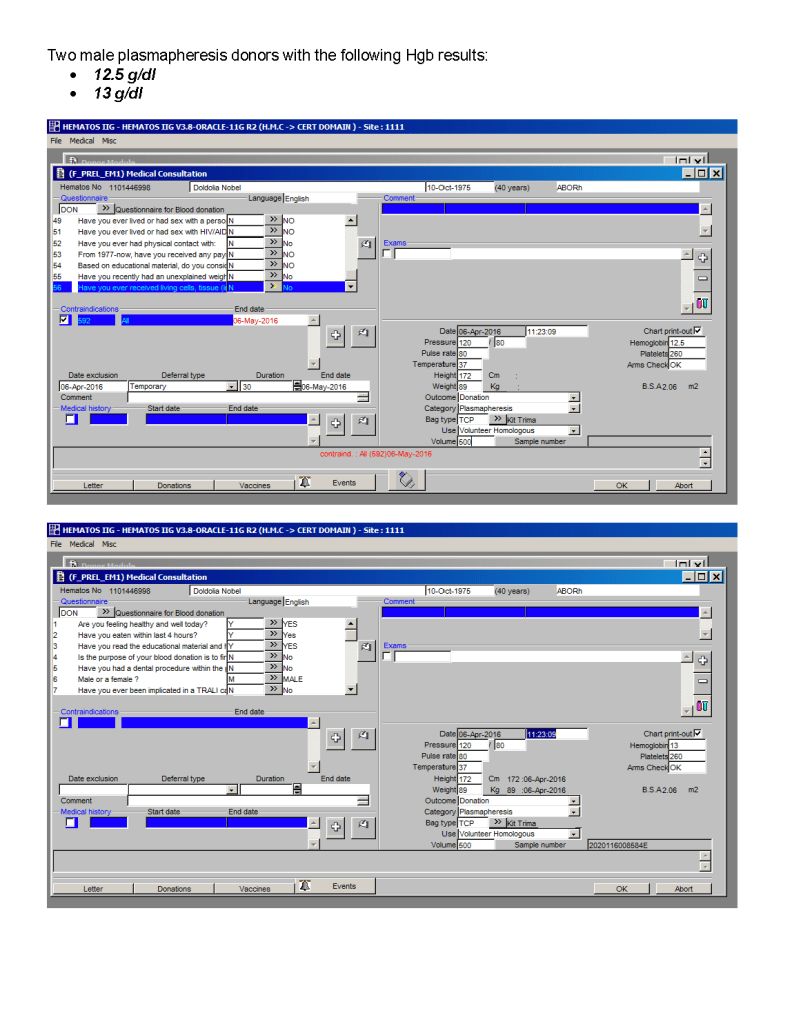
    1. Males with hemoglobin <= 13.5 g/dl
    2. Females with hemoglobin <= 13.0 g/dl
  6. Donors with low ferritin level (below current lower limit of reference range)

Policy:

  1. Donors will be provided with information regarding iron-deficiency from donation.
  2. High risk donors (as defined above) will be offered a prescription for iron supplementation equivalent to 18 mg of elemental iron daily for 30 days.
  3. During the iron supplementation period, the donor will be deferred for donation.
  4. If a donor does not take the iron supplement, then he/she is limited to 2 donations/year.
  5. We will offer donors to test ferritin in the following categories:
    1. Apheresis donors after their fifth donation of plasma or platelets within 8 weeks
    2. Whole blood donors after three donations within a 12-month period
    3. Donors after dual-unit (2-unit) RBC apheresis donation
    4. All female donors otherwise meeting donor criteria before donation
  6. Donors with low ferritin levels will be deferred until ferritin levels are normal (based on reference range currently in effect)

References:

AABB Association Bulletin #17-02, Updated Strategies to Limit or Prevent Iron Deficiency in Blood Donors, 26/3/17

Updated 6/9/20

Processes and Software Building 41: Off-Line Medinfo Donor Transactions

Principle:

Normally, outside donor campaigns still connect to the main server via wireless 4G/5G with a VPN.  However, if there is a “dead” spot, Medinfo can provide a local area network using one of the PCs/laptops to serve as a server.  The local server receives an uploaded image of the donor database.  Upon return to the donor center, the local server’s data is uploaded and synchronized.

When you cannot establish a direct link to the live Medinfo program, you must arrange for Medinfo/VHT to create a local server that will have the current Medinfo donor database for use at outside campaigns where the internet connection cannot be used.  This can also be used if for some reason the Blood Donor Center link is down in order to register donors and check the donor deferral database.

Policy:

  1. For each outside campaign, there should be a pre-campaign visit to verify the availability of internet to connect to Medinfo.
    1. If the internet connection is working, use Medinfo using the 4G/5G access points.  Otherwise:
    2. If none, inform Medinfo/VHT to prepare a local server—at least ONE DAY in advance of the campaign.
      1. Provide Medinfo/VHT one of the portable computers to download the database and software.  This will be the offline server for the campaign.
      2. Link the offline server to the other portable computers for the campaign (see the corresponding Medinfo job aid).
      3. Use the local network (offline server and other portable computers) for registering donors.
      4. Upon return to the Blood Donor Center, upload the data as indicated in the Medinfo job aid.
      5. Continue the regular processes after uploading.

7/9/20

Sample Resident Examination for Donor Center

Reading Assignments:

  • Chapters 5-9:  Blood Donation and Collection in Technical Manual, 16th Edition
  • Standards for Blood Banks and Transfusion Services, AABB, 25th Edition

Study Questions:

  1. Which of the following candidates is acceptable for donation?
    1. Saudi, visited Sudan 11 months ago as part of National Guard exchange
    2. Saudi former student lived in UK for 2 years from 1993-95
    3. Normotensive taking amlodipine and valsartan
    4. Psoriatic using Tegison
    5. Male adult using ibuprofen for lower back pain
    6. Female 4 weeks post-partum
    7. Husband of patient with recent onset of hepatitis B infection
    8. Male stopped taking ampicillin one week ago for acute pharyngitis
    9. Donor with WBC count 12000/cmm but otherwise normal
  2. Which of the following donors is suitable for autologous donation?
    1. Cataract surgery patient
    2. Well, but had gastroenteritis 3 days ago
    3. Pregnant with Hgb 11 g/dl
    4. CGL patient with Hgb 13 g/dl
    5. Hodgkin’s disease patient Hgb 12 for exploratory laparotomy
    6. Patient with rare antibody anti-Tja, Hgb 13 for cholecystecomy
  3. How do you handle the following events?
    1. Donor draw fills bag with bright red blood in 30 seconds
    2. Donor faints when needle is shown
    3. Lipemic serum during donor plateletpheresis session
    4. Donor with numbness and tingling of extremities during donor apheresis session
  4. How would you handle the following therapeutic phlebotomy requests?
    1. Hgb 22 g/dl, suspected polycythemia rubra vera
    2. Hgb 13, suspected hemochromatosis patient
    3. Hgb 16, renal failure patient post-erythropoietin treatment
    4. Unstable angina, Hgb 9
  5. What is the final volume of each of the following blood components?
    1. Whole blood
    2. Packed RBCs—state hematocrit as well
    3. Washed RBCs
    4. Irradiated packed cells
    5. Platelet pool—state number of platelets
    6. FFP
    7. Cryo-poor plasma
    8. Cryoprecipitate
  6. What are the outdates of each of the following components?
    1. Packed RBCs
    2. Platelet pool
    3. FFP frozen at -35C
    4. Granulocyte concentrate
  7. Which donor units are acceptable for transfusion?
    1. HBsAg negative, HBcAb positive, HBsAb > 20 IU/liter
    2. HCV Ab positive, RIBA-3 negative, HCV-RNA negative
    3. Syphilis positive, FTA-ABS negative

Revised:

29/8/20

Advanced Hematology Resident Training in Donor Center and Apheresis

Objectives:

  1. Donor criteria based on AABB standards
    1. Is it safe for the donor to donate?
    2. Medical history
      1. Current medical conditions
      2. Past medical conditions
  2. Medications
  3. Vaccinations
  4. Travel history
  5. High-risk behaviors
  6. SARS/MERS
  7. COVID-19 convalescent plasma CCP
  8. Prion diseases
  9. Donor medical examination
  10. Is it safe for the recipient to receive the donor’s blood?
  11. Donor registration issues
    1. Positive identification
    2. Donor deferral database
  12. Donor phlebotomy
    1. Safe volume to donate
    2. Anticoagulant-preservative solutions
    3. Time limit for phlebotomy
    4. Post-donation care
  13. Donor reactions—Dx and Rx of the following:
    1. Vasovagal
    2. Seizures
    3. Air embolism
    4. Arterial stick
    5. Hematoma
  14. Donor Apheresis
    1. Plateletpheresis
    2. Plasmapheresis
    3. Plateletpheresis with concurrent plasma collection
    4. RBC collection
    5. Combined platelet, plasma, and RBC collection
  15. Autologous donation
    1. Predeposit
    2. Perioperative
    3. Intraoperative
    4. Postoperative
  16. Donor self-deferral
  17. Therapeutic Phlebotomy
  18. Therapeutic Apheresis
    1. Therapeutic plasma exchange/plasmapheresis
    2. Leukapheresis
    3. Thrombapheresis
    4. Red cell exchange
    5. Stem cell collection
    6. Column absorption technologies
    7. Clinical indications
    8. Writing orders for above procedures
  19. Component Processing:
    1. Manual
    2. Automated—Reveos
    3. Pathogen Inactivation Mirasol
    4. Buffy coat vs classic platelet-rich plasma platelets and pools
    5. Platelet Additive Solution PAS
    6. FFP, FP24, thawed plasma
    7. Cryoprecipitate
    8. Cryo-poor plasma (plasma, cryoprecipitate-removed)
    9. COVID-19 convalescent plasma CCP

Clinical Responsibilities (after proven competence):

  1. Triage of donor requests
  2. Handling of donor reactions
  3. Approval of therapeutic phlebotomies
  4. Assistance with therapeutic apheresis

Assessments:

  1. Pre-training/baseline
  2. Competency documentation for clinical responsibilities (#11 above)
  3. Post-training

Working Hours:

  1. 0900-1700, Saturday through Wednesday
  2. Must carry pager for clinical responsibilities

Reviewed 17/8/20

Basic Hematology Fellowship Rotation in Transfusion Medicine

Objectives:

  1. Donor Center
    1. Donor eligibility criteria
    2. Whole blood collection
    3. Donor apheresis (platelets, plasma, dual-RBC)
    4. Donor reactions
  2. Therapeutic Apheresis
    1. Plasma exchange
    2. Leukocyte reduction—stem cell collection
    3. Reductive thrombapheresis
    4. RBC exchange
    5. Column-absorption procedures including phototherapy
  3. Component Preparation
    1. Preparation and release issues
  4. Transfusion Service:
    1. Blood component therapy
    2. RBC blood groups
    3. Compatibility Testing
    4. Antibody Identification and clinical significance
    5. Transfusion reactions
    6. Direct antiglobulin test clinical significance
    7. Drug-related hemolysis

Venue:

TMS Donor and Transfusion Services

Conducted by:  Head, TMS, and senior TMS technical staff

Evaluation:

Discussion of topics with TMS Head and written final examination

Source Materials:

  1. Technical Manual, AABB
  2. Standards for Blood Banks and Transfusion Services, AABB
  3. Apheresis, Principles and Practice, AABB

This is a full-time, one-month rotation—attendance in mandatory.  Vacations should NOT be taken during this rotation.

Originally Prepared for NGHA Riyadh 31/3/09

Reviewed 26/8/20

Whole Blood

In my long career, there have been cycles in transfusion practice.  Today’s dogma becomes yesterday’s heresy and then later again the dogma.  Just consider the selection of blood components before the introduction of cyclosporine for intended renal transplant recipients.

In training, I was told NEVER, NEVER use the intended donor’s blood for the renal recipient.  This would immunize him against the donor tissue antigens and cause the transplant to fail.

Several years later after cyclosporine, we were doing a booming business of directed RBC transfusions from the donor to his/her recipient.

Just a few years ago, I used blood component therapy for all, especially trauma patients.  Give the victim what he lacks:  for oxygen-carrying capacity, RBCs;  for volume crystalloid;  for low protein albumin;  for coagulopathy FFP, factor concentrates, cryoprecipitate;  for thrombocytopenia, platelets.

Most recent studies now mention the danger of giving too much crystalloid, etc.  It talks about using fresh whole blood to provide all of the above in less volume.  Results from trauma and military studies are encouraging and may be better than individual component therapy.

There are special considerations for whole blood:

  1. 21-day outdate for the RBCs
  2. Platelet functionality limited after 7 days
  3. Use of group O, low-ABO-titer

Pathogen-inactivation of whole blood is CE-approved by riboflavin (Mirasol).  Terumo BCT is developing an exciting technology to first use Mirasol and then make components using the Reveos automated component system—RBCs, plasma, and platelets.  This is an ongoing project so for now the only CE-approved project is use as whole blood.  Such Mirasol-treated whole blood has been shown to prevent malaria transmission in Ghana.

From my review of the literature, these are my specifications as of this date 18/8/20:

  1. Use/ordering restricted to trauma and selected ICU/surgery suites
  2. Only male donors
  3. 7 day outdate
  4. Group O, Anti-A and anti-B IgM titers, both <= 1/256
  5. Leukodepleted < 1E6 residual WBCs

What level of anti-A and anti-B titers is acceptable?  The titer was set as low as 1:32 but at recent THOR meeting 1:256 has been used.  In Qatar in a pilot study, I found that about 50% of our donors had titers < 1:256.  The issue is that each time the donor presents himself/herself, we must repeat the titer—it is not stable.

Of course, performing even just a saline-titer is time consuming.  The only practical way for us in Doha would have been to use an automated titration option on an immunohematology analyzer—in our case, the Ortho Vision MAX, which could perform 1 titration run in about 30 minutes, and the instrument cannot be used for any other testing during the process.

I personally would perform leukodepletion to conform to CE, but you need a special whole blood filter that removes WBCs but spares the platelets.  Terumo BCT has such a filter that achieves <1E6 residual WBCs.  Never use a standard RBC leukodepletion filter since it will remove BOTH platelets and WBCs—this would defeat the purpose of using whole blood.

At HMC Doha, female donors were only used for packed RBC production—all plasma and platelets were discarded.  Some centers do HLA antibody screens and allow negative females to donate.

Finally, many groups do not leukodeplete at all.  I am concerned about the risk of adverse reactions and TRALI so I would conform to CE and do it.

Whichever conditions you stipulate, it is easy to create the process in Medinfo.  The most important thing is to know what you want to specify.

19/8/20

My Opinion: Separate Transfusion Medicine from the Laboratory

Transfusion Medicine includes laboratory and non-laboratory functions.  The non-laboratory and purely clinical functions are unique and have no analogy within the general laboratory.

The transfusion service/hospital blood bank laboratory is the closest to a laboratory operation, but there is component modification and complex manual testing, especially for reference immunohematology testing.  The staff must make detailed manual decisions, the errors for which could be life-threatening for the patient.

The blood donor center manufactures a pharmaceutical, i.e. blood components with collection, donor qualification, donor abnormal results review, infectious disease marker testing, component production, and donor immunohematology testing—all subject to Good Manufacturing Practices.  Never forget:  Blood is a drug!!

No other laboratory section is directly responsible for treatment of critically ill patients.  Therapeutic apheresis is essential for organ and stem-cell transplants, nephrology, neurology, etc.  No other laboratory section is directly responsible for treatment of critically ill patients.  Transfusion Medicine physicians are functioning as intensivists.  There is no hiding in the laboratory from clinical medicine.

There may also be an industrial manufacturing plant to extract various blood derivatives (e.g. factor concentrates, albumin, Rh immune globulin, etc.)  This is pharmaceutical manufacturing on a large-scale basis.  There is medical, technical, and special administrative expertise.

Many functions may operate 24/7.  The transfusion medicine physician may be on-call for donor issues and review of complex immunohematology problems to acutely decide which blood component (and phenotype) should be given as well as review all adverse reactions to transfusion.

The unique blend of clinical skills is unlike anything else in the laboratory.  Also, those outside the blood bank rarely have the skills or judgments for the best course of action for transfusion medicine or for its operations.

The clinical transfusion medicine physician must make acute, life-threatening decisions unlike anyone else in the laboratory.  The blood bank technologist is at the cutting edge of the battle with his testing and interpretations.  No other area of the laboratory is at such risk for injuring or even killing the patient.  There is high stress and burn-out.

I have talked with many blood bankers and many seem to share the exasperation that the laboratory does not understand us.  The latter looks at blood bank testing like that coming off a hematology or chemistry analyzer—although patients rarely would have severe morbidity or mortality like the blood bank from errors in those analyzers.

No laboratory pathologist has the pressure of the blood bank physician on-call.  It really is 24/7 and requires a broad, clinical background to make the right decisions.  It is very stressful and does not permit a good night’s sleep.

Thus, I make my case to separate us from the laboratory.  We can form our own more effective administrative organization and optimize our own planning.  Regretfully, I have never worked in such an administrative structure.  I also am a realist that cost-containment nowadays makes it much less likely high administration would permit this change for a mere cost center.  This will probably never happen during my career.

Finally, Transfusion Medicine is an essential service.  Blood components are essential drugs.  The operations and staff must be free of political influences.  This is a service for the entire region or country like the fire department, civil defense, etc.

8/8/20

Processes and Software Building 28: Donor Questionnaire

Donor Collection 6

I started building this using the Uniform Donor Questionnaire UDQ from the AABB;  however, I modified it to include coverage for Chikungunya, Zika, etc. and to include enhanced processes for malaria based on the Australian Red Cross.

For each screening question, I prepared the exact wording (usually the UDQ’s) and set the deferral to temporary (how many days) or permanent.

Some questions were more open-ended, and the interviewer manually entered a medication, surgical procedure, etc.  The transfusion physician would review this and assign a temporary (specifying the interval) or permanent deferral.

The questionnaire was constantly being updated by changes.  My role was to review different accreditation systems (AABB, CE, etc.) and the World Health Organization’s websites.  I would then prepare an interim policy and pass the specifications for the changes to the Medinfo software engineer and when ready, finally to the Super Users for testing.  If there was an urgent change, the whole process could be completed in less than one day including validation testing.

The following shows examples of the software processes:

  1. Medications
  2. Body fluid exposures
  3. Vaccinations
  4. Malaria
  5. Ebola/Zika

I emphasize that all of these settings are user-definable (at least in jurisdictions that permit all open, non-turnkey software).

Medication Questions:

Vaccinations:


Blood and Body Fluid Exposures:

Malaria Example:  DMAL refers to the malaria antibody test.


Ebola and Zika Examples:

7/8/20

Processes and Software Building 27 Donor Center 5

Building the Software Processes for the Donor Collection 5: Donor Physical Examination and Adverse Reaction Reporting

Donor Physical Examination and Adverse Reactions

Donor physical examination, along with the donor questionnaire, are important both for donor and patient safety.  In general:

Is it safe for the donor to donate?

Is it safe for the patient to receive the blood even if it is safe for the donor to donate.

Any donor who does not feel well must not donate.  This may be the single most important step in ensuring a safe blood supply.

The donor physical examination includes the vital signs (blood pressure, pulse, temperature, heart rate, and temperature).  I have attached a sample set of criteria for review.  All are user-definable.  Note how the arm examination is also included (looking for scarring, skin lesions, etc.)

For all types of donations, there may be adverse reactions.  These must be documented in the record along with the disposition of the donation.  Will the donor need an extended deferral if the RBCs in the apheresis run are not returned?  This can be built from the reaction documentation.  Note the following sample table of reactions.

To Be Continued

5/8/20