Body Fluid Exposures

Principle:

New rules have been approved by US FDA CBER for body fluid exposure, tattooing, body fluid exposure, and body-piercing.  By similar logic we will extend this also to HIJAMA.  We will not make any changes to our sexual history/practices or history of sexually transmitted disease treatment or clotting factor deferrals (except fibrinogen.)

Policy:

  1. Effective immediately, we will accept donors AFTER THREE MONTHS from the following activities:
    1. HIJAMA (ritual blood-letting)
    2. Tattooing
    3. Body piercing (e.g. piercing for ear-rings)
    4. Contact with blood of another individual through percutaneous inoculation such as a needle stick or through contact with a donor’s open wound or mucous membranes
  2. A TWELVE-MONTH DEFERRAL still applies after receiving a blood component or blood derivative except clotting factors (excluding fibrinogen concentrate.)
  3. Transfusion of clotting factors remains a permanent/indefinite deferral.

Reference:

Revised Recommendations for Reducing the Risk of Human Immunodeficiency Virus Transmission by Blood and Blood Products, Guidance for Industry,  U.S. Department of Health and Human Services, Food and Drug Administration, Center for Biologics Evaluation and Research, April 2020

External Disaster Plan, Simplified

Principle:

Maintaining an adequate blood supply and expedited compatibility testing are critical in disaster planning.  Medinfo Hematos IIG allows us to get dynamic updates of our blood supply and dynamically reallocate blood components as needed.

Policy:

  1. Determinate total available blood supply across all locations by using the Cumulative Stock Display program in Medinfo Hematos IIG.
    1. Recheck stock at least every hour during the disaster.
  2. At each transfusion service site, in conjunction with a Transfusion Medicine Consultant:
    1. Cancel reservations for elective surgical and non-emergency medical cases of affected ABO/D types.
    2. Retain reservations for antigen-matched, oncology, NICU, and high-risk obstetrical cases.
  3. Inform Donor Recruitment/Logistics to send SMS, radio, and television messages for blood donors—all types.
  4. Contact ALL staff and have them report to duty.
    1. At the Blood Donor Center, the Head Nurse, Recruitment, Supervisor, Component Processing, and Supervisor, Marker Testing will contact staff.
    2. At hospital transfusion services, the site supervisor will contact all staff.
  5. Process blood components using automated component technology (Reveos).
  6. Perform all donor marker testing including single-well NAT.
    1. Abbreviation of donor marker testing is only at the discretion of the Division Head, Transfusion Medicine.
  7. Transfusion Services:
    1. Release blood component according to the various protocols as needed:
      1. Massive Transfusion Protocols
      2. Emergency release
      3. STAT
      4. Priority
      5. Routine
  8. Compatibility testing will be electronic, immediate-spin, or full AHG as per our protocols.

References:

  1. Standards for Blood Banks and Transfusion Services, Current Edition, AABB, Bethesda, MD, USA
  2. Guidelines to the Preparation, Use, and Quality Assurance of Blood Components, European Committee (Partial Agreement) on Blood Transfusion (CD-P-TS), Current Edition

Pre-Screening for CCP Patients

This is a review/update of this document prepared early in the course of our COVID-19 Convalescent Plasma CCP collections.  It now includes testing of specimens not only for donor marker testing but also COVID-19 antibody titers.

All blood components are considered medications and are subject to Good Manufacturing Practices as mandated by international accreditation standards.  The whole process must be done reproducibly and precisely by specific personnel trained and documented to be competent.  This includes collection of convalescent COVID-19 plasma.

Transfusion Medicine will provide staff who are deemed competent for the entire process of the collection, manufacture, and release of this unlicensed, emergency-contingency component.

It will help greatly if all candidates are prescreened to exclude the following candidates:

  1. Administrative:
    • Donors must come with a valid Qatari identity card:  no ID means no screening
  2. Sex:
    • Males only to minimize the risk for transfusion-associated lung injury TRALI
  3. Donor Feeling:
    • If the donor does not feel well, he should not come for screening/collection.
  4. Food/Drink:
    • Donor must have eaten/drunk fluids within 4 hours of arrival for screening/collection.
  5. Medication exclusions:
    • Antibiotics within the past 14 days
    • ACE inhibitors in the past 48 hours
    • Beta blockers
    • Anticoagulants
    • Anti-anxiety or other psychotropic medications
    • Other medications on the Unified Donor Questionnaire Deferral List
  6. Medical exclusions:
    • Stable vital signs
    • History of seizures
    • History of dementia or other chronic neurologic disorder
    • Family history of dementia or other chronic neurologic disorder
    • Significant cardiac arrhythmias
    • History of hepatitis B, hepatitis C, HIV, brucellosis, Ebola
  7. Travel history:
    • 5 years cumulative residence in Europe including Ireland and France 1980-2001
    • 3 months cumulative residence in the UK (and/or all its territories) 1980-1996
    • Any visit(s) to West Africa
  8. Testing:
    • Antibody titers should be performed to exclude candidates with low-titer or absence of antibodies.
    • Regular donor marker testing (excluding malaria and HTLV 1/2)

All processes will continue to be performed in the dedicated blood bank computer system. The COVID-19 antibody titers will be part of the donation record.

This is NOT a complete list of criteria.  Transfusion Medicine personnel will screen according to the full donor criteria.  Thus, donors passing the pre-screening may still be otherwise disqualified based on the detailed process.

8/11/20

COVID-19 Convalescent Plasma Revisited:

In February, 2020, I developed a program for convalescent COVID-19 plasma at Hamad Medical Corporation in Doha.  In early March, 2020, our program started collecting CCP by apheresis.  We started before the software modifications were completed since there were urgent requests by the clinicians for the product.

I proposed the software specifications and our vendor Medinfo Hematos IIG implemented them within 2-3 weeks, after which they were implemented/validated

Thus, now we have 8 month experience has been 8 months since starting manually and more than 7 months using a specific modification of our blood bank software Medinfo.

A complete manual system was implemented with quarantined registration, screening, collection, processing, and release.  Only the donor marker testing was shared with the regular donors.  This was built into the computer system.

Upon review, these are my current thoughts on our processes:

  1. Actively monitor supply requests:  Keep good communication between ordering/treating physicians and apheresis unit to optimize the stock according to patient needs.
  2. Collect/process/release separately from regular donations.
  3. Use dedicated quarantine equipment (apheresis, processing, storage refrigerators)
  4. Collect manufacturer’s recommended maximum of plasma based on body weight.
  5. Use pre-donation screening to allow quick release of components and avoid wasting apheresis kits.
  6. Repeat testing on the new specimen collected at the time of apheresis donation.
  7. Process units by same processes used for normal donations, including pathogen-inactivation.
  8. Use standard processes for release of blood components to end-users.

  9. Restrict ordering to designated treating COVID-19 physicians (enforce in computer system)
  10. Restrict release of CCP to designated non-blood bank staff from the quarantine storage location (enforce in computer system)

Notes:

  1. Include COVID-19 antibody testing and establish a threshold level (e.g. 1:128 titer) for donor qualification.  Do not collect if low-titer or absence of COVID-19 antibodies.   Store titer information with donation record.  Add antibody results to donation records that occurred before the assay was available.
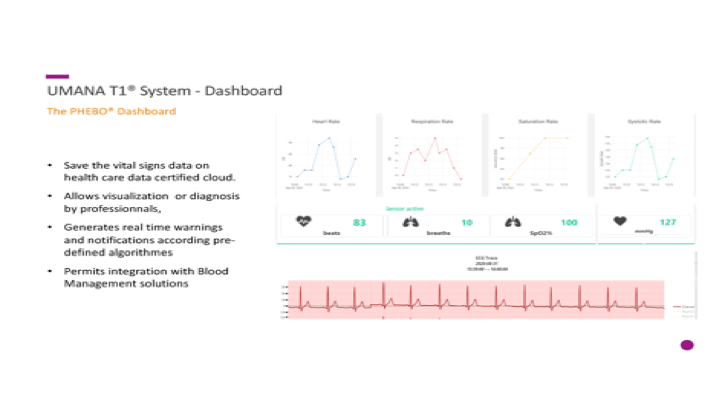
  2. Review of donor criteria:  are there increased risks using these recovered donors:  cardiac or respiratory risk?  Is there a way to continuously monitor CCP donors’s vital signs during the donation?
  3. Collect apheresis components only in pre-screened donors:  Apheresis kits are expensive, use them only if the donor is prequalified, continue to retest when actual apheresis donation occurs
  4. Allow use of units directly after collection/processing as long as the other donor processing steps have been completed (allow blood bank computer system to use pre-donation specimen for marker testing criteria).

Donor Unit Discrepancies

Principle:

All donor unit mislabeling is potentially life-threatening and must be stringently investigated as soon as possible after the discrepancy is detected.  Most importantly, if there is one error, there may be possibly ADDITIONAL donor unit errors (e.g. switch of donor tubes or units, etc.).  All donor units processed in the same batch must be also quarantined until the discrepancies are resolved.

The blood bank computer system will detect many errors;  however, if the donor unit or its samples are mislabeled in the beginning, these may not be detected.  Medinfo enforces checks on the final ISBT label and will compare current results to the historical record and will alert to any errors. Additionally, the use of ISBT specimen labels will obviate the risk of barcode reading errors.
Definitions:

Responsible blood bank physician:  specialist or consultant physician on-call at the time the discrepancy is detected

Policy Details:

The following steps MUST be performed as soon as possible:

  1. The Component Processing Supervisor or Senior Technologist must be IMMEDIATELY notified of any discrepancy.
  2. The Blood Bank Supervisor will inform the Division Head, Transfusion Medicine.  If the Head is not available, notify the Transfusion Medicine on-call.
  3. Quarantine ALL donor units collected and processed in the same batch.
  4. Obtain copies of all testing including photos of the gel/glass bead cards documenting the discrepancy.
  5. Obtain copies of all worksheets used in donor processing for the affected batch.
  6. Perform repeat ABO/D typing of ALL DONOR UNITS in the affected batch.  Any further discrepancies must be investigated and resolved.
  7. Identify all staff who were involved in handling the donor unit (phlebotomist, blood bank technicians processing and labelling the unit).  Identify those associated directly with the error.
  8. Submit all documents and photos to the Blood Bank Supervisor or designate.
  9. Prepare an occurrence/variance OVA report documenting all the data, findings, and interpretations.
  10. All investigations must be reviewed by the Supervisor, responsible blood bank physician, and one of the senior consultants.
  11. All such investigations must then be finally reviewed and approved by the Division Head, Transfusion Medicine or his designate.  Only when the issue(s) are completely resolved and investigation is approved may the donor unit be properly relabeled and released into available stock.  Also, only at that time may the other units in the affected batch be released into available stock!!
  12. Photograph the correctly relabeled unit and attach it to the other documentation of the incident.
  13. If the discrepancy cannot be resolved, ALL units in the affected batch must be discarded.
  14.  The implicated staff’s personnel record should be reviewed for previous errors.   Appropriate disciplinary action should be taken and documented in the personnel record.  If a verbal warning is given, it should still be documented in the written record.
  15. If there is a systemic cause for the error, appropriate measures should be taken to minimize reoccurrence.
  16. All actions must be in accordance with the institution’s policies and regulations.

2/11/20

Nipah Virus and Blood Donation

Principle:

Nipah virus NiV is a paramyxovirus that may cause a fatal encephalitis in infected patients.  Transmission to humans may occur after direct contact with infected bats, infected pigs, or from other infected humans.  ELISA, NAT, and direct culture may be used for confirmation of diagnosis, but there is no available licensed donor test.  The geographical distribution of this virus corresponds generally to the areas of malaria exclusion used for blood donor screening.  Most cases are fatal, and survivors may have neurologic sequelae.

The incubation period is 5-14 days with illness presenting 3-14 days of fever, headache, followed by drowsiness, disorientation, and confusion.  These findings may progress to coma within 24-48 hours.  Some patients also develop a respiratory illness.  Latent infections with subsequent reactivation of the virus have occurred months to years after exposure.

Policy:

  1. The current exclusion for travel to malaria endemic areas will be used to exclude donors with possible NiV exposure.
  2. Any donor with a history of Nipah virus infection will be permanently deferred.
  3. As per current SOP, any donor not feeling well must not donate blood or blood components.

Blood Bank Software is Dynamic, NOT Static

I was recently talking with one of the hospital software system administrators from my previous site.  He had originally worked on building the Medinfo system, but was then reassigned to the laboratory modules of the hospital information system.

His alarming comment to me was that the Medinfo build was completed so there was no need to worry about it now—it was finished.  I guess he was looking from the perspective of the general laboratory software.  There is no need to make major changes to the build, just update interfaces and troubleshoot.

I was surprised.  He had no idea of how many times we have to update the structure for new rules and regulations, and changes in blood bank practice—let alone emerging pathogens such as ZIKA, dengue, Chikungunya, and most recently, COVID-19.

My daily morning routine was to survey several blood bank websites with changes to blood donor criteria including US FDA CBER, read the transfusion journals (Transfusion, Vox Sanguis, etc.), AABB, and ASFA.  If there were any changes pertinent to our organization, I had to make interim policies and procedures, and finally prepare specifications for changes in the Medinfo software.

The Medinfo engineers would prepare flow charts of the proposed changes and implement them in a test environment for the Super-Users to test.  I had to prepare validation protocols for the testing, and then review the validation results and finally approve the adoption of the changes.

I cannot remember even a month going by without some revision in the donor protocols.  When COVID-19 came, I had to prepare a parallel, but separate, processing and allocation/release system.

This was a never-ending story that kept the Super Users and the local Medinfo engineers busy.  I always reminded the hospital information system staff that playing with blood bank software was like playing with fire:  there is a good chance you will get burned if you do not set it up properly.

31/10/20

Directed Donations

Principle:

Directed donations are used for dedicated components from a particular donor for a specific patient.

Policy:

  1. All requests for directed donations must be specifically approved by one of the Transfusion Medicine physicians.
  2. Indications—patient has need of a rare component type, including:
    1. Antibody to a high-incidence/prevalence RBC antigen (e.g. anti-PP1Pk)
    2. Neonatal isoimmune thrombocytopenia or other platelet antibody situation (anti-HLA or platelet-specific)
    3. IgA-deficient plasma
  3. Other requests:
    1. If #2 above does not apply but someone wants to donate on behalf of a particular patient, the final decision to proceed will be made by the transfusion medicine physician.
  4. All directed donations must be registered as such in the Medinfo Hematos IIG computer system to ensure that the proper ISBT label is generated.
  5. Directed donors must meet the same eligibility criteria as regular donors.
  6. Special conditions apply to apheresis components from a dedicated donor:
    1. If a directed apheresis donor passes initial donor testing and is dedicated for one particular donor, then additional plateletpheresis donations may be accepted for 30 days without further testing.
  7. The platelet apheresis component may be directly released without further testing if it is an emergency situation.  Otherwise, we will proceed with full donor testing before release.
  8. Exceptions to the above policy can only be made by the Transfusion Medicine Consultants or designate;  all exceptions must be documented in writing.
  9. All RBC and platelet components from directed donations will be irradiated before release.

Please note:

  1. Plateletpheresis donations may be collected twice weekly from the same donor, 48 hours apart, for a maximum of 24 times per year.
  2. If more than 200 ml RBC loss occurs within an 8-week period from apheresis component collection, that donor must be deferred for 8 weeks.

Reference:

Standards for Blood Banks and Transfusion Services, Current Edition, AABB, Bethesda, MD, USA

Processes and Software Building 54: Confidential Unit Exclusion

As per AABB Standards, each donor must have the opportunity to confidentially exclude the use of his collected blood AFTER the collection.  He may use a confidential code associated with his collection encounter.  Donor Center staff will mark the Confidential Unit Exclusion and the donor is permanently deferred.  All products made from his/her donation will be discarded.

22/10/20