Data Entry Verification: Updated Version

This is an update from the previous version posted to include low-titer group A FFP/FP24 and low ABO-titer group O whole blood.

Principle:

This policy outlines steps taken to minimize the risk of data entry errors and is based on a dualistic approach:  review of results by a senior technologist and/or supervisor and various computer safeguards built into the Medinfo Hematos IIG blood bank computer HIIG system.  This policy also discusses the verification (here called authorization) and purge processes of HIIG.

Policy:

  1. Review by senior technical, supervisory, or transfusion medical staff:
    1. Designated test procedures require review by a second technologist before authorization.
    2. Complex immunohematology testing and specimens showing aberrant results (e.g. ABO/D discrepancies) are reviewed by the supervisors or designates and ultimately a transfusion medicine physician before authorization.
  2. Computer system HIIG rules:
    1. Privileges:
      1. System restricts which staff can perform specific tests
    2. Patient/donor identity:
      1. System asks end-users to verify patient/donor identity before starting any access to the patient/donor record.
      2. System performs historical database checking and flags any inconsistencies (e.g. historical ABO/D typing differences, etc.)
    3. Testing:
      1. Only selected staff have privileges to authorize or purge.
      2. ABO/D testing algorithms require entry of reactions, not interpretation of results and are compared to a truth table.
        1. Aberrant results require special review before ABO/D typing results can be authorized/purged.
        2. D-controls must be negative to allow D typing results to be authorized for liquid D-typing reagents.
      3. DAT results require appropriate controls to meet truth-table criteria.
      4. Eluates require last wash to be negative before authorization
    4. Blood components:
      1. Selection of RBC or plasma units requires two independent sample determinations within 72 hours of each other.
      2. ABO-incompatible RBC or FFP/FP24 transfusions are not allowed.
      3. Titer-based ABO blood group selection:
        1. Low titer group A FFP may be used as universal plasma like group AB.
        2. Group O whole blood with low anti-A and anti-B titers may be used for all ABO types.
        3. Acceptable titer threshold is specifically defined as parameters in Medinfo.
      4. Donors with any detectable clinically significant antibodies are permanently deferred.
      5. Depending on the patient’s antibody history, release of RBC units may require antigen-matched units.  Examples:
        1. Mandatory matching (only antigen negative matched units allowed—no antigen positive or antigen-untyped units):  Antibodies against H, D, c, K, k, Kpa, Kpb, Jsa, Jsb, Jka, Jkb antigens, anti-PP1Pk
        2. Priority matching (incompatible or untested can be approved by a transfusion medicine physician):  C,E, e, Fya, Fyb, M, S, s
        3. Antigen matching not required:  Lea, Leb, N
      6. Least-incompatible crossmatch require special authorization to release
      7. Protocols to force irradiation or other modified components can be setup in HIIG.
    5. Donors:
      1. Donor tests have same criteria as the same test used in patient testing for controls, etc.
      2. Donor demographics are read directly from the Ministry of Interior database—no manual entry (bar code only used).

References:

  1. Workflows for Hematos IIG (1001 through 1005), 2013-2020
  2. Standards for Blood Banks and Transfusion Services, Current Edition, AABB, Bethesda, MD, USA
  3. Guidelines to the Preparation, Use, and Quality Assurance of Blood Components, European Committee (Partial Agreement) on Blood Transfusion (CD-P-TS), Current Edition
Pre- and Post-Exposure Antiretroviral HIV Prophylaxis

Principle:

Use of anti-retroviral therapy as prophylaxis for pre- or post-exposure (PrP or PEP) HIV prophylaxis may lower the viral load below detectable levels.

Policy:

  1. Defer any donor taking PrP or PEP anti-retroviral ART medications for three (3) months since the last dose.
  2. Donors taking ART drugs as treatment for HIV infection are still indefinitely deferred.
  3. Donor information pamphlets should be updated to include this new deferral.

References:

  1. AABB Association Bulletin #4, The Impact on Blood Safety of Effective Antiretroviral Medications for HIV Prevention and Treatment, 5/5/20
  2. DHQ Medical Deferral List, Version 2.1, AABB, Bethesda, MD, USA, June 2020

Off-Line Donor Medinfo Transactions

Principle:

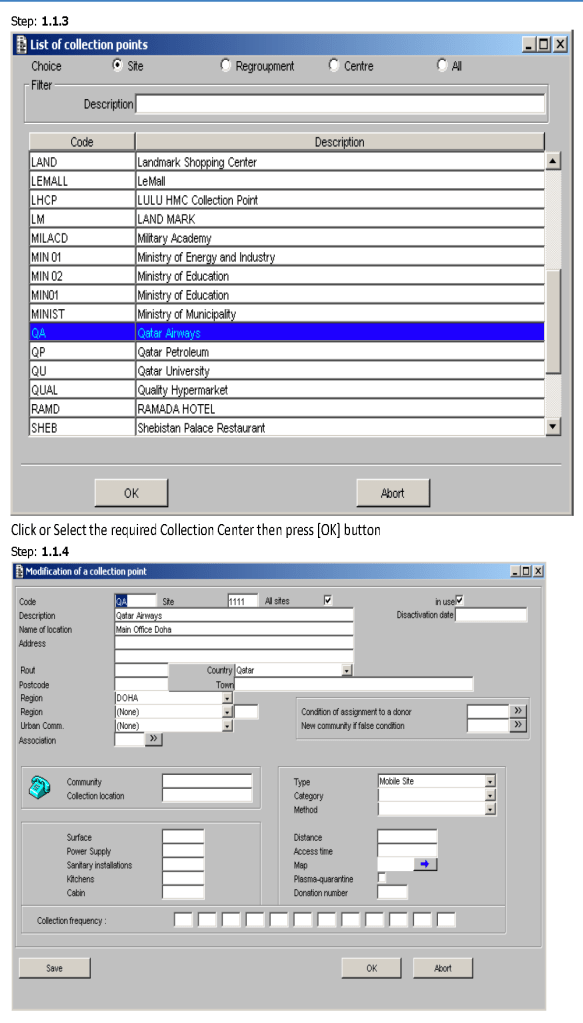
When you cannot establish a direct link to the live Medinfo program, you must arrange for the local Medinfo engineers to create a local server that will have the current Medinfo donor database for use at outside campaigns where the internet connection cannot be used.  This can also be used if for some reason the Blood Donor Center link is down in order to register donors and check the donor deferral database.

Policy:

  1. For each outside campaign, there should be a pre-campaign visit to verify the availability of internet to connect to Medinfo.
    1. If the internet connection is working, use Medinfo using the 4G access points.  Otherwise:
    2. If none, inform the Medinfo engineers to prepare a local server on one of the laptops at least ONE DAY in advance of the campaign.
      1. Give Medinfo engineers the laptop to download the database and software.  This will be the offline server for the campaign.
      2. Link the offline server to the other portable computers for the campaign (see the corresponding Medinfo job aid).
      3. Use the local network (offline server and other portable computers) for registering donors.
      4. Upon return to the Blood Donor Center, upload the data.
      5. Continue the regular processes after uploading.

Note:  When the offline data is uploaded into Medinfo main database, it will be checked against the latest donor deferral database.  The latter will be applied for the donation.

Processes and Software Building 56: Multi-Site Patient and Donor Considerations

As our hospital network expanded, there were many patients who moved between locations.  They might first start in an emergency room and then be transferred to a specialty hospital.  These locations might be served from different hospital blood banks/transfusion services.  What happens if work is progress from one site when the new site receives the patient.  Must the previous workup be repeated or could it be used for transfusion at the next site?

For example, the ABO typing could be performed at one site and the antibody screen at a second site, and the antibody identification at still another site.  Could the results be used across the entire system?

I had multiple hospital blood banks and blood donor centers.  The general and specialty laboratories had multiple sites.  The hospital information system was set up so that the various tests could only be performed at specific designated sites.  This posed problems as patients were moved around or if some site(s) became inoperative since the specimens then had to transported at great distances for testing.  Only a few basic STAT tests were available at all sites.

It was my decision to allow all test categories at all sites, e.g. a DAT request from any site, any methodology, could be used to satisfy the order.  Similarly, all donor processes were available at all donor centers (the processes could be completed at one or more sites).  Different hospital blood banks had different equipment but all the test categories were the same across site—the methodologies might differ.  We had at least four different DATs across our system.

The interface between the blood bank and hospital system worked as follows:  In the hospital information system HIS, test orders pointed to a category of testing and any methodology for that category at any site could be used in the blood bank system for testing and reporting back to the HIS.  Any test in a category from any site could be used to satisfy the test request.  Blood bank staff would choose the particular test methodology to use.  It was NOT specified by the HIS!

In summary, for blood banks and donor centers within our system, the work could be flexibly moved between sites.  There was no need to repeat testing when a patient transferred to a new site.  The only type the work was repeated if testing was done at an institution outside our system.

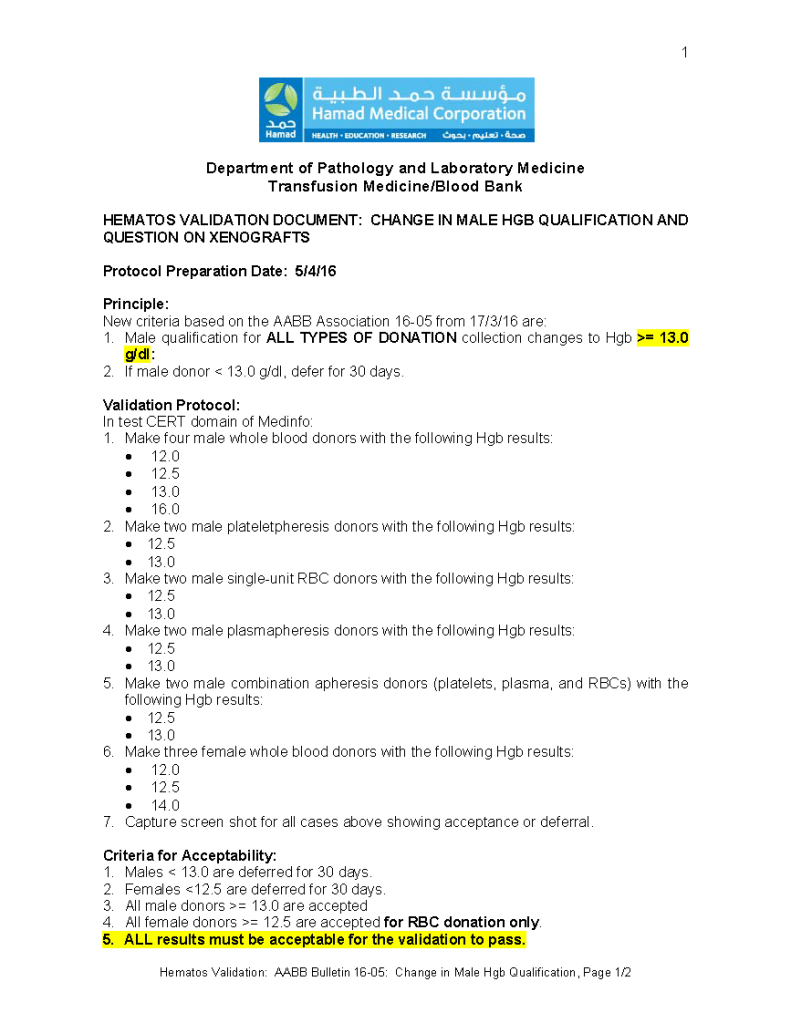
Sample Validation Change Protocol: Donor Hgb Levels

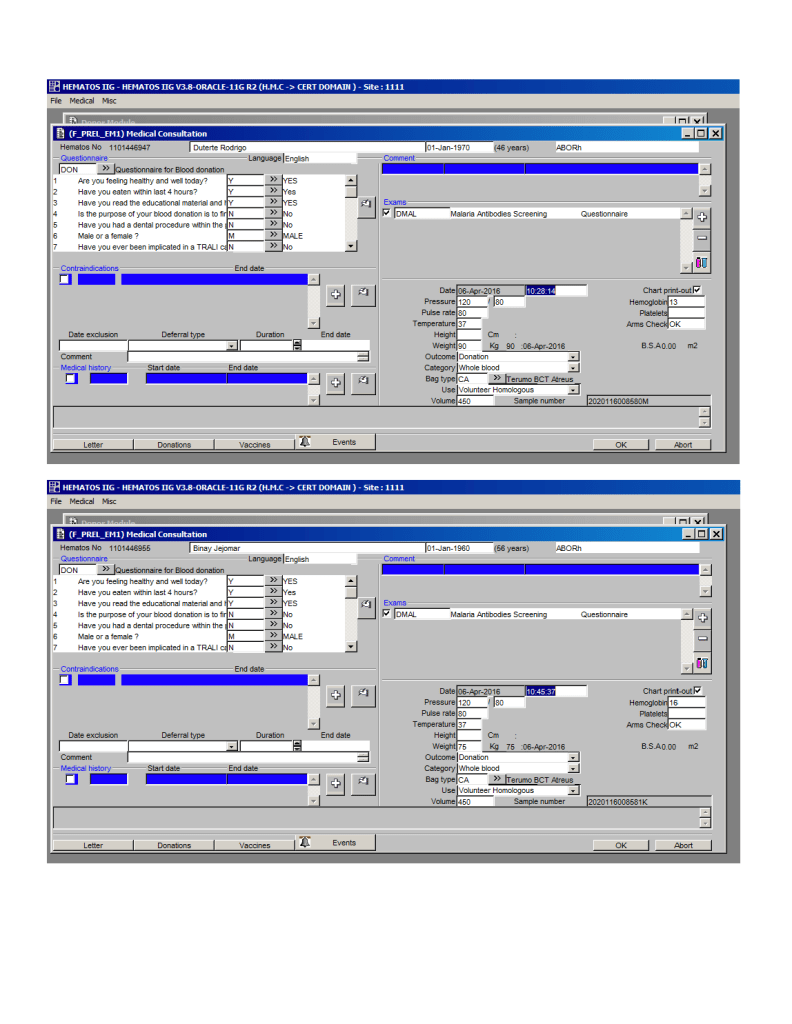
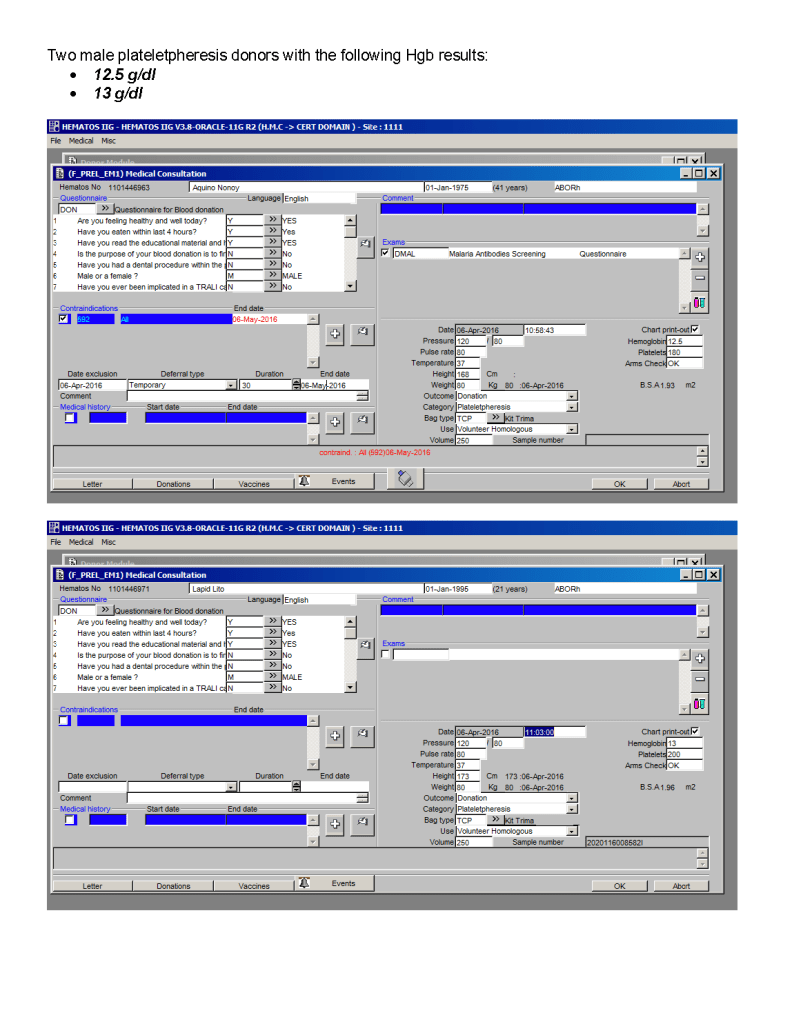
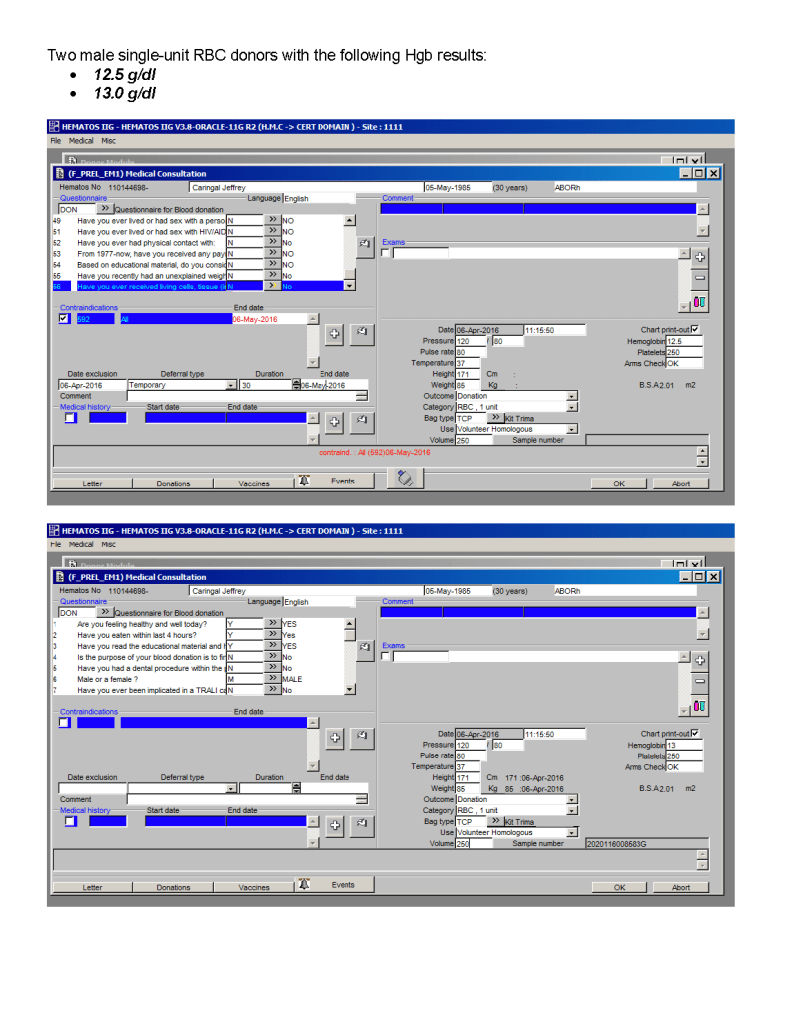
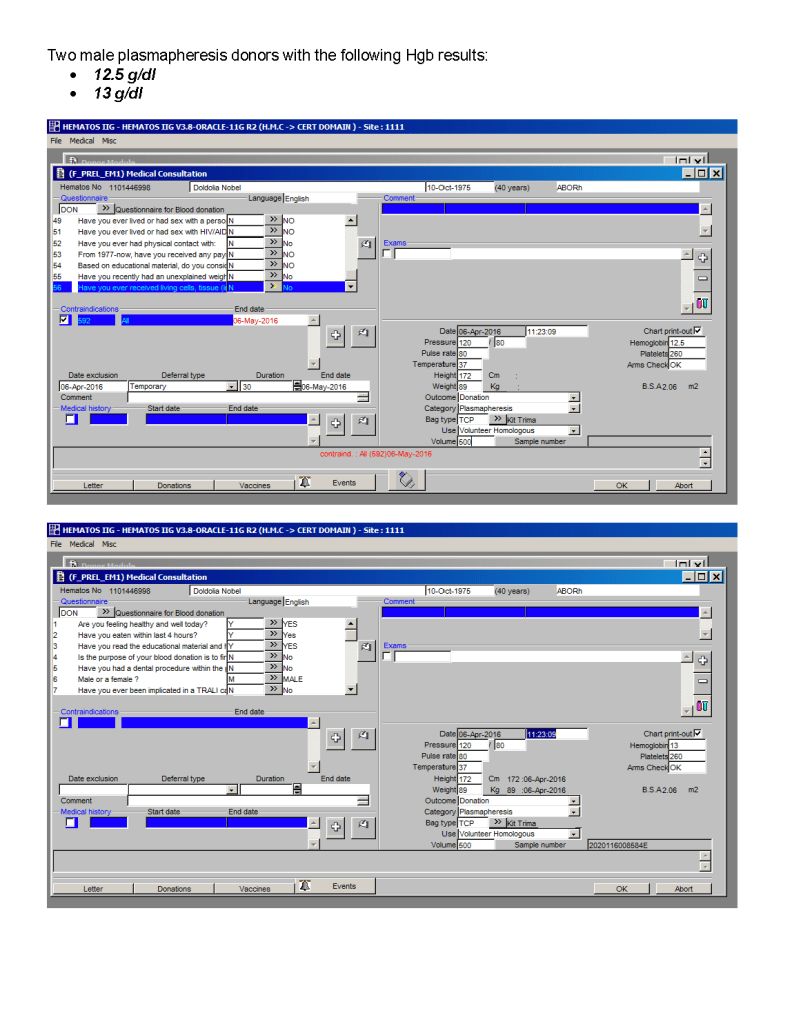
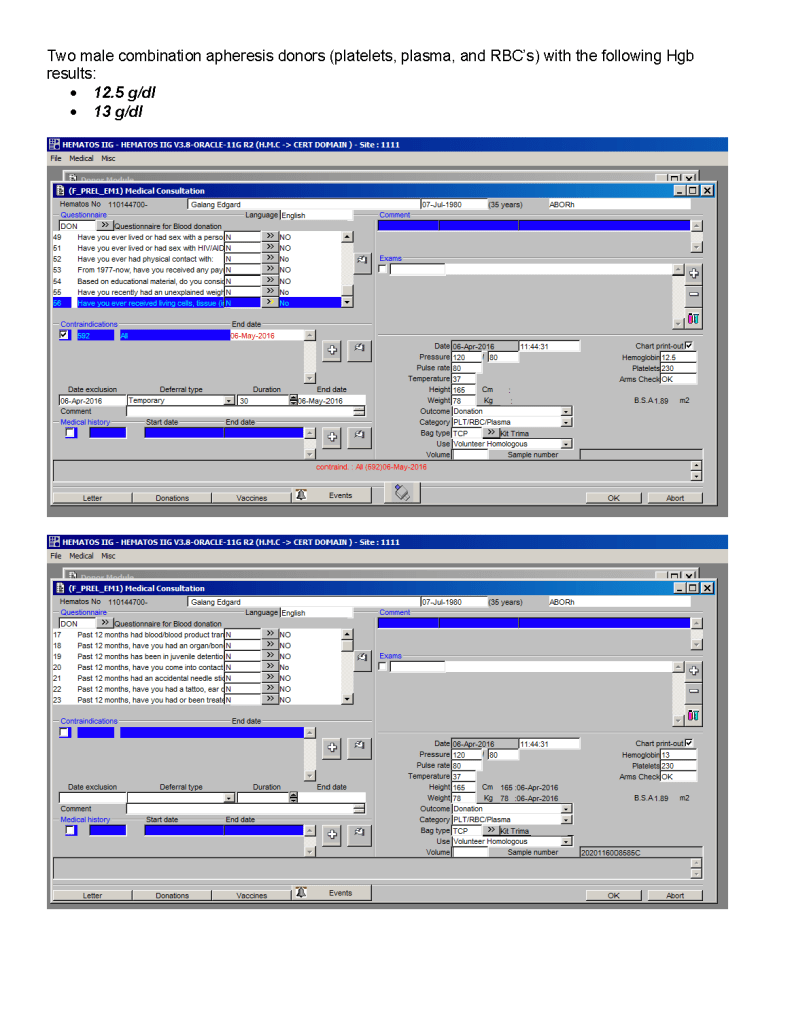
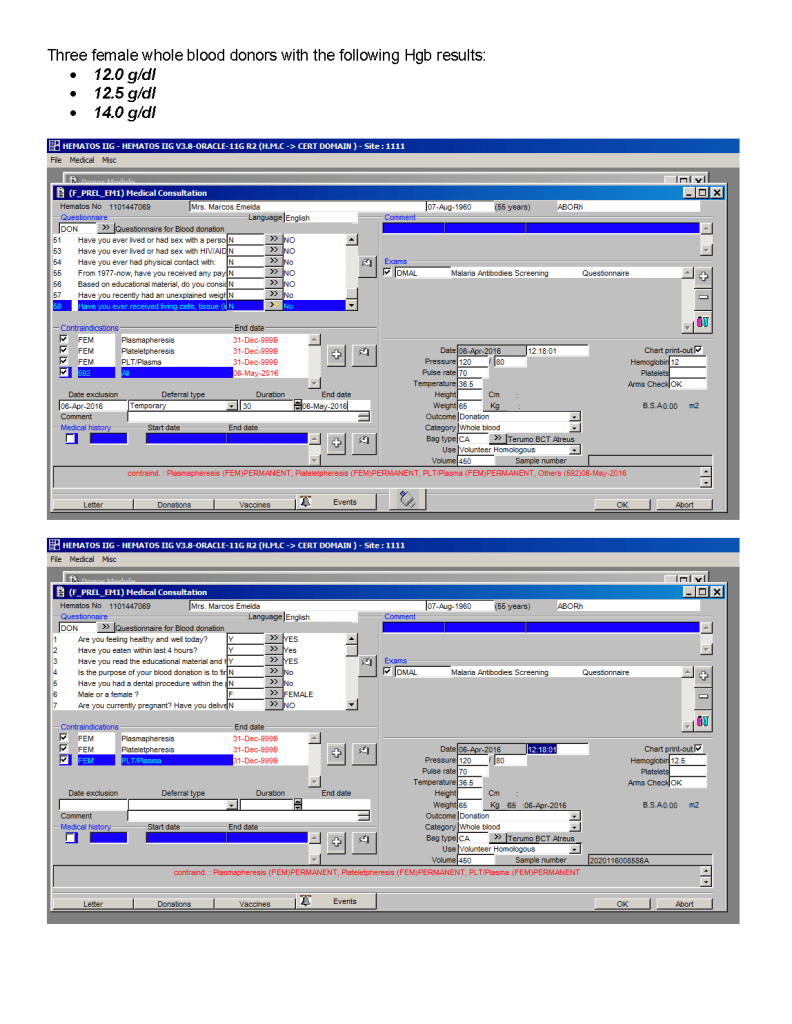
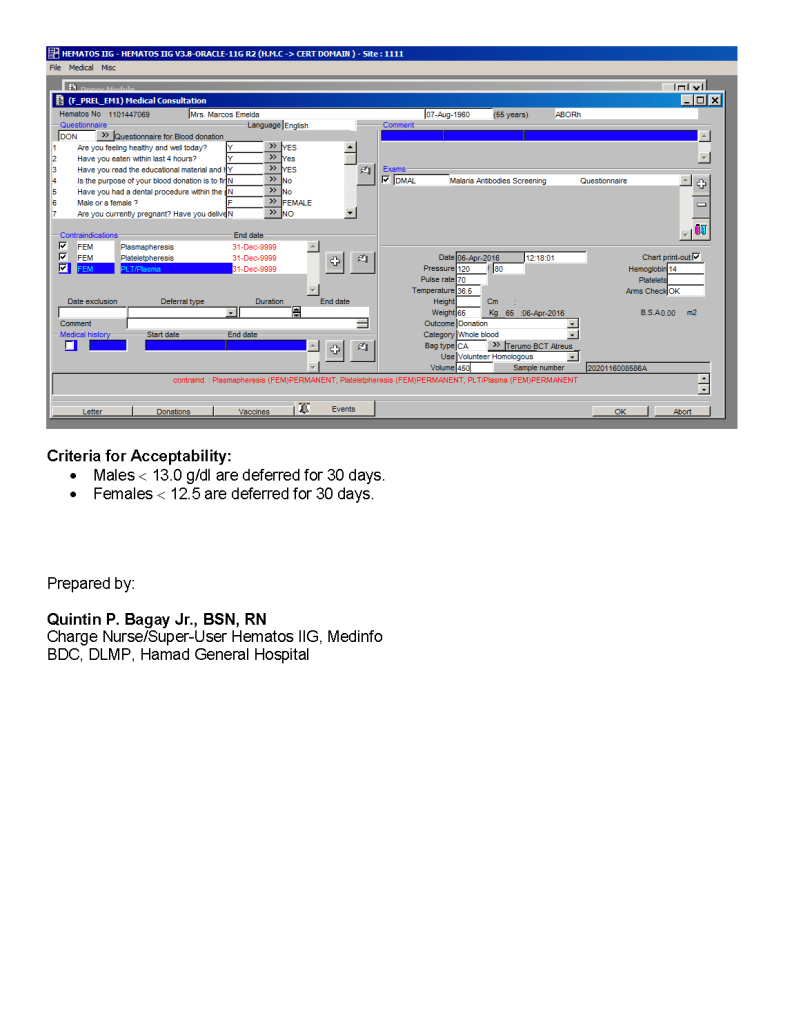
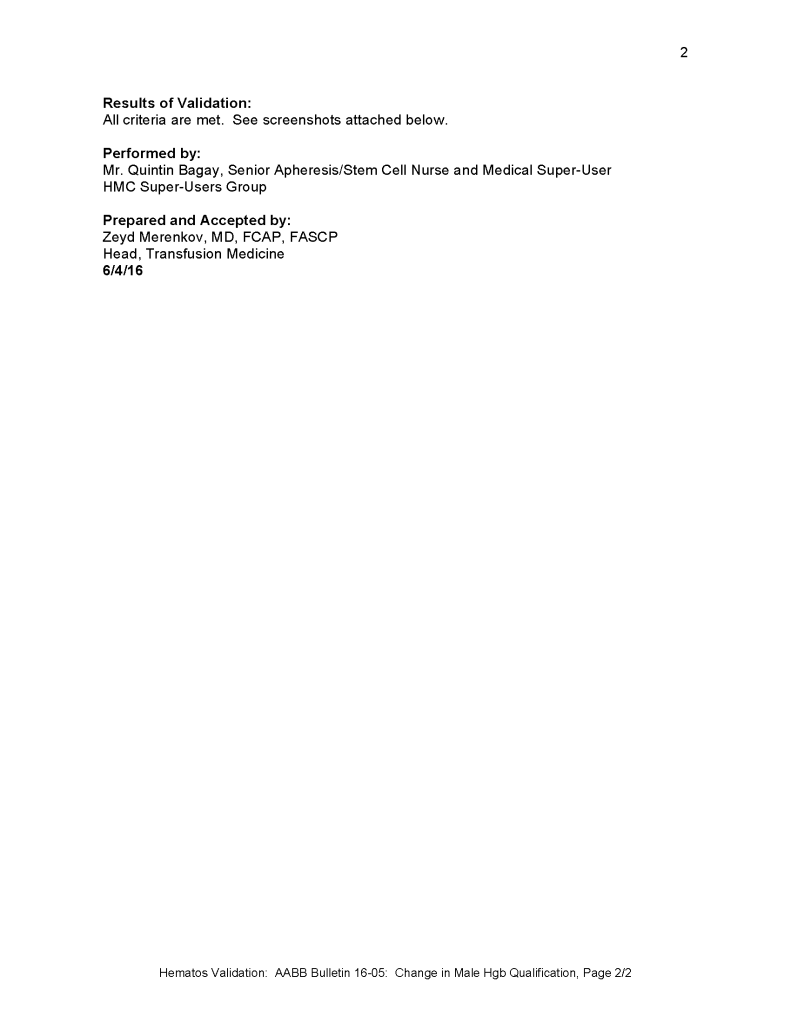
Changes to donor criteria can occur at any time.  This example is the change in donor criteria for males to 13.0 g/dl based on AABB Bulletin #16-05.

I made a validation protocol, which was subsequently performed by a Donor Center Medinfo Super-User.   The data was then sent to me for review and then accepted.

Note that females were included in the testing for regression purposes.  Females were only permitted to donate RBCs—all other components were discarded in production. Contraindication information appears in RED.

Body Fluid Exposures

Principle:

New rules have been approved by US FDA CBER for body fluid exposure, tattooing, body fluid exposure, and body-piercing.  By similar logic we will extend this also to HIJAMA.  We will not make any changes to our sexual history/practices or history of sexually transmitted disease treatment or clotting factor deferrals (except fibrinogen.)

Policy:

  1. Effective immediately, we will accept donors AFTER THREE MONTHS from the following activities:
    1. HIJAMA (ritual blood-letting)
    2. Tattooing
    3. Body piercing (e.g. piercing for ear-rings)
    4. Contact with blood of another individual through percutaneous inoculation such as a needle stick or through contact with a donor’s open wound or mucous membranes
  2. A TWELVE-MONTH DEFERRAL still applies after receiving a blood component or blood derivative except clotting factors (excluding fibrinogen concentrate.)
  3. Transfusion of clotting factors remains a permanent/indefinite deferral.

Reference:

Revised Recommendations for Reducing the Risk of Human Immunodeficiency Virus Transmission by Blood and Blood Products, Guidance for Industry,  U.S. Department of Health and Human Services, Food and Drug Administration, Center for Biologics Evaluation and Research, April 2020

External Disaster Plan, Simplified

Principle:

Maintaining an adequate blood supply and expedited compatibility testing are critical in disaster planning.  Medinfo Hematos IIG allows us to get dynamic updates of our blood supply and dynamically reallocate blood components as needed.

Policy:

  1. Determinate total available blood supply across all locations by using the Cumulative Stock Display program in Medinfo Hematos IIG.
    1. Recheck stock at least every hour during the disaster.
  2. At each transfusion service site, in conjunction with a Transfusion Medicine Consultant:
    1. Cancel reservations for elective surgical and non-emergency medical cases of affected ABO/D types.
    2. Retain reservations for antigen-matched, oncology, NICU, and high-risk obstetrical cases.
  3. Inform Donor Recruitment/Logistics to send SMS, radio, and television messages for blood donors—all types.
  4. Contact ALL staff and have them report to duty.
    1. At the Blood Donor Center, the Head Nurse, Recruitment, Supervisor, Component Processing, and Supervisor, Marker Testing will contact staff.
    2. At hospital transfusion services, the site supervisor will contact all staff.
  5. Process blood components using automated component technology (Reveos).
  6. Perform all donor marker testing including single-well NAT.
    1. Abbreviation of donor marker testing is only at the discretion of the Division Head, Transfusion Medicine.
  7. Transfusion Services:
    1. Release blood component according to the various protocols as needed:
      1. Massive Transfusion Protocols
      2. Emergency release
      3. STAT
      4. Priority
      5. Routine
  8. Compatibility testing will be electronic, immediate-spin, or full AHG as per our protocols.

References:

  1. Standards for Blood Banks and Transfusion Services, Current Edition, AABB, Bethesda, MD, USA
  2. Guidelines to the Preparation, Use, and Quality Assurance of Blood Components, European Committee (Partial Agreement) on Blood Transfusion (CD-P-TS), Current Edition
Pre-Screening for CCP Patients

This is a review/update of this document prepared early in the course of our COVID-19 Convalescent Plasma CCP collections.  It now includes testing of specimens not only for donor marker testing but also COVID-19 antibody titers.

All blood components are considered medications and are subject to Good Manufacturing Practices as mandated by international accreditation standards.  The whole process must be done reproducibly and precisely by specific personnel trained and documented to be competent.  This includes collection of convalescent COVID-19 plasma.

Transfusion Medicine will provide staff who are deemed competent for the entire process of the collection, manufacture, and release of this unlicensed, emergency-contingency component.

It will help greatly if all candidates are prescreened to exclude the following candidates:

  1. Administrative:
    • Donors must come with a valid Qatari identity card:  no ID means no screening
  2. Sex:
    • Males only to minimize the risk for transfusion-associated lung injury TRALI
  3. Donor Feeling:
    • If the donor does not feel well, he should not come for screening/collection.
  4. Food/Drink:
    • Donor must have eaten/drunk fluids within 4 hours of arrival for screening/collection.
  5. Medication exclusions:
    • Antibiotics within the past 14 days
    • ACE inhibitors in the past 48 hours
    • Beta blockers
    • Anticoagulants
    • Anti-anxiety or other psychotropic medications
    • Other medications on the Unified Donor Questionnaire Deferral List
  6. Medical exclusions:
    • Stable vital signs
    • History of seizures
    • History of dementia or other chronic neurologic disorder
    • Family history of dementia or other chronic neurologic disorder
    • Significant cardiac arrhythmias
    • History of hepatitis B, hepatitis C, HIV, brucellosis, Ebola
  7. Travel history:
    • 5 years cumulative residence in Europe including Ireland and France 1980-2001
    • 3 months cumulative residence in the UK (and/or all its territories) 1980-1996
    • Any visit(s) to West Africa
  8. Testing:
    • Antibody titers should be performed to exclude candidates with low-titer or absence of antibodies.
    • Regular donor marker testing (excluding malaria and HTLV 1/2)

All processes will continue to be performed in the dedicated blood bank computer system. The COVID-19 antibody titers will be part of the donation record.

This is NOT a complete list of criteria.  Transfusion Medicine personnel will screen according to the full donor criteria.  Thus, donors passing the pre-screening may still be otherwise disqualified based on the detailed process.

8/11/20

COVID-19 Convalescent Plasma Revisited:

In February, 2020, I developed a program for convalescent COVID-19 plasma at Hamad Medical Corporation in Doha.  In early March, 2020, our program started collecting CCP by apheresis.  We started before the software modifications were completed since there were urgent requests by the clinicians for the product.

I proposed the software specifications and our vendor Medinfo Hematos IIG implemented them within 2-3 weeks, after which they were implemented/validated

Thus, now we have 8 month experience has been 8 months since starting manually and more than 7 months using a specific modification of our blood bank software Medinfo.

A complete manual system was implemented with quarantined registration, screening, collection, processing, and release.  Only the donor marker testing was shared with the regular donors.  This was built into the computer system.

Upon review, these are my current thoughts on our processes:

  1. Actively monitor supply requests:  Keep good communication between ordering/treating physicians and apheresis unit to optimize the stock according to patient needs.
  2. Collect/process/release separately from regular donations.
  3. Use dedicated quarantine equipment (apheresis, processing, storage refrigerators)
  4. Collect manufacturer’s recommended maximum of plasma based on body weight.
  5. Use pre-donation screening to allow quick release of components and avoid wasting apheresis kits.
  6. Repeat testing on the new specimen collected at the time of apheresis donation.
  7. Process units by same processes used for normal donations, including pathogen-inactivation.
  8. Use standard processes for release of blood components to end-users.
  9. Restrict ordering to designated treating COVID-19 physicians (enforce in computer system)
  10. Restrict release of CCP to designated non-blood bank staff from the quarantine storage location (enforce in computer system)

Notes:

  1. Include COVID-19 antibody testing and establish a threshold level (e.g. 1:128 titer) for donor qualification.  Do not collect if low-titer or absence of COVID-19 antibodies.   Store titer information with donation record.  Add antibody results to donation records that occurred before the assay was available.
  2. Review of donor criteria:  are there increased risks using these recovered donors:  cardiac or respiratory risk?  Is there a way to continuously monitor CCP donors’s vital signs during the donation?
  3. Collect apheresis components only in pre-screened donors:  Apheresis kits are expensive, use them only if the donor is prequalified, continue to retest when actual apheresis donation occurs
  4. Allow use of units directly after collection/processing as long as the other donor processing steps have been completed (allow blood bank computer system to use pre-donation specimen for marker testing criteria).