Overextending Oneself—Two Case Studies in the Blood Bank

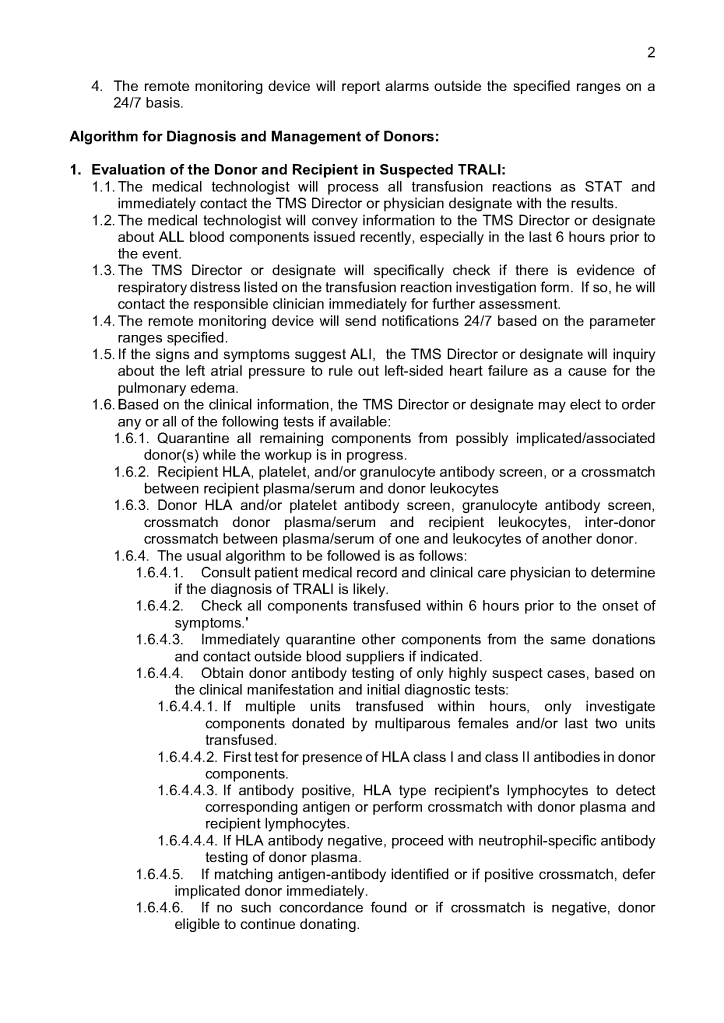
One has to learn when enough is enough.  There are times when there are staff shortages but the conscientious staff wants to be the Super-Tech and handle all the work, whether or not there are sufficient resources.  This is a big gamble, and there may be serious consequences for the over-achiever and for the patient.

Anecdote #1:  Chicago Blizzard of 1979 (13-14 January):

When I was in my residency training in Chicago, I was in the blood bank during the blizzard of January, 1979.  The following tragedy occurred.

Suse was one of the best blood bank technologists that I have ever known, extremely conscientious and very meticulous—and very fast at doing things.  She was a workaholic.  Suse’s whole life centered on her job at our academic medical center—so much so that she had an apartment near the hospital complex.  In mid-January, a snow storm was predicted with an estimated snowfall of about 5 cm. total.  Actually, that night a blizzard developed and around a meter of snow fell with white-out conditions and zero visibility.  Preoperative patients had been admitted the night before based on the low snowfall prediction.

The next day was chaos.  Essentially only staff who lived near the hospital complex could report to work.  Suse came in and saw all the pending preoperative blood requests.  She decided to “double-up” and work on two cases at one time.  In the rush, she mixed up test tubes and issued ABO-incompatible blood for a surgical case.  The surgeon noted the abnormal oozing of blood at the operative site and stopped the transfusion.  Hematuria developed, but the patient survived.

Suse was suspended pending investigation.  Based on her excellent work record, she was offered to return to work.  Unfortunately, she became very depressed and was afraid to return since she feared she would make another mistake.  She never worked in the blood bank again.

Anecdote #2:  Shortage of Blood at Major Hospital:

1991 in another country, a large hospital complex was suffering a shortage of blood.  A large number of donors were called and the available staff were overwhelmed with work.  One donor phlebotomist decided to collect whole blood from two different donors simultaneously and in the confusion, mixed up the sample tubes for donor marker testing.

Unfortunately, one of those donors was HBsAg positive, but with the specimen mix-up was marked as negative.  The unit of blood was transfused, and the recipient developed fulminant hepatitis B and died.

Analysis:

In both these systems, there were processes in effect not to work on two patient specimens or collect two donors at one time, but the staff took short-cuts.

No one is super-human.  Don’t try to cut corners and handle more than one patient at a time.  Your intention may be good, but you will be judged by the consequences.  No one will care about the extenuating circumstances.  You will be blamed.  I tell my staff that if they cannot handle the workload, they should contact me as the Division Head, Transfusion Medicine, to triage the cases for them.  My role is to bring these events to the higher authorities to get the resources we need to do the work properly and safely.
A Novel Way to Document Therapeutic Phlebotomies in the Blood Bank Computer System

Therapeutic phlebotomies TP, like regular whole blood donation WBD, both require collection of whole blood into a blood bag set.  In whole blood donation, we ask two questions during the process:

  • Is it safe for the donor to donate?
  • Is it safe for the collected unit or its processed components to be given to recipients?

For TP, we only have to consider the first question so the process must ensure the patient/donor’s safety.  We do not have to concern ourselves with the use of the collected product—it will be discarded.

Since the donor collection processes of both TP and WBD are similar, why couldn’t we use the blood bank computer software to document the TP procedures?  The process is a subset of normal WB donation.  On this basis, I make suggestions on using the donor module to document the TP process.  It is basically a truncated version of blood donation process in the Medinfo Hematos IIG system:

  • Registration
  • Donor Safety
  • Vital Signs
  • Hemoglobin Determination
  • Blood Collection Data
  • Adverse Effect Reporting
  • Discard of Unit
  • Documentation of Physician’s Order and Transfusion Medicine Physicians Acceptance

Registration:  Positive patient identification can be made through the donor registration process;  force selection of an inexpensive bag type (not the Reveos set) for this purpose.

Donor Safety:  Perform a modified, shortened donor questionnaire covering the medical history and medications is used.  Confirm that the patient has had food and drink before donating.  Require a waiting period of 24 hours before the next procedure.

Vital Signs and Weight:  Measure weight plus BP, pulse, temperature, and respiratory rate as well as inspect the arm for scarring before procedure.  Allow repeat vital signs monitoring after the procedure if requested by the transfusion medicine physician.

Hemoglobin Determination:  Allow acceptable Hgb >= 11 g/dl or >33% hematocrit

Blood Collection:  Use the same process for the mixer-shakers but the amount collected can range up to 500 ml with amounts <405 ml acceptable for small patients

Adverse Effect Reporting:  The complications of TP collection are the same as WBD.  Use the same system as for WBD.

Discard of the Unit:  Print discard label and quarantine of the ISBT unit number in system (so that it cannot be used for transfusion).

Documentation of Order:  Create separate fields for the ordering physician and for the approving transfusion medicine physician.  Capture scan of paper orders and incorporate into the TP computer encounter.

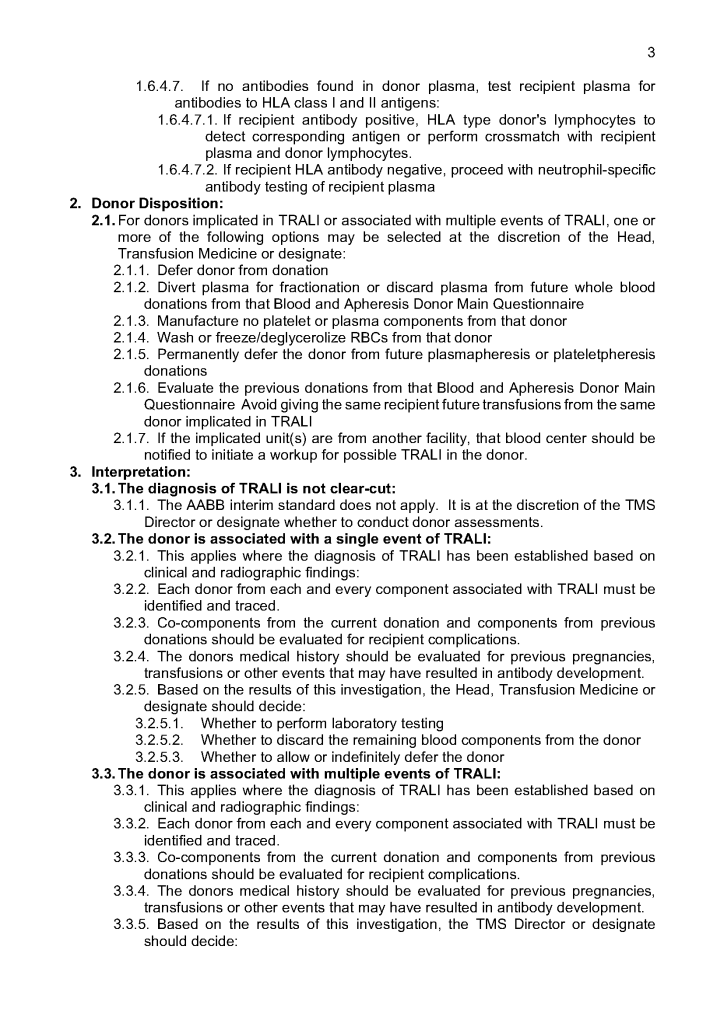
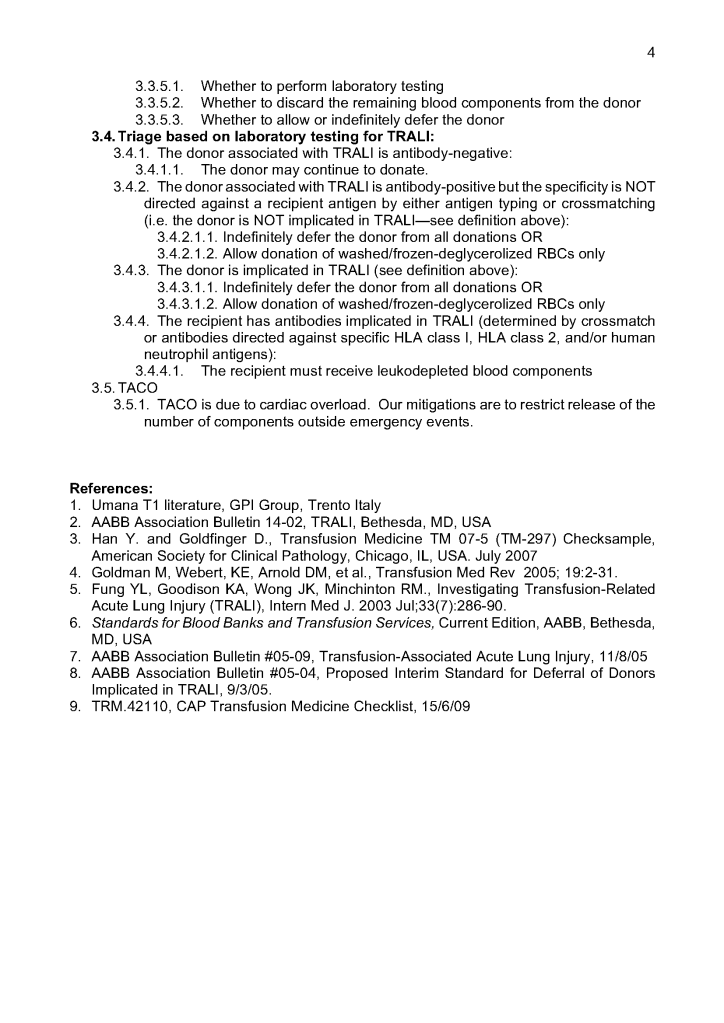
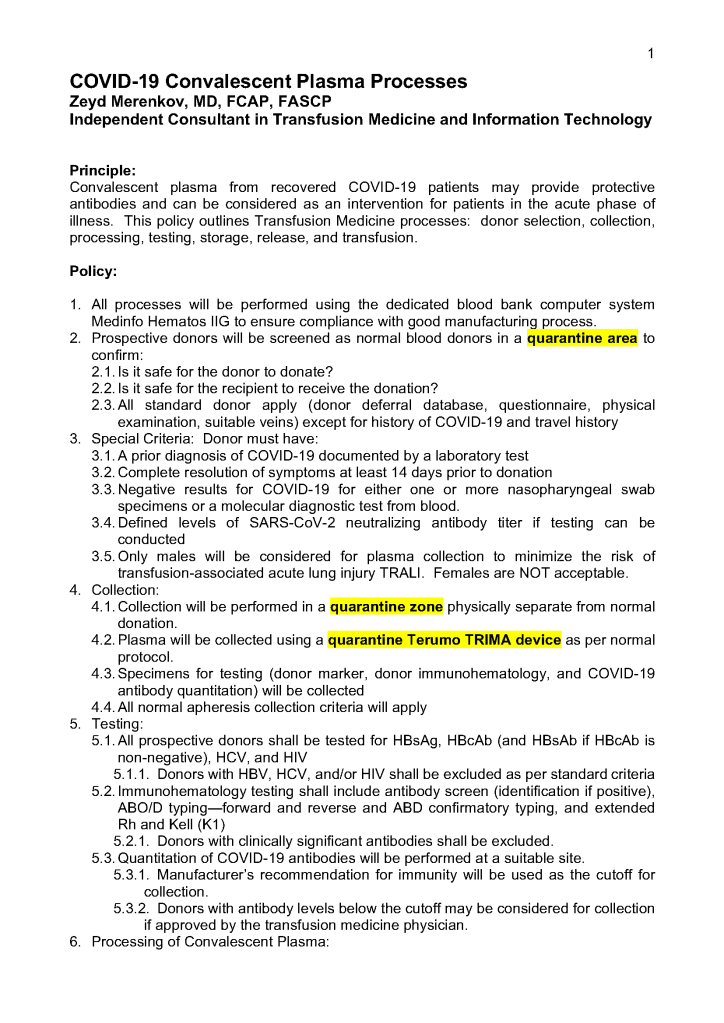
Other Considerations:  In high-risk cases, e.g. with pre-existing cardiovascular, pulmonary, or cerebrovascular disease, one could consider using a remote monitoring device such as the Umana T1 device to record vital signs, EKG, and oxygen saturation that can continuously record these parameters and trigger user-definable alarms during the process and afterwards if desired.  The data can be incorporated into the blood bank computer encounter.

Antibody Titration

My practice across the globe has exposed me different rationales to performing antibody titration.  In my American training and practice (and also at international institutions following the American version of AABB accreditation), I only routinely performed titration of anti-D for Rh(D) hemolytic disease of the newborn and anti-A/anti-B for ABO-incompatible stem cell transplants AND ABO-incompatible renal transplants.

I have had heated arguments with some physicians who insisted they wanted titers for other antibodies.  The AABB Standards do not require this but leave it to the discretion of the Transfusion Service Medical Director.

In my entire career, I never worked in a blood bank or blood center which had optimal staffing or resources.  I focused on what was medically/technically necessary and even then still had shortages.  If performing a test does not change the clinical treatment, why perform it unless you are doing a research project!

Titration is a time-consuming, and until recently, a tedious manual task.  Recently some of the automated immunohematology analyzers offer a titration program.  We used the Ortho Vision Max which could perform both IgG and IgM titers within one hour—walk away!!  However, during that time, the titration procedure monopolized the analyzer.

Nowadays, low-anti-B-titer group A universal plasma and low-titer (anti-A and anti-B) group O whole blood may be offered as components.  At HMC Qatar, a preliminary study showed about 50% of units could be classified as low-titer (defined as a saline titer <1:128).  The amount of titration will require an automated analyzer.

The ABO-incompatible renal transplant program at HMC Qatar was modelled after Sweden’s Karolinska Institute.  However the latter site performed manual IgG and IgM titrations using Biorad/Diamed gels.

I did not have sufficient resources to commit staff to manual titration at HMC so I did a comparison study between the Ortho Max and the Biorad manual gel methods.  We were able to get good correlation and used the automated method for the transplant.

I still don not perform against performing titrations for antibodies other than anti-D.  I always ask, ‘Does the titration correlate with clinical severity?’  Unlike anti-D, antibodies such as anti-Kell and anti-c may be low titer but cause death.  Can anyone show me a definitive study that titers are useful except for transplants and Rh(D) hemolytic disease of the fetus/newborn?

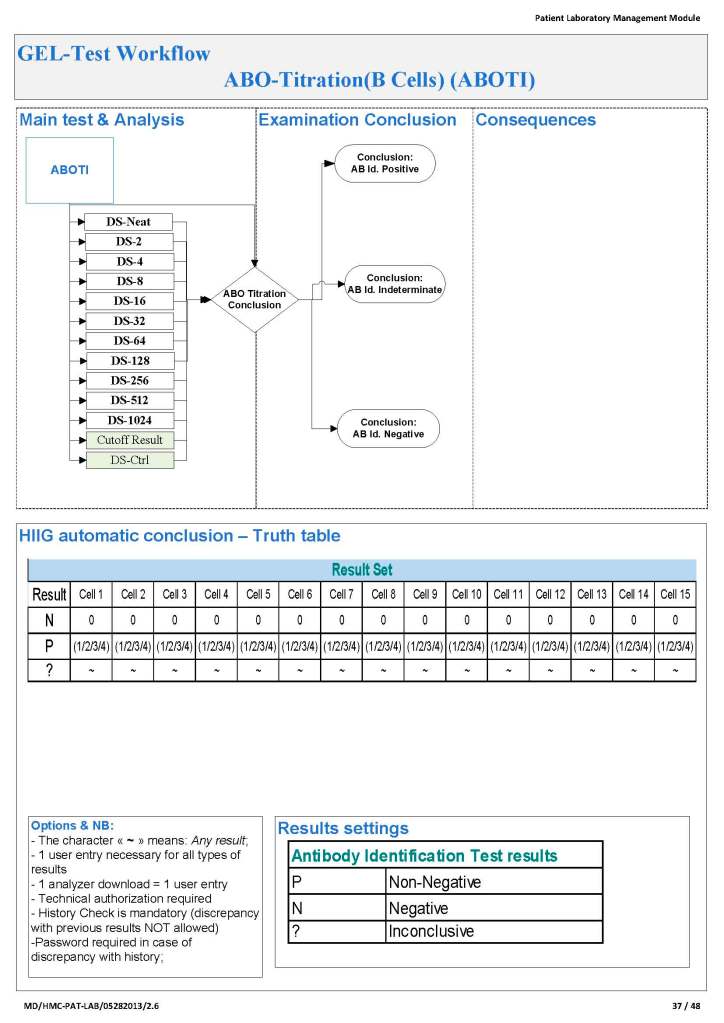
Since the method was working well on the Ortho equipment, I next established an interface to Medinfo.  The test was performed separately for IgG and IgM antibodies.  Medinfo recorded the reactions in all the wells.  The last well showing a 1+ reaction was interpreted as the titer (e.g. if 1:64 were the last 1+ reaction, then the titer was 64 in Medinfo).

The Medinfo process is shown below.

CCP Collection and Exposure to COVID Vaccines

Principle:

Donor criteria for COVID convalescent plasma collection have been updated by the US FDA.  This policy has adapted them to our practice setting.

Policy:

  1. Donors who donated CCP prior to COVID-19 vaccination may donate following vaccination if they meet remaining donor eligibility criteria.
  2. Donors who did NOT have symptoms and a positive diagnostic test for COVID-19 prior to vaccination are ineligible to donate plasma after COVID -19 vaccination.
  3. Individuals may donate CCP for up to 6 months after resolution of COVID-19 symptoms regardless of what their antibody levels are at 6 months.
  4. Only high-titer units (as defined by the reagent manufacturer) may be used for patient treatment.

Reference:

Regulatory Update:  FDA Officials Provide Insight on High-Titer CCP, Donor Eligibility Following Vaccination, 9/2/21, AABB, Bethesda, MD, USA

COVID-19 Donor Qualification

Principle:

This is the latest update on donor qualifications during the COVID-19 pandemic and addresses issues about COVID-19 vaccination, COVID convalescent plasma use and donation, return of donors into the donor pool after COVID-19 vaccination.  All of this information is subject to change as new regulations are released.

Policy:

  1. All donors must be in good health and meet all donor eligibility criteria at the time of the donation.
  2. Individuals diagnosed with COVID-19 or who are suspected of having COVID-19, and who had symptomatic disease, must refrain from donating blood for at least 14 days after complete resolution of symptoms.
  3. Individuals who had a positive diagnostic test for SARS-CoV-2 (e.g., a nasopharyngeal swab), but never developed symptoms, must refrain from donating at least 14 days after the date of the positive test result.
  4. Individuals who are tested and found positive for SARS-CoV-2 antibodies, but who did not have prior diagnostic testing and never developed symptoms, can donate without a waiting period and without performing a diagnostic test (e.g., a nasopharyngeal swab).
  5. Individuals who received a non-replicating, inactivated, or mRNA-based COVID-19 vaccine can donate blood without a waiting period.
  6. Individuals who received a live-attenuated viral COVID-19 vaccine, must refrain from donating blood for 14 days after receipt of the vaccine.
  7. Individuals who are uncertain about which COVID-19 vaccine was administered must refrain from donating for 14 days if it is possible that the individual received a live-attenuated viral vaccine.
  8. Individuals who received monoclonal antibodies should be deferred for three months from the last dose.
  9. Donors who have received blood components, including COVID-19 convalescent plasma are deferred for 3 months since the last transfusion.
  10. Recovered COVID-19 patients who are eligible to donate CCP and receive an approved COVID-19 vaccine may donate if they:
    1. Had symptoms of COVID-19 and a positive test result from an approved diagnostic test
    2. Received the COVID-19 vaccine after the diagnosis of COVID-19
    3. Are within 6 months after complete resolution of COVID-19 symptoms

References:

  1. Summary:  Donation of CCP, Blood Components, and HCT/Ps Following COVID-19 Vaccines or Treatment with CCP or Monoclonals, Updated 3/2/21, AABB, Bethesda, MD, USA
  2. Updated Information for Blood Establishments Regarding COVID-19 Pandemic and Blood Donation, US FDA, 19/1/21
  3. Toolkit for COVID-19 Convalescent Plasma (CCP) Under Emergency Use Authorization Issued 02 04 21 Revision 12/2/21, AABB, Bethesda, MD, USA

Donor Deferrals for Transfusion of Blood Components, Body Fluid Exposure, Tattoos, Body Piercing, and Hijama

Principle: 

This is an updated set of donor deferral rules based on US FDA CBER guidances for body fluid exposures, blood components, and exposure to COVID-19 convalescent plasma CCP.

Policy:

  1. We will accept donors AFTER THREE MONTHS from the following activities:
    1. HIJAMA (ritual blood-letting)
    2. Tattooing
    3. Body piercing (e.g. piercing for ear-rings)
    4. Contact with blood of another individual through percutaneous inoculation such as a needle stick or through contact with a donor’s open wound or mucous membranes
    5. Transfusion of a blood component, including COVID-19 convalescent plasma
  2. Transfusion of clotting factors cases should be reviewed by the Transfusion Medicine Physician.

References:

  1. Revised Recommendations for Reducing the Risk of Human Immunodeficiency Virus Transmission by Blood and Blood Products, Guidance for Industry,  U.S. Department of Health and Human Services, Food and Drug Administration, Center for Biologics Evaluation and Research, April 2020
  2. Updated Information for Blood Establishments Regarding the COVID-19 Pandemic and Blood Transfusion, CBER, US FDA, 19/1/21
  3. AABB Summary:  Donation of CCP and Blood Components Following COVID-19 Vaccines or CCP Transfusion, 14/12/20

Operational Effects of the COVID Pandemic–My Experience in Qatar

The COVID-19 pandemic imposed new challenges to our system.  In general, these could be divided into:

  1. Decreased donors
  2. COVID vaccine effects
  3. Decreased available staff
  4. Shortages of supplies
  5. More demands on donor apheresis staff—CCP
  6. More demands on donor processing staff—CCP
  7. More demands on hospital transfusion service/blood bank staff—CCP

There were fewer donors in the early phase and the nurses also had to add a large number of donor plasmapheresis collections for COVID convalescent plasma CCP.  Still they had to maintain all donor and therapeutic apheresis services with no increase in staff.  Although elective procedures had been cancelled, there were still obstetrical, oncologic, and trauma services in full action.

Many of our staff were on leave when the borders were closed.  Some had to wait months before they could return to work.  Others had COVID-19 infection and were quarantined for several weeks.  This further reduced staffing.  We could not just hire outside staff since considerable training is involved in these processes.

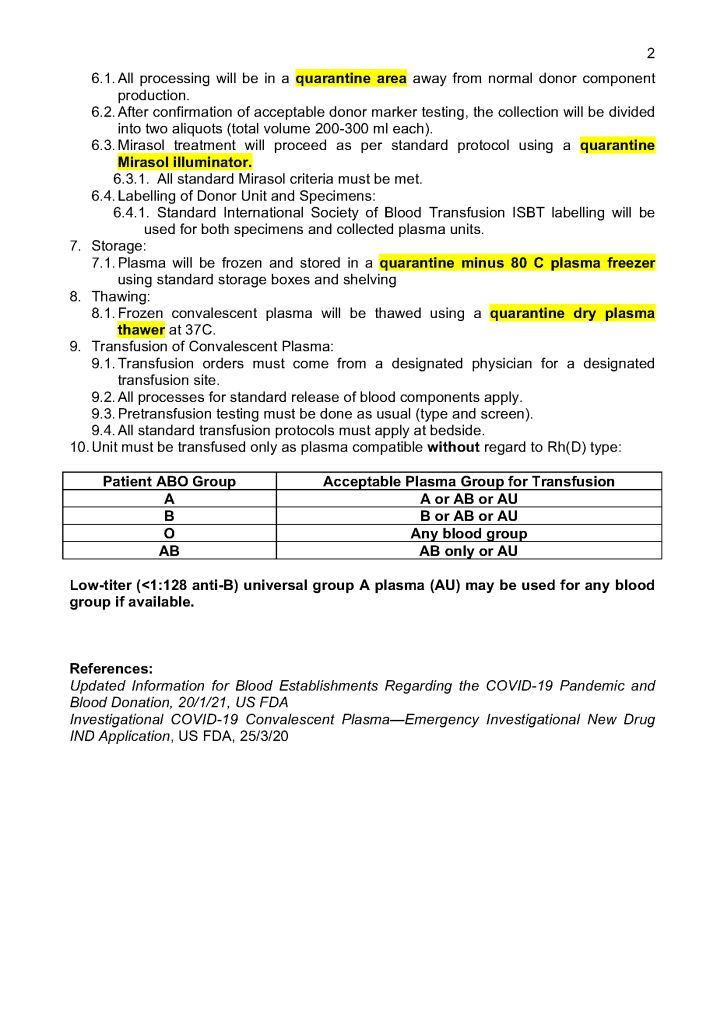
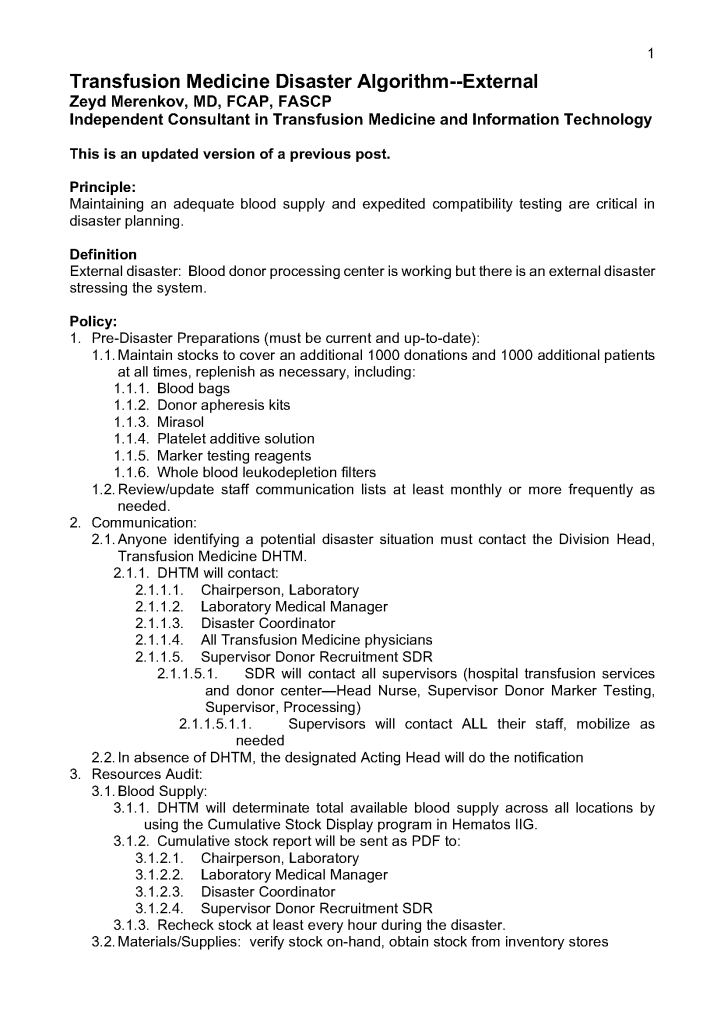
I dedicated a separate donor collection space for the CCP program away from the regular donors as well as a quarantine processing area.  Similarly, the CCP plasma was kept segregated from the regular plasma supply and a specially designed location was identified for release of this product.  Working for this program diverted resources from blood collection to this special project, again without increasing resources.

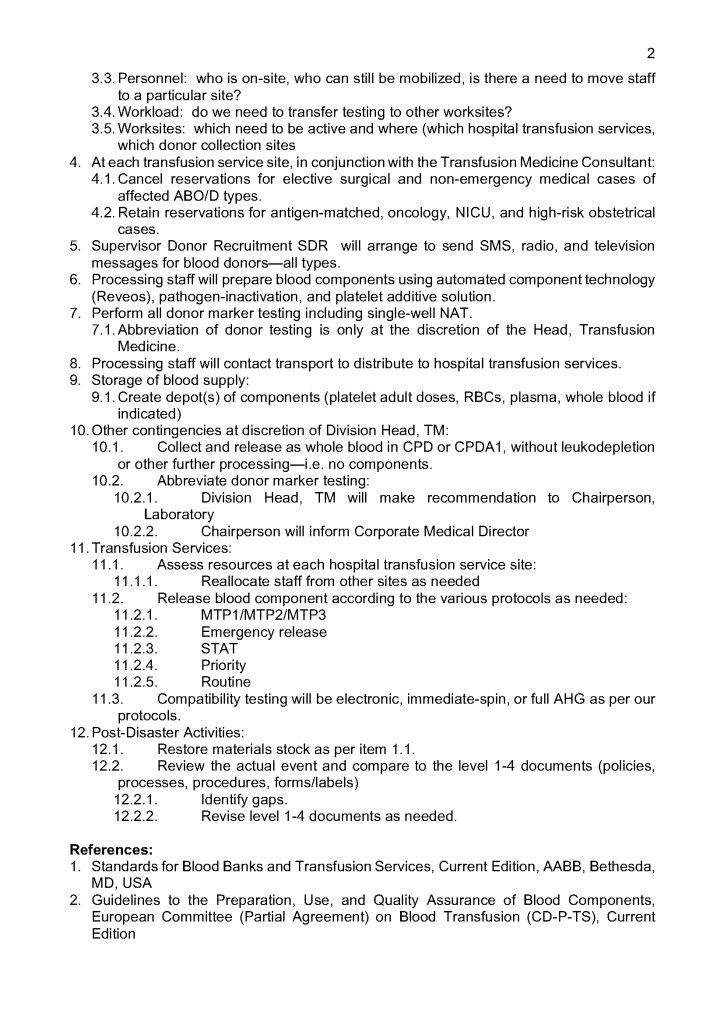
With disruptions to shipments of supplies, including the Reveos whole blood kits and Trima donor apheresis sets, we had to rely on our large in-home inventory until the situation stabilized.  We prescreened the CCP donor candidates before we would collect them to avoid wastage of kits.

Fortunately, our throughput was minimally affected because our equipment and processes had always stressed speed.  We used single-well NAT testing to minimize the need of additional runs.  Also, we used Reveos automated component processing to greatly speed production (one Reveos can process four whole blood units in about 23 minutes or about 12 units in 75 minutes.)  One technologist could operate all 4 of our machines simultaneously and perform other tasks while the machines were working.

In the system I developed in Qatar, we could complete processing into components (RBCs, buffy coat platelet pools, leukodepleted plasma), all marker and immunohematology testing, leukoreduction of the pools and RBCs, Mirasol pathogen inactivation, and platelet additive solution in as little as five hours.

In rapid turn-around events, it is most helpful to have a robust blood bank computer system that can scale to the challenge.  Also, it must mercilessly enforce all the rules starting with donor qualification, screening, collection through testing and production.  At times of emergency, it is difficult to meet Good Manufacturing Processes manually.

I had built parallel separate donor collection, donor processing, and transfusion service/hospital blood bank processes specifically for CCP and had to staff them with available personnel, limited our capability to process regular donors.  The blood bank computer software restricted CCP use to designated physicians and transfusing locations.  For those interested, there is a separate series of posts about the CCP project and its implementation in the dedicated blood bank Medinfo HIIG.

COVID-19 vaccinations should have minimal effect in donor qualification since mRNA or antigen-based ones do not cause donor deferral.  Live attenuated COVID vaccines will defer donors for 2 weeks by current rules—the same as other live vaccines.  Donors who had previously received CCP will be deferred for three (3) months after last receiving this product.

In summary, the COVID pandemic reduced staffing and affected donor recruitment.  We had production mitigations to maximize throughput.  The system was stressed by the reduced staffing and special demands to produce CCP.  However, the extent of our automation allowed us to maintain throughput throughout the crisis.