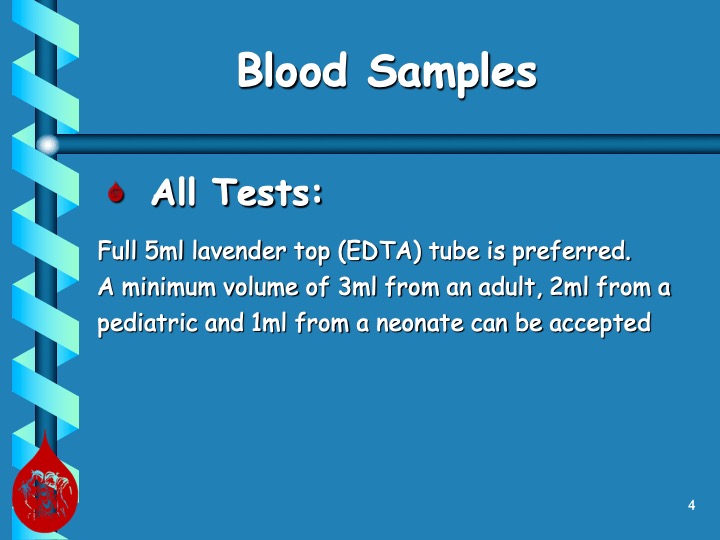
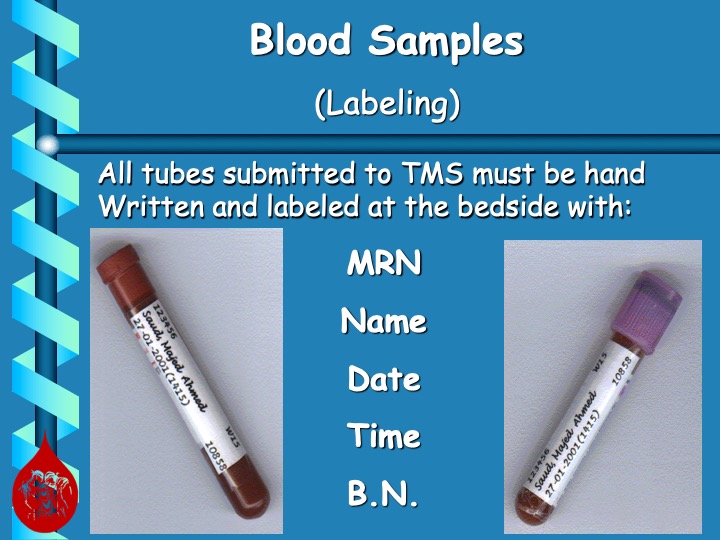
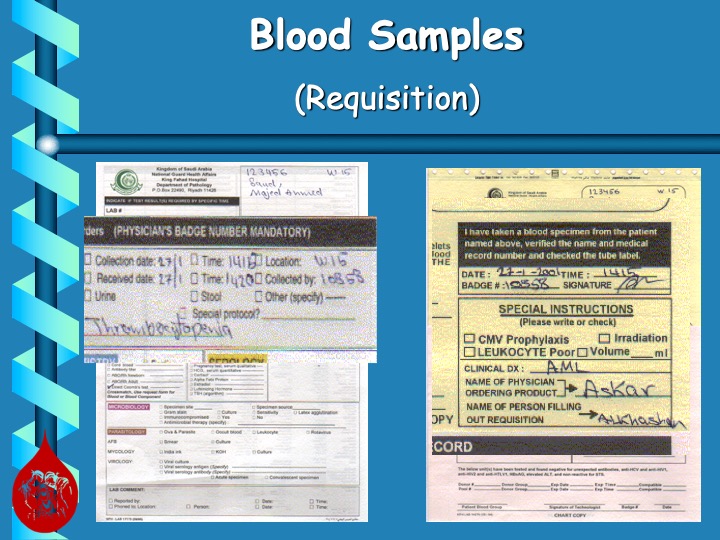
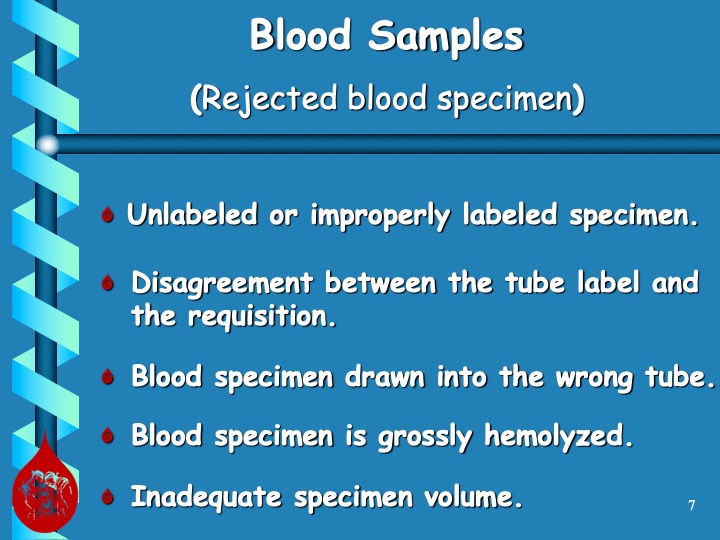
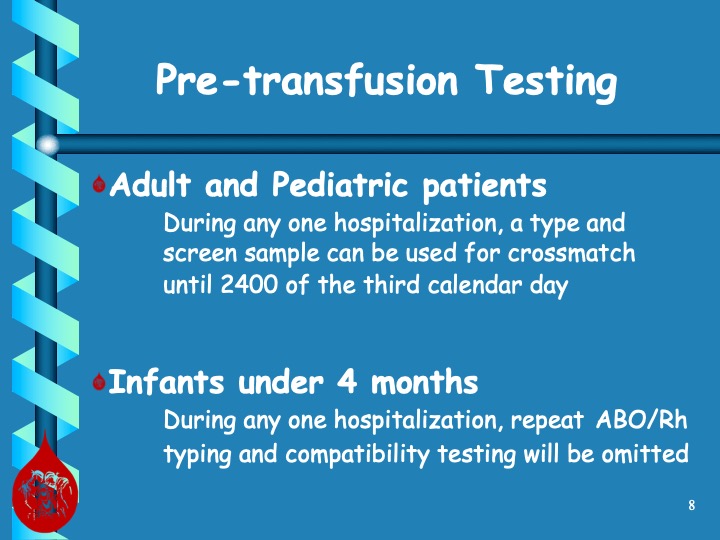
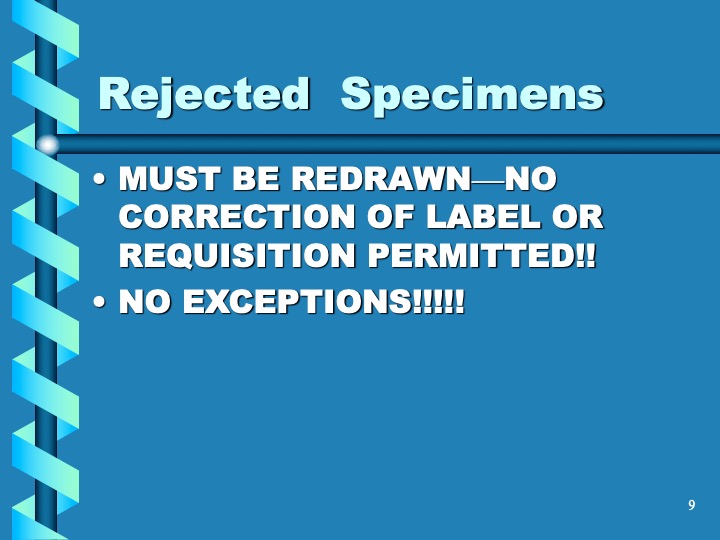
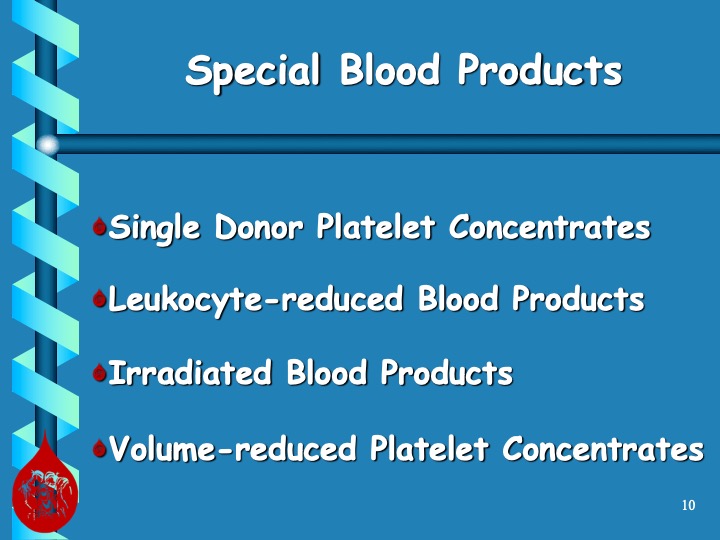
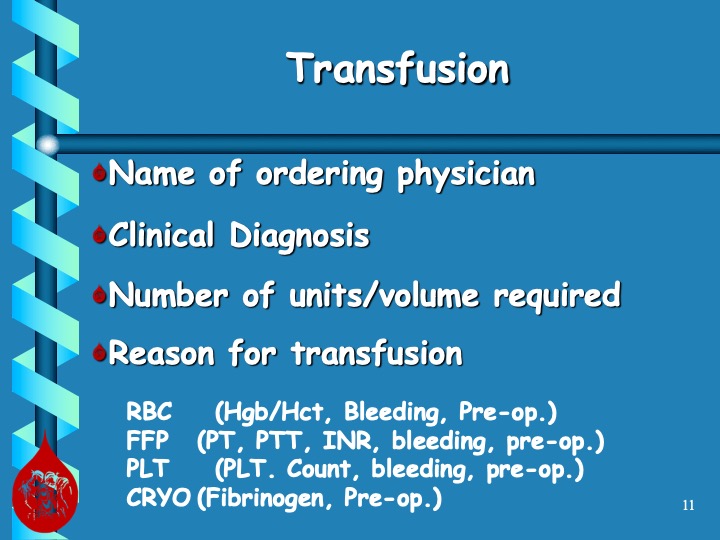
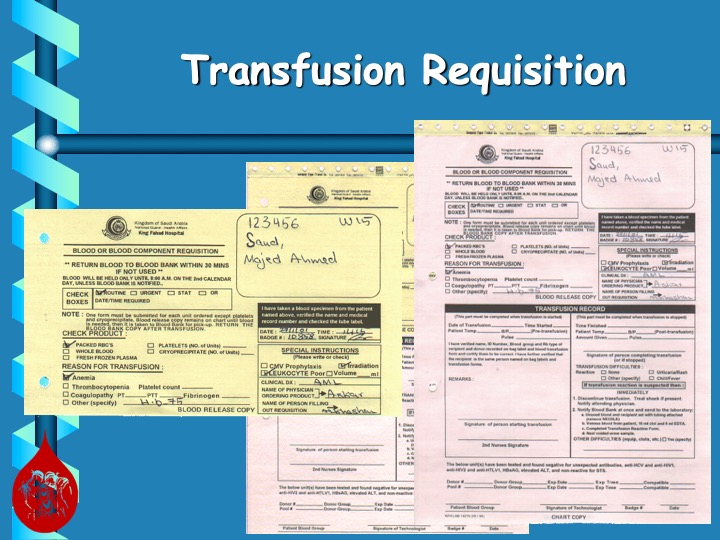
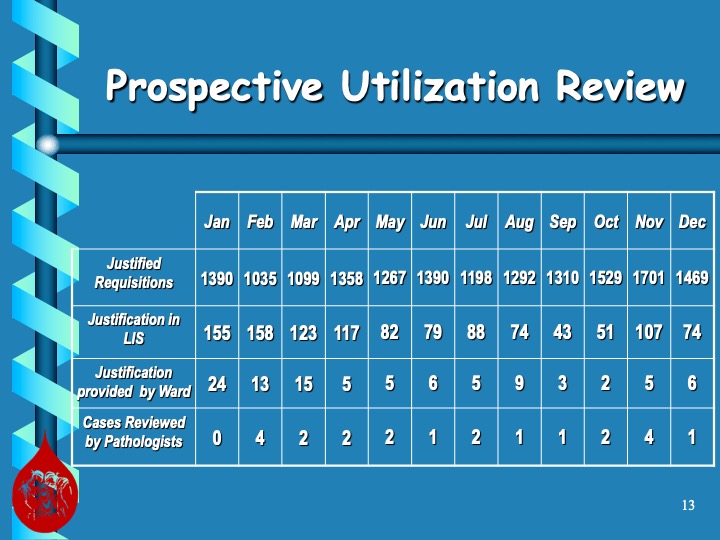
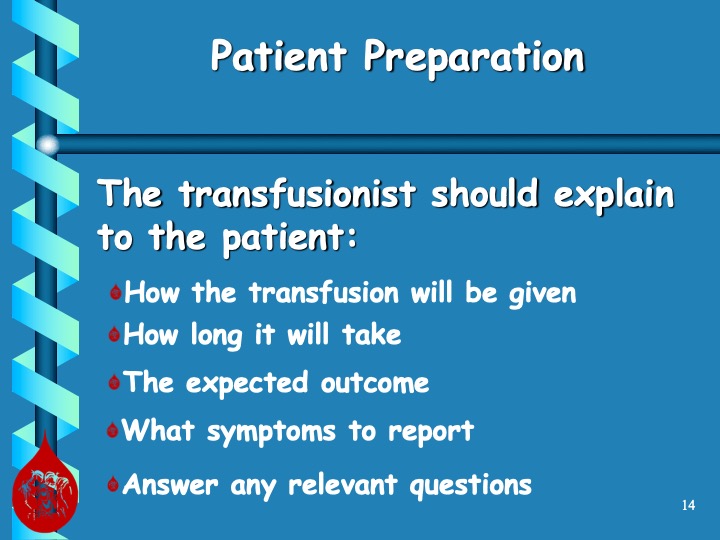
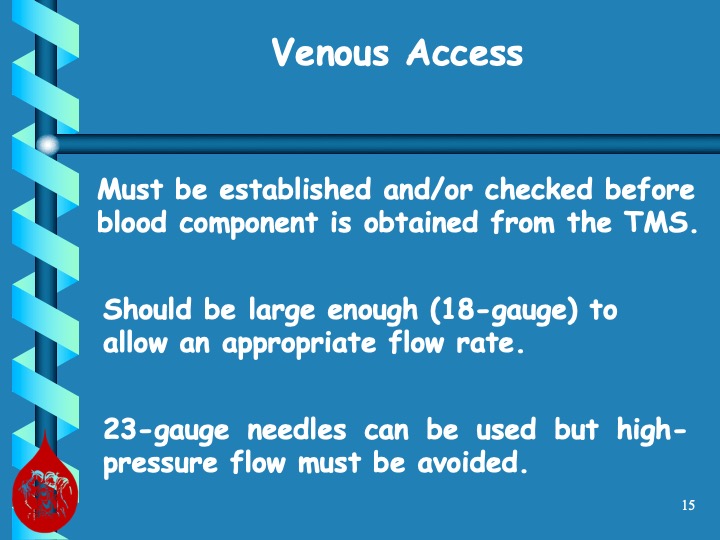
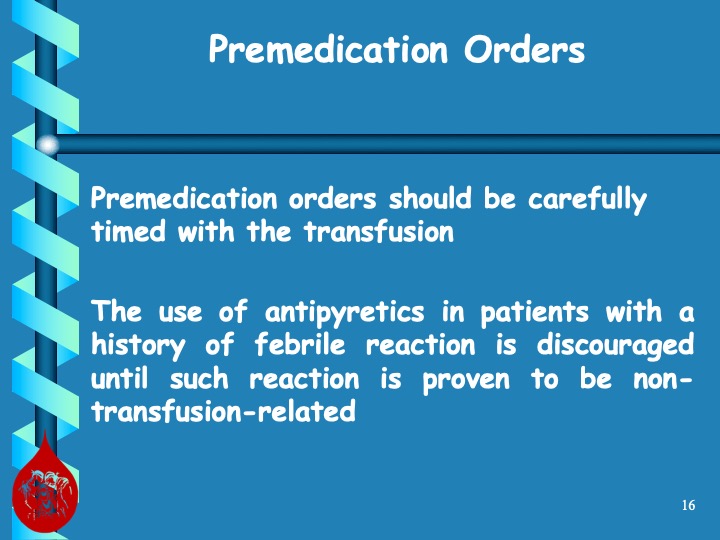
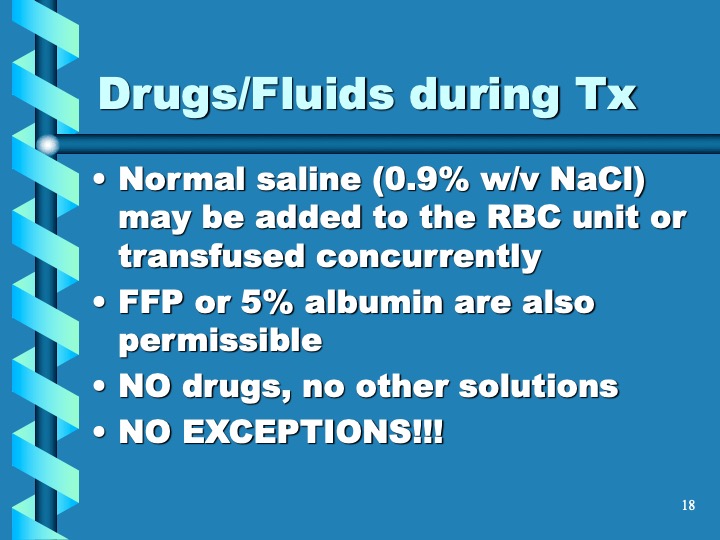
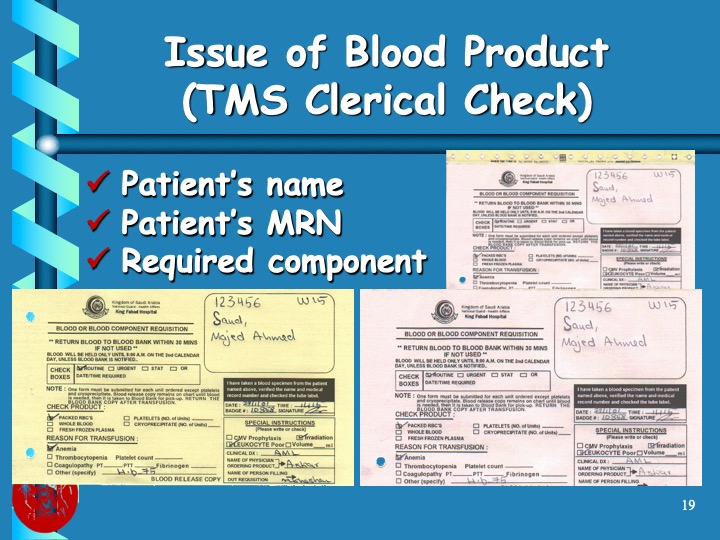
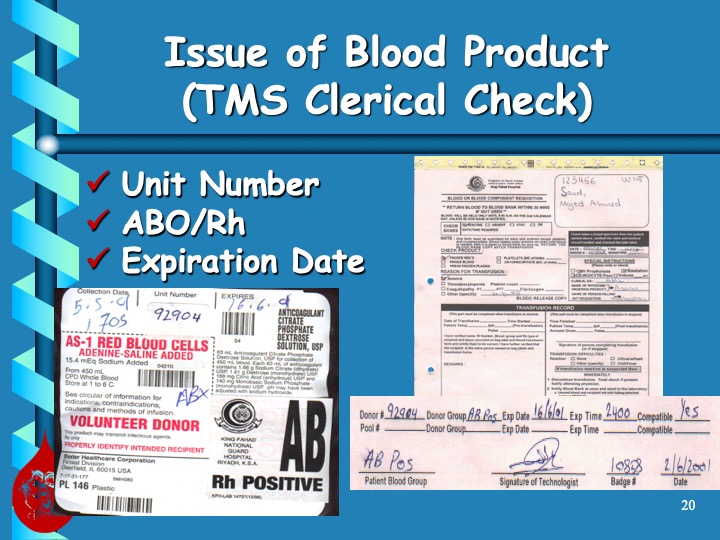
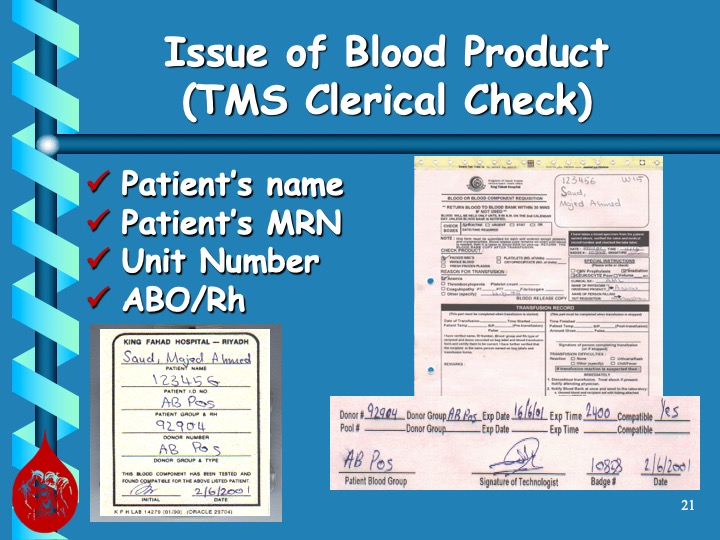
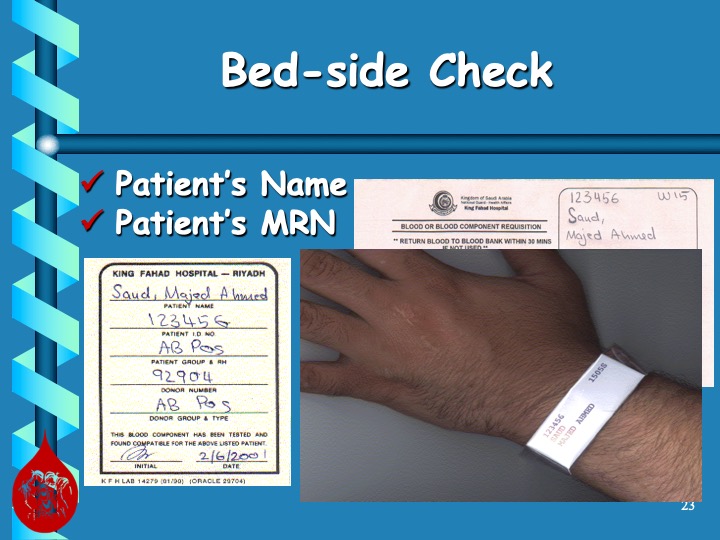
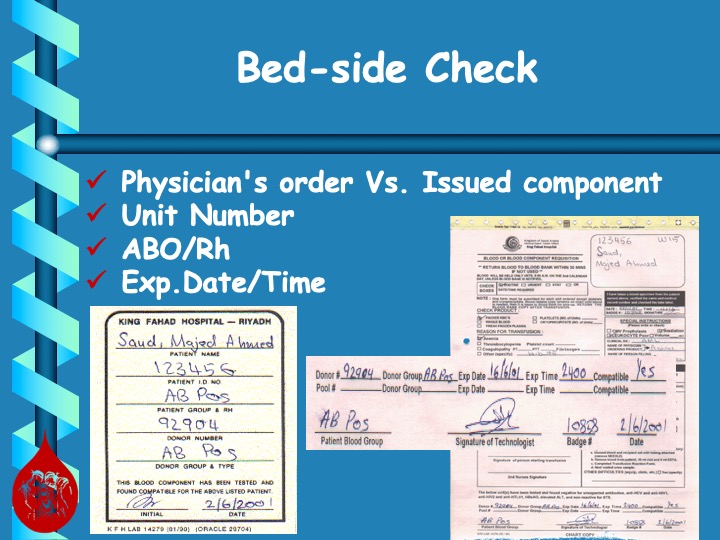
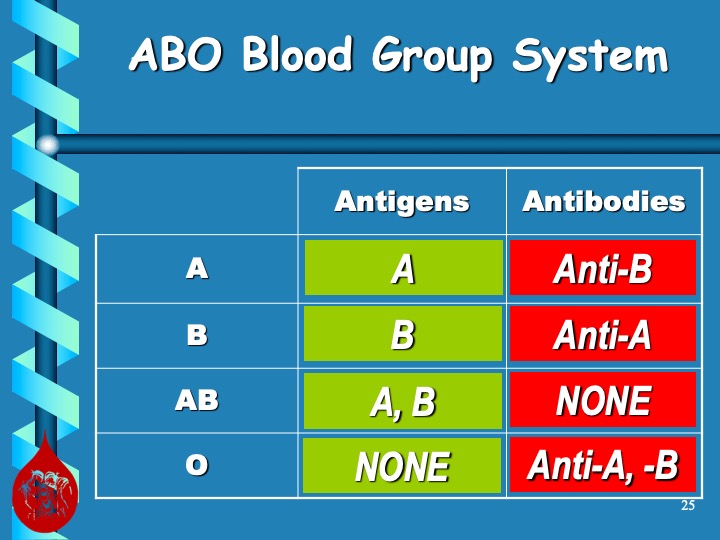
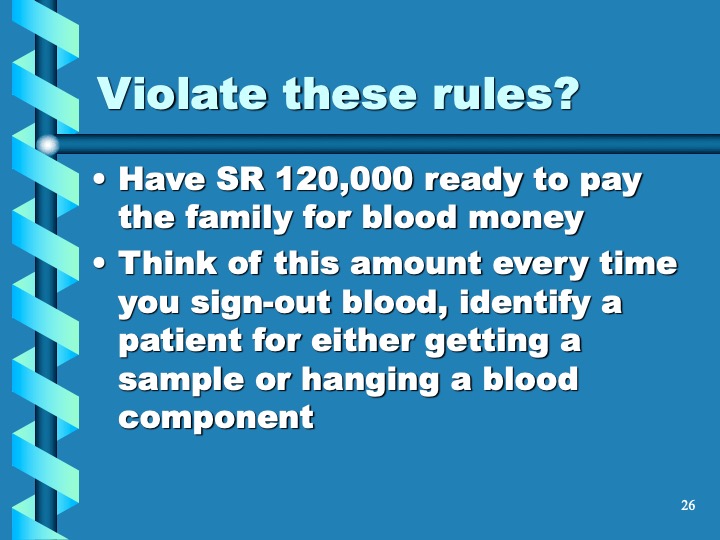
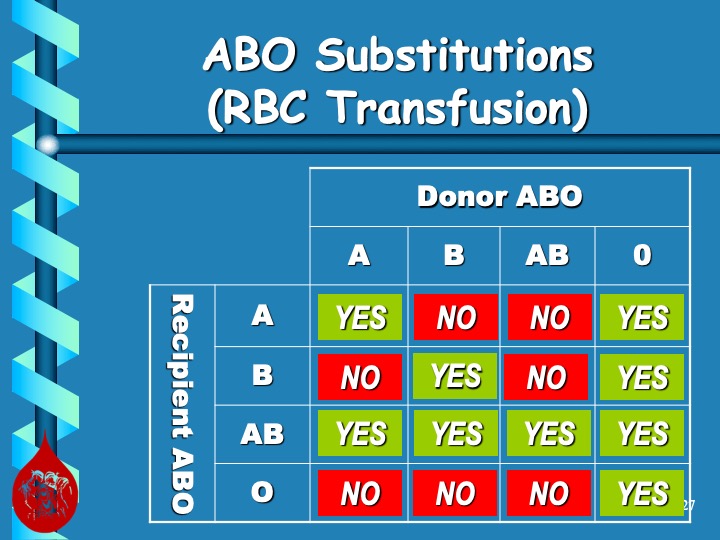
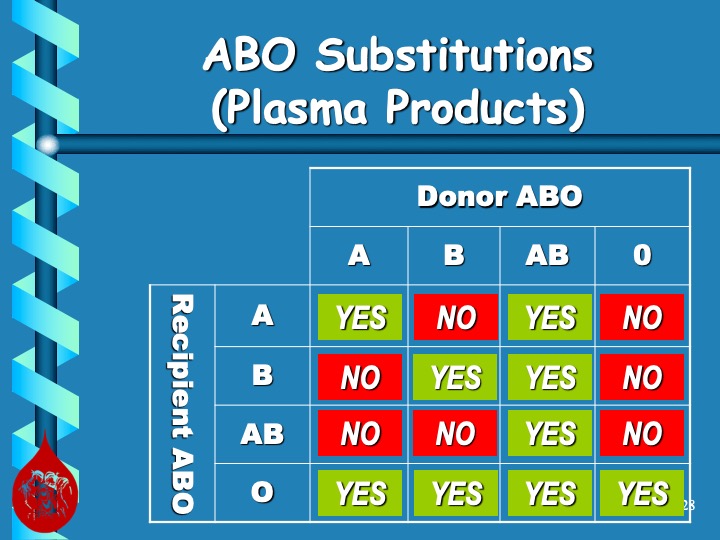
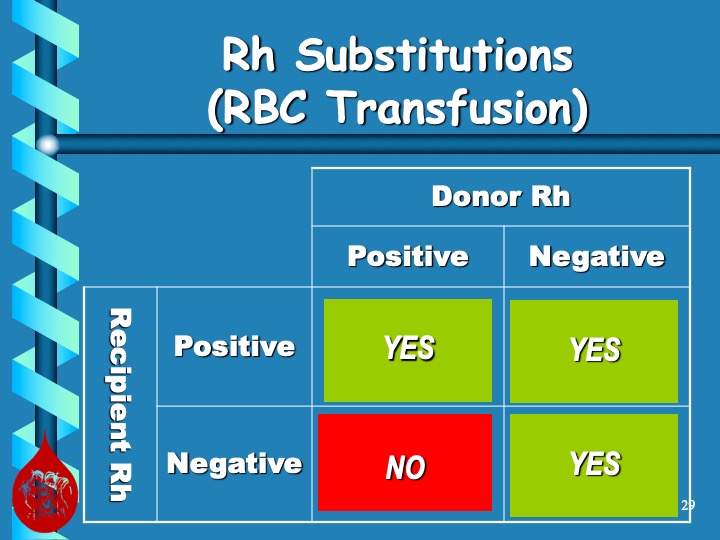
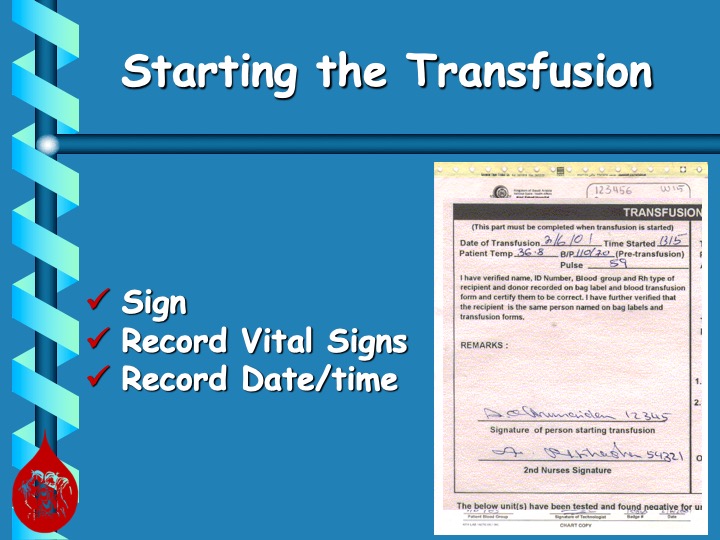
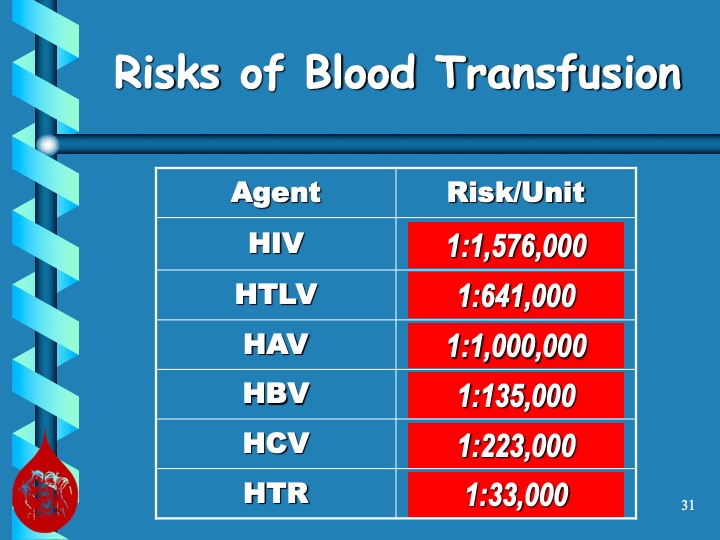
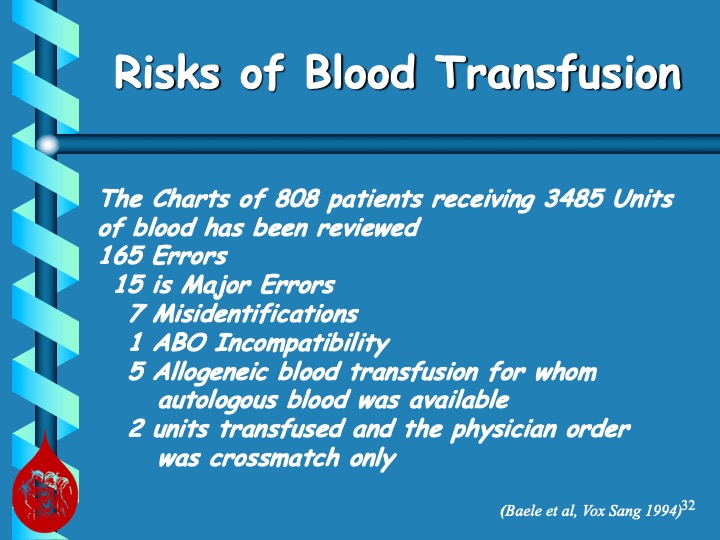
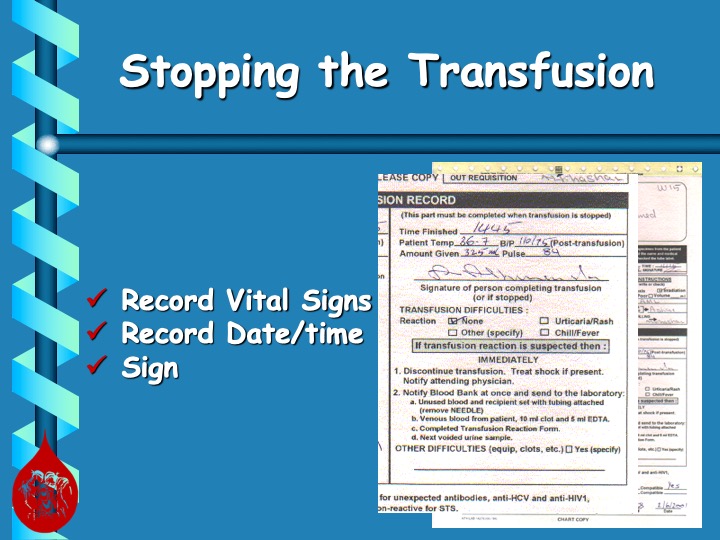
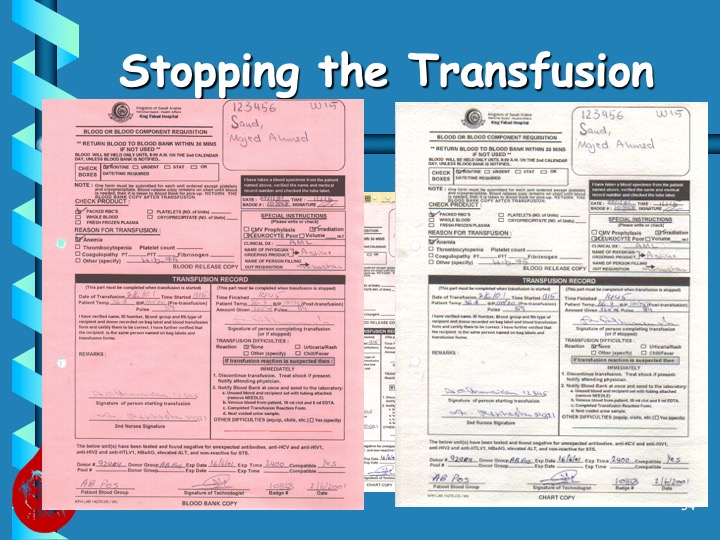
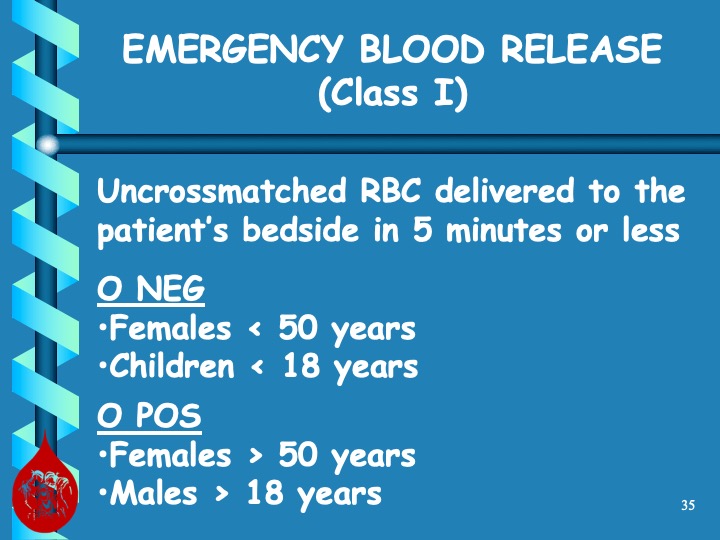
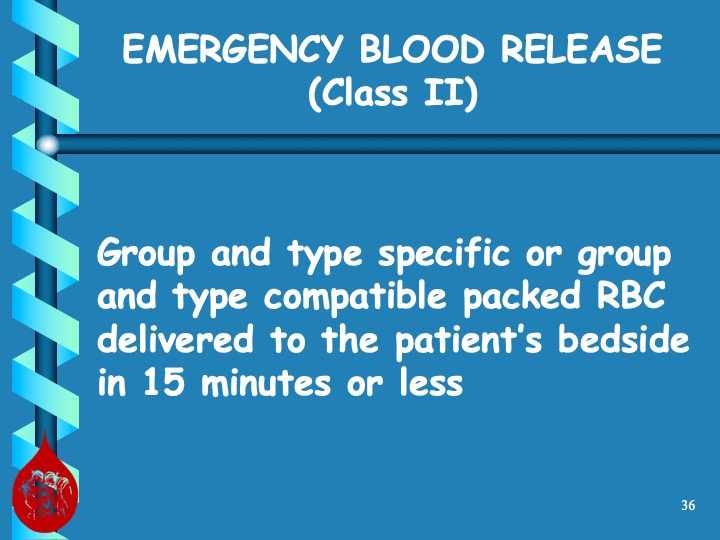
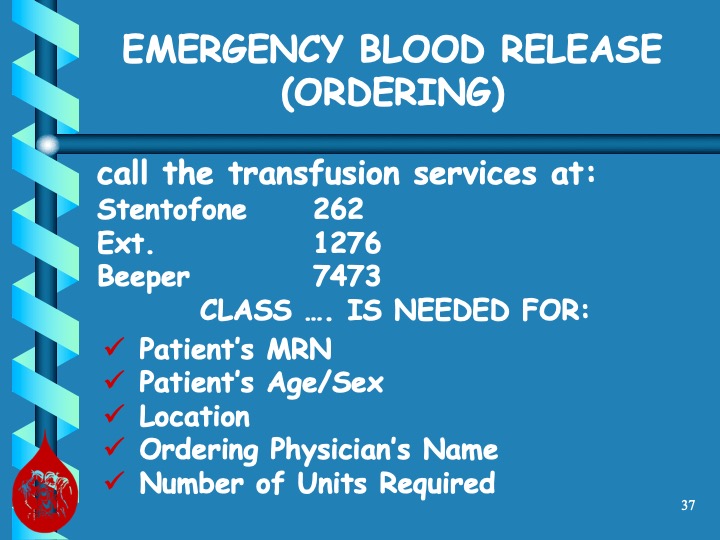
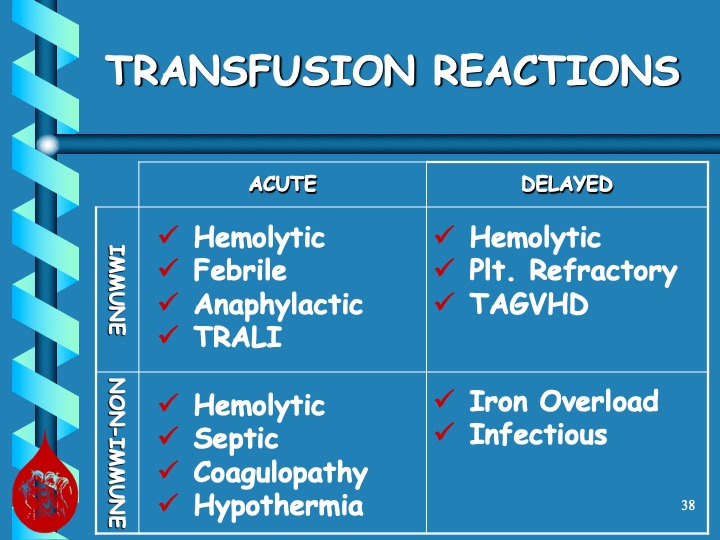
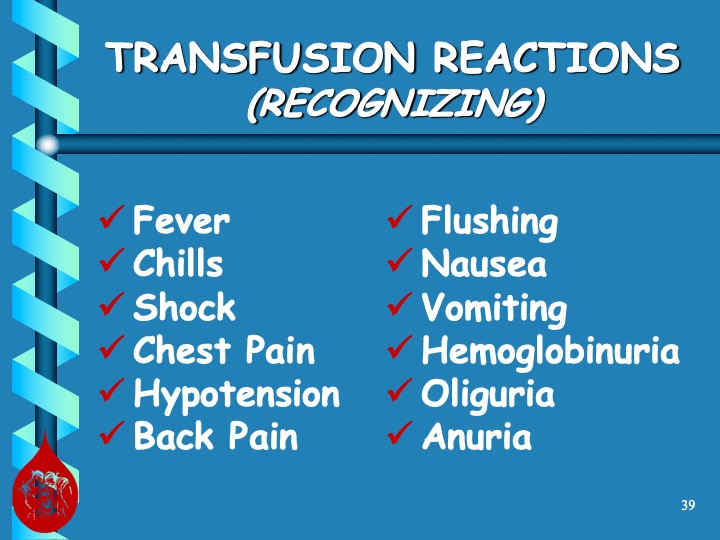
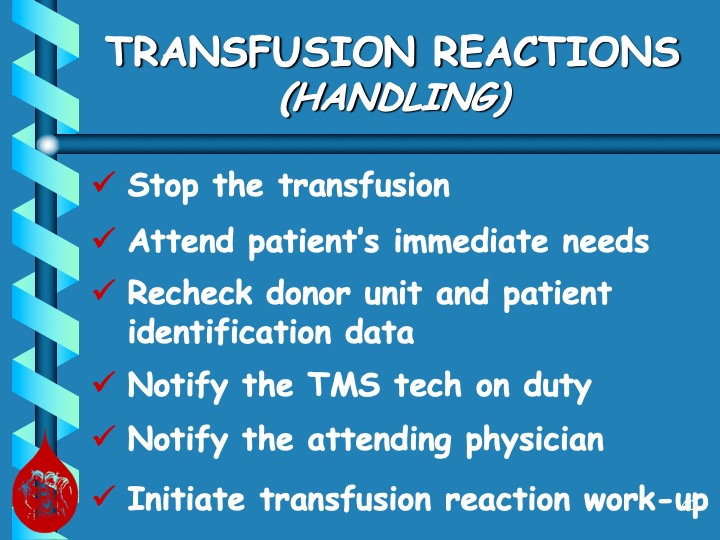
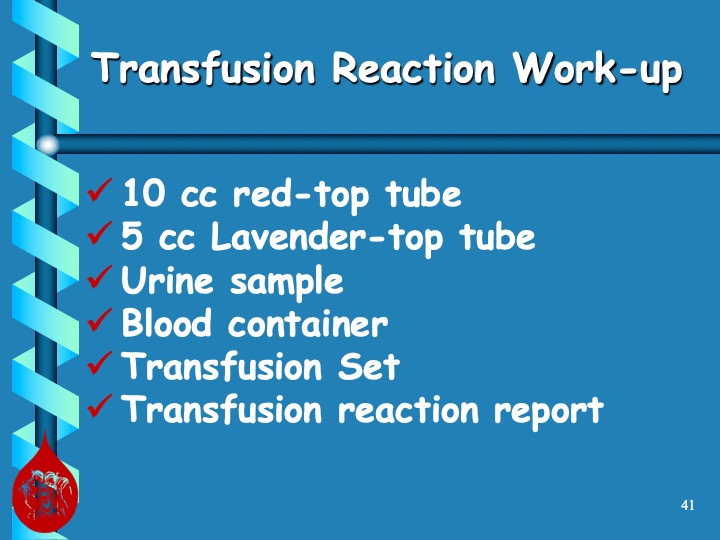
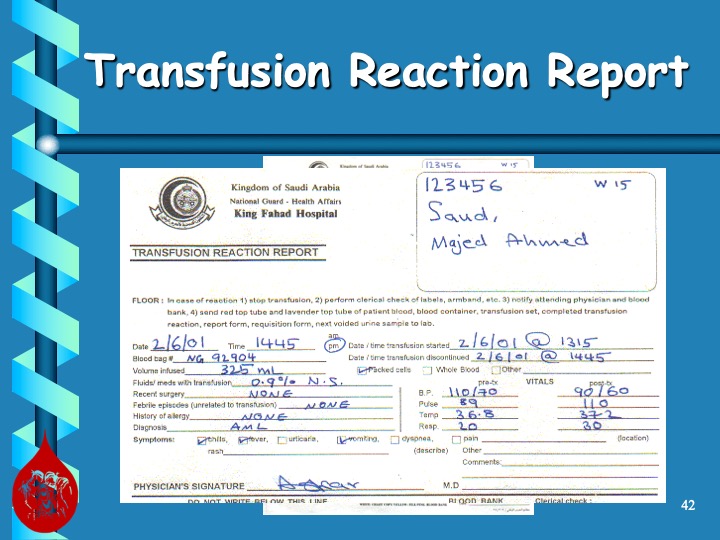
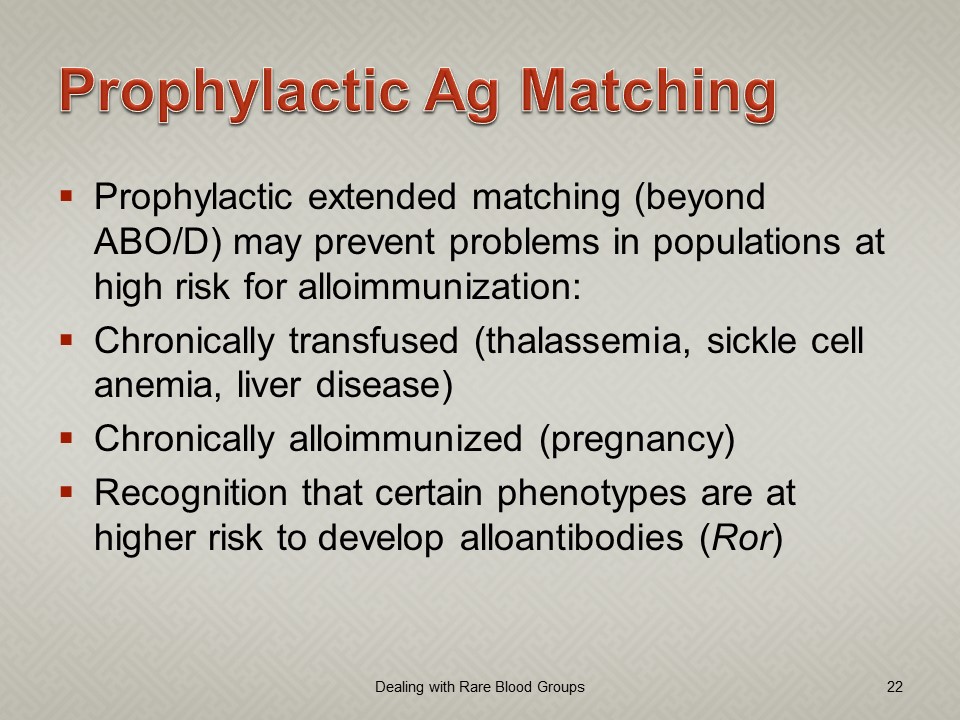
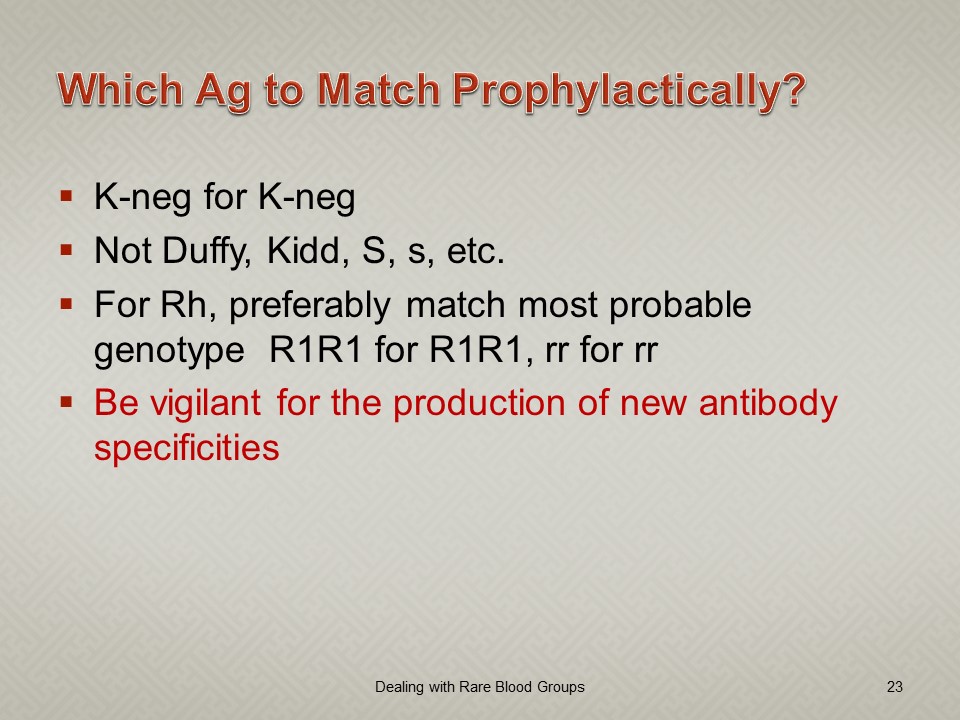
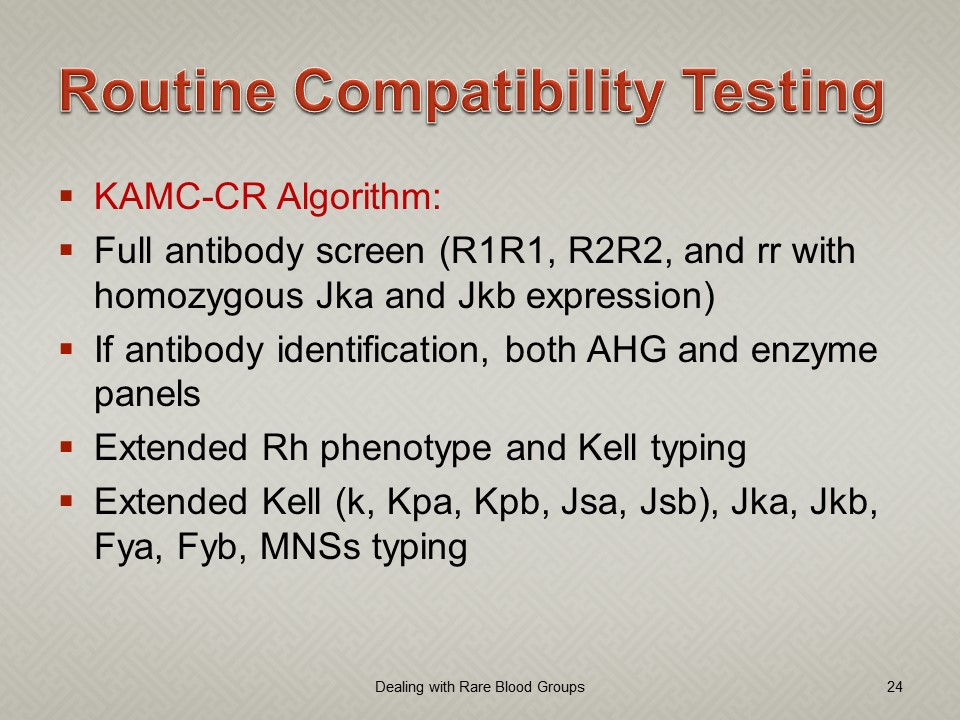
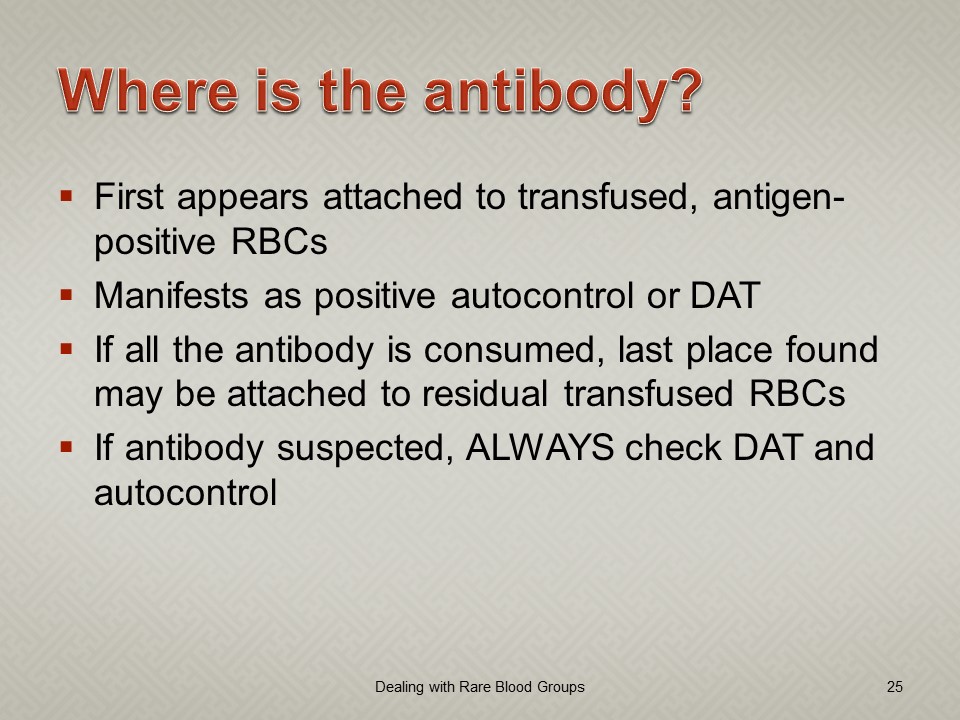
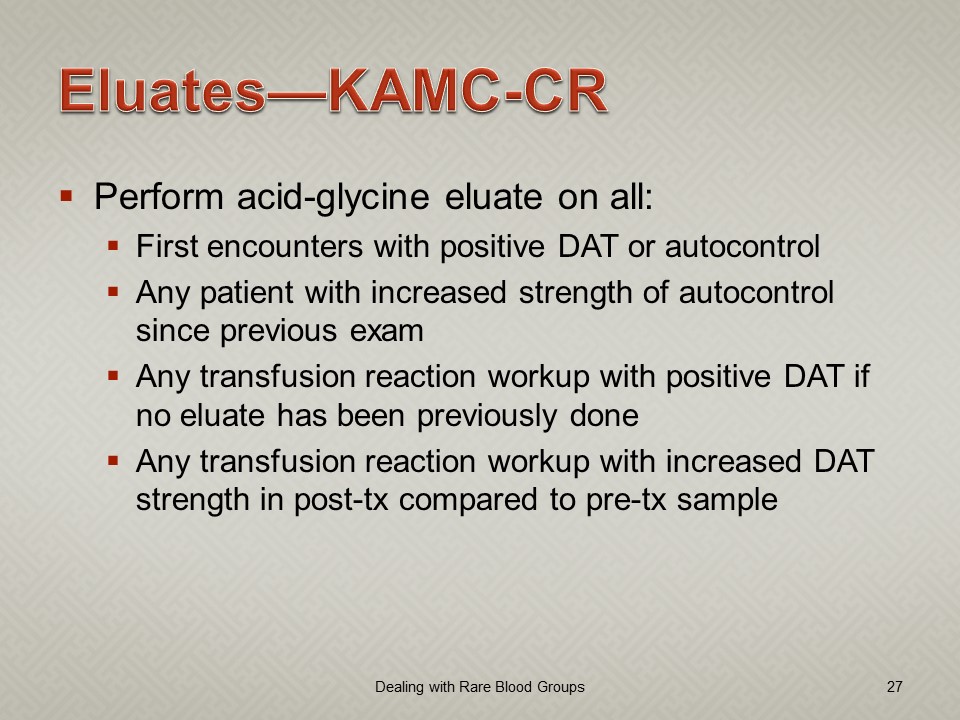
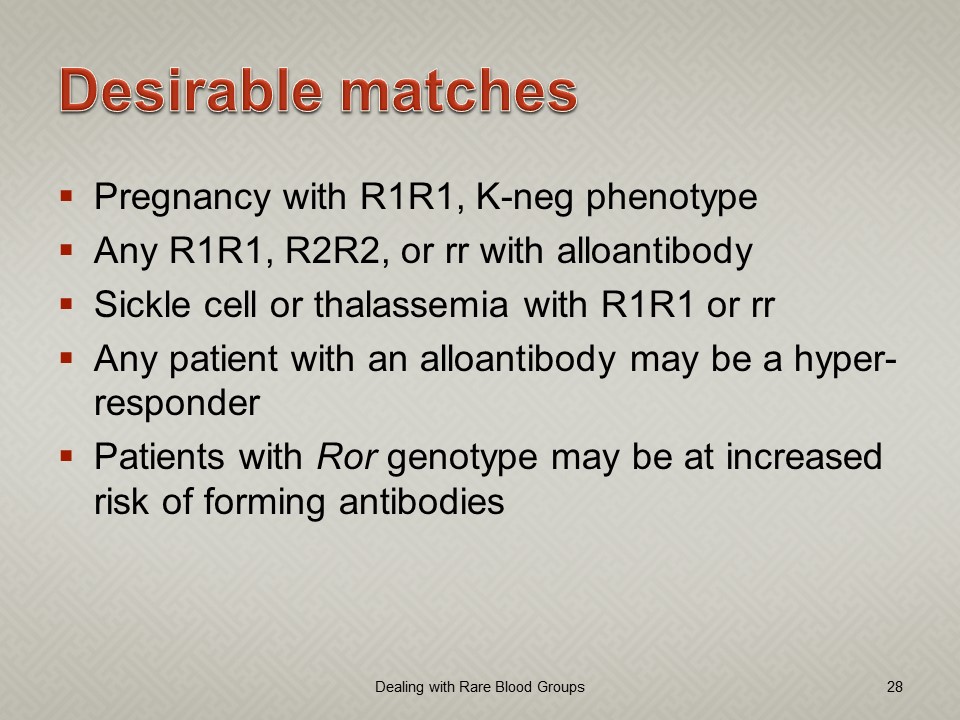
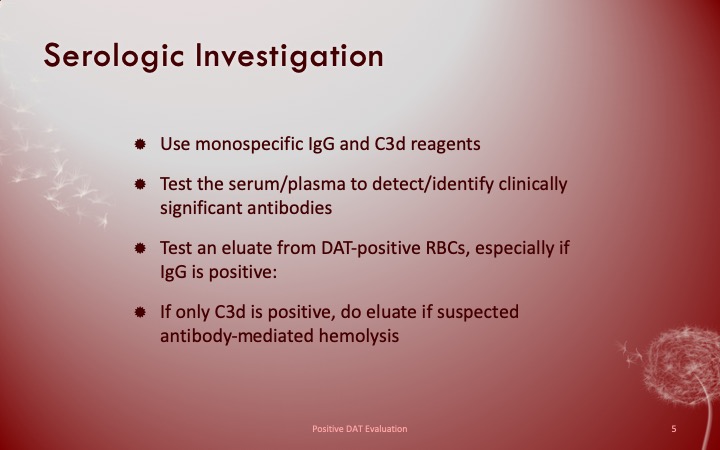
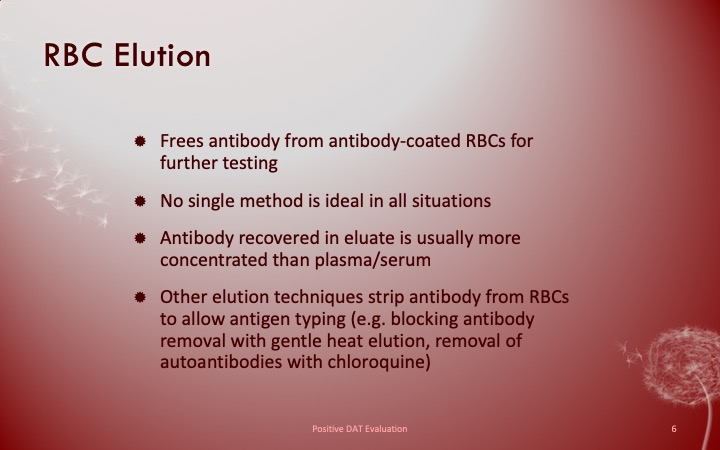
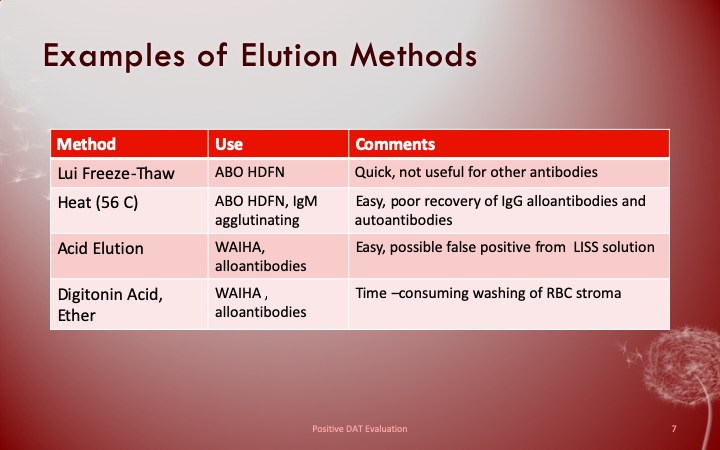
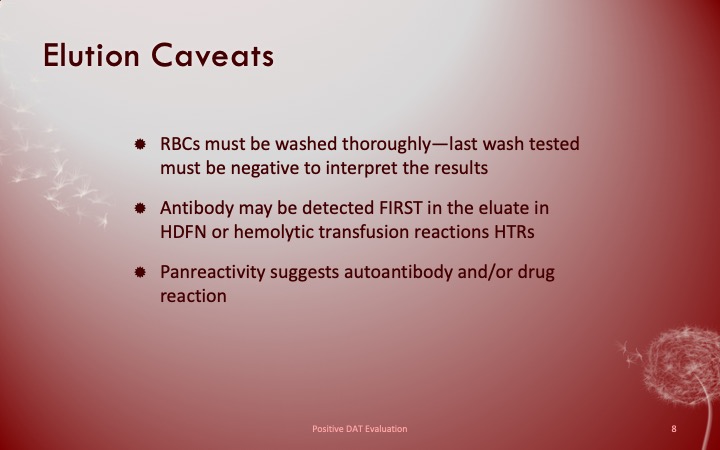
When I was affiliated with National Guard Health Affairs in Riyadh, my staff and I gave weekly new-arrival nursing orientations. The attached PowerPoint file from 2004 shows the manual system in effect at the time, but it is still illustrative to acquaint new staff on the hospital blood bank as it relates to their nursing duties, including specimen collection, pick up and transfusion of blood components, and adverse effects of transfusion.
I wish to give full credit to Mr. Abdullah Al Khashan, who prepared this file in conjunction with Ms. Editha Durante, the Transfusion Clinical Resource Nurse. The three of us used to rotate giving this lecture. This is my version of their presentation (with some minor formatting changes).
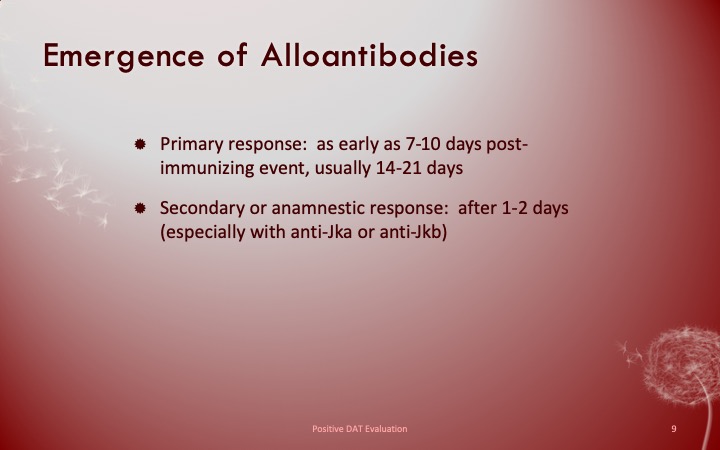
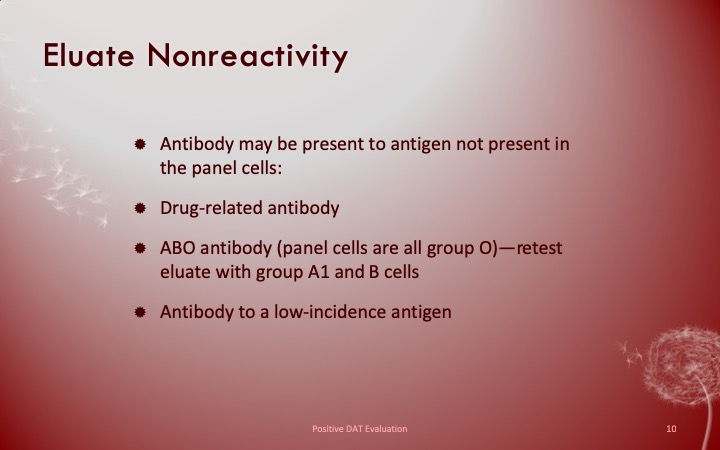
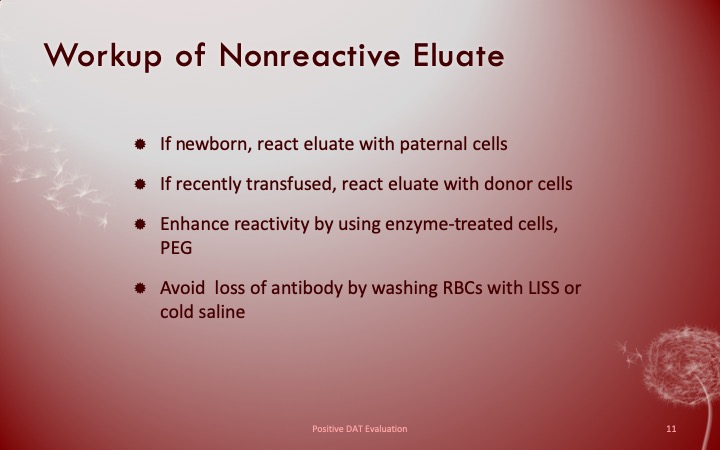
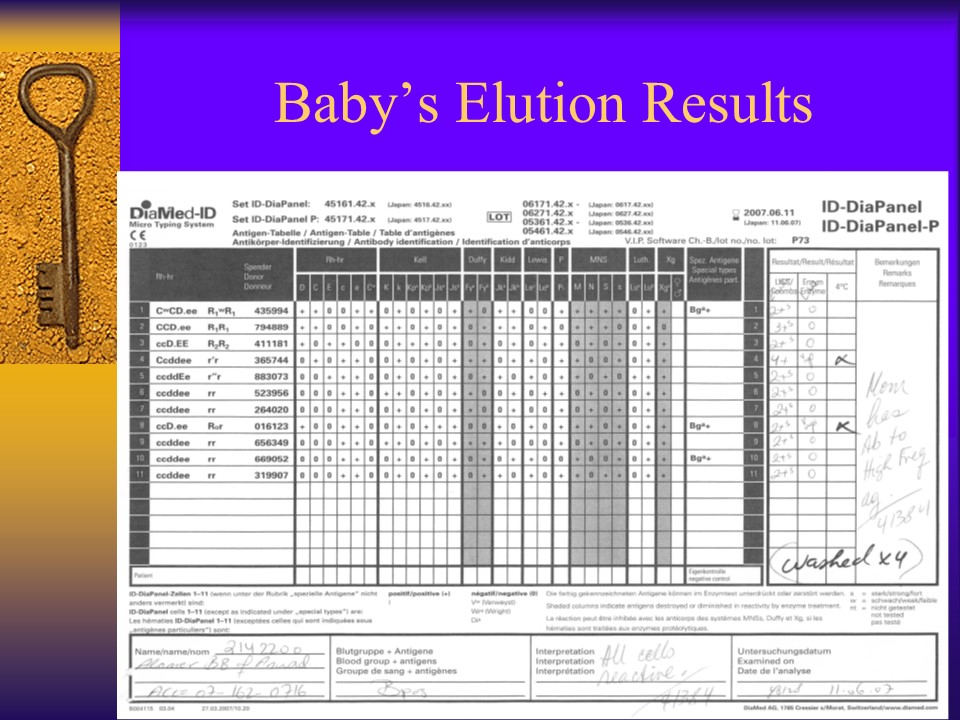
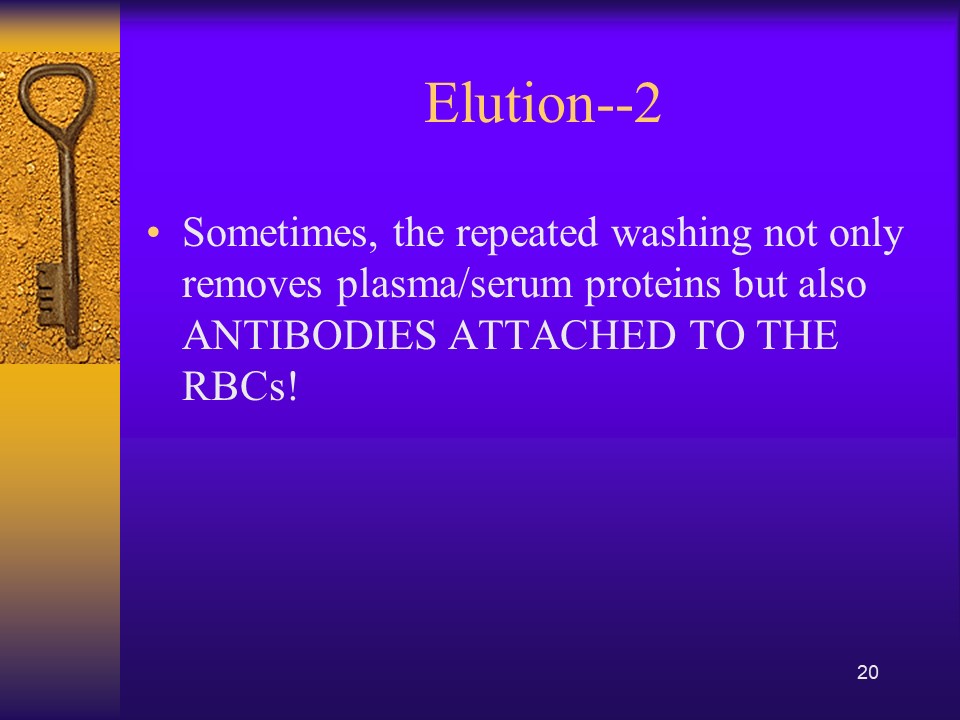
I cannot emphasize enough proper technique in doing the washing during the elution process. We are usually concerned about too little washing and thus possibly residual reactions in the last wash. However, aggressive overwashing may remove the bound antibody resulting in a negative result.
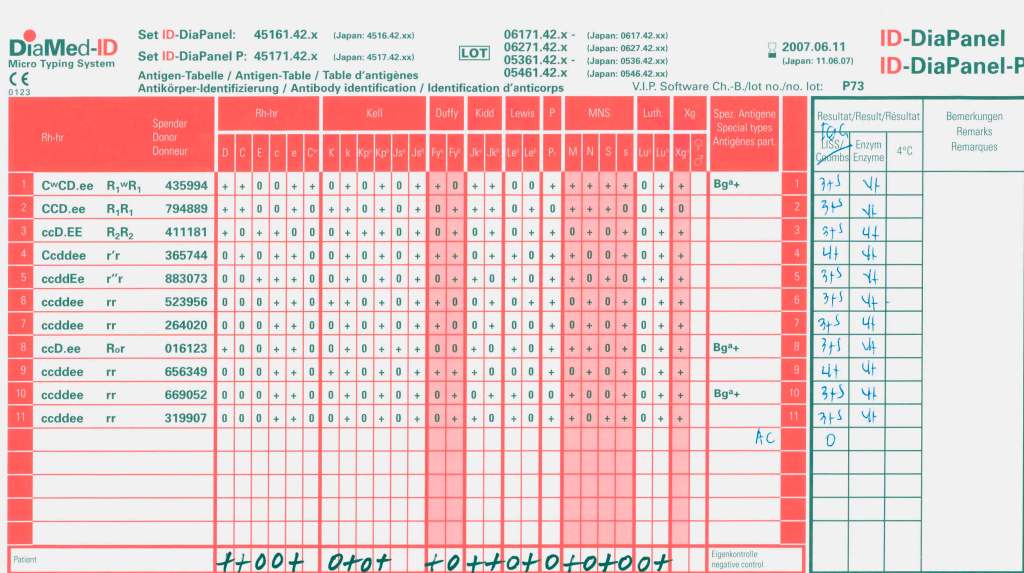
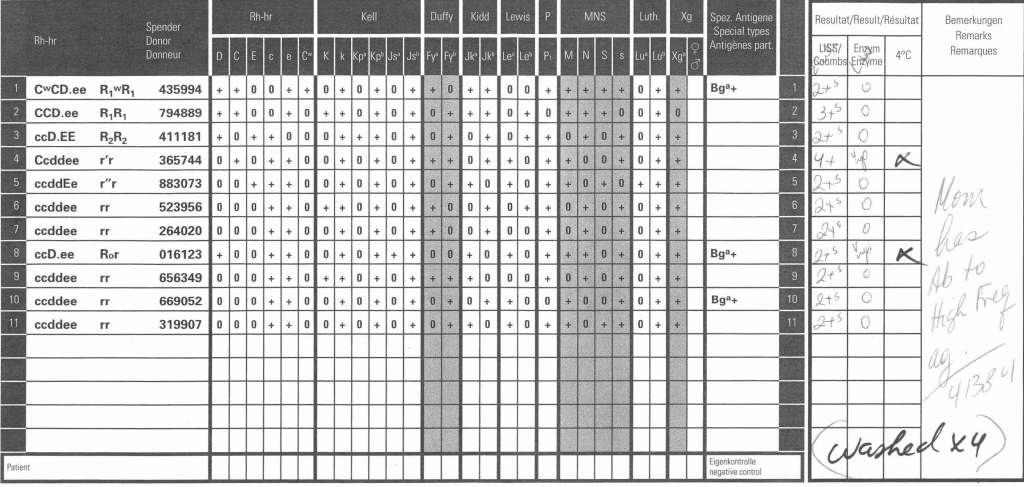
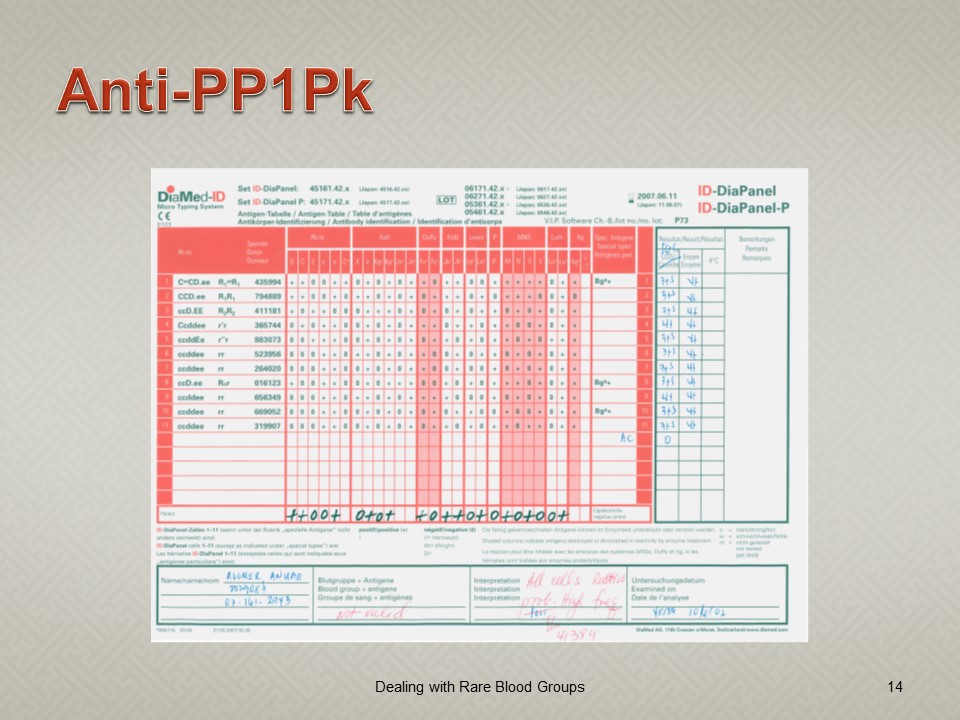
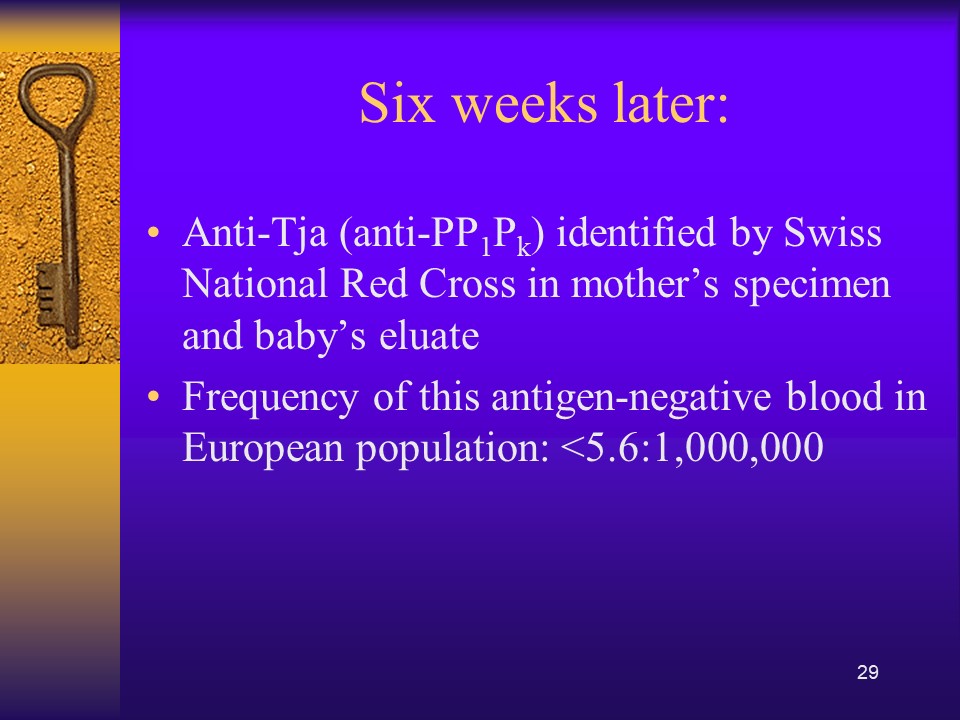
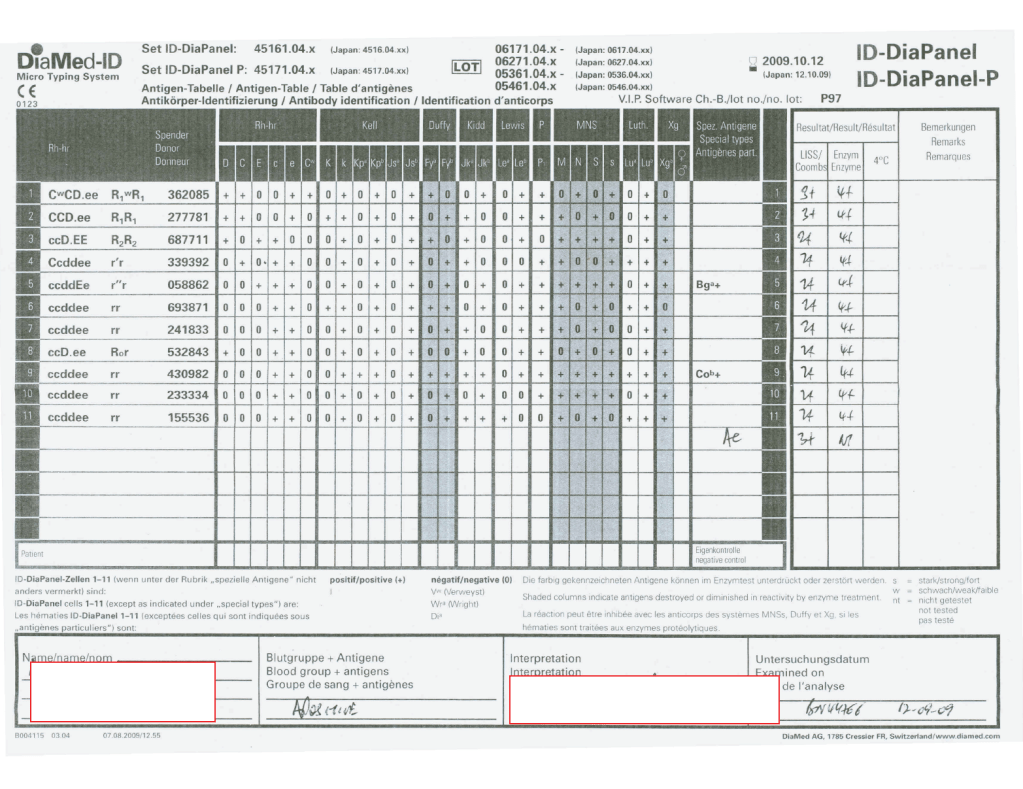
Here is an example of anti-PP1Pk (alias anti-Tja). The mother’s panel shows an antibody to a high prevalence/incidence antigen with negative autocontrol and no lability at enzyme phase:
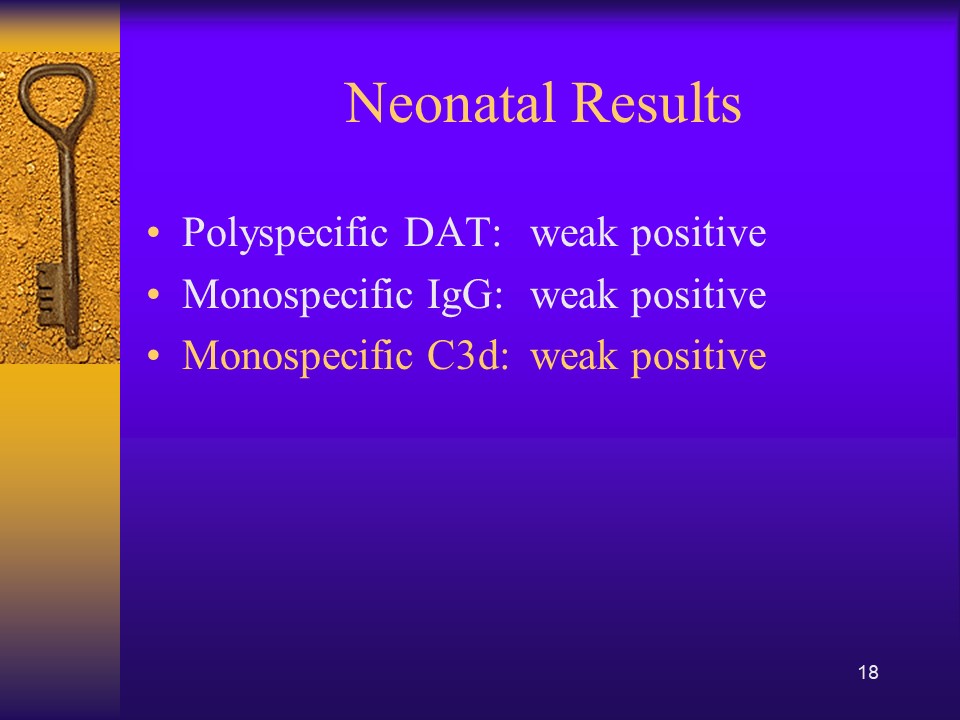
The neonate’s DAT was weak positive at polyspecific and IgG monospecific phases. An eluate was performed. Here is the result after washing four (4) times:
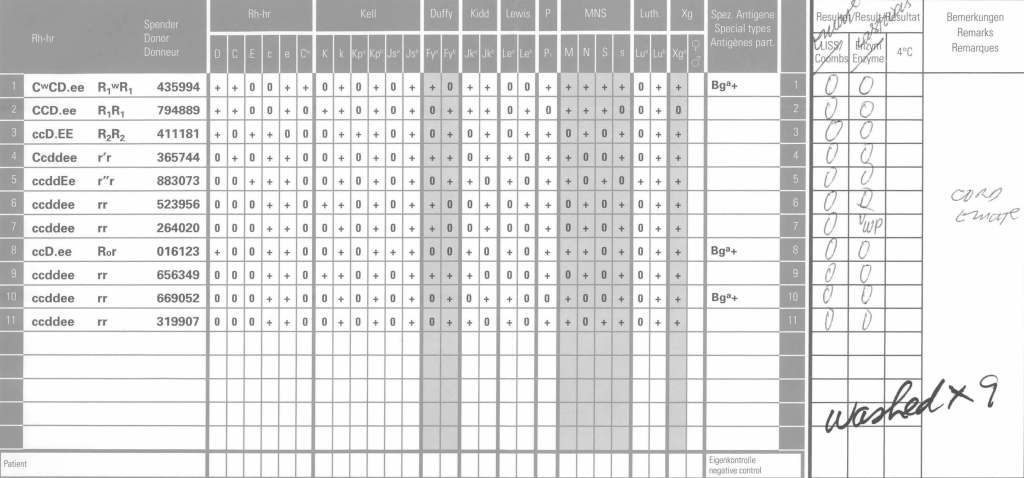
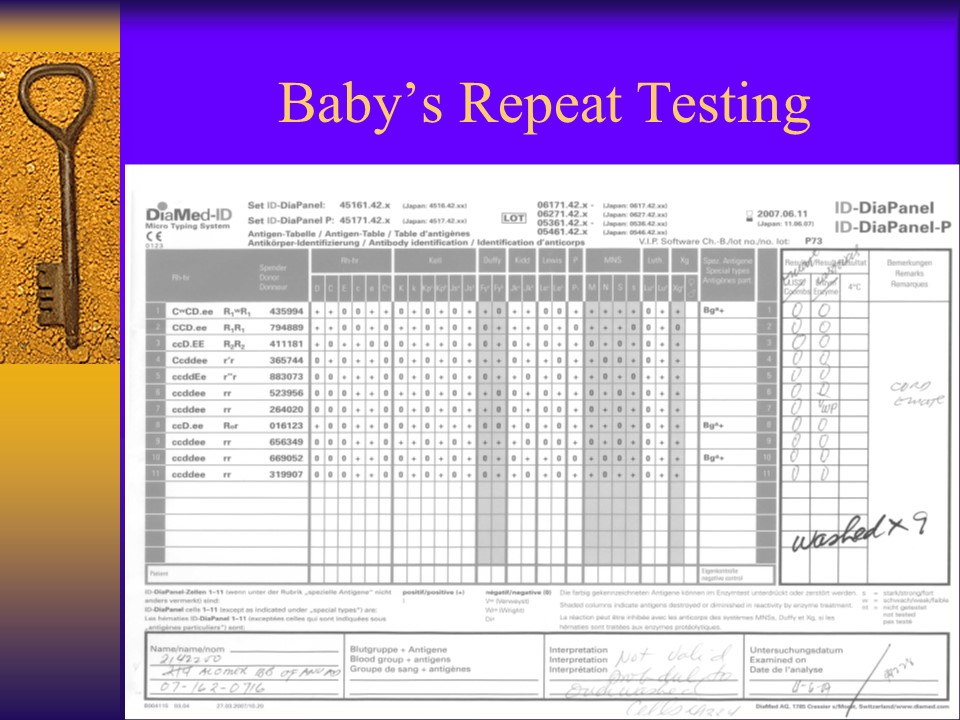
Since 2 cells in the last wash were very weakly positive, the washing was continued for a total of 9 times with the following results:
Even then there was very weak positivity in one cell, but the eluate was negative. We had washed away the attached antibodies.
A 31 year old Indian female’s prenatal testing results follow:
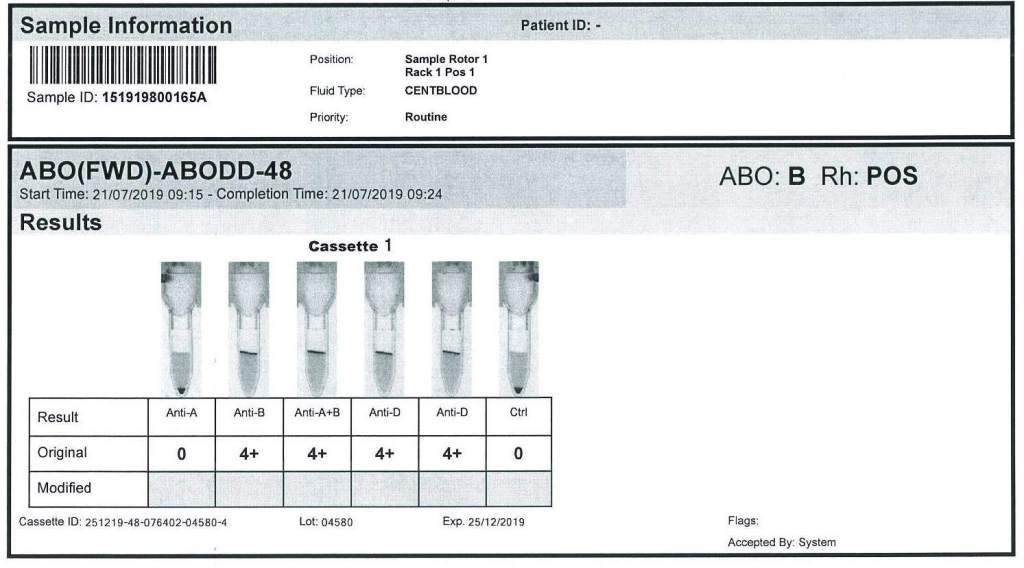
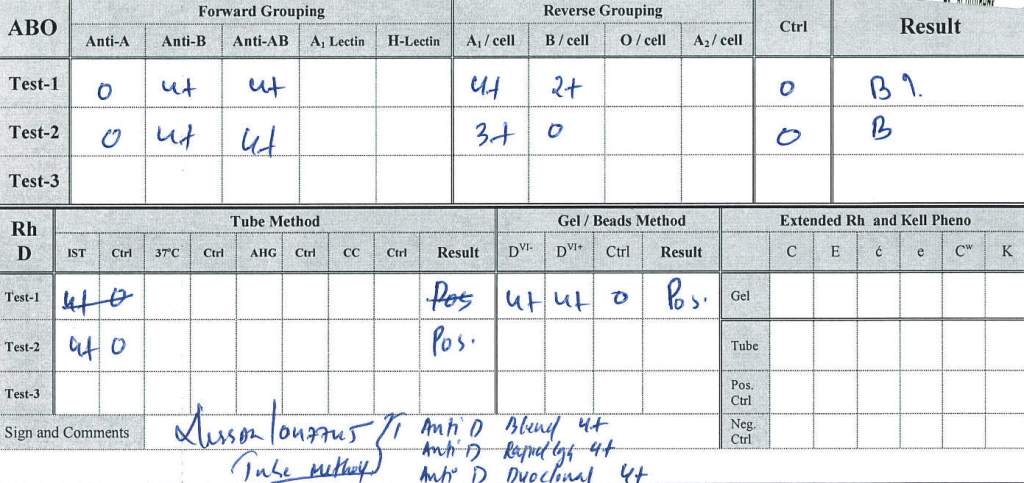
ABO Group B—unremarkable pattern
Rh(D) positive by both DVI+ and DVI- reagents by multiple manufacturers, both with gel and tube methods
Extended Rh and Kell:
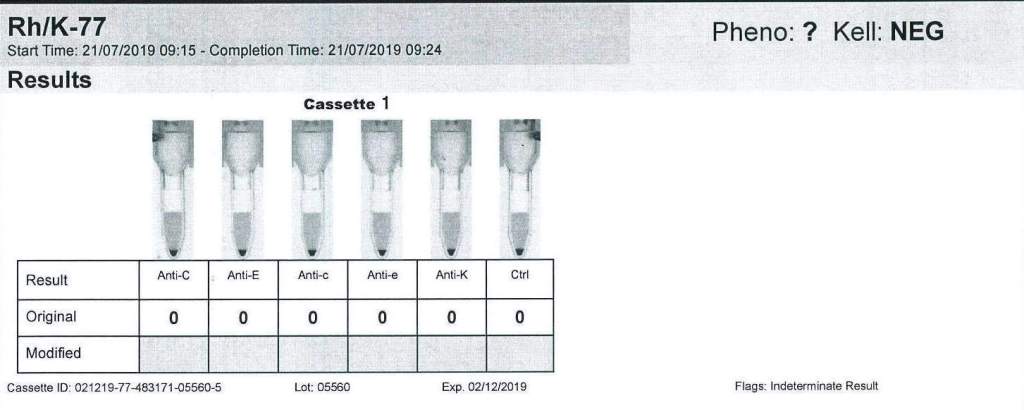
No reactions for C, c, E, e; Kell negative
(These results were confirmed by multiple manufacturer’s tube and gel reagents)
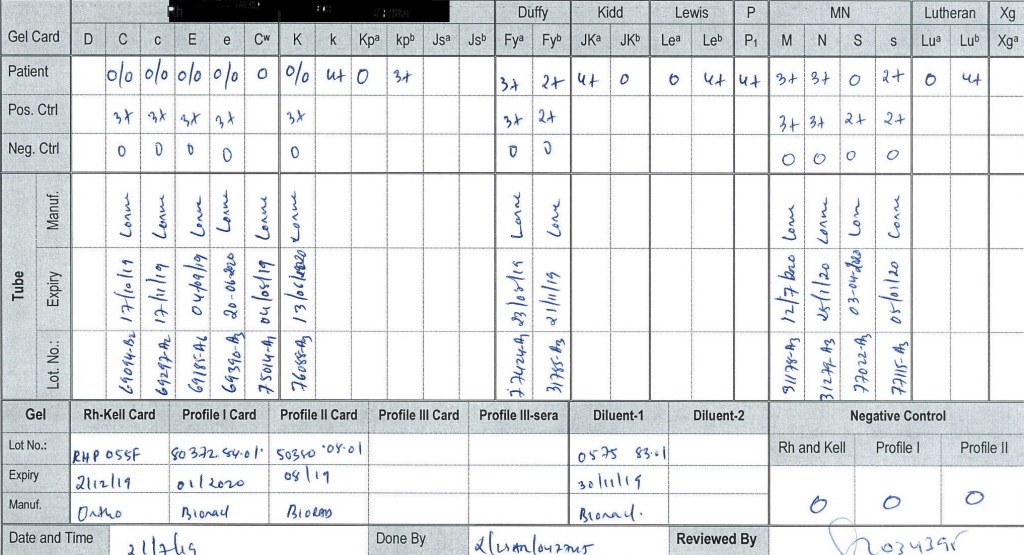
Extended Antigen Typings:
From the phenotypic data, we could already rule out anti-H, k, PP1Pk, U, and some unusual MN system variants found in the region.
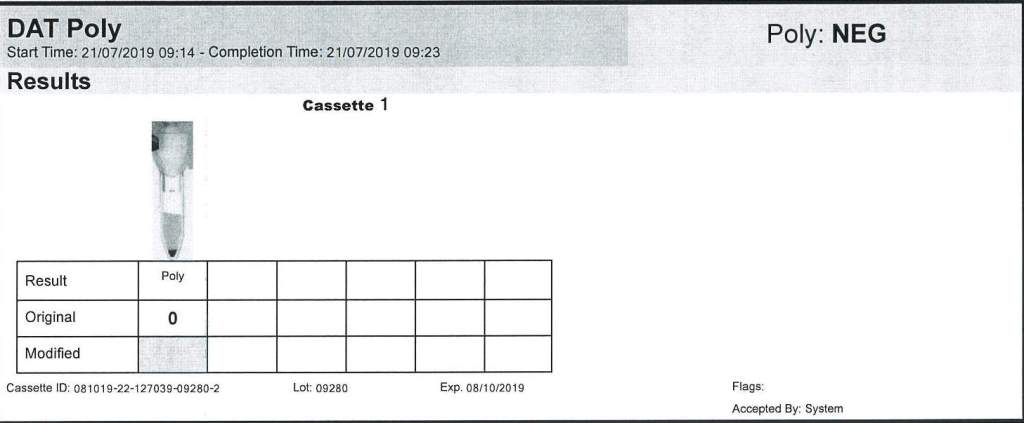
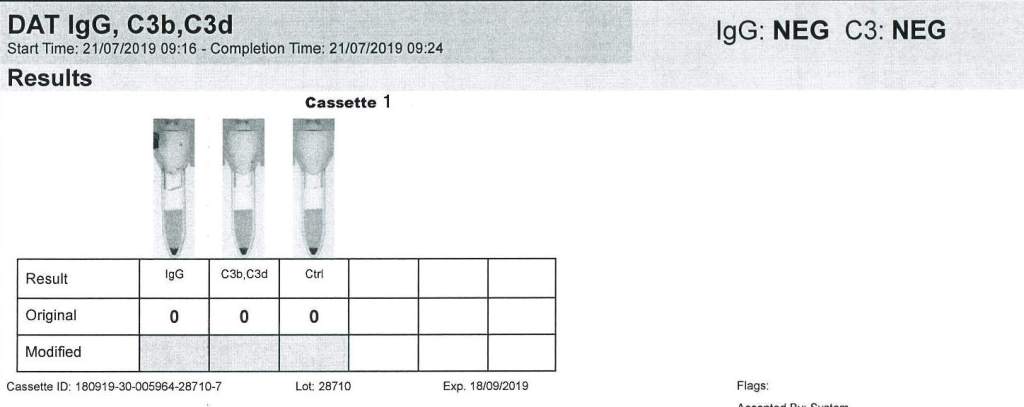
DAT: Polyspecific and monospecific IgG, C3b/C3d were all negative.
Antibody Screen: 4+ panreactive
Antibody Panel: 4+ panreactive, autocontrol negative, also 4+ by enzyme
Clinical Course:
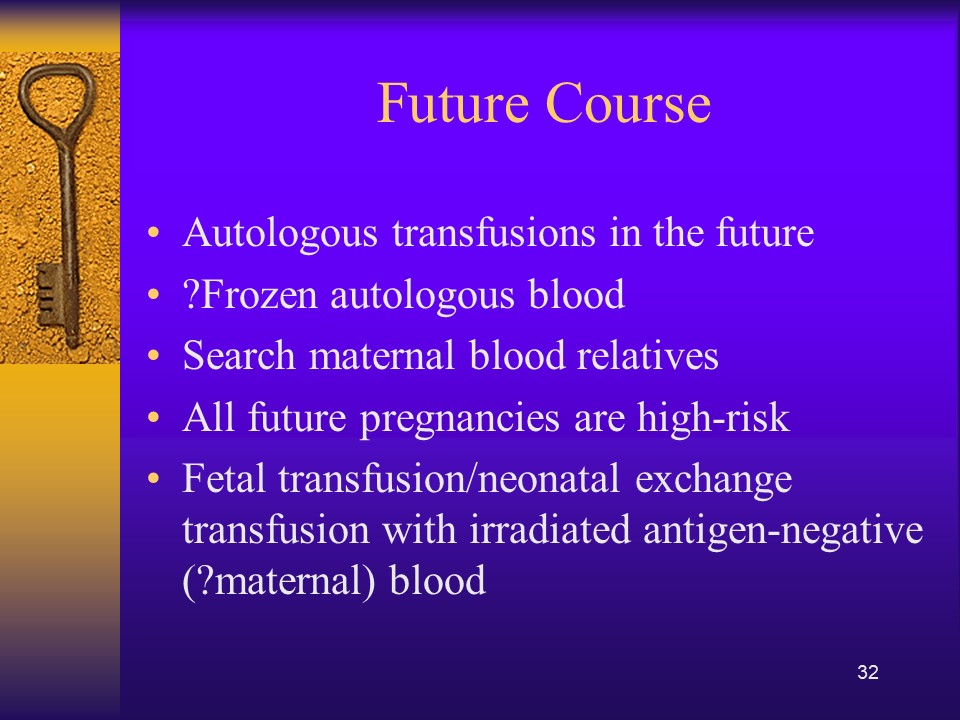
At the time of the prenatal specimen, we informed the clinicians that we did not know the significance of the panreactive antibody. We recommended screening any blood relatives and autologous blood collection. We also recommended genotyping of the mother.
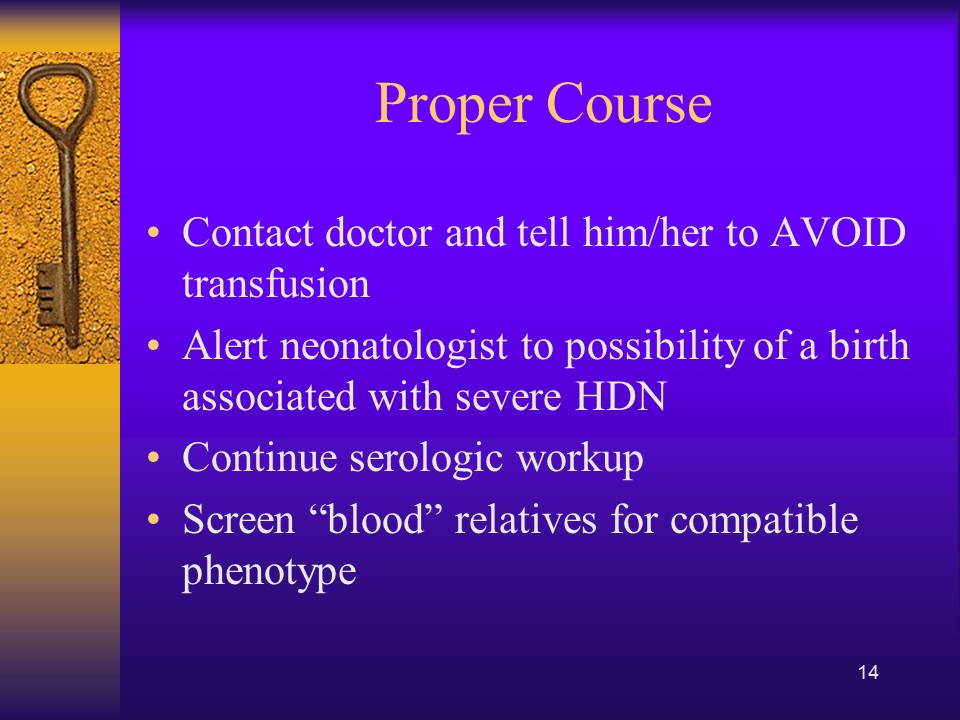
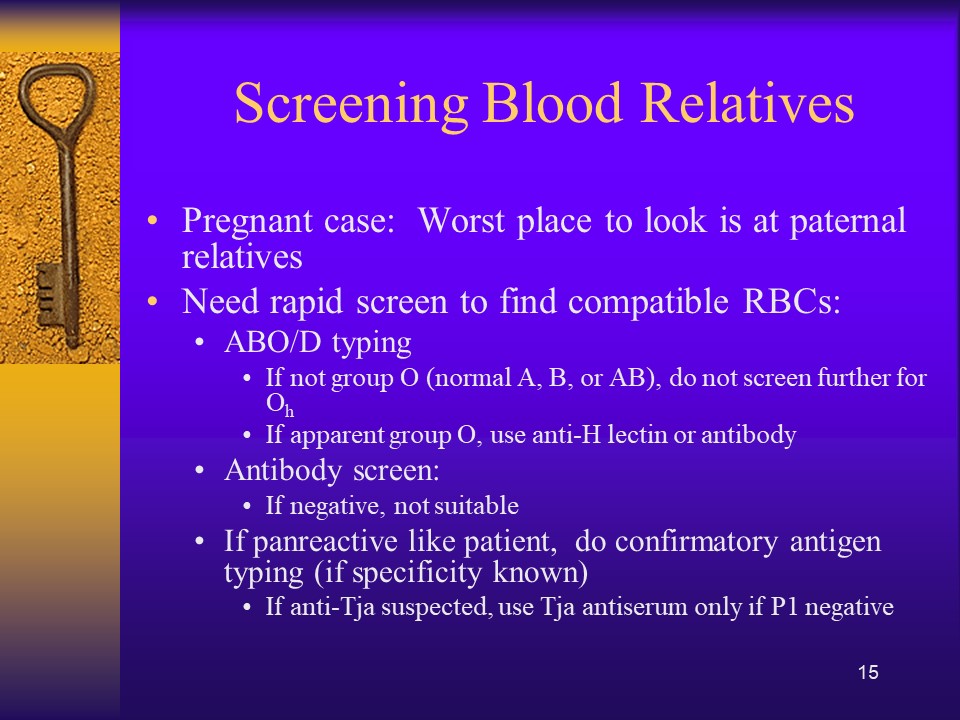
Several months later the patient presented in labor with severe fetal hydrops. The previous workup was repeated and confirmed. Neither genotyping or autologous collection had been done. No relatives had the same phenotype, and none were compatible with the mother.
We now knew that the antibody was highly clinically significant and very dangerous. With the permission of the treating obstetrician, the mother’s blood was used for transfusion of the newborn (washed, irradiated). Both mother and baby were group B positive.
To date of my departure from HMC Doha, the antibody had not been characterized, but we continued to recommend genotyping and autologous collection from the mother.
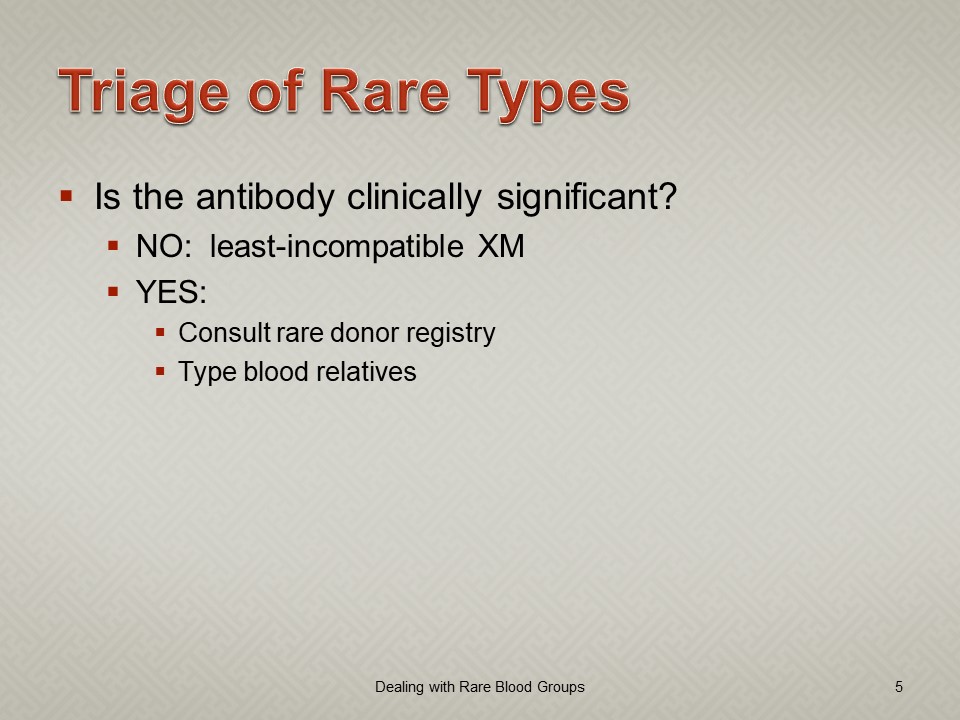
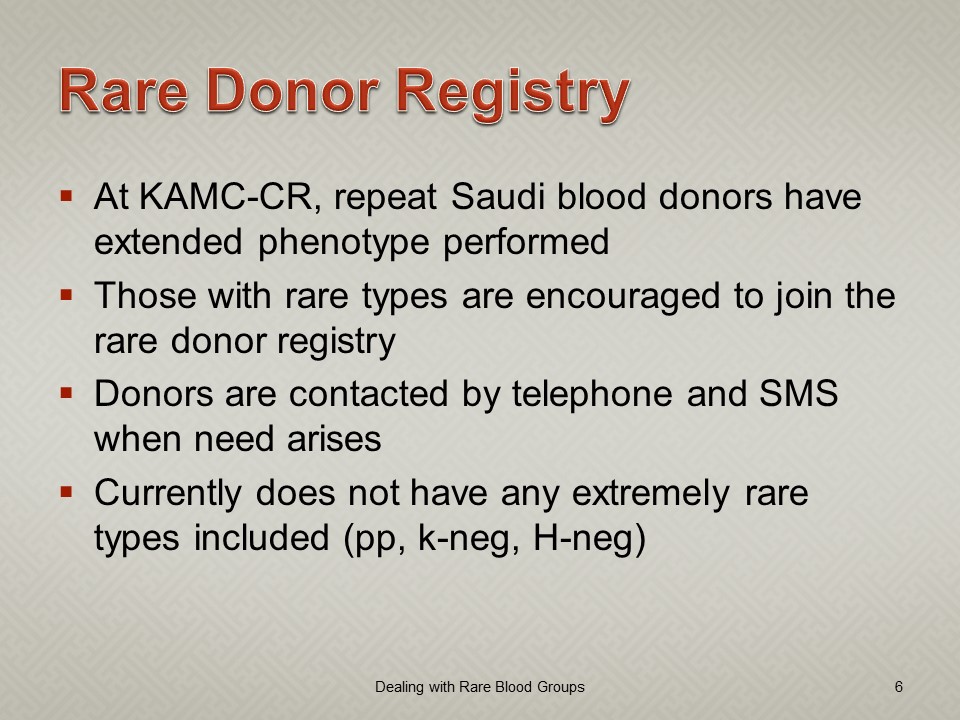
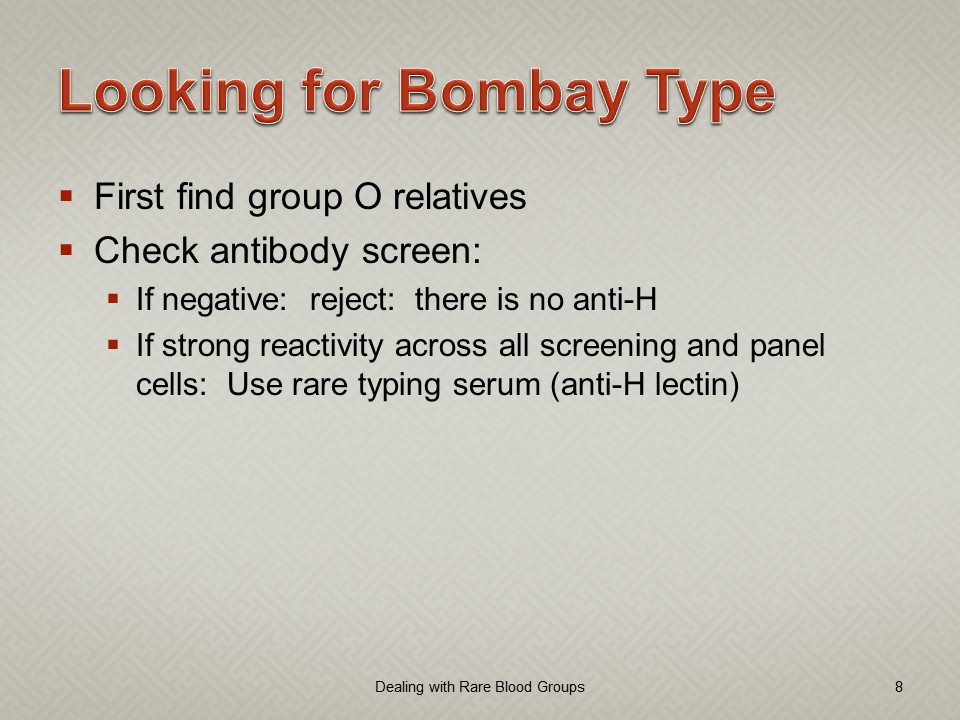
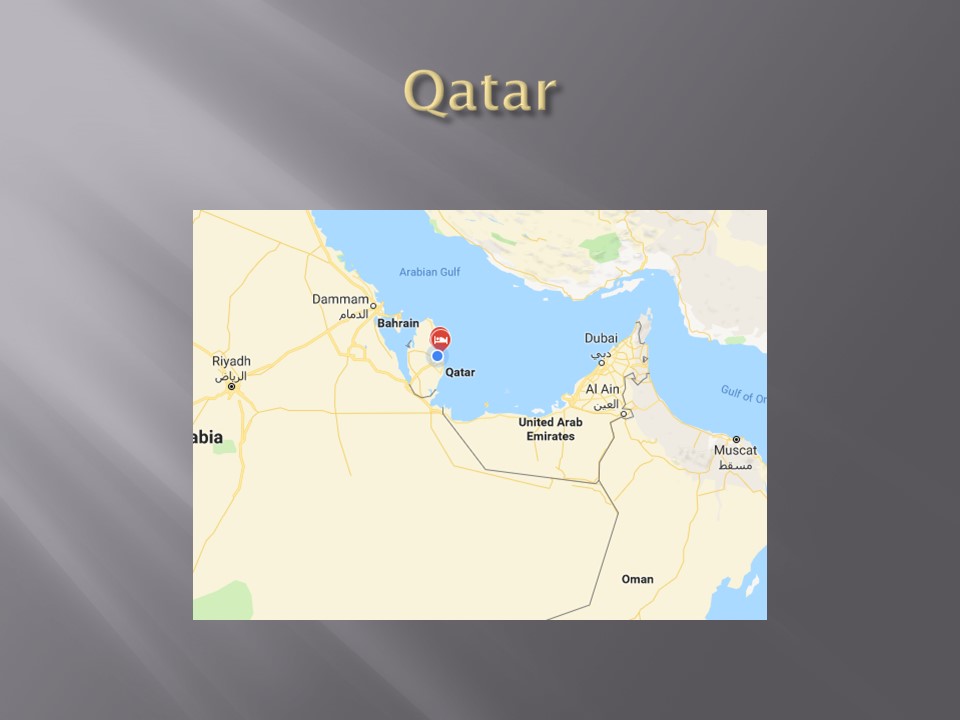
This is a presentation from my time at NGHA Riyadh on a strategy for rare RBC types in the Gulf/Middle East region. This is my practical method for dealing with these antibodies.
As regards prophylactic antigen matching, my remarks are based on the antibodies observed in my region. I know that some would match at least Duffy antigens, but emergence of anti-Fya and anti-Fyb have not been common in my practice.
This presentation is from my time at National Guard Health Affairs Riyadh and suggests an algorithm to assess the clinical significance of the reaction. In my opinion, the essence of immunohematology testing is the antiglobulin test so I would spend much time with technical and medical staff, including trainees/fellows (even those not based in transfusion medicine) to make certain they understood how to interpret it.
This is a presentation I gave while working as Head of Transfusion Medicine for Saudi Arabian National Guard Affairs, King Abdulaziz Medical City at Riyadh. I used this strategy there and later at HMC Doha.
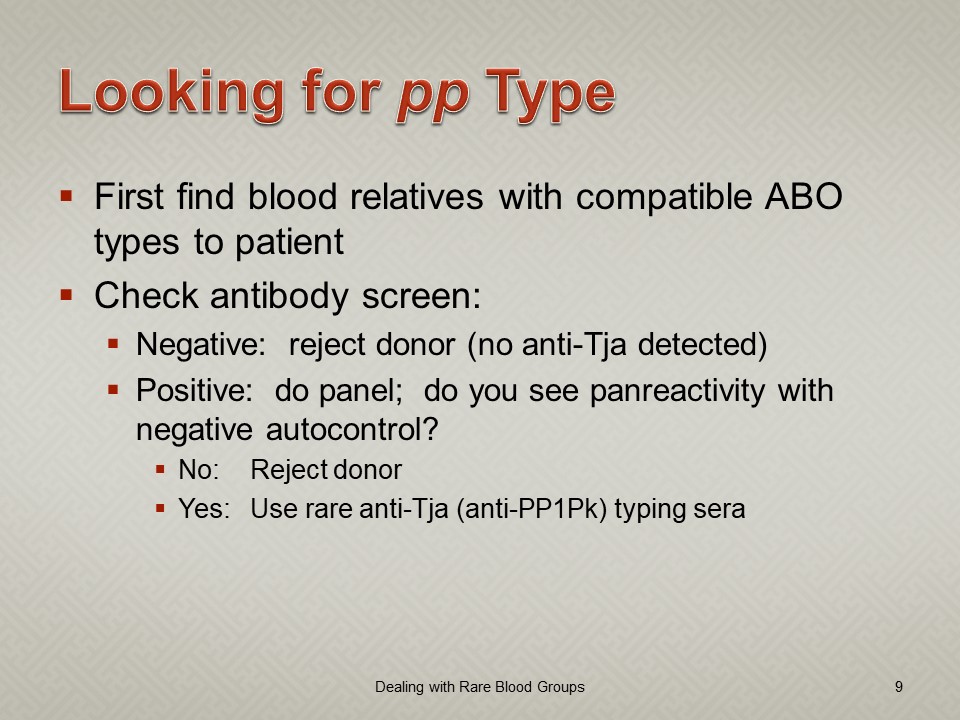
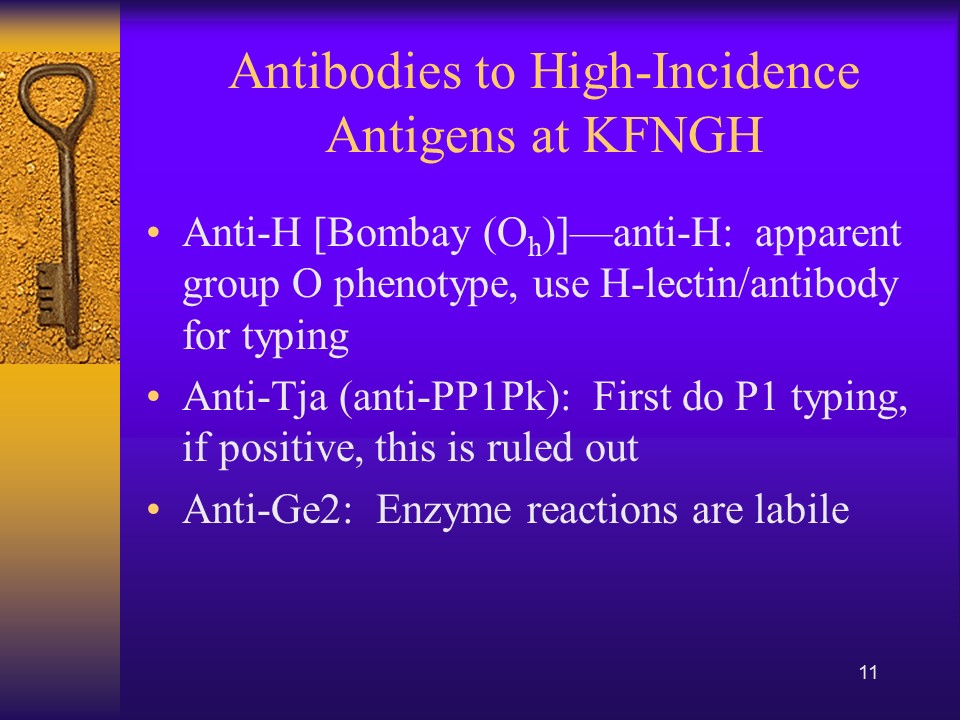
Fortunately we had access to rare antisera such as anti-Tja (anti-PP1Pk) which we could purchase from Diamed AG and its successor Biorad. I emphasize that we only sparingly used these rare antisera AFTER ruling out more common high-incidence antibodies.
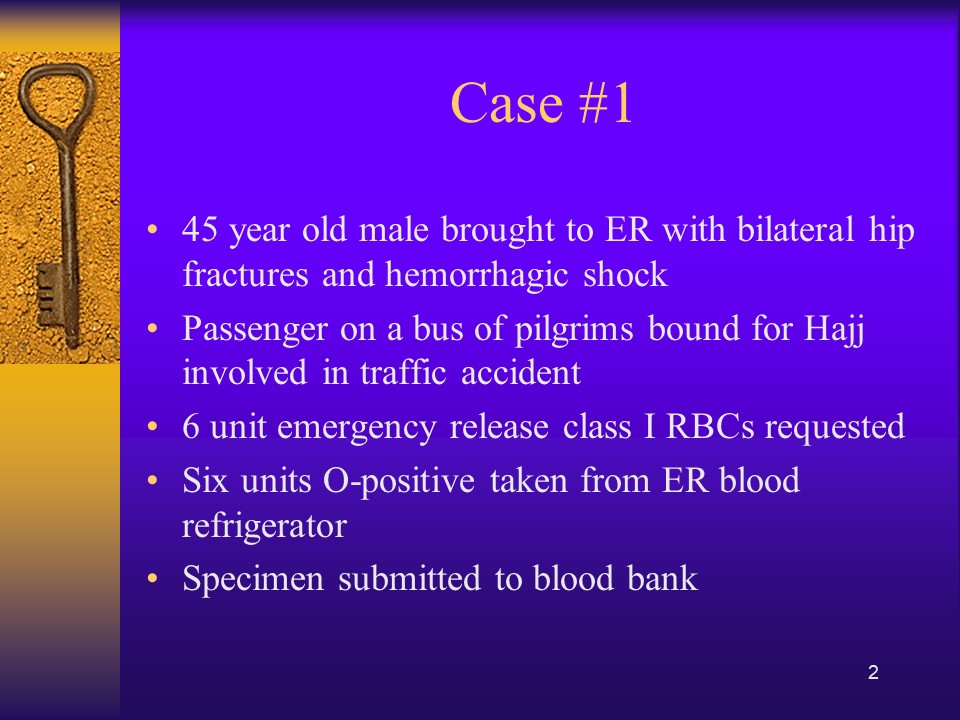
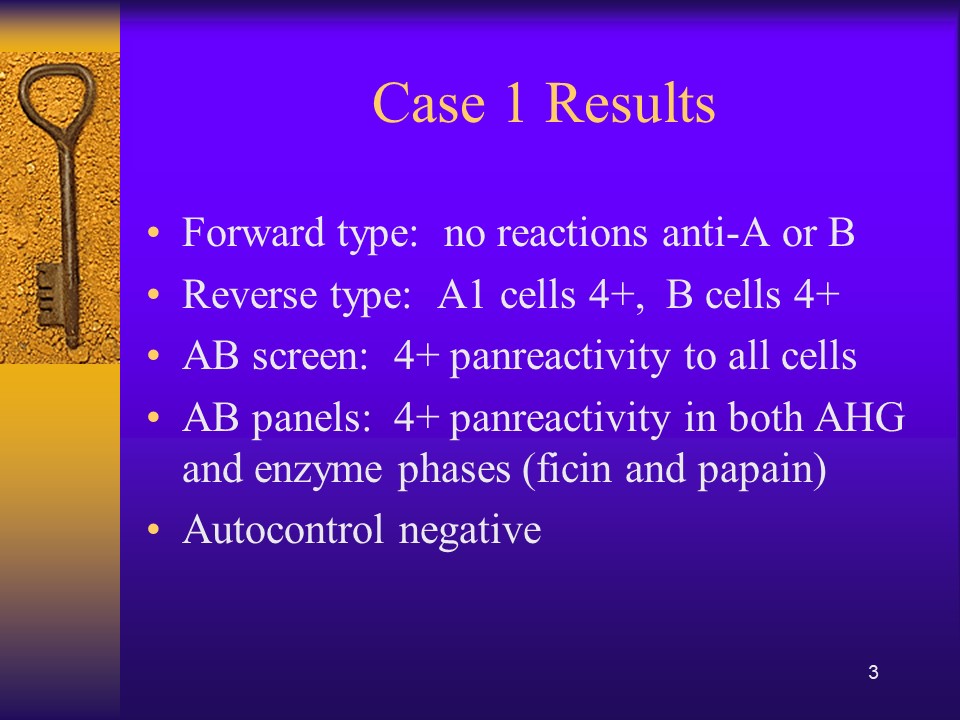
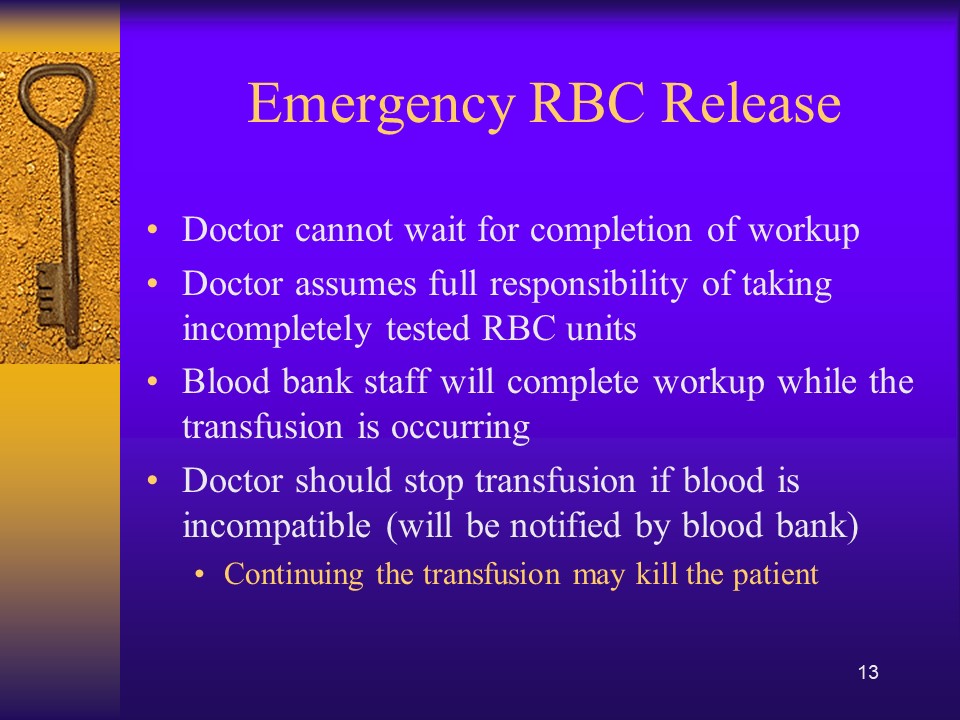
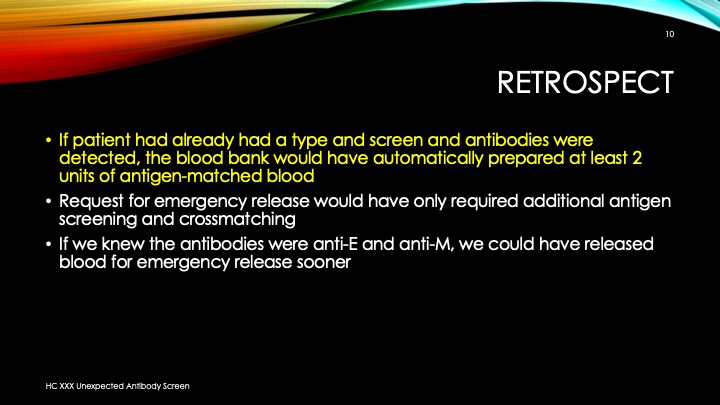
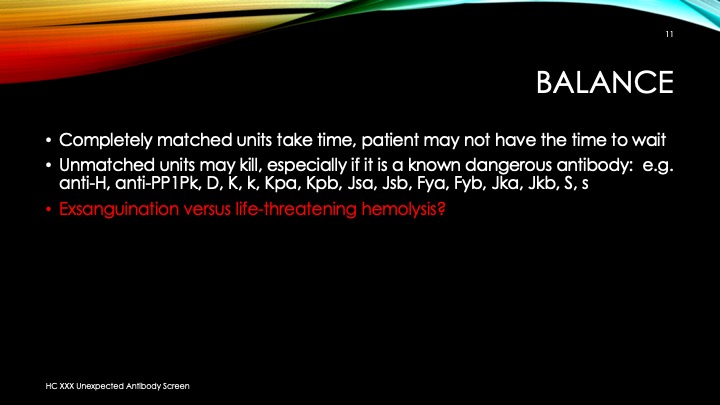
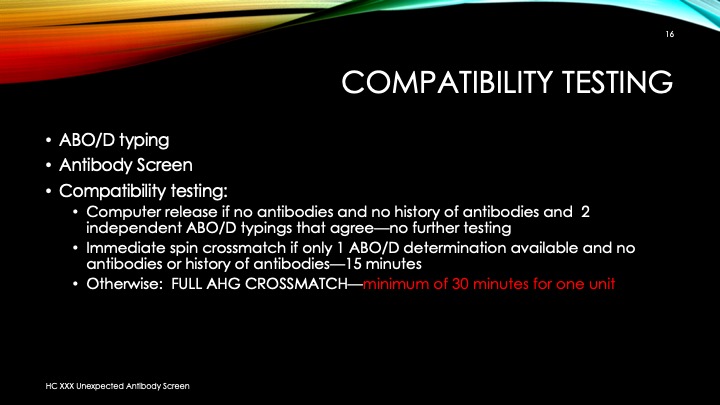
It is the middle of the night, you only have one blood bank technologist on duty, an urgent request for 6 units of packed PRBCs from a bleeding patient is received. You have units, you have the specimen, but also the unfortunate luck that the antibody screen is positive. There is no previous transfusion history and no previous results. What do you do? They need the blood YESTERDAY!!! The Transfusion Medicine Consultant is called and tells the staff not to release any RBCs until the workup is complete.
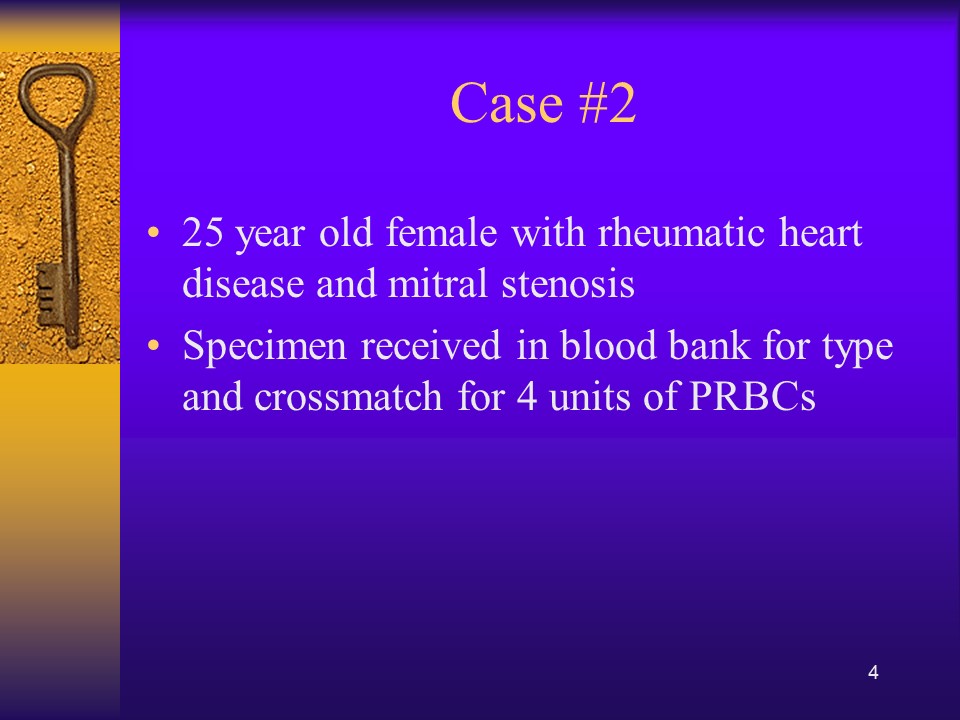
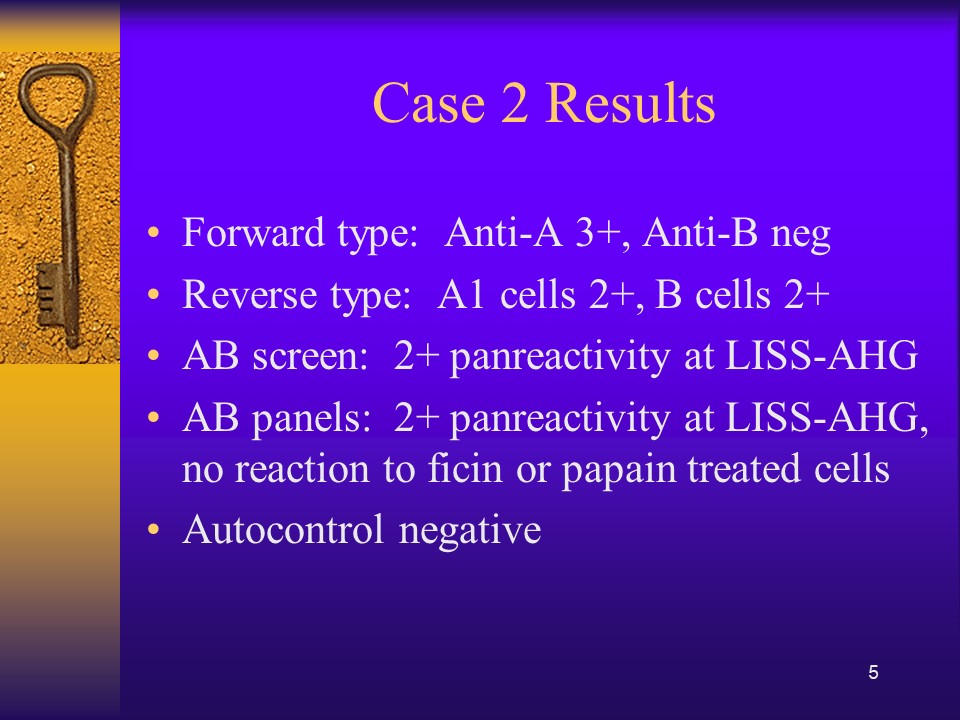
The following is taken from my Powerpoint presentation based on this incident. The intended audience is basic-level blood bank technical staff and the clinicians involved in the case:
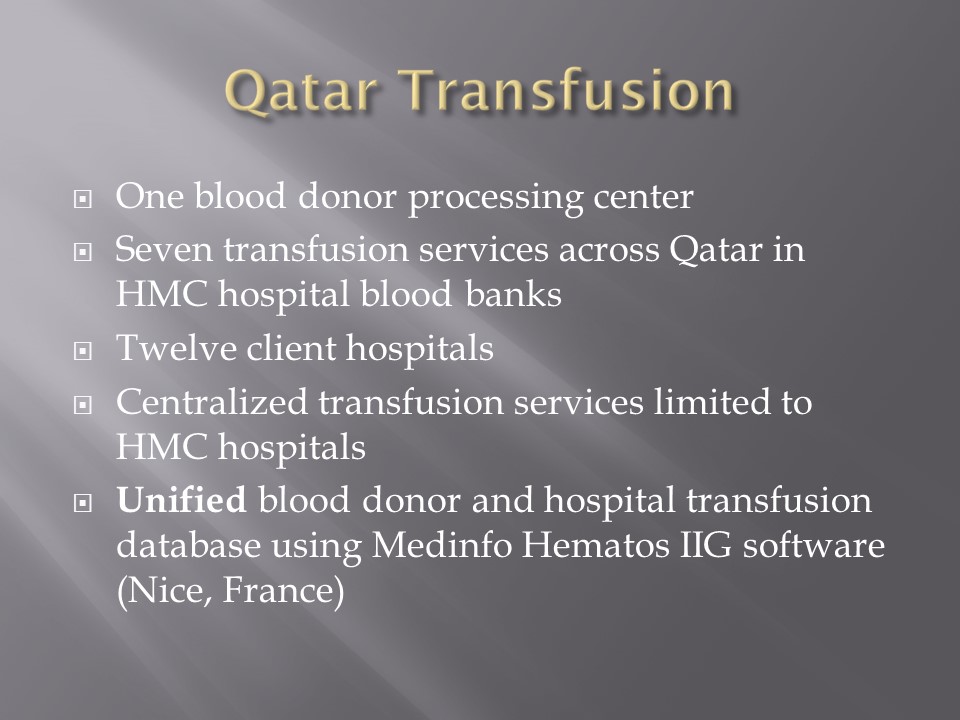
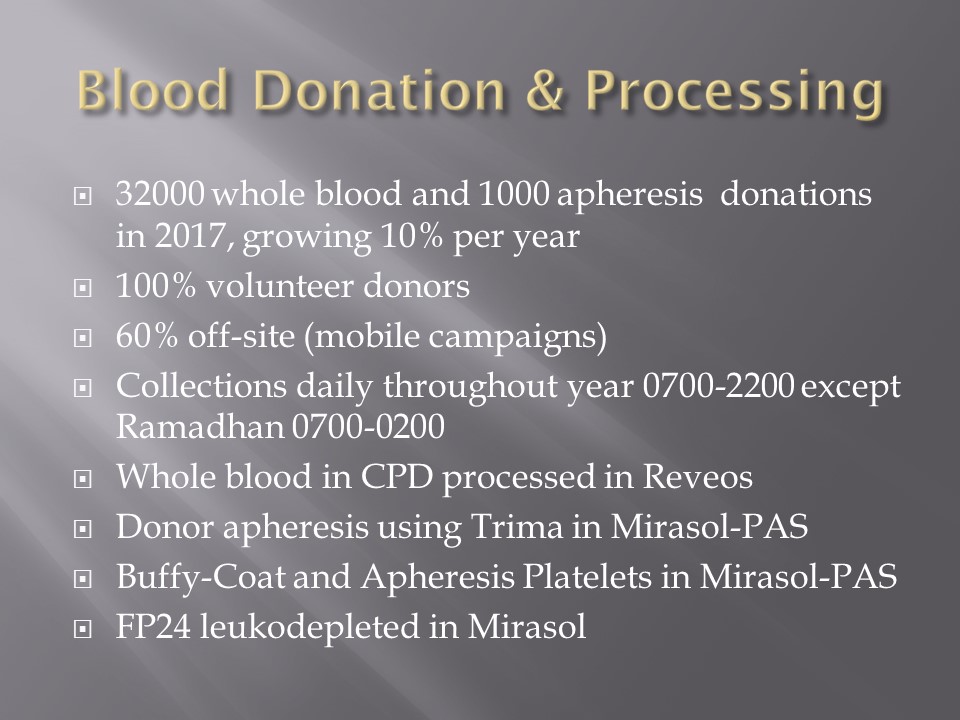
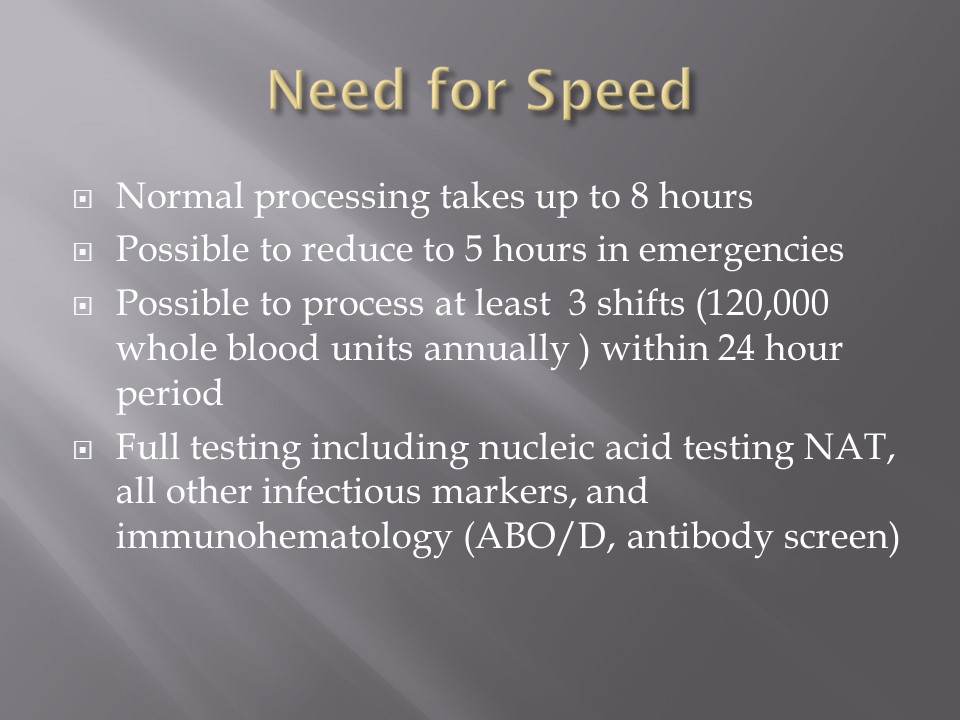
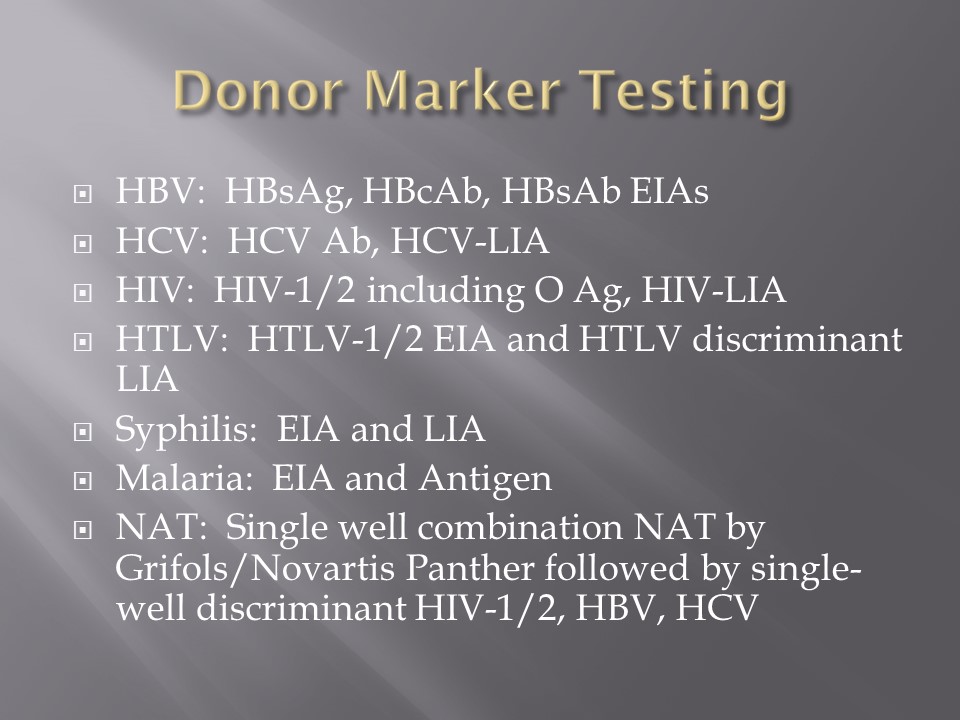
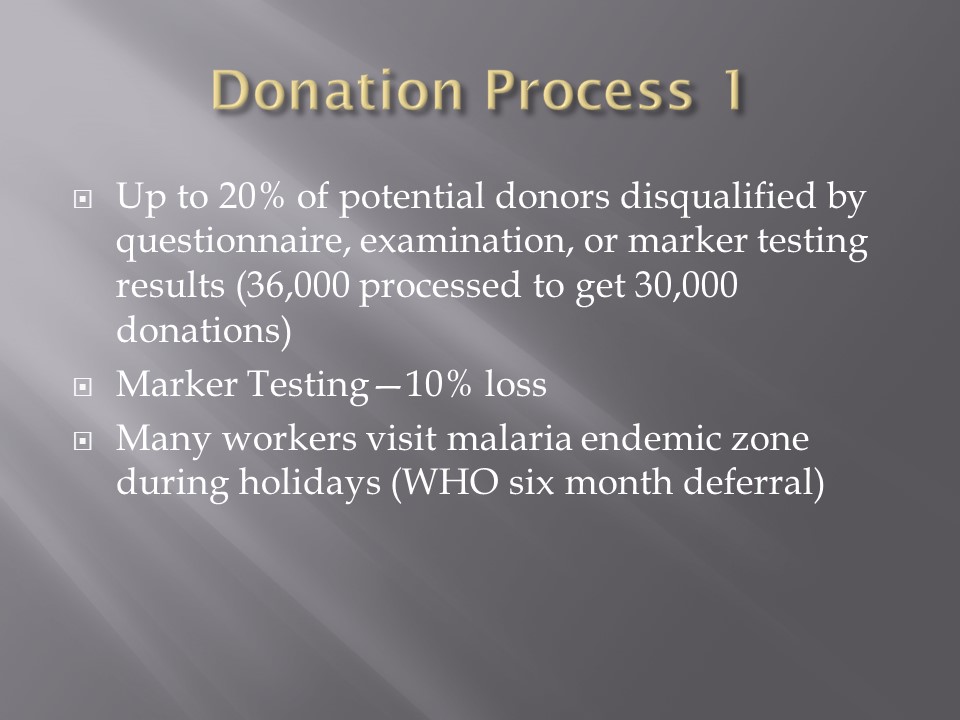
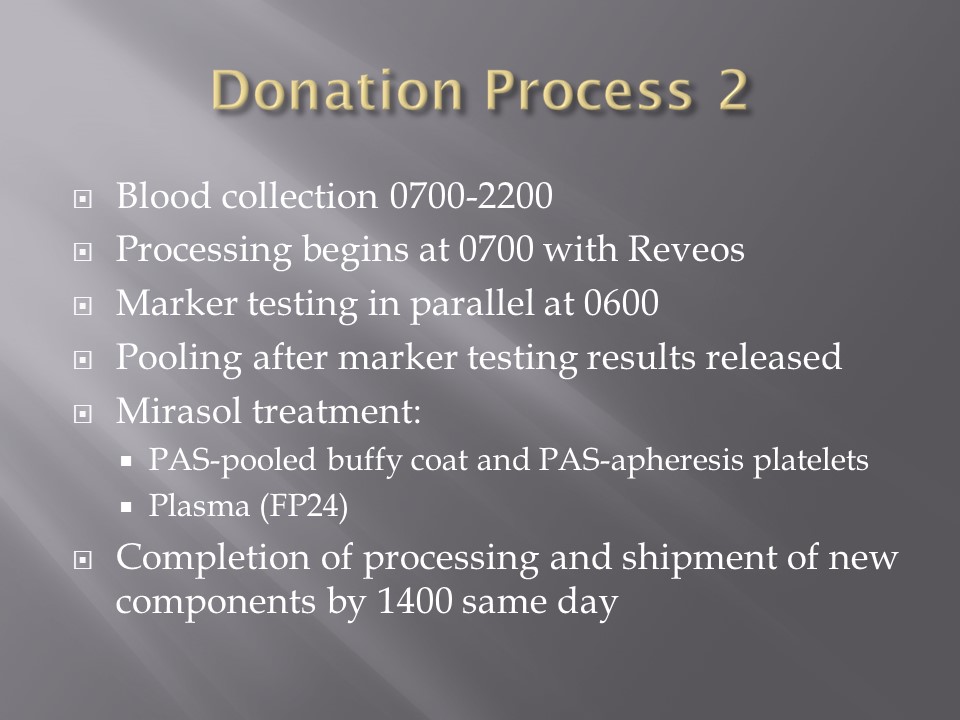
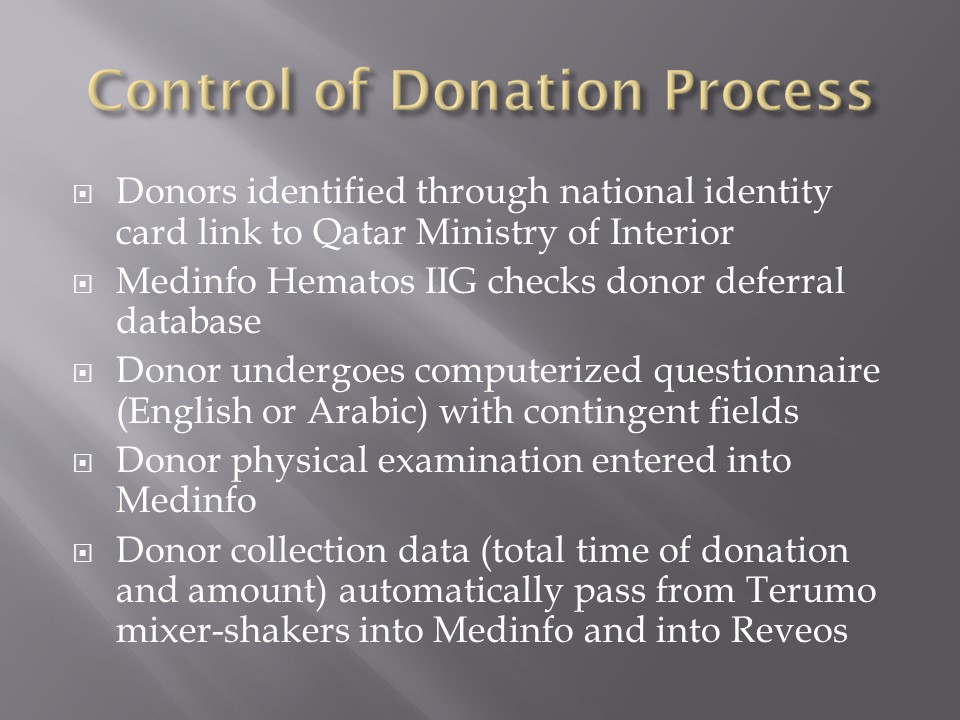
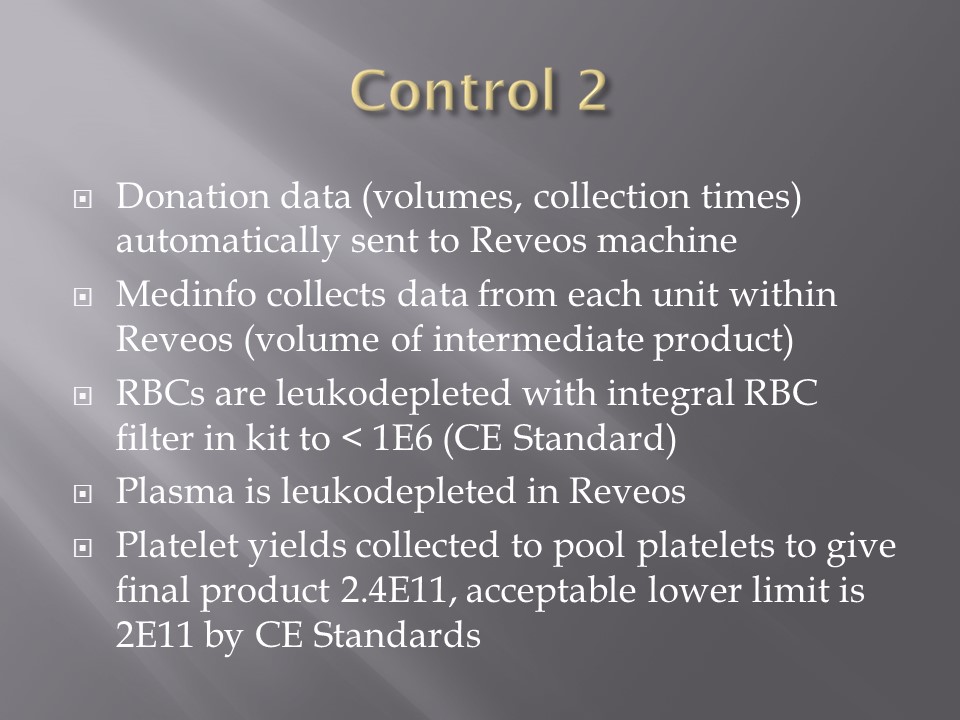
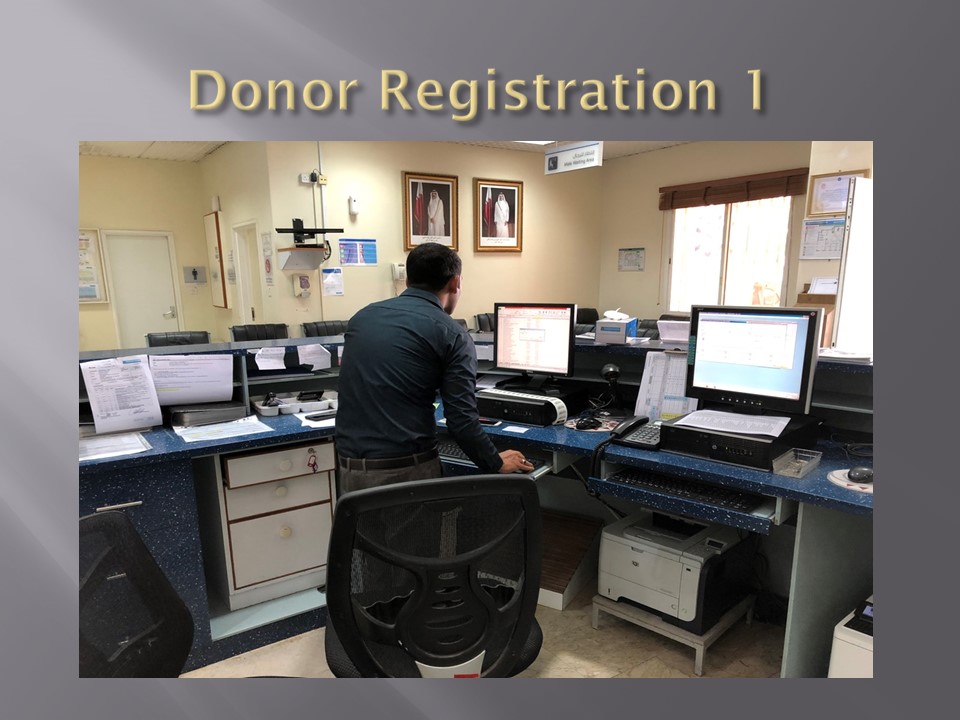
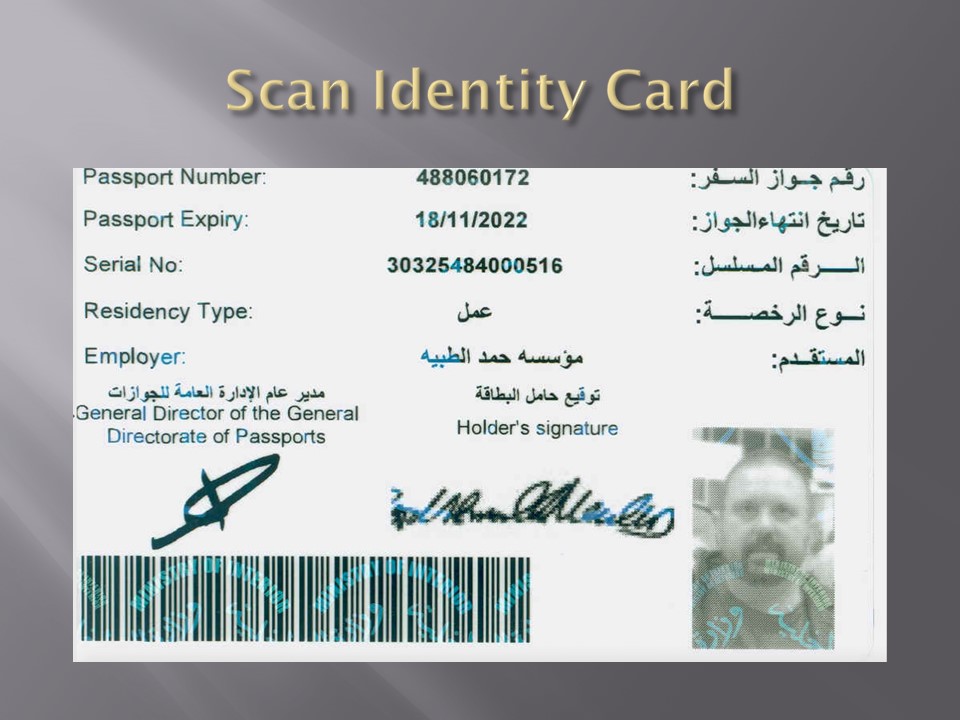
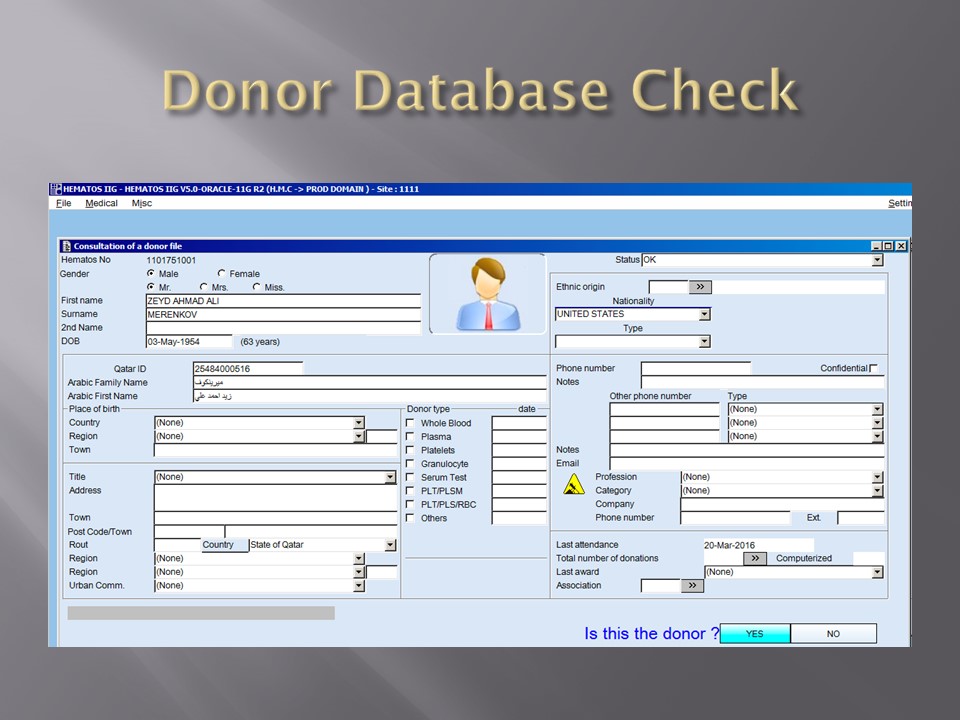
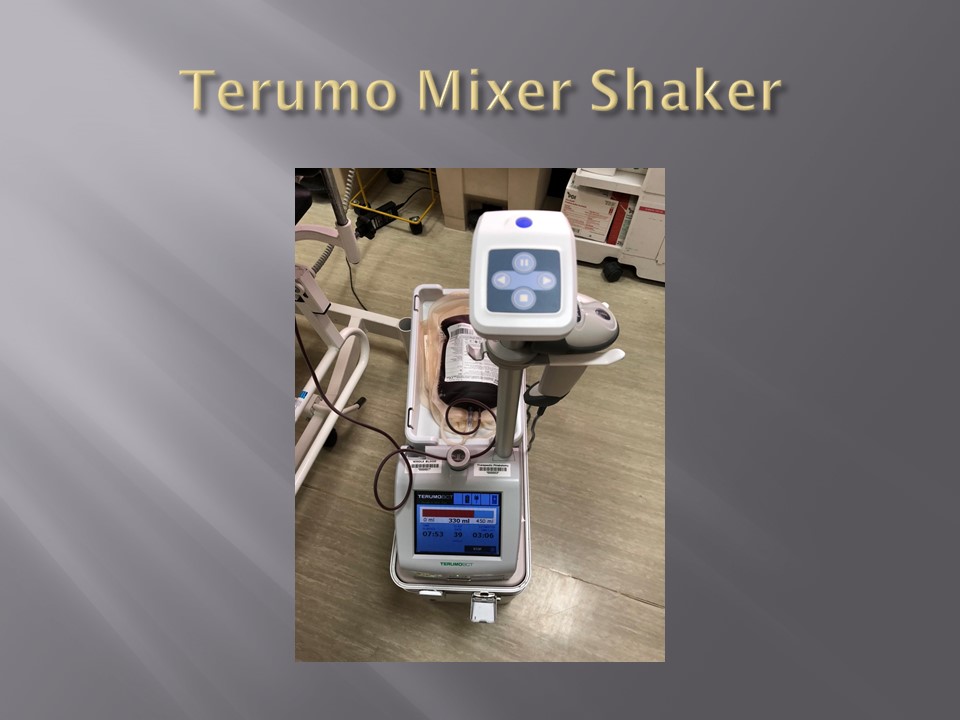
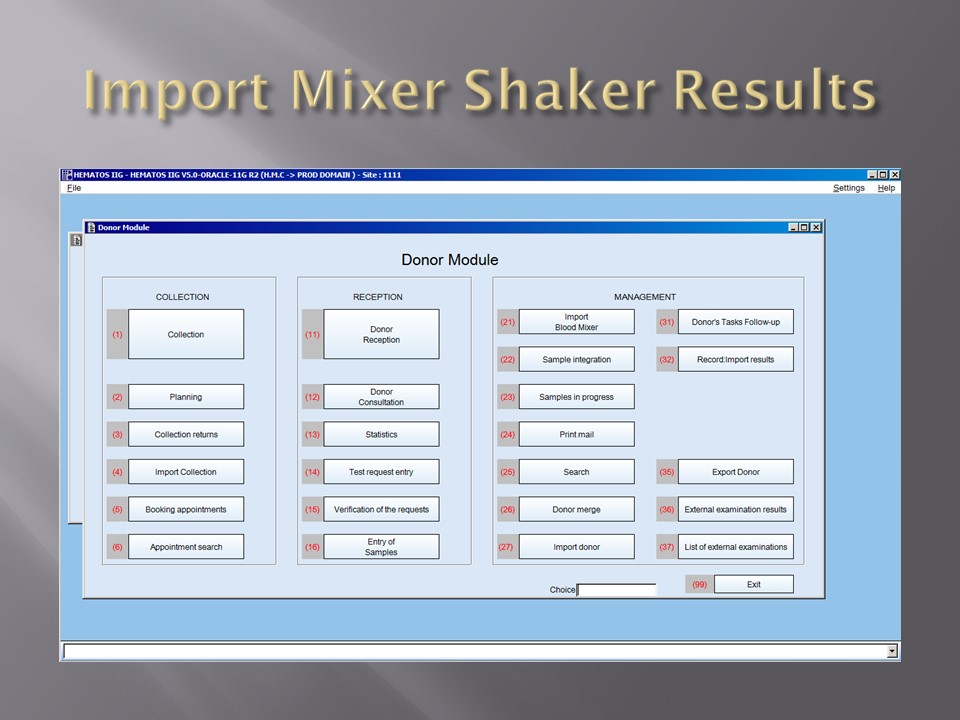
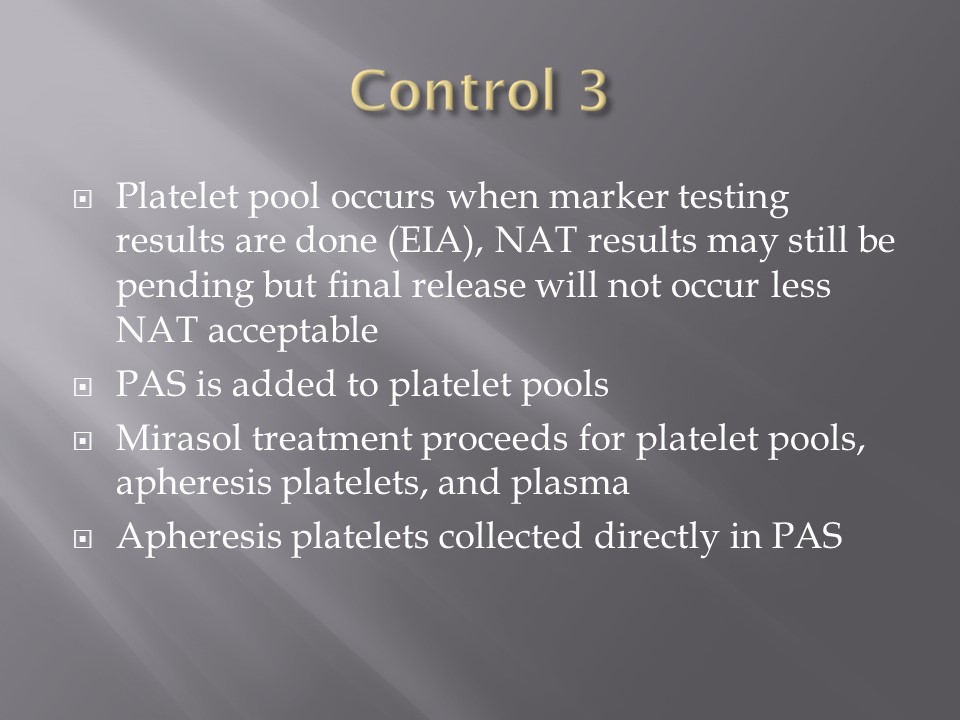
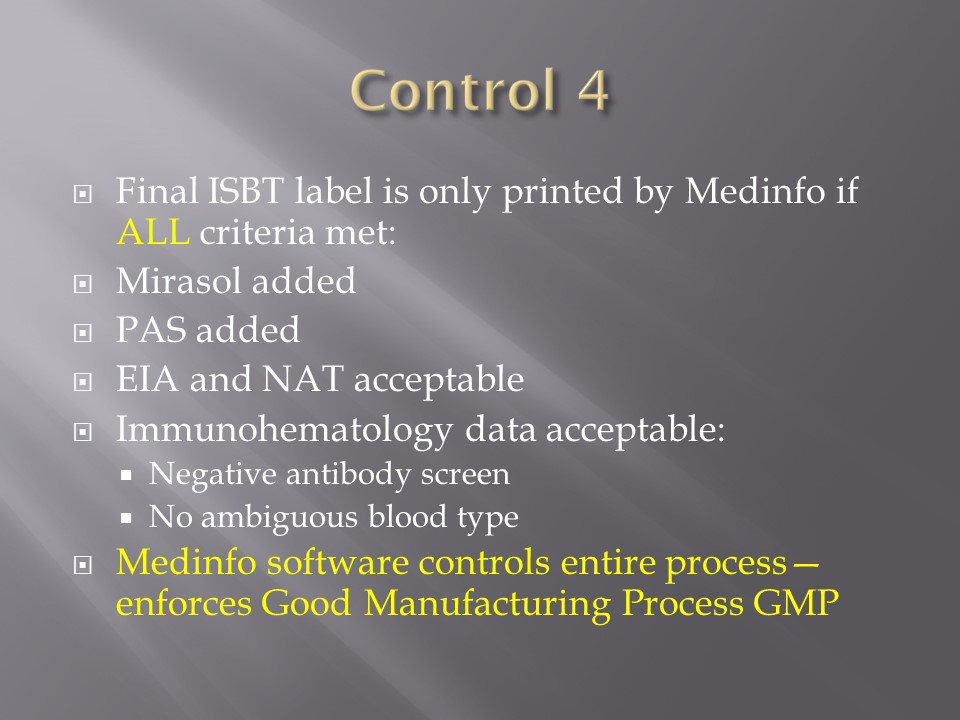
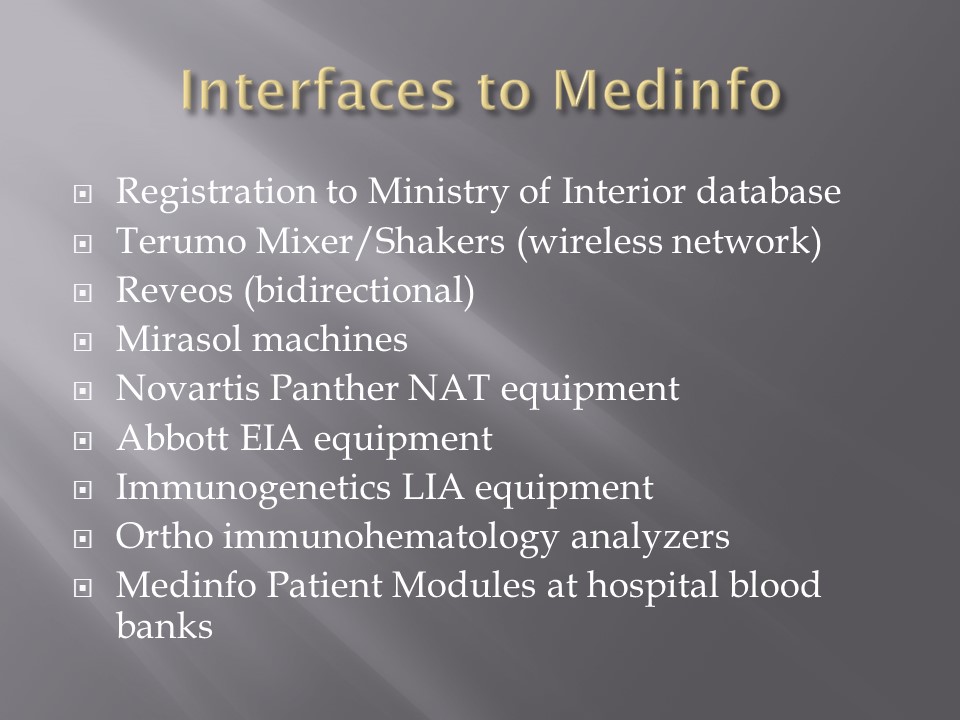
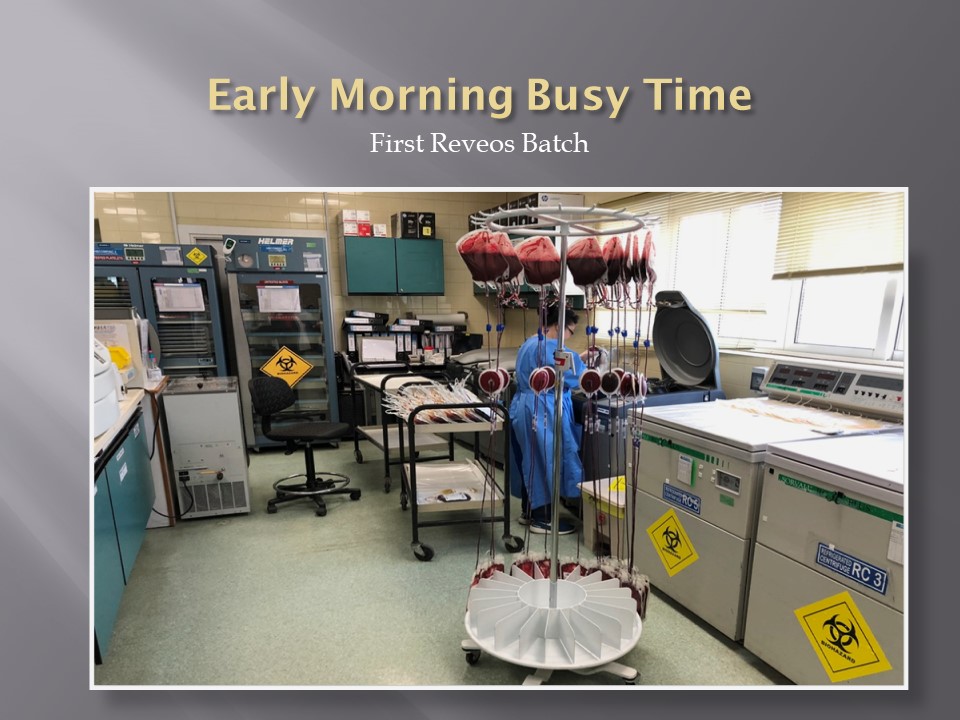
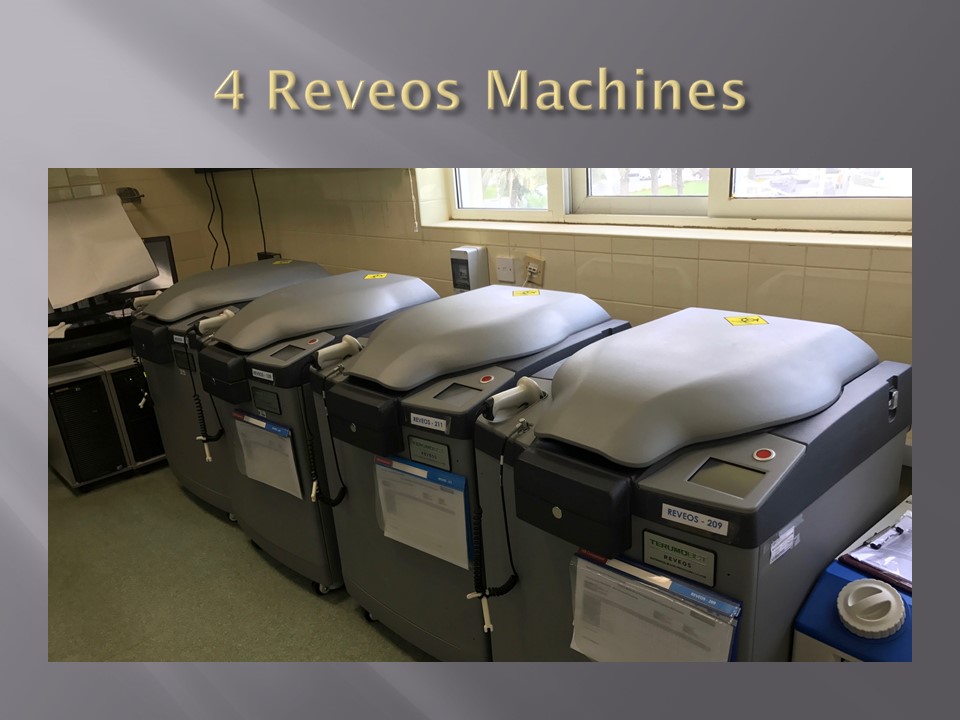
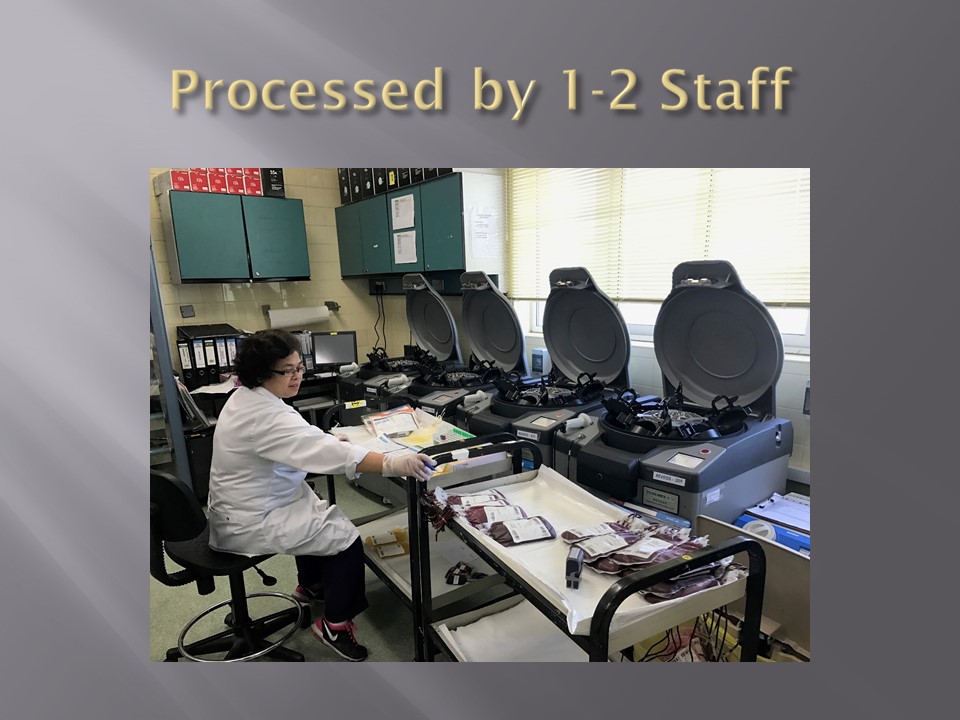
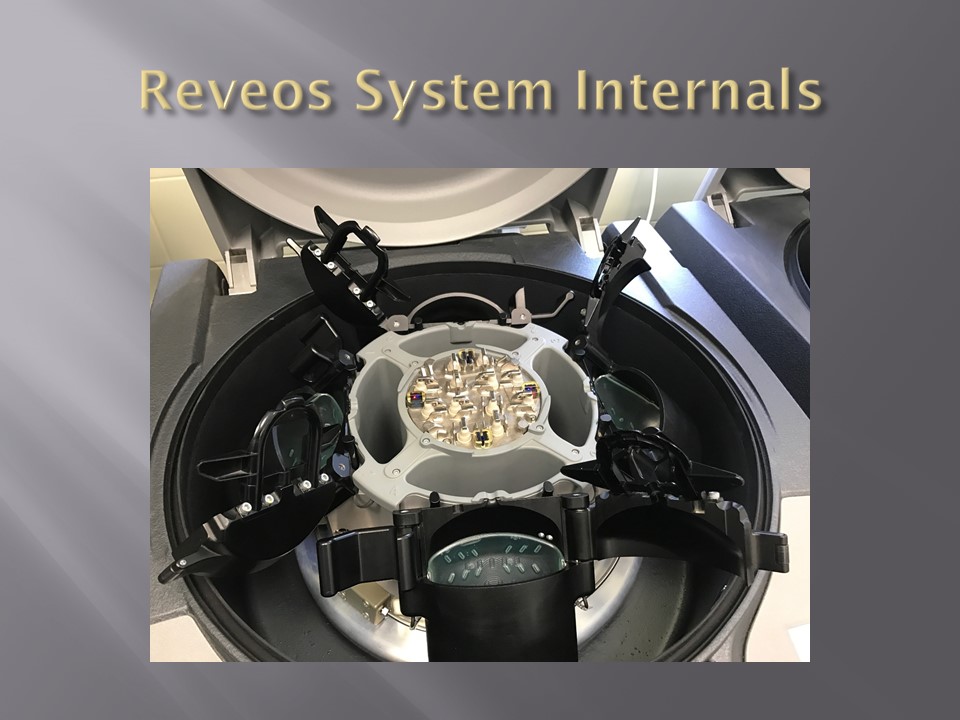
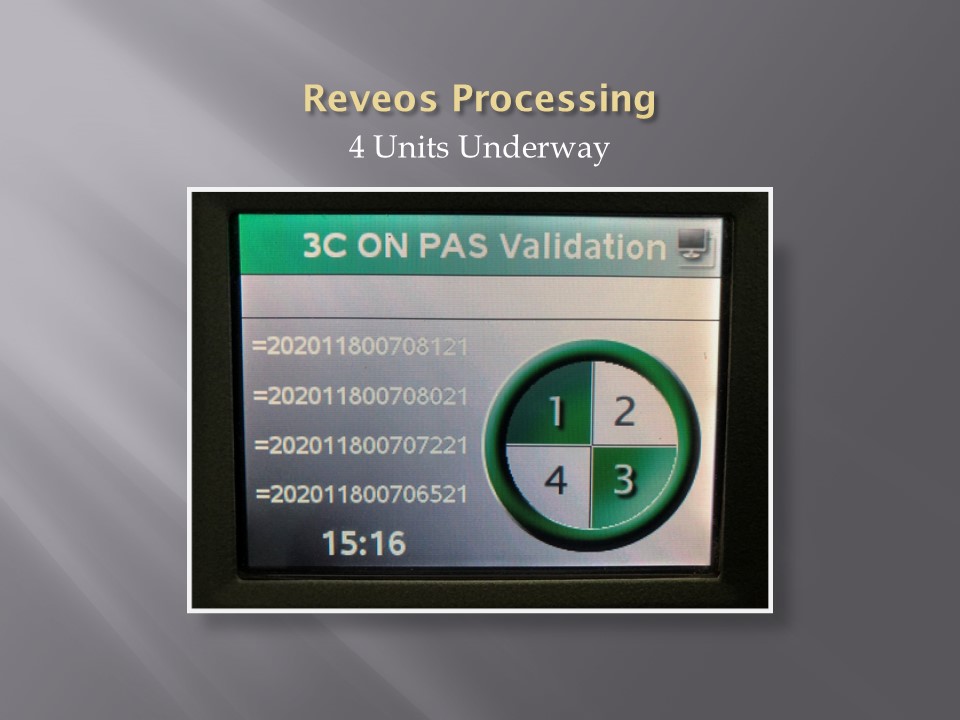
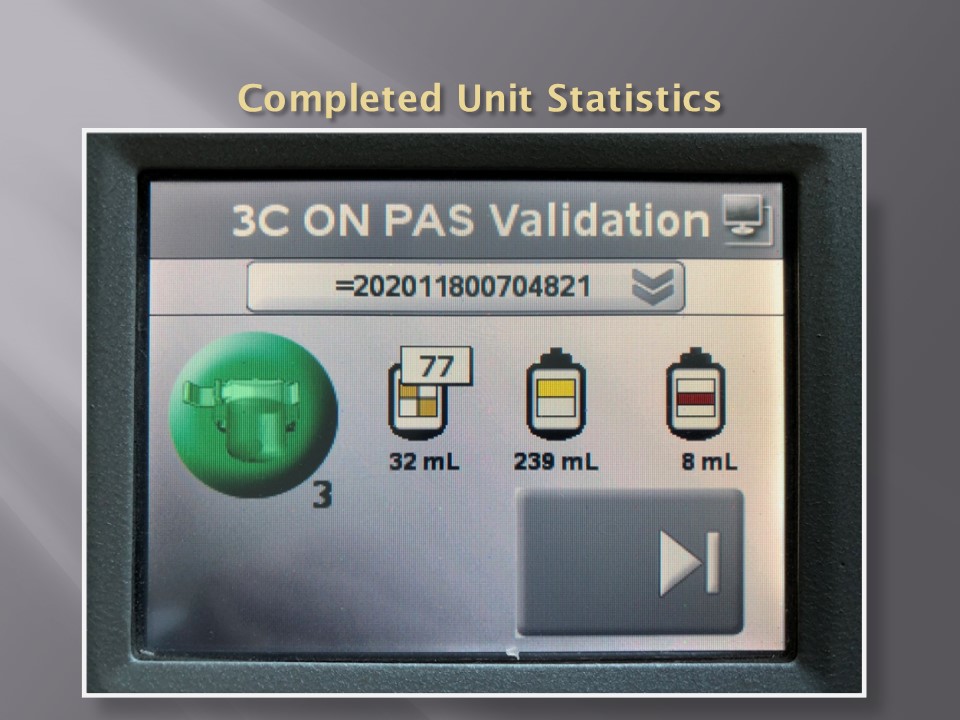
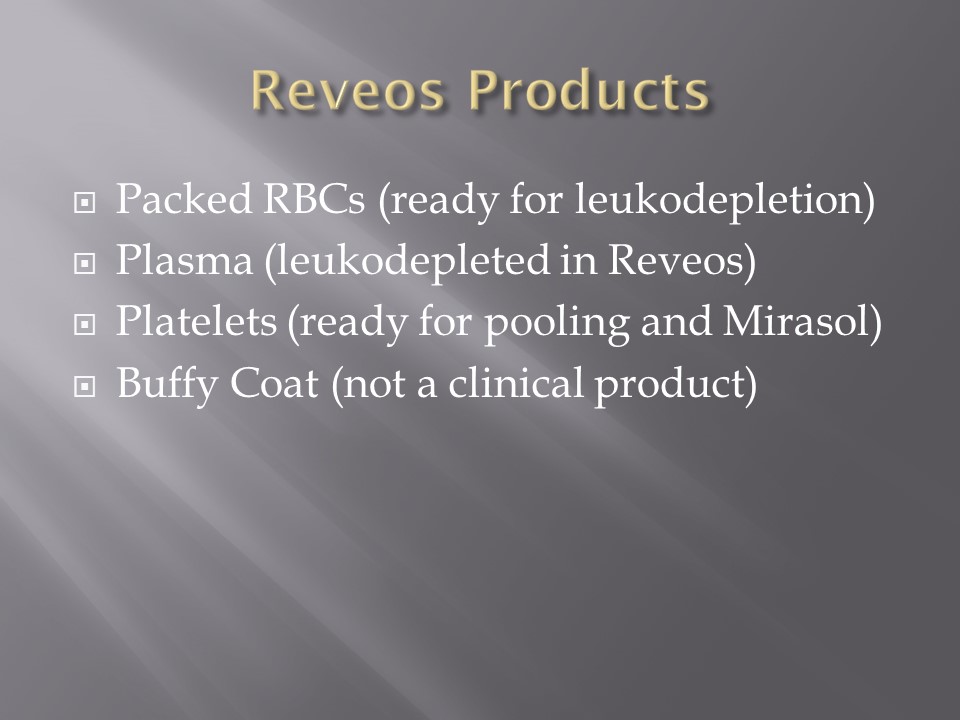
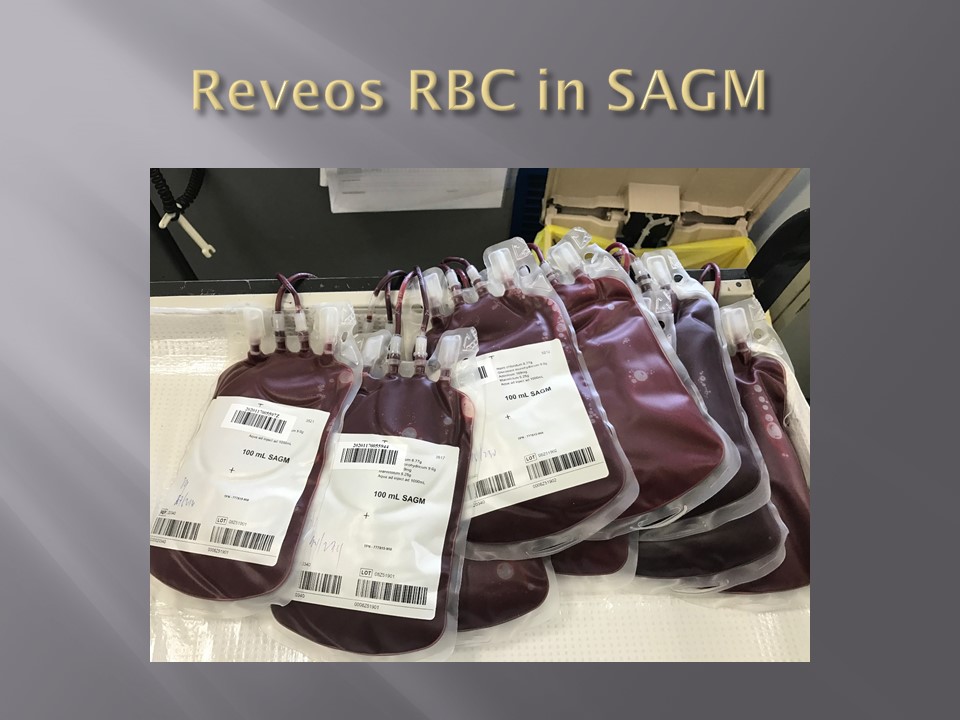
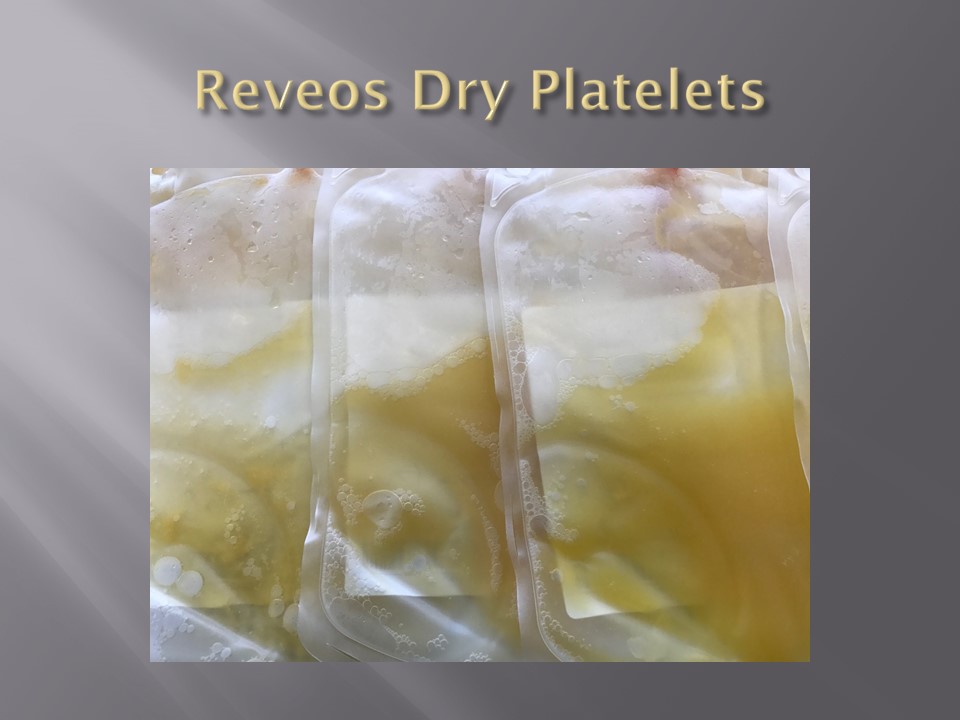
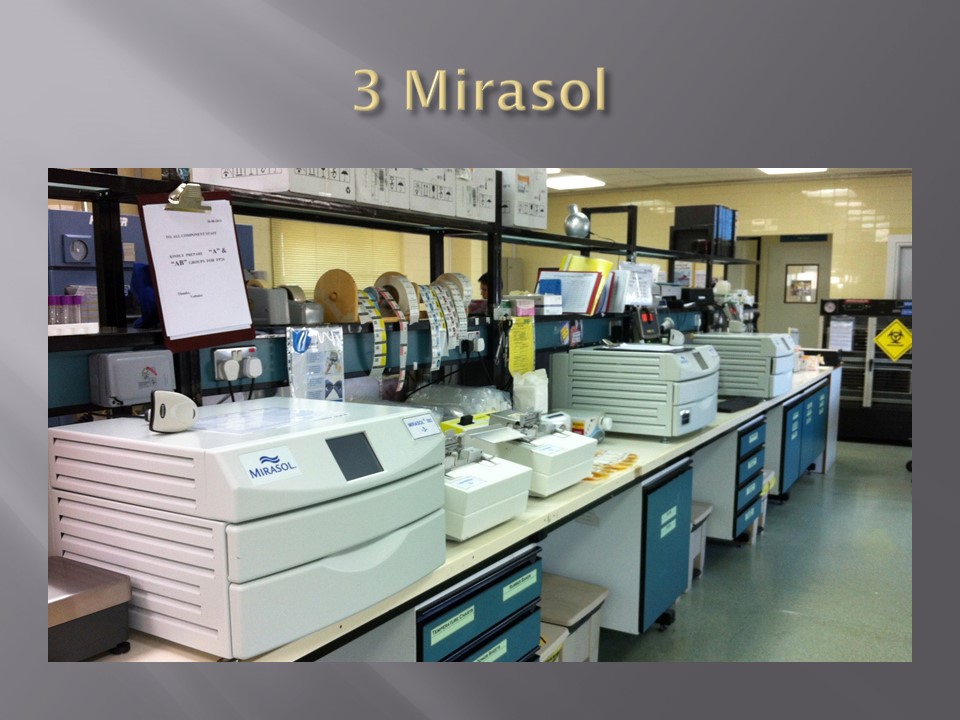
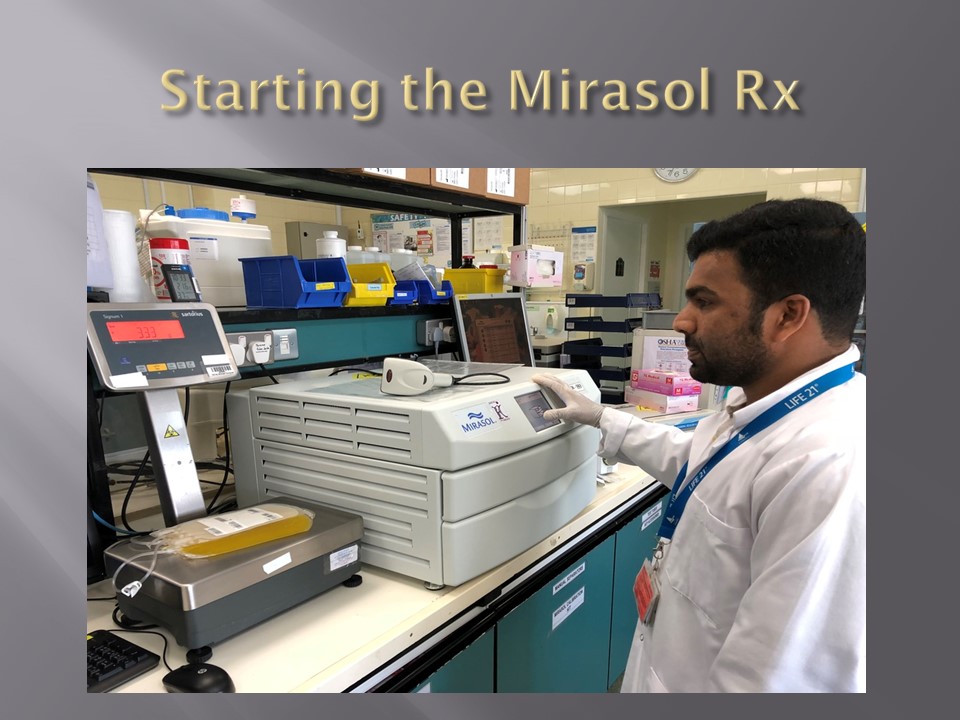
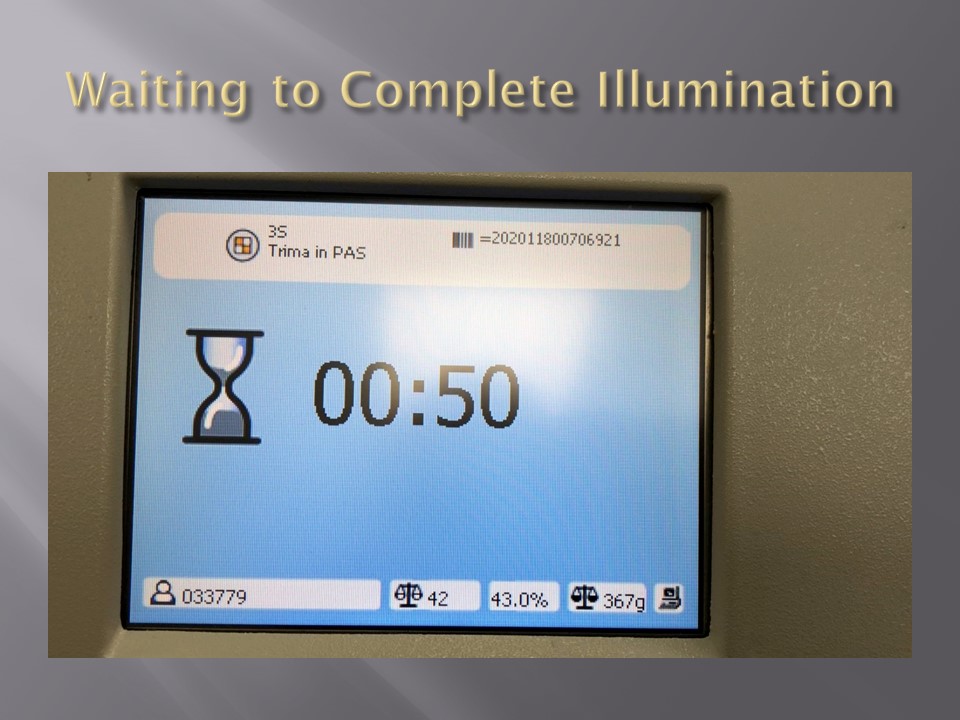
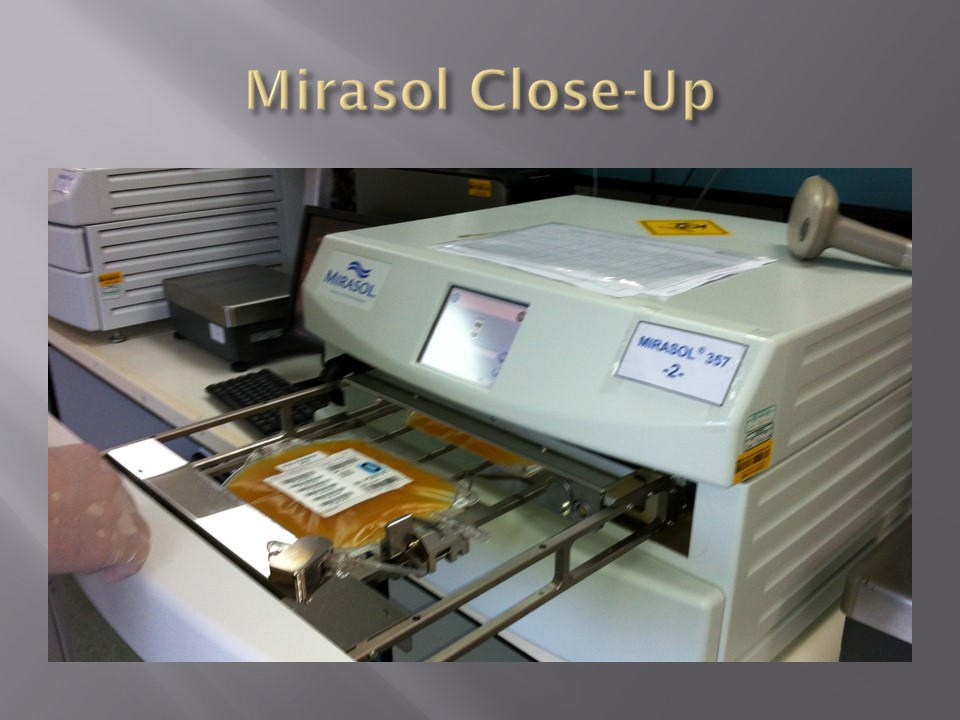
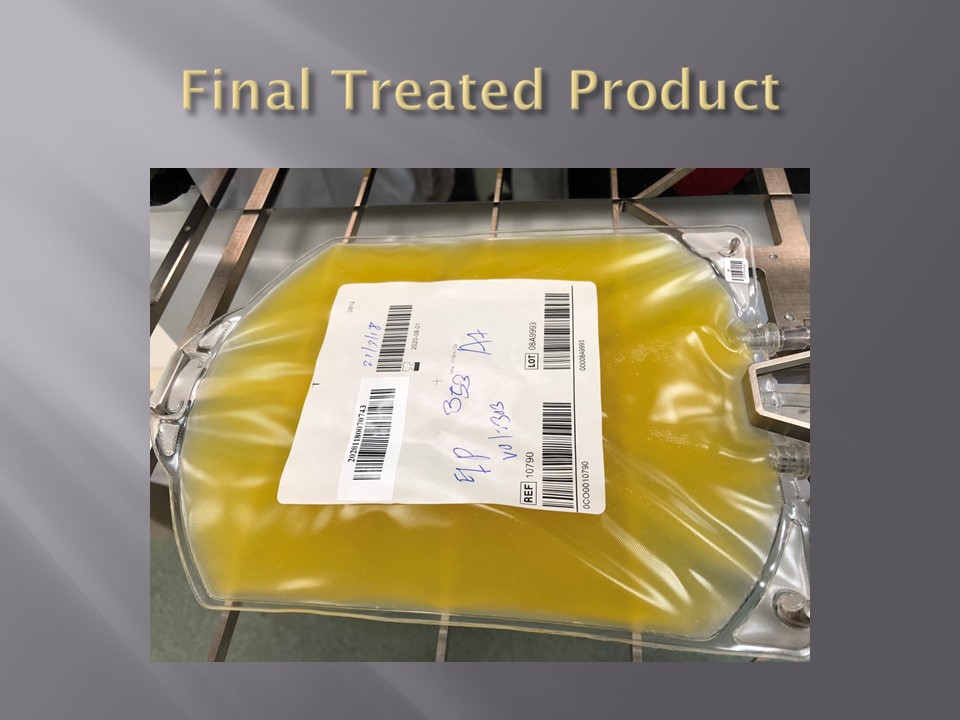
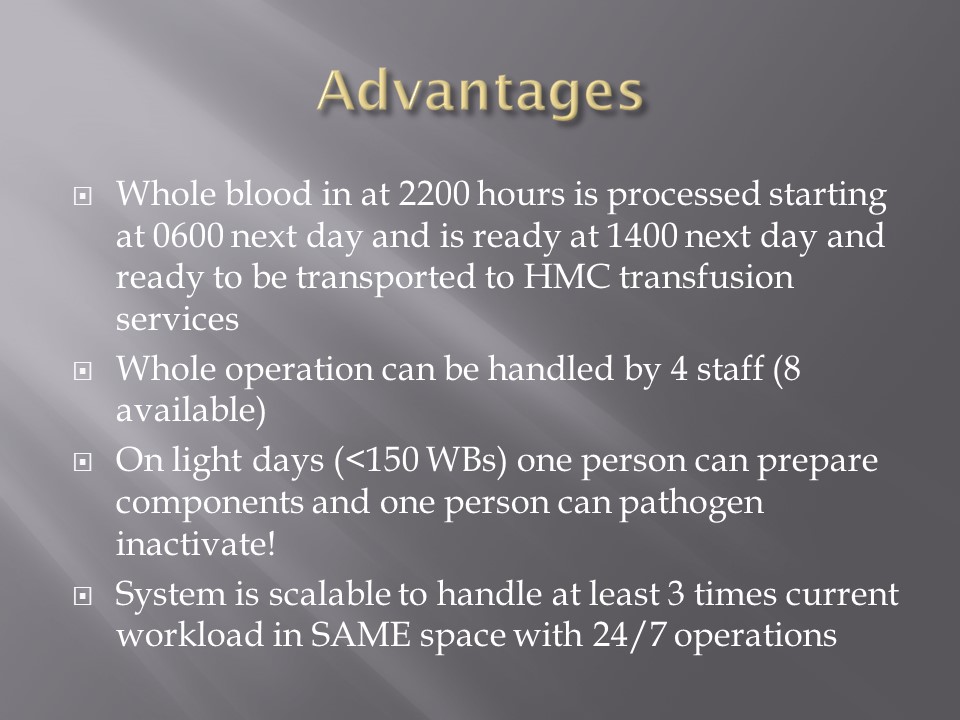
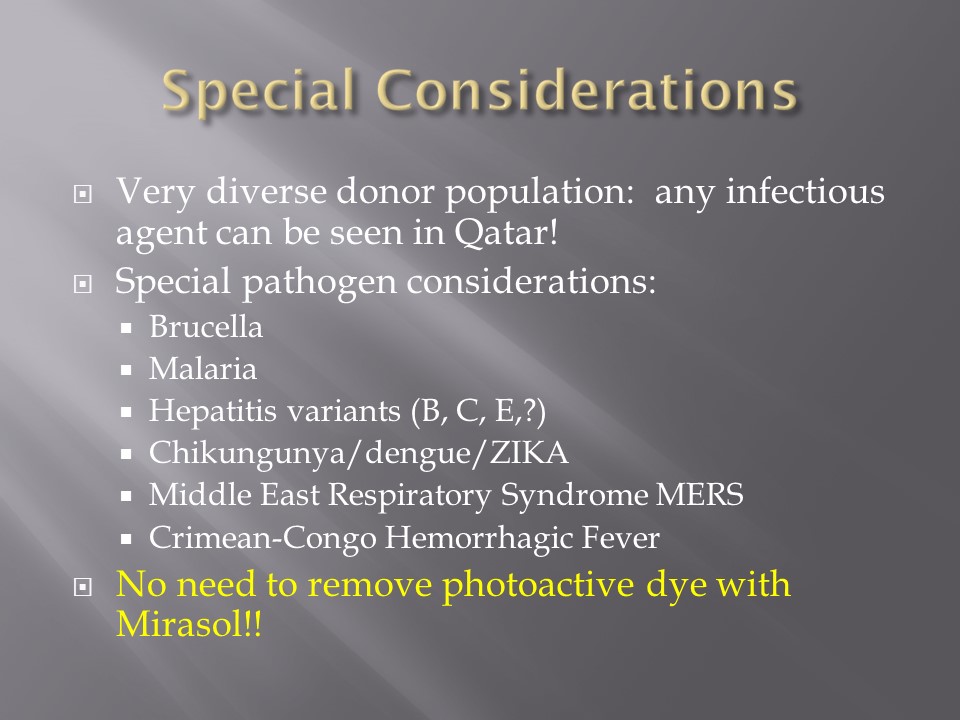
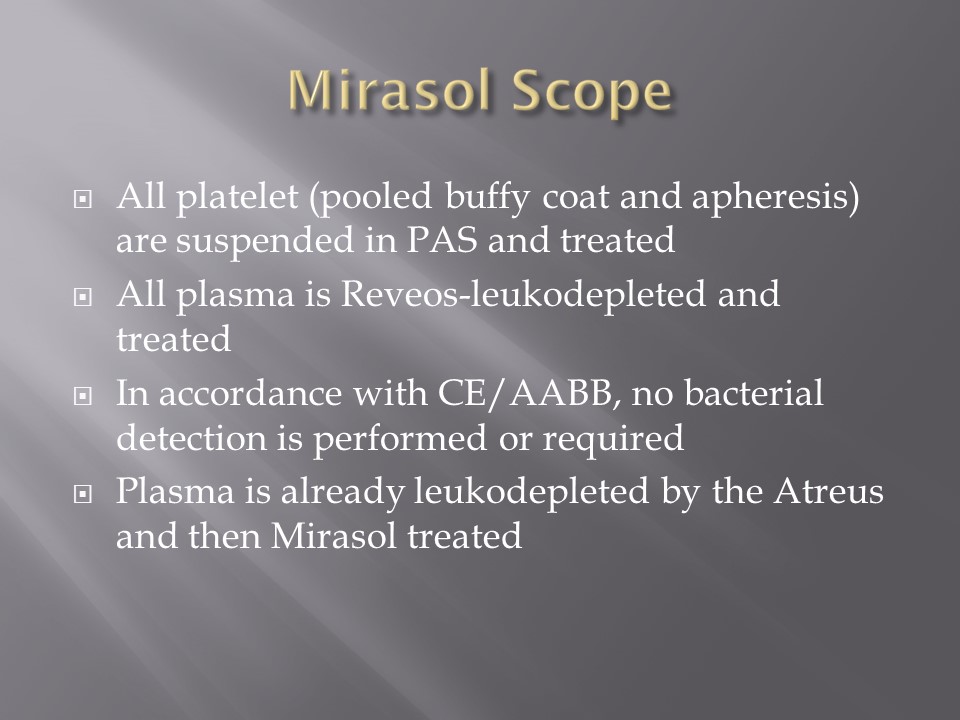
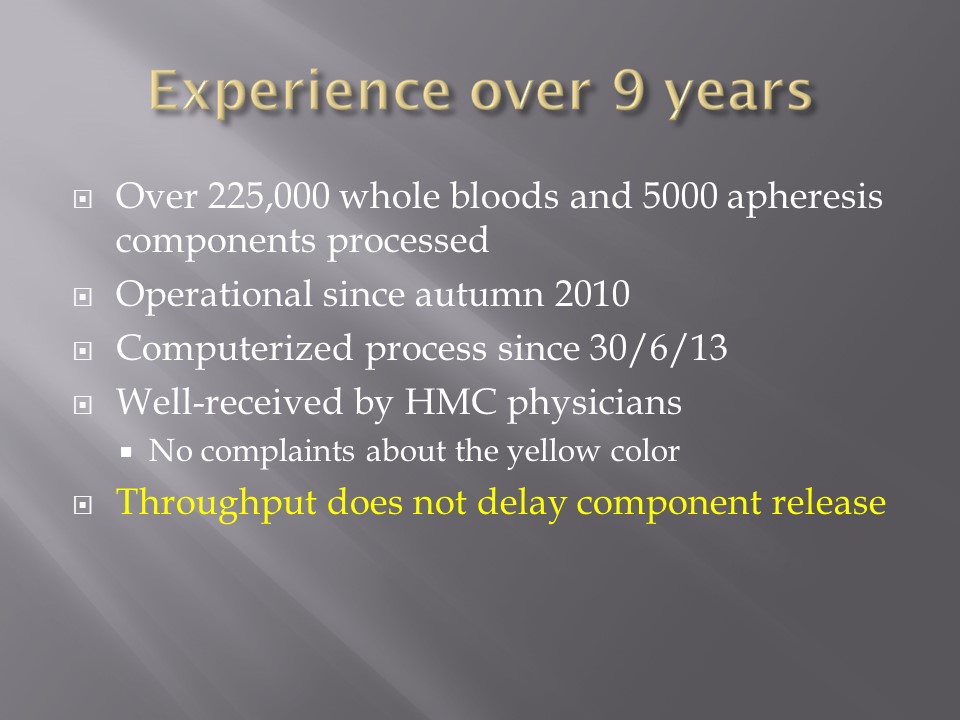
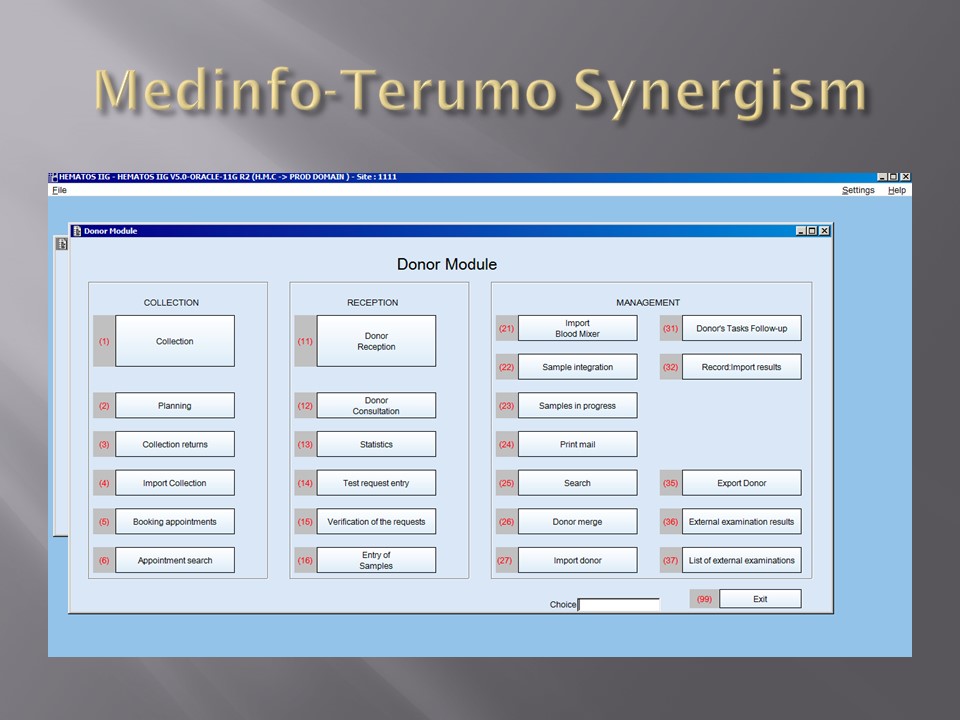
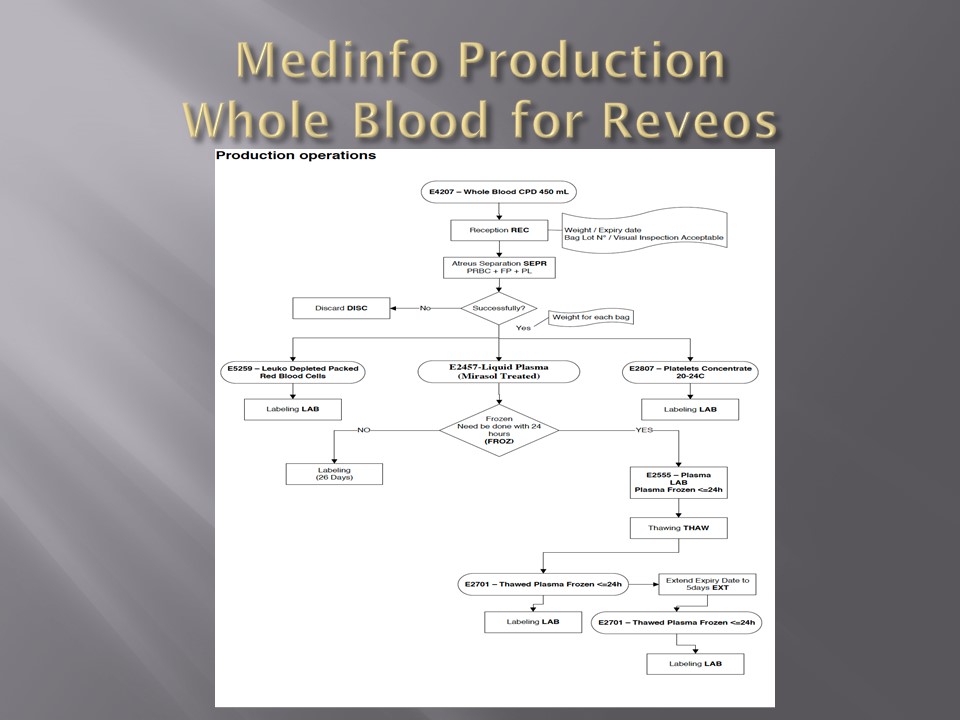
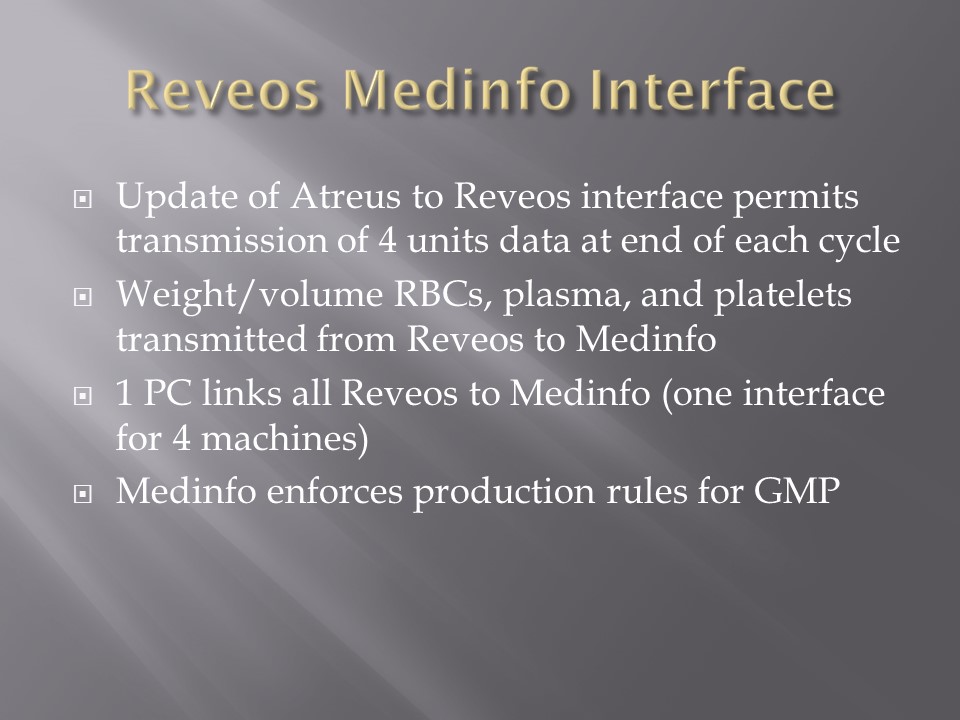
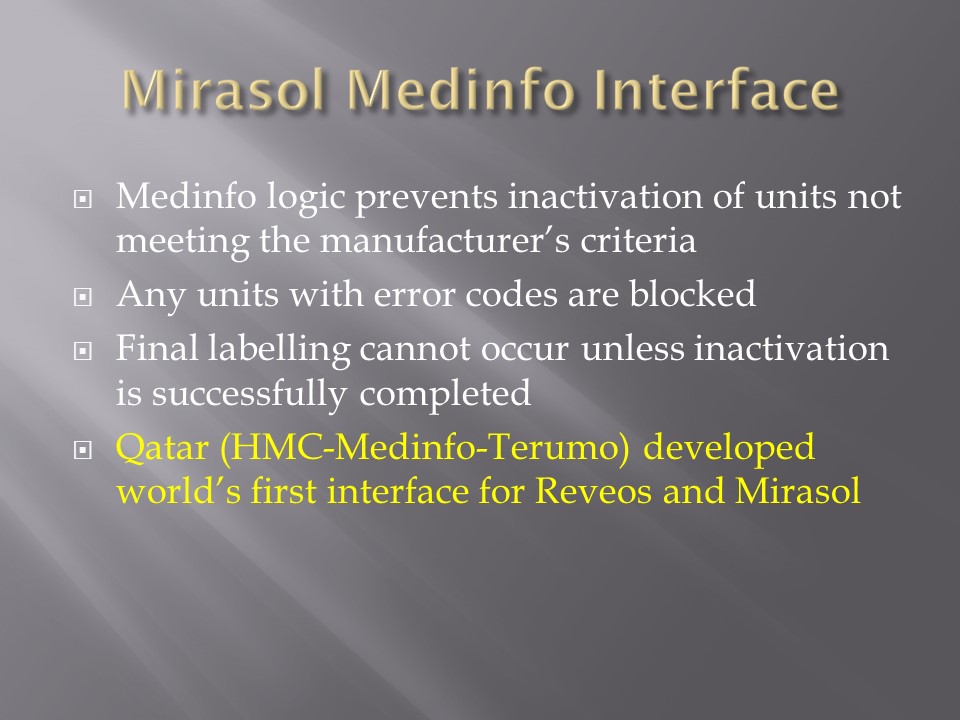
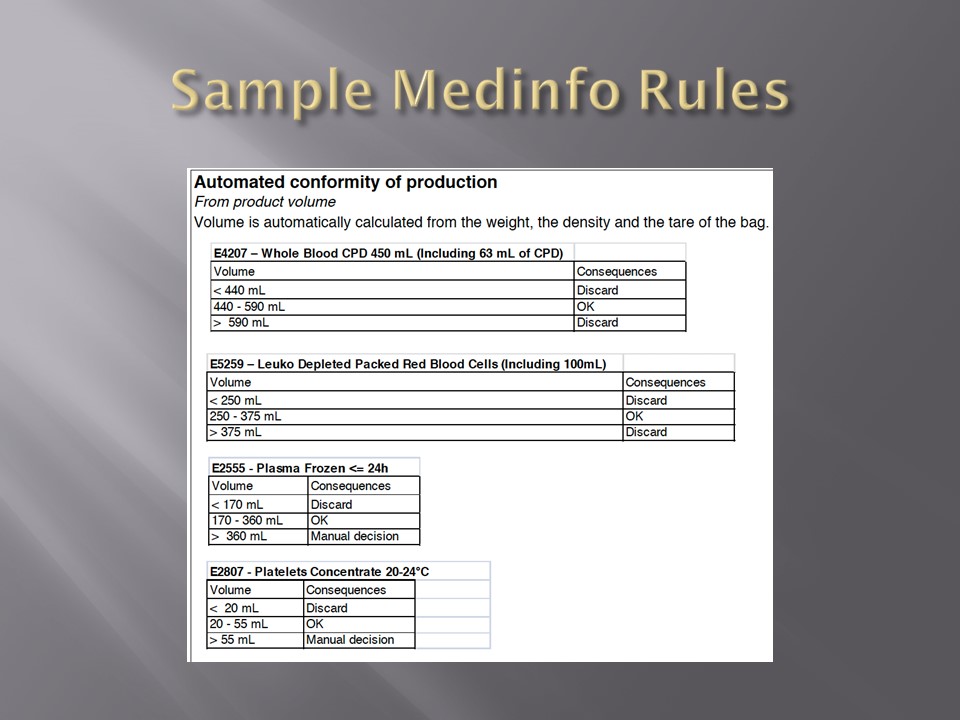
This Powerpoint file summarizes the past previous posts about the use of automated components, pathogen inactivation, and their synergism with the blood bank computer software Medinfo Hematos IIG
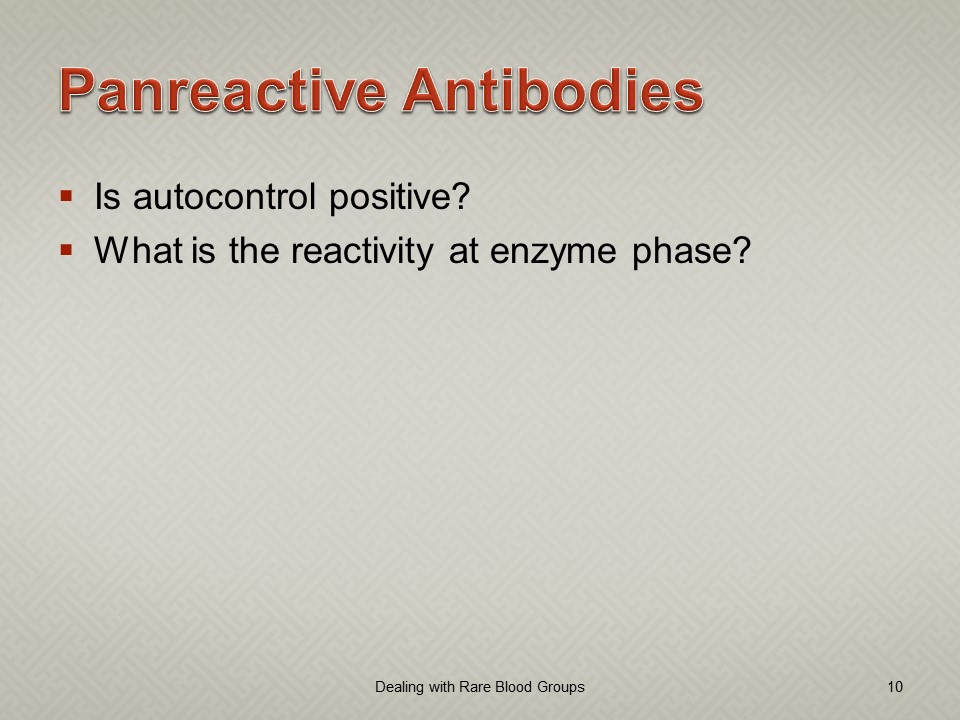
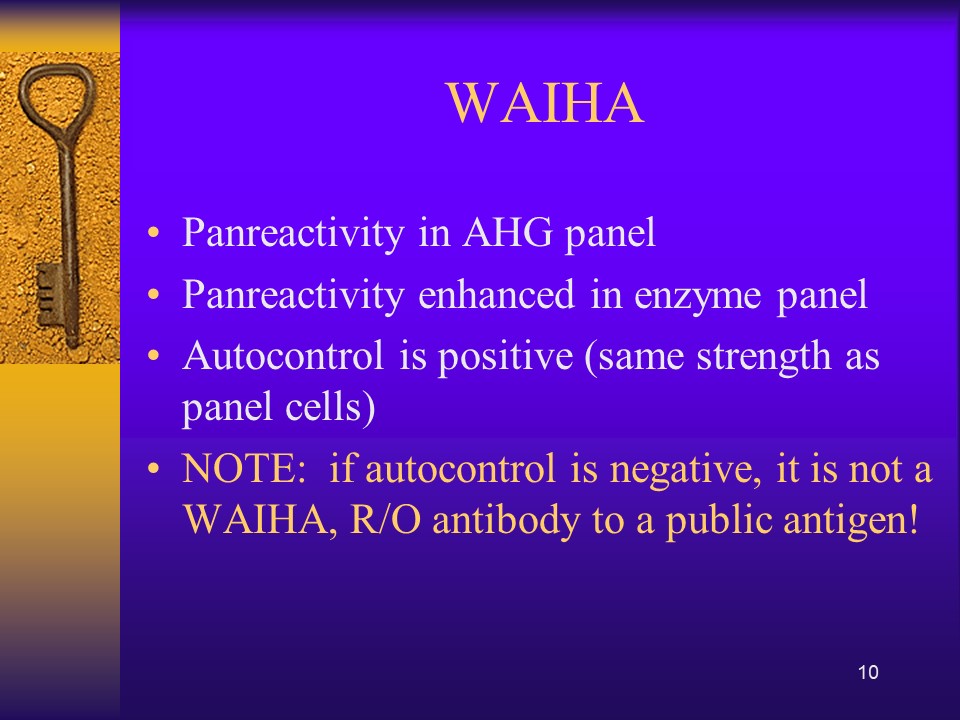
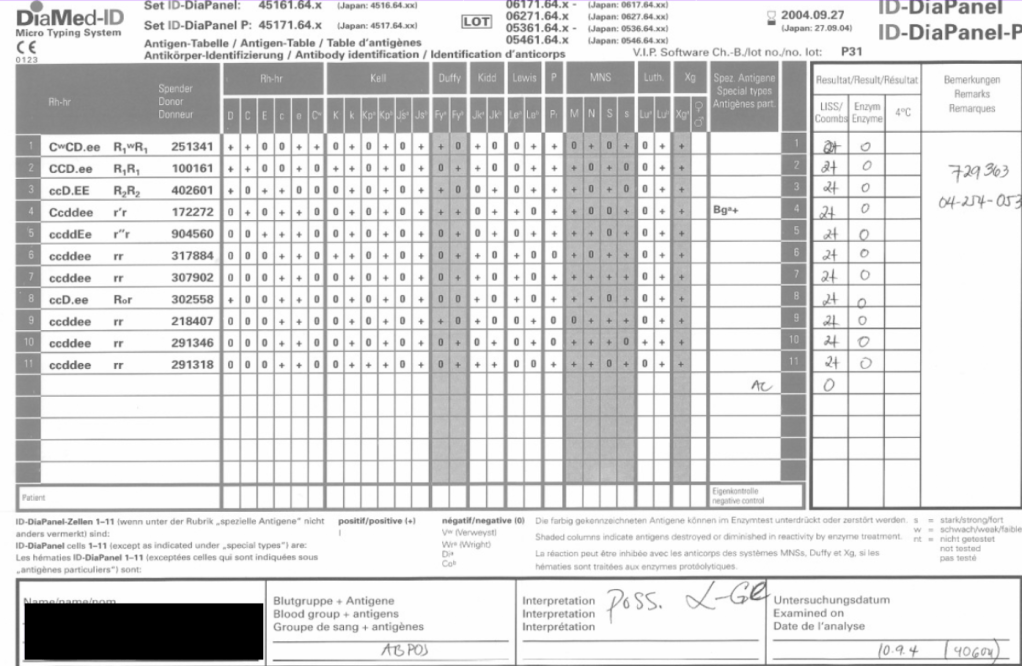
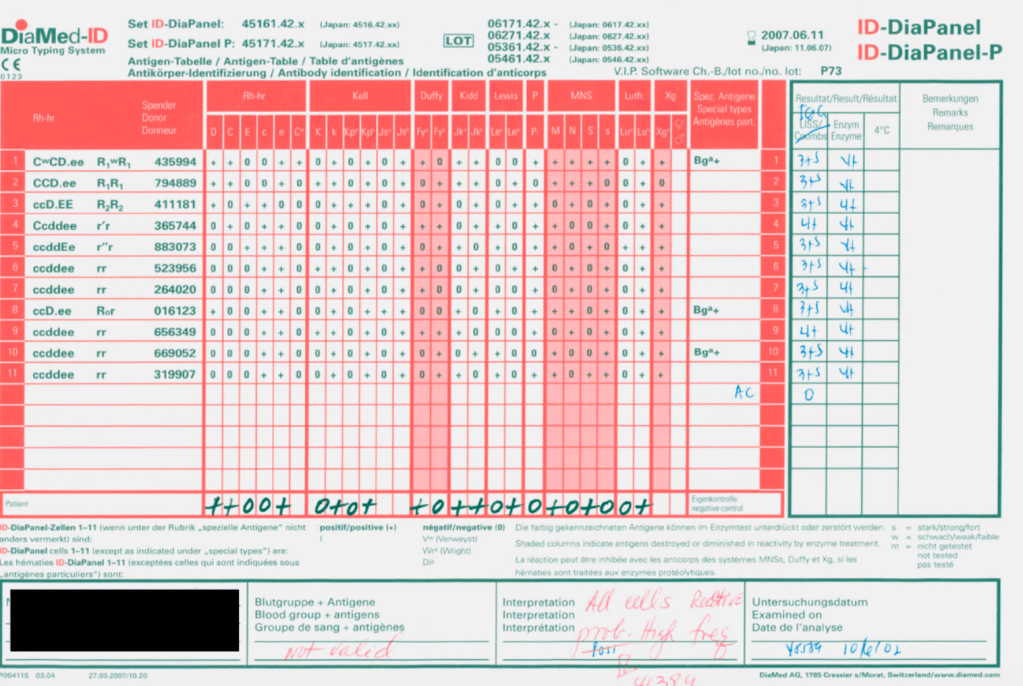
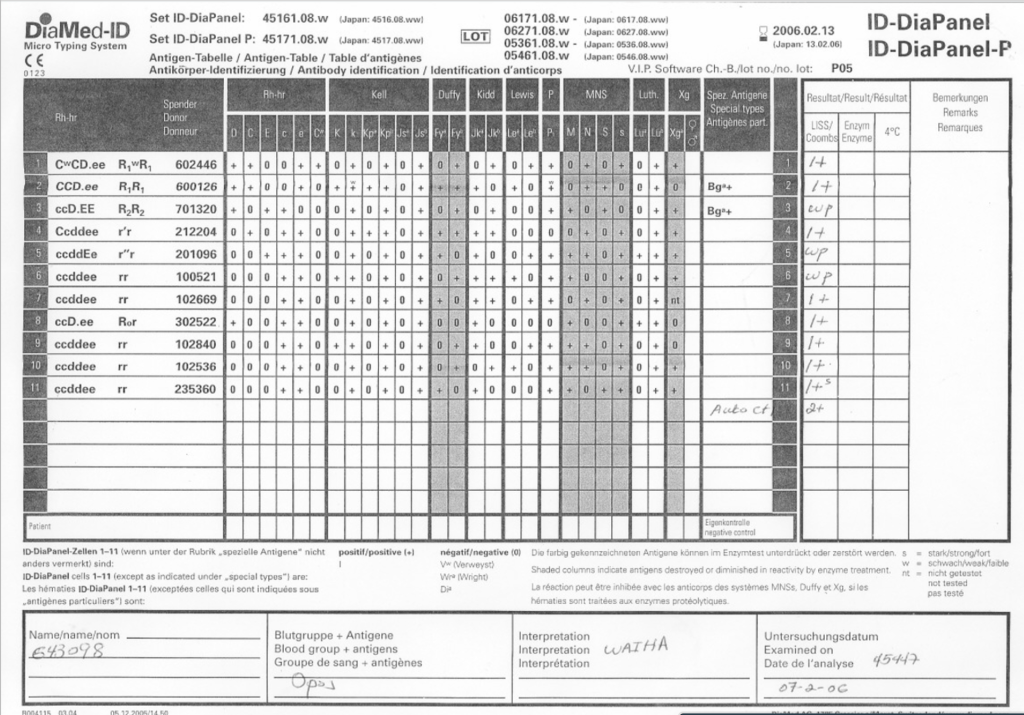
As a Transfusion Medicine physician, I reviewed all antibody workups. Here are three different panels, all appearing to be panreactive, at AHG phase. Note the differences:
Autocontrol is positive, enzyme is panreactive and enhanced
Autocontrol is negative, enzyme phase shows no reactions
Autocontrol is negative, enzyme phase is panreactive enhanced
In the middle of the night, if I am called to select blood, I always keep these patterns first and foremost in my mind.
Case 1:
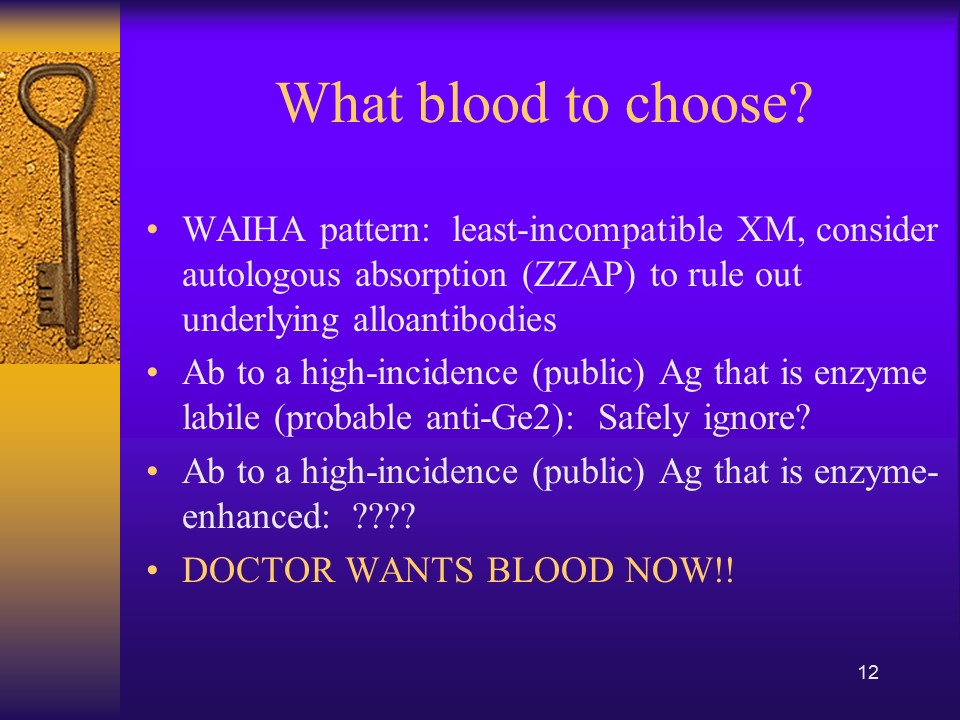
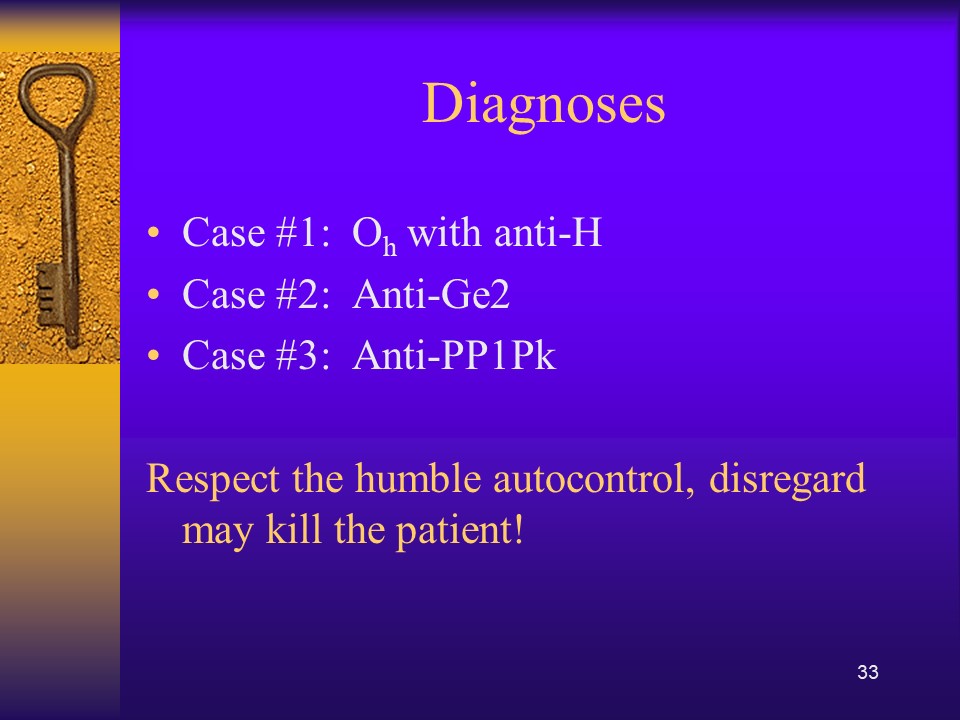
If the autocontrol is positive at about the same strength as the panreactivity. I can state that this is probably a warm autoimmune pattern WAIHA (although I cannot rule out underlying clinically significant alloantibodies obscured by this pattern and need to do autologous auto-absorption ZZAP). Both warm autoimmune antibodies and certain drug reactions may cause this pattern. Use least-incompatible crossmatch matching any significant specificities you found by ZZAP and observe the patient closely throughout transfusion.
Case 2:
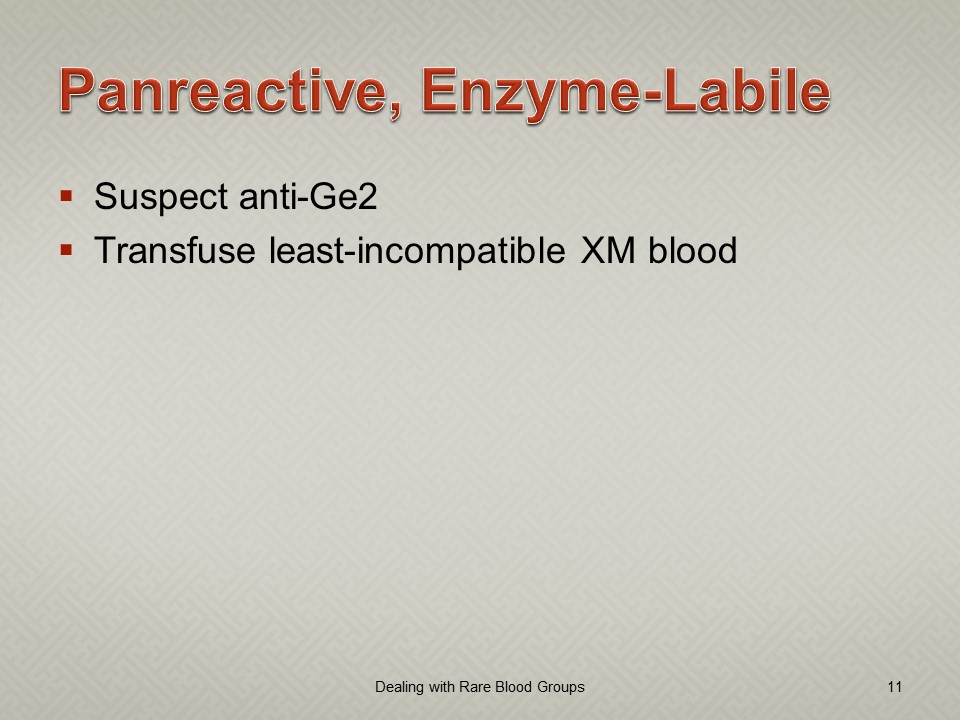
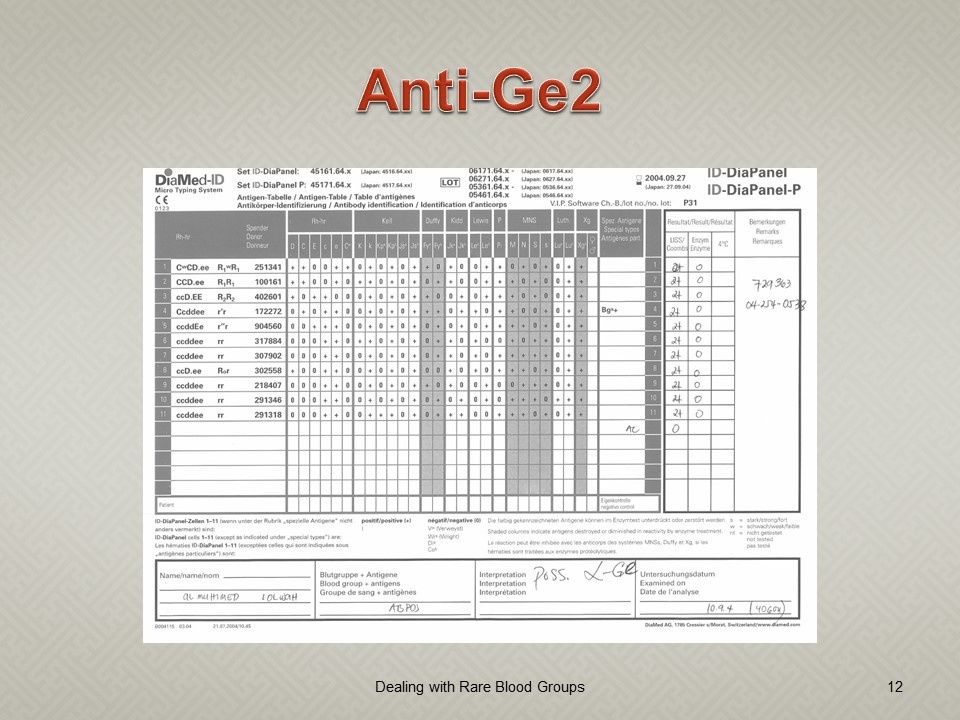
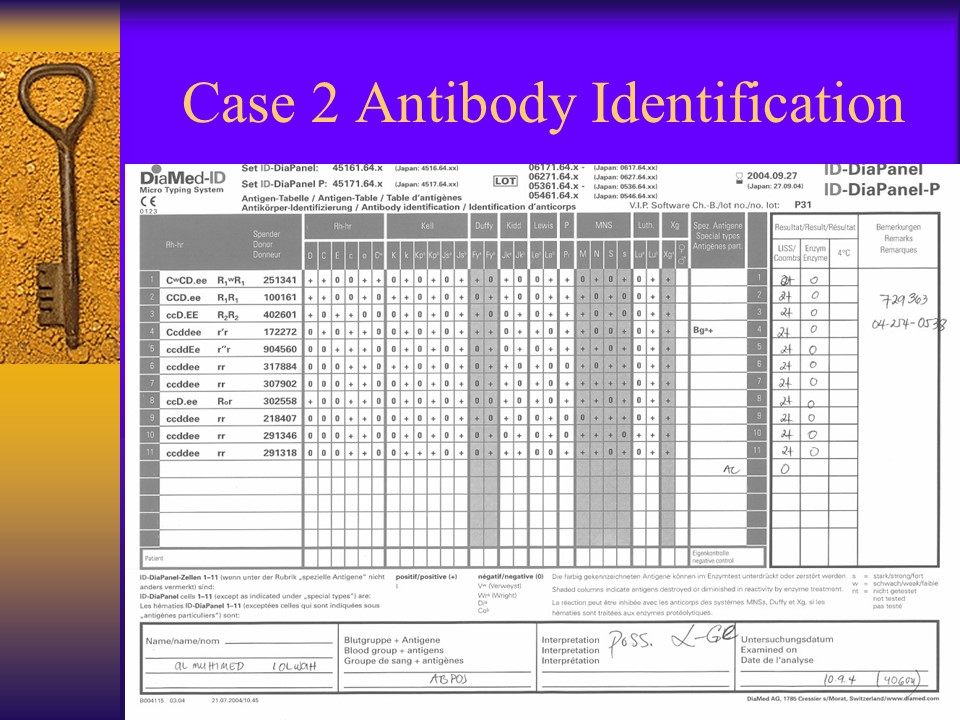
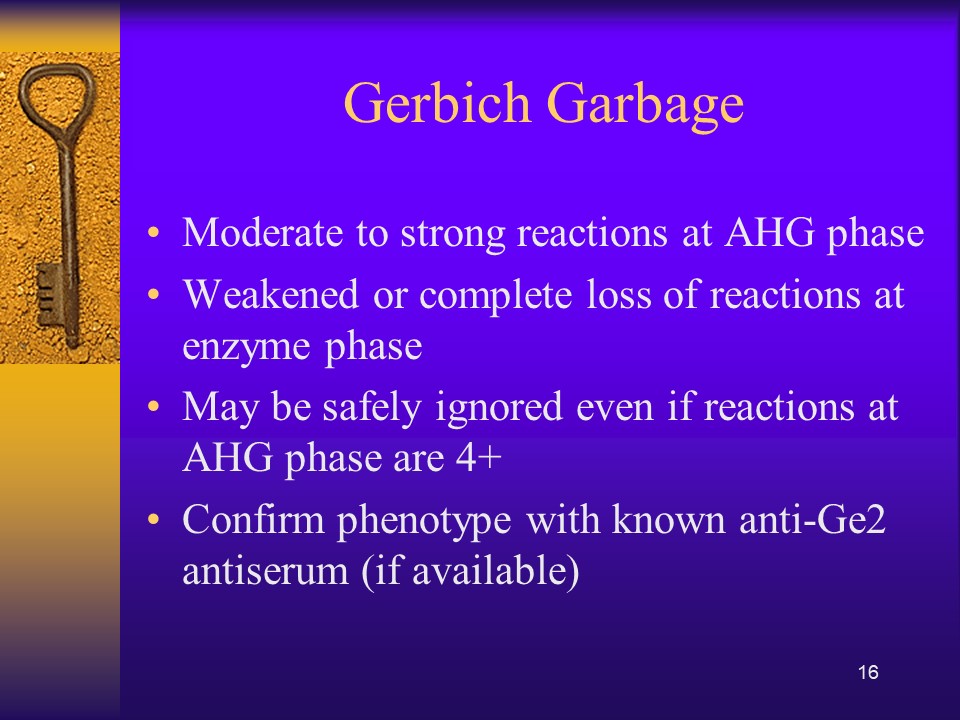
If the autocontrol is negative and all reactions are enzyme-labile—and if you live in the Middle East/Gulf region, then you have a presumptive anti-Ge2. You can safely ignore this antibody and release least-incompatible crossmatch RBCs, regardless of the strength of the reactions.
Case 3:
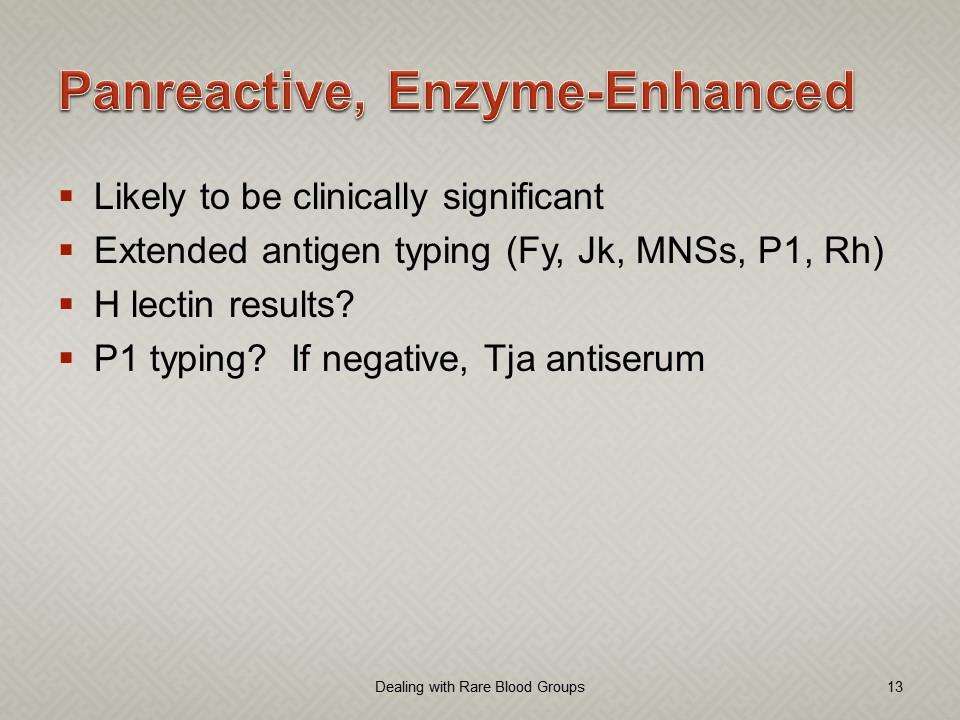
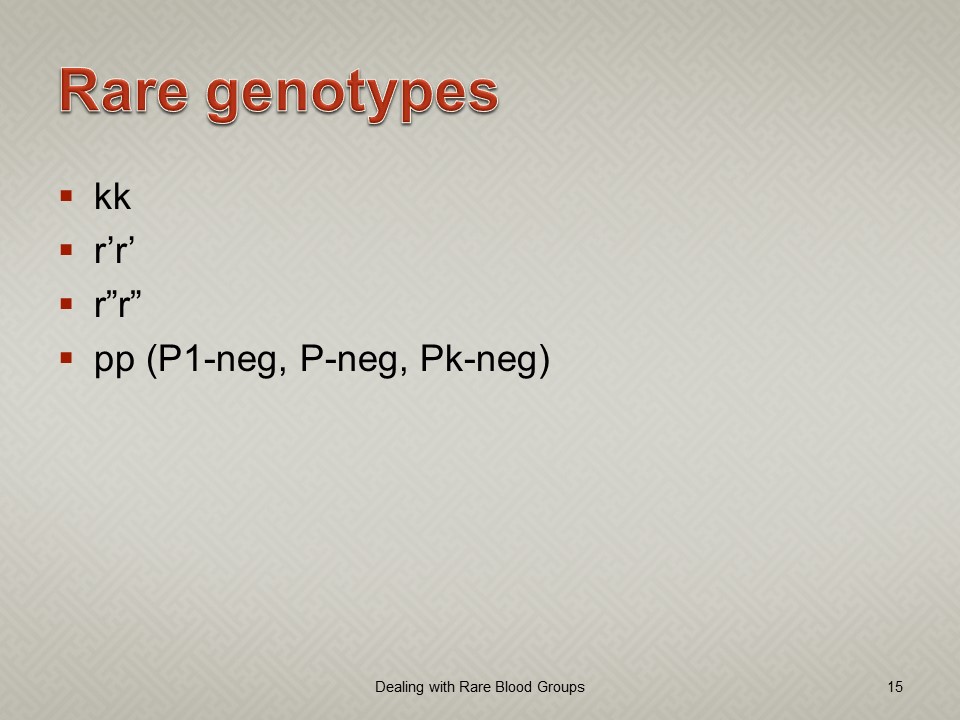
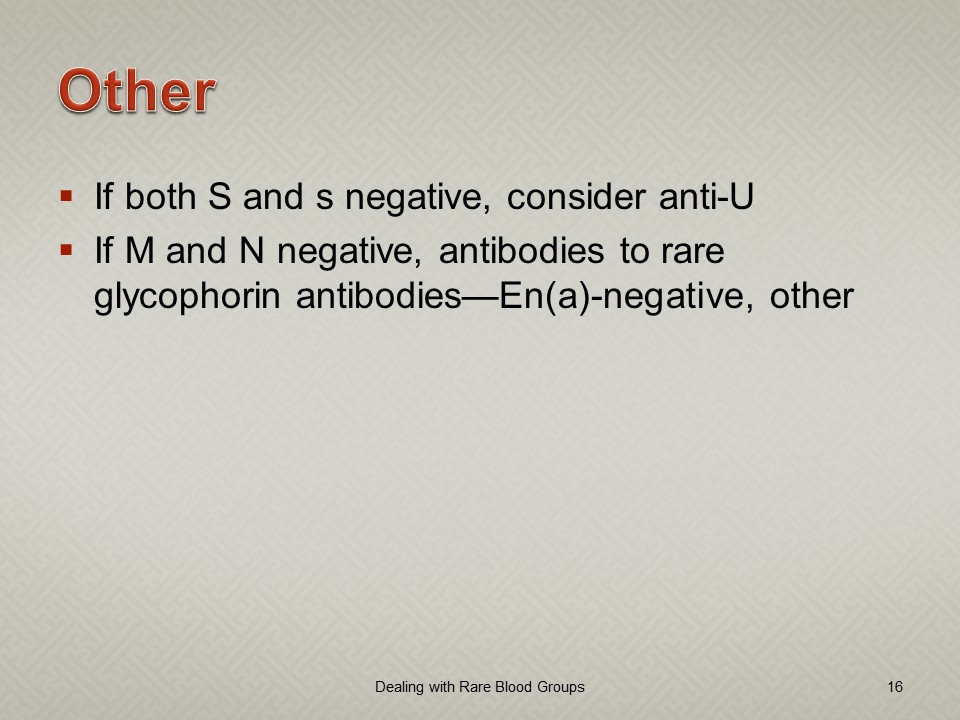
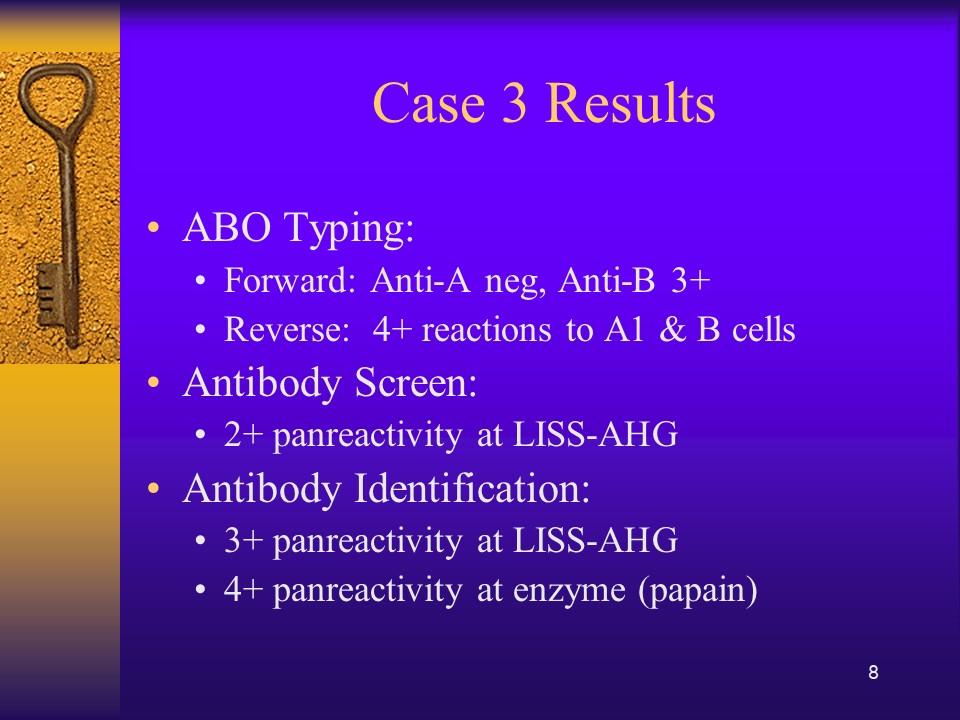
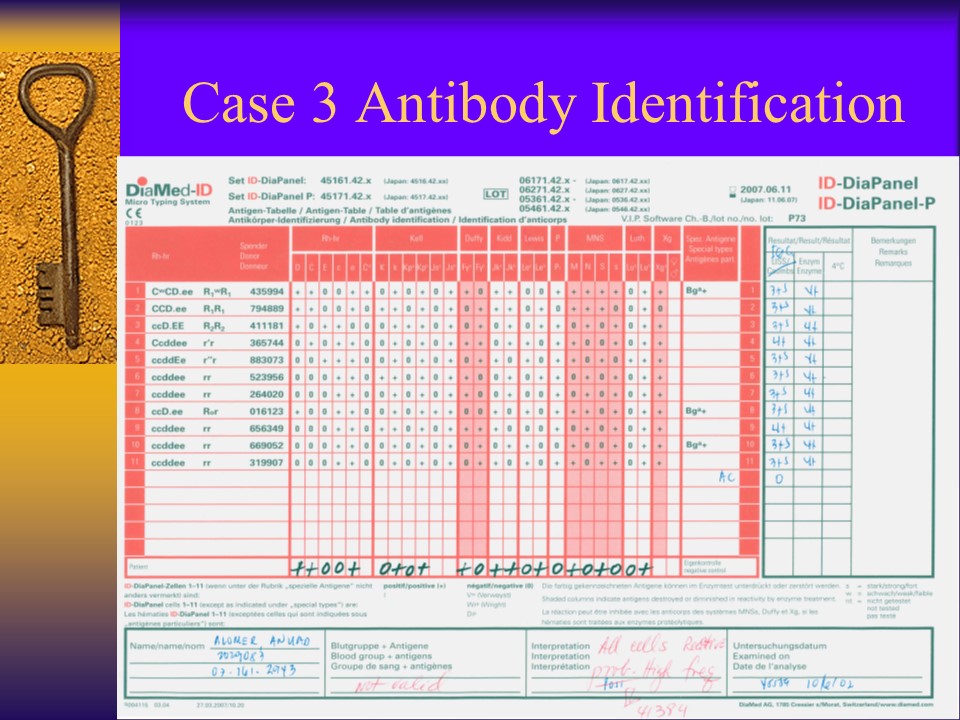
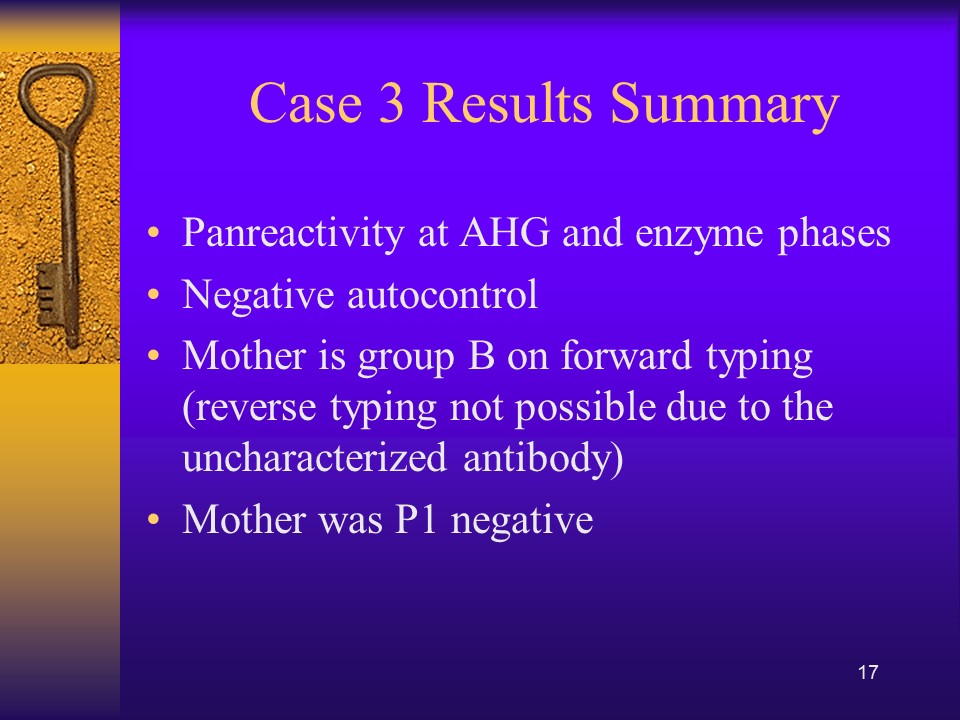
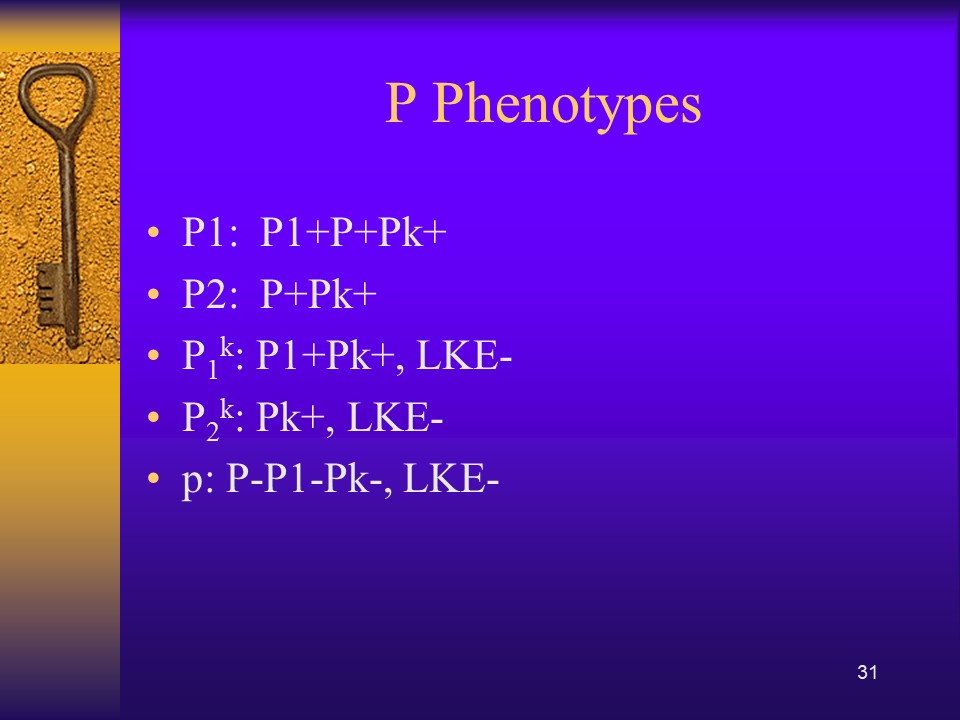
If the autocontrol is negative and the reactions are unchanged or enhanced by enzyme, BE AFRAID, VERY AFRAID!! This is an antibody to a high-incidence antigen. These can be very dangerous. In the Middle East/Gulf region, consider anti-H, anti-k (cellano), anti-Kpb, anti-PP1Pk, and rare antibodies to the MNSs such as anti-U or other MN system deletions. There are many other possibilities, e.g. anti-Fy3.
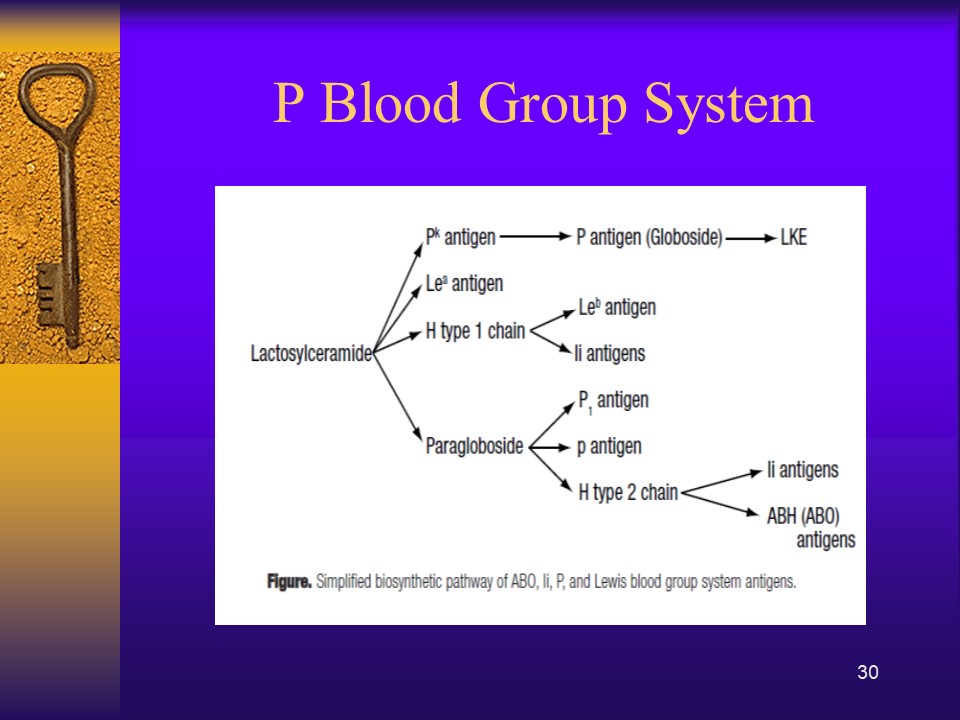
You need to perform extended antigen typing across the major Rh antigen, Kell, Duffy, Kidd, MNSs, P systems (at least P1):
Run H lectin to rule out Bombay Oh or Parabombay.
Some Rh system deletions and Rh null show pan-Rh reactivity—check D, C, c, E, e typings.
Anti-k (cellano) will be suggested by k-negative phenotype.
Unusual, weak or absent reactions with M and N reagents suggest something like En(a)-negative or similar.
Absent P1 with no other findings, you must rule out anti-Tja (anti-PP1Pk).
I have seen all of these specificities during my time in the Middle East. All of these antibodies can be clinically significant and often life-threatening.
Conclusion: NEVER NEGLECT TO REVIEW THE AUTOCONTROL!!!
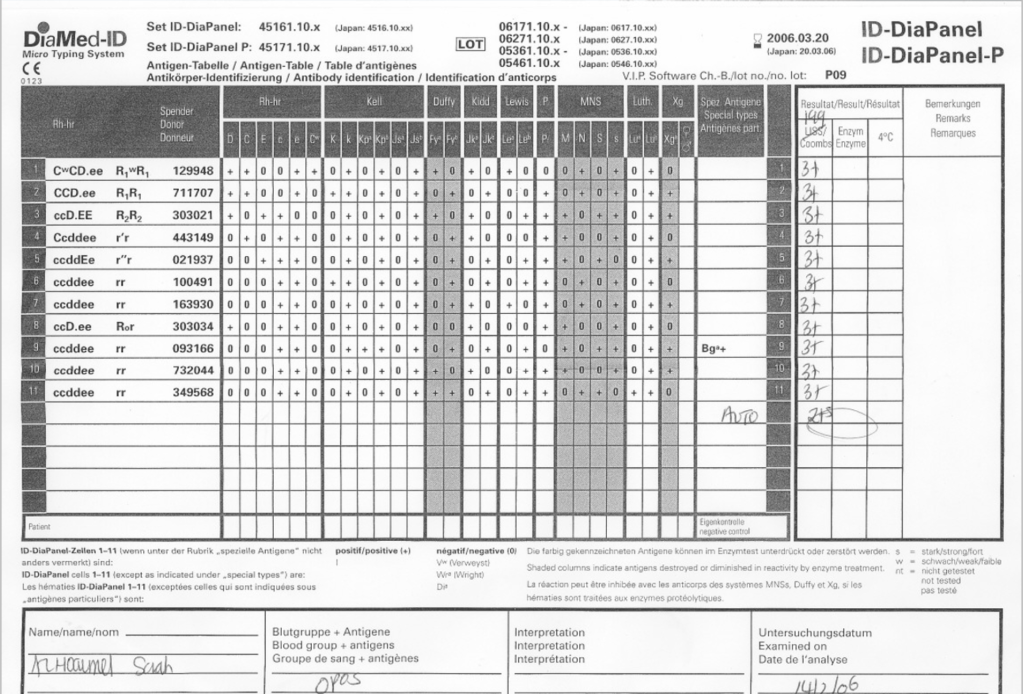
Whenever I had a “nonspecific” antibody, I had to first rule out issues with the reagents themselves. The following example shows weak to 2+ reactions in the panel cells and autocontrol.
The variability in the reactions made me initially uncomfortable about called this WAIHA. I then checked the panel details: the testing was done only six days before the panel outdate.
I told my staff to repeat the workup with the new panel expiring five weeks later. The difference is astounding!!
Remember: if you work in the Middle East, the environmental conditions can be extreme in summer (>50C). Do you know how your reagents were handling during transport?
My advice: if you are concerned there is a clinically significant antibody but cannot discern it, consider repeating the workup using fresh reagents.