This is an update of a previous post and is applicable to all sections of the laboratory, not just blood bank.


Includes patient, donor, apheresis and related IT topics
This is an update of a previous post and is applicable to all sections of the laboratory, not just blood bank.
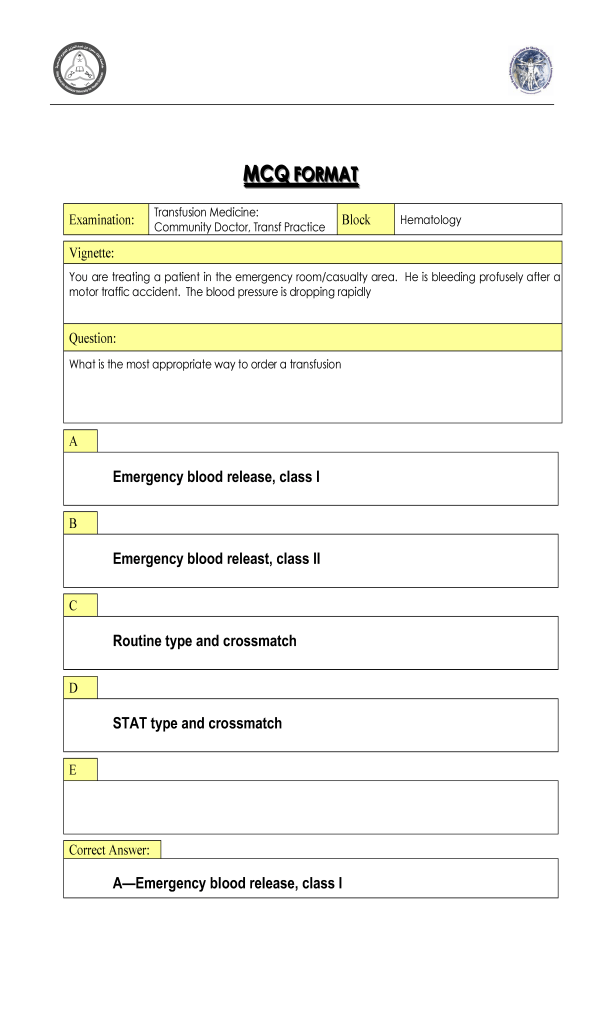
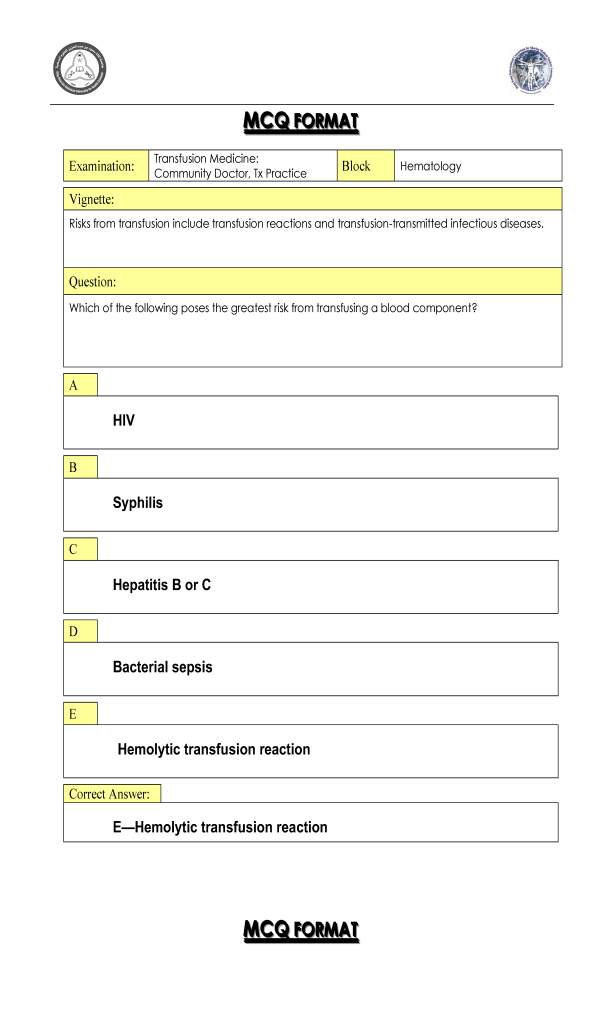
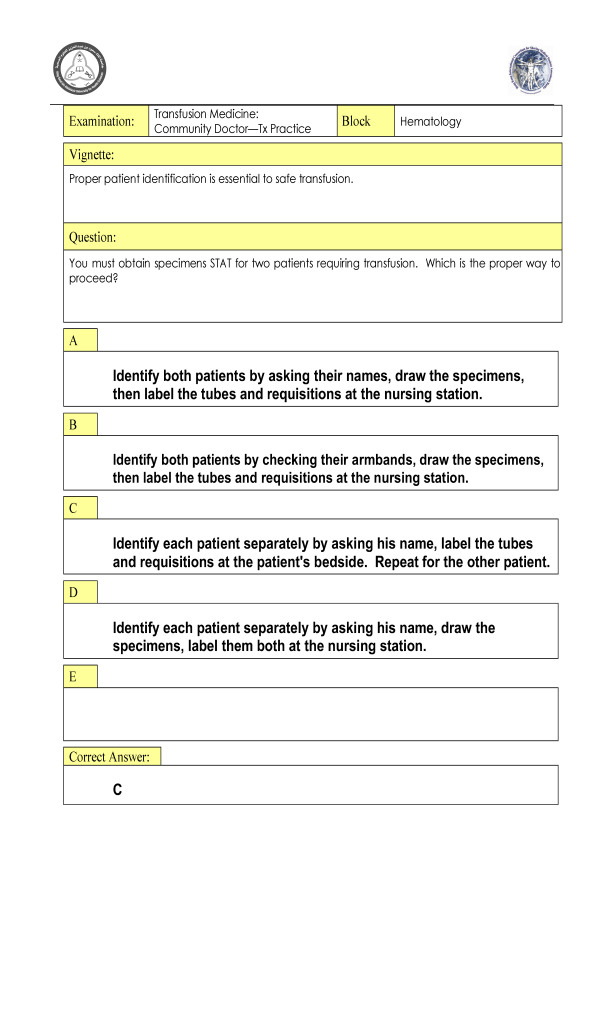
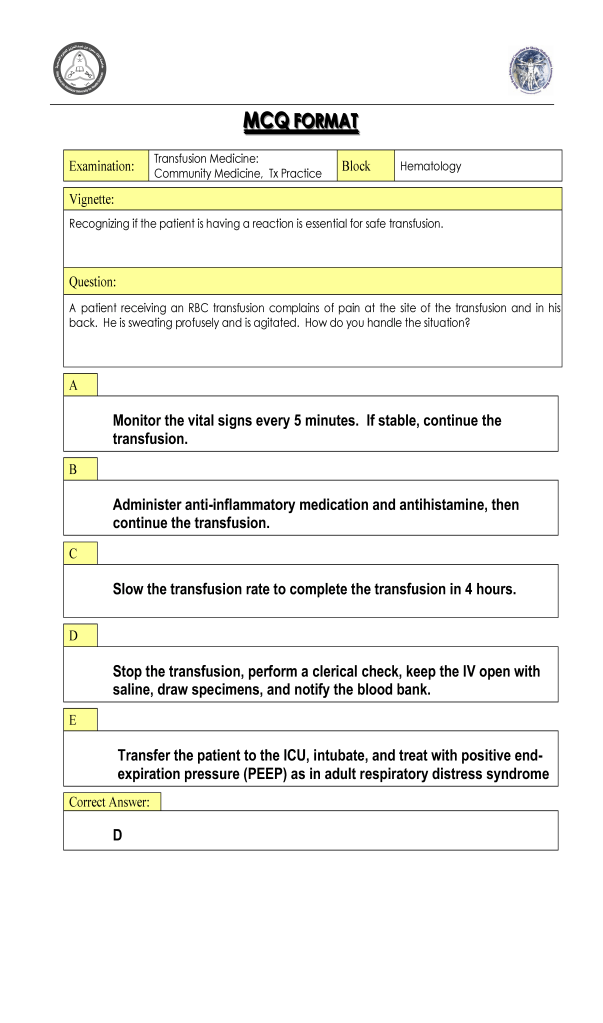
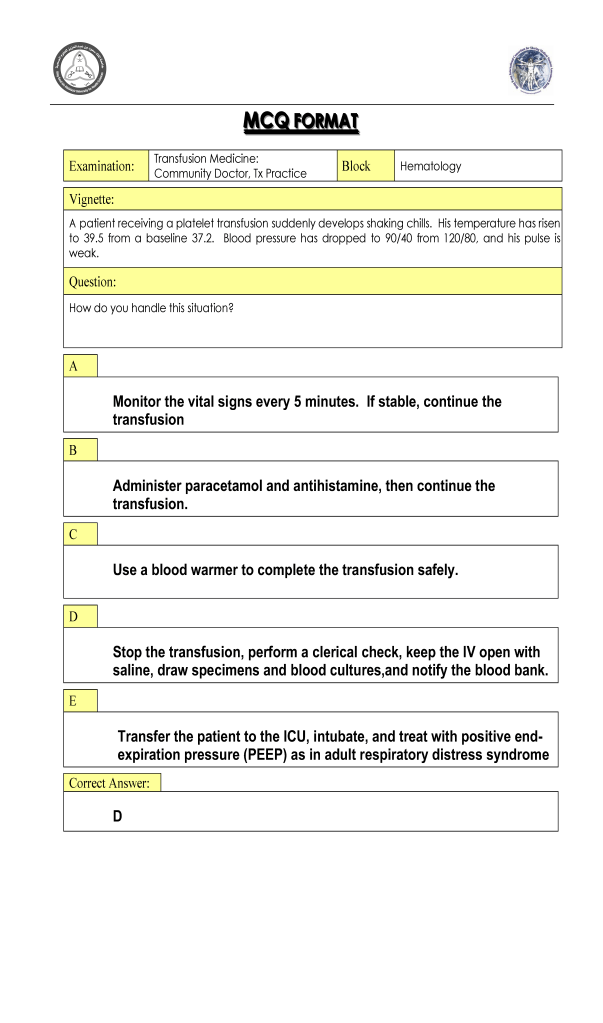
These are questions based on my medical student lecture on Community Practice of Transfusion originally given at National Guard Health Affairs in Riyadh:
5.6.1 PROCESS: Donor Reactions
Process:
References:
Document Enumeration: 5.6
Policy:
References:
Transfusion-transmitted infectious disease are a continuing threat. Despite donor infectious marker testing and new donor questioning, there are many threats which are not addressed by these measures. Also new pathogens are being identified for which there are no tests or specific donor questions available. How can we handle these new threats?
Pathogen inactivation can significantly reduce infectious agents in blood components, although the degree varies depends on the agent. Theoretically any agent with nucleic acid—RNA or DNA is affected. The only class of agents not affected at all are prions, which have NO nucleic acid at all.
In general, a photoactive agent is added to the blood component which binds to the nucleic acid. Photoactive agents include riboflavin, psoralen dyes, and methylene blue. Then the component is irradiated, the time proportional to the volume of the unit.
The component is then exposed to ultraviolet light to photoactivate it, which disrupts the DNA and RNA present, including in the white cells. Thus, NO irradiation or bacterial culture is required.
Here are my questions to consider when selecting a pathogen inactivation system:
Targets? Platelets vs plasma vs whole blood?
Methylene may be used for plasma, but riboflavin or psoralens may be used for platelets or plasma. Whole blood inactivation with riboflavin is CE-approved.
Photoactive dye: Is it riboflavin vs psoralen vs methylene based?
Riboflavin is vitamin B2—the amount used is small and does not need to be removed whereas the psoralen must be removed for clinical use.
Does the photoactive material need to be removed before transfusion?
You can immediately use the riboflavin-treated component but the psoralen must be removed before transfusion—this may take 6 or 20 hours depending on the licensing of the product.
What is the loss of platelets or coagulation factors after treatment?
With treatment by all methods, there is some loss of platelets and coagulation factors. The platelet loss may be greater in psoralen-based methods and require additional components be added to the pool to reach the desired dose. Likewise, plateletpheresis components treated with psoralen may require a recalibration of the donor apheresis equipment to collect more platelets per dose to compensate. There may be some RBC loss additionally in whole blood pathogen inactivation.
What is the efficacy of pathogen reduction for the infectious agents, particularly the ones in your region?
Example: How well does the treatment handle local agents like Hepatitis E? Psoralen agents may be less effective than riboflavin for this agent.
Does it work with platelet additive solution PAS?
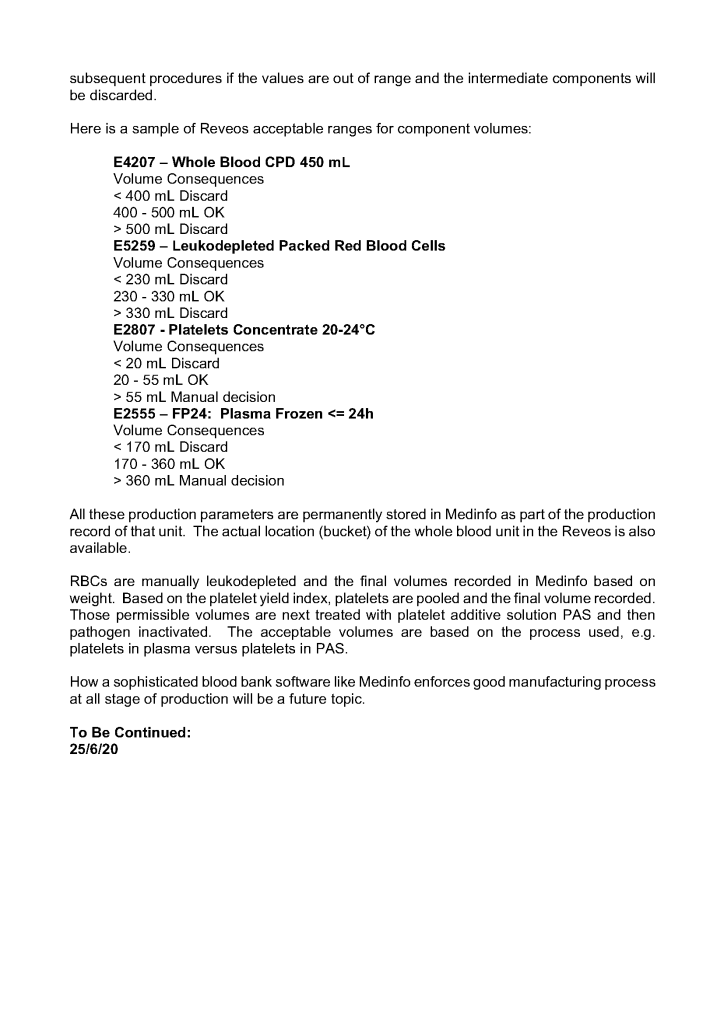
There are minimum and maximum volumes for pathogen inactivation set by the manufacturer. Can you get sufficient yields within these volumes?
How good is the data management system? Can it be integrated with your blood bank computer system?
Can the equipment be integrated with your system? This is important to set rules and enforce good manufacturing processes GMP.
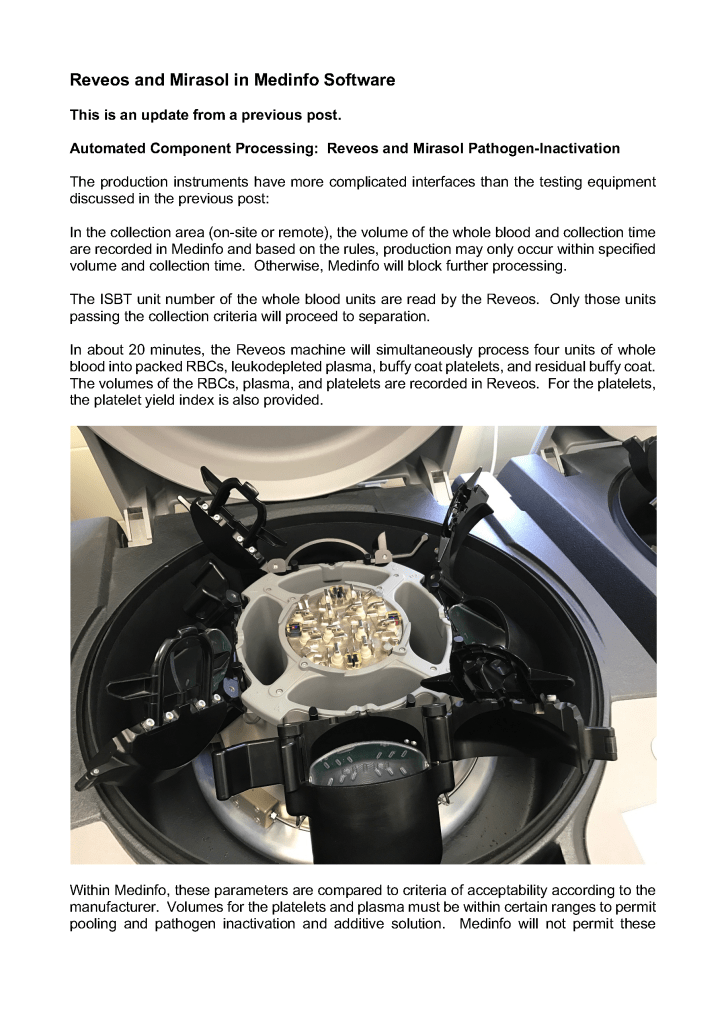
Does it work well with an automated blood component production system?
Such automated systems like the Reveos can free up personnel for pathogen inactivation. Can the volumes produced be handled effectively by the pathogen-inactivation method? Do the timings for separation of components work synergistically with the pathogen inactivation method?
Vendor issues: how well will the local agent provide support? Is someone else in your country or region using the system?
You need an experienced vendor to provide optimal support.
In the previous post, the Medinfo document for Inter-Depot transfer had many pages of rules for matching RBC antigens. Multiple actions were available:
To avoid mistakes, the blood bank computer system enforced the rules. There was no mercy. Only specific individuals could override this( in many cases, but certain allocations (e.g. group O RBCs to a Bombay Oh patient) were not permitted under any circumstances.
Prophylactic Antigen Matching:
Please also refer to my prophylactic antigen matching post made last week for the rules I selected for Qatar.
Prophylactic antigen matching is common in Europe. I have been doing this during the many years I have worked in the Middle East. Most patients were not local nationals but transient. They would return to their home countries where blood bank testing (antibody screening/identification/antigen matching) or intrauterine exchanges might not be always available.
For pregnant patients, we would prophylactically match K-negative and c-negative—regardless if there were antibodies detected—R1R1 units for R1R1 patients. At the end of my time in Qatar, we had several pregnant women with various Rh deletions, so we added routine extended Rh(D) and Kell typing to all.
For sickle cell patients, especially African type, I would prophylactically match Rh antigens (D, C, c, E, e) and Kell because of the polymorphisms in the CE gene, some of which may lead to pan-Rh antibodies.
I would consider selective prophylactic antigen matching in chronically transfused populations, again regardless if clinically significant antibodies were detected.
If a patient makes any antibody, regardless if is clinically significant or not, I would consider that patient as a candidate for prophylactic antigen matching (but NOT necessarily for a clinically insignificant antibody).
In Qatar, blood bank services (testing and components) were not charged to the patient. In many other parts of the world, blood bank is a cost center. No prophylactic antigen matching may be routinely performed. If it is done, it must be charged to the patient or the hospital must assume the cost. I have gone to conferences in such locales where not even R1R1 patients were not matched and subsequently developed anti-c, which complicated management. It would have been cheaper to do the antigen matching than to pay for the consequences of the alloimmunization.
This is a teaching case presented to the Medical and Nursing staff at one of my previous affiliations.
 Dr. Zeyd Merenkov