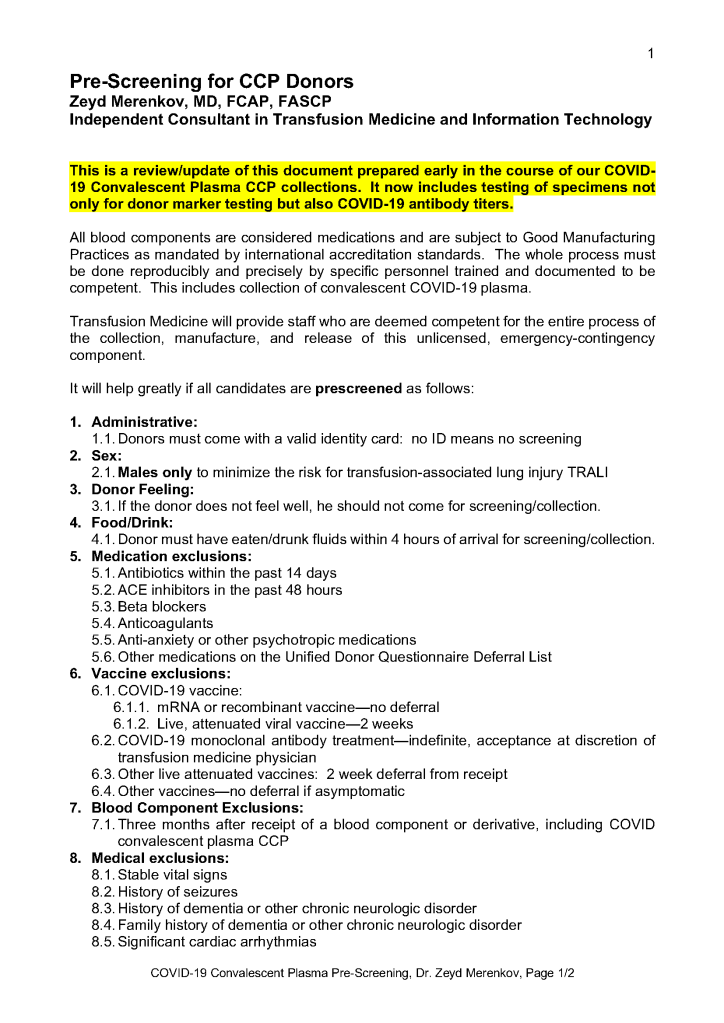
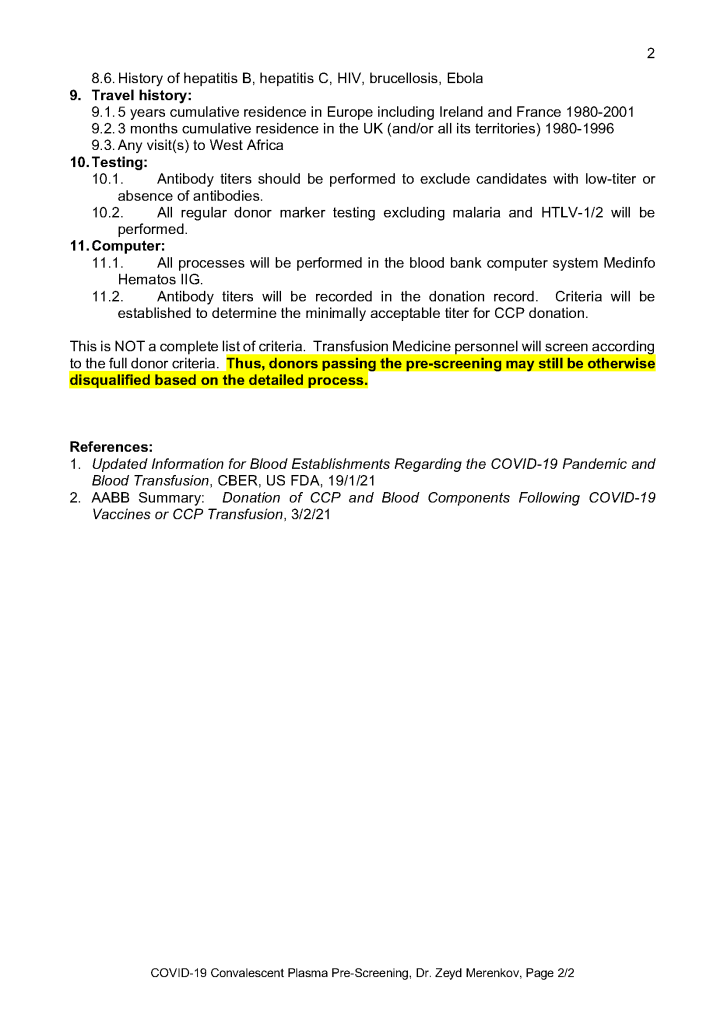
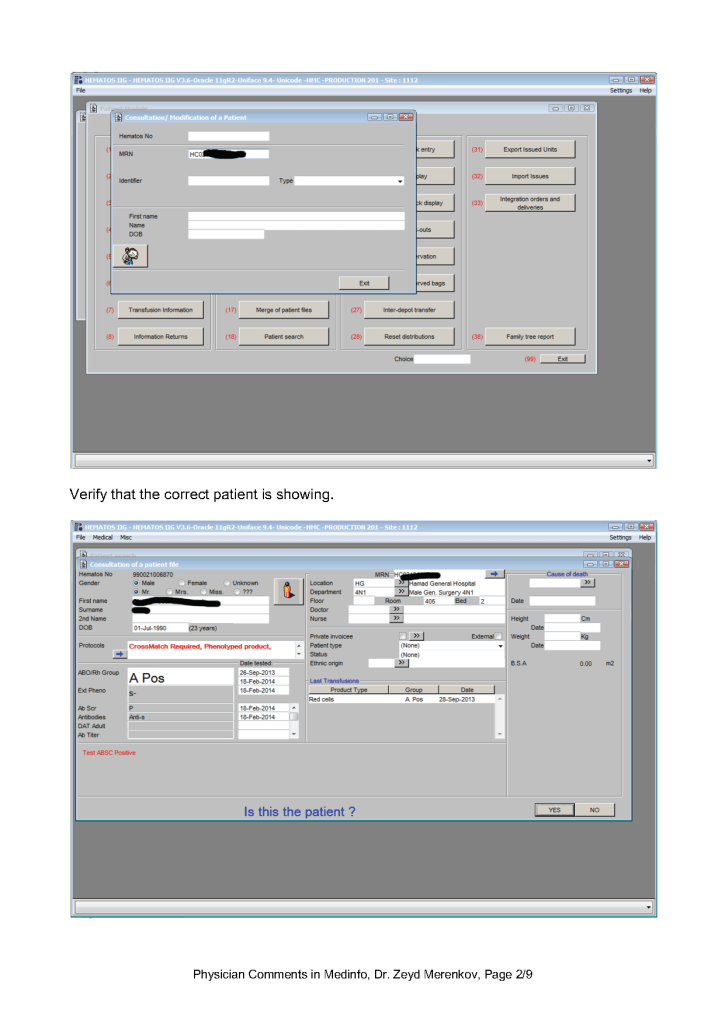
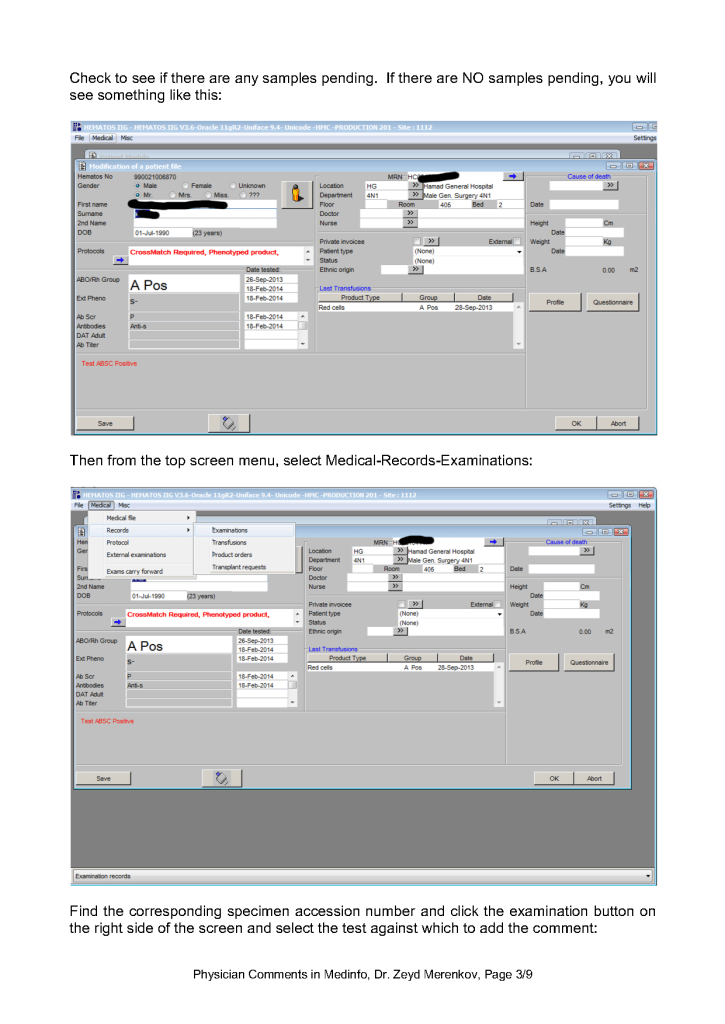
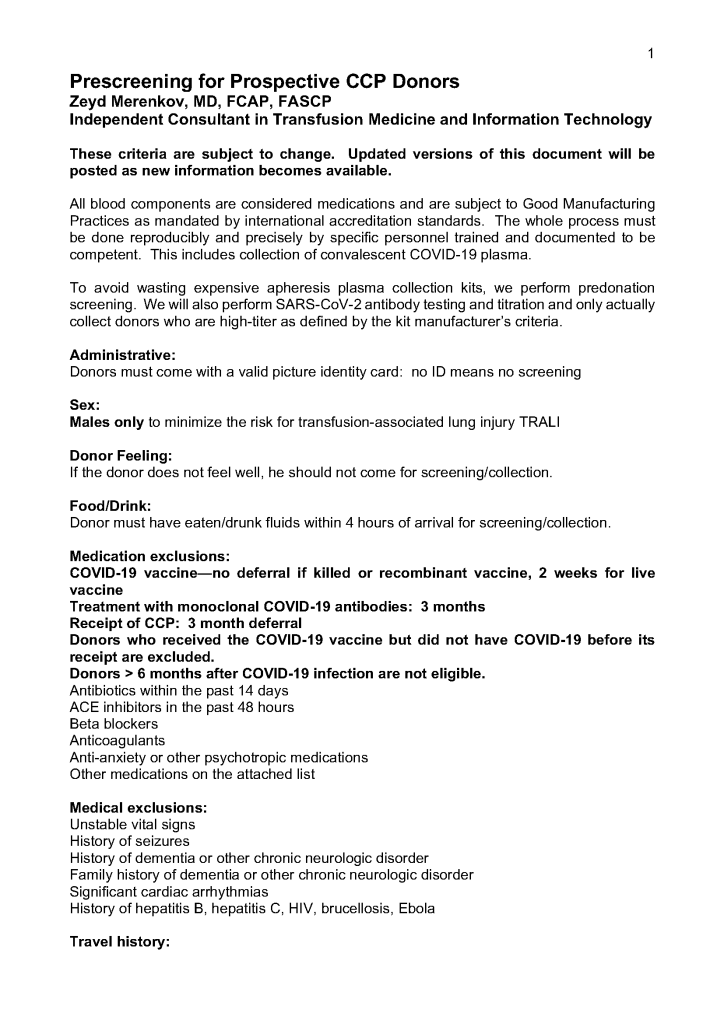
Blood Bank Software is Dynamic, NOT Static

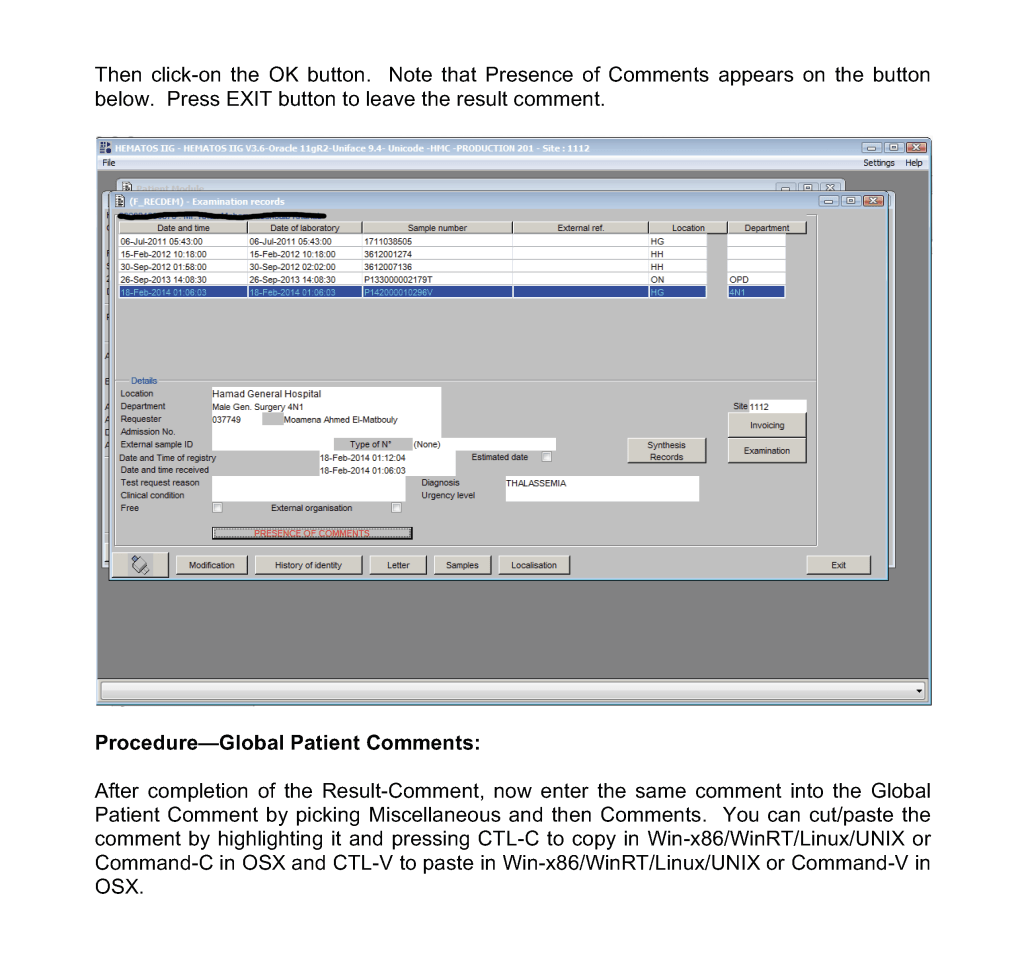
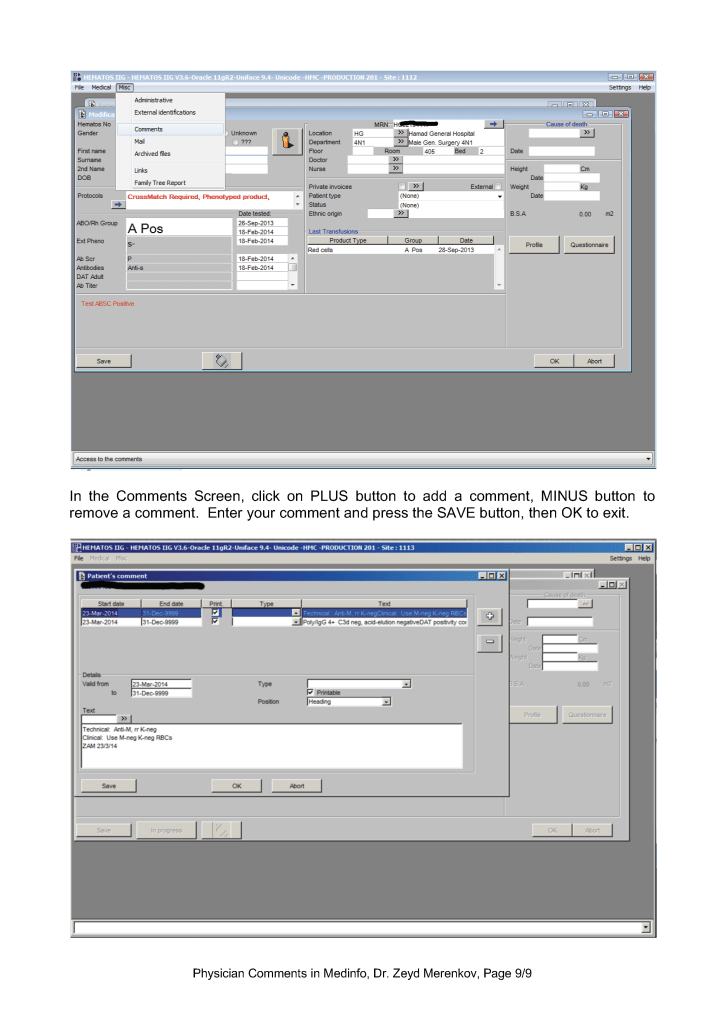
I was recently talking with one of the hospital software system administrators from my previous site.  He had originally worked on building the Medinfo system, but was then reassigned to the laboratory modules of the hospital information system.

His alarming comment to me was that the Medinfo build was completed so there was no need to worry about it now—it was finished.  I guess he was looking from the perspective of the general laboratory software.  There is no need to make major changes to the build, just update interfaces and troubleshoot.

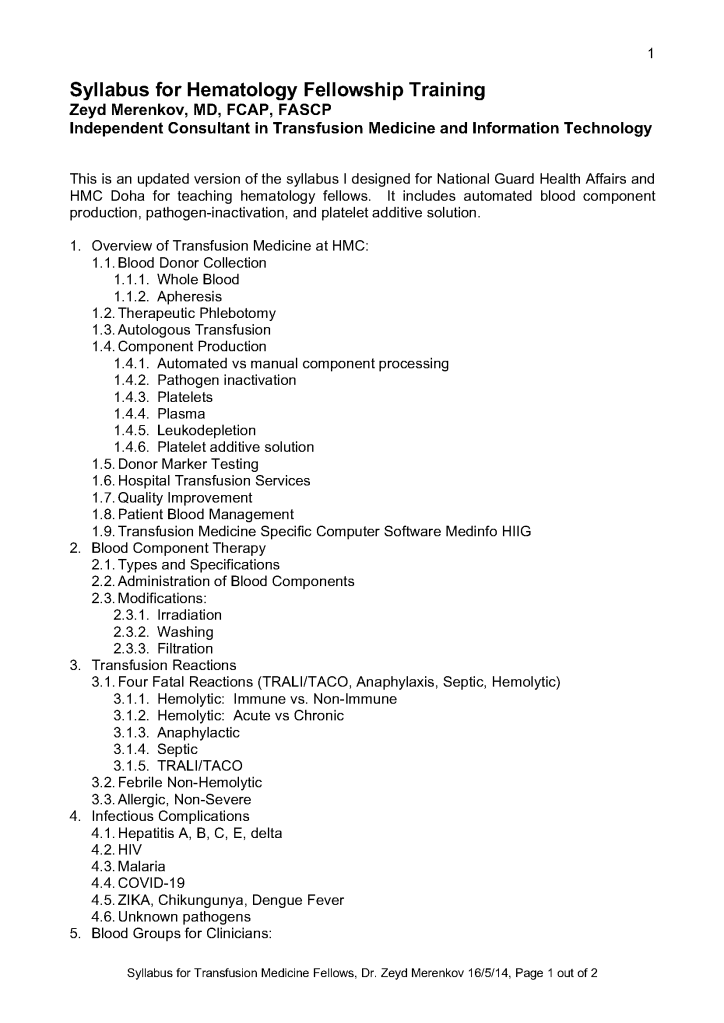
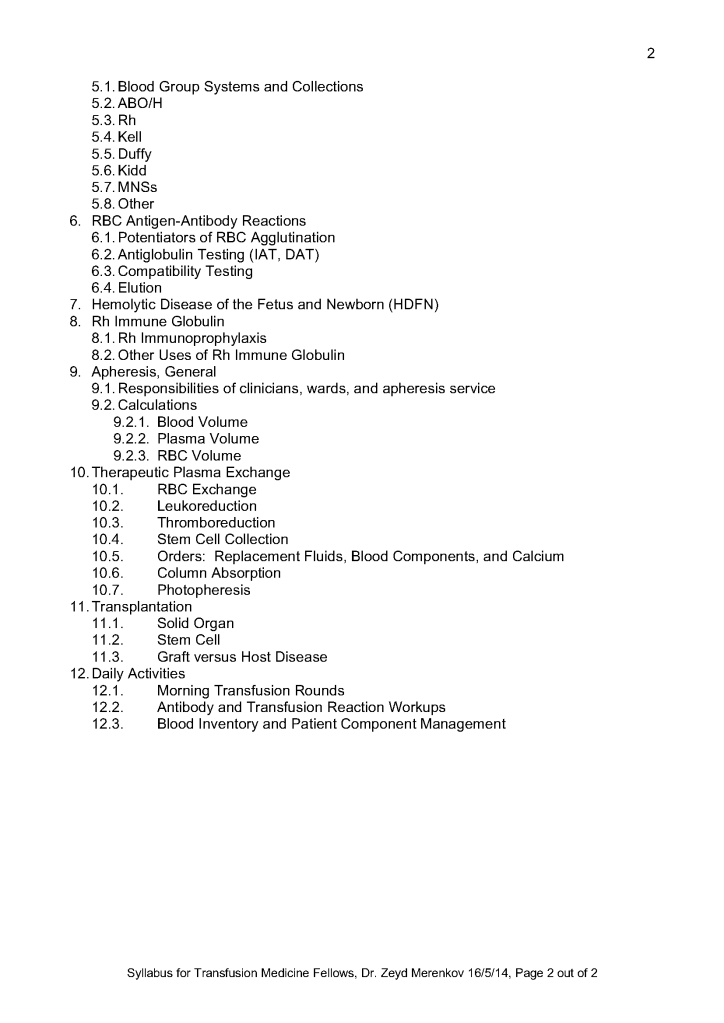
I was surprised.  He had no idea of how many times we have to update the structure for new rules and regulations, and changes in blood bank practice—let alone emerging pathogens such as ZIKA, dengue, Chikungunya, and most recently, COVID-19.

My daily morning routine was to survey several blood bank websites with changes to blood donor criteria including US FDA CBER, read the transfusion journals (Transfusion, Vox Sanguis, etc.), AABB, and ASFA.  If there were any changes pertinent to our organization, I had to make interim policies and procedures, and finally prepare specifications for changes in the Medinfo software.

The Medinfo engineers would prepare flow charts of the proposed changes and implement them in a test environment for the Super-Users to test.  I had to prepare validation protocols for the testing, and then review the validation results and finally approve the adoption of the changes.

I cannot remember even a month going by without some revision in the donor protocols.  When COVID-19 came, I had to prepare a parallel, but separate, processing and allocation/release system.

This was a never-ending story that kept the Super Users and the local Medinfo engineers busy.  I always reminded the hospital information system staff that playing with blood bank software was like playing with fire:  there is a good chance you will get burned if you do not set it up properly.

31/10/20

Opinion: International Perspective

In all my years practicing medicine outside the United States, I have come to appreciate working with a diverse group of health care professionals from many countries and cultures and with many different primary languages.

I learned that there are many different international standards and not all agree with each other.  Yet, despite the apparent contradictions, they all work to improve patient care and were generally successful.  It made me reconsider my roots and think less dogmatically and be willing to learn from other perspectives.

This applies in many ways.  First, which English should we use?  Most people are at least somewhat aware of American English, but there are differences with British, Australian, and international English—even the term “blood bank” may have different meanings:  is it a hospital transfusion service, is it a donor center, or some combination of the two?

I have worked at many sites where I was the only person native in English.  I always tried to conceive how difficult it could be for someone non-native to understand and communicate in a highly technical and highly Germanic structured language.  I considered the scenario where I had to work in another language exclusively and perform all my tasks—I highly respect my staff having to cope with this.

English technical writing includes a lot of passive voice, subjunctive mode, perfect tenses, and participles.  How formidable a barrier are these to staff whose native languages may not use these structures?

I am not saying that English is the best language to perform the work in, but it is most prevalent one so everyone must cope with it.  I told many of my staff to learn German to better understand English grammar.

What bothers me is that certain software vendors and visiting lectures send speakers and staff who ONLY think in American English and American culture.  I can think of several anecdotes:

One speaker was talking about hyperlipidemia and used non-SI units.  He kept stating cholesterol > 200 and LDL-cholesterol > 120 to an audience who only used SI units.  Could the audience quickly convert to cholesterol > 5 and LDL > 3?  Did they know what a temperature of 104 F was 40 C?

Another speaker for a software company used an analogy of collecting maple sap and making maple syrup—in a presentation in the Middle East.  How many in the audience even knew what maple syrup is?

In building a series of software modules, some company staff used 24-hour clock and others used 12-hour clock.  It was chaos trying to define a 24-hour interval between the different modules.

Finally, I think of the Aesop’s fable about the mother who gave birth to a very ugly child, but to her, he was the most beautiful child in the world—so much so that she entered him into a beauty contest.  Well, each of us is the “mother” to our documents and memos.  The writing looks good to us and is perfect, but do our staff interpret it the same way we do?

I had my staff read my documents and then explain back to me what I was trying to say.  I was shocked at the differences in many cases.  After this, I always included a validation step to have other people read and interpret what I was saying—and correct any misconceptions in the writing before I finally released the document.

In summary, it is a whole new world outside the United States.  Don’t assume everyone thinks the same way or uses the same criteria to accomplish goals.  Be open to this and you will have a rewarding international career.

30/10/20

Document Specification

There should be a clear specification of how to prepare documents (policies, processes, procedures, and forms for Transfusion Medicine. The following is a draft document prepared by Transfusion Quality Management and myself for HMC in Doha. I want to thank Ms. Editha Durante, then Quality Manager and Quality Reviewer at HMC for all her work on this.

29/10/20

Directed Donations

Principle:

Directed donations are used for dedicated components from a particular donor for a specific patient.

Policy:

  1. All requests for directed donations must be specifically approved by one of the Transfusion Medicine physicians.
  2. Indications—patient has need of a rare component type, including:
    1. Antibody to a high-incidence/prevalence RBC antigen (e.g. anti-PP1Pk)
    2. Neonatal isoimmune thrombocytopenia or other platelet antibody situation (anti-HLA or platelet-specific)
    3. IgA-deficient plasma
  3. Other requests:
    1. If #2 above does not apply but someone wants to donate on behalf of a particular patient, the final decision to proceed will be made by the transfusion medicine physician.
  4. All directed donations must be registered as such in the Medinfo Hematos IIG computer system to ensure that the proper ISBT label is generated.
  5. Directed donors must meet the same eligibility criteria as regular donors.
  6. Special conditions apply to apheresis components from a dedicated donor:
    1. If a directed apheresis donor passes initial donor testing and is dedicated for one particular donor, then additional plateletpheresis donations may be accepted for 30 days without further testing.
  7. The platelet apheresis component may be directly released without further testing if it is an emergency situation.  Otherwise, we will proceed with full donor testing before release.
  8. Exceptions to the above policy can only be made by the Transfusion Medicine Consultants or designate;  all exceptions must be documented in writing.
  9. All RBC and platelet components from directed donations will be irradiated before release.

Please note:

  1. Plateletpheresis donations may be collected twice weekly from the same donor, 48 hours apart, for a maximum of 24 times per year.
  2. If more than 200 ml RBC loss occurs within an 8-week period from apheresis component collection, that donor must be deferred for 8 weeks.

Reference:

Standards for Blood Banks and Transfusion Services, Current Edition, AABB, Bethesda, MD, USA

Processes and Software Building 54: Confidential Unit Exclusion

As per AABB Standards, each donor must have the opportunity to confidentially exclude the use of his collected blood AFTER the collection.  He may use a confidential code associated with his collection encounter.  Donor Center staff will mark the Confidential Unit Exclusion and the donor is permanently deferred.  All products made from his/her donation will be discarded.

22/10/20

Look-Back of Patients and Donors

Principle:

Using the Medinfo Hematos IIG program, it is easy to perform look-back for patients who have developed an infectious disease that might have been transmitted by a blood component.  Likewise, if a donor develops an infectious disease that is transmissible to patients, we can check which patient(s) received blood components from the incriminated donor.  The time interval for checking will vary according to local regulations.

Policy:

  1. If a patient is reported to have developed an infectious disease which might have been transmitted by a blood component transfusion:
    1. Review the patient’s infectious marker testing data.
    2. Review the patient’s transfusion history, especially for any transfusions at outside institutions or any other body fluid exposures.
    3. Look up the transfusion history in Medinfo HIIG.
    4. Determine which transfusions occurred during the deferral period for that disease.  Examples:
      1. HBV—6 months
      2. HCV—6 months
      3. HIV—2 months
      4. Malaria—6 months
      5. HTLV—6 months
      6. Syphilis—12 months
    5. Look up the donors for each donation during the specified interval.
    6. Check each donor’s donation records for:
      1. Infectious disease marker testing
      2. Questionnaires—any irregularities noted?
    7. Call donors back for repeat testing (only on advice of the investigating transfusion medicine physician)
    8. Collate all results and prepare an interpretative report.
    9. Interpretative report must be reviewed/released by the Head, Transfusion Medicine.
    10. Submit the report to Infectious Disease and the patient’s most responsible physician
    11. If any irregularities are found, assess processes to make any improvements in an attempt to minimize future risk.
    12. Prepare an OVA according to HMC procedures.
  2. If donor develops an infectious disease:
    1. Review the donor’s infectious marker testing results.
    2. Check if the donor had any body fluid exposures.
    3. Obtain new specimen from the donor.
    4. Look up all components made from that donor.
    5. Determine which transfusions occurred during the incubation period for that disease.  Examples:
      1. HBV—6 months
      2. HCV—6 months
      3. HIV—2 months
      4. Malaria—6 months
      5. HTLV—6 months
      6. Syphilis—12 months
    6. Recheck the complete donor history including infectious disease marker testing and questionnaire
    7. If samples are available from the interval, repeat donor marker testing on it.
    8. Look up the patient/recipients for each donation during the specified interval
    9. Check each patient’s records for infectious disease marker testing results
    10. Call patients back for repeat testing (only on advice of the investigating transfusion medicine physician in conjunction with the Infectious Disease department.)
    11. Collate all results and prepare an interpretative report.
    12. Interpretative report must be reviewed/released by the Head, Transfusion Medicine.
    13. Submit the report to Infectious Disease and the patient’s most responsible physician
    14. If any irregularities are found, assess processes to make any improvements in an attempt to minimize future risk.
    15. Prepare an OVA according to HMC procedures.

Reference:

Standards for Blood Banks and Transfusion Services, Current Edition, Bethesda, MD, USA

Policy: ISBT Component Label Usage

Principle:

Blood components will only receive final ISBT labels for the purpose of transfusion upon completion of the production processes specific for that component and will be specifically prepared by the Medinfo Hematos IIG software in accordance to Council of Europe CE Standards.

An improper label, be it for the wrong unit, or improper designation can have catastrophic results to the recipient.  This is why this is such a CONTROLLED process under Medinfo Hematos IIG.  There are label-printing softwares available that do not follow these rules, but I consider them dangerous to use since these safeguards are not enforce—they are NOT permitted here.

Policy:

  1. The formatting of ISBT labels is addressed in the Interim Policy: ISBT Labels (a previous post).
  2. The selection of the ISBT E codes will be made by the Division Head, Transfusion Medicine and Laboratory Information Systems.
  3. Blood component labels, either final or in-process are ISBT-specific and may only be generated by the Hematos IIG computer system.
  4. The ISBT specimen are generated at the time of donor registration.
    1. ISBT specimen labels are of limited number and cannot be reprinted by operational staff.
      1. Reprinting is only allowed by Transfusion LIS with approval of the Division Head, Transfusion Medicine/Laboratory Information System
  5. Final ISBT blood component labels may only be attached at the successful completion of component processing according to the HIIG workflow processes specific for each component.
  6. ISBT labels are also generated and attached after component modification (washing, irradiating, aliquoting, pooling) in accordance with the respective HIIG workflow processes.
    1. Multiple modifications may be performed before the final ISBT label is generated by HIIG.
  7. No modifications of the HIIG-generated ISBT labels is permitted.
  8. No manual corrections or attachment of additional, non-ISBT labels is permitted.
  9. During computer down-times, manual (non-ISBT) labels may be generated internally and will be replaced by the formal ISBT label using Manual Stock Entry after resumption of HIIG.
  10. For solvent-detergent-treated plasma SDP (e.g. Octaplas), the following applies:
    1. SDP (Octaplus) ISBT labels are prepared and attached by the manufacturer Octapharma during the manufacturing process and will be used/read as such.
    2. Thawed SDP will receive a new ISBT label at the time of thawing.

References:

  1. HIIG Workflows, Component Processing, 1002
  2. Standards for Blood Banks and Transfusion Services, Current Edition, AABB, Bethesda, MD, USA
  3. Policy:  ISBT Labels, Current Edition—previously posted
  4. TRM.43625 CAP Checklist

20/10/20

Processes and Software Building 53: Donor Extended Rh and Kell Typing

For this typing, I always had both automated and manual methods set up on the blood bank computer system Medinfo Hematos IIG.  The automated method had a bidirectional interface between Medinfo and the instrument.   Medinfo did not need a separate middleware.  A truth table was prepared for acceptable results for automatic interpretation.  Other results had to be manually interpreted by someone with the appropriate security level.

It was standard in my donor processing laboratory that extended Rh typing (EeCc) and Kell were performed.  We were in a region with many sickle cell and thalassemia patients.  Having all RBC units pre-typed in the Blood Donor Center expedited selection and release in the hospital blood bank—especially for matching K-negative units to K-negative patients and extended Rh phenotypes for sickle cell patients.

The manual testing option is structured similarly.  Within Medinfo, it is easy to change the methodology or have more than one methodology if the system is so built.  Thus, if the analyzer for this typing was down, the staff could select the manual methodology.  Likewise, if one testing center went off-line, the work could be completed at another site—no need to repeat testing already completed from the first site.  This flexibility could apply to any test in system.

The manufacturer’s recommendations for the particular reagents in use were strictly followed.  Most importantly, Medinfo can be configured for any set of reagent values.

Please refer to the sample flowchart which also includes Cw and DVI+ typing.  The same process could apply to patient testing, but some reagents would use a DVI- reagent.

18/10/20

Processes and Software Building 52: Donor Antibody Screening

For donor antibody screening, I always had both automated and manual methods set up on the blood bank computer system Medinfo Hematos IIG.  The automated method had a bidirectional interface between Medinfo and the instrument.   Medinfo did not need a separate middleware.  A truth table was prepared for acceptable results for automatic interpretation.  Other results had to be manually interpreted by someone with the appropriate security level.

I did not use pooled cells, but instead 2, 3, or 4 cell screens at various times based on the available reagents.  Personally, I prefer a 3 or 4 cell screen which is more sensitive—I want homozygous Jka and Jkb cells present.  All positive cases had an antibody identification performed.  According to my medical decision, I did not routinely allow any donor to be collected if he/she had a positive antibody screen.  Some standards would permit the use of RBCs from such a case, but this was not my preference.  In cases with rare phenotypes, I would allow production of RBCs (e.g. Bombay donor with anti-H, patient with anti-Tja (PP1Pk)) for patients with those rare types.

The manual testing option is structured similarly.  Within Medinfo, it is easy to change the methodology if the system is so built.  Thus, if the analyzer for antibody screening is down, the staff can select the manual methodology.  Likewise, if one testing center goes off-line, the world can be completed at another site—no need to repeat testing already completed from the first site.  This flexibility can apply to any test in system.

The manufacturer’s recommendations for the particular reagents in use were strictly followed.  Controls were included.  Most importantly, Medinfo can be configured for any set of reagent values.

Also note that Medinfo will check for the donor’s previous testing history and compare results.  If there are discrepancies, this will require manual review.  Normally, a donor with a positive antibody history is indefinitely deferred.  The transfusion medicine physician could remove such a deferral if indicated.

Refer to the following flow diagram for a three-cell  and four-cell screens.

16/10/20

Policy: ISBT Specimen Labelling Audit

Principle:

ISBT specimen labels have a check-digit to reduce the risk of misreading the label.  They are generated by the blood bank computer system Medinfo.  Normally one group of labels is printed for all needs (donor unit, marker testing, donor immunohematology, and donor processing.  Reprinting the same number is restricted to minimize the risk of using the wrong label on a specimen or unit.  These labels are NOT used for patient testing.

ISBT specimen labels are only printed at the time of donor registration.  We must securitize them so that they are not used for other, potentially malicious purposes.  Remember:  a labelling mistake may cause fatality in a patient receiving the wrong blood component.

Policy:

  1. ISBT specimen labels are only for blood donor specimens, initially labelling of donor collections, and intermediate processing of components.
  2. They must be applied to the primary specimens directly at the donor’s bedside.
  3. They must be applied to aliquots from the original ISBT-labelled tubes.
  4. They may NOT be applied to any other specimen (e.g. for routine laboratory testing outside Transfusion Medicine)
    1. If an ISBT label not corresponding to the correct donor is discovered, an OVA or event report must be generated and investigated immediately.
  5. If additional ISBT labels are needed, this must be documented on a specific audit sheet with signature of the person taking the extra labels and a second person to witness their removal.  It will also be noted in the Medinfo system for auditing purposes.
  6. The audit sheet must be kept in a secure place for future reference in Blood Donor Center.

14/10/20