Training Future Transfusion Medicine Physicians: Need for Technical-Medical Expertise

In a previous post, I discussed transfusion training for hematology fellows and general pathology residents.  I have no expectations that most of them have any interest in the field so I suggested concentrating on the interpretation of the direct antiglobulin test DAT and turn-around-times for services.

In contrast, the transfusion medicine physician in-training needs to understand in detail all processes, donor and patient—especially test interpretation so that he/she can make medical decisions and variances.

During my training, I was fortunate to be in a residency training program that also had an American Specialist-in-Blood Bank SBB training program.  To a large extent, I attended the SBB program and even worked on the “wet” specimens.

I had no delusions that I would ever function as technologist or SBB in the blood bank.  However, that extended blood bank training has made me the physician I am.  I can correlate advanced, even reference, procedures to my medical knowledge and thus provide a unique offering.  In contrast, even the SBB is not a physician and cannot make the medical correlations.  Recently, I was flattered at an AABB meeting when the speaker thought that I was an SBB.

In certain regions where reference immunohematology laboratories and SBBs or equivalent are rare, the transfusion medicine should have sufficient technical background to help fill this gap.  In my practice, I review all antibody and DAT workups and make interpretative comments for the physicians and nursing staff.  These comments are entered into the blood bank computer system.

I personally tutor the trainees and make certain that they understand potentially dangerous patterns such as antibodies to high-incidence antigens, significance of the autocontrol in panreactivity, and assessing for fatal acute transfusion reactions—both hemolytic and non-hemolytic.

It also helps when I can discuss with my technical staff my interpretations and choices for clinical management.  They get a better idea how important their work is for patient care and understand how any errors may adversely affect the patient.

In regions where there are good immunohematology reference laboratories, some of this may be less necessary.  I lament that transfusion medicine physicians may not maintain these skills and must rely on others to their detriment.  Even if one is comfortable with this, the physician is still ultimately responsible for making the clinical decision.
ABO Subgroup Testing for Organ Donors

Principle:

Organ donors with a history of RBC transfusion within the past three months must have ABO subgroup (weak A as detected by A2 cells and anti-A1 lectin) if the transfusion included group A RBCs.

Policy:

  1. Organ donors who are typed as A should be tested to distinguish group A1 from weak subgroups of A.
  2. Use anti-A1 lectin and A2 cells as indicated.

Reference:

Standards for Blood Banks and Transfusion Services, AABB, Current Edition, Bethesda, MD, USA

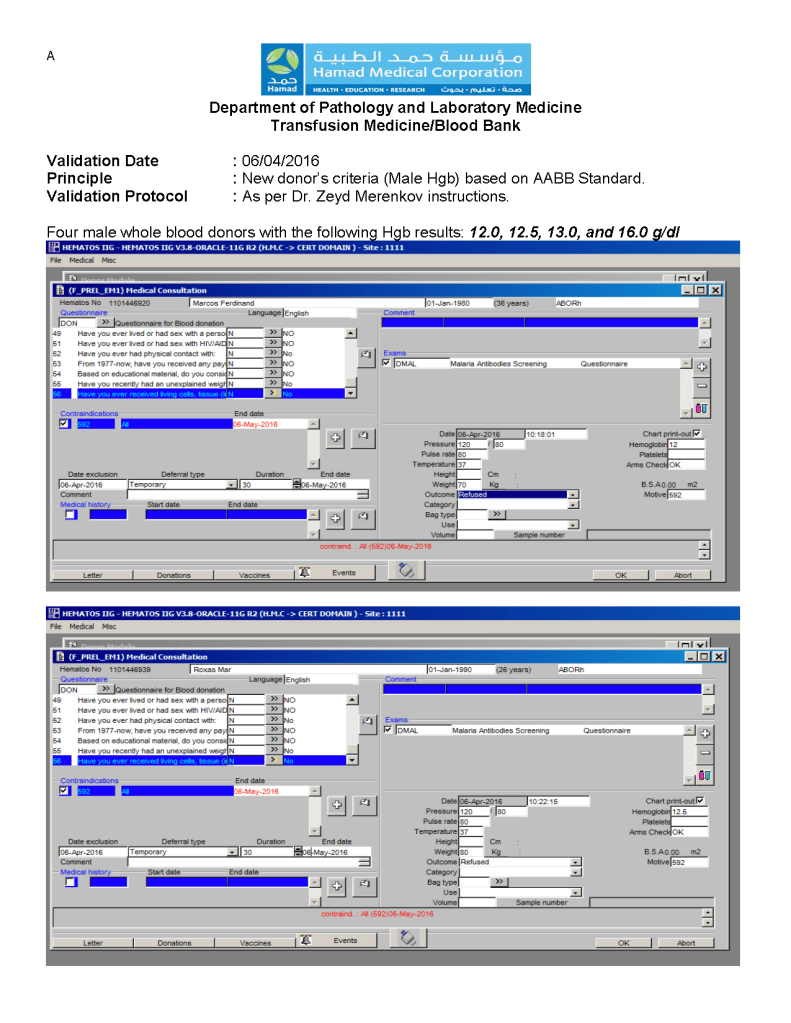
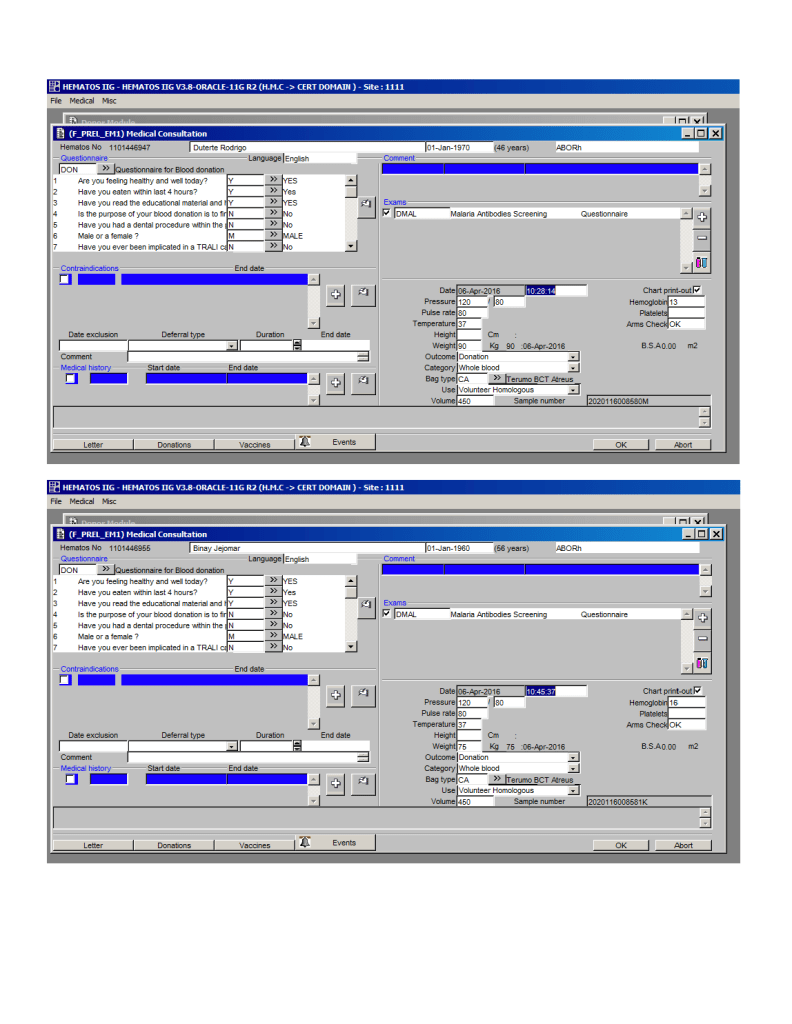
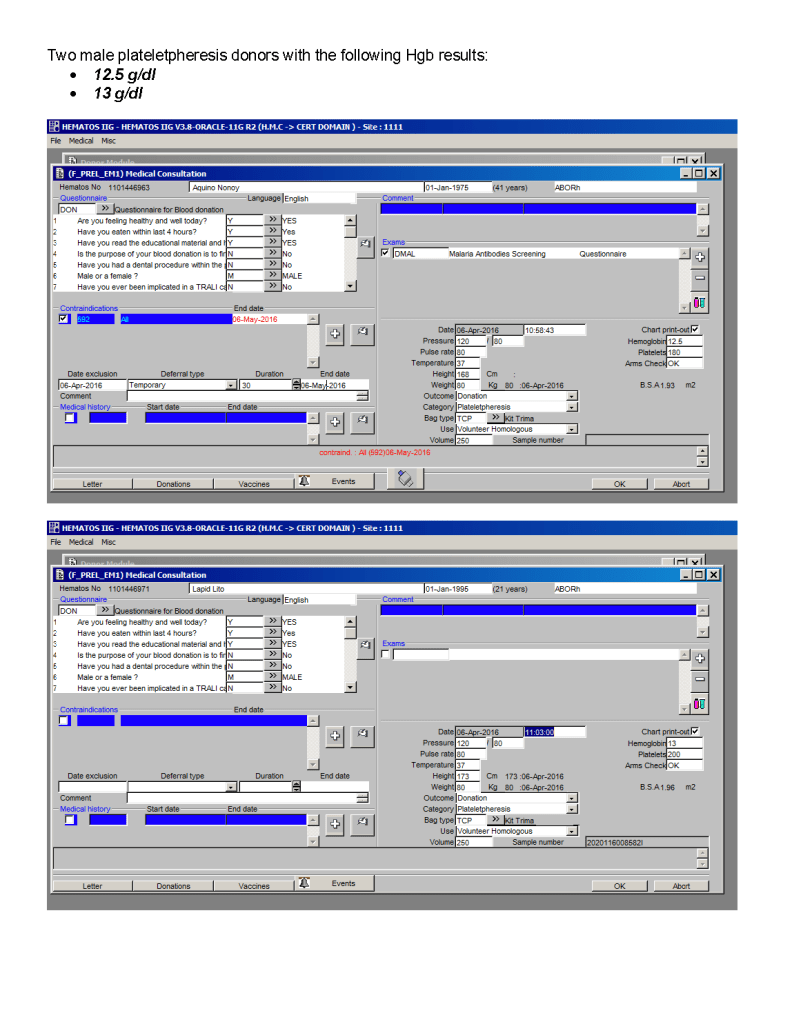
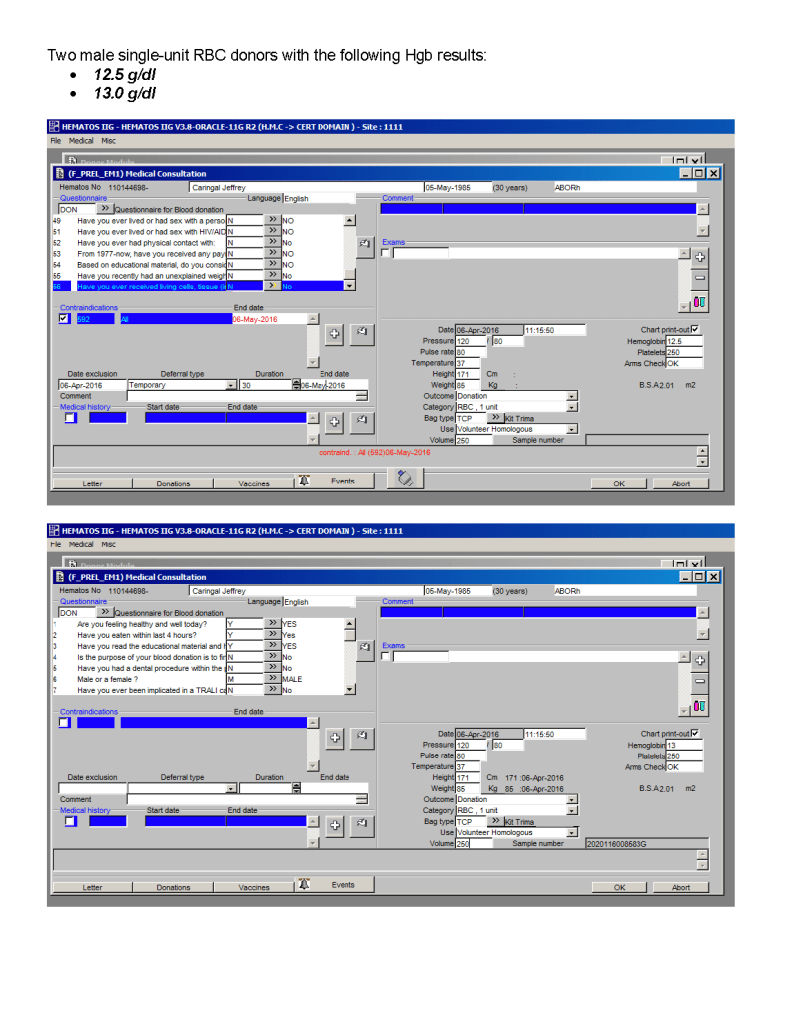
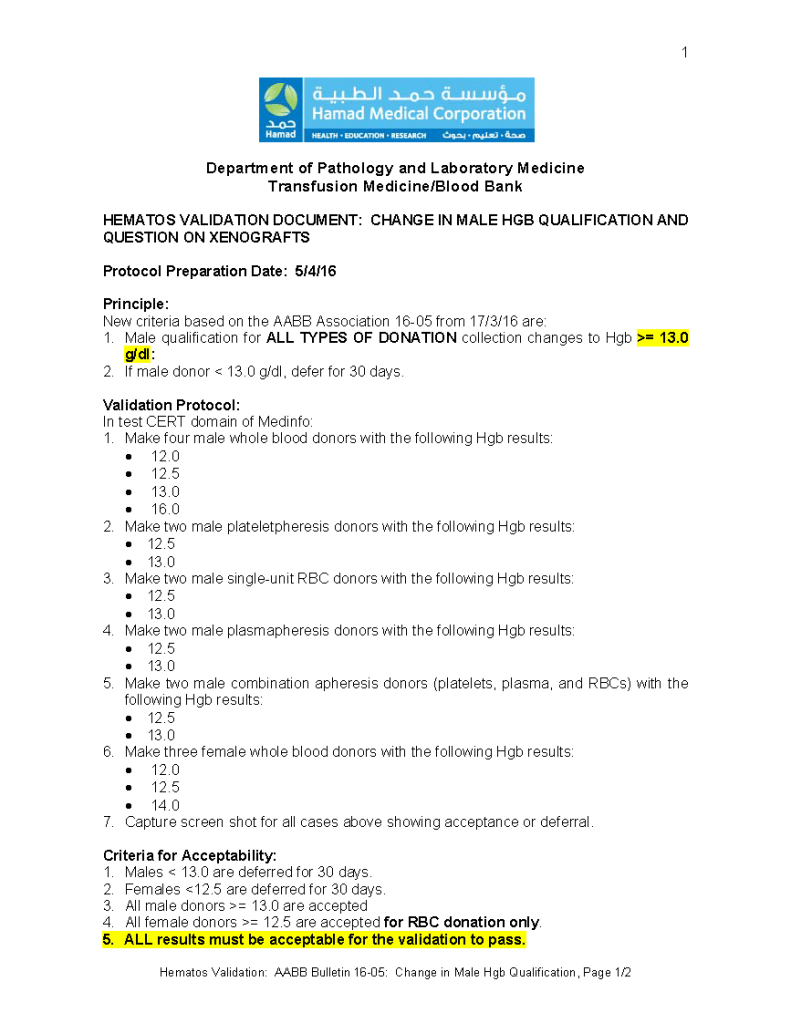
Sample Validation Change Protocol: Donor Hgb Levels

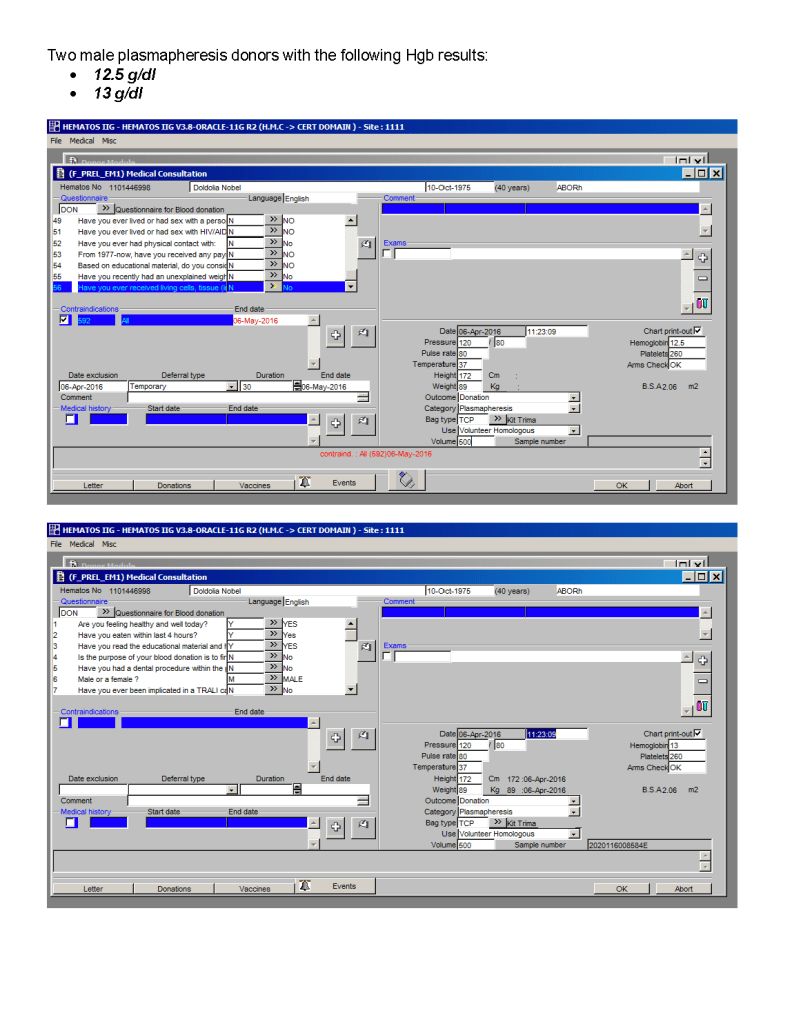
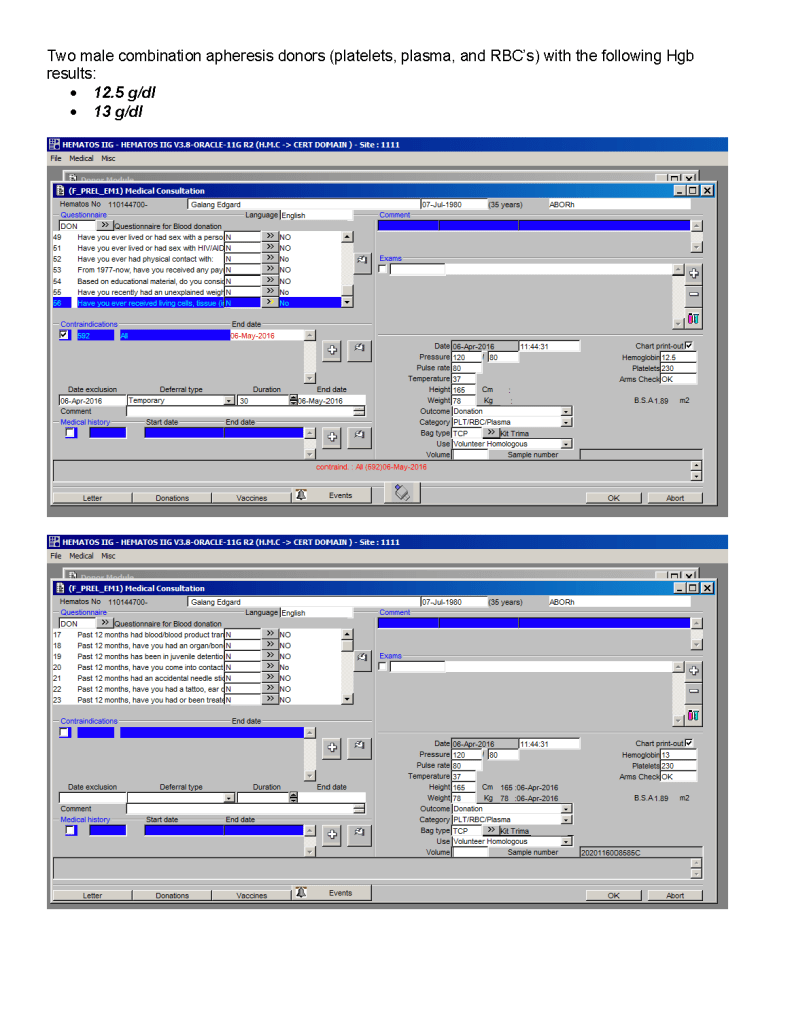
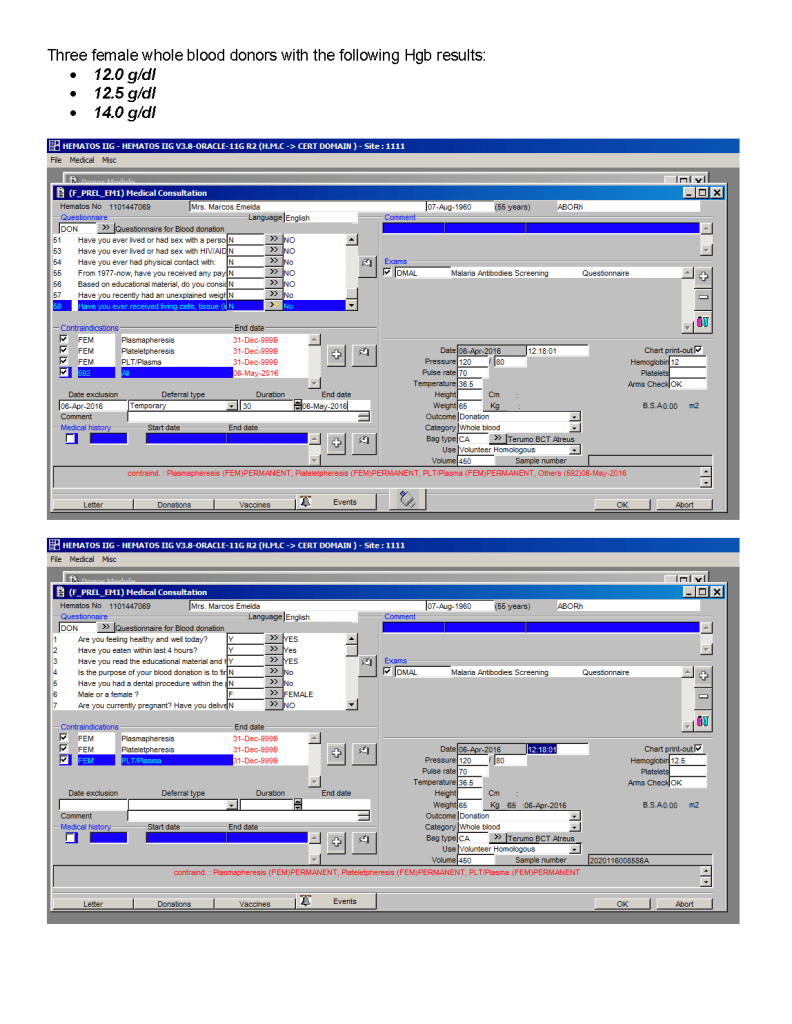
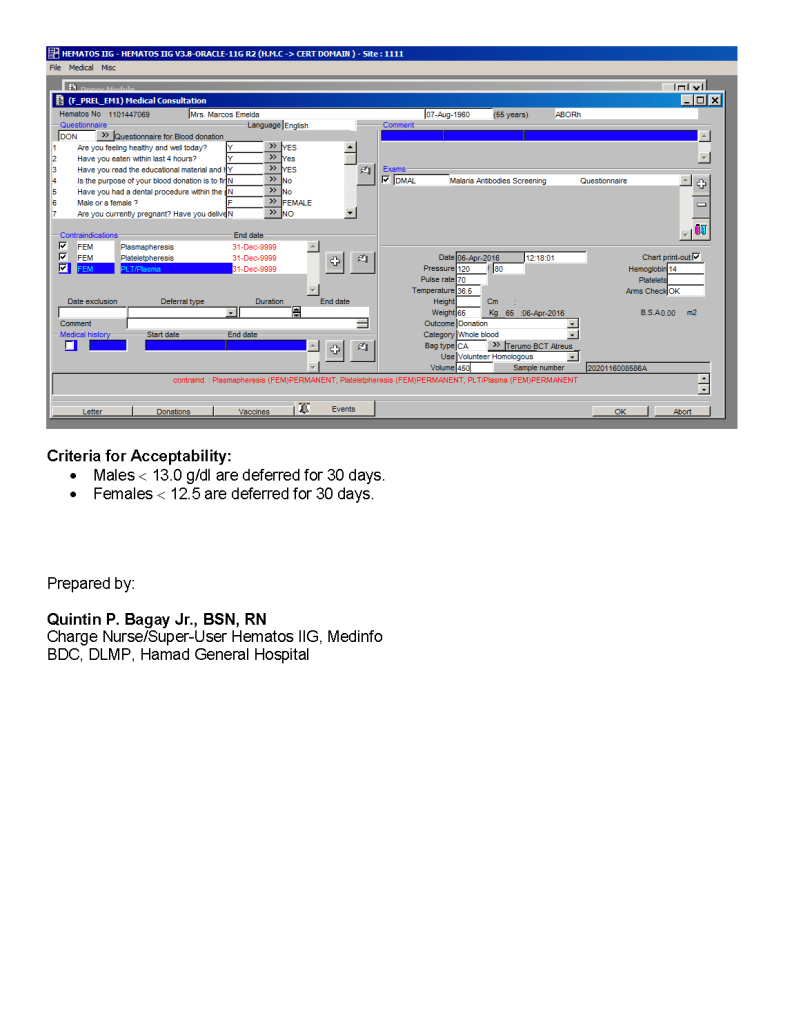
Changes to donor criteria can occur at any time.  This example is the change in donor criteria for males to 13.0 g/dl based on AABB Bulletin #16-05.

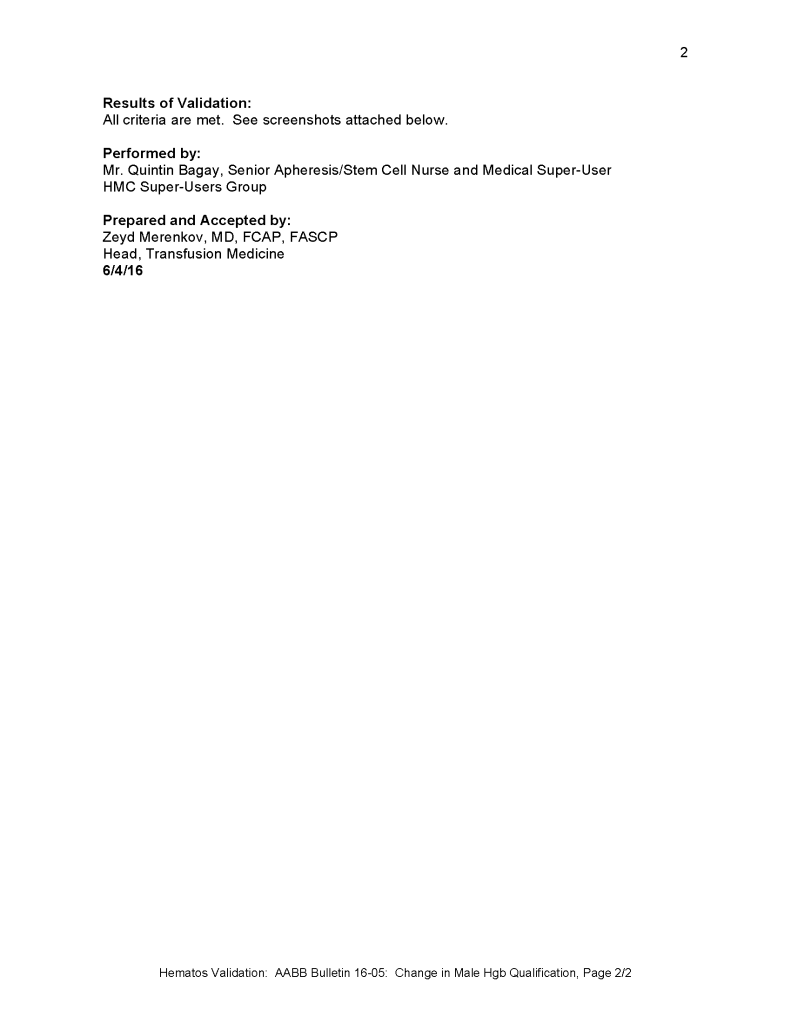
I made a validation protocol, which was subsequently performed by a Donor Center Medinfo Super-User.   The data was then sent to me for review and then accepted.

Note that females were included in the testing for regression purposes.  Females were only permitted to donate RBCs—all other components were discarded in production. Contraindication information appears in RED.

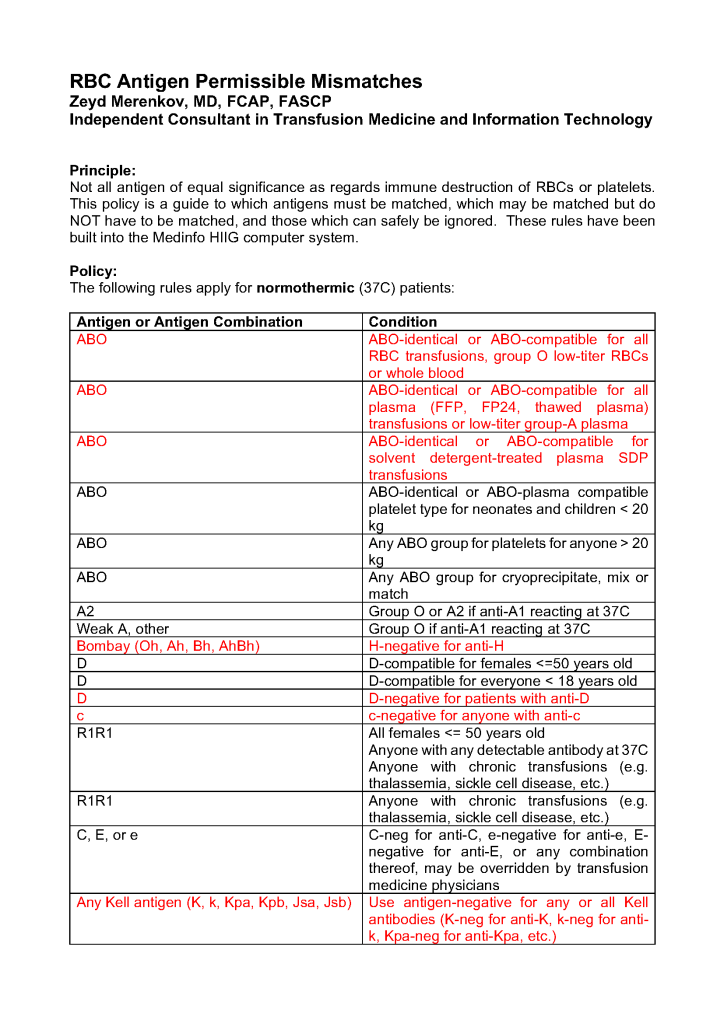
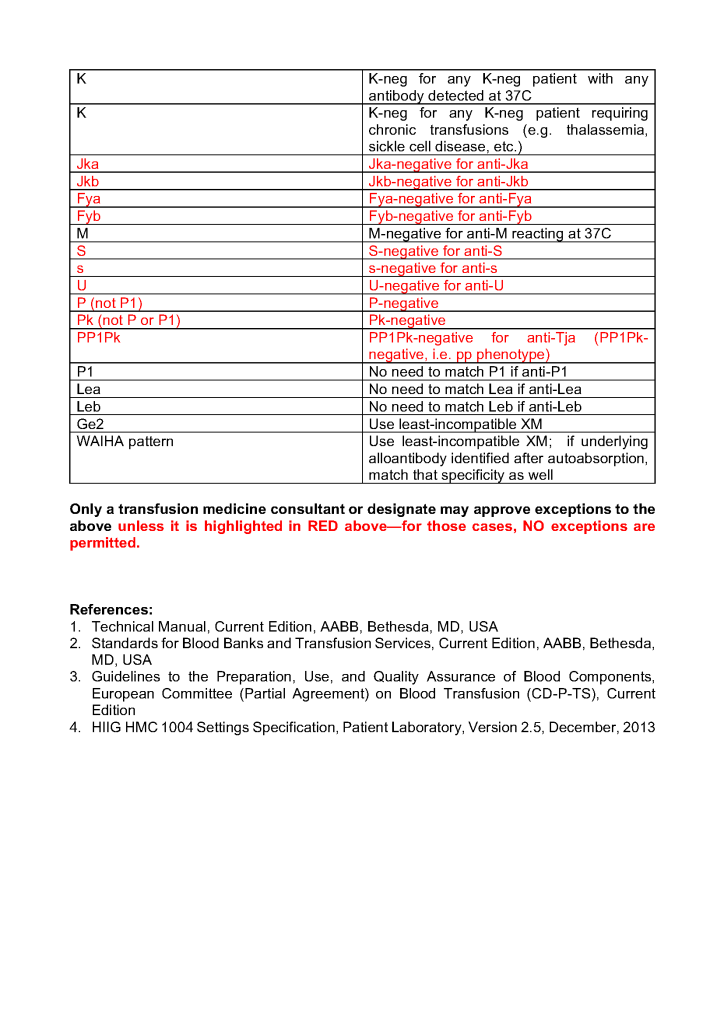
Permissible RBC Type Mismatching

The following was my interim policy at HMC for permissible matching and mismatching. This assumes that the patient is not being transfused while in a hypothermic state.

The prohibited options were blocked in the Medinfo Hematos IIG computer system. WAIHA least-incompatible release required physician approval. This protocol did not apply to low-titer group A or low-ABO-titer whole blood units, which were not available at the time.

Biologic Product Deviations

Principle:

Any nonconforming product that is released for patient use must be reported through the official channels.  Since there is no equivalent to the US CBER, this policy outlines the process for the HMC organization, the only provider of blood components for the State of  Qatar.

Definition:

Nonconforming Blood Component:  Any blood component not meeting the production criteria set in the policies, processes, or procedures of Transfusion Medicine.  Some examples include:

  • Low-volume RBC or FFP/FP24 units
  • Reduced yield platelet units
  • Units made with materials/supplies that have been recalled by the manufacturer
  • Units produced on equipment or tested with reagents that the manufacturer has recalled from use
  • Units contaminated during the production process

Policy:

  1. Nonconforming components must not be released unless they are reviewed and approved by the Head, Transfusion Medicine.
    1. Full written documentation of the review and the reasons for acceptance must be recorded.
    2. Such acceptance must be exceptional—there must be emergency reasons to resort to using such components.
      1. Minor nonconformances such as units with low volume or reduced platelet levels may be considered for use at times of critical shortage of blood components if they otherwise meet acceptability criteria.
  2. If anyone suspects there has been release of a nonconforming blood component, they should immediately contact the Division Head, Transfusion Medicine.
  3. The Division Head, Transfusion Medicine will conduct an immediate investigation to determine the veracity of the allegation.
  4. If the suspicion is confirmed, the Division Head, Transfusion Medicine will immediately contact the Chairperson, Pathology and Laboratory Medicine.
  5. The Chairperson in conjunction with Head, Transfusion Medicine, will inform the Medical Director and other senior administrative officials as indicated.
  6. A lookback will be initiated to determine if any patients have received the nonconforming components.
  7. The results of the lookback will be reported to the Chairperson, Pathology and Laboratory Medicine and the Medical Director.

References:

  1. Standards for Blood Banks and Transfusion Services, Current Edition, AABB, Bethesda MD, USA
  2. Guidelines to the Preparation, Use, and Quality Assurance of Blood Components, European Committee (Partial Agreement) on Blood Transfusion (CD-P-TS), Current Edition

Body Fluid Exposures

Principle:

New rules have been approved by US FDA CBER for body fluid exposure, tattooing, body fluid exposure, and body-piercing.  By similar logic we will extend this also to HIJAMA.  We will not make any changes to our sexual history/practices or history of sexually transmitted disease treatment or clotting factor deferrals (except fibrinogen.)

Policy:

  1. Effective immediately, we will accept donors AFTER THREE MONTHS from the following activities:
    1. HIJAMA (ritual blood-letting)
    2. Tattooing
    3. Body piercing (e.g. piercing for ear-rings)
    4. Contact with blood of another individual through percutaneous inoculation such as a needle stick or through contact with a donor’s open wound or mucous membranes
  2. A TWELVE-MONTH DEFERRAL still applies after receiving a blood component or blood derivative except clotting factors (excluding fibrinogen concentrate.)
  3. Transfusion of clotting factors remains a permanent/indefinite deferral.

Reference:

Revised Recommendations for Reducing the Risk of Human Immunodeficiency Virus Transmission by Blood and Blood Products, Guidance for Industry,  U.S. Department of Health and Human Services, Food and Drug Administration, Center for Biologics Evaluation and Research, April 2020

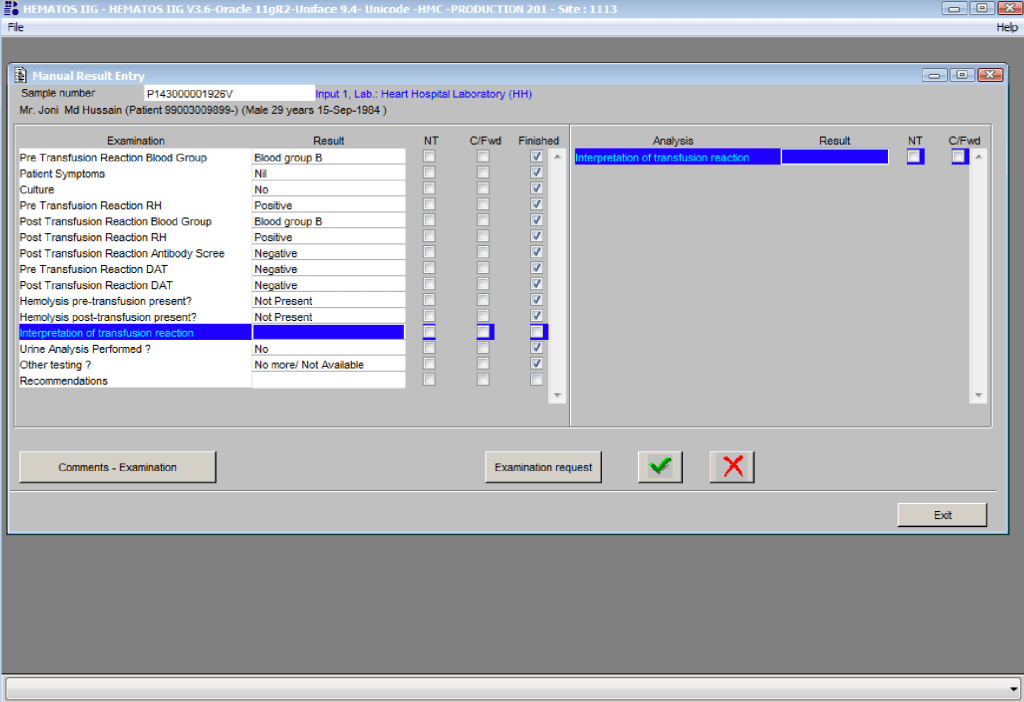
Physician Review and Data Entry of Transfusion Reactions

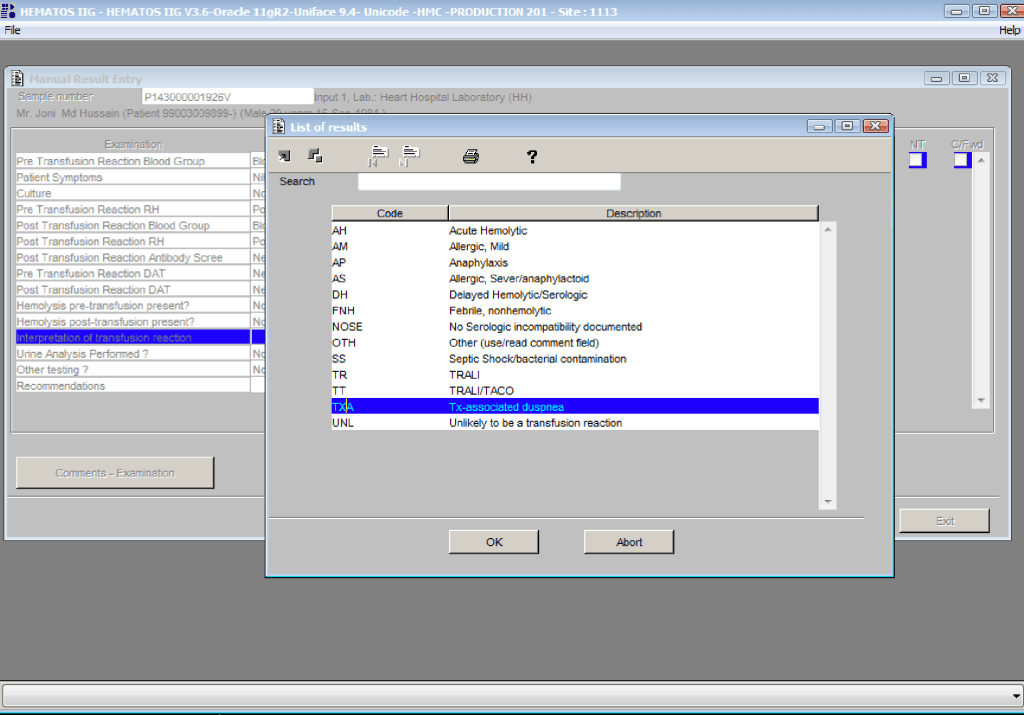
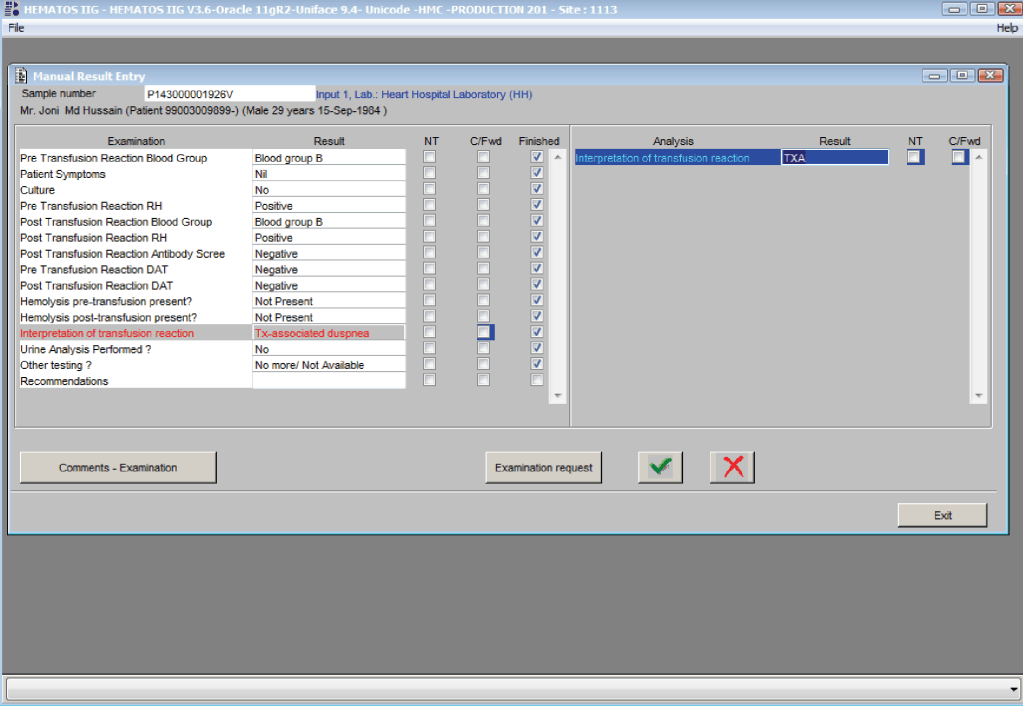
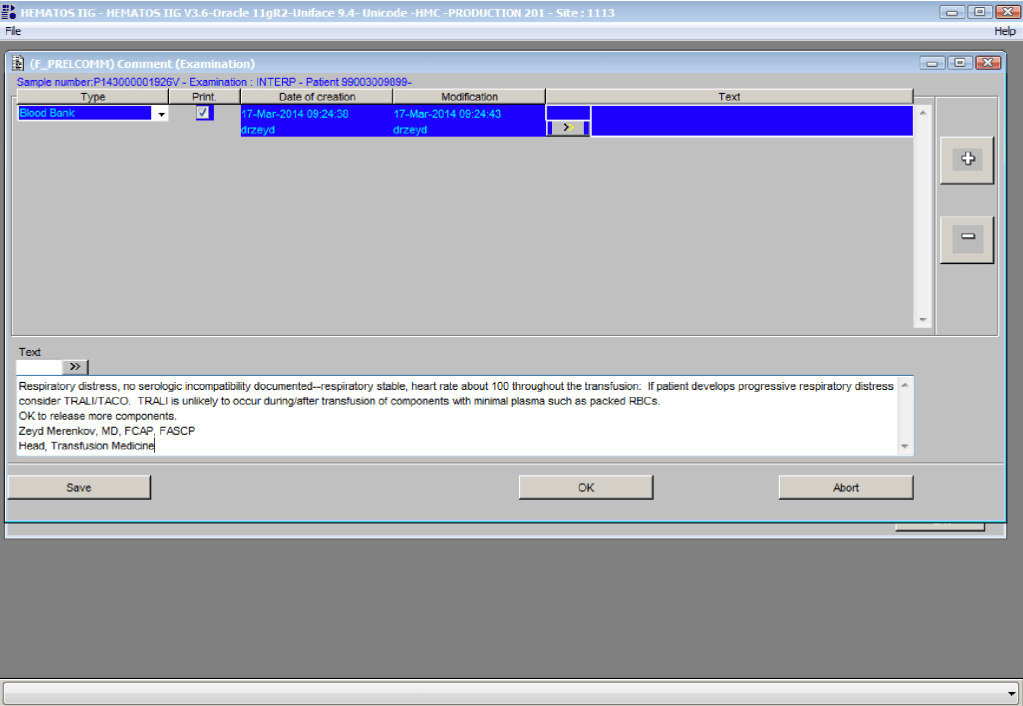
Physicians must enter their interpretations and recommendations for each transfusion reaction review.  In addition, they may enter comments against any of the data.  This post shows the process used in Medinfo Hematos IIG.

By highlighting Interpretation (left side), they then click on the Result Field (right side) and select their interpretation from the drop-down menu.  They can also select other and then enter a comment.

References:

  1. Standards for Blood Banks and Transfusion Services, Current Edition, AABB, Bethesda, MD, USA
  2. Guidelines to the Preparation, Use, and Quality Assurance of Blood Components, European Committee (Partial Agreement) on Blood Transfusion (CD-P-TS), Current Edition

Clarification on Quality Control of Reagents for Antibody Screening and Identification

Principle:

This policy is a reiteration of current policy to QC reagents used for antibody screening and identification to document how current practice meets these requirements.  This policy is NOT a change from current practice.

Policy:

  1. Each cell used for antibody detection must be checked each day of use for reactivity of at least one antigen using antisera of 1+ or greater avidity:
    1. We will use reactivity encountered during the daily antibody testing:  reactions of 1+ in each screening cell will be deemed acceptable.  For panel cells, reactions of 1+ or greater for any specificity will be deemed acceptable.
  2. Typing reagents such as anti-D, anti-K, anti-Fya, etc. must be checked each day of use.
    1. Already defined explicitly in SOPs
  3. Anti-IgG reactivity of antiglobulin reagents may be checked during antibody screening and crossmatching:
    1. Currently performed as per manufacturer’s instructions (e.g., Immunocor, Biorad, Grifols, Ortho) for gel and tube reagents.
  4. Typing sera and reagent cells must be checked for reactivity and specificity on each day of use, including a check against known positive and negative cells or antisera:
    1. Already defined explicitly in SOPs

References:

  1. Standards for Blood Banks and Transfusion Services, Current Edition, AABB, Bethesda, MD, USA
  2. Guidelines to the Preparation, Use, and Quality Assurance of Blood Components, European Committee (Partial Agreement) on Blood Transfusion (CD-P-TS), Current Edition
  3. TRM.31400, CAP Checklist, current version

Blood Supplier Quarantine

This is the process I used at HMC Qatar.  Note that Medinfo would quarantine units directly and block their allocation, reservation, and modification for patients.

Principle:

The State of Qatar does NOT import blood components.  The sole producer and supplier is the HMC Blood Donor Center BDC.  BDC will block release of quarantined products and contact any private hospitals not using Hematos IIG that have already received said products.

Definition:

Blood component:  Specific parts derived from whole blood during the manufacturing process:  packed RBCs, platelets, plasma, cryoprecipitate, cryo-poor plasma, reconstituted whole blood

Solvent Detergent-Treated Plasma SDP:  Plasma made from large pools of ABO-identical plasma, treated by solvent-detergent-treated methods for pathogen inactivation (Octaplas purchased from Octapharma AG, Wien Österreich)

Policy:

  1. If a blood component or SDP is withdrawn from use, the affected components or SDP will be quarantined immediately in Medinfo Hematos IIG to prevent their release.
    1. This immediately blocks its release for patient use or modification at any site using Hematos IIG.
  2. If a component or SDP has already been released to an outside hospital not using Hematos IIG (i.e. prior to the formal notification of quarantine), the Blood Donor Center Supervisor or designate will contact the facility that has received the product and inform them to quarantine the product.
  3. Quarantined units should be returned to the Blood Donor Center.
  4. Documentation of the contact will be made against the component record in Hematos Medinfo IIG in the comment field.
  5. All such cases should be referred to the Division Head, Transfusion Medicine, for review.

References:

  1. Standards for Blood Banks and Transfusion Services, Current Edition, AABB, Bethesda, MD, USA
  2. Guidelines to the Preparation, Use, and Quality Assurance of Blood Components, European Committee (Partial Agreement) on Blood Transfusion (CD-P-TS), Current Edition

Therapeutic Apheresis Volume Calculations

You can get the values off the therapeutic apheresis machine, but in the middle of the night when you have to write orders, it is convenient to estimate the volumes (whole blood, plasma, RBCs).  These are the values from my lectures to hematology fellows while I was at HMC Doha:

Whole Blood:

Weight in kg X 70 ml/kg = whole (whole) blood volume adult

Weight in kg X 85 ml/kg =whole blood volume for child (prepubertal)

Weight in kg X 100 ml/kg = whole blood volume for neonates/premature

Example:  70 kg adult has 4900 ml blood volume (I round up to 5 liters)

Plasmacrit + hematocrit = 1.00 in fractions (100%), ignore buffy coat volume

Plasmacrit = 1- hematocrit

Plasma volume:

Plasma volume = whole blood volume x plasmacrit = whole blood volume X (1-hematocrit)

RBC volume:

RBC volume = whole blood volume x hematocrit

Estimates for blood components:

The volumes will depend on the original amount collected (e.g. 450 vs 500 ml),  original preservative solution used (e.g. CPD), use of automated component production such as Terumo Atreus or Reveos, use of RBC additive solution (e.g. SAGM), leukodepletion, platelet additive solution, pathogen inactivation.

At HMC Doha, the average values were:

300 ml for leukodepleted RBCs in SAGM prepared by Reveos

300 ml for platelet pools in Mirasol and platelet additive solution (residual WBC < 1E6)

300 ml for plateletpheresis concentrate (2.4E11) in Mirasol and platelet additive solution

250 ml for leukodepleted, pathogen inactivated plasma