Rules in Medinfo Hematos IIG Blood Bank Software

Medinfo Hematos IIG has an underlying framework of functionality.  It is flexible since it acts upon rules based on parameters (e.g. sex, age, diagnosis, test results, etc.)  You can change the processes in the system by changing the parameters without upsetting the underlying structure of the software.  This means you can make changes very simply and quickly without having to “hard-code.”

Rules are based on parameters which are entered into the system by the user or the results of previous action.  I am listing here some examples of parameters used to define processes in my Medinfo installations:

  • Demographics (e.g. age, sex, nationality, address)
  • Diagnosis
  • Ordering Physician
  • Project (e.g. research project)
  • Location (e.g. hospital ward or clinic)
  • Procedure (e.g. apheresis, surgical)
  • Test results (ABO typing, DAT, marker testing, control values)

Based on these parameters, the system may require:

  • Specific selection of component, derivative
  • Special processing of component
  • Selection of specific test methodology
  • Discard of blood component
  • Invalidation of test rests (e.g. positive D control)

Examples:

  • Restrict use of CCP if SARS-CoV-2 antibody titer is low
  • Discard component if HBsAb quantitation below a threshold (e.g. 100 IU/liter)
  • Hematology ward patients only to receive irradiated blood components
  • Patients in research project to have special testing always done
  • Patients with unexplained hemolysis to have special DAT performed (IgG, IgA, IgM, C3c, C3d)
  • If anti-Kell present, only use K-negative blood—if Kell positive or Kell untested, block allocation
  • If female donor, whole blood only to be processed for RBCs
  • Reflex testing (if HBcAb reactive, then HBsAb must be performed)

Overriding rules:

One can also define if the rules can be overridden by someone with appropriate credentials:

  • Use antigen-incompatible RBCs (e.g. C-positive in a patient with anti-C)
  • Use of non-irradiated RBCs if irradiator is broken

On the other hand, rules can be specified to prohibit overriding:

  • Use of group O RBCs in a patient with anti-H
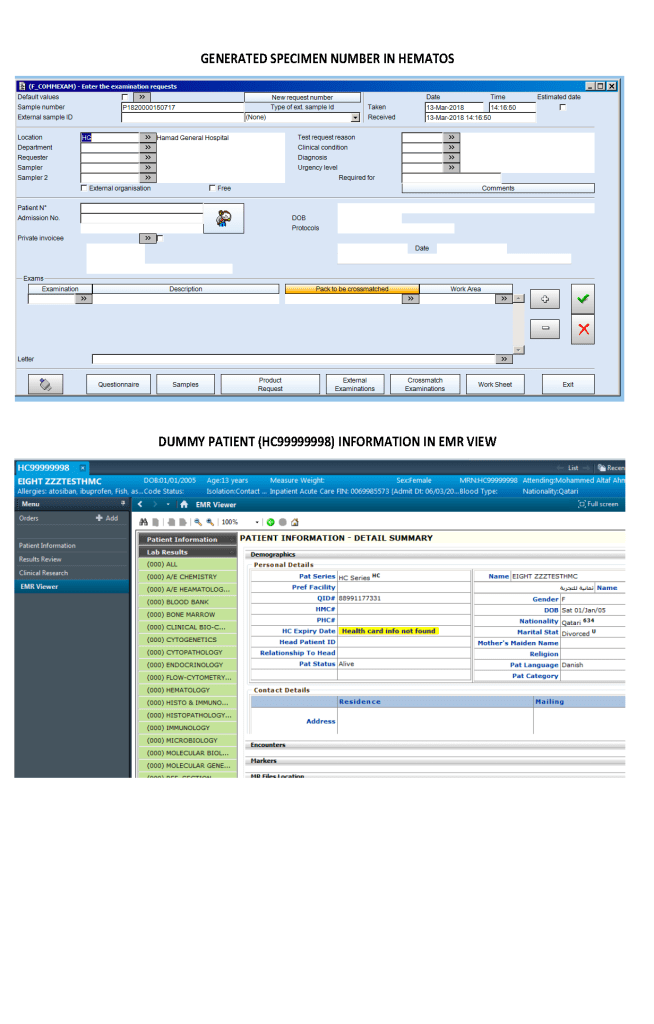
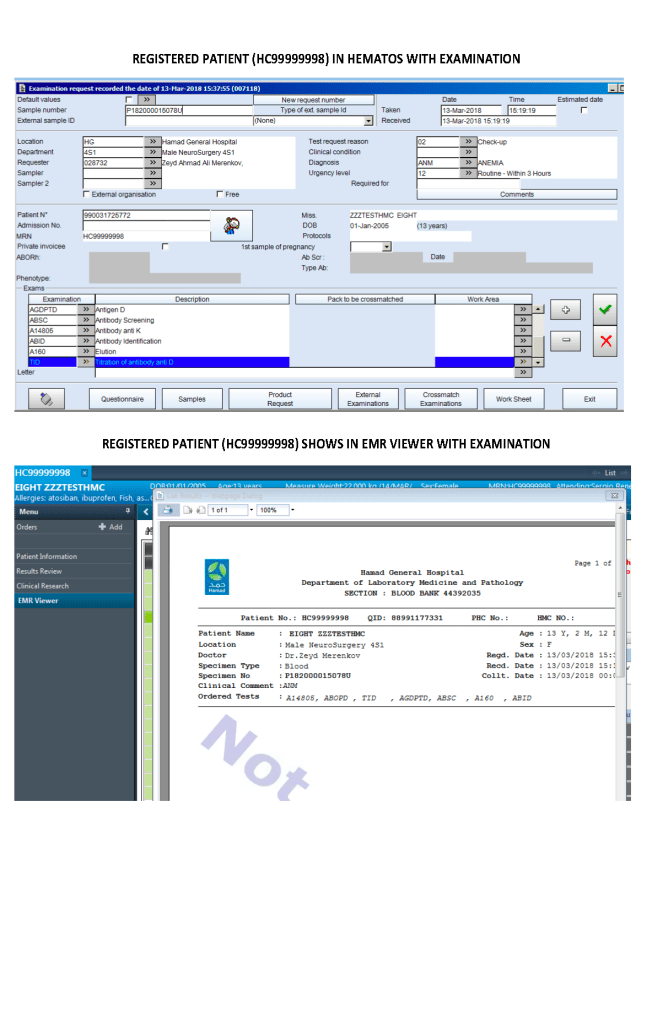
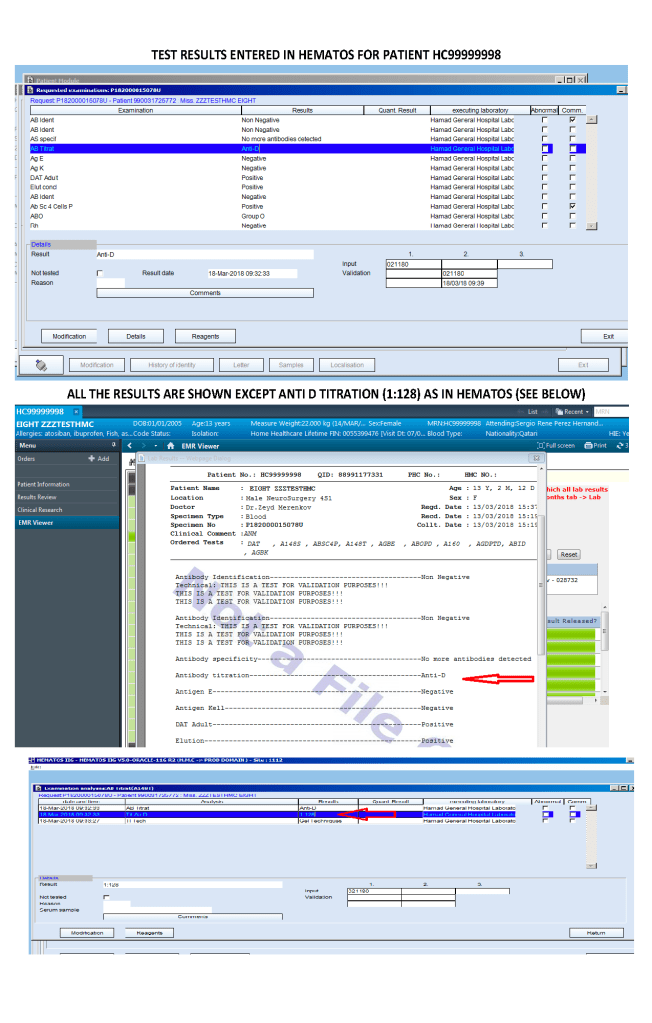
Validation of Reporting Formats

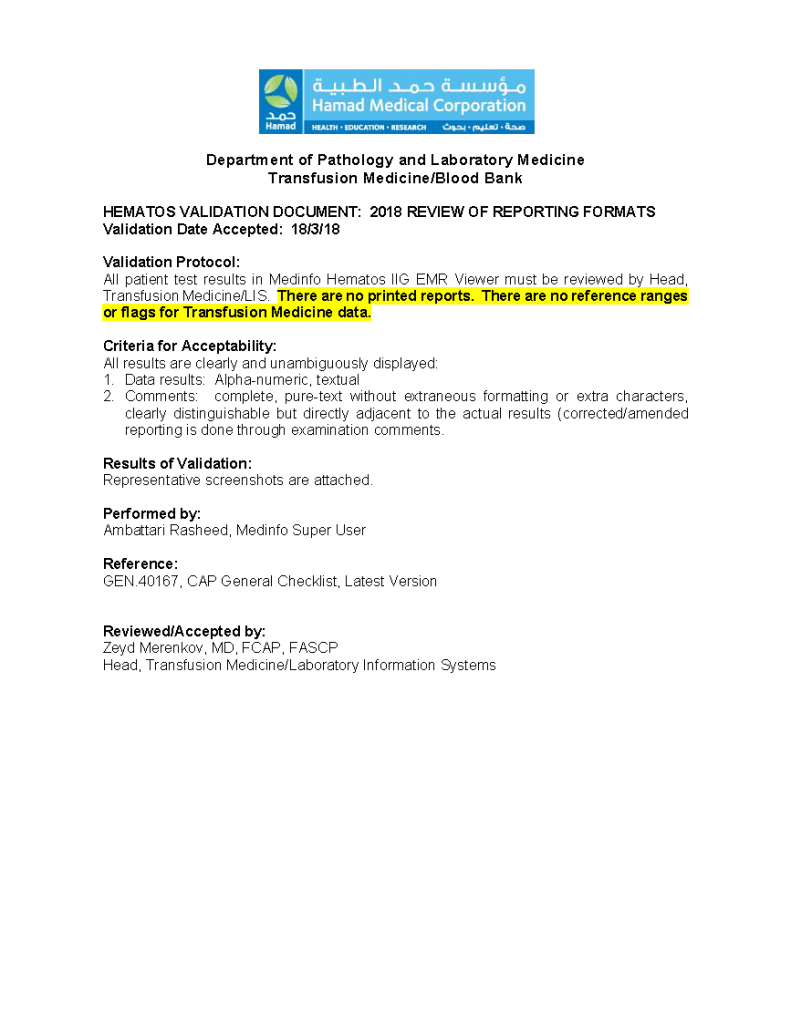
The attached PDF illustrates a sample validation of reporting formats for transfusion service testing.  The validation criteria are explicitly stated.  The evidence, in forms of screen shots, is attached to the PDF.  The data is reviewed and then accepted by me as the Division Head, Laboratory Information Systems.

Please note in this sample, no actual patient data was used.  All testing was done in a non-production environment.

Here are the embedded screenshots:

Opinion: Software Permissions for Blood Bank Staff

In my career, I have worked with many different hospital and laboratory computer systems.  One of my greatest frustrations has been providing software permissions to staff at all levels, from clerical, nursing, technical, and medical—inside and outside the blood bank.

The software permissions that I am specifically referring to are those with the blood bank software.  These I directly controlled as Division Head of Transfusion Medicine and Laboratory Information Systems.  I am not talking about virtual private networks or Citrix or cloud-based software controlled by the hospital IT department.

Here are some examples of inappropriate permissions:

  • All staff share the same access, regardless of position or department
  • Technical staff, including non-blood bank staff have global access to all functions
  • Non-blood bank staff can modify test results or comments

The golden rule is to only give access that is needed for each staff’s job designation.  Staff must sign an agreement not to access the system except for work and not release anything to non-designated personnel.

I recommend separating privileges by:

  • Blood bank vs non-blood bank staff
  • Blood bank section and location
  • Technical privileges by rank:  trainee vs base technologist vs senior technologist vs supervisor vs technical director
  • Medical privileges by rank:  residents/fellows, junior medical staff, senior staff, head of sections/directors

Permissions within a test category may include test ordering, result entry, verification/authorization, and/or purging.  In the donor center, it may include registration, donor qualification, collection, donor marker testing, donor immunohematology, component processing, component modification, and/or inter-depot transfer of components.  Management tools included in the software may also be restricted to high-level staff.

In this time of COVID and staffing shortages, we may be training new staff to work in the blood bank.  During their training, these trainees can be competency assessed and be given access to limited functions.  In Medinfo Hematos IIG, you can give staff custom permissions test-by-test so for example, if they are deemed competent for ABO/D typing, you could restrict their access to only those tests as an interim measure.

Having customized access for each employee can be nightmare for the systems administrators so this granular special access must be kept to a minimum.  However, it is good to know that you do have this capability if needed.

Teaching Document: Variances in Transfusion Medicine

Principle:

In accordance with AABB Standards, all actions contrary to the standard operating procedures and policies of Transfusion Medicine must be specifically approved by the Head, Transfusion Medicine or designate.

Documentation of variances must be organized in a system for ready retrieval for analysis.  They should not be entered into a system that is cumbersome to find the entered variances.

Examples include but are not limited to:  Rh(D)-incompatible transfusions, least-incompatible crossmatch, extension of expired rare reagents, etc.

If the same variance is occurring frequently, it should be determined if modifications in the underlying documentation (policies, processes, procedures) should be made.

Policy:

  1. Whenever there is need for a variance in the policies and procedures in Transfusion Medicine, the Division Head, Transfusion Medicine or designate must be informed.
  2. The Division Head or Designate will review and accept/reject the request.
  3. If accepted, the variance must be documented in writing by any of the following:
    1. A paper form (pre-blood bank computer system implementation) that can ultimately be scanned or an electronic version stored in Transfusion Medicine.
    2. A comment in an appropriate field in the Medinfo computer system
  4. All verbal authorizations for a variance (e.g. telephone call to Transfusion Medicine physician at night) must be recorded on a form and submitted to the responsible TM physician for review and signature.
  5. All variance documentation must be readily retrievable for analysis.
  6. All variances must be collated and assessed as part of the monthly quality review.

References:

  1. Technical Manual, Current Edition, AABB, Bethesda, MD, USA
  2. Standards for Blood Banks and Transfusion Services, Current Edition, AABB, Bethesda, MD, USA

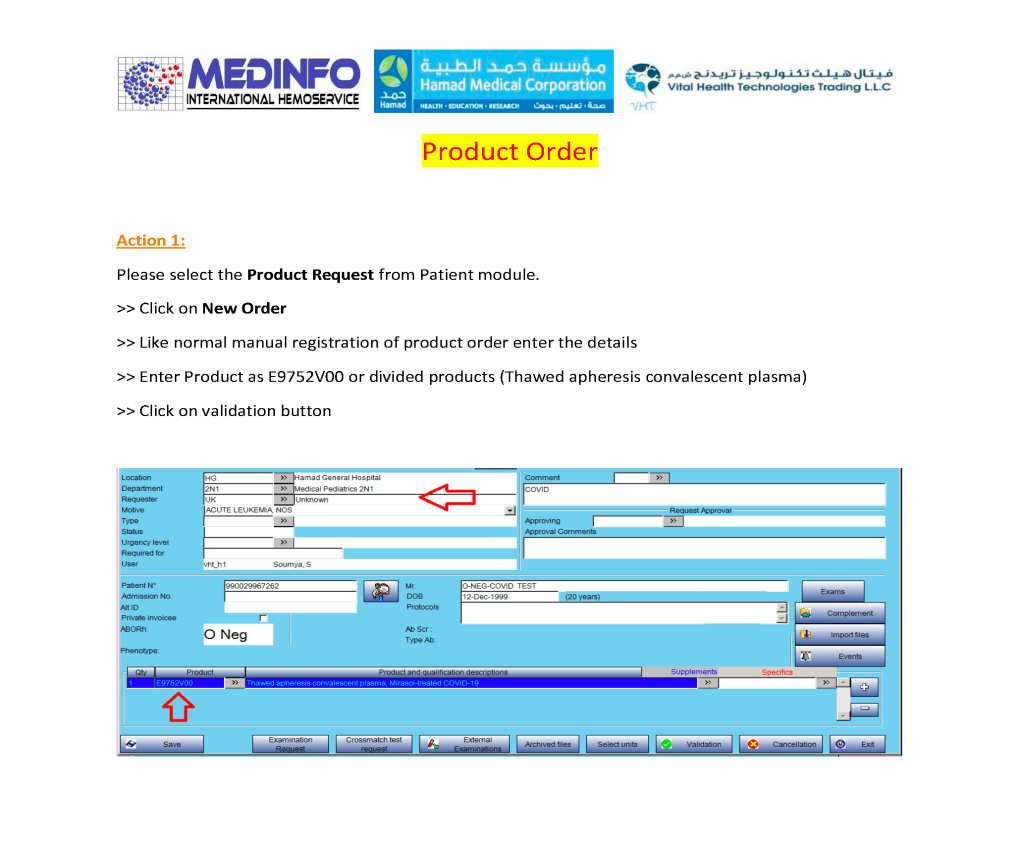
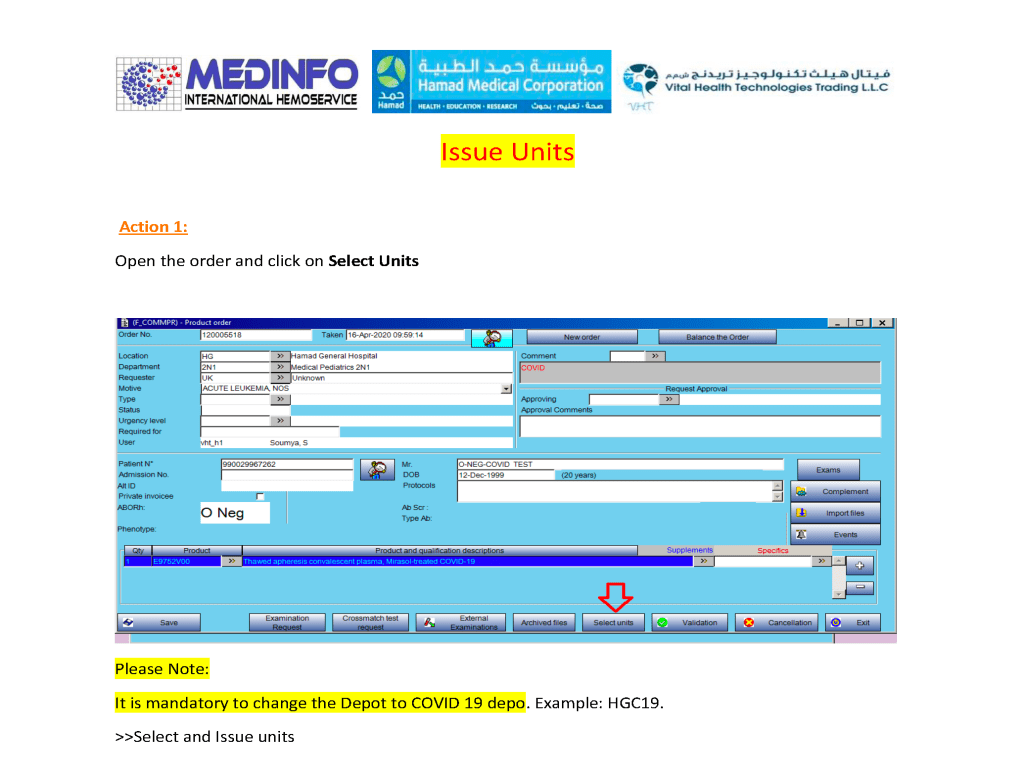
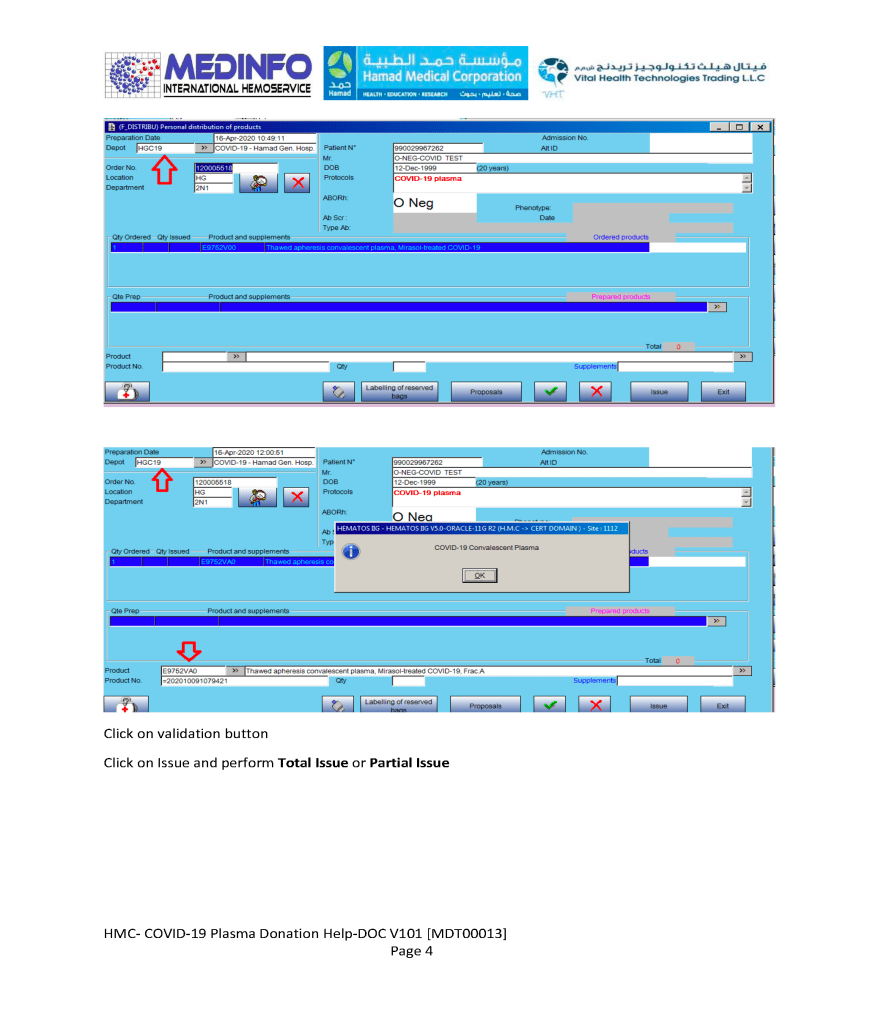
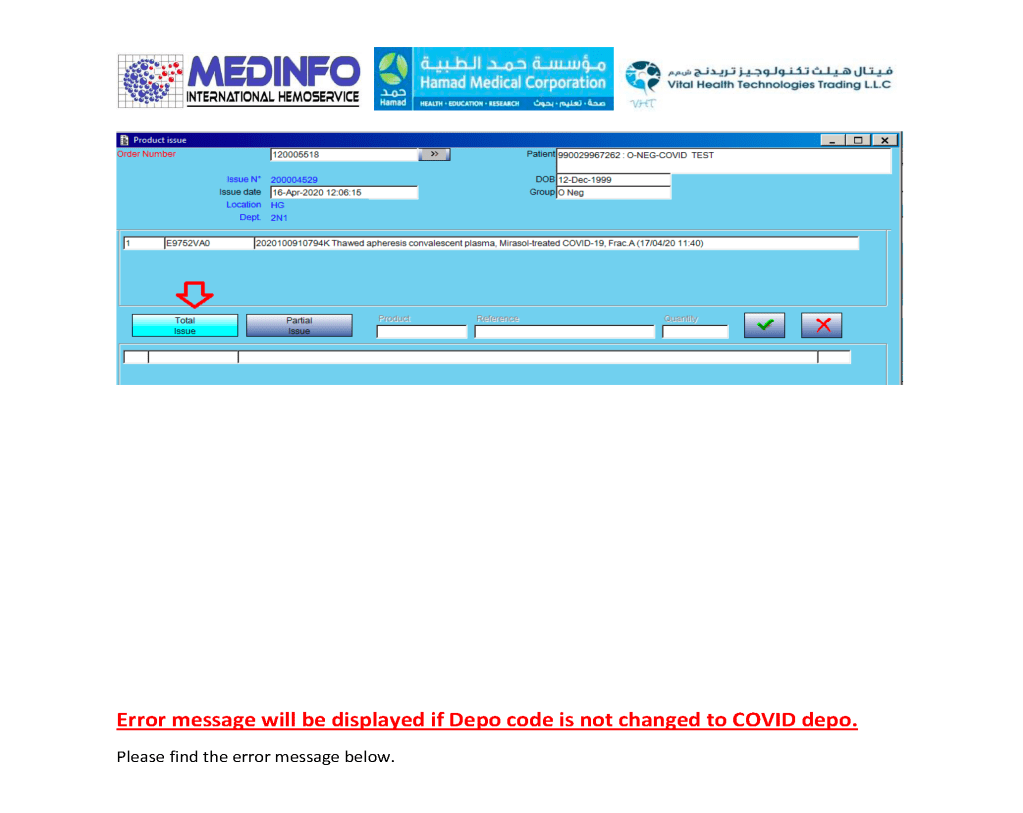
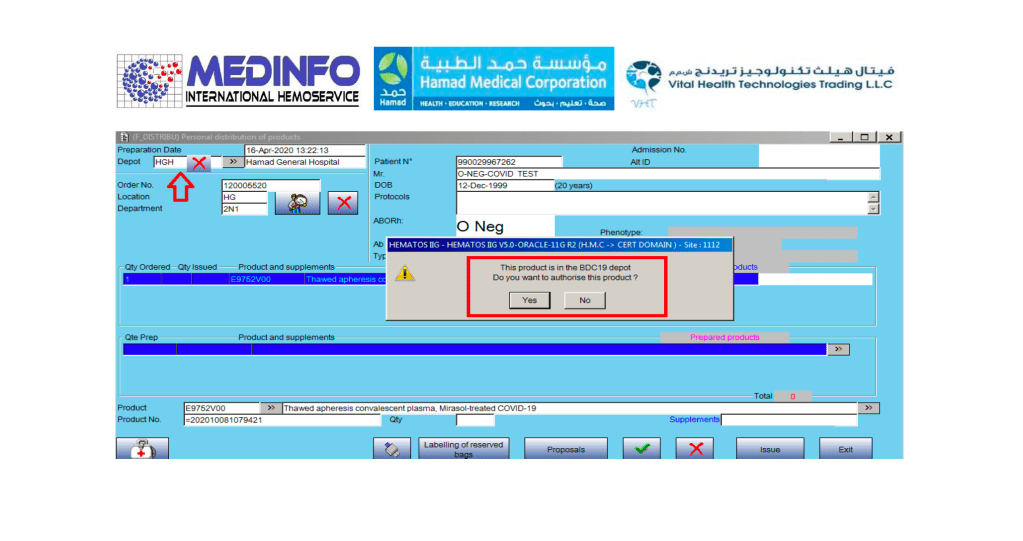
COVID-19 Convalescent Plasma CCP Product Issue

This is the conclusion of a continuing series of posts on the actual Medinfo design of the CCP donation and release processes and covers the transfer of completed units to the hospital blood banks.  It highlights specific changes made for the parallel CCP system I developed at HMC Doha.

A blood component is either located at a production site, a destination hospital blood bank site, or in transit.  Here a quarantine production site is specified.  The actual release process is documented in this post.

In summary, with the exception of the donor marker testing and immunohematology testing, all other CCP processes are handled by special quarantine processes.  There are abbreviated marker testing specific for plasma and a special Predonation screening to minimize wastage of the expensive apheresis kits.

Issues with Labels

You can have the most sophisticated blood bank software, but if you can’t read the labels or if they fall off, you have a disaster.  These are my thoughts from implementing our blood bank computer system back in 2013.

Check Digits:

Both ISBT specimen and product labels have an internal system to verify that they have been read correctly.  Within the blood bank software, this should not be a problem.  However, can your third party such as a hospital information system HIS read them?

ISBT Compatibility:

The institution’s HIS could not read the component labels.  To this date, the problem has not been fixed.  As a workaround, we sent them the ISBT label codes directly from the blood bank software.  The only complete transfusion record was in the dedicated blood bank computer system, not the HIS.  You could not rely on the bedside nursing entry at all.

The HIS did not use the ISBT database and had no values for the E codes.  Again, we had no choice but to send an abbreviated E-code descriptor to them.  We did not use their transfusion module at all, but one of our clients did.  They had to hard code the list of E codes in use with their descriptors into their HIS.

Label Adhesive

We tested candidate labels at room temperature, 1-6, minus 18, and minus 80 C.  We found that most of the labels’ adhesive were not sticking at minus 80.  For some, you could literally blow on the blood bag and the label fell off.  I imagined a scenario in which I opened a freezer and saw the blood bag labels all lying separately at the bottom.

RFID Tags:

Do you use an RFID tag integrally attached to the ISBT label OR do you stick a separate RFID tag?  If the latter, how do you ensure that you put the proper tag on the proper bag?

Readability:

Readability:  Can all your blood bank devices read your printed labels?  Do you have to adjust the printers for this?  Whose responsibility is it to do this? 

Labels printed outside the blood bank:

If you receive patient specimens from outside the blood bank, can your devices read them?  Who is responsible to adjust the printers in the wards and clinics?

Validations:

Who validated that the HIS prints the accurate complete label for the right patient?  We discovered that this was not the case with our HIS and needed correction by them.  Remember that any processes affecting Transfusion Medicine should be assessed by Transfusion Medicine.  Do not accept verbal assurances from anyone, not even your HIS.

2/2/21

Universal Low-Titer Group O Whole Blood

Principle:

Fresh group O whole blood has viable platelets, plasma, and RBCs.  Fresh whole blood may provide better resuscitation than individual components.  It can replace MTP component therapy of separate RBCs, plasma, and platelets.  We will use low ABO-titer whole blood units (here called O universal OU) in selected trauma cases, based on availability.

Testing for low-titer (both low-titer anti-A and anti-B) units is time-consuming and monopolizes the automated immunohematology analyzers.  This is the rate-limiting step.

Policy:

  1. Stock a limited number of OU whole bloods at the trauma/emergency room sites—based on inventory needs.
  2. Allow up to 2 doses (2 OU units/patient) before reverting to the MTP protocol.
  3. Prepare allocation rules to allow group OU whole blood and group O RBCs to be used for ALL ABO types except Oh, Ah, Bh.
  4. Medinfo Hematos IIG will use the new allocation rules for OU in emergency release situations only.  It will not be allowed for routine use.

References:

  1. Technical Manual, Current Edition, Bethesda, MD, USA
  2. Standards for Blood Banks and Transfusion Services Current Edition, AABB, Bethesda, MD, USA

Setting Up Universal Low-Titer Group O Whole Blood

This post outlines a framework for establishing the use of universal group O whole blood.  Manual titering large number of donor specimens in my organization is not precise.  Using an automated system will also increase the precision of the results.  The rate-limiting step is the ability to do the anti-A and anti-B titers.

Process:

  1. Select cut-offs for anti-A anti-B titer.  This should be determined by the blood bank medical director.
    1. I recommend saline 1:64 for both titers based on recent THOR (Thrombosis Hemostasis Oxygenation Research) meetings
  2. Assess availability of automated immunohematology analyzers for titration.
    1. Titration may take up to 30 minutes per sample, during which time the machine cannot be used for any other purpose.
  3. Perform a survey of the anti-A and anti-B titers in your blood donor population.
    1. At my sites, about 50% had titers less than or equal to 1:64.
    2. Determine how stable the titer is:
      1. Does the titer change between whole blood donations?
  4. Prepare as follows:
    1. Collect whole blood units in CPD.
    2. Filter with a platelet-sparing whole blood leukodepletion filter.
  5. Add a new blood type OU (for group O whole blood universal) for plasma in your blood typing algorithm.
  6. Establish new allocation rules to permit group OU whole blood for all ABO types.
  7. Software:
    1. Set up new truth table in your blood bank computer system.
    2. Validate the modification in your blood bank donor and patient modules.
    3. Update ISBT code for this new product, verify your transfusion service module can read this.
  8. Determine the target inventory level for universal plasma (group AB and low-titer A) based on current/past usage.
    1. I started with a trial of a small inventory of 8 units to cover 4 patients each receiving a maximum of 2 units at one trauma site.
    2. Consider a dose of two as equivalent to an MTP dose in an adult.
    3. If more than 2 units  are needed, revert to the MTP protocol.

Special notes:

  1. At my last location, we had only 3 analyzers capable of doing the titration.  Thus, we could only do 6 titrations per hour at the expense of stopping all other testing.  You will have to coordinate the titration with your other immunohematology testing.  Also, you must verify if all these equipment can interface to your production software.  In my system, any test (including titration) could be performed at any location and its results be used for production purposes.
  2. Donor ABO antibody titers may fluctuate.  I would not use previous results to qualify a donor to be OU.  I would repeat the anti-A and anti-B titer each donor encounter.

References:

  1. Technical Manual, Current Edition, Bethesda, MD, USA
  2. Standards for Blood Banks and Transfusion Services Current Edition, AABB, Bethesda, MD, USA
  3. Medinfo Hematos IIG Donor Production Module

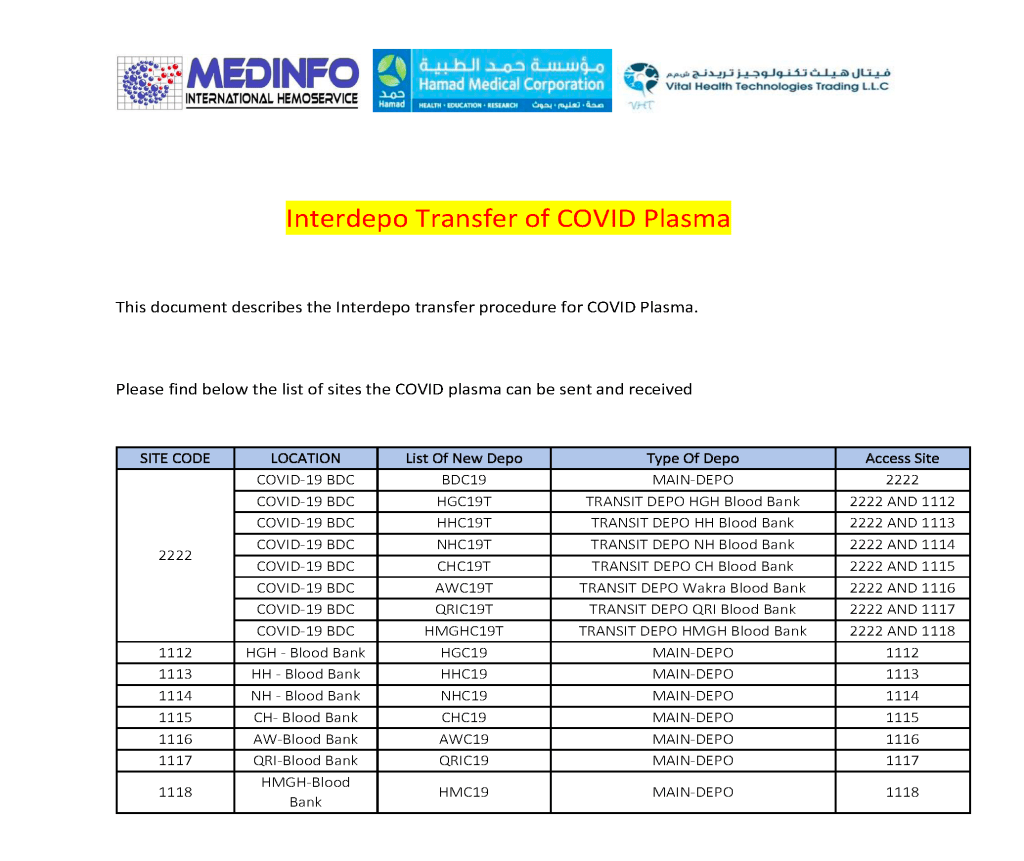
COVID-19 Convalescent Plasma CCP Interdepot Transfer

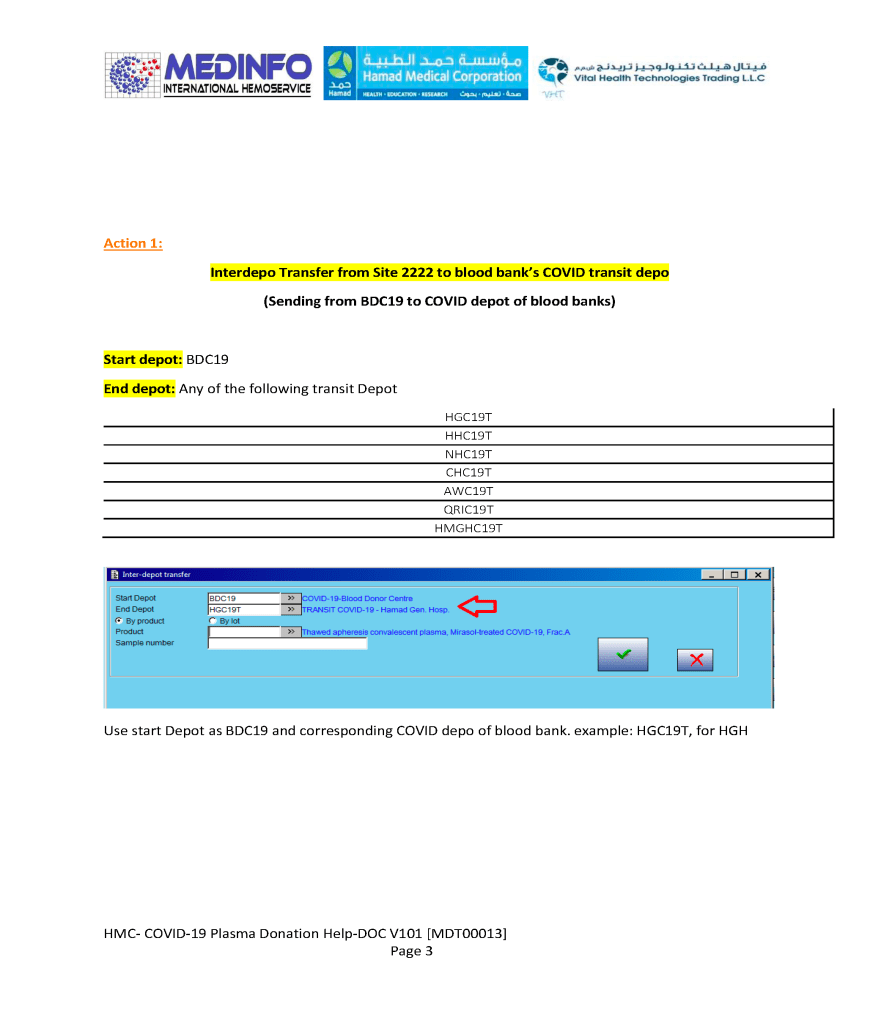
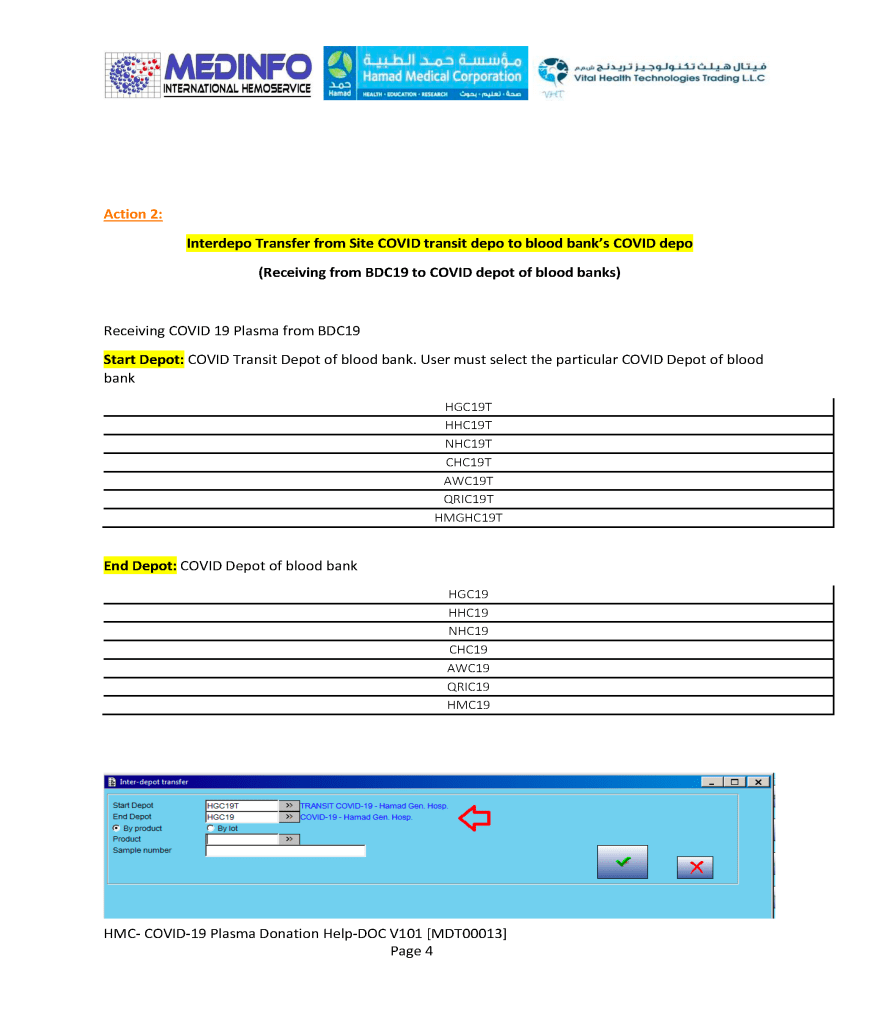
This is a part of a continuing series of posts on the actual Medinfo design of the CCP donation and release processes and covers the transfer of completed units to the hospital blood banks.  It highlights specific changes made for the parallel CCP system I developed at HMC Doha.

A blood component is either located at a production site, a destination hospital blood bank site, or in transit.  Here a quarantine production site is specified.  The actual transfer protocols and allowable destination sites are listed for this product.