Autologous Transfusion

This a revised version of a previous post for the processes of autologous transfusion that I developed at HMC Doha.  It can serve as a template for other sites and was also a teaching document for the Transfusion Committee members.

Background:

There are four basic types of autologous transfusion:  preoperative, perioperative hemodilution, intraoperative, and postoperative drainage/collection.  The use of all of the above techniques can significantly decrease the need for homologous blood and as an added benefit reduce the risk of the disease transmission and immunosuppressive effects of such homologous transfusions.

Preoperative collection can make available packed red blood cells, whole blood, platelets, FFP, and/or cryoprecipitate.  However, at most two units of blood per week can be collected.  RBC’s can be stored for up to 42 days in the liquid state, frozen RBC’s up to ten years, platelets up to five days, and fresh frozen plasma and cryoprecipitate up to one year.  The last collection cannot be less than 72 hours prior to the surgery time.  Units can be collected as long as the patient’s hematocrit remains above 33%.  Supplemental iron and erythropoietin can increase the number of units harvested.  The biggest obstacle to using this service is the coordination of the patient scheduling for this procedure.  The blood bank does not have the resources to prospectively analyze the surgical scheduling and make the various appointments, contact the attending physician, etc.  Thus, this service is vastly underutilized.

PHD or Perioperative hemodilution (also called acute normovolemic hemodilution) is useful in cases when the anticipated blood loss is at least one liter and the initial hematocrit is at least 34%.  This includes essentially all types of surgery, but in particular cardiac, vascular, orthopedic, and urologic cases.  The patient’s hematocrit Hct. is lowered to the range of 20-25% and the blood is replaced by crystalloid in a ratio of 3:1–i.e. three times as much fluid as blood, or in the case of colloid replacement, a 1:1 ratio of colloid plus 0.5 to 1.0 ml. of crystalloid.  Crystalloid has the advantage of being readily removed by diuretic use.  However, this technique should not be undertaken when vascular access is inadequate or appropriate monitoring devices are lacking.  The physician performing PHD must be familiar with the compensatory mechanisms normally invoked when the hemoglobin is acutely lowered.

Another new twist to PHD is the perioperative collection of platelets by a special attachment to a cell-saving machine.  This could allow collection of a typical apheresis load, about 6 to 10 units of fresh platelets for potential use.  There are currently studies underway to determine if this has particular clinical advantages to warrant the additional cost.

Intraoperative salvage may be performed with a number of canister or automated devices.  The latter is usually used when there are large volumes (usually 3 or more units) of blood to be salvaged.  Depending on the body site, the recovered material is at least filtered and may or may not be washed.  Care must be taken to collect the blood at a low suction rate and with minimal turbulence to minimize hemolysis.

Postoperative drainage collection of certain sites such as post-knee replacement surgery or chest wounds involves a canister collection device.  This blood may or may not be filtered before reinfusion.

Note that perioperative and intraoperative material can only be transfused up to six or eight hours at room temperature or 24 hours if refrigerated at 1-6 degrees (depending on the method used) post collection to minimize the risk of infection.  Intraoperative collection may be contraindicated in cases of cancer and if the bowel has been violated.

Other Issues:

The transfusion criteria for autologous blood is the same as for allogeneic units.

The same compatibility testing algorithm applies both the autologous and allogeneic units.

Policy:

  1. Scope:
    1. Predeposit collection of Whole Blood/RBCs and plasma is under the authority of Transfusion Medicine.
    2. Perioperative hemodilution, intraoperative cell salvage, and postoperative drainage collection is under the authority of the National Transfusion Committee in conjunction with the Departments of Surgery and Anesthesia.
      1. The Division Head, Transfusion Medicine will liaise with the clinical departments as needed.
      2. Transfusion Medicine may provide blood collection bags for perioperative hemodilution upon request.
    3. Transfusion Medicine does not receive autologous collections—perioperative, intraoperative, or postoperative drainage collection.
  2. Processes directly under Transfusion Medicine authority:
    1. Autologous collection of whole blood/RBCs (pre-deposit) for elective surgeries may be considered especially if:
      1. The patient has a dangerous antibody for which antigen-matched units cannot be easily obtained (e.g. anti-k (cellano), anti-PP1Pk (anti-Tja), anti-H (Bombay and Para-Bombay phenotypes).
    2. Autologous collection of plasma may be considered for patients with IgA deficiency with documented specific anti-IgA antibodies.
    3. Other requests will be reviewed by the Head, Transfusion Medicine or designate.
    4. The final decision to proceed with items 2.1 and 2.2 will be made by the Head, Transfusion Medicine or his designate.
  3. Process for Transfusion Medicine Autologous Procedures
    1. The requesting physician shall provide a written or electronic order to the Blood Donor Center.
    2. The request will be reviewed by a transfusion medicine physician.
    3. If rejected, the requesting physician will be notified with the reason for the rejection.
    4. If approved, the donor shall be screened by the usual donation process except:
      1. Hgb >= 11 g/dl will be acceptable for whole blood collection.
      2. Females may also donate autologous plasma.
      3. The last autologous donation will be at least 72 hours before the elective procedure.
    5. Marker testing:  Components from autologous donors with confirmed positive cases of HBV, HCV, or HIV will NOT be used for autologous donation and will be destroyed.
    6. Computer:  Autologous collections will be entered as specifically at the time of registration in the Medinfo  Hematos IIG blood bank computer system and be labeled as autologous in their corresponding ISBT labels.
    7. The transfusion criteria for autologous units shall be the same as for homologous blood.
    8. Both autologous and allogeneic units will follow the same compatibility testing algorithm.
  4. Responsibilities:
    1. Predeposit:  Directly under the control of Transfusion Medicine for all aspects:  policies, procedures, and direct performance of the procedures, including annual review of criteria
    2. Perioperative:  Division Head, Transfusion Medicine involved in conjunction with Surgery and Anesthesia through the National Transfusion Committee.
    3. Intraoperative:  Division Head, Transfusion Medicine involved in conjunction with Surgery and Anesthesia through the National Transfusion Committee.
    4. Postoperative:  Division Head, Transfusion Medicine involved in conjunction with Surgery and Anesthesia through the National Transfusion Committee.

References:

  1. Standards for Blood Banks and Transfusion Services, Current Edition, AABB, Bethesda, MD, USA, 2014
  2. TRM.41600 CAP Checklist Standard

Opinion: Outsider Access to Blood Bank Software

I designed my blood bank software Medinfo for use by my staff at all levels and positions to adhere to and facilitate compliance to the workflow processes.  Blood bank staff were restricted to access only those functions needed for their job duties.

Blood Donation records could not be viewed by outside staff for confidentiality reasons.  Blood donor records were not linked to patient records at all.

We did not allow access for Medinfo to non-Transfusion Medicine staff since the screens were designed to maximize efficiency of the work processes, not the viewing by outsiders of results.  Outsider access was made through the hospital information system HIS.

The separate hospital information system HIS interfaced to Medinfo for the following functions:

  • Ordering blood components
  • Ordering a limited number of tests from which algorithms would be generated on the blood bank side for further testing
  • Querying the status of the test or component orders (e.g. ordered, collected, in blood bank being processed, completed)
  • Viewing of completed tests and component requests

Even within the HIS ordering capabilities, there were additional restrictions:

  • Blood components:  outside doctors could order base blood components could be ordered, but special processing such as washing or irradiation followed internal blood bank rules.  Outside physicians could state their preferences in an order comment, but blood bank rules applied.  Any disagreements had to be discussed with the transfusion medicine physician.
  • Testing:  Only base tests such as ABO/D typing, antibody screen, direct antiglobulin test, transfusion reaction workup, and cord blood testing could be directly ordered by outside physicians, but further testing depended on the results of these tests as allowed by internal blood bank algorithms.  An outside physician could not directly order other tests but had to discuss his concerns with the transfusion medicine physician.

Results viewing in the HIS were subject to additional conditions as well:

Only certain results, not all results were viewable directed in the patient’s chart since showing all results may be confusing to the outside physicians and nurses.  The selected results were sent back into the HIS for viewing.  All these non-viewable results were retrievable for blood bank staff in Medinfo.

Another option, one I did not use at either HMC Doha or NGHA in Saudi Arabia, was to order tests and components by physicians directly into Medinfo.  Likewise, they could view test results directly in the system.  Special screens could be constructed to offer ordering and results retrieval.

Use of Expired Reagents

This is a sample document for use of expired reagents I wrote for HMC Qatar.

Principle:

Due to logistics issues including the long distance between suppliers in Europe and North America and Qatar and the importation/customs clearance of critical materials, Transfusion Medicine has developed a contingency variance policy to minimize disruption of the essential transfusion medicine testing and component preparation.  Approval for use of outdated reagents in special circumstances is not meant to be an excuse for untimely monitoring and improper ordering of supplies.

Definition:

Rare Reagent:  Any reagent that is either used uncommonly or is in short supply and difficult to obtain in a timely matter.

Policy:

  1. Maintain a minimum six (6) months’ supply of each reagent when feasible.
    1. This cannot be done for short-outdate reagents such as reagent red cells for panels and antibody screens.
  2. If an in-date reagent is not available for use, then an outdated reagent may be considered for use if:
    1. It passes an in-run quality control including negative and positive controls as applicable specific for the test in question.
    1. Supervisor reviews the results and approves their use:
      1. Results using such outdated reagents may only be used if they pass the validation rules in that procedure.
    1. The Division Head, Transfusion Medicine, or designate reviews the supervisor’s recommendations and approves their use.
  3. All such variances must be documented as follows:
    1. Variance document form
    1. In the comments for results within the Medinfo Hematos IIG software.

References:

Sections 1.3.2 and 7.0, Standards for Blood Banks and Transfusion Services, Current Edition, AABB, Bethesda, MD, USA

COVID-19 Convalescent Plasma CCP Product Issue

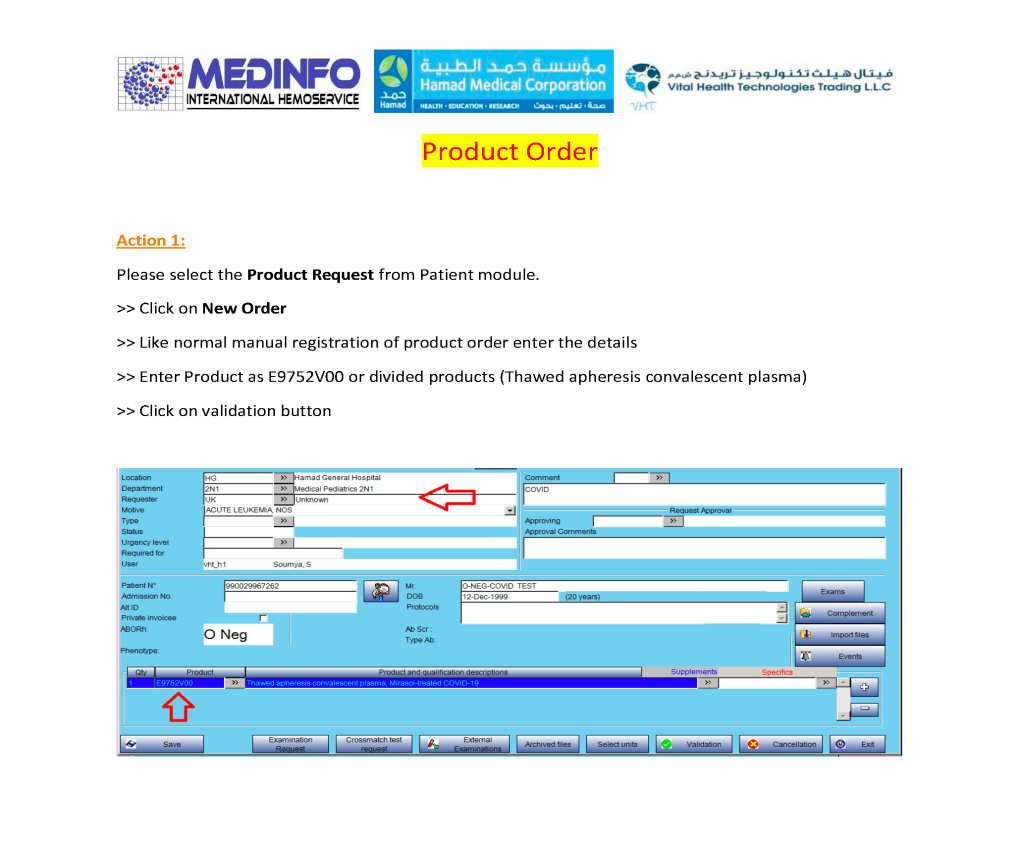
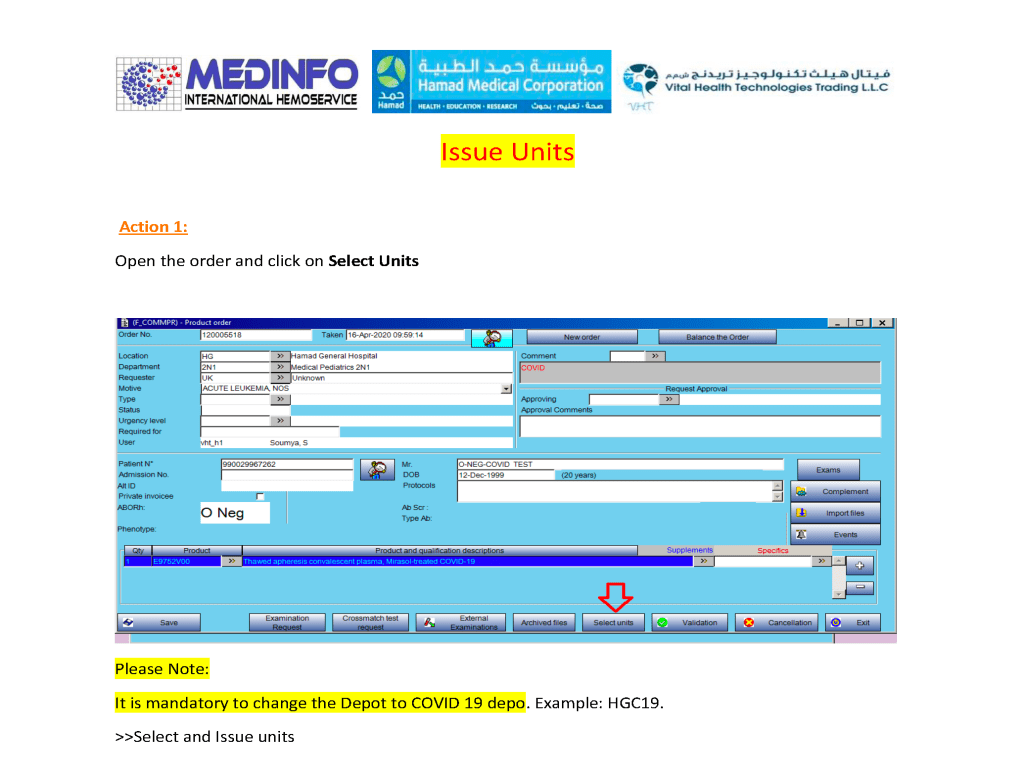
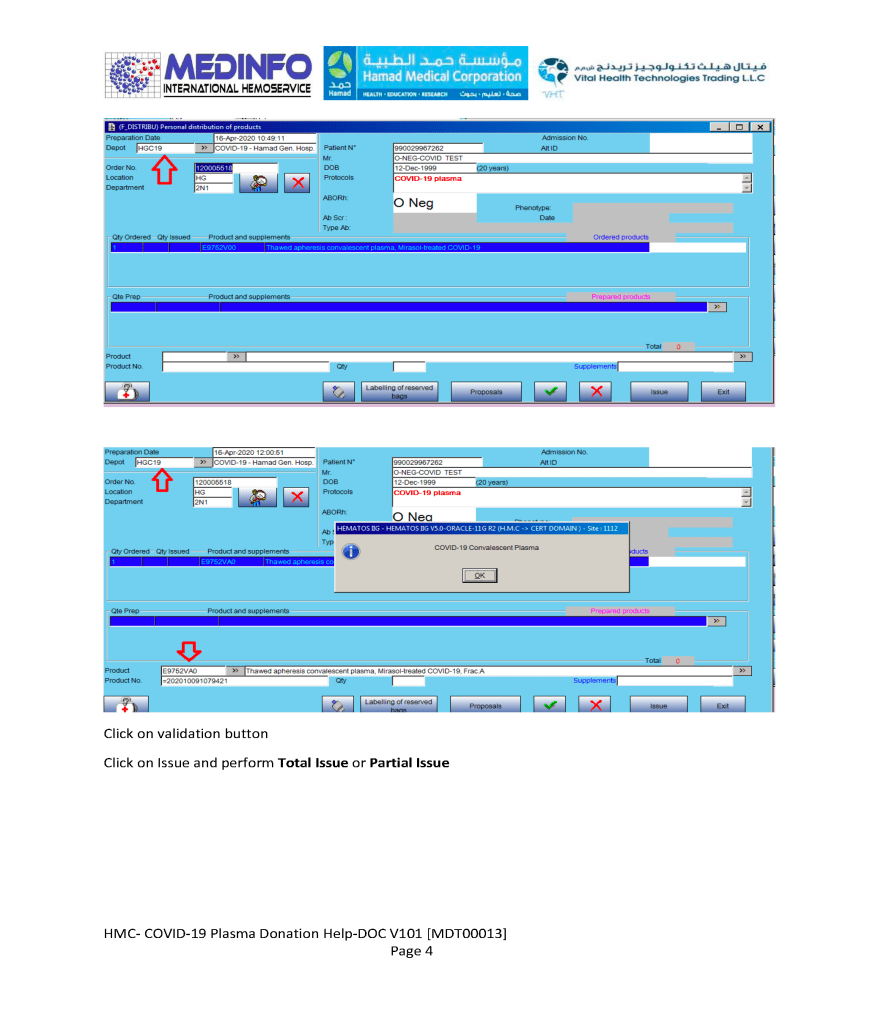
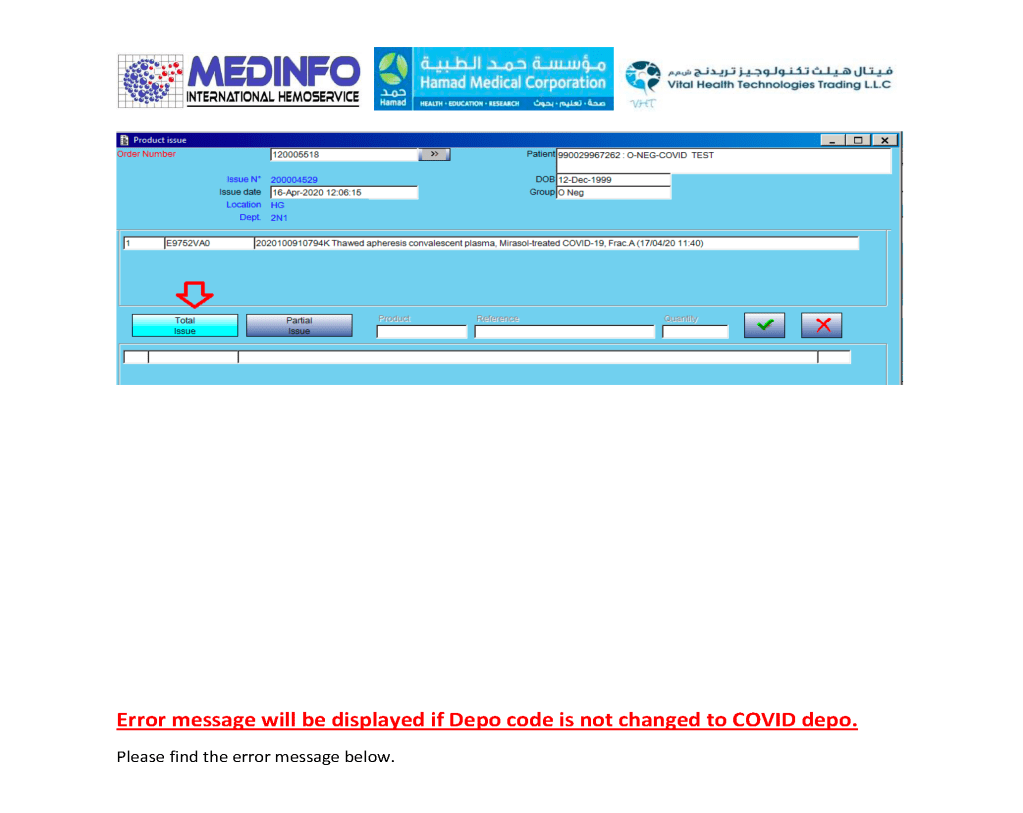
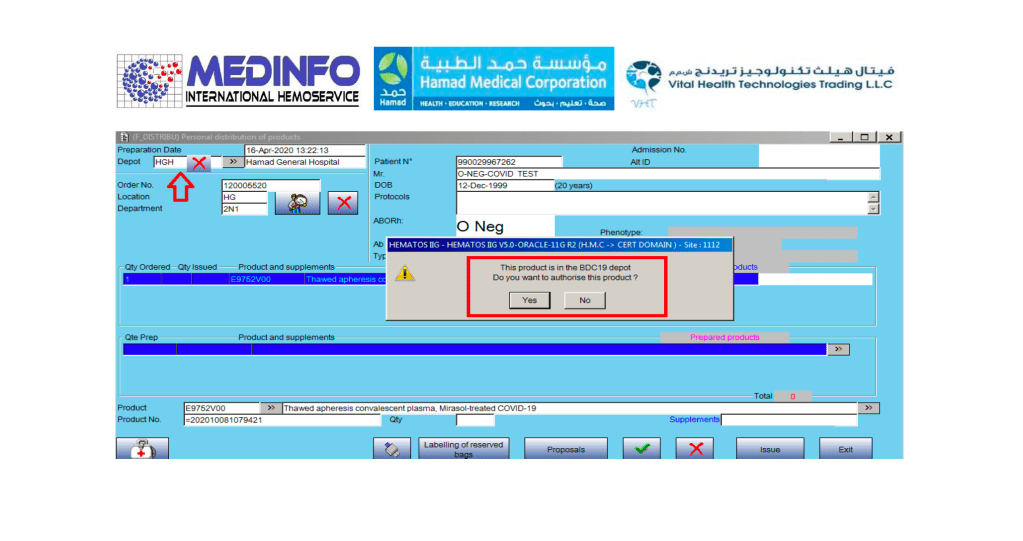
This is the conclusion of a continuing series of posts on the actual Medinfo design of the CCP donation and release processes and covers the transfer of completed units to the hospital blood banks.  It highlights specific changes made for the parallel CCP system I developed at HMC Doha.

A blood component is either located at a production site, a destination hospital blood bank site, or in transit.  Here a quarantine production site is specified.  The actual release process is documented in this post.

In summary, with the exception of the donor marker testing and immunohematology testing, all other CCP processes are handled by special quarantine processes.  There are abbreviated marker testing specific for plasma and a special Predonation screening to minimize wastage of the expensive apheresis kits.

Weak D Phenotype

I prepared this policy for HMC Qatar, which did not perform genotyping.

Principle:

Weakened expression of the D antigen may be due to either quantitative or qualitative defects.  Qualitative defects (partial or mosaic D) are uncommon.

Patients with quantitative defects have the whole D molecule and will not make anti-D upon exposure to D-positive RBCs.

Patients with partial or mosaic D may form antibodies against the portion of the D molecule they lack.  However, not all partial D types may make anti-D upon exposure.  Since we cannot specifically test for this condition, we shall consider females of child-bearing age with weak D as potentially partial D and use D-negative RBCs.

Genotyping for the D gene may define better which partial D types need to receive RhIG or D-negative transfusions.

Definition:

Weak D is defined as weak (1+ or weaker) reactions with one or more routine reagents or reactions only at antiglobulin phase (i.e. Du testing).

Policy:

  1. All donor units must be tested by a method to detect weak D phenotype.  If such testing is positive, the donor unit must be labelled as D-positive and be used routinely for D-positive patients.
  2. Weak-D females of child-bearing ages (<50) should receive D-negative RBCs.
  3. Weak-D males may receive D-positive RBCs unless they are a potential recipient of chronic transfusions (e.g. thalassemia, sickle cell disease, etc.)

References:

Technical Manual, Current Edition, American Association of Blood Banks, Bethesda, Maryland, USA

Standards for Blood Banks and Transfusion Services, Current Edition, AABB, Bethesda, MD, USA

Universal Low-Titer Group O Whole Blood

Principle:

Fresh group O whole blood has viable platelets, plasma, and RBCs.  Fresh whole blood may provide better resuscitation than individual components.  It can replace MTP component therapy of separate RBCs, plasma, and platelets.  We will use low ABO-titer whole blood units (here called O universal OU) in selected trauma cases, based on availability.

Testing for low-titer (both low-titer anti-A and anti-B) units is time-consuming and monopolizes the automated immunohematology analyzers.  This is the rate-limiting step.

Policy:

  1. Stock a limited number of OU whole bloods at the trauma/emergency room sites—based on inventory needs.
  2. Allow up to 2 doses (2 OU units/patient) before reverting to the MTP protocol.
  3. Prepare allocation rules to allow group OU whole blood and group O RBCs to be used for ALL ABO types except Oh, Ah, Bh.
  4. Medinfo Hematos IIG will use the new allocation rules for OU in emergency release situations only.  It will not be allowed for routine use.

References:

  1. Technical Manual, Current Edition, Bethesda, MD, USA
  2. Standards for Blood Banks and Transfusion Services Current Edition, AABB, Bethesda, MD, USA

Setting Up Universal Low-Titer Group O Whole Blood

This post outlines a framework for establishing the use of universal group O whole blood.  Manual titering large number of donor specimens in my organization is not precise.  Using an automated system will also increase the precision of the results.  The rate-limiting step is the ability to do the anti-A and anti-B titers.

Process:

  1. Select cut-offs for anti-A anti-B titer.  This should be determined by the blood bank medical director.
    1. I recommend saline 1:64 for both titers based on recent THOR (Thrombosis Hemostasis Oxygenation Research) meetings
  2. Assess availability of automated immunohematology analyzers for titration.
    1. Titration may take up to 30 minutes per sample, during which time the machine cannot be used for any other purpose.
  3. Perform a survey of the anti-A and anti-B titers in your blood donor population.
    1. At my sites, about 50% had titers less than or equal to 1:64.
    2. Determine how stable the titer is:
      1. Does the titer change between whole blood donations?
  4. Prepare as follows:
    1. Collect whole blood units in CPD.
    2. Filter with a platelet-sparing whole blood leukodepletion filter.
  5. Add a new blood type OU (for group O whole blood universal) for plasma in your blood typing algorithm.
  6. Establish new allocation rules to permit group OU whole blood for all ABO types.
  7. Software:
    1. Set up new truth table in your blood bank computer system.
    2. Validate the modification in your blood bank donor and patient modules.
    3. Update ISBT code for this new product, verify your transfusion service module can read this.
  8. Determine the target inventory level for universal plasma (group AB and low-titer A) based on current/past usage.
    1. I started with a trial of a small inventory of 8 units to cover 4 patients each receiving a maximum of 2 units at one trauma site.
    2. Consider a dose of two as equivalent to an MTP dose in an adult.
    3. If more than 2 units  are needed, revert to the MTP protocol.

Special notes:

  1. At my last location, we had only 3 analyzers capable of doing the titration.  Thus, we could only do 6 titrations per hour at the expense of stopping all other testing.  You will have to coordinate the titration with your other immunohematology testing.  Also, you must verify if all these equipment can interface to your production software.  In my system, any test (including titration) could be performed at any location and its results be used for production purposes.
  2. Donor ABO antibody titers may fluctuate.  I would not use previous results to qualify a donor to be OU.  I would repeat the anti-A and anti-B titer each donor encounter.

References:

  1. Technical Manual, Current Edition, Bethesda, MD, USA
  2. Standards for Blood Banks and Transfusion Services Current Edition, AABB, Bethesda, MD, USA
  3. Medinfo Hematos IIG Donor Production Module

Teaching Document: Validation Process

This is a teaching document for medical technology and transfusion fellows to explain the general structure of a validation.

Principle:

All validations must be planned.  A validation protocol must be prepared with specific criteria for acceptance.  All validations with attached evidence must approved by the Head, Transfusion Medicine.

Policy:

  1. A written validation protocol must be prepared in the advance and at least including the following:
    1. Specific parameters and number of iterations to be performed
    1. Designated staff to perform validation
    1. Documentary evidence of the testing
    1. Specific acceptability criteria
  2. The completed validation protocol must be submitted to the Division Head, Transfusion Medicine, or designee for review.
  3. Once the validation plan has been reviewed, it must be performed by the designated staff.
    1. Software validations will be performed in a specific test environment, not in the live, production system.
  4. The completed validation document, including screenshots of the software functionality if applicable, must be submitted to the Division Head, Transfusion Medicine for review.
  5. The equipment or software may only be used if the acceptability are met AND the validation is approved by the Division Head, Transfusion Medicine or designee.
  6. The completed validation protocol will be stored in the document control system.

Reference:

Standards for Blood Banks and Transfusion Services, Current Edition, Bethesda, MD, USA

Blood Component Variances

Principle:

AABB Standards requires that all variances are documented and investigated and corrective actions taken when necessary.  Any time a blood component is found to be defective (e.g. broken seal, leaking, discoloration, clots, etc.), mislabeled, or testing results incomplete or not documented,  the cause should be investigated by the Donor Center and reported back to the initiator of the report in writing.

Policy:

  1. All transfusion services must inspect all blood components upon receipt (e.g. for leakage, broken seals, improper temperature, clots, discoloration, gas, etc.).
  2. Labels must be compared to the consignment sheet for complete concordance.
  3. If units are found that are not listed or mislabeled, they must be reported in writing to the Donor Center and returned as-is for investigations.
    1. If the unit is leaking or broken, ensure standard/universal precautions are taking to minimize contact with the fluids.
    2. Damaged blood components must not be used.  Units with mislabelings or other discrepancies between the labels and the consignment sheets may be used when such errors are corrected and officially reported by the Donor Center.
  4. Use the standard incident (occurrence variance) report form (OVA) for each and every variance.
  5. The submitting location should keep a copy of the OVA and immediately forward the original to the Transfusion Quality Section.
  6. The Donor Center should investigate the variance and prepare a written investigative report and submit to the Division Head, Transfusion Medicine.
    1. Donor Center investigations should be completed within one calendar week.
  7. The Donor Center should forward a copy of the completed written investigation to the transfusion service which initiated the investigation.
  8. The copy of the investigation report should be attached to the OVA and kept at the local site.
  9. Transfusion Quality shall include these variances in its monthly reports.

References:

Standards for Blood Banks and Transfusion Services, Current Edition, AABB, Bethesda, Maryland, USA