Inter-Depot Transfer, Blood Delivery, Type and Antigen Matching

This is an update of a previous post.

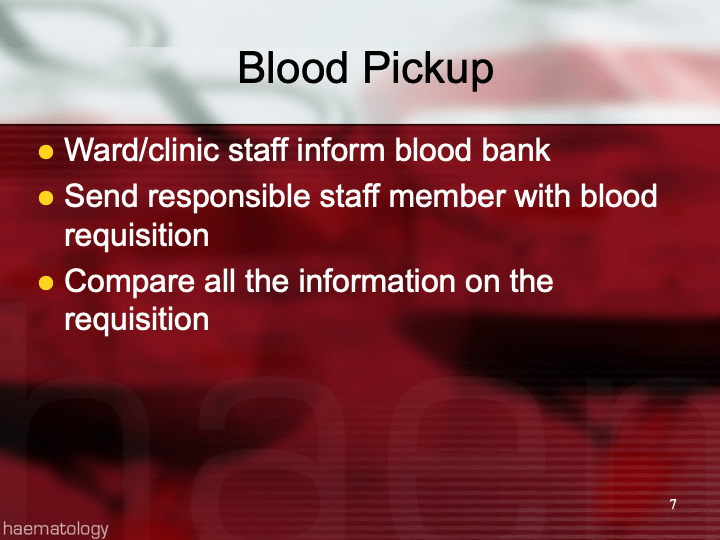
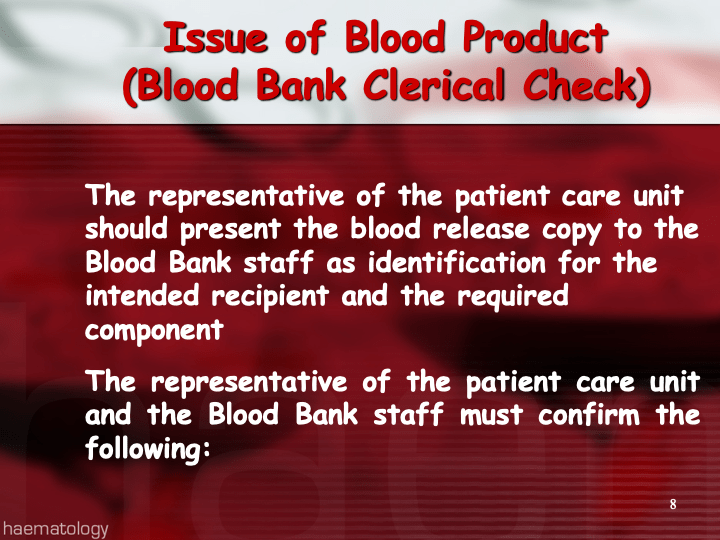
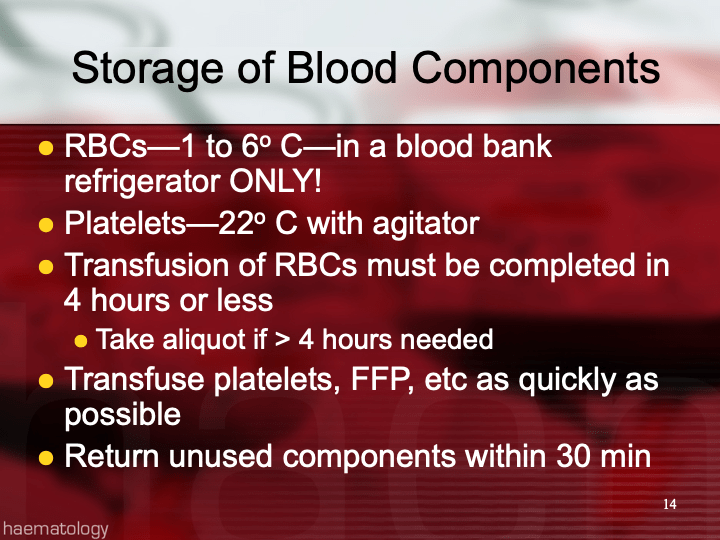
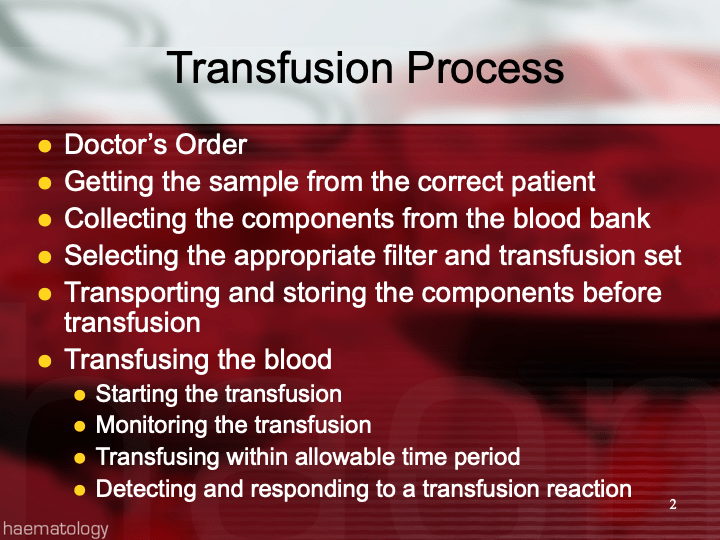
The final components from the component preparation center may be sent to various depots (freestanding location and/or hospital blood banks.  There should be complete traceability for every step (from donor reception, collection, testing, and processing) transport between locations, and finally the exact storage site, which might include which refrigerator/freezer/incubator and even shelf/position number for each component is stored.  The end of that document showed rules for type/antigen matching.

For disaster planning, rapid inventory enumeration by type is very important.  This can be very time-consuming manually.  With our Medinfo Hematos blood bank system, we could quickly get total inventory across the Qatar or by hospital in less than one minute.  We could also quickly find antigen-matched units across the system and reserve it at any one site for another if necessary.

Smart blood bank dispensing refrigerators, as offered by Haemonetics and Angelatoni, may also serve as depots and take the place of a hospital blood bank for some dispensing.  These solutions can also capture vital information about the storage conditions of the components and prevent release if the storage criteria are not met.  They can also interface with blood bank computer systems and use the main system’s logic for the dispensation rules.

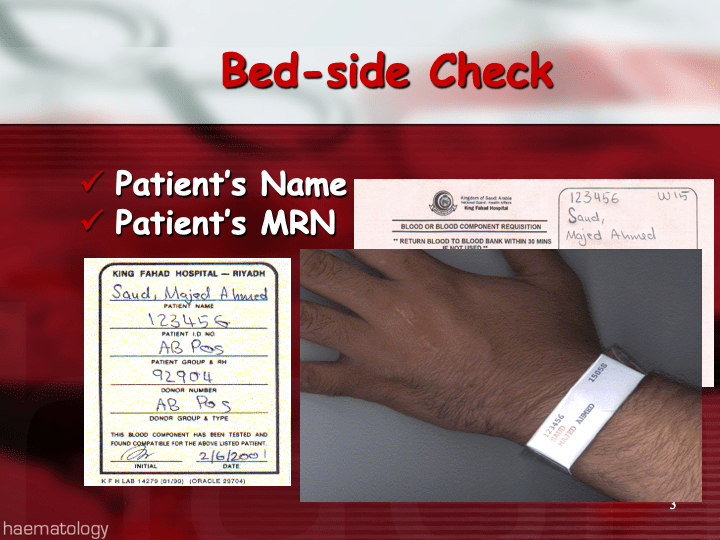
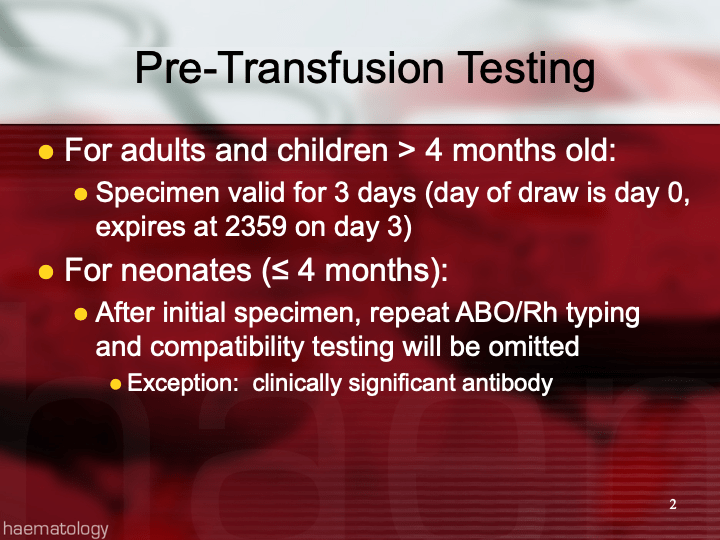
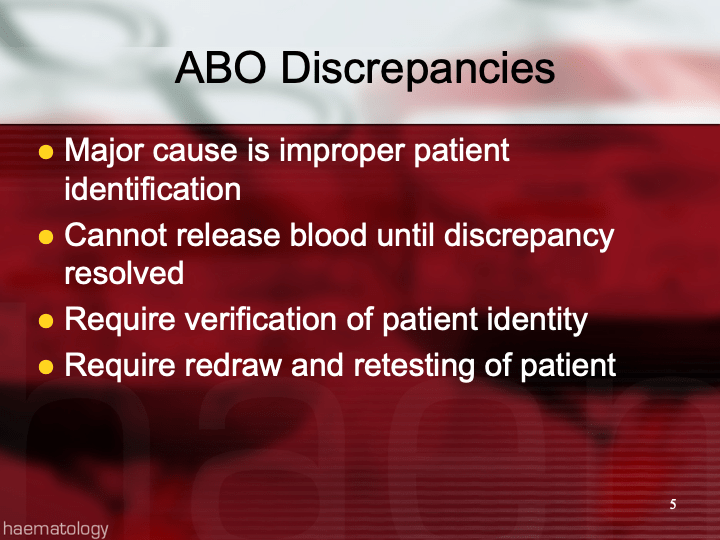
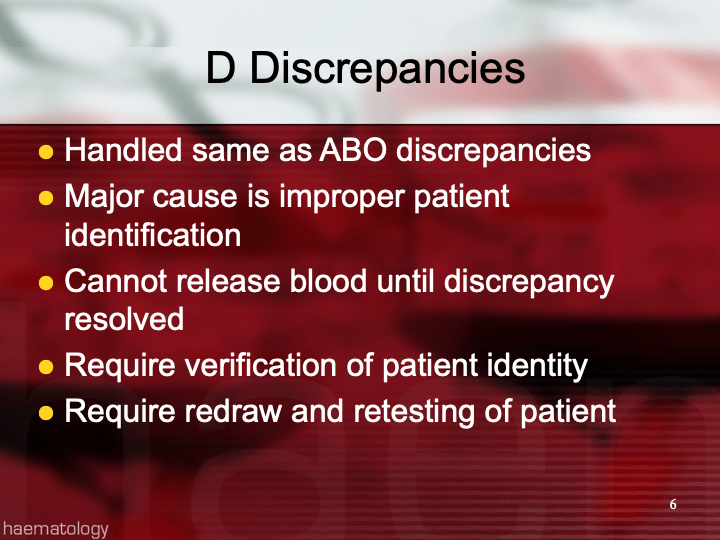
Upon receipt at the hospitals from the blood processing center, the forward ABO and D typing must be confirmed.  We used D reagents which detected partial D so we would call such donor units as D-positive.  However, if a patient type reagent insensitive to partial D types is used, it is possible for a unit to be typed as D-negative whereas in the donor center it might be D-positive.  Sometimes, nothing types consistently as D-positive:  all you can say is that with a particular reagent and lot number, there is or isn’t reactivity.

The greatest complexity is for RBCs since potentially so many antigens exist.  Criteria for matching/ignoring certain antigens must be made.  Critically significant antibodies such as the Kell, Duffy, Kidd, and certain Rh (D and c) must be antigen matched.  A robust blood bank computer system can enforce these rules.

For other components, antigen/typing may be less important.  In fact, in most situations, any type of platelets can be given to anyone (except neonates).  Despite the potentially incompatible plasma, there is rarely significant hemolysis.  In fact, if pooling platelets without regard to blood types is done, a platelet transfusion is a common cause of a positive direct antiglobulin test DAT—something that is not clinically significant.  No one died of a positive DAT by itself for this reason.

Specific rules for compatible plasma types are important, but nowadays, low-anti-B-titer group A plasma may be used like universal AB plasma.  The challenge is to be able to perform the ABO titration (specifically anti-B) quickly—titration can be a slow process, even with automated equipment.  A similar situation for low-titer, universal group O whole blood requires both anti-A and anti-B titration (I will return to this topic in a future post).

Post RhIG Use Without Antibody Identification

Rh immunoprophylaxis has big effect on the Transfusion Medicine operations.  With a very active obstetrics program, there are numerous prenatal blood bank workups and administrations of Rh immune globulin RhIG—and consequently many antibody identifications.  In fact at my previous position, the largest single source of antibody workups was from patients post-RhIG administration.

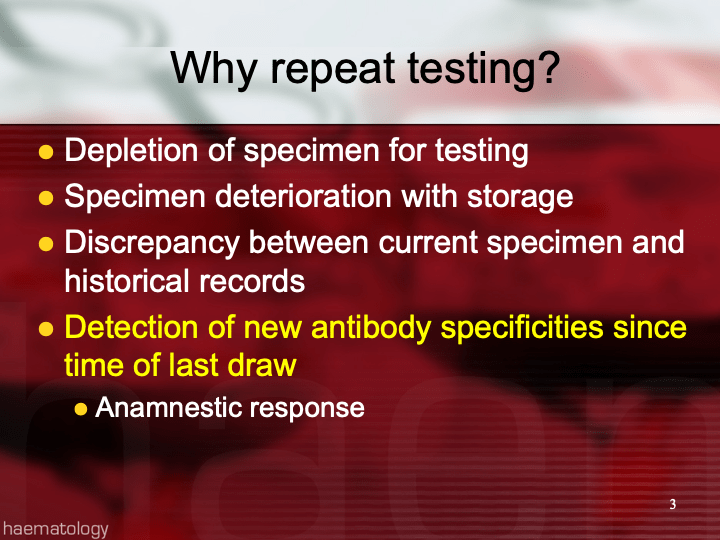
As a result of the antenatal RhIG use, there were numerous positive antibody screens.  Our policy had been to always do a full antibody identification, both AHG and enzyme panels, and this made up the bulk of our antibody testing.  In my experience, I have found other antibody specificities in some of these patients, including anti-Kell and anti-c, both of which could be very clinically significant.

As part of the workup, we also did ABO and extended Rh and Kell phenotyping, and thus identified rare Rh phenotypes (r’r’, -D-, etc.) and several Bombay phenotypes.

Unfortunately, I have been at institutions where they assumed a positive antibody screen in a patient with recent RhIG administration was passive anti-D and did NOT perform further testing.

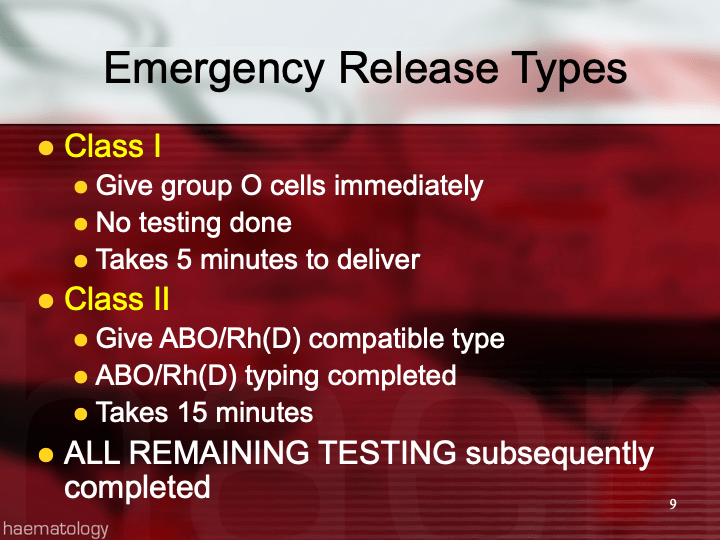
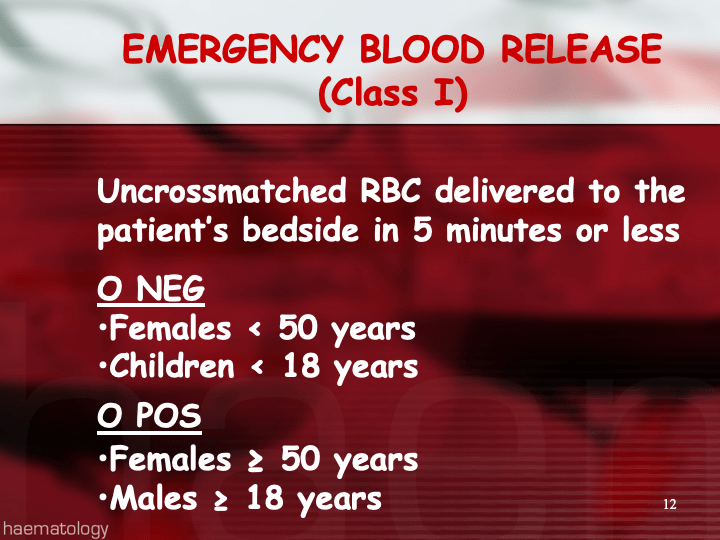
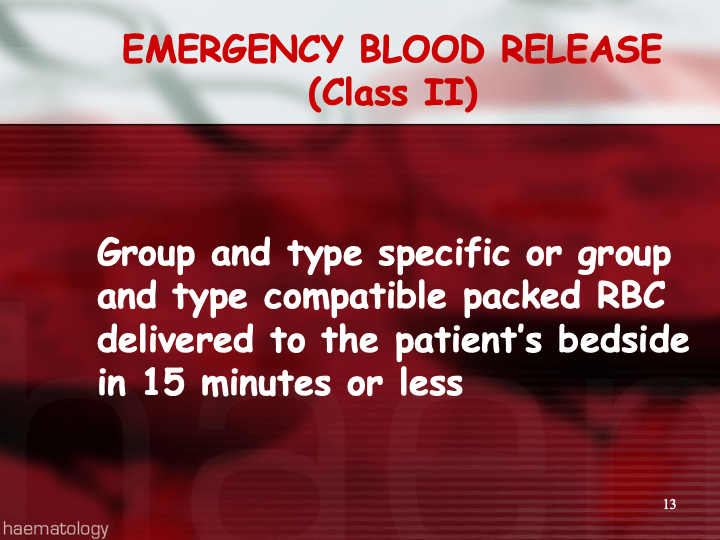
If the patient needs blood and the antibody screen is positive, the antibody workup must be performed for routine release.  This means about a 20-30 minutes delay in release until the antibody panels are completed and reviewed.  Otherwise, blood can be released through an emergency protocol if the clinician accepts responsibility for incomplete testing at the time of release.

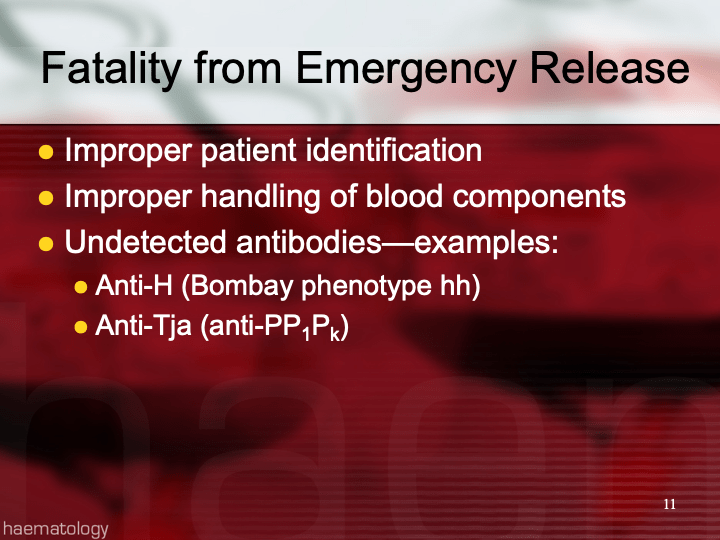
Many clinicians refused to do this emergency release and insisted on waiting for the antibody identification before accepting RBC components.  They would not take the responsibility for the emergency release.

If we had done the antibody workup in these RhIG patients, we would have identified the anti-D, and I as the transfusion medicine physician would then advise the clinician to accept emergency release of RBCs while we complete the antibody workup.

For this reason alone, I insisted on a full antibody workup for all RhIG patients RhIG who exhibit a positive antibody screen.  I would be comfortable in recommending emergency release if I had results of the previous antibody identification showing passive anti-D.  The delay in release could adversely affect the patient’s outcome if there is active bleeding.

In summary, if a patient has a positive antibody screen post RhIG administration, you should still do ABID to rule out other antibodies and facilitate release of RBCs to a bleeding patient.

How I Select Technologist Candidates for Work or Promotion

As a transfusion medicine physician, I must know if I can trust my staff’s interpretation of immunohematology testing.  I may be called at night and they will provide me with results and I must use these to make a medical judgment.  If their interpretation is flawed, I might make a decision that harms the patient.

I really don’t like multiple-choice questions, but nowadays this is often the norm.  For my staff, especially senior staff and those who want to be promoted to senior staff, I have developed a series of projective exercises to help me understand their thought processes. I also used this approach on prospective candidates for hire.

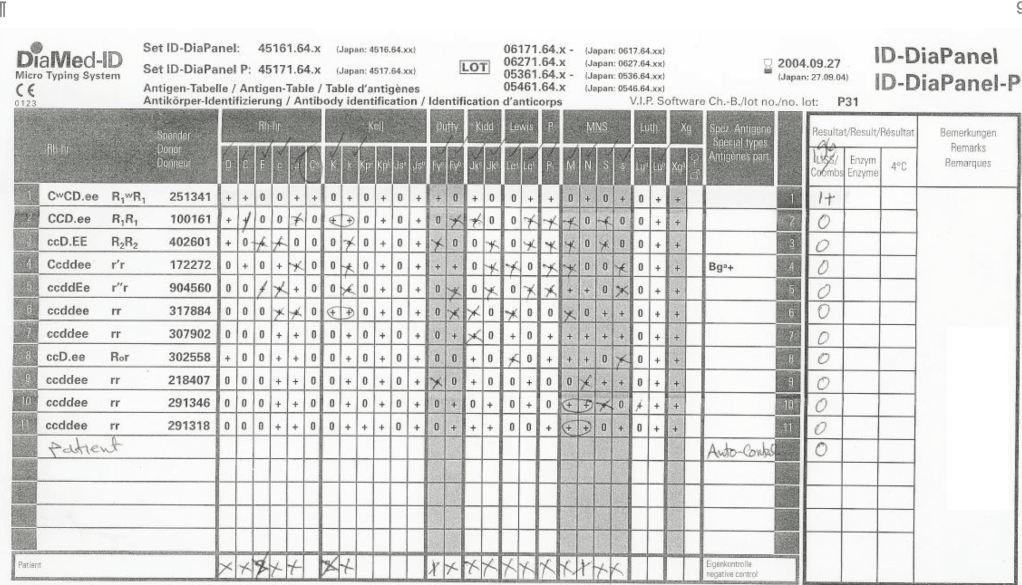
Here is a sample exercise.  I have the candidate or staff review this panel and tell me to interpret it:

Most of them answer that this is an anti-Cw without hesitation.  However, they are basing that on only one Cw-positive cell.

More astute ones indicate it might be anti-Cw but ask to test additional Cw-positive cells and perform an enzyme panel.  These are the ones that I will consider for hire or promotion now.

Antiglobulin Reagents

Antiglobulin reagents are used to detect molecules bound to the RBC surface.  What they detect depends on their specificity.  Such detection can be performed in the routine immunohematology laboratory or elsewhere such as flow cytometry.  This discussion is for the blood bank laboratories, both routine and reference immunohematology.

This is how I classify and use the various reagents in my daily practice:

  • Routine use—DAT testing and compatibility testing
  • Antibody identification
  • Drug-related hemolysis and transfusion reaction workups
  • Special assays:  DAT-negative AIHA, prediction of clinical significance of reaction by IgG subclass determination

There are many types of antiglobulin reagents:

  • Polyspecific:  IgG and complement usually C3d but sometimes C3b specificity included
  • Whole Molecule IgG including mu heavy chains and kappa and lambda light chains
  • Monospecific gamma heavy chain, mu heavy chain, alpha heavy chain, C3c, C3d, C3b
  • IgG subclass:  IgG1 IgG3

Whole molecule IgG detects class-specific mu heavy chains AND light chains kappa and lambda.  Since kappa and lambda are found on all immunoglobulin classes, whole molecule reagents can detect IgM so there may be weak staining with cold antibodies that are not clinically significant.

C3d is the final breakdown product of C3b and does not cause hemolysis.  Its presence merely means that at some time—unspecified—complement was fixed.  C3c is an intermediate product in the breakdown pathway.  If detected, C3c positivity means ACTIVE complement fixation was occurring at the time of specimen collection.

General Use:

Routine DAT testing:

  • Polyspecific:  if positive, then use
  • Monospecific IgG and monospecific C3 reagents

Antibody workups:

Routine:  antibody screens and AHG crossmatch (if indicated)

  • Polyspecific
  • Gamma heavy-chain monospecific

Monospecific gamma heavy chain is preferred to minimize non-clinically significant, cold antibody interference.

Complicated—where detection of complement reactivity is especially important:

Polyspecific for drug-related hemolysis and transfusion reactions

Difficult antibody workups, e.g. to rule out anti-Jka and/or anti-Jkb

Specialty Reference Procedures:

  • DAT-negative AIHA:  mu heavy chain, alpha heavy chain for IgM and IgA mediated hemolysis (rare), C3c to detect active complement fixation
  • Predicting clinical significance:  IgG1 IgG3

Complement fixation may be important in various drug-related hemolysis and some transfusion reactions so I always use a polyspecific reagent in these situations.  Most antibodies can be detected by gamma heavy-chain specific reagents;  however, there are rare examples of anti-Jka and anti-Jkb which are only detected by complement.  Whenever I have a nonspecific reaction in an Jka-negative or Jkb-negative patient, I repeat the AHG panel using polyspecific reagents.  I do not use polyspecific routinely because of the nonspecific and non-clinically significant cold antibodies.

One way to assess for the clinical significance of an antibody is to determine its IgG subclass.  In general, IgG3 antibodies may fix complement and cause severe hemolysis.  Both IgG1 and IgG3 antibodies cross the placenta and may cause hemolytic disease of the fetus/newborn.

In summary, when reviewing immunohematologic reactions using AHG, I always remember to check which type of AHG reagent was used.  I always keep multiple types of AHG reagents in the laboratory for the reasons explained above.