Donor Unit Discrepancies

Principle:

All donor unit mislabeling is potentially life-threatening and must be stringently investigated as soon as possible after the discrepancy is detected.  Most importantly, if there is one error, there may be possibly ADDITIONAL donor unit errors (e.g. switch of donor tubes or units, etc.).  All donor units processed in the same batch must be also quarantined until the discrepancies are resolved.

The blood bank computer system will detect many errors;  however, if the donor unit or its samples are mislabeled in the beginning, these may not be detected.  Medinfo enforces checks on the final ISBT label and will compare current results to the historical record and will alert to any errors. Additionally, the use of ISBT specimen labels will obviate the risk of barcode reading errors.

Definitions:

Responsible blood bank physician:  specialist or consultant physician on-call at the time the discrepancy is detected

Policy Details:

The following steps MUST be performed as soon as possible:

  1. The Component Processing Supervisor or Senior Technologist must be IMMEDIATELY notified of any discrepancy.
  2. The Blood Bank Supervisor will inform the Division Head, Transfusion Medicine.  If the Head is not available, notify the Transfusion Medicine on-call.
  3. Quarantine ALL donor units collected and processed in the same batch.
  4. Obtain copies of all testing including photos of the gel/glass bead cards documenting the discrepancy.
  5. Obtain copies of all worksheets used in donor processing for the affected batch.
  6. Perform repeat ABO/D typing of ALL DONOR UNITS in the affected batch.  Any further discrepancies must be investigated and resolved.
  7. Identify all staff who were involved in handling the donor unit (phlebotomist, blood bank technicians processing and labelling the unit).  Identify those associated directly with the error.
  8. Submit all documents and photos to the Blood Bank Supervisor or designate.
  9. Prepare an occurrence/variance OVA report documenting all the data, findings, and interpretations.
  10. All investigations must be reviewed by the Supervisor, responsible blood bank physician, and one of the senior consultants.
  11. All such investigations must then be finally reviewed and approved by the Division Head, Transfusion Medicine or his designate.  Only when the issue(s) are completely resolved and investigation is approved may the donor unit be properly relabeled and released into available stock.  Also, only at that time may the other units in the affected batch be released into available stock!!
  12. Photograph the correctly relabeled unit and attach it to the other documentation of the incident.
  13. If the discrepancy cannot be resolved, ALL units in the affected batch must be discarded.
  14.  The implicated staff’s personnel record should be reviewed for previous errors.   Appropriate disciplinary action should be taken and documented in the personnel record.  If a verbal warning is given, it should still be documented in the written record.
  15. If there is a systemic cause for the error, appropriate measures should be taken to minimize reoccurrence.
  16. All actions must be in accordance with the institution’s policies and regulations.

2/11/20
Nipah Virus and Blood Donation

Principle:

Nipah virus NiV is a paramyxovirus that may cause a fatal encephalitis in infected patients.  Transmission to humans may occur after direct contact with infected bats, infected pigs, or from other infected humans.  ELISA, NAT, and direct culture may be used for confirmation of diagnosis, but there is no available licensed donor test.  The geographical distribution of this virus corresponds generally to the areas of malaria exclusion used for blood donor screening.  Most cases are fatal, and survivors may have neurologic sequelae.

The incubation period is 5-14 days with illness presenting 3-14 days of fever, headache, followed by drowsiness, disorientation, and confusion.  These findings may progress to coma within 24-48 hours.  Some patients also develop a respiratory illness.  Latent infections with subsequent reactivation of the virus have occurred months to years after exposure.

Policy:

  1. The current exclusion for travel to malaria endemic areas will be used to exclude donors with possible NiV exposure.
  2. Any donor with a history of Nipah virus infection will be permanently deferred.
  3. As per current SOP, any donor not feeling well must not donate blood or blood components.

Blood Bank Software is Dynamic, NOT Static

I was recently talking with one of the hospital software system administrators from my previous site.  He had originally worked on building the Medinfo system, but was then reassigned to the laboratory modules of the hospital information system.

His alarming comment to me was that the Medinfo build was completed so there was no need to worry about it now—it was finished.  I guess he was looking from the perspective of the general laboratory software.  There is no need to make major changes to the build, just update interfaces and troubleshoot.

I was surprised.  He had no idea of how many times we have to update the structure for new rules and regulations, and changes in blood bank practice—let alone emerging pathogens such as ZIKA, dengue, Chikungunya, and most recently, COVID-19.

My daily morning routine was to survey several blood bank websites with changes to blood donor criteria including US FDA CBER, read the transfusion journals (Transfusion, Vox Sanguis, etc.), AABB, and ASFA.  If there were any changes pertinent to our organization, I had to make interim policies and procedures, and finally prepare specifications for changes in the Medinfo software.

The Medinfo engineers would prepare flow charts of the proposed changes and implement them in a test environment for the Super-Users to test.  I had to prepare validation protocols for the testing, and then review the validation results and finally approve the adoption of the changes.

I cannot remember even a month going by without some revision in the donor protocols.  When COVID-19 came, I had to prepare a parallel, but separate, processing and allocation/release system.

This was a never-ending story that kept the Super Users and the local Medinfo engineers busy.  I always reminded the hospital information system staff that playing with blood bank software was like playing with fire:  there is a good chance you will get burned if you do not set it up properly.

31/10/20

Directed Donations

Principle:

Directed donations are used for dedicated components from a particular donor for a specific patient.

Policy:

  1. All requests for directed donations must be specifically approved by one of the Transfusion Medicine physicians.
  2. Indications—patient has need of a rare component type, including:
    1. Antibody to a high-incidence/prevalence RBC antigen (e.g. anti-PP1Pk)
    2. Neonatal isoimmune thrombocytopenia or other platelet antibody situation (anti-HLA or platelet-specific)
    3. IgA-deficient plasma
  3. Other requests:
    1. If #2 above does not apply but someone wants to donate on behalf of a particular patient, the final decision to proceed will be made by the transfusion medicine physician.
  4. All directed donations must be registered as such in the Medinfo Hematos IIG computer system to ensure that the proper ISBT label is generated.
  5. Directed donors must meet the same eligibility criteria as regular donors.
  6. Special conditions apply to apheresis components from a dedicated donor:
    1. If a directed apheresis donor passes initial donor testing and is dedicated for one particular donor, then additional plateletpheresis donations may be accepted for 30 days without further testing.
  7. The platelet apheresis component may be directly released without further testing if it is an emergency situation.  Otherwise, we will proceed with full donor testing before release.
  8. Exceptions to the above policy can only be made by the Transfusion Medicine Consultants or designate;  all exceptions must be documented in writing.
  9. All RBC and platelet components from directed donations will be irradiated before release.

Please note:

  1. Plateletpheresis donations may be collected twice weekly from the same donor, 48 hours apart, for a maximum of 24 times per year.
  2. If more than 200 ml RBC loss occurs within an 8-week period from apheresis component collection, that donor must be deferred for 8 weeks.

Reference:

Standards for Blood Banks and Transfusion Services, Current Edition, AABB, Bethesda, MD, USA

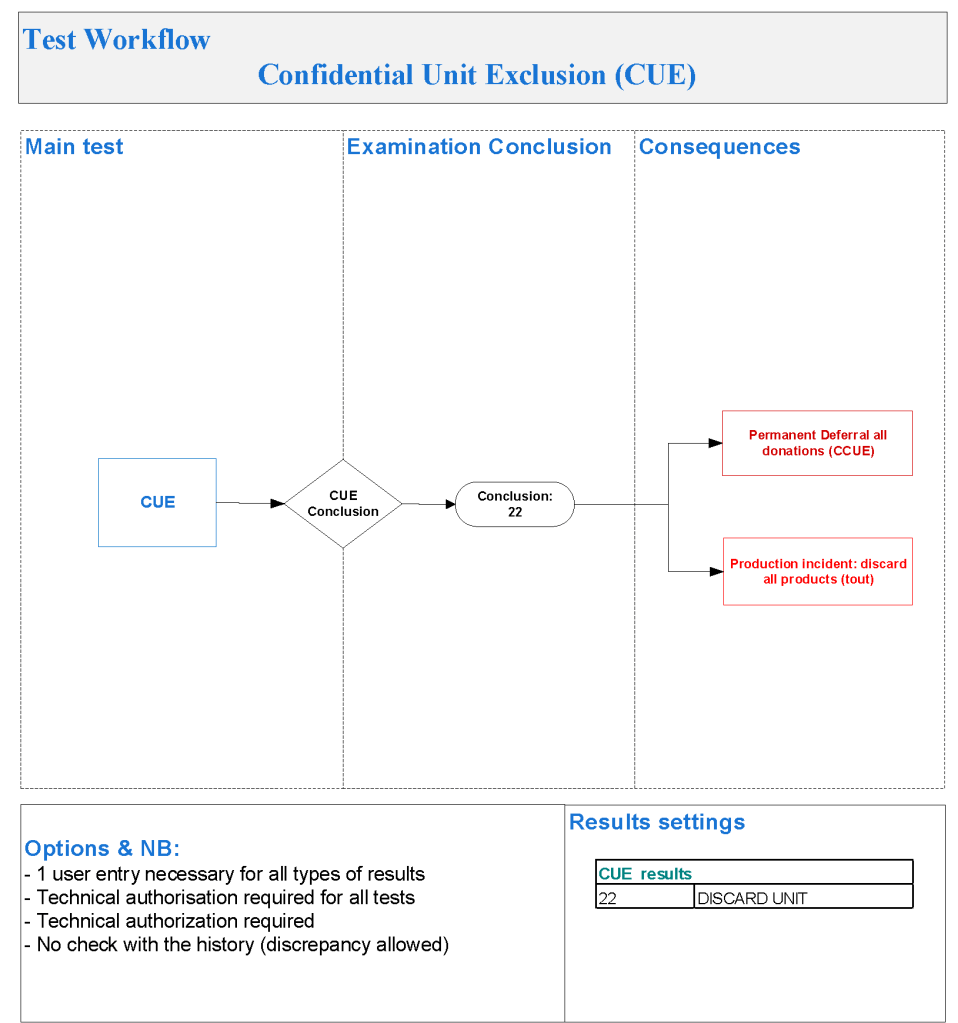
Processes and Software Building 54: Confidential Unit Exclusion

As per AABB Standards, each donor must have the opportunity to confidentially exclude the use of his collected blood AFTER the collection.  He may use a confidential code associated with his collection encounter.  Donor Center staff will mark the Confidential Unit Exclusion and the donor is permanently deferred.  All products made from his/her donation will be discarded.

22/10/20

Look-Back of Patients and Donors

Principle:

Using the Medinfo Hematos IIG program, it is easy to perform look-back for patients who have developed an infectious disease that might have been transmitted by a blood component.  Likewise, if a donor develops an infectious disease that is transmissible to patients, we can check which patient(s) received blood components from the incriminated donor.  The time interval for checking will vary according to local regulations.

Policy:

  1. If a patient is reported to have developed an infectious disease which might have been transmitted by a blood component transfusion:
    1. Review the patient’s infectious marker testing data.
    2. Review the patient’s transfusion history, especially for any transfusions at outside institutions or any other body fluid exposures.
    3. Look up the transfusion history in Medinfo HIIG.
    4. Determine which transfusions occurred during the deferral period for that disease.  Examples:
      1. HBV—6 months
      2. HCV—6 months
      3. HIV—2 months
      4. Malaria—6 months
      5. HTLV—6 months
      6. Syphilis—12 months
    5. Look up the donors for each donation during the specified interval.
    6. Check each donor’s donation records for:
      1. Infectious disease marker testing
      2. Questionnaires—any irregularities noted?
    7. Call donors back for repeat testing (only on advice of the investigating transfusion medicine physician)
    8. Collate all results and prepare an interpretative report.
    9. Interpretative report must be reviewed/released by the Head, Transfusion Medicine.
    10. Submit the report to Infectious Disease and the patient’s most responsible physician
    11. If any irregularities are found, assess processes to make any improvements in an attempt to minimize future risk.
    12. Prepare an OVA according to HMC procedures.
  2. If donor develops an infectious disease:
    1. Review the donor’s infectious marker testing results.
    2. Check if the donor had any body fluid exposures.
    3. Obtain new specimen from the donor.
    4. Look up all components made from that donor.
    5. Determine which transfusions occurred during the incubation period for that disease.  Examples:
      1. HBV—6 months
      2. HCV—6 months
      3. HIV—2 months
      4. Malaria—6 months
      5. HTLV—6 months
      6. Syphilis—12 months
    6. Recheck the complete donor history including infectious disease marker testing and questionnaire
    7. If samples are available from the interval, repeat donor marker testing on it.
    8. Look up the patient/recipients for each donation during the specified interval
    9. Check each patient’s records for infectious disease marker testing results
    10. Call patients back for repeat testing (only on advice of the investigating transfusion medicine physician in conjunction with the Infectious Disease department.)
    11. Collate all results and prepare an interpretative report.
    12. Interpretative report must be reviewed/released by the Head, Transfusion Medicine.
    13. Submit the report to Infectious Disease and the patient’s most responsible physician
    14. If any irregularities are found, assess processes to make any improvements in an attempt to minimize future risk.
    15. Prepare an OVA according to HMC procedures.

Reference:

Standards for Blood Banks and Transfusion Services, Current Edition, Bethesda, MD, USA

Policy: ISBT Specimen Labelling Audit

Principle:

ISBT specimen labels have a check-digit to reduce the risk of misreading the label.  They are generated by the blood bank computer system Medinfo.  Normally one group of labels is printed for all needs (donor unit, marker testing, donor immunohematology, and donor processing.  Reprinting the same number is restricted to minimize the risk of using the wrong label on a specimen or unit.  These labels are NOT used for patient testing.

ISBT specimen labels are only printed at the time of donor registration.  We must securitize them so that they are not used for other, potentially malicious purposes.  Remember:  a labelling mistake may cause fatality in a patient receiving the wrong blood component.

Policy:

  1. ISBT specimen labels are only for blood donor specimens, initially labelling of donor collections, and intermediate processing of components.
  2. They must be applied to the primary specimens directly at the donor’s bedside.
  3. They must be applied to aliquots from the original ISBT-labelled tubes.
  4. They may NOT be applied to any other specimen (e.g. for routine laboratory testing outside Transfusion Medicine)
    1. If an ISBT label not corresponding to the correct donor is discovered, an OVA or event report must be generated and investigated immediately.
  5. If additional ISBT labels are needed, this must be documented on a specific audit sheet with signature of the person taking the extra labels and a second person to witness their removal.  It will also be noted in the Medinfo system for auditing purposes.
  6. The audit sheet must be kept in a secure place for future reference in Blood Donor Center.

14/10/20

Donor Prion Disease Precautions

Principle:

Prion diseases, including variant Creutzfeld-Jakob disease (mad cow disease), can be efficiently transmitted by transfusion of blood components.  Since there is a variable, often long (measured in months to years) incubation time before the disease is manifest, it is important to note individuals at high-risk and exclude them from the donor pool.

This is the August 2020 revision of the previous CBER recommendation on this topic.

Policy:

The following categories of individuals are permanently prohibited from donation (whole blood, apheresis, or organ):

  1. Anyone who received human growth hormone derived from human pituitary glands
  2. Anyone who received dura mater grafts
  3. Anyone from families with a history of Creutzfeld-Jakob Disease or other prion diseases (including variant Creutzfeld-Jakob—Mad Cow Disease, Gerstmann-Straussler-Scheinker Syndrome, Fatal Familial Insomnia, Kuru)
  4. Anyone with a family history of dementia or any other chronic neurologic illnesses
  5. Anyone with first-degree relatives (parent, sibling, children) who have a prion disease
  6. Anyone who has used (injected) bovine insulin of UK origin since 1980
  7. Defer indefinitely a donor who has spent five years or more cumulatively in France or Ireland from 1980 to 2001.
  8. Anyone having resided in the United Kingdom or visited there for a total of at least three months between 1980-96
  9. Anyone who received a blood component transfusion in the United Kingdom, France, or Ireland since 1980.

Definitions:

  1. For the purposes of this policy, the United Kingdom UK is defined as any one of the following areas:  England, Northern Ireland, Scotland, Wales, Isle of Man, Gibraltar, Channel Islands, or the Falkland Islands.
  2. France refers only to mainland France and NOT to French overseas departments, e.g. Martinique, French Guiana, Guadeloupe, Mayotte, and Réunion

All donors (except autologous) must be asked questions to rule out any of the above possibilities.

References:

  1. Recommendations to Reduce the Possible Risk of Transmission of Creutzfeld-Jakob Disease and Variant Creutzfeld-Jakob Disease by Blood and Blood Components, Guidance for Industry, US Department for Health and Human Services. FDA, Center for Biologics Evaluation and Research CBER, August, 2020
  2. Association Bulletin #02-2, American Association of Blood Banks, Bethesda, Maryland, USA, 8/3/02
  3. FDA Guidance for Industry:  Revised Preventive Measures to Reduce the Possible Risk of Transmission of Creutzfeld-Jakob and Variant Creutzfeld-Jakob Disease by Blood and Blood Products, FDA Guidance for Industry, 9/1/2002
  4. Belay E.D. and Schonberger L.B., The Public Health Impact of Prion Diseases, Annu. Rev. Public Health 2005. 26:191–212, Division of Viral and Rickettsial Diseases, Centers for Disease Control and Prevention, Atlanta Georgia,
  5. Standards for Blood Banks and Transfusion Services, Current Edition, AABB, Bethesda, MD, USA
  6. Guidelines to the Preparation, Use, and Quality Assurance of Blood Components, European Committee (Partial Agreement) on Blood Transfusion (CD-P-TS), Current Edition

Donor Center Materials and Equipment Strategy

This is the policy I developed for HMC Doha Blood Donor Center:

Policy:

  1. This policy applies to all blood donor processing (including reagents, materials, equipment) in the Blood Donor Center.
    1. Immunohematology testing and donor infectious disease marker testing are not included.
  2. Equipment and reagents must be selected to meet/exceed productions standards set by the Council of Europe, International AABB, HMC policies and procedures, and Qatari law.
  3. Each equipment must have a fully functioning, reliable, bidirectional interface to Medinfo Hematos IIG and be fully interfaced
    1. Vendor is responsible to pay for the interface licensing for each piece of equipment.
  4. Materials/reagents/equipment must cover the following functionalities:
    1. Automated separation of whole blood and apheresis components into:
      1. Packed RBCs in additive solution
      2. Buffy coat derived platelet pools
      3. Apheresis-derived platelets, plasma, and/or RBCs
      4. Fresh frozen and FP24 plasma
    2. Pathogen inactivation of whole blood, platelets, plasma, RBCs
    3. Cryoprecipitate
    4. Cryo-poor plasma
    5. Frozen RBCs (high-glycerol method)
    6. Washed RBCs
    7. Thawed plasma
    8. Irradiated RBCs
    9. Reconstituted whole blood (PRBCs and thawed plasma)
    10. Leukodepletion of ALL components to current and future CE standards
  5. Equipment must have/meet:
    1. CE mark or equivalent (FDA, CSA, etc.)
    2. Sufficient throughput for the workload in the area assigned
    3. Scalability:  A path of upgrading to larger capacity/throughput equipment using the same reagent line of the vendor
    4. A minimum of two of each equipment type must be obtained to minimize disruption of blood supply.
  6. Vendors:
    1. Vendors must offer 24/7 service on critical equipment for donor blood component and patient compatibility testing
    2. Vendors who do not meet qualification standards must not be used.

References:

  1. Standards for Blood Banks and Transfusion Services, Current Edition, AABB, Bethesda, MD, USA
  2. Guide to the Preparation, Use, and Quality Assurance of Blood Components, European Committee (Partial Agreement) on Blood Transfusion (CD-P-TS), European Directorate for the Quality of Medicines and Healthcare, Current Edition, Strasbourg, France