The Devil is in the Details: Three Antibody Panels for Illustration

As a Transfusion Medicine physician, I reviewed all antibody workups.  Here are three different panels, all appearing to be panreactive,  at AHG phase.  Note the differences:

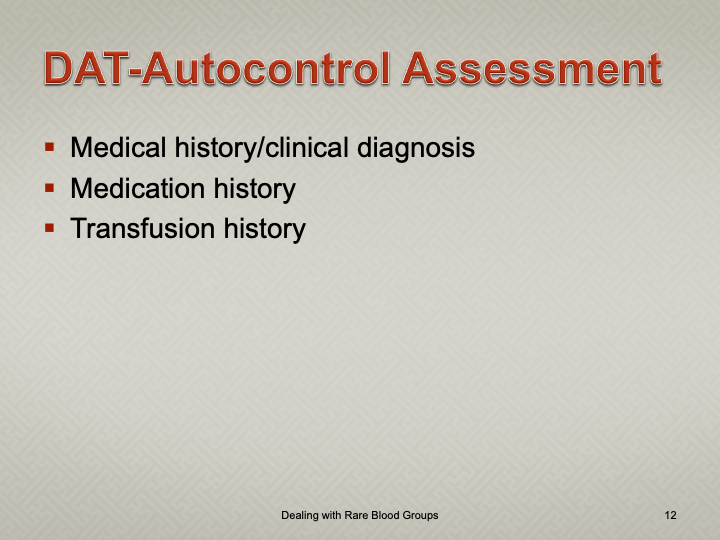
  1. Autocontrol is positive, enzyme is panreactive and enhanced
  2. Autocontrol is negative, enzyme phase shows no reactions
  3. Autocontrol is negative, enzyme phase is panreactive enhanced

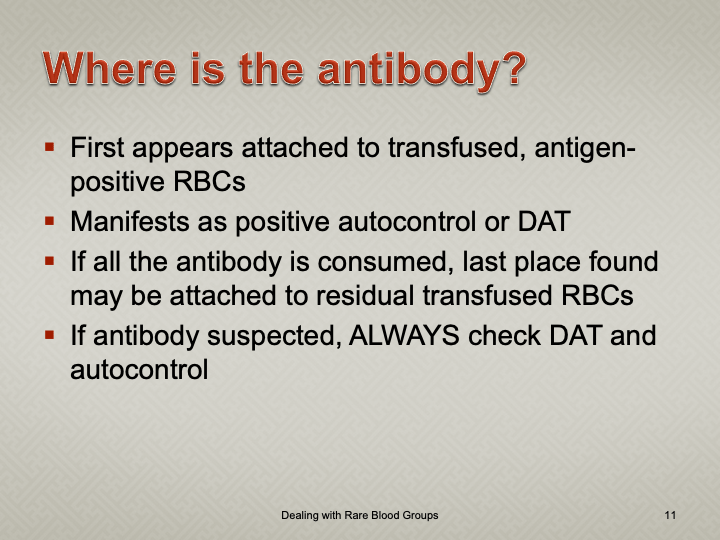
In the middle of the night, if I am called to select blood, I always keep these patterns first and foremost in my mind.

Case 1:

If the autocontrol is positive at about the same strength as the panreactivity.  I can state that this is probably a warm autoimmune pattern WAIHA (although I cannot rule out underlying clinically significant alloantibodies obscured by this pattern and need to do autologous auto-absorption ZZAP).  Both warm autoimmune antibodies and certain drug reactions may cause this pattern.  Use least-incompatible crossmatch matching any significant specificities you found by ZZAP and observe the patient closely throughout transfusion.

Case 2:

If the autocontrol is negative and all reactions are enzyme-labile—and if you live in the Middle East/Gulf region, then you have a presumptive anti-Ge2.  You can safely ignore this antibody and release least-incompatible crossmatch RBCs, regardless of the strength of the reactions.

Case 3:

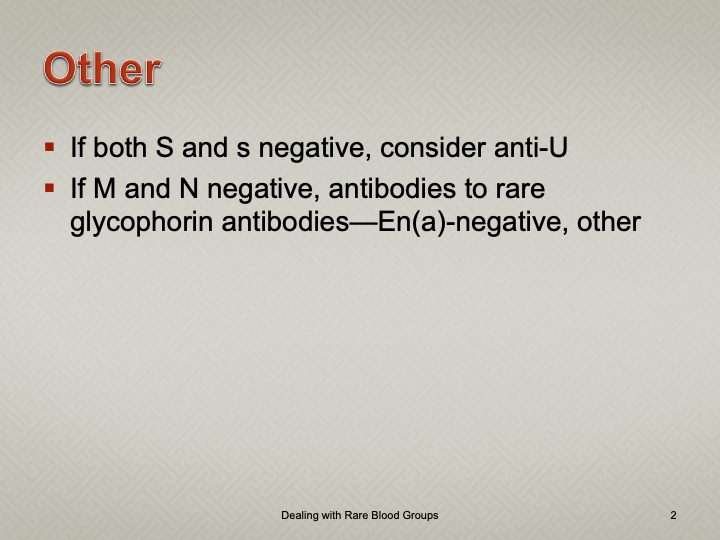
If the autocontrol is negative and the reactions are unchanged or enhanced by enzyme, BE AFRAID, VERY AFRAID!!  This is an antibody to a high-incidence antigen.  These can be very dangerous.  In the Middle East/Gulf region, consider anti-H, anti-k (cellano), anti-Kpb, anti-PP1Pk, and rare antibodies to the MNSs such as anti-U or other MN system deletions.  There are many other possibilities, e.g. anti-Fy3.

You need to perform extended antigen typing across the major Rh antigen, Kell, Duffy, Kidd, MNSs, P systems (at least P1):

  1. Run H lectin to rule out Bombay Oh or Parabombay.
  2. Some Rh system deletions and Rh null show pan-Rh reactivity—check D, C, c, E, e typings.
  3. Anti-k (cellano) will be suggested by k-negative phenotype.
  4. Unusual, weak or absent reactions with M and N reagents suggest something like En(a)-negative or similar.
  5. Absent P1 with no other findings, you must rule out anti-Tja (anti-PP1Pk).

I have seen all of these specificities during my time in the Middle East.  All of these antibodies can be clinically significant and often life-threatening.

Conclusion:  NEVER NEGLECT TO REVIEW THE AUTOCONTROL!!!

Nonspecific Reactions, Reagents Near Expiration

Whenever I had a “nonspecific” antibody, I had to first rule out issues with the reagents themselves. The following example shows weak to 2+ reactions in the panel cells and autocontrol.

The variability in the reactions made me initially uncomfortable about called this WAIHA. I then checked the panel details: the testing was done only six days before the panel outdate.

I told my staff to repeat the workup with the new panel expiring five weeks later. The difference is astounding!!

Remember: if you work in the Middle East, the environmental conditions can be extreme in summer (>50C). Do you know how your reagents were handling during transport?

My advice: if you are concerned there is a clinically significant antibody but cannot discern it, consider repeating the workup using fresh reagents.

Case Report: Unusual Antibody Anti-Jka

This is a rare anti-Jka that only reacts with polyspecific AHG and only in Jka+ homozygous reagent cells. In the past three decades in the Middle East, I have only seen three of these.

Almost all anti-Jka and anti-Jkb antibodies in my experience can be detected using monospecific, gamma-heavy-chain AHG reagents (I personally prefer this latter reagent to avoid cold antibody interference.)

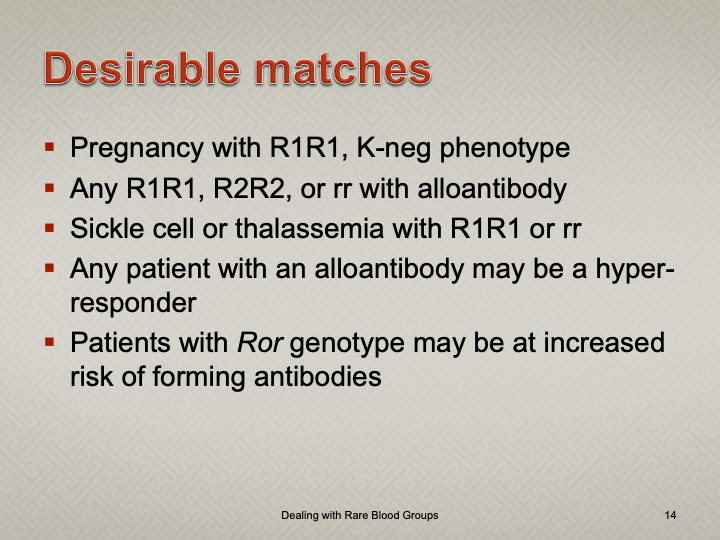
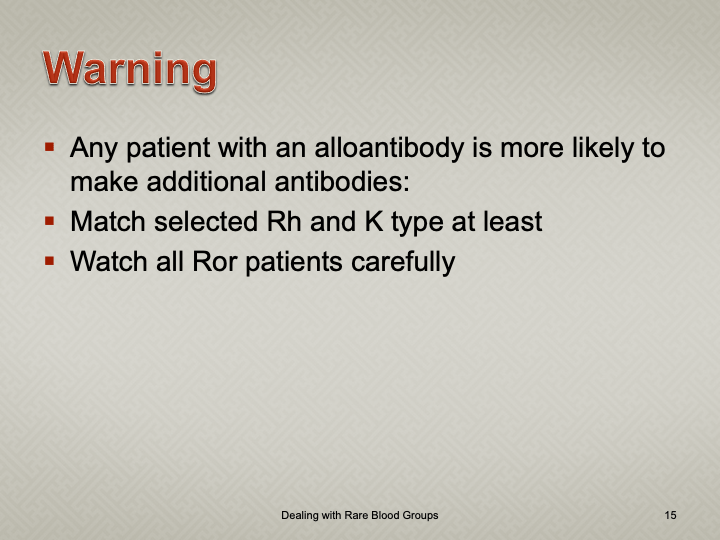
If you have a nonspecific antibody, never discount this possibility and then run polyspecific reagents and check for dosage. I also recommend extended antigen typing (e.g. Diamed/Biorad Profile Cards 1-2-3).