Direct Antiglobulin Test and Selection of RBC Units for Transfusion

Principle:

In 1984 effective with the 13th Edition AABB Standards, the requirements for performing a direct antiglobulin test and autocontrol for compatibility testing were eliminated.  The DAT is very important to detect delayed hemolytic transfusion reactions, certain autoimmune conditions, and drug-related hemolysis.

Since that time, the immediate-spin crossmatch and now the electronic computer paperless crossmatch may be used for most compatibility testing in place of the classic, antiglobulin-phase (indirect antiglobulin test) crossmatch.

If an antiglobulin phase (IAT) crossmatch is performed, an RBC unit with a positive DAT will cause a false-positive reaction.  Since most crossmatching does not include the IAT, it will not be affected by the DAT status of a donor unit.

Policy:

  1. Donor RBC units will NOT be routinely tested for DAT as part of component processing.
  2. The type of compatibility testing selected for a particular patient should be the technically simplest one (no need to do extra work unless so instructed by the transfusion medicine consultant/designate):
  3. Do a full antiglobulin-phase IAT crossmatch if ANY of the following applies:
    1. There are no two independent ABO/D typings on the patient during the current admission.
    2. The ABO/D type of the current admission does not match the historical information.
    3. The patient has a detectable antibody at 37C
    4. The patient has a history of a clinically significant antibody but no current antibody
    5. Whenever the consultant, transfusion medicine/designate requests it.
    6. Whenever the Medinfo HIIG record so indicates (in comment section)
  4. Do the immediate-spin crossmatch if ALL of the following apply:
    1. Only one determination of the ABO/D type
    2. The historical ABO/D type agrees with the current type.
    3. There are no antibodies reacting at 37C AND there is no history of antibodies at 37C.
  5. Use the computer/electronic crossmatch if ALL of the following apply:
    1. There are two determinations of the ABO/D type and they both agree with each other.
    2. The historical ABO/D type agrees with the current type.
    3. There are no antibodies reacting at 37C AND there is no history of antibodies at 37C.
  6. When to do a DAT on a donor unit:
    1. Patient antibody screen is negative but the full AHG crossmatch is incompatible.
    2. Part of a transfusion reaction workup where the AHG crossmatch of donor cells and patient serum is incompatible.
    3. Whenever the consultant, transfusion medicine/designate requests it.
  7. If a donor unit is found with a positive DAT:
    1. Test with polyspecific and monospecific IgG and C3d antisera
    2. Perform an acid-elution.
    3. Send the results to the transfusion medicine consultant/designate for review.
    4. The reviewer will enter his review in HIIG in the Donor Consultation Section both as global donor comment and a result-specific comment against the antibody screen result.
    5. Use of the DAT-positive donor unit:
      1. Select another RBC unit for the transfusion.
      2. The final decision to use the unit will be made by the Transfusion Medicine consultant/designate.

Important:  Don’t do a classic AHG/IAT phase crossmatch unless you have to do it  (see conditions above.)  A donor unit with a DAT is unlikely to be clinically significant and may be transfused safely to the patient in most situations.  Patients receiving electronic-crossmatch and immediate-spin crossmatch are receiving units with positive DAT without incident.

References:

  1. Standards for Blood Banks and Transfusion Services, Current Edition, AABB, Bethesda, MD, USA
  2. Guidelines to the Preparation, Use, and Quality Assurance of Blood Components, European Committee (Partial Agreement) on Blood Transfusion (CD-P-TS), Current Edition
  3. Technical Manual, Current Edition, AABB, Bethesda, MD, USA
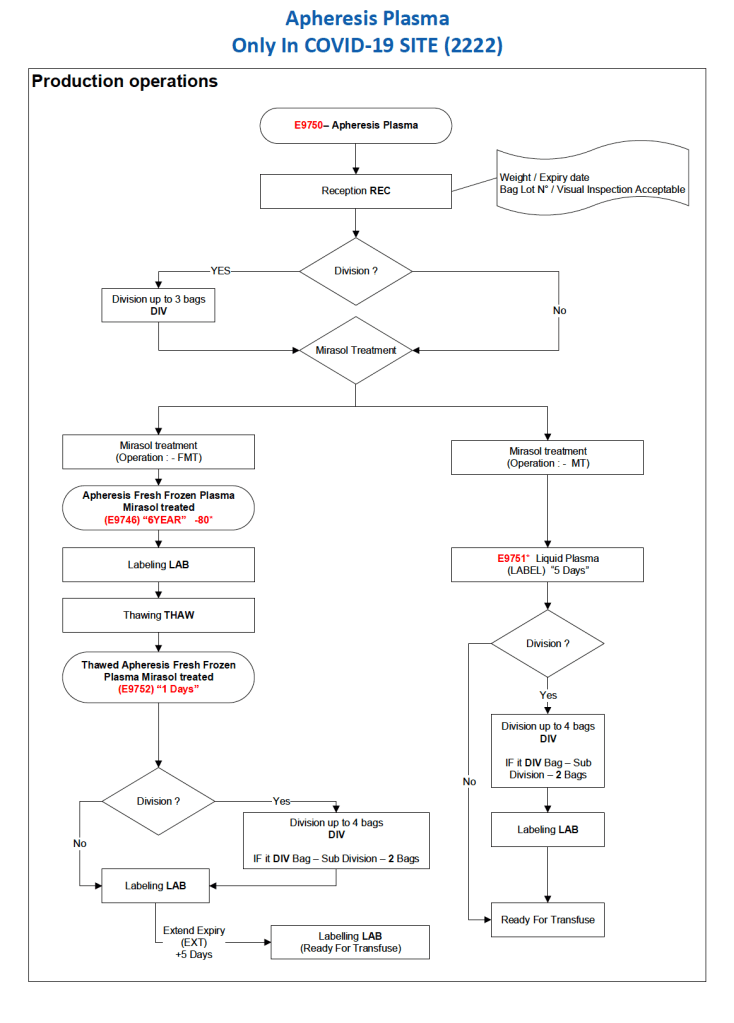
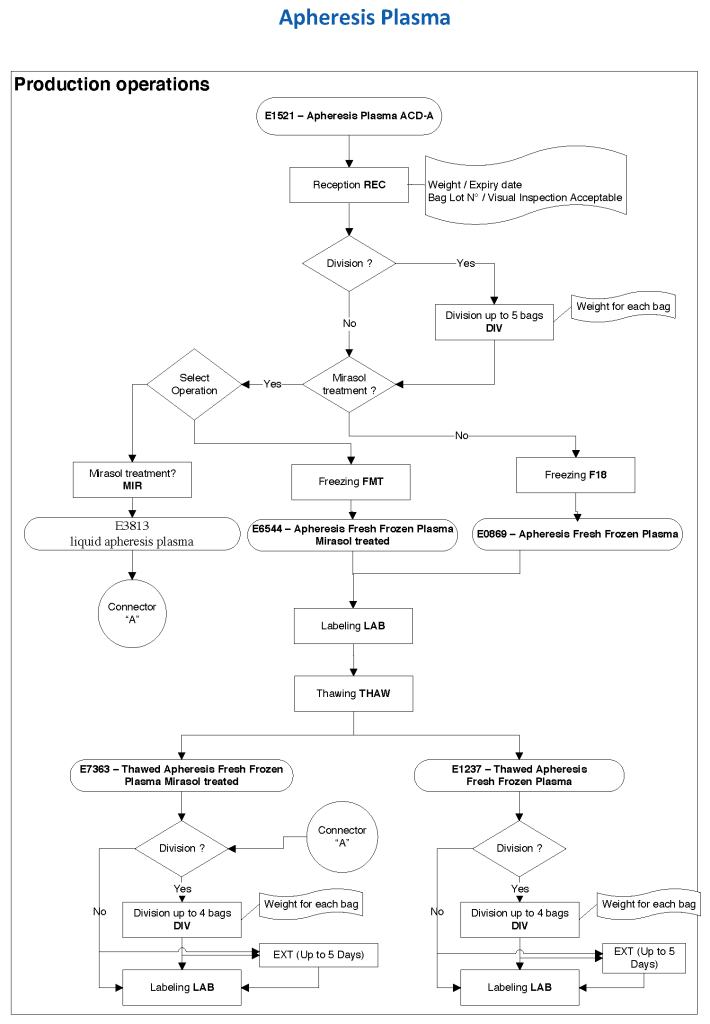
Processes and Software Building 47: Apheresis Plasma

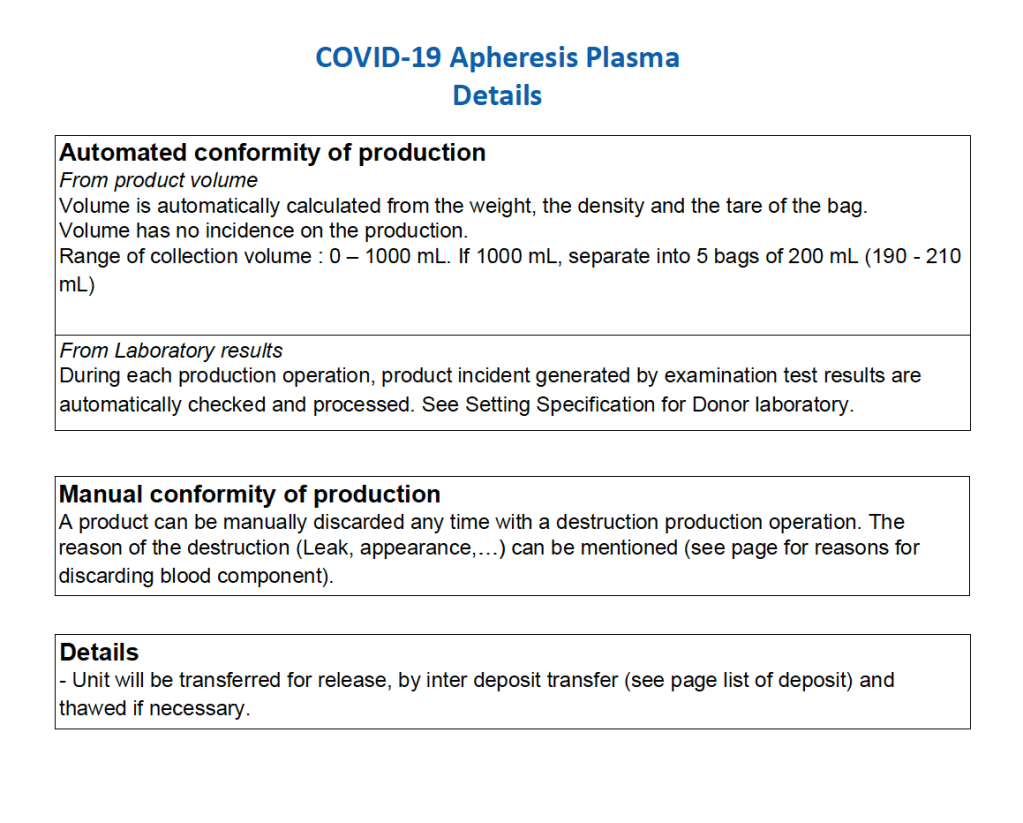
At HMC during my tenure, all plasma products—whole-blood and apheresis-derived were pathogen inactivated with riboflavin (Mirasol).  In our software processes, I had options to release both Mirasol-treated and untreated (the latter in emergencies) and to aliquot either as needed.  The same processes applied to COVID-19 convalescent plasma CCP except that they were performed in a quarantine production area.  There were specific ISBT codes for CCP.

24/9/20

SARS-CoV-2 Vaccines and Donor Qualification

Principle:

Under AABB and FDA rules in the Uniform Donor History Questionnaire, unlicensed, investigational vaccines have a 12-month deferral or as indicated by a responsible physician.  In light of the anticipated vaccination trials for COVID-19, this policy gives interim guidance until more definitive information is available.

For COVID-19 Convalescent Plasma CCP donation, investigational vaccine recipients should not donate COVID-19 convalescent plasma until further information is available about their antibody profile.

Policy:

Any donor who has received a COVID-19 (SARS-CoV-2) vaccine will be deferred as follows:

  1. Whole blood or apheresis donation (except COVID-19 convalescent plasma):
    1. Live, attenuated vaccine:  14 days post vaccination
    2. Non-replicating, inactivated, or RNA-based vaccine:  NO DEFERRAL
  2. COVID-19 Convalescent Plasma CCP Donation:  DO NOT ACCEPT

Reference:

Text from the AABB Weekly Report:

Novel Coronavirus Update, Regulatory Update:  Investigational Vaccines and Deferral for Donor of Blood and Convalescent Plasma, AABB Weekly Report, 7 August 2020

“FDA recognizes AABB’s DHQ which includes unlicensed (experimental) vaccines on the medication deferral list as a 12-month deferral or as indicated by the responsible physician.

“For routine blood donation, the responsible physician may wish to consider the potential infectious risk associated with the vaccines, and the use of short deferral periods (e.g., 14 days) for live attenuated vaccines and no deferral for non-replicating, inactivated or RNA-based vaccines.

“We agree that no deferral is necessary for routine blood donors who might have received the mRNA-1273 Moderna vaccine.

“At this time, we suggest that individuals who have received a COVID-19 investigational vaccine should not donate COVID-19 convalescent plasma until further information is available about their antibody profile.”

Summary of Accomplishments at HMC 2011-2020

I resigned from HMC on 16/4/20.  Here are a set of my major accomplishments during that period. None of my work after this date has any relationship to HMC.

2011

Established automated component production using Atreus technology, plasma and platelet pathogen inactivation (Mirasol)—made HMC component production Good Manufacturing System GMP compliant

Adopted non-PCR-based NAT technology (Grifols/Novartis Tigress) and Qatar becomes world reference site for this

Based on the above, Qatar can now completely process all whole blood into blood components (red cells, platelets, and plasma) in as little as 5 hours from collection!

2011-2020:

Prepared policies and procedures for the hospital blood banks/transfusion services, blood donor center, therapeutic apheresis, and laboratory information systems to bring HMC in compliance with the Council of Europe, international AABB, and other standards.  I customized our own standards for our local needs based on them.

2012-2013

Implemented custom build of the multilingual blood bank computer system (Medinfo) for both patient and donor services, including development of interfaces to all production equipment including Atreus and Mirasol (world’s first) and a direct link to Ministry of the Interior to obtain patient demographics in English and Arabic—Qatar became the world’s first site to combine fully-interfaced, automated component production with pathogen inactivation:  Qatar becomes world reference site for this.

2013-2014

Built, validated, and implemented laboratory build of hospital information system, Cerner Millennium

2015

Replaced and updated Atreus with Reveos automated component production to allow faster throughput and capacity with a full bidirectional interface (world’s first), introduced platelet-additive solution PAS with pathogen inactivation (Mirasol)—Medinfo interfaces updated to Reveos for all equipment:  this doubles the capacity to process whole blood into components using the same physical space

2015-2019

Updated dedicated blood bank software Medinfo Hematos IIG by several versions using Division Head, LIS, and internally trained Super Users—at great cost savings to HMC by not using outside consultants (e.g. Dell Consulting)

2019

Established column absorption technology using Terumo Optia therapeutic apheresis machine for treatment of ABO-incompatible renal transplants:  I validated using the Ortho Vision MAX to perform ABO antibody titers for this system and correlated it with the reference method at Karolinska Institutet in Stockholm (manual gel) to bring rapid throughput and labor savings—Qatar being the first-site in the world to do this.  We saved money by using the same apheresis machine to use this column absorption technology (no need for second machine to use the columns)

2020

Expedited setup (two weeks total) of COVID-19 convalescent plasma production, initially manual and then fully integrated into the Medinfo computer system as a customized module with separate quarantine collection, production, and transfusion service functions

Other:

I was awarded two HMC Star of Excellence Awards:

2013—Liver Transplantation Transfusion Support

2019—ABO-Incompatible Renal Transplantation Support

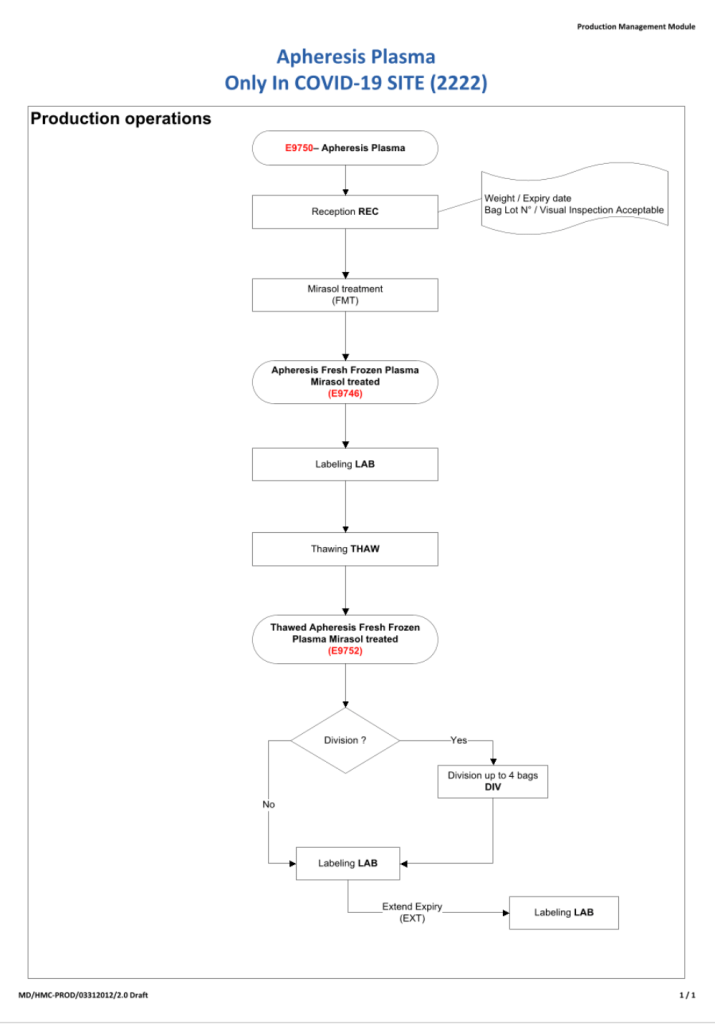
Processes and Software Building: Updated Convalescent COVID-19 Plasma Production

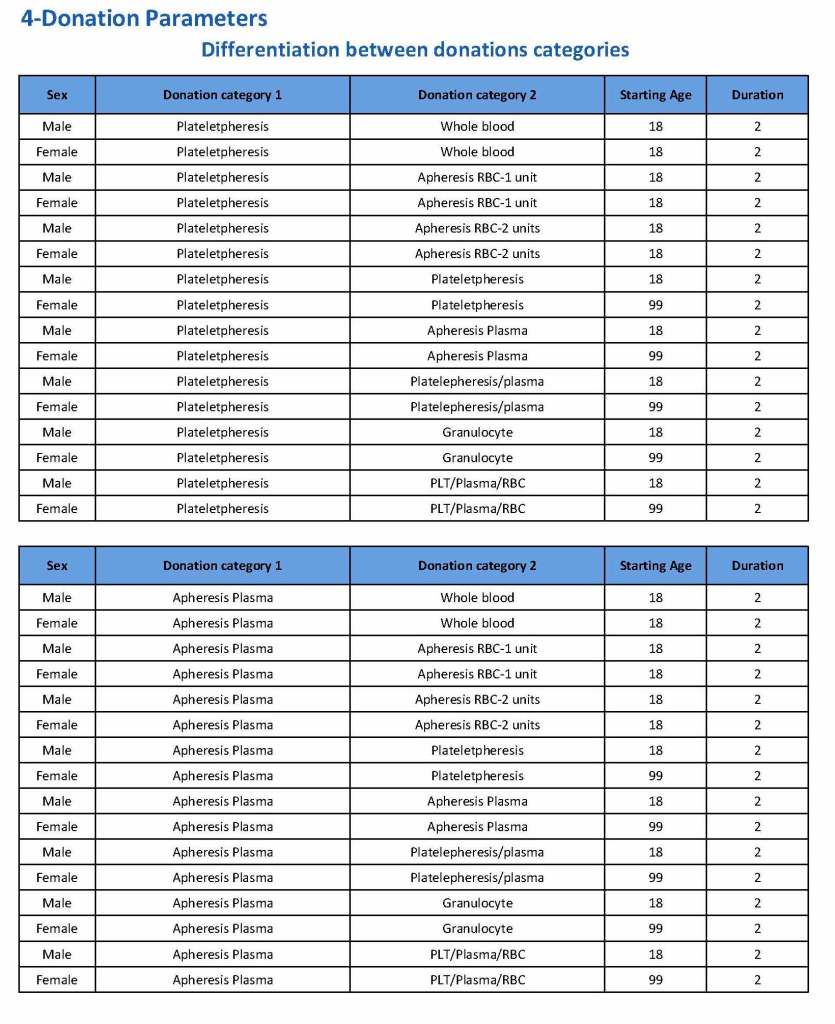
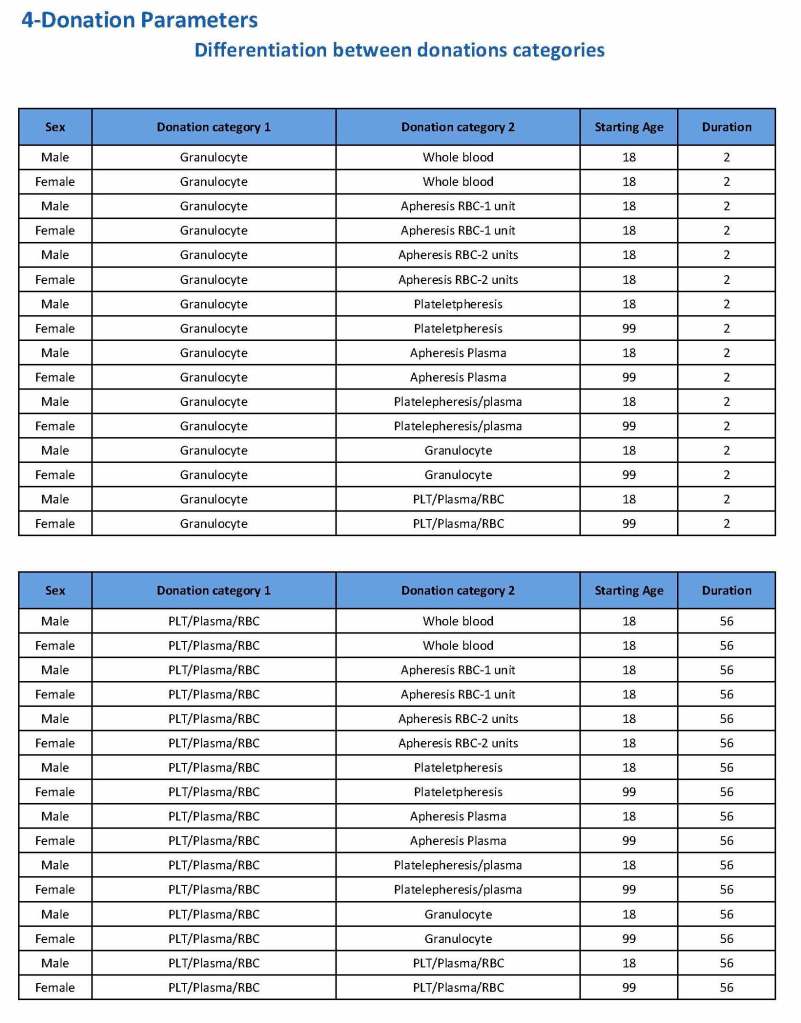
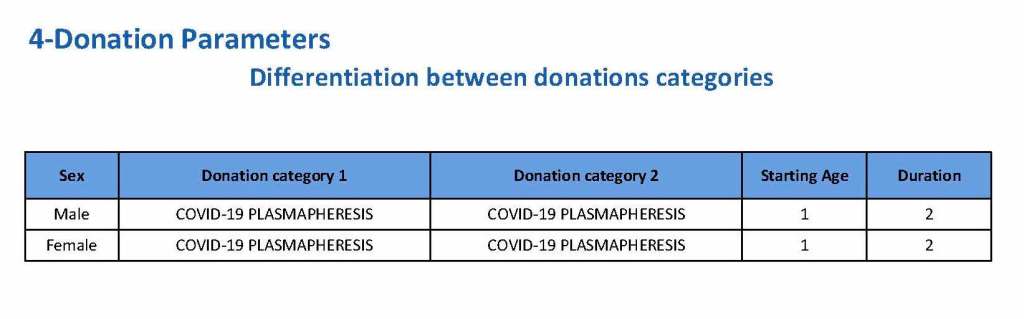
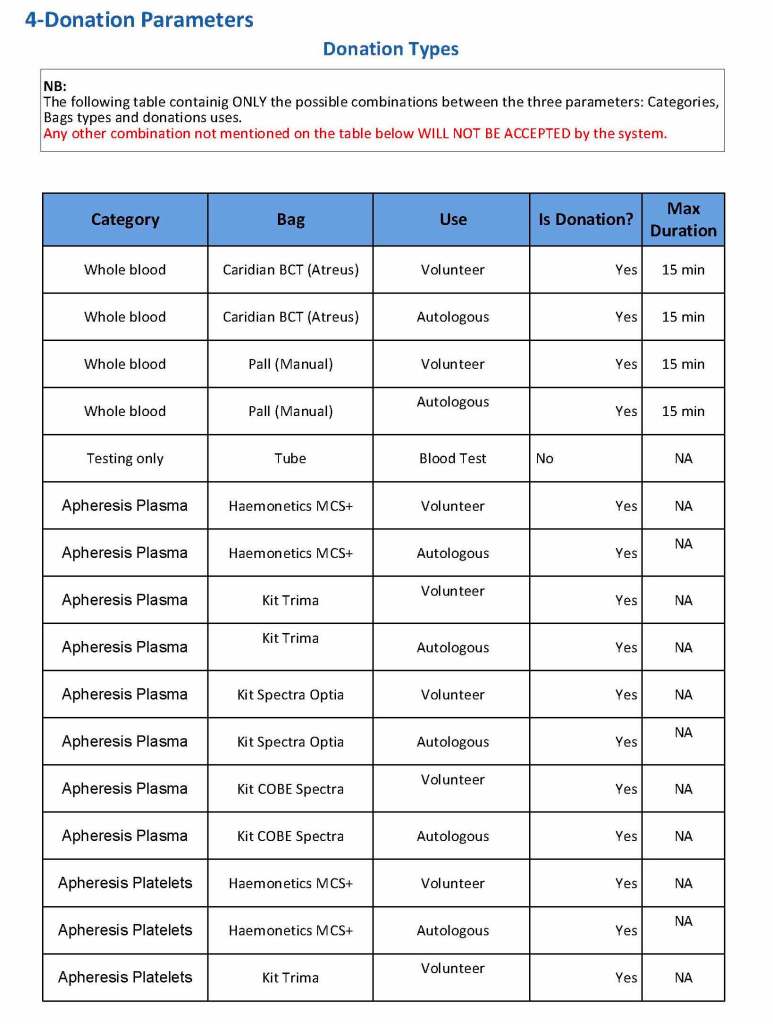
After the initial manual setup of the CCP program, the Medinfo process was set up.  The following workflow shows the production of CCP from the raw apheresis collection, including division into aliquots based on the total volume.  The plasma volumes were kept within the range for riboflavin pathogen inactivation (Mirasol).

The usual safeguards for production were also in effect for CCP.  The product could not be labelled without all criteria (donor screening, collection, marker testing) being met.  Furthermore, the inter-depot and transfusion service processes still applied.  However, all steps were done in quarantine at a location separate from the regular processes.  Also, the actual ordering and release of CCP was restricted to the quarantine hospital blood bank site.

The following outline the production process:

Manual CCP Plasmapheresis Collection

Principle:

Due to the pandemic, we will initially MANUALLY collect an experimental, investigational-use-only plasma product from apheresis donors and treat it with Mirasol.  THIS IS A EMERGENCY INTERIM PROCESS UNTIL THE MEDINFO HEMATOS IIG PROCESSES ARE PREPARED AND VALIDATED.

Policy:

  1. Good Manufacturing Practice applies:
    1. Manufacturers’ recommended processes for equipment and materials usage applies.
    2. All staff engaged in these processes must be competency assessed successfully.
  2. Pre-Screening:
    1. Clinical staff will use the prescreening document to select donors for pre-donation screening.
  3. Quarantine:
    1. All processes (day 0, day 1, day 2, and product modification and release) will be done in quarantine areas SEPARATE and DISTINCT from regular Transfusion Medicine activities.  This includes:
      1. Separate space and equipment must be provided.
        1. Equipment for this project may NOT be used for regular, non-quarantine processes
    2. Non-Transfusion Medicine staff will not be permitted in operational areas.
    3. Prospective donors will not be permitted in the processing, testing, storage, or blood bank work areas.
  4. Donation Process:
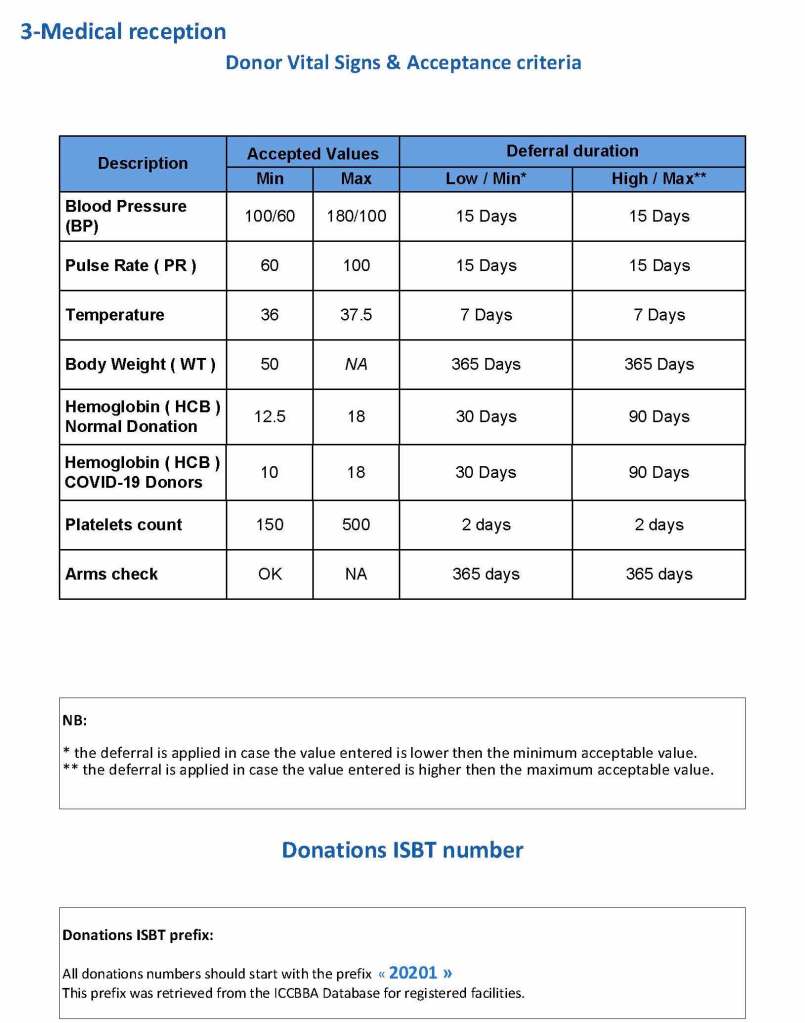
    1. Day 0:  Registration, check donor deferral database, questionnaire, physical exam including arm check, and specimen collection using ISBT specimen labels
    2. Use latest manual donor questionnaire.
    3. Day 1:  Donor marker and immunohematology testing, review of results, accept or reject donor for actual plasmapheresis
    4. Day 2:  Collect manufacturer’s recommended volume of plasma (500 ml if < 80 kg, 600 ml if >= 80 kg), aliquot, pathogen-inactivate (Mirasol), freeze at minus 80C
  5. Testing:
    1. Testing will be performed with regular blood donor specimens using ISBT specimen labels
    2. Testing must be done by donor-specific processes (not those for clinical patients)
    3. Testing must be directly interfaced to Medinfo Hematos IIG donor module
  6. Processing:
    1. Aliquoting, pathogen-inactivation, and labelling may proceed if the pre-donation screening results are acceptable.
  7. Storage:
    1. Long-term in minus 80C quarantine freezer
    2. Short-term at 1-6 C just after thawing in quarantine refrigerator
    3. Standard temperature monitoring and alarms apply
  8. Labelling:
    1. The backup manual labelling process applies
    2. The ISBT specimen label will the donor unit number
      1. Outdate will be 6 years if the product is stored at -65C, 1 year if stored at -18C
  9. Product Release:
    1. Orders must be on the PAPER requisition (old Blood Bank Order Form) with a patient prescription:
      1. No orders in Cerner
    2. Thawing plasma at 37C upon receipt of order by Transfusion Medicine staff
    3. Signing out component to clinical unit by Transfusion Medicine Staff
  10. Information Technology:  Medinfo Hematos IIG customized software to be implemented as soon as possible for all processes
  11. Not covered:  Transfusion Medicine is NOT responsible for:
    1. Triage of request for convalescent plasma
    2. Pickup and transport of components

8/4/20

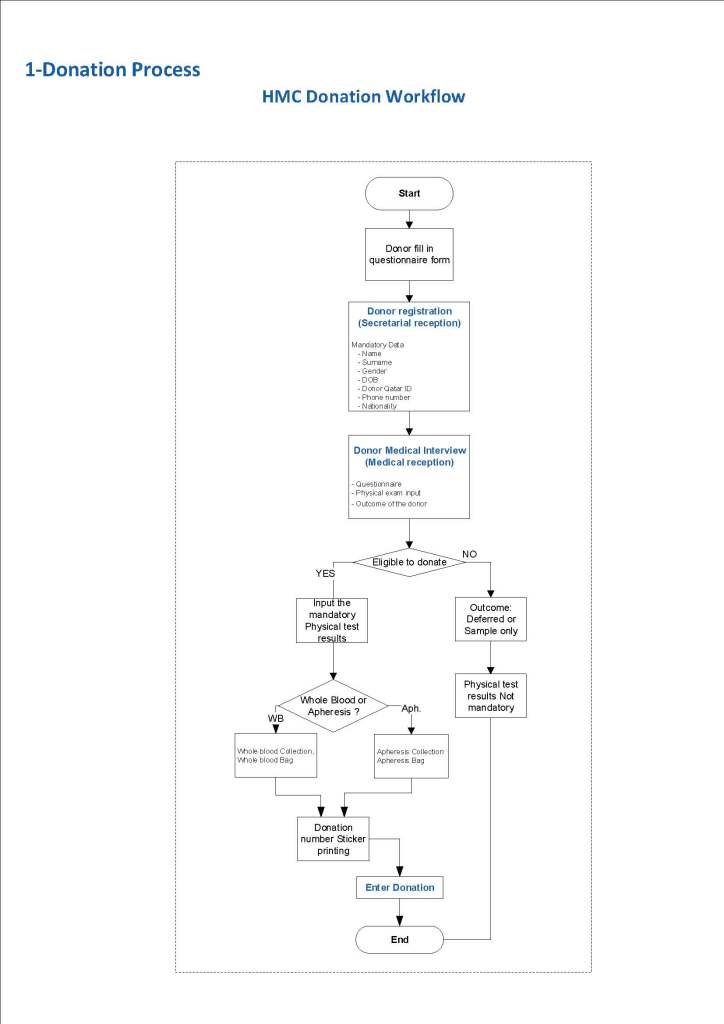
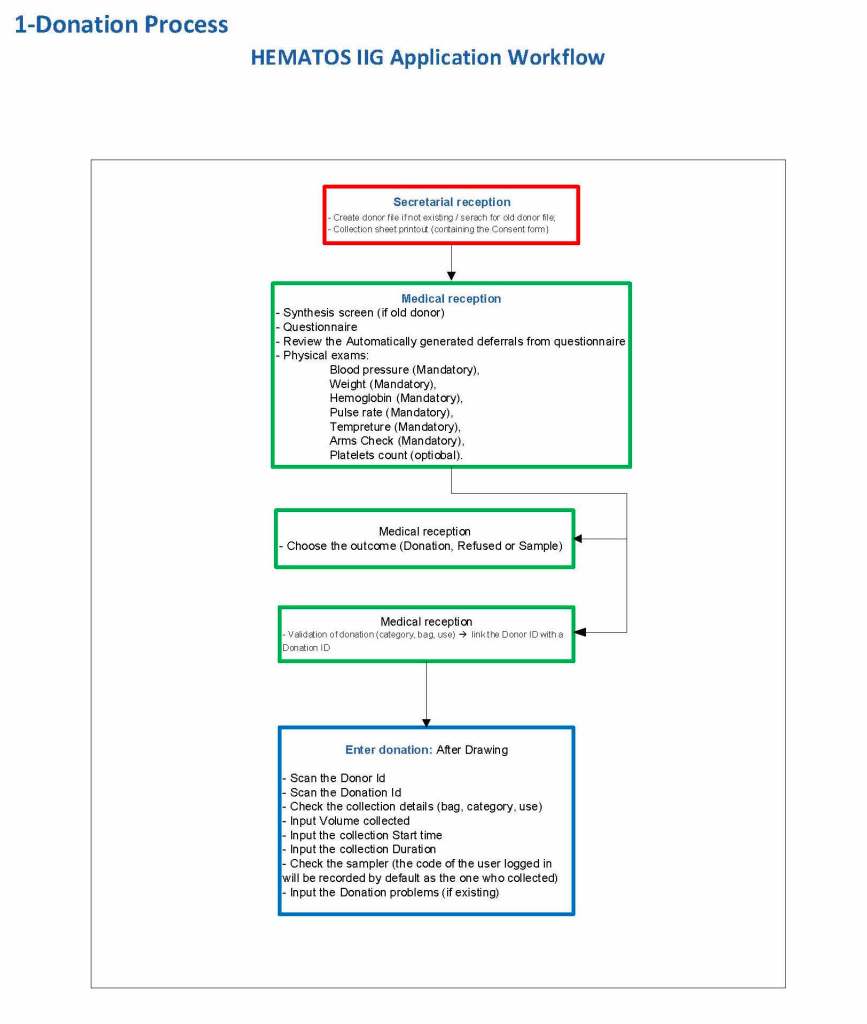
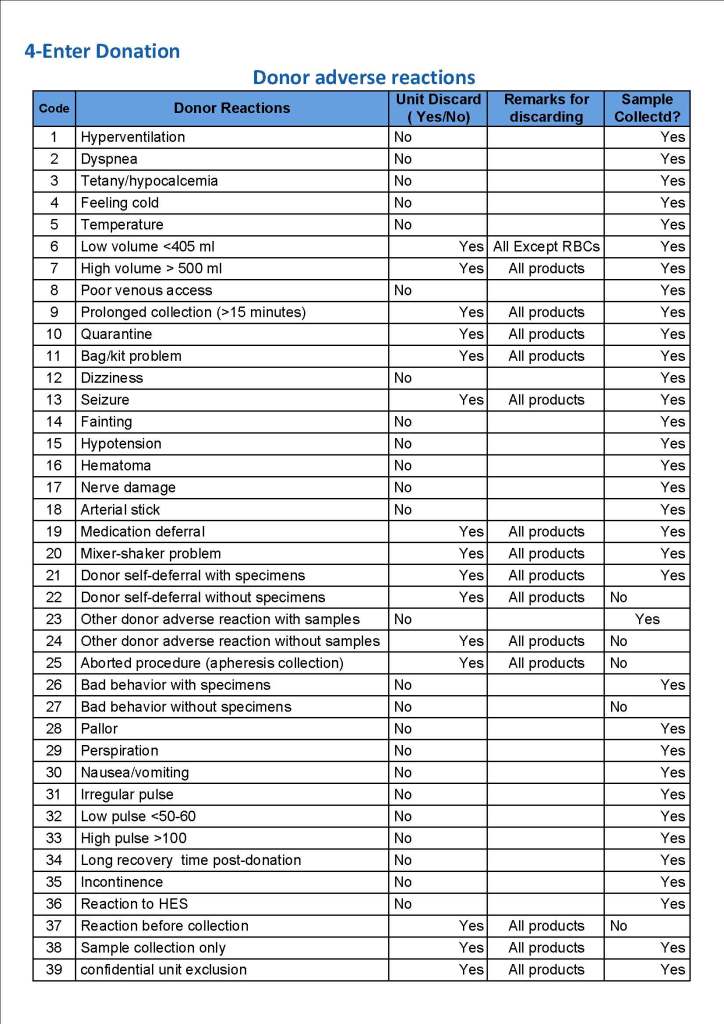
Blood Donation Process Overview

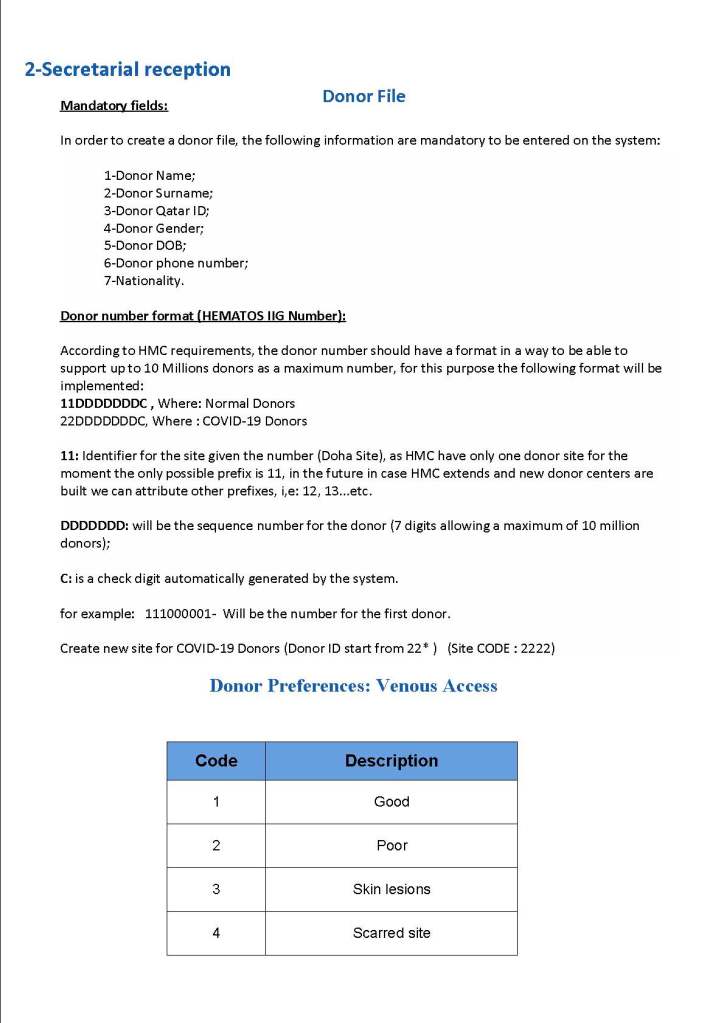
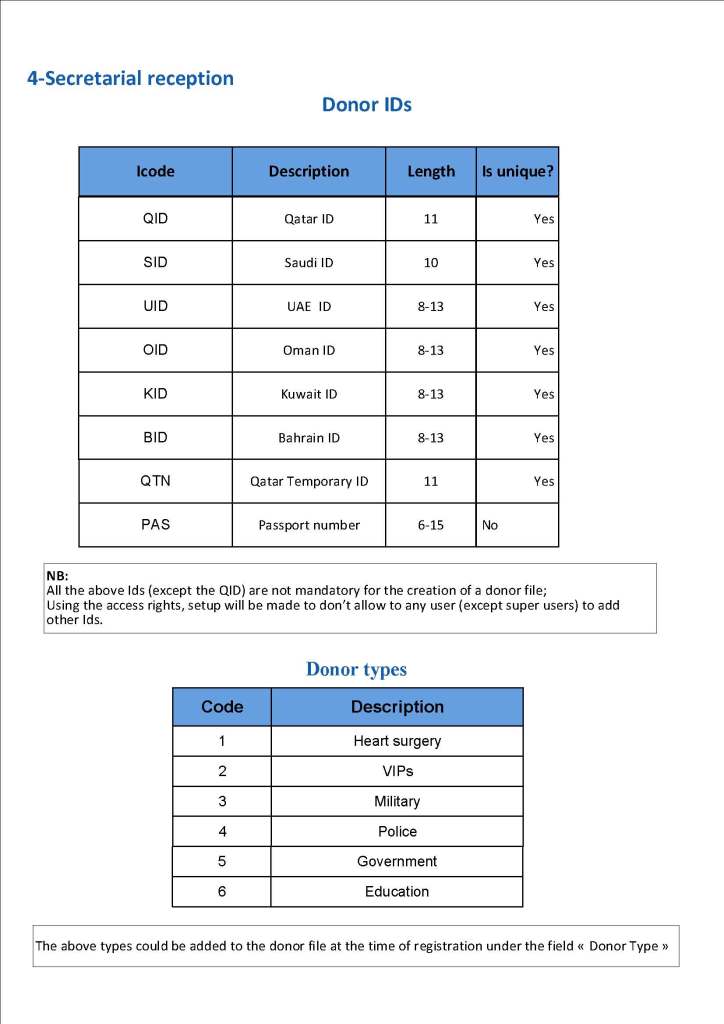
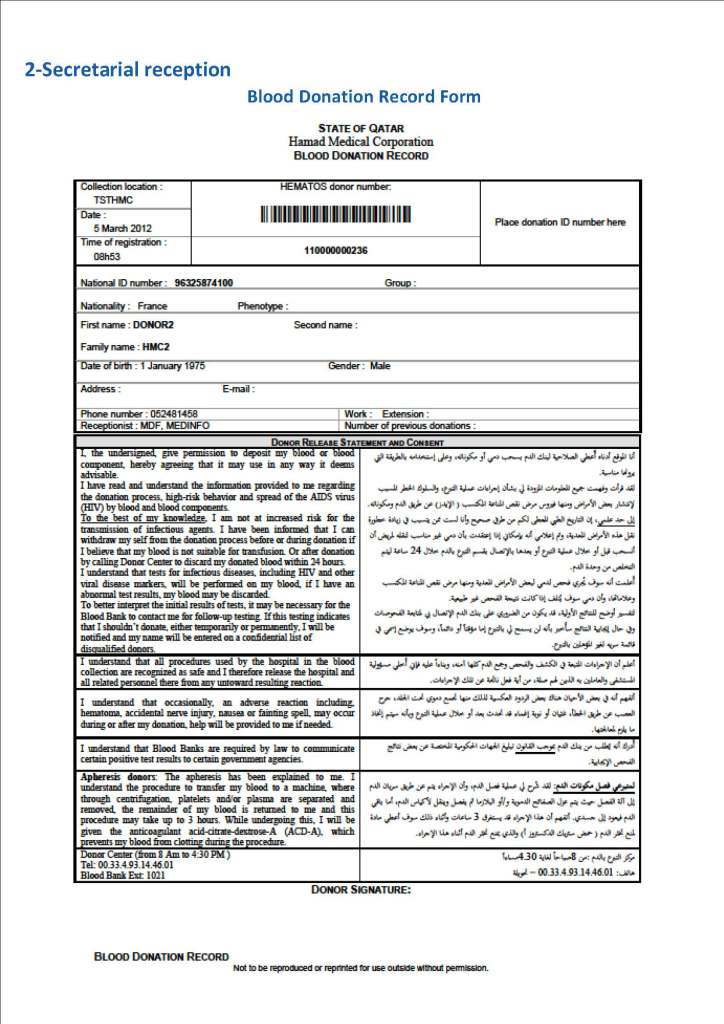
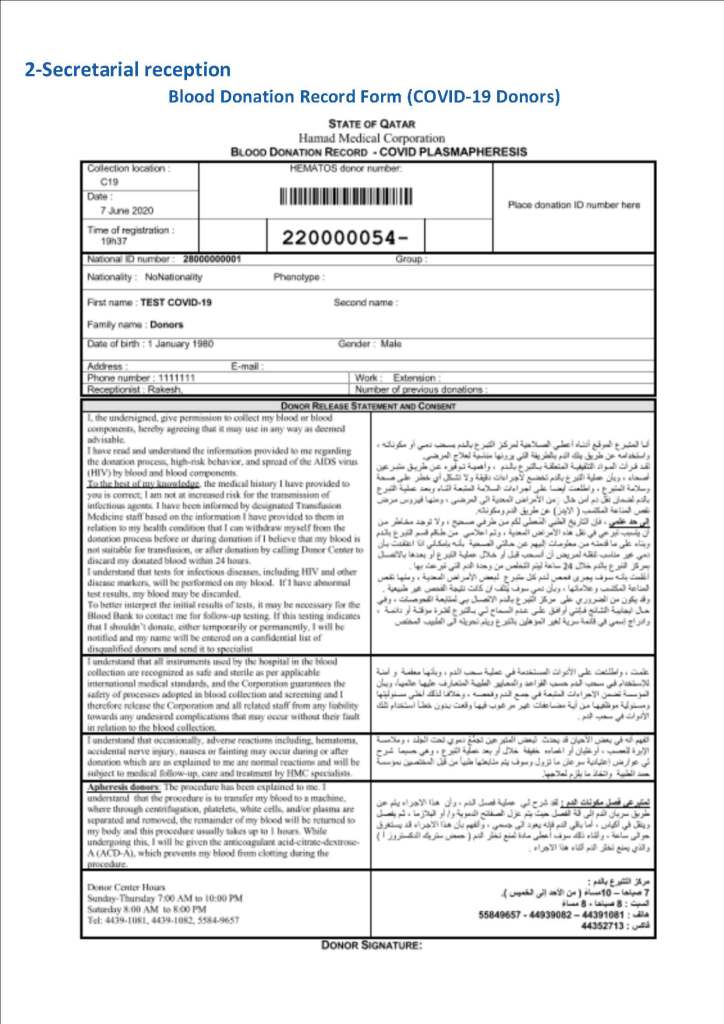
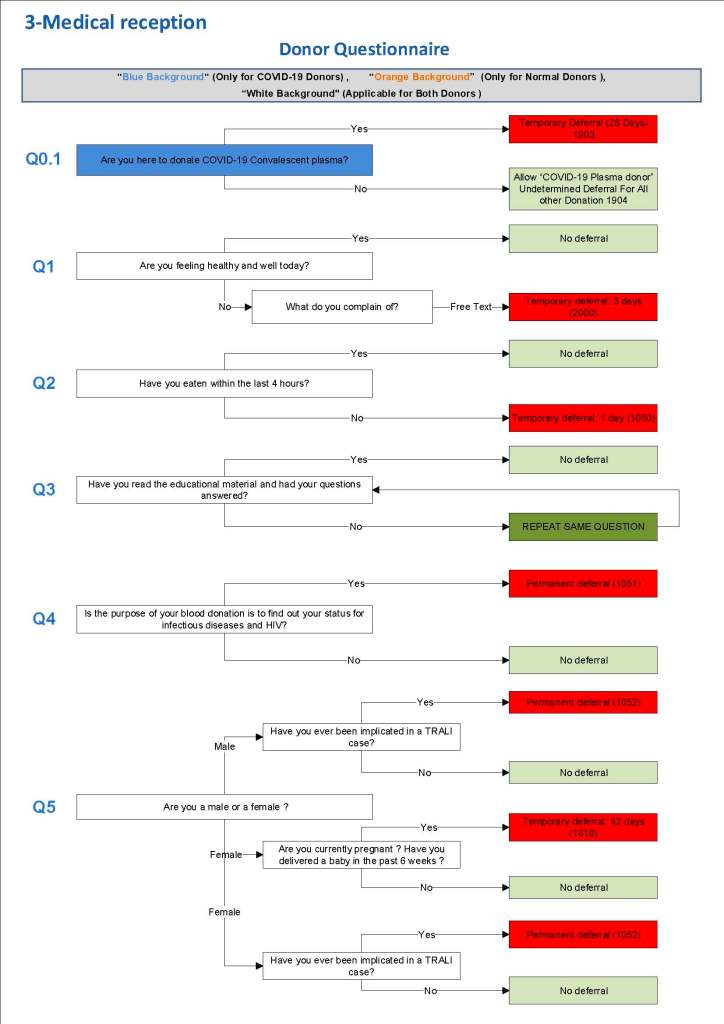
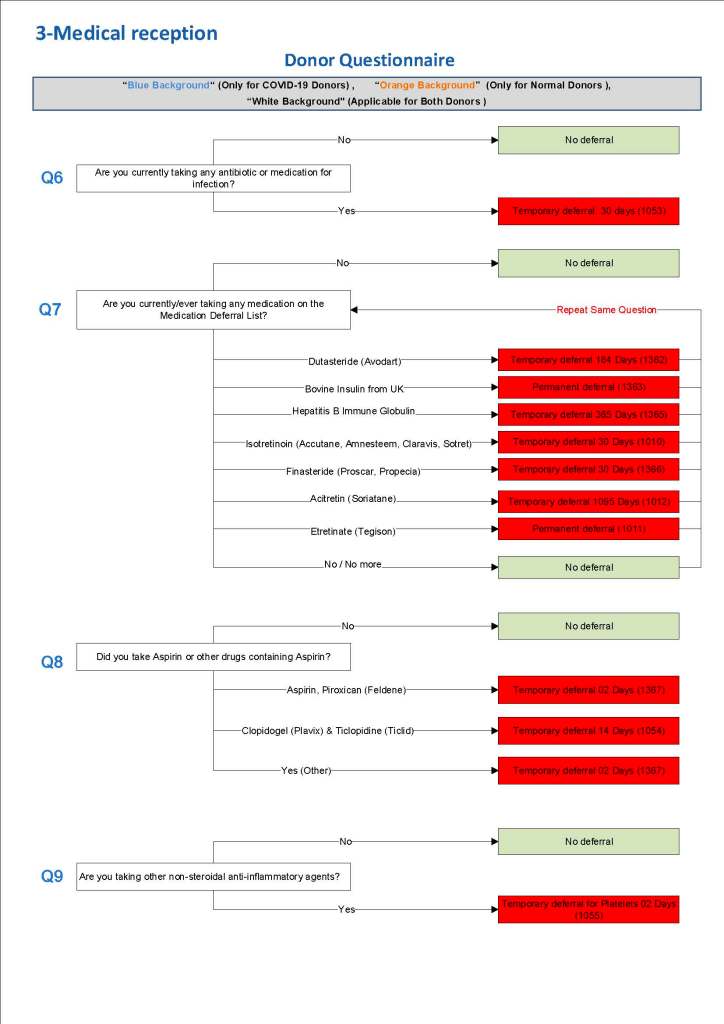
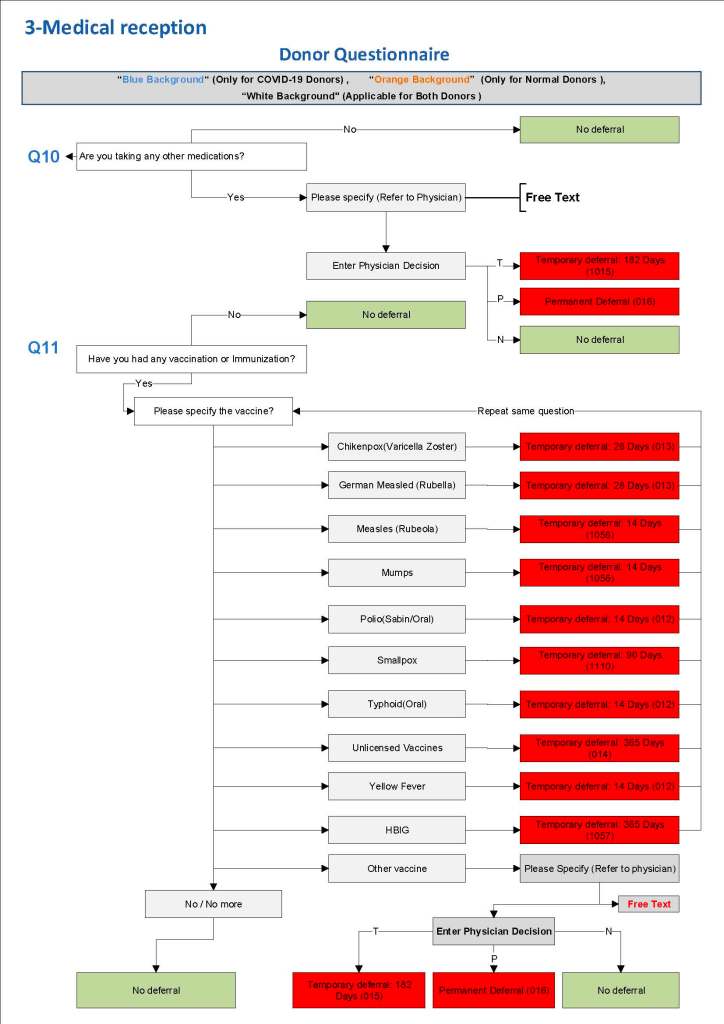
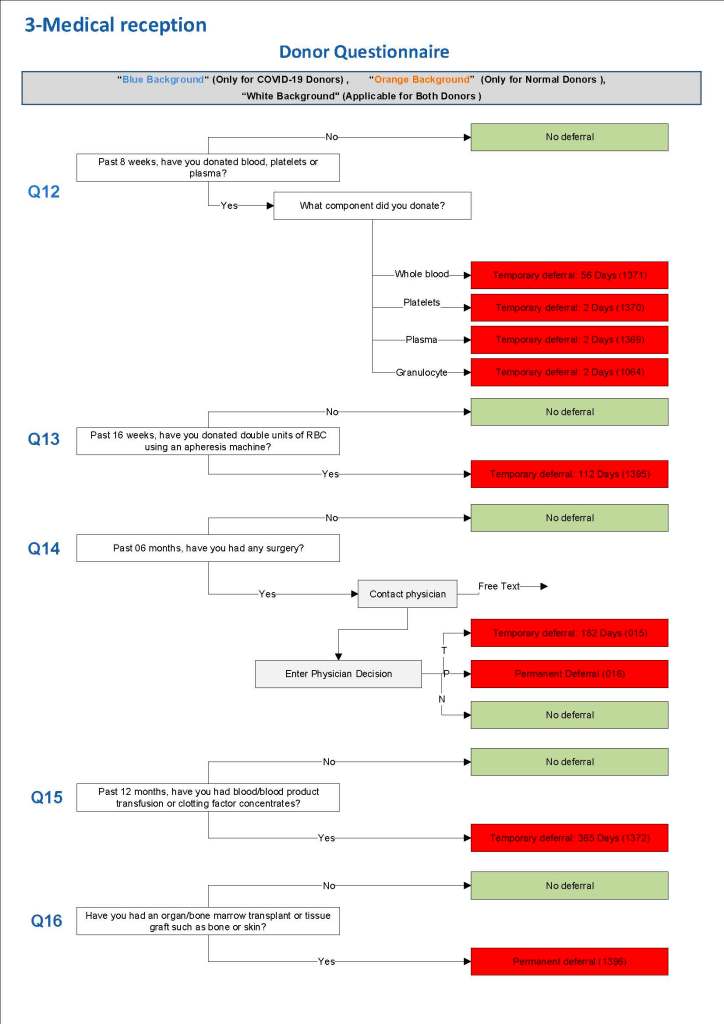
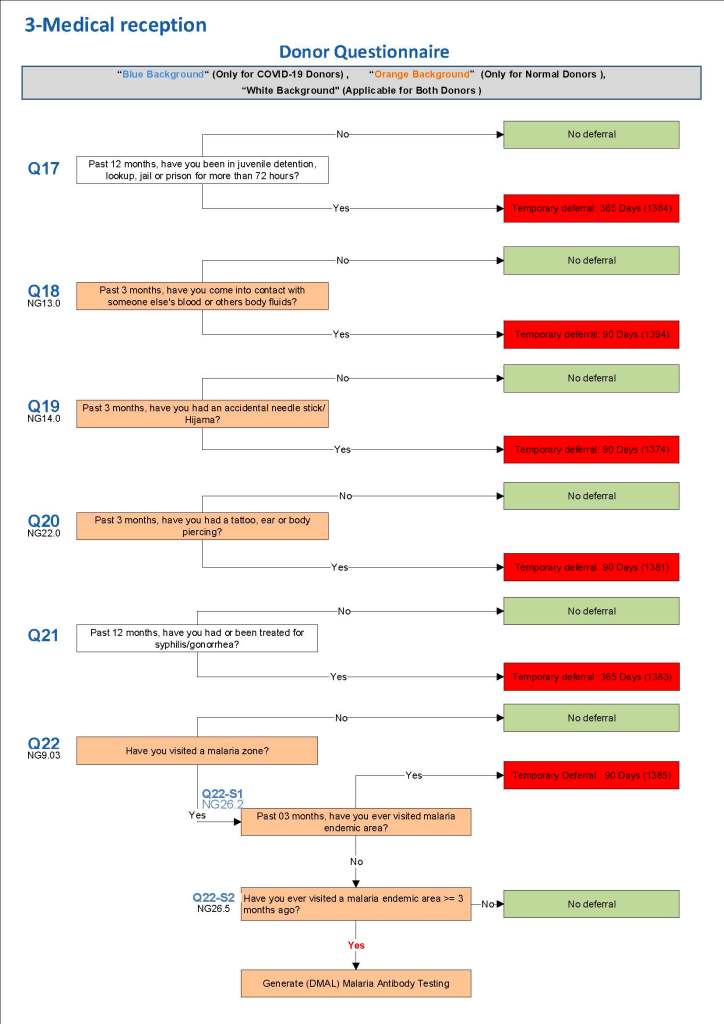
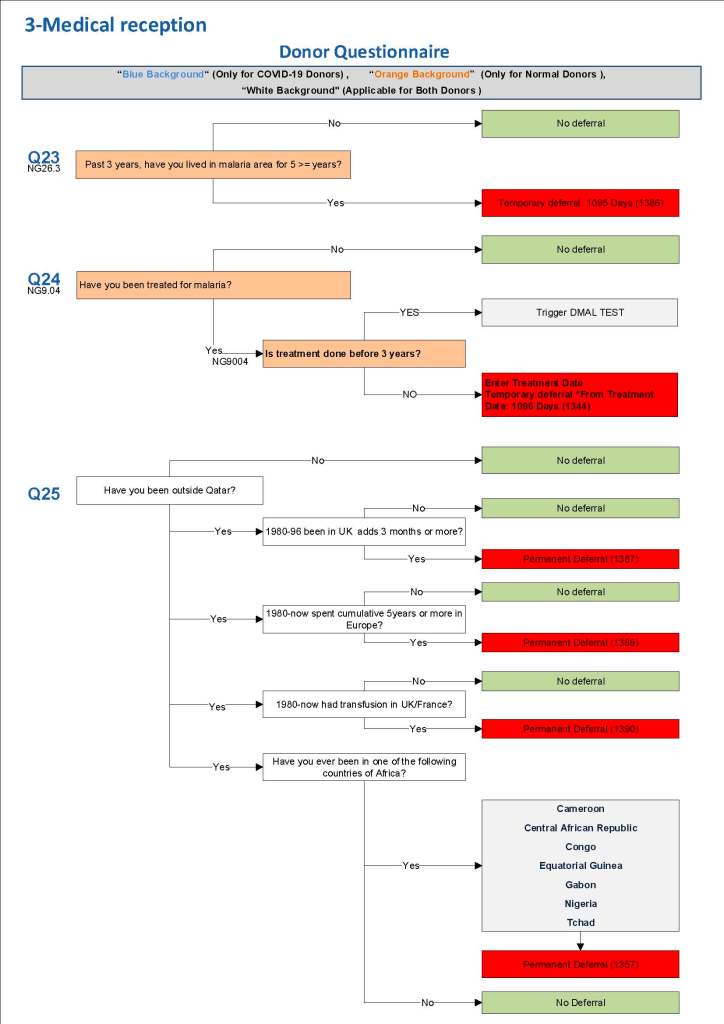
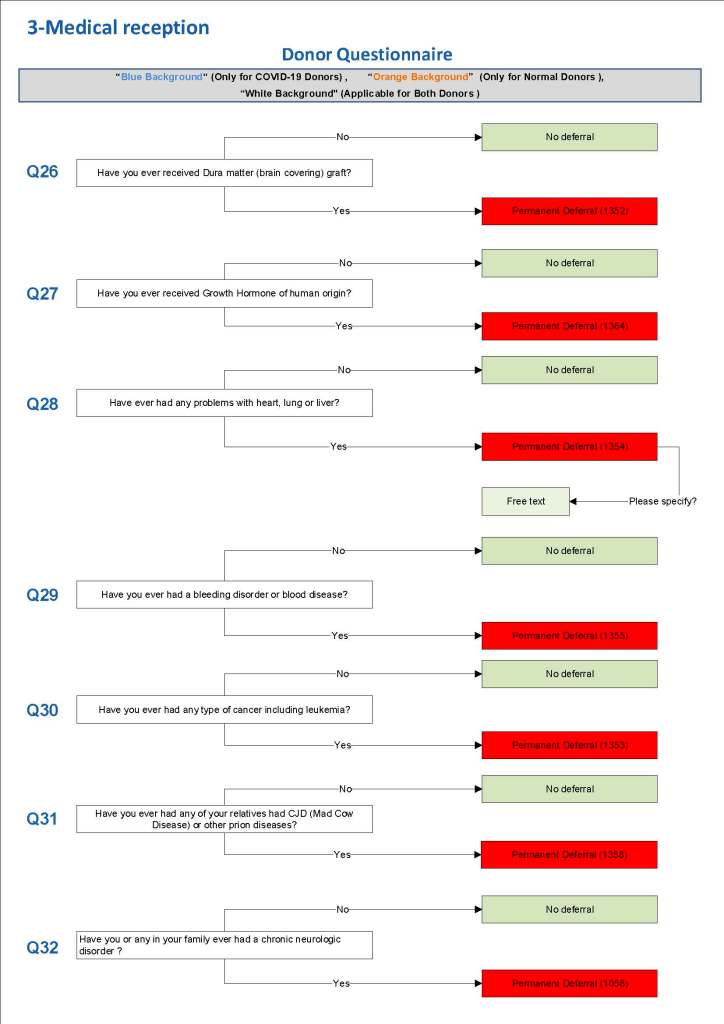
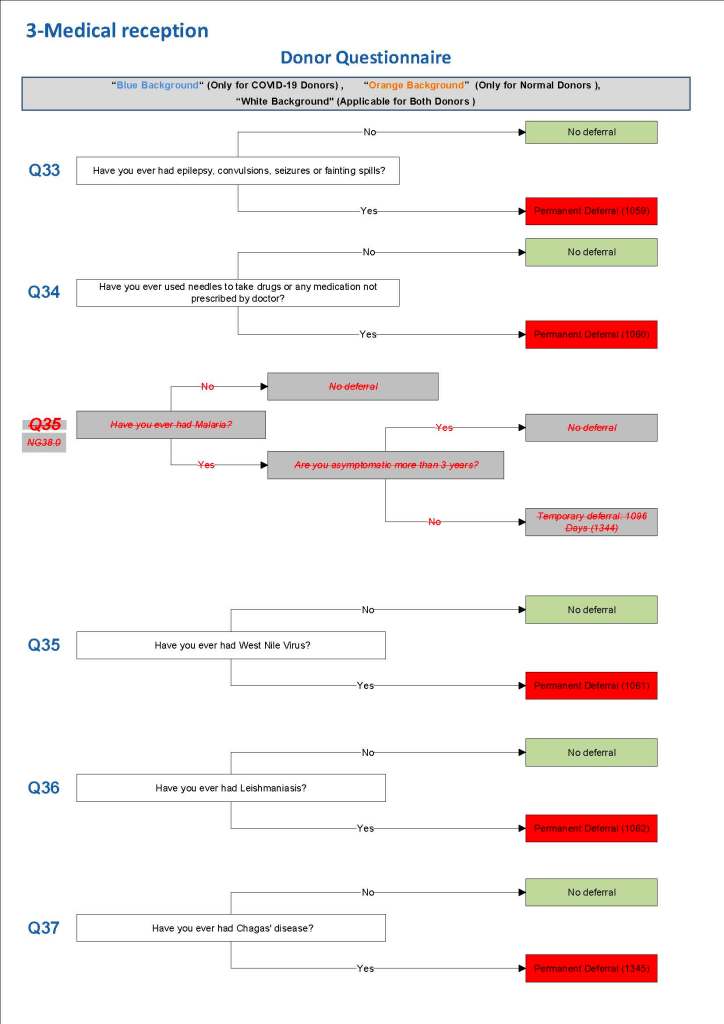
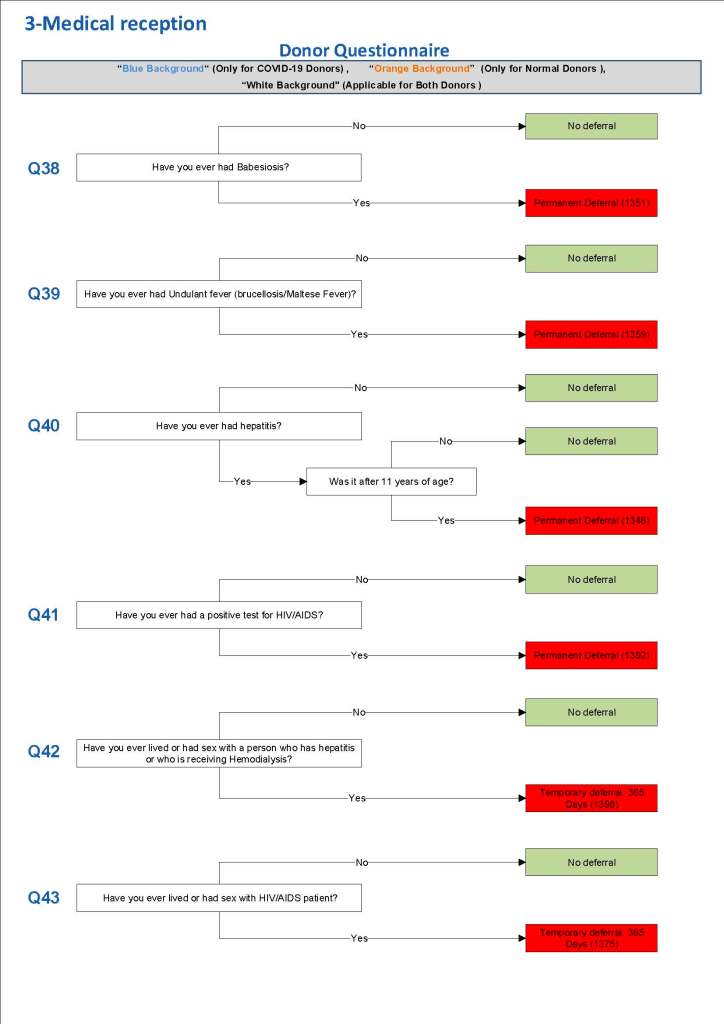
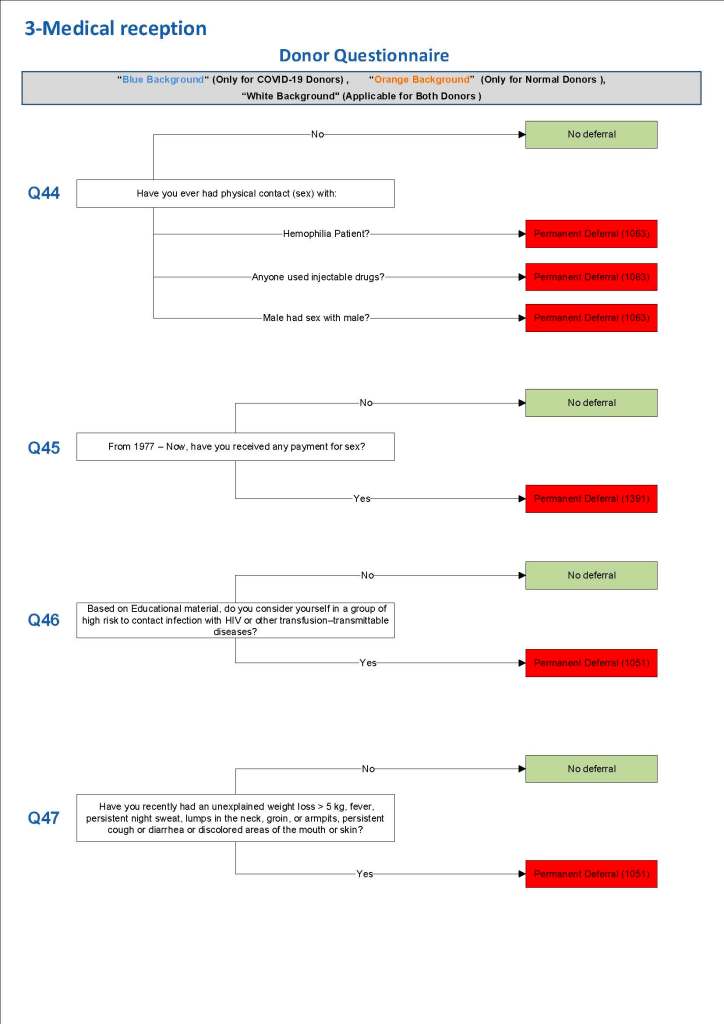
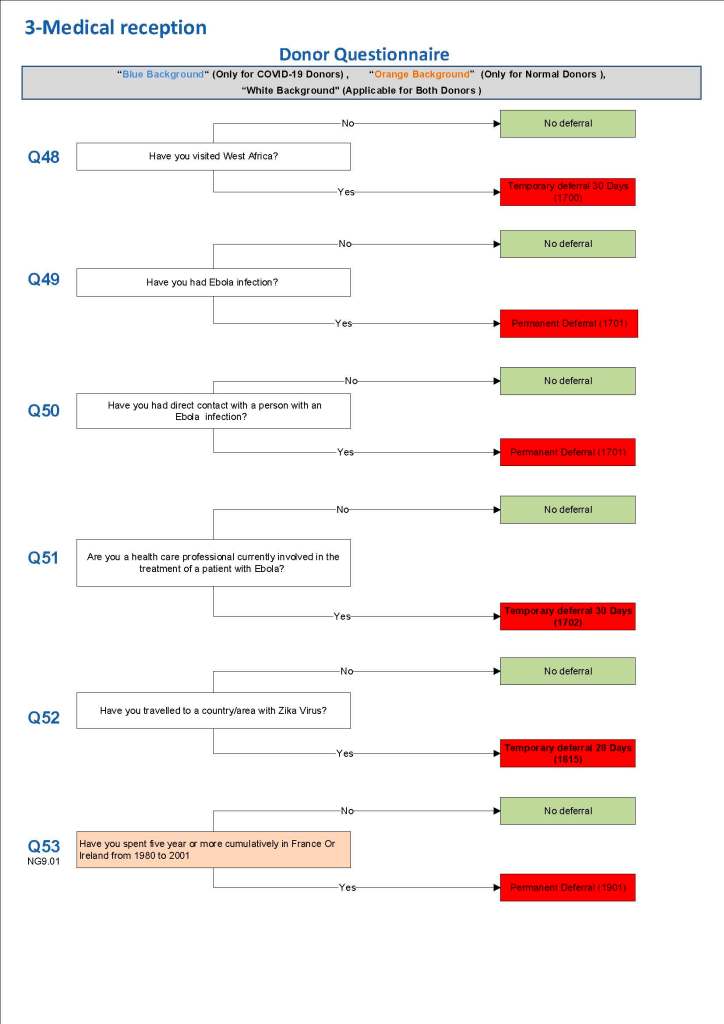
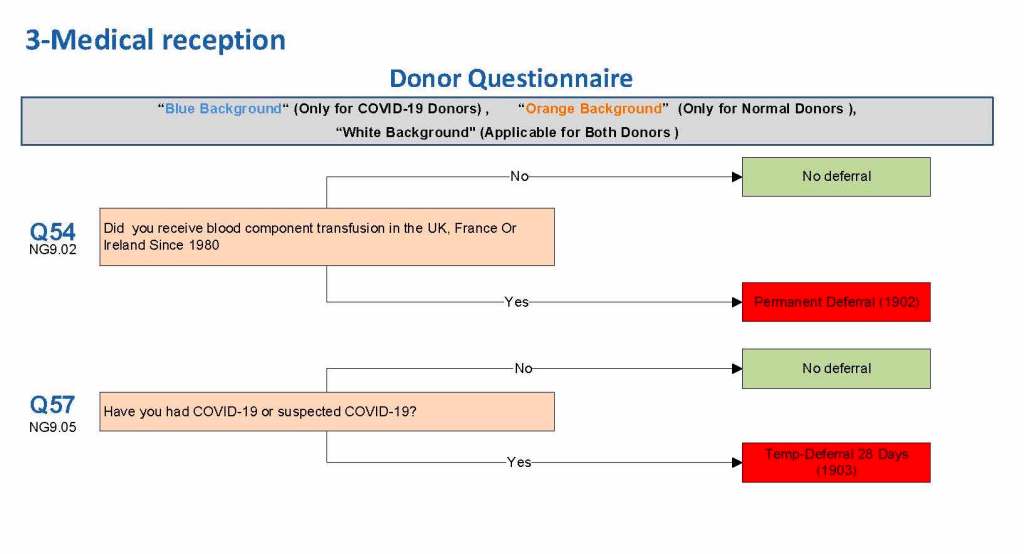
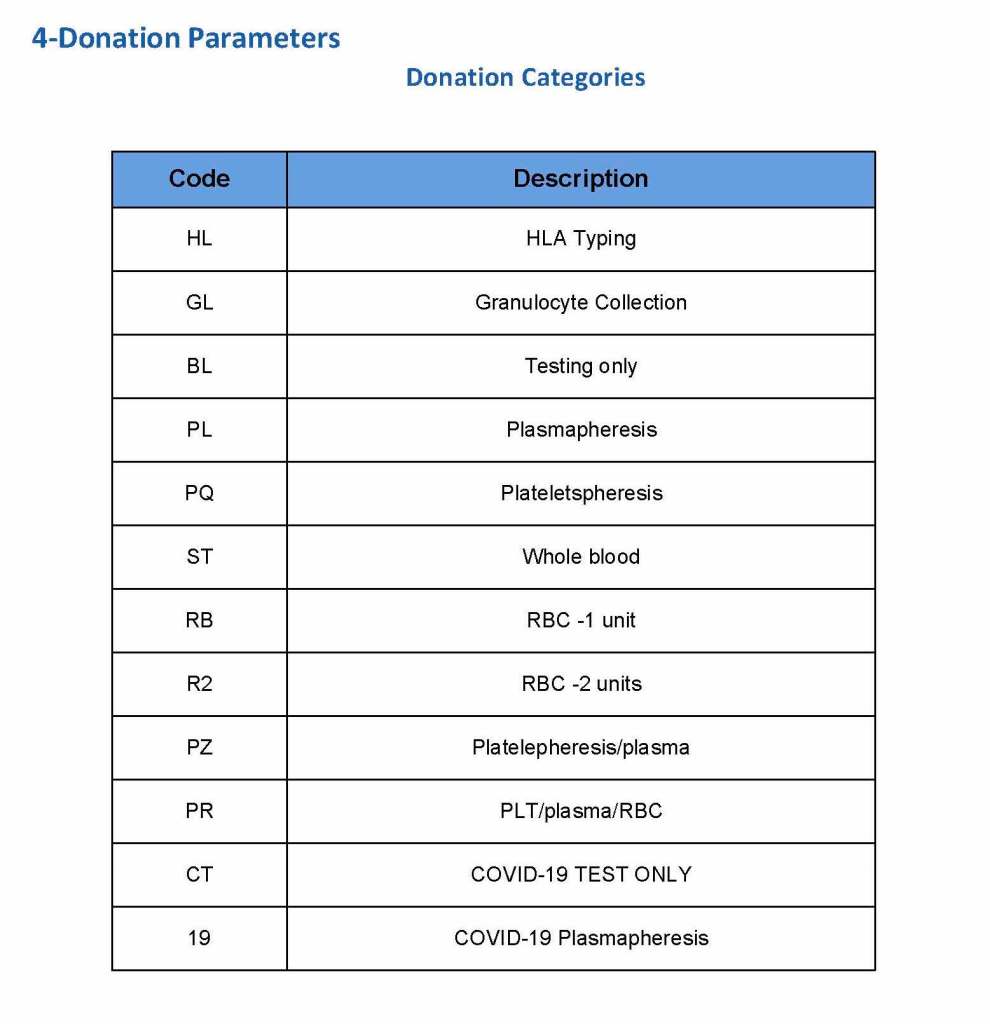
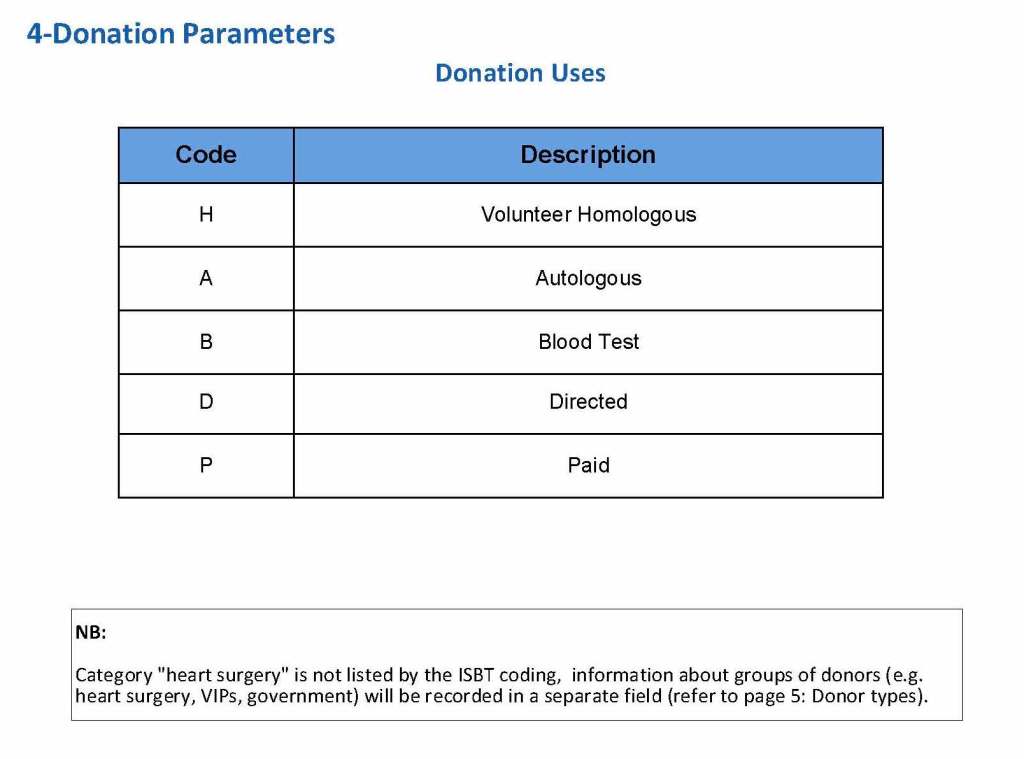
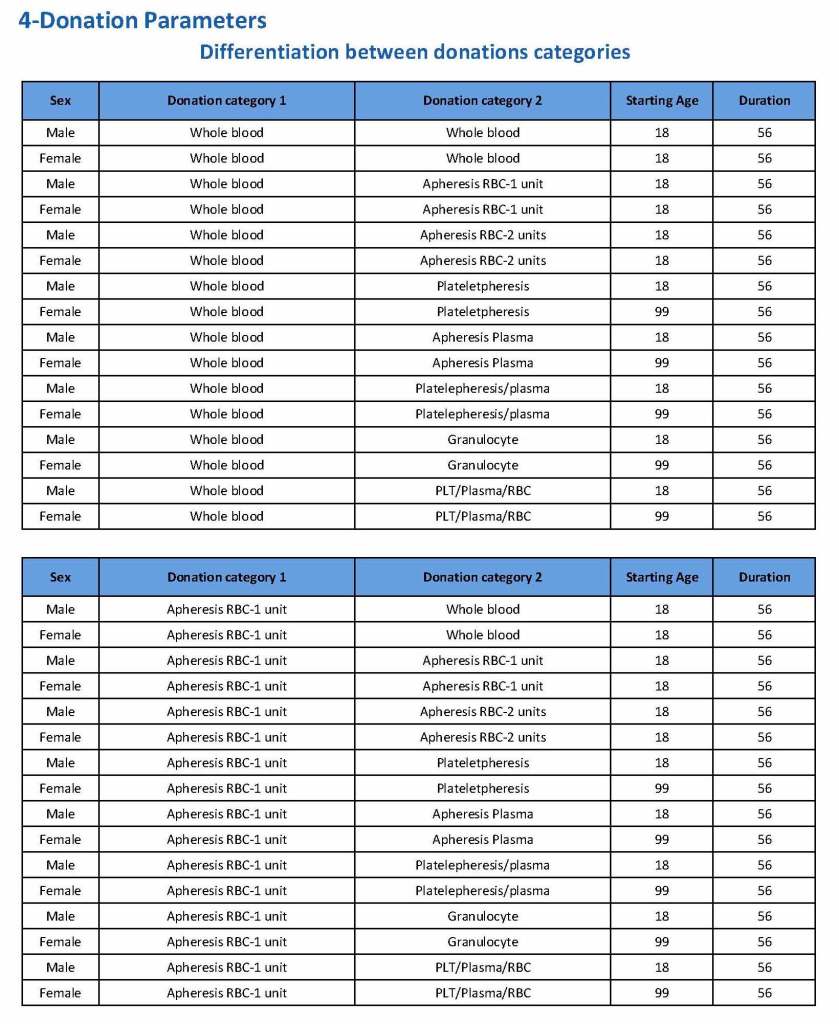
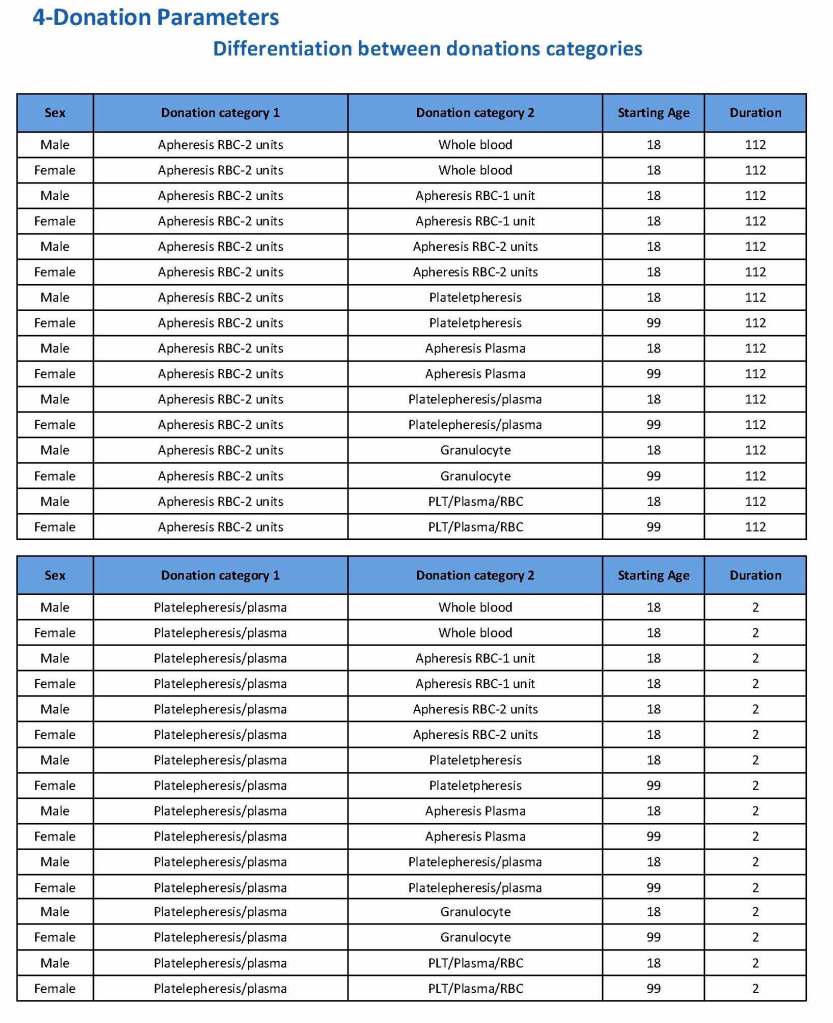
This is a sample Medinfo overview document for the blood collection process for HMC Doha that I designed in conjunction with Medinfo France and Medinfo Doha. This includes, registration, donor consent, questionnaire, physical examination, and collection.

Pre-Screening for Convalescent COVID-19 Donor Candidates

All blood components are considered medications and are subject to Good Manufacturing Practices as mandated by international accreditation standards.  The whole process must be done reproducibly and precisely by specific personnel trained and documented to be competent.  This includes collection of convalescent COVID-19 plasma.

Transfusion Medicine will provide staff who are deemed competent for the entire process of the collection, manufacture, and release of this unlicensed, emergency-contingency component.

It will help greatly if all candidates are prescreened to exclude the following candidates:

Administrative:

Donors must come with a valid Qatari identity card:  no ID means no screening

Sex:

Males only to minimize the risk for transfusion-associated lung injury TRALI

Donor Feeling:

If the donor does not feel well, he should not come for screening/collection.

Food/Drink:

Donor must have eaten/drunk fluids within 4 hours of arrival for screening/collection.

Medication exclusions:

  1. Antibiotics within the past 14 days
  2. ACE inhibitors in the past 48 hours
  3. Beta blockers
  4. Anticoagulants
  5. Anti-anxiety or other psychotropic medications
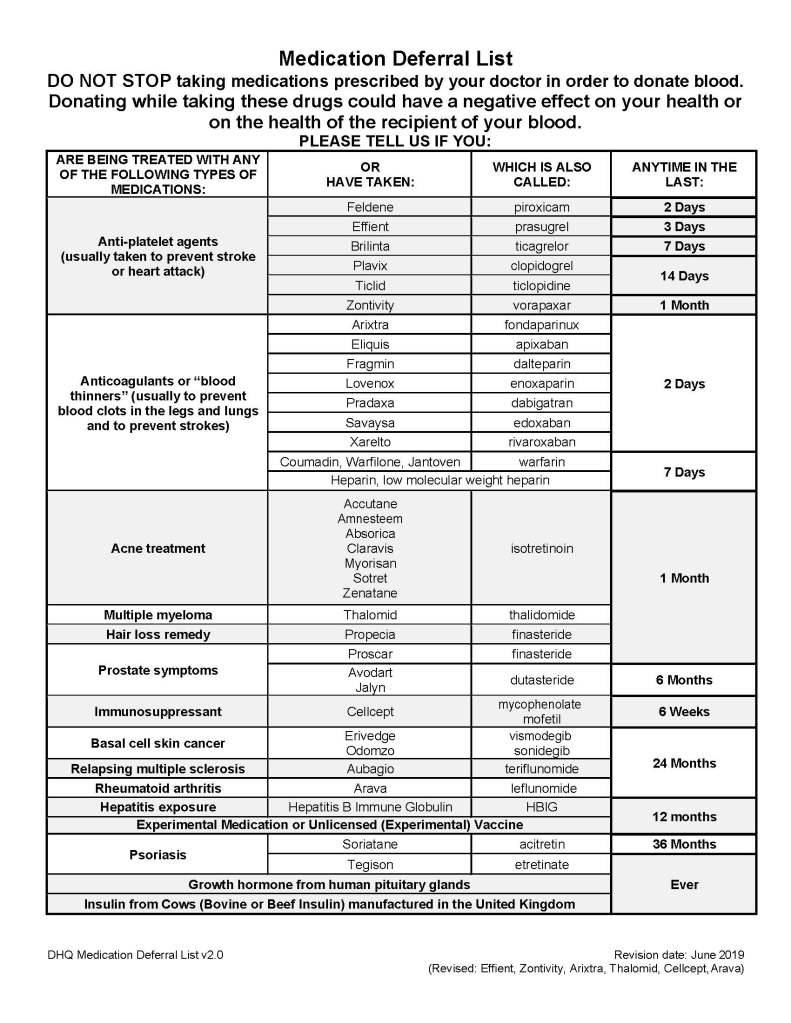
  6. Other medications in the attached list DHQ 2.0

Medical exclusions:

  1. Stable vital signs
  2. History of seizures
  3. History of dementia or other chronic neurologic disorder
  4. Family history of dementia or other chronic neurologic disorder
  5. Significant cardiac arrhythmias
  6. History of hepatitis B, hepatitis C, HIV, brucellosis, Ebola

Travel history:

  1. 5 years cumulative residence in Europe including Ireland and France 1980-2001
  2. 3 months cumulative residence in the UK (and/or all its territories) 1980-1996
  3. Any visit(s) to West Africa

This is NOT a complete list of criteria.  Transfusion Medicine personnel will screen according to the full donor criteria.  Thus, donors passing the prescreening may still be otherwise disqualified based on the detailed process (testing, physical examination, etc.)

Interim Policy Updated Donor Medication Deferral List 190805 based on DHQ 2.0: