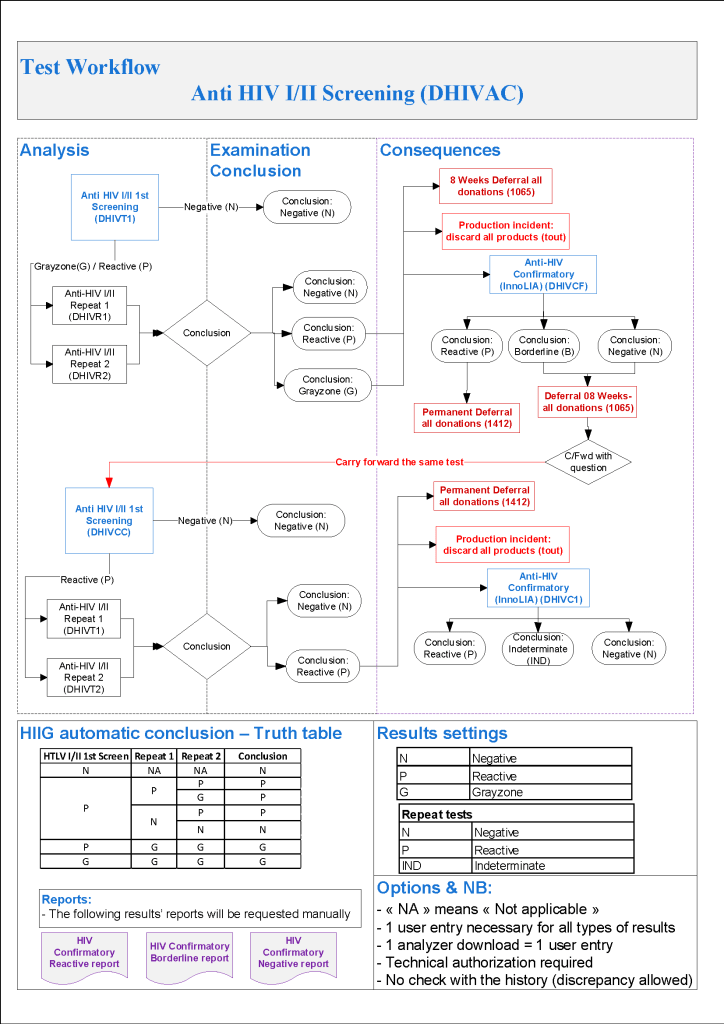
As I designed this in Medinfo, this is algorithm uses an HIV- /HIV-2 antibody EIA screening test, HIV p24 antigen test, and a confirmatory linear immunoblot assay LIA that can discriminate between type HIV-1 and type HIV-2. If there is an indeterminate result, a repeat test is ordered after 8 weeks. A reentry protocol is also included (1.6.3 below).
HIV Testing:
HIV-RNA positive confirmed, regardless of other HIV results: permanent deferral and do HIV-InnoLIA, refer to Infectious Disease clinic
HIV-RNA borderline: do HIV-InnoLIA
HIV-InnoLIA positive, regardless of other HIV results: permanent deferral and refer to Infectious Disease clinic
HIV-InnoLIA indeterminate: repeat all HIV testing after 8 weeks
HIV Ab positive with negative HIV-RNA and/or borderline/negative HIV-InnoLIA: repeat testing after 8 weeks
Repeat HIV Testing After 8 Weeks:
HIV RNA positive and/or HIV-InnoLIA positive, regardless of other HIV results: refer to Infectious Disease clinic
HIV-InnoLIA and/or HIV antibodies indeterminate: permanent deferral, HIV infection not confirmed
HIV Ab negative and HIV-RNA negative and HIV-InnoLIA negative: reenter into donor pool
This algorithm is represented in Medinfo as follows:
HMC Doha 2011-2020: Set-up of both donor and patient modules including inter-depot transfer:
Donor:
Implemented COVID-19 convalescent plasma CCP production at HMC Doha over two-week period, February-March, 2020 including full integration with software
Donor collection, donor marker testing, donor immunohematology testing, inter-depot transfer between production site and hospitals and hospital-hospital transfers, ISBT labelling and specimen
Collection Interface (read-only) with Qatar Ministry of Interior to obtain both English and Arabic demographic information from donors
Establishing world’s first interfaces (bidirectional as required) with Terumo BCT Atreus and Reveos automated blood processing equipment, Mirasol pathogen-inactivation/platelet additive solution, Terumo Trima Accel donor apheresis machine, Terumo mixer-shaker donor collection device
Patient:
Implemented a CCP quarantine patient blood bank separate from regular hospital blood banks) for thawing and releasing of CCP plasma
Patient module including all compatibility testing, ABO/D typing, extended antigen typings, direct and indirect antiglobulin testing (antibody screens), antibody identifications, eluate, component modifications (thawing, pooling, aliquoting), interfacing of Diamed automated gel testing
Establishing algorithms for emergency release, electronic crossmatching, automated patient specimen titration with Ortho Vision MAX, prophylactic antigen matching, ensuring irradiation of blood components or use of pathogen-inactivation as required, allocation rules by algorithm, required and optional antigen matching in presence of antibodies
Development of bidirectional interface between Medinfo patient module and Cerner Millennium laboratory module (permitting order of transfusion tests and blood component orders in Cerner, transmission to Medinfo patient module for testing and allocation of components, and then sending test results and component status back to Cerner)
Common:
Developing current and future states to develop the workflows to prepare software processes
NGHA Riyadh 2009-2010: Set up of both donor and patient modules including inter-depot transfer:
Donor:
Collection, marker testing, immunohematology testing, component production, inter-depot transfer between production site and hospitals and hospital-hospital transfers, ISBT labelling and specimens
Patient:
Patient module including all compatibility testing, ABO/D typing, extended antigen typings, direct and indirect antiglobulin testing (antibody screens), antibody identifications, eluate, component modifications (thawing, pooling, aliquoting), interfacing of Diamed automated gel testing
Please refer to my website https://drzeydbloodbank.com for specific posts on Medinfo software process building. On the right hand side from the bottom TAGS menu, pick Medinfo Hematos IIG to see those articles.
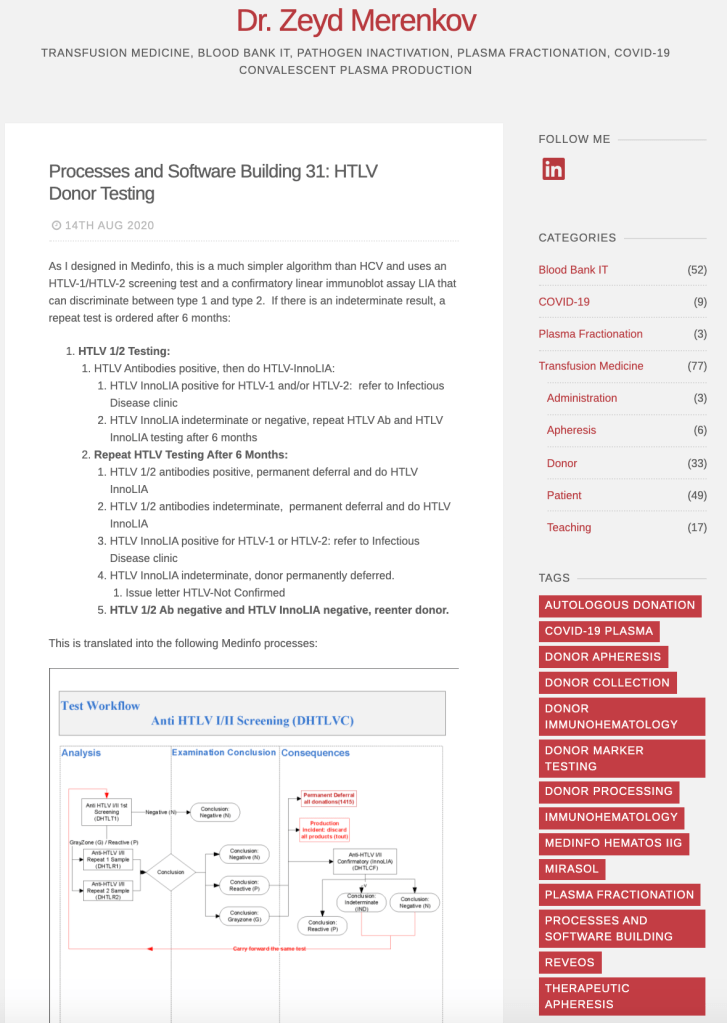
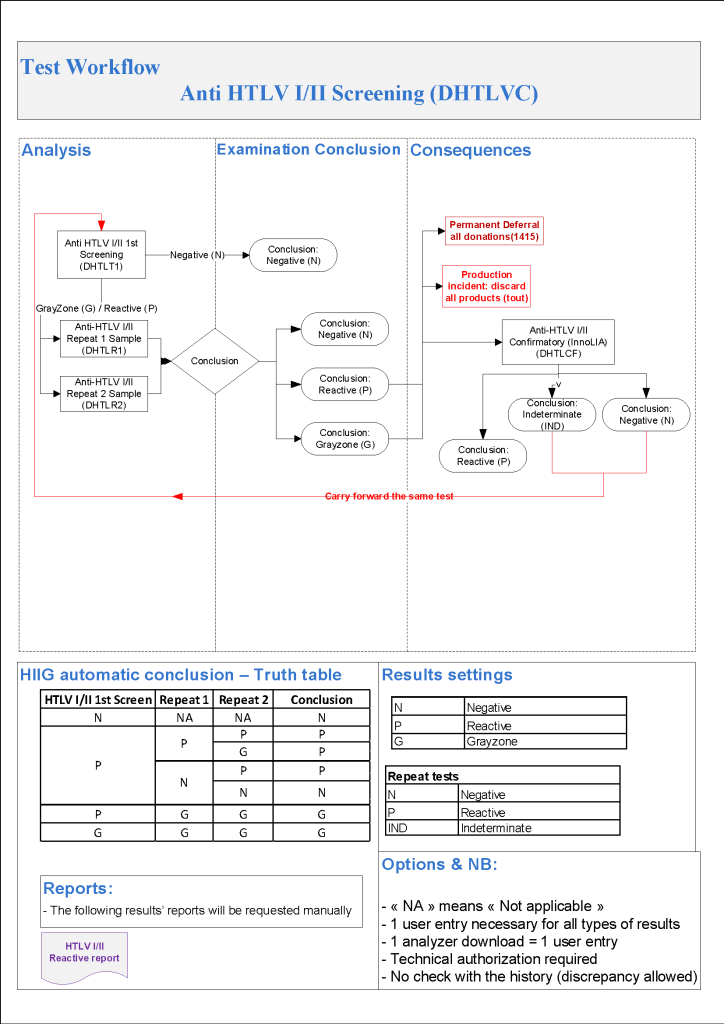
As I designed in Medinfo, this is a much simpler algorithm than HCV and uses an HTLV-1/HTLV-2 screening test and a confirmatory linear immunoblot assay LIA that can discriminate between type 1 and type 2. If there is an indeterminate result, a repeat test is ordered after 6 months:
HTLV 1/2 Testing:
HTLV Antibodies positive, then do HTLV-InnoLIA:
HTLV InnoLIA positive for HTLV-1 and/or HTLV-2: refer to Infectious Disease clinic
HTLV InnoLIA indeterminate or negative, repeat HTLV Ab and HTLV InnoLIA testing after 6 months
Repeat HTLV Testing After 6 Months:
HTLV 1/2 antibodies positive, permanent deferral and do HTLV InnoLIA
HTLV 1/2 antibodies indeterminate, permanent deferral and do HTLV InnoLIA
HTLV InnoLIA positive for HTLV-1 or HTLV-2: refer to Infectious Disease clinic
The following protocol is the one I made for National Guard Health Affairs in Riyadh and has been updated to include the use of a blood bank computer system.
Medinfo has an emergency mode that facilitates release of blood components even if all the usual testing is not available
If Medinfo software is used, one can write a protocol based on the diagnosis of placenta previa to automatically allocate the blood and keep it on hold at all times.
Ward Responsibilities:
As soon as a patient with high-risk placenta previa is identified, order type and crossmatch for 4 units PRBCs.
Immediately forward the specimen and its requisition to the blood bank for expedited processing. BE CERTAIN TO INDICATE ON THE FORM AND/OR IN THE COMPUTER SYSTEM THAT THIS IS A PLACENTA PREVIA CASE!!
Send a new specimen for crossmatching every 3 days until delivery.
Phone the blood bank immediately when blood is needed for the patient before coming to the Blood Bank. DO THIS BEFORE SENDING SOMEONE TO THE BLOOD BANK TO PICK UP THE BLOOD!
Blood Bank Responsibilities:
Check the order comments for placenta previa.
Handle all such requests as emergency or STAT.
Enter a comment in the computer that this is a placenta previa case.
Verify that the specimen has been properly collected and labelled.
If the specimen is not acceptable, request new specimen.
In emergencies, use emergency release/emergency mode in Medinfo.
If specimen valid:
Perform ABO/Rh typing and antibody screen if one is not available within the past 3 days.
Check for previous history of ABO/Rh typing and antibodies—performed by blood bank computer system.
Allocate 4 units, electronic crossmatch or full AHG as indicated by our rules.
Provide antigen-matched units accordingly.
When the ward calls that a placenta previa patient needs blood, immediately prepare the blood for release. This is an emergency request of the highest priority. VERBAL REQUESTS FOR BLOOD IN THESE CASES ARE ACCEPTABLE.
Use emergency mode/emergency release in Medinfo if all the testing is not done or current.
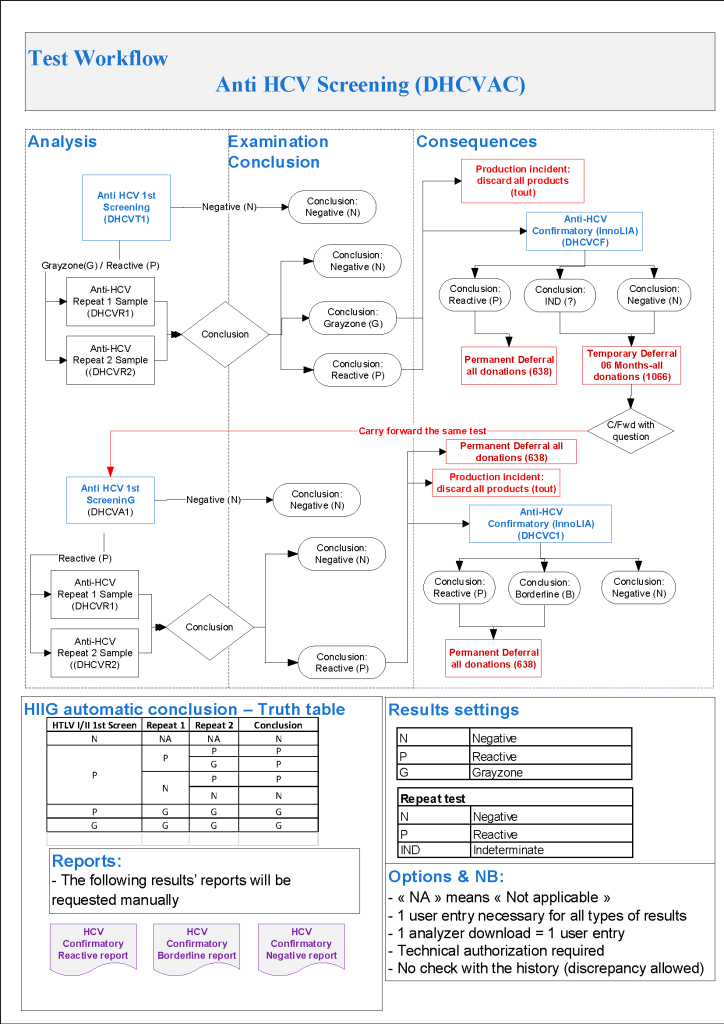
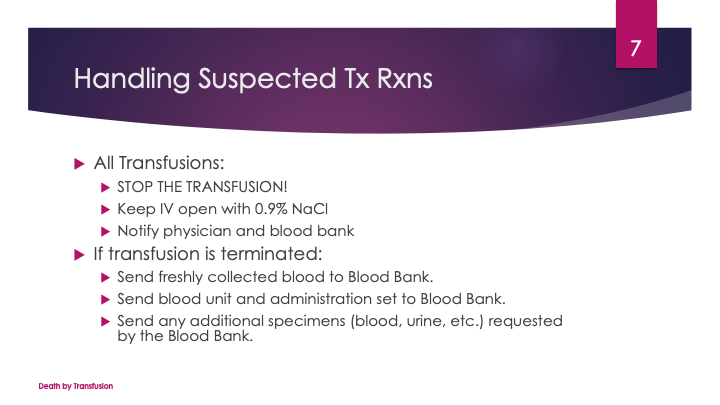
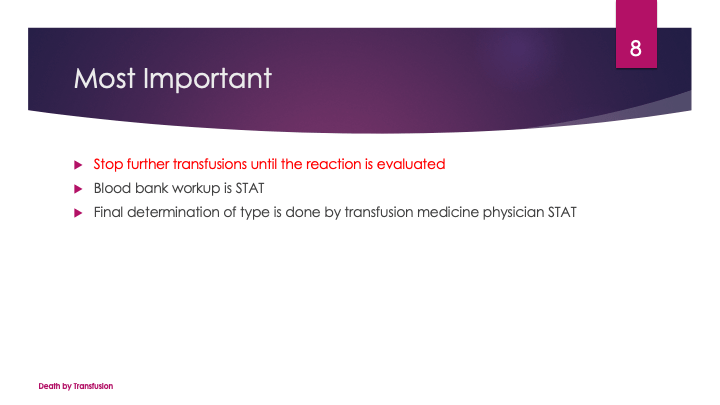
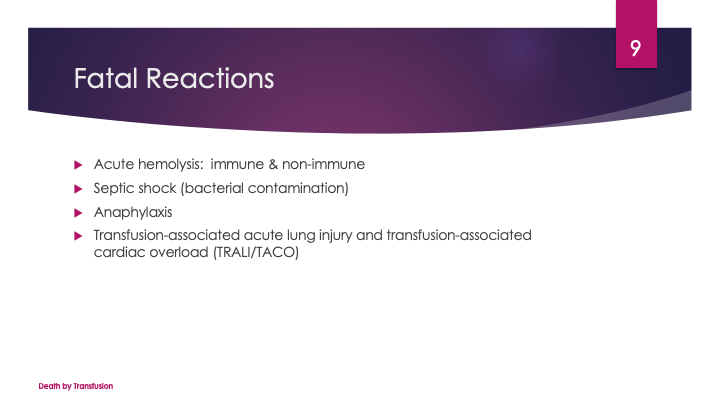
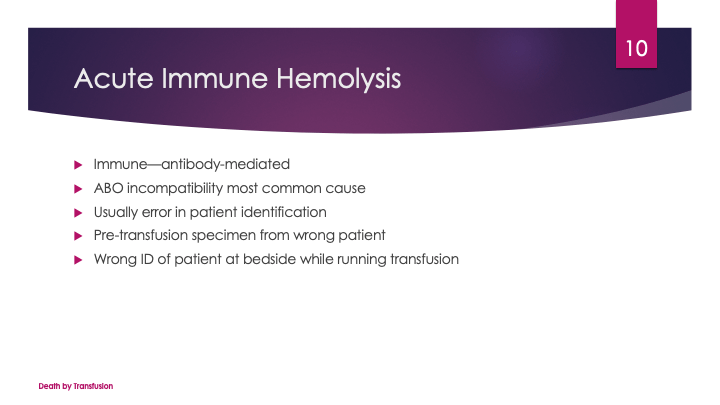
The testing algorithms may trigger additional testing, repeat of current testing at some future date, or permanent deferral. One of the most complex processes is for HCV testing. The following criteria are based on US FDA CBER guidelines, but are modified for the availability of test methodologies not licensed in the USA.
For HCV, we use the following testing in all donors:
HCV antibody EIA
HCV NAT
If any of the tests are non-negative, then we do the HCV LIA immunoblot assay.
HCV LIA is more sensitive than RIBA-3 (now no longer performed in the USA) but is not available in the USA. This test has been incorporated into the testing algorithm from CBER:
Hepatitis C:
HCV-RNA positive confirmed, regardless of other HCV results: permanent deferral, refer to Infectious Disease clinic
HCV-RNA borderline: repeat all HCV testing after 6 months
HCV-InnoLIA positive, regardless of other HCV results: permanent deferral, refer to Infectious Disease clinic
HCV-InnoLIA indeterminate: repeat all HCV testing after 6 months
HCV-Ab positive, HCV-RNA negative, do HCV-InnoLIA:
If HCV-InnoLIA positive, permanent deferral, refer to Infectious Disease clinic
If HCV-InnoLIA indeterminate or negative, repeat all HCV testing after 6 months
Repeat Hepatitis C Testing After 6 months:
HCV-RNA or HCV-InnoLIA positive: permanent deferral, refer to Infectious Disease clinic
HCV-RNA or HCV-InnoLIA borderline: permanent deferral, HCV infection not confirmed
HCV-Ab positive or borderline without positive HCV-RNA or positive HCV-InnoLIA: permanent deferral, HCV infection not confirmed
HCV-Ab negative, HCV-RNA negative, HCV-InnoLIA negative: reenter donor into donor pool
Note that indeterminate HCV results may be carried forward repeatedly by CBER rules but I decided to permanently defer the donor after 2 cycles of indeterminate results. The donor must wait SIX MONTHS before the next round of testing. Should he/she return before that time, those results may not be used for determining donor eligibility (unless the results have become clearly positive).
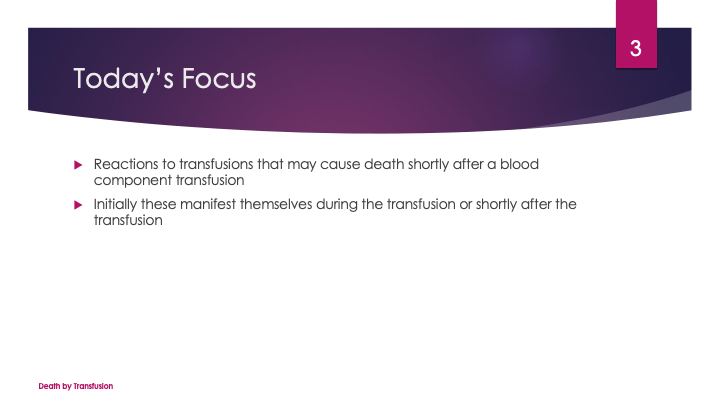
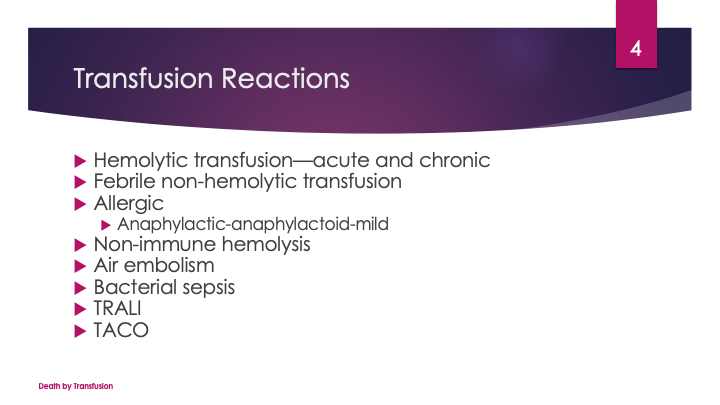
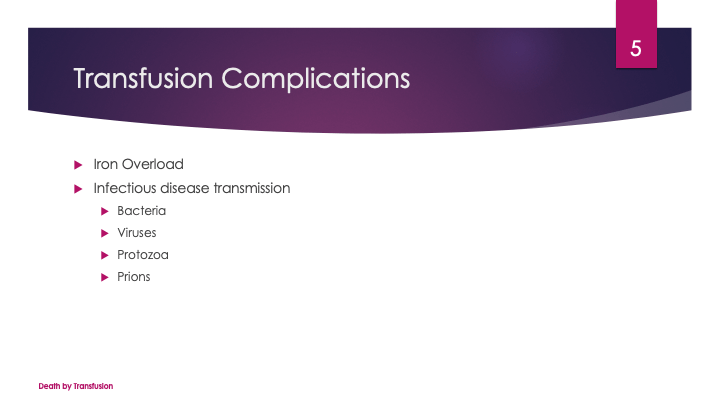
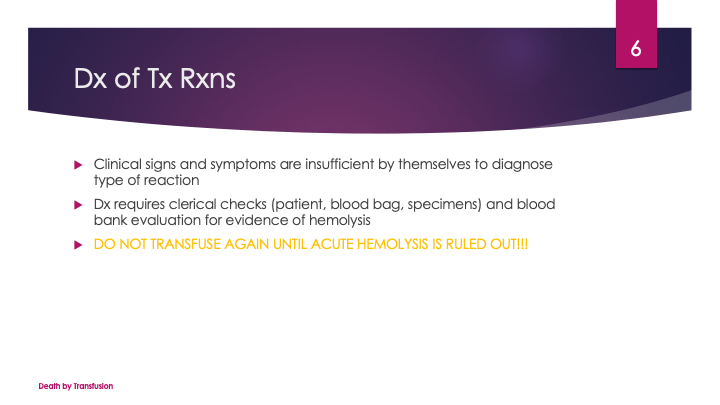
This is a presentation I made at the Saudi MOH many years ago, but it is still good for teaching purposes. I am dividing it into multiple parts because of its size.
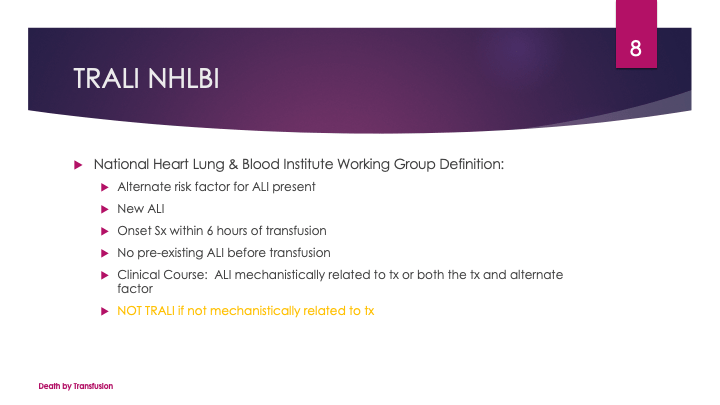
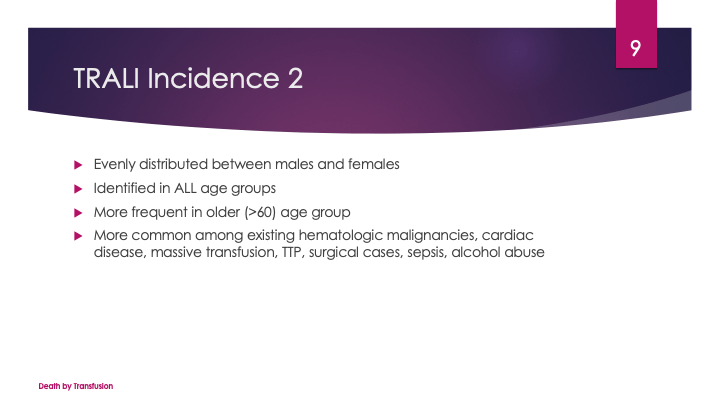
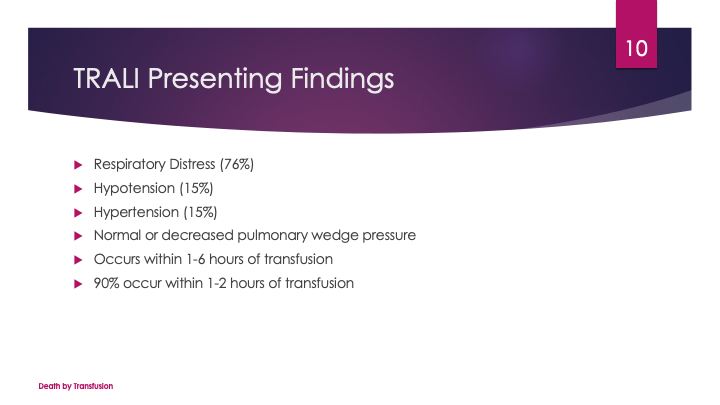
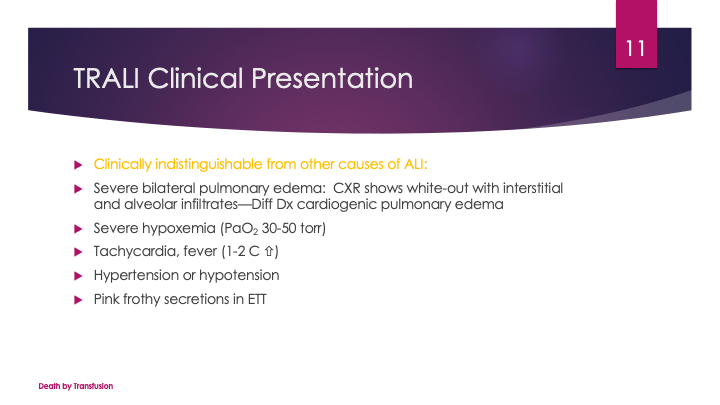
Donor marker testing algorithms are very complex and serve multiple objectives:
Is the blood safe for the recipient, i.e. minimize likelihood of disease transmission?
How do we to counsel the affected donor? Does he need referral for treatment or follow-up?
Often the donor disposition is unclear based on a single encounter and a temporary deferral must be triggered so the current results may be compared to future ones, usually after 8 weeks, 6 months, or one year—depending on the pathogen in question.
Regretfully, the significance of reactions that do not meet the criteria for positivity may be unclear. It is very difficult to explain to the donor that he has abnormal results and cannot donate but we as physicians do not know what their significance is.
Thus, the testing algorithms may trigger current additional testing, temporary deferral with repeat of testing at some future date, or permanent deferral.
At my previous positions, I started with the AABB/FDA CBER Uniform Donor Questionnaire UDQ and then modified it to include some advanced methodologies not available in the USA.
In the next series of posts I will elaborate on the processes developed for this for each marker.
Transfusion Medicine includes laboratory and non-laboratory functions. The non-laboratory and purely clinical functions are unique and have no analogy within the general laboratory.
The transfusion service/hospital blood bank laboratory is the closest to a laboratory operation, but there is component modification and complex manual testing, especially for reference immunohematology testing. The staff must make detailed manual decisions, the errors for which could be life-threatening for the patient.
The blood donor center manufactures a pharmaceutical, i.e. blood components with collection, donor qualification, donor abnormal results review, infectious disease marker testing, component production, and donor immunohematology testing—all subject to Good Manufacturing Practices. Never forget: Blood is a drug!!
No other laboratory section is directly responsible for treatment of critically ill patients. Therapeutic apheresis is essential for organ and stem-cell transplants, nephrology, neurology, etc. No other laboratory section is directly responsible for treatment of critically ill patients. Transfusion Medicine physicians are functioning as intensivists. There is no hiding in the laboratory from clinical medicine.
There may also be an industrial manufacturing plant to extract various blood derivatives (e.g. factor concentrates, albumin, Rh immune globulin, etc.) This is pharmaceutical manufacturing on a large-scale basis. There is medical, technical, and special administrative expertise.
Many functions may operate 24/7. The transfusion medicine physician may be on-call for donor issues and review of complex immunohematology problems to acutely decide which blood component (and phenotype) should be given as well as review all adverse reactions to transfusion.
The unique blend of clinical skills is unlike anything else in the laboratory. Also, those outside the blood bank rarely have the skills or judgments for the best course of action for transfusion medicine or for its operations.
The clinical transfusion medicine physician must make acute, life-threatening decisions unlike anyone else in the laboratory. The blood bank technologist is at the cutting edge of the battle with his testing and interpretations. No other area of the laboratory is at such risk for injuring or even killing the patient. There is high stress and burn-out.
I have talked with many blood bankers and many seem to share the exasperation that the laboratory does not understand us. The latter looks at blood bank testing like that coming off a hematology or chemistry analyzer—although patients rarely would have severe morbidity or mortality like the blood bank from errors in those analyzers.
No laboratory pathologist has the pressure of the blood bank physician on-call. It really is 24/7 and requires a broad, clinical background to make the right decisions. It is very stressful and does not permit a good night’s sleep.
Thus, I make my case to separate us from the laboratory. We can form our own more effective administrative organization and optimize our own planning. Regretfully, I have never worked in such an administrative structure. I also am a realist that cost-containment nowadays makes it much less likely high administration would permit this change for a mere cost center. This will probably never happen during my career.
Finally, Transfusion Medicine is an essential service. Blood components are essential drugs. The operations and staff must be free of political influences. This is a service for the entire region or country like the fire department, civil defense, etc.