Using the Current State to Build the New Processes:

Processes and Software Building—Part Three

This is an updated version of a previous post.

Using the current state to build a new work flow can be a difficult task and balancing act.  If one changes it too much, it may be difficult for the staff to cope.  If too little, then why bother at all?  Still, we had to take the time to analyze our current system and identify areas  of improvement.  When building a new computer system, we didn’t want to capture our current system with its flaws in concrete.  Buying a new system is costly and it would be very hard to change it again,  This had to be done right.

Also, whether or not you have a pre-existing software may affect your choices.  In my opinion, it is easier to learn something new than to make some changes to a system that everyone has already learned.  Learning is easier than unlearning and relearning.

First, I studied the new system’s capabilities and took note of the features I would like to adopt to improve the current processes.  I did this especially at the critical control points.  I also studied our incident reports:  where had there been nonconformances?  How could I change things for the better, i.e. with increased safety and compliance to international standards?

I did not want to throw out a successful manual system, just to optimize it.  I tried to pick out those manual processes that worked and build those into the new workflows.  What I wanted was a system recognizable and familiar to the staff but with enhancements with the least amount of change to reach our goals.

Although the vendor did some initial testing, this was insufficient to accept the system.  I didn’t want the vendor to just show me some scenarios that they concocted.  I was always suspicious why the vendor chose these examples and not others.  Could it be that the other processes did not work as desired?  I always insisted that I give the vendor representative scenarios and have them show me how the system reacted.

It is daunting task to know what settings to make.  At one of my previous institutions, the administration recognized that they needed additional expertise from someone experienced in the new system.  They hired an outside firm in addition to the software vendor.  Still, even this was not sufficient to make the proper settings and testing.  We had to rely on ourselves!

Ultimately, the Laboratory had to thoroughly test the system,  The only way to do this was to use our own resources.  Only we could test its actual functionality to the proper degree to ensure safety.  Still, where could we get the resources to do this?  Outside consultants were very expensive, especially if they have to live on-site for extended periods.  The only answer was to make use of our internal resources, i.e. our staff.
Serologic Controls

In old days of only polyclonal reagents, QC of reagents took significant time.  This has been simplified and easier since the introduction of monoclonal cocktail reagents.

Controls may be explicit (a specific control provided by the manufacturer) or implicit (implied by at least one negative reaction in the well of a gel card).

In order to properly interpret test results:

  • Always follow manufacturer’s recommendations for performance of test AND use of controls.
  • Use only the manufacturer’s specified control for testing.  For example, do not substitute 6% albumin as the D-control if the manufacturer provides a specific control.
  • Use manufacturer’s criteria for control validity.

Make certain test results meet the criteria for interpretation.  Do not accept negative results for IAT typing if DAT is strongly positive (blocking antibody).

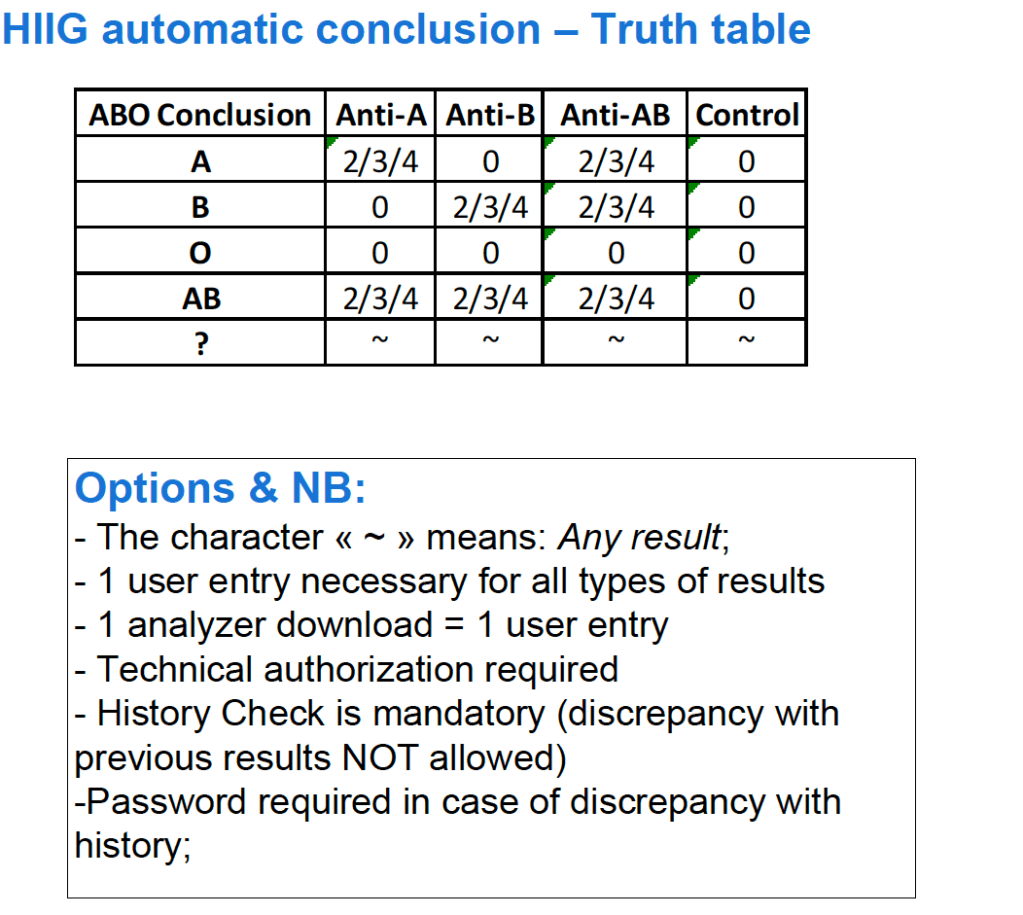
For both manual and automated tests, you can build the control criteria directly into your blood bank computer system’s truth table of results.  This way the system will enforce the criteria and prevent false interpretations:

Example of control for ABO typing:

Blocking Antibodies

This is a revised version of a previous post.

If there is strong antibody binding to an RBC, this may interfere with a typing reagent attaching to the cell and cause a false-negative, i.e. a “blocking” antibody.  Such cells may interfere with the indirect antiglobulin test IAT, i.e. the antibody screen.  The autocontrol and direct antiglobulin test DAT will be strongly positive.

The manufacturer’s instructions for using its reagents should be strictly followed in the presence of a strongly positive DAT.  If there is no reaction with the typing reagent, the result must be indeterminate.

One could try a (relatively) nondestructive elution method such as gentle-heat elution to remove some of the antibody and then retype the cells.  I have found this to be a simple and effective method for my staff to use.  Just remember that despite being “gentle,” there will still be some hemolysis present, but here it is the cells we are trying to save.

Usually, we find this situation in a neonate born of a mother with anti-D.  The baby has a strong DAT but the D typing is negative.  Check the D control carefully:  if it is positive, the result is indeterminate, try another method.  Usually gel/glass bead methods are subject to less interference.  Finally, there is always the classic saline anti-D!

In Medinfo software with a blocking antibody, a nonnegative control will trigger a manual review of the results.  There will be no automatic release.

Here is my process for handling blocking antibodies, which I set up for HMC Doha:

INTERIM POLICY:  ANTIGEN TYPINGS IN PRESENCE OF STRONGLY POSITIVE DIRECT ANTIGLOBULIN TEST (DAT):  RULE OUT BLOCKING ANTIBODY

Principle:

Antigen typing of cells with large amounts of coating antibody (i.e. strongly positive DAT 3-4+) may not always be possible because the bound antibody may block available antigen sites.  This policy is to clarify how to recognize and handle such situations.

Policy:

  1. Always follow the manufacturer’s instructions for the use of the typing reagent.
    1. In particular, note whether a control must be run with the test (e.g. D-control, D-diluent, etc.) or if it is included in the gel or glass bead card.
      1. If a control is required, use exactly what the manufacturer recommends.
      2. DO NOT SUBSTITUTE ANYTHING ELSE AS THE CONTROL!!
  2. Interpret the reactions exactly as the manufacturer indicates.
  3. If the test is invalid because of the control or any other reason, report the antigen typing as indeterminate and send for Transfusion Medicine Physician TMP review.
  4. If the DAT is 3-4+ and the antigen typing shows no reaction (apparent negative), send the case to the Transfusion Medicine Physician for review and final interpretation.  DO NOT ENTER THE RESULT AS NEGATIVE UNLESS THE TMP INSTRUCTS YOU TO DO THIS!!
  5. To rule out a blocking antibody, a special elution to gently remove the coating antibody may be needed so that the RBCs can then be typed (not acid glycine technique—rather use gentle heat elution.)  The Transfusion Medicine Physician will decide whether to do this additional testing.

References:

  1. Standards for Blood Banks and Transfusion Services, Current Edition, AABB, Bethesda, MD, USA
  2. Technical Manual, Current Edition, AABB, Bethesda, MD, USA
  3. Guidelines to the Preparation, Use, and Quality Assurance of Blood Components, European Committee (Partial Agreement) on Blood Transfusion (CD-P-TS), Current Edition

Processes and Software Building—Part Two

This is a revision of a previous post.

Documenting Processes:

My previous post emphasized how important it is to map the current state across all processes as the first step to optimize current operations and prepare for a new computer system.

One non-blood bank vendor submitted the following as a complete representation of all current processes—across more than 4,000 tests and hundreds of instruments:

  1. Order something
  2. Receive specimen
  3. Perform test
  4. Report test

This was the same for each of the tests in the different sections of the laboratory—be it blood bank, anatomic pathology, chemistry, hematology, etc.  I was flabbergasted!  What were we paying for?

As Head of the Laboratory Information Systems, I rejected this.  I would have been ashamed to submit this to a client as a sufficient current state.  Even more astounding was the fact that that vendor actually mainly used the same four-step flow chart for the tests in their new computer build!!

As painful and time-consuming as it is, one must develop a specific flow for each process.  This could include:

  1. Specimen condition and acceptability criteria
  2. Possible results for each part of the test
  3. Interpretation of each result
  4. Control results
  5. Acceptability criteria
  6. Truth table
  7. Reflex testing triggered by the results

When we built our first dedicated blood bank computer system, the company would take a module and completely map out the current processes collaboratively with me.  After this, I analyzed the critical control points and started to map out the improved computer processes that would take over.  I did not want to throw out the successful manual system, just to optimize it.  After that we would build that those limited processes in the software and test it.  If it failed, we would correct it, and the vendor didn’t charge us extra for the corrections.  It was a beautiful collaboration.

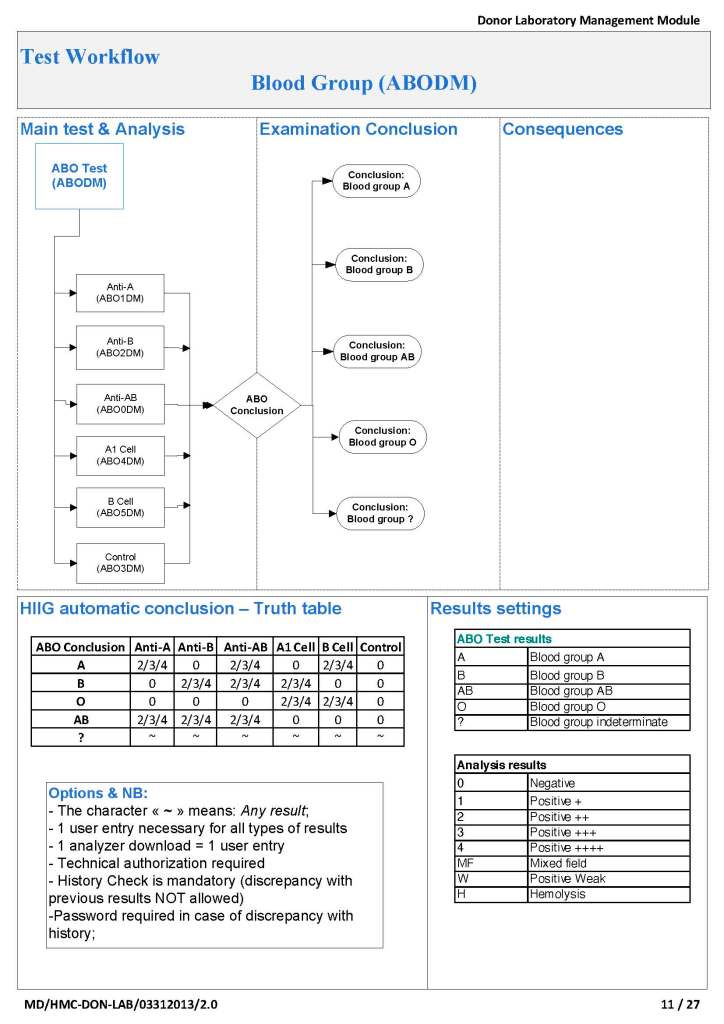
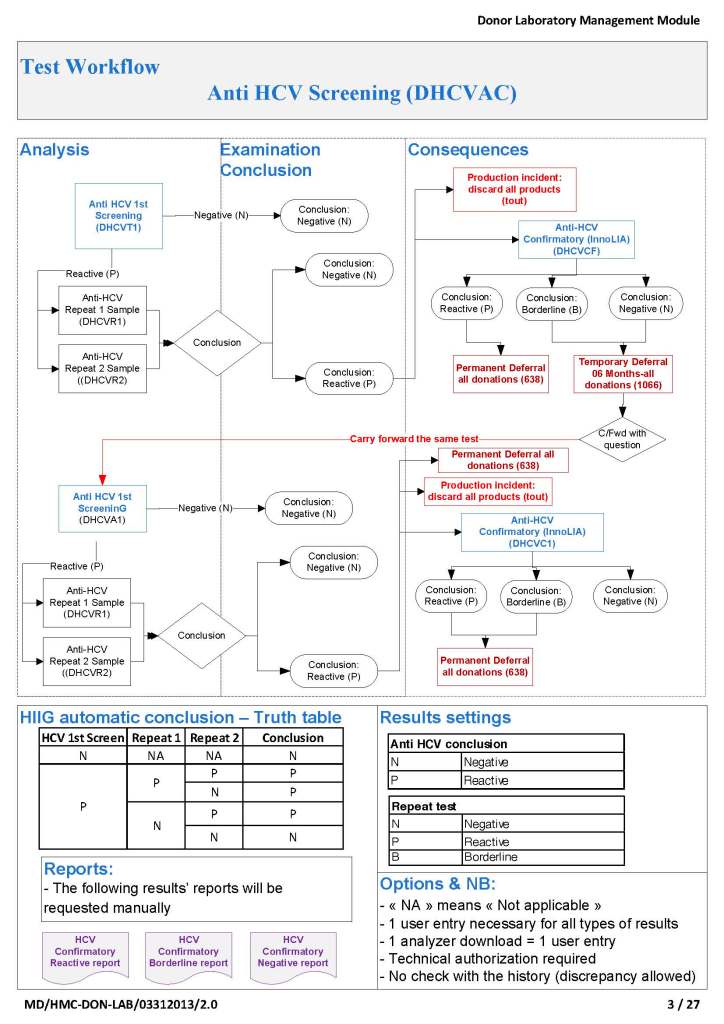
To illustrate these points, I am showing two process flows from our Medinfo Hematos IIG build:  one for the ABO typing (forward and reverse) for donors and the other a complex testing algorithm flow for HCV donor marker testing.  These are from previous builds and have been updated subsequently.

ABO Typing: Attachment One

This consisted of six individual tests forward (anti-A, anti-B, anti-A,B), two reverse (A1 cells and B cells) and a control.  The acceptable tests for automatic typing were in {0, 2, 3, 4}, other results (mixed field, weak, 1+, hemolysis) required a manual interpretation.  There is a truth table for interpretation of all six results together.

Donor HCV Testing:  Attachment Two

This is a more complicated flow that includes multiple tests (HCV-antibody EIA, HCV-LIA, and HCV-NAT).  Results may trigger reflex testing immediately (abnormal HCV EIA triggers HCV-LIA, abnormal HCV-NAT triggers HCV-LIA, etc.) or repeat testing after six months for indeterminate results.

In each case, every possible result is listed and its interpretation and acceptability criteria.

In summary, it may take considerable time to map out all your processes, but this is time well spent and allows you build your system accurately.  There will be few surprises this way.

A Novel Way to Document Therapeutic Phlebotomies in the Blood Bank Computer System

Therapeutic phlebotomies TP, like regular whole blood donation WBD, both require collection of whole blood into a blood bag set.  In whole blood donation, we ask two questions during the process:

  • Is it safe for the donor to donate?
  • Is it safe for the collected unit or its processed components to be given to recipients?

For TP, we only have to consider the first question so the process must ensure the patient/donor’s safety.  We do not have to concern ourselves with the use of the collected product—it will be discarded.

Since the donor collection processes of both TP and WBD are similar, why couldn’t we use the blood bank computer software to document the TP procedures?  The process is a subset of normal WB donation.  On this basis, I make suggestions on using the donor module to document the TP process.  It is basically a truncated version of blood donation process in the Medinfo Hematos IIG system:

  • Registration
  • Donor Safety
  • Vital Signs
  • Hemoglobin Determination
  • Blood Collection Data
  • Adverse Effect Reporting
  • Discard of Unit
  • Documentation of Physician’s Order and Transfusion Medicine Physicians Acceptance

Registration:  Positive patient identification can be made through the donor registration process;  force selection of an inexpensive bag type (not the Reveos set) for this purpose.

Donor Safety:  Perform a modified, shortened donor questionnaire covering the medical history and medications is used.  Confirm that the patient has had food and drink before donating.  Require a waiting period of 24 hours before the next procedure.

Vital Signs and Weight:  Measure weight plus BP, pulse, temperature, and respiratory rate as well as inspect the arm for scarring before procedure.  Allow repeat vital signs monitoring after the procedure if requested by the transfusion medicine physician.

Hemoglobin Determination:  Allow acceptable Hgb >= 11 g/dl or >33% hematocrit

Blood Collection:  Use the same process for the mixer-shakers but the amount collected can range up to 500 ml with amounts <405 ml acceptable for small patients

Adverse Effect Reporting:  The complications of TP collection are the same as WBD.  Use the same system as for WBD.

Discard of the Unit:  Print discard label and quarantine of the ISBT unit number in system (so that it cannot be used for transfusion).

Documentation of Order:  Create separate fields for the ordering physician and for the approving transfusion medicine physician.  Capture scan of paper orders and incorporate into the TP computer encounter.

Other Considerations:  In high-risk cases, e.g. with pre-existing cardiovascular, pulmonary, or cerebrovascular disease, one could consider using a remote monitoring device such as the Umana T1 device to record vital signs, EKG, and oxygen saturation that can continuously record these parameters and trigger user-definable alarms during the process and afterwards if desired.  The data can be incorporated into the blood bank computer encounter.

Antibody Titration

My practice across the globe has exposed me different rationales to performing antibody titration.  In my American training and practice (and also at international institutions following the American version of AABB accreditation), I only routinely performed titration of anti-D for Rh(D) hemolytic disease of the newborn and anti-A/anti-B for ABO-incompatible stem cell transplants AND ABO-incompatible renal transplants.

I have had heated arguments with some physicians who insisted they wanted titers for other antibodies.  The AABB Standards do not require this but leave it to the discretion of the Transfusion Service Medical Director.

In my entire career, I never worked in a blood bank or blood center which had optimal staffing or resources.  I focused on what was medically/technically necessary and even then still had shortages.  If performing a test does not change the clinical treatment, why perform it unless you are doing a research project!

Titration is a time-consuming, and until recently, a tedious manual task.  Recently some of the automated immunohematology analyzers offer a titration program.  We used the Ortho Vision Max which could perform both IgG and IgM titers within one hour—walk away!!  However, during that time, the titration procedure monopolized the analyzer.

Nowadays, low-anti-B-titer group A universal plasma and low-titer (anti-A and anti-B) group O whole blood may be offered as components.  At HMC Qatar, a preliminary study showed about 50% of units could be classified as low-titer (defined as a saline titer <1:128).  The amount of titration will require an automated analyzer.

The ABO-incompatible renal transplant program at HMC Qatar was modelled after Sweden’s Karolinska Institute.  However the latter site performed manual IgG and IgM titrations using Biorad/Diamed gels.

I did not have sufficient resources to commit staff to manual titration at HMC so I did a comparison study between the Ortho Max and the Biorad manual gel methods.  We were able to get good correlation and used the automated method for the transplant.

I still don not perform against performing titrations for antibodies other than anti-D.  I always ask, ‘Does the titration correlate with clinical severity?’  Unlike anti-D, antibodies such as anti-Kell and anti-c may be low titer but cause death.  Can anyone show me a definitive study that titers are useful except for transplants and Rh(D) hemolytic disease of the fetus/newborn?

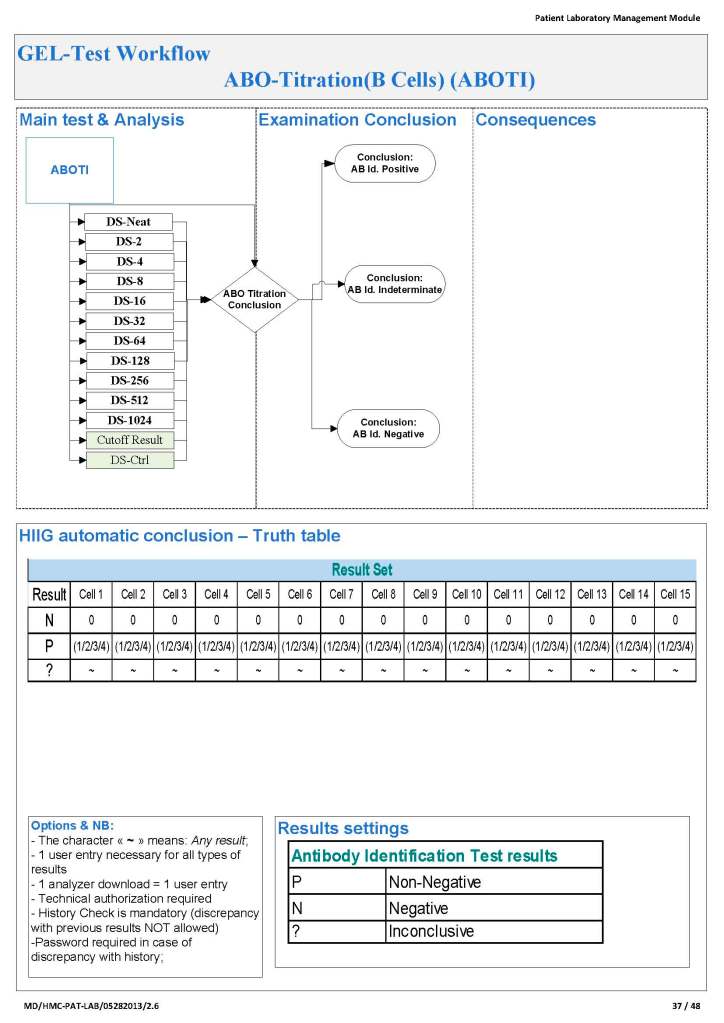
Since the method was working well on the Ortho equipment, I next established an interface to Medinfo.  The test was performed separately for IgG and IgM antibodies.  Medinfo recorded the reactions in all the wells.  The last well showing a 1+ reaction was interpreted as the titer (e.g. if 1:64 were the last 1+ reaction, then the titer was 64 in Medinfo).

The Medinfo process is shown below.

Building Your Blood Bank Software—Initial Considerations

In a series of posts, I will elaborate on how I built the processes and settings for a blood bank computer system in conjunction with the vendor’s software engineers.  This also applies to other laboratory software.

If you don’t know exactly what you are doing, how can you improve it?  Regardless whether you currently have laboratory software, you still need to optimize processes, determine critical control points, and plan improvements based on that.  A good manual system is the foundation for a good software build.

I was never taught in medical school how to do this.  I learned on-the-job at a time when software was quite rudimentary and mainly to record results.

Staffing:

For our first system, we used medical technologists to make settings for and administrate.  We thought that only those with a technical background in the field could do this.  It was moderately successful.  There was some antagonism between the technologist computer staff and the hospital computer department.  The technologists did not have a background in databases and programming;  the IT staff did not know the laboratory and were frustrated in dealing with the laboratory staff.

Later, to help reconciliate the two when a new hospital system was installed, we tried a different approach.  We found a database professional who was a very good listener.  Although he had no blood bank technical background, he could listen and map out the processes.  He was well-liked by the technologists who saw that he just wanted to understand their work and help them.  He was very successful in this endeavor.  I strongly recommend a software engineer as the lead in the project, one who can work with technical and medical staff to map out processes.

Unifying Processes Across Multiple Sites;

If your organization covers multiple sites, it is best to unify your processes as much as possible.  We built our dedicated blood bank system AFTER we had done this so the processes (except for some equipment differences) were the same everywhere.   This allowed us to move work between institutions quickly and makes system administration easy.

At one organization, I worked at, they had not done this.  They built their system based on the processes at the first site to go live, which was a small hospital with less than 10% of the workload.  It was not designed for the high-volume sites, and this was major problem as the larger sites were implemented. 

Capturing the Current State:

Most importantly, I cannot emphasize enough the need to capture the current state.  Take the time to do this properly and thoroughly.  This will help you whether or not you are building a computer system or just optimizing your manual processes.

At one institution in a non-blood bank system build, the administrative decision was to rush and not wait to complete this task so the actual processes were not captured—I actually rejected the proposed current state but was overruled.  The institution did not unify their processes as much as possible across sites.  The result was a suboptimal system that many/most people do not like:  should you blame the build or the limitations of the underlying software?  In my opinion, you can’t fully blame the software itself, if you didn’t design your build properly.

My Opinion: Issues in Transfusion Medicine Software and Component Production

I anticipate that there are several innovations coming or in the process of coming to mainstream blood component production and software.  Some of these I have already addressed in some of my previous posts:

Pathogen inactivation:  We have had this for over a decade.  However, with new emerging pathogens, this will become more important so I expect it will be adopted in many centers where it is not currently being used.  I expect we will close the loop and pathogen-inactivated RBCs will be available so all components will be treated.  Still, the first-generation pathogen-inactivated RBCs may have reduced shelf life compared to regular, untreated units.

Automated component production:  Although this is expensive, it does provide excellent GMP production.  It is fast and may provide higher yields, especially for platelets.  I expect more centers will adopt this technology, especially in combination with pathogen inactivation.

Blood bank computer software:  This software must be considered as dynamically changing, and considerable resources are needed to keep in compliance with ever-changing international regulations and the latest epidemiologic data.  Production rules can be strictly and mercilessly enforced by a dedicated blood bank computer software.  It can also ensure that the final ISBT label is not applied unless all the production rules (registration, collection, processing, and testing) are met.  Manual processing is extremely risky nowadays with all the parameters to be monitored.

Patient Blood Management:  Current blood bank software does not adequately address the need for prospective review of component orders.  I expect that collaboration will occur between laboratory and blood bank software vendors to fill this gap.

Refrigerated platelets:  The pendulum swings back to this component which was used over 40 years ago.  Refrigerated platelets suspended in additive solution may be effective up to 14 days for hemostasis in the trauma setting.  These platelets are activated so standard 20-24C stored platelets may be preferred for prophylactic transfusions.

Low-titer group A universal plasma:  This is already available, but its use will increase because of the low numbers of group AB units available and increased demand.  This includes its production for COVID convalescent plasma.  Your transfusion medical director must decide what “low titer” means.  Also you need a robust way of performing anti-B titers, this may require use of an immunohematology analyzer with titration built-in.

Low titer group O whole blood:  Use of this product may reduce the need for components in massive transfusion settings but it requires performing anti-A and anti-B titers on large numbers of units.  Your transfusion medical director must decide what “low titer” means.  Also you need a robust way of performing anti-A and anti-B titers, this may require use of an immunohematology analyzer with titration built-in.  Also, you must decide whether to leukodeplete the whole blood units:  few whole blood filters are platelet-sparing.

Reveos Interface to Medinfo Hematos IIG

The Medinfo HIIG interface to the Reveos is a bidirectional interface, which was first developed by the Medinfo team for HMC in Qatar.  It is similar to the Atreus interface but there are 4 units processed simultaneously in each cycle of operation whereas the Atreus only processed 1 unit each cycle.  In Qatar it was used in conjunction with Mirasol riboflavin-based pathogen inactivation.

The process is:

  1. Medinfo controls registration, donor screening, and donor collection of whole blood and apheresis-derived (Trima) components.
  2. Medinfo will assign ISBT specimen labels for the whole blood collected with the Reveos blood kit.
  3. Medinfo will not allow processing of whole blood units not meeting donor criteria (donor screening, volumes, collection time, donor deferral database, etc.)
  4. Reveos will read ISBT specimen labels generated by Medinfo.
  5. Upon processing, Medinfo will receive from the Reveos machine the packed red blood cell, plasma, platelet, and buffy coat volumes for each bucket in the Reveos machine.
  6. If the volumes are within the specified ranges, platelet pooling and Mirasol pathogen inactivation of platelets and plasma may proceed.

For each component, the following information will be collected:

  1. All timestamps in the process
  2. Which Reveos machine used
  3. Which bucket in each machine used
  4. Volumes collected (packed RBCs, buffy coat platelet, plasma volume)
  5. Reveos collection set details
  6. Processing technologist ID

The key point is the complete TRACEABILITY of each component throughout its production.  Should there be a failure in production, we can trace exactly where the problem is and then quarantine this and any other affected units simply in the system.  Additionally, this information is part of the permanent record of the unit so it can retrieved subsequently at any time.

Reveos and Atreus Automated Blood Component Processing: My Experience

This post is about my over 10 years of experience with automated component processing using Terumo equipment, first Atreus and then Reveos at HMC Qatar.  The Reveos system is still in use at that institution.  There is also a previous post about Mirasol riboflavin-based pathogen inactivation.

We were the first place in the world to combine the automated component production Atreus with the Mirasol pathogen inactivation.  Their synergism was very important in the rapid throughput of component production for Qatar.

Terumo has two programs, 2C (C for components) to yield plasma and RBCs and 3C for yielding RBCs, plasma, and platelets.  The 2C program is faster but no platelets are separated.

We used the Atreus since 2010 and later replaced it with the Reveos in 2016.  Both systems use a special blood bag set that collects the whole blood in European CPD.  The kit is carefully placed in the machine.  Atreus machines accepted one blood bag set, the Reveos can accept up to 4 sets.  In both cases, the whole blood is processed to yield packed RBCs, leukoreduced plasma (<1E6 residual WBCs), platelets, and a special WBC bag (i.e. the residual buffy coat, which is not for clinical use.

The Atreus took about 10 minutes to process the one bag set whereas the Reveos processes 4 bag sets in slightly more than 20 minutes.  Thus, the throughput from the Reveos is twice that of Atreus.

We had 4 Atreus and later 4 Reveos machines and these were handled by up to 4 technologists, depending on the number of the units.  While the machines were running, the staff were filtering the RBCs and platelet pools, pooling the platelets, and performing the PAS-Mirasol pathogen inactivation.  The workflow was not hectic and staff were not stressed out by the multiple tasks.  Normally 1 staff member ran the Reveos or Atreus machines at any one time.

When the processing was complete, the RBC bags were filtered with an integral leukodepletion filter designed to leave a residual of <1E6 WBCs in accordance with the CE Standard.  The platelets were combined to give a target yield of >= 2.4E11 absolute number of platelets.  Then the pool was leukodepleted by filtration to a residual of <1E6 WBCs.

Both Reveos and Atreus measured the RBC, platelet, and plasma volume yields.  Additionally, for platelets a Platelet Yield Index PYI was calculated as a relative measure of the platelet yield.  To reach a goal of 2.4E11 platelets, the PYI indices for the individual platelet bags were added so that the total exceeded 240.

When combined with the Mirasol system, the component volumes for the plasma and platelets needed to be within specified ranges.  Both systems could easily meet these requirements.

When we switched from Atreus to Reveos, our platelet yields increased.  The transition period was only two weeks.   When we adopted platelet additive solution PAS at the same time, the Reveos had a special program to make “dry” platelets with less volume so that the PAS could be added and still stay within the acceptable range for pathogen-inactivation.

Throughout these years, Terumo sent us special engineers to handle the Atreus then Reveos, Mirasol, and PAS processing.  All staff were trained by Terumo initially before we finalized their competency assessments. 

We had excellent local service:  we never had downtimes due to equipment failures.  During the COVID pandemic, all materials (kits, filters, Mirasol solution, and PAS) have been provided without interruption.

We went live with Medinfo Hematos IIG software for the entire blood donor center and hospital blood banks in 2013.  From the first day 30/6/13 we had bidirectional interfaces first to the Atreus and later to the Reveos—the world’s first.  Likewise, the Mirasol and PAS processing were fully integrated with Medinfo when they were activated.

The residual buffy coat was not used for patient care.  However, it has proven invaluable as a quality control material for the stem cell laboratory.  In addition, many researchers have used it to establish cell lines for investigational use.

Proper handling the collected whole blood units is critical to success:

  1. Maintain the temperature below 25C.
  2. Carefully stack the whole blood units in the blood containers—do not play “ring toss” and just throw them into the container.

In summary, I am very pleased with using this system for over 10 years.  In a few weeks, the production laboratory was fully GMP compliant using a diverse group of staff with varying technical backgrounds.

The following are some pictures of the Reveos and its prepared blood components.

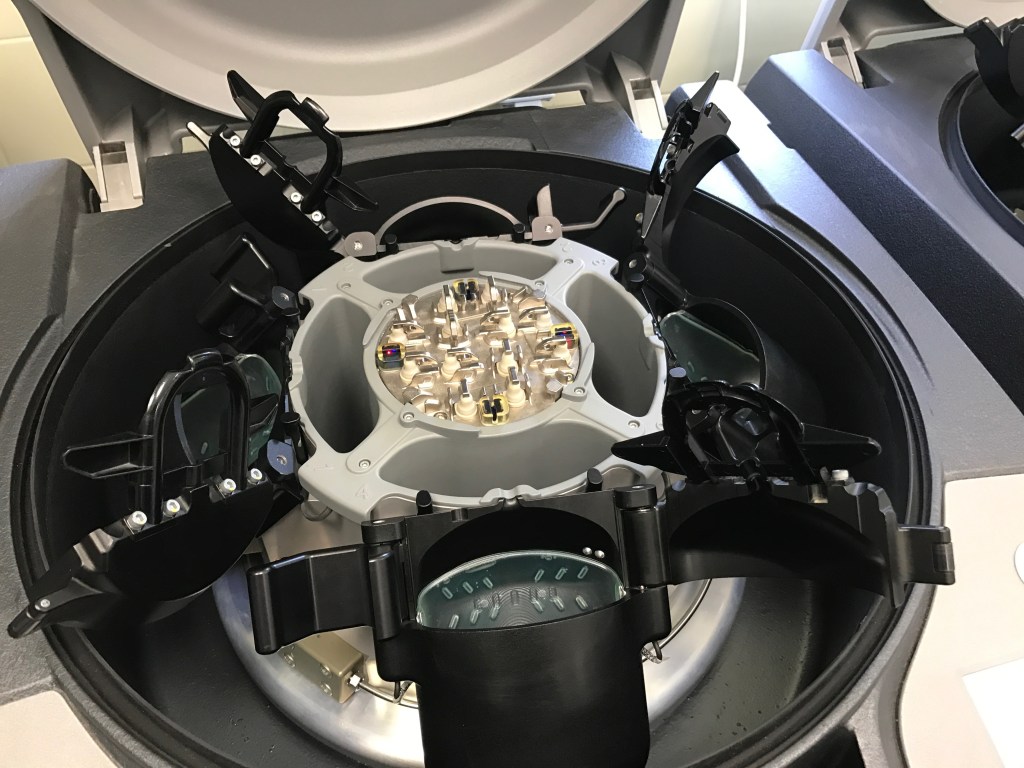
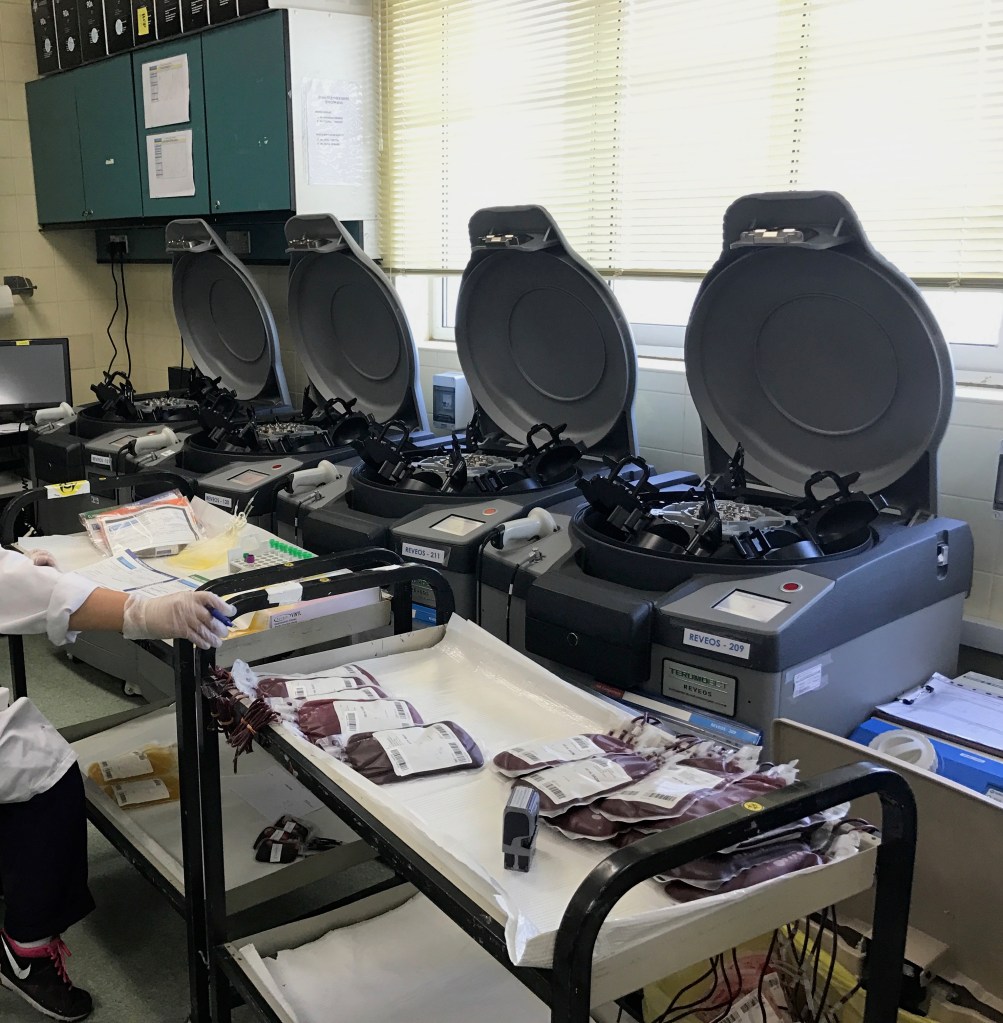
Reveos Machine has 4 chambers to process the 4 whole blood units.
Reveos takes up little space: this crowded corner processed all whole blood for Qatar.
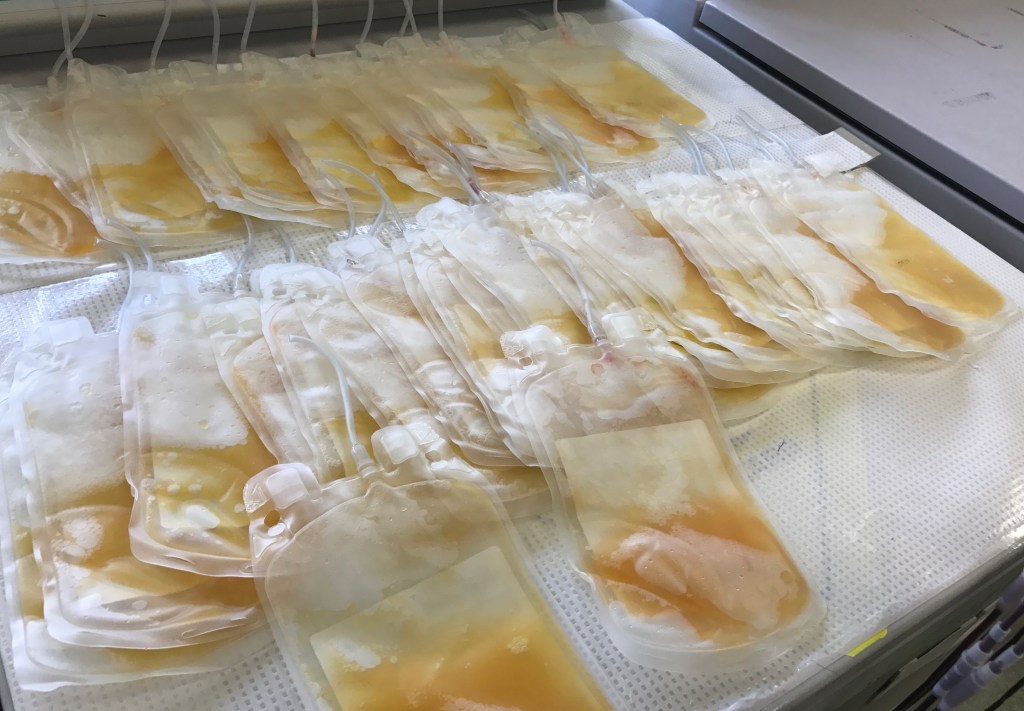
Buffy-coat platelets processed by the Reveos
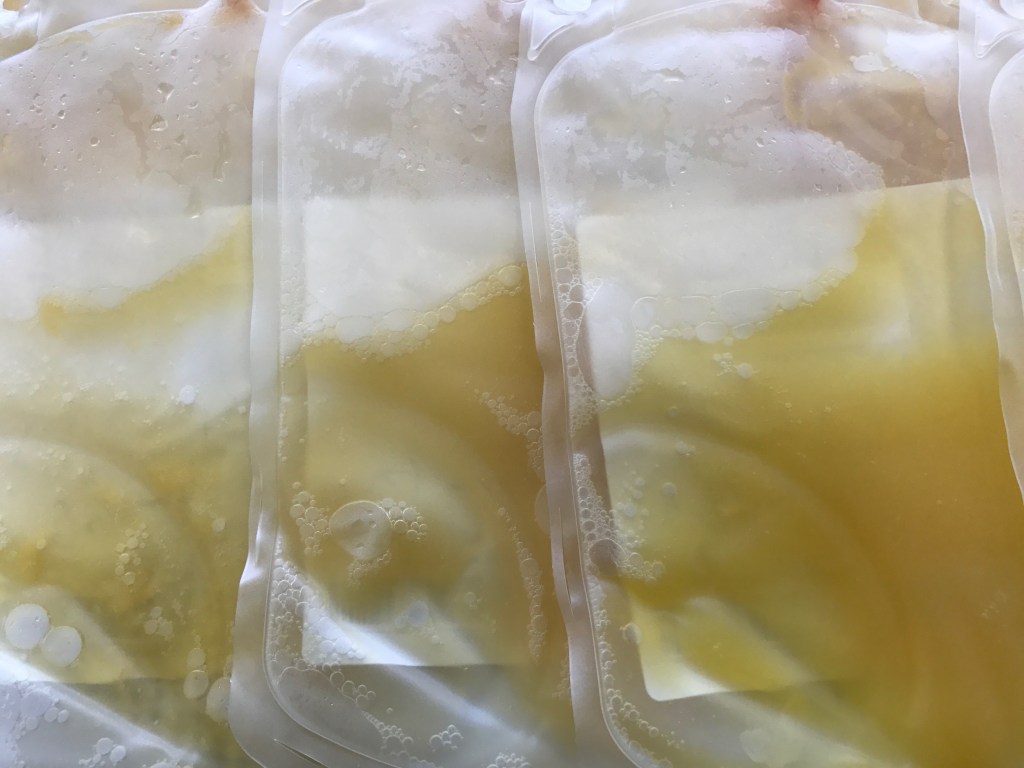
Close-up of Reveos buffy coat platelets: notice there are NO streaks of RBCs.