This is part one of a lecture for medical technology students that I originally gave at National Guard Health Affairs in Riyadh.

Immunohematology testing and processes
This is part one of a lecture for medical technology students that I originally gave at National Guard Health Affairs in Riyadh.
This is an update of a previous post.
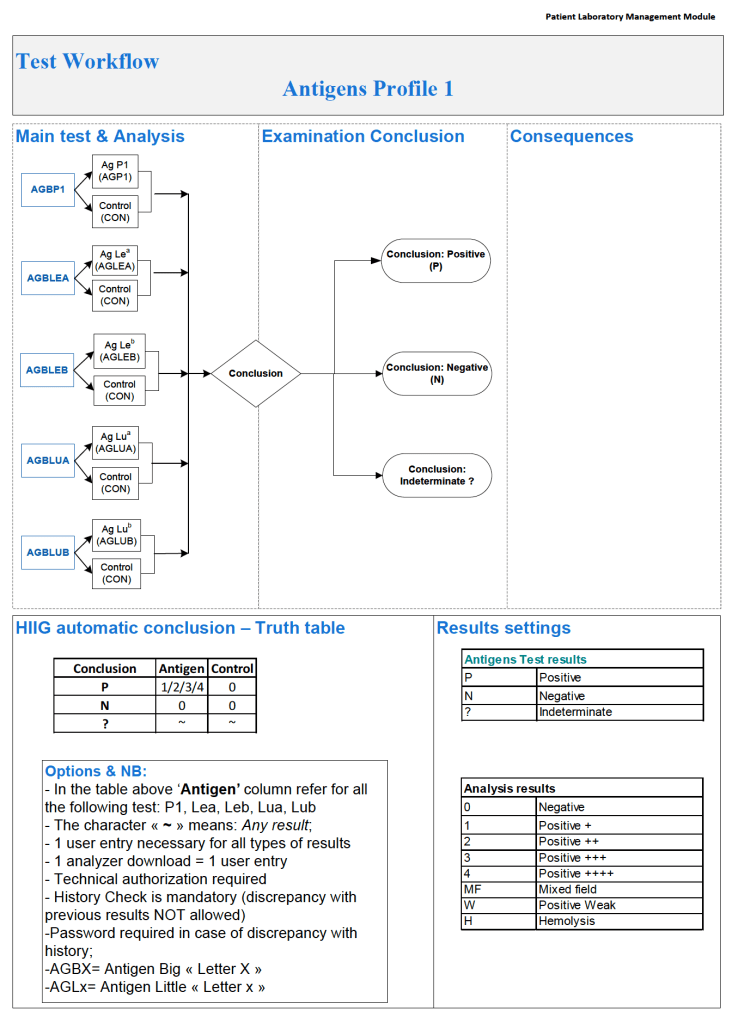
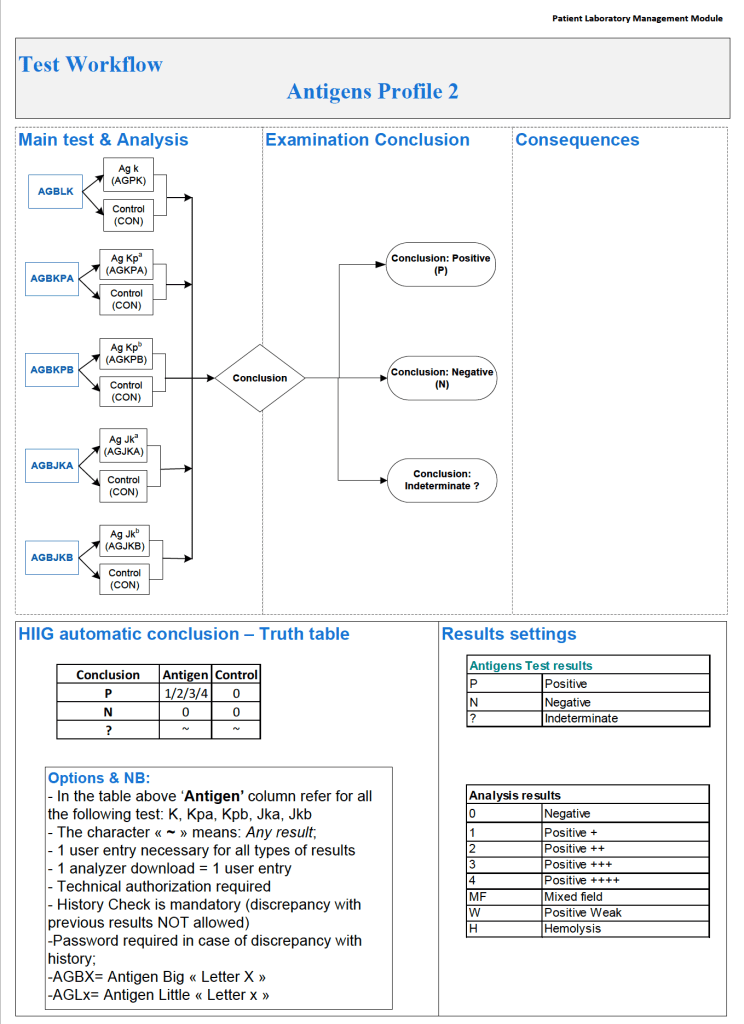
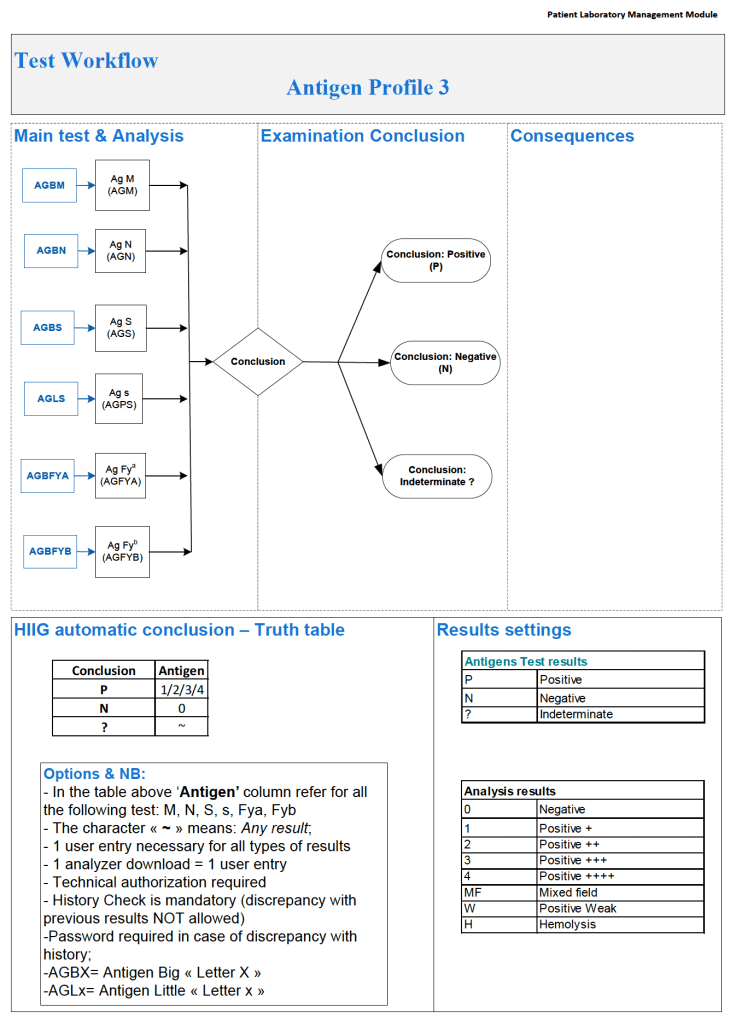
In any case with nonspecific antibodies and for all new patients who will require chronic transfusions, I perform extended Rh (CcEe)/Kell and the three Diamed (now Biorad) profile cards.
It is very easy in Medinfo to write a process for any group of antigen typings as long as you know the manufacturer’s criteria for accepting results. Some cards have controls, others do not. In the latter case, the “control” is a negative reaction in the card or series of cards of the same type.
In Medinfo, one can also look for errors in using the card: In Profile Card 3, i.e. the MNSsFyaFyb card, one must reject the card if no reactions in any well appear: Did the technologist forget to add the cells or reagents? Did he/she use the wrong diluent (i.e. bromelin enzyme) which would destroy the labile antigens?
One can set the acceptable range of reactivity, flag for mixed field, etc. and record these findings in the official record. One can define which reactions you will accept an automatic reading of the card. For the other readings, one can force a manual review and result entry.
Note that Profile Cards 1 and 2 both have an internal control whereas Profile Card 3 (enzyme-labile antigens) does not.
Here are the processes for all three profile cards:
Principle:
The Division Head, Transfusion Medicine and Blood Banks, is responsible for all aspects of transfusion medicine at HMC for the State of Qatar. The following policy documents some of those roles.
Policy:
References:
Standards for Blood Banks and Transfusion Services, Current Edition AABB, Bethesda, MD, USA
Principle:
Based on recent cases of rare phenotypes in the Rh system, we will proactively detect such patients and donors most likely for this.
Policy:
Extended Rh (C, c, E, e) and Kell (K1) typing should be done on all donors and patients meeting the any of the following criteria:
References:
Standards for Blood Banks and Transfusion Services, AABB, Current Edition, Bethesda, MD, USA


Enumeration: 5.9.1
Process:
References:

 Dr. Zeyd Merenkov