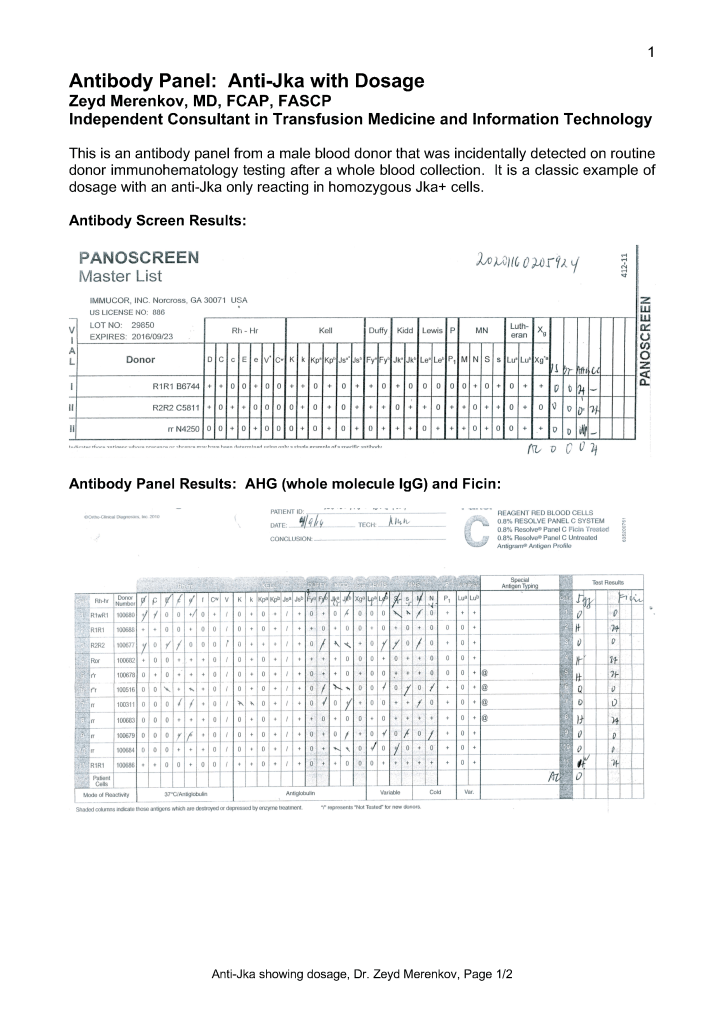
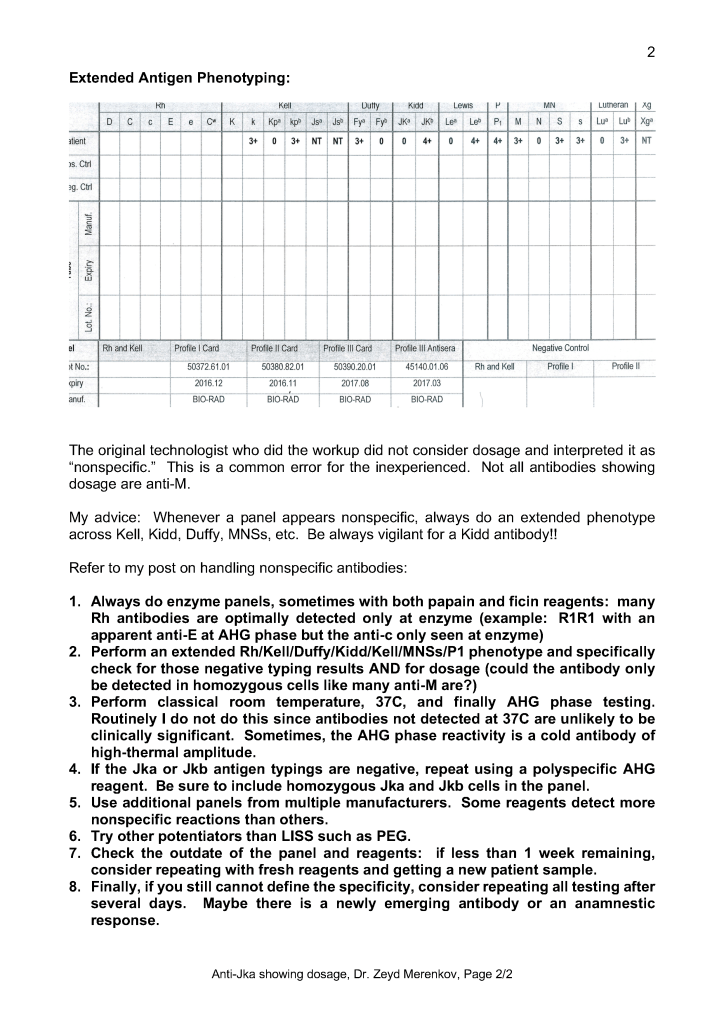
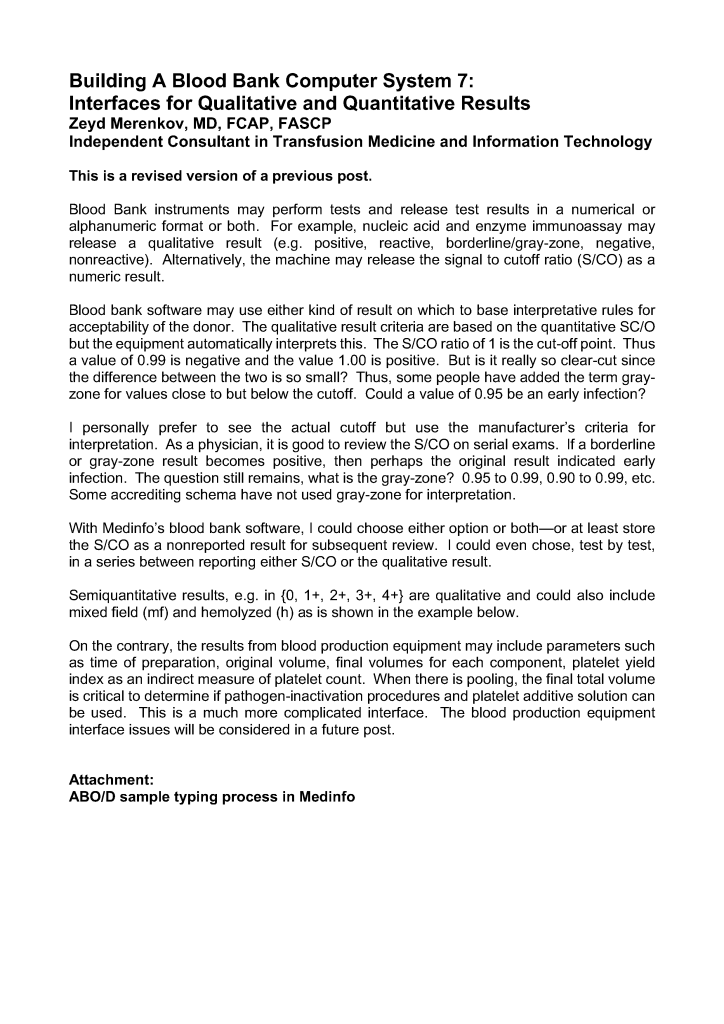
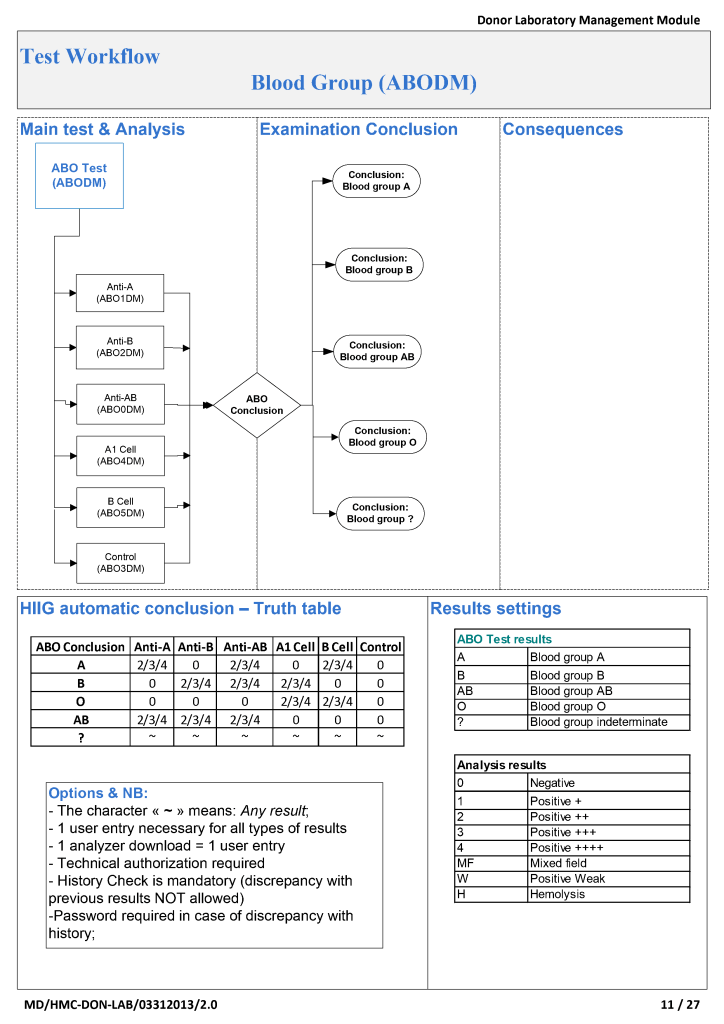
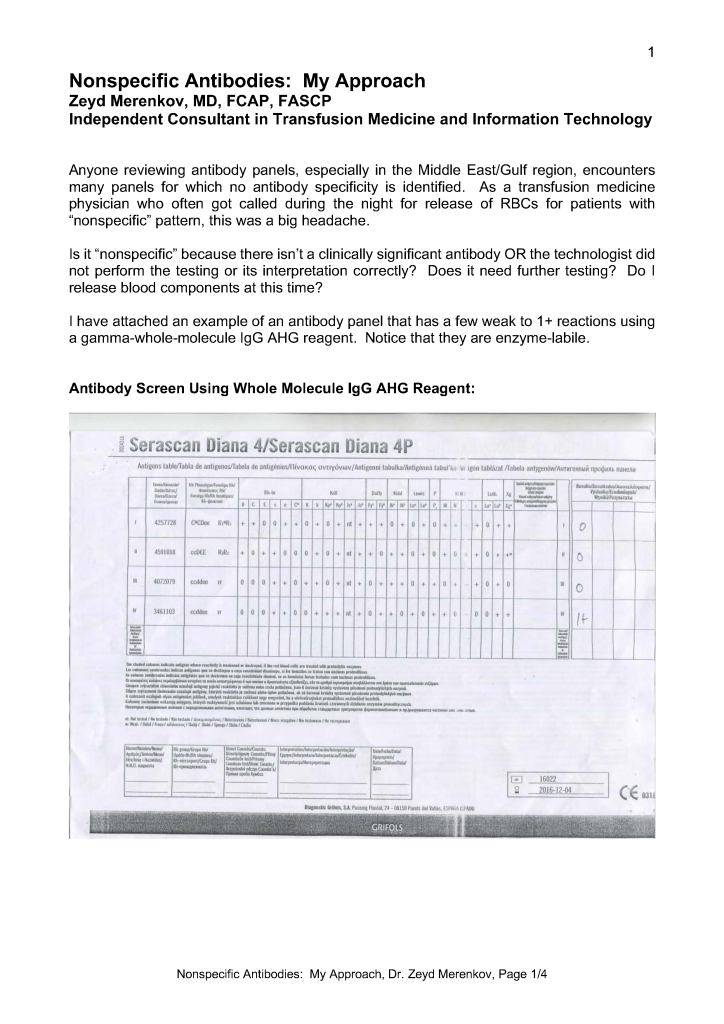
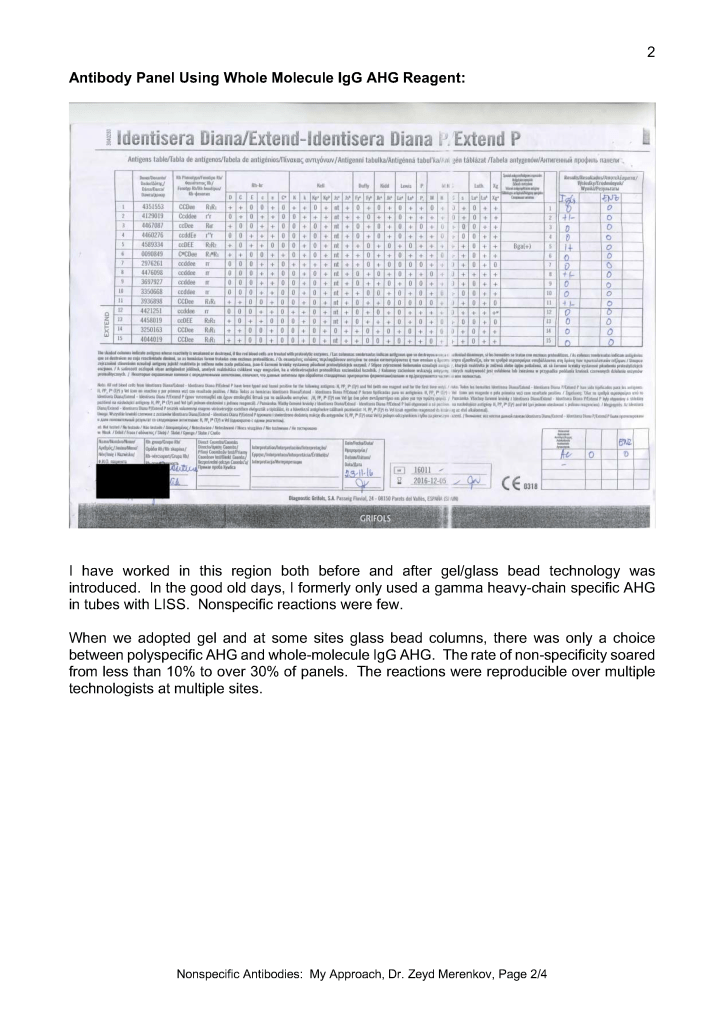
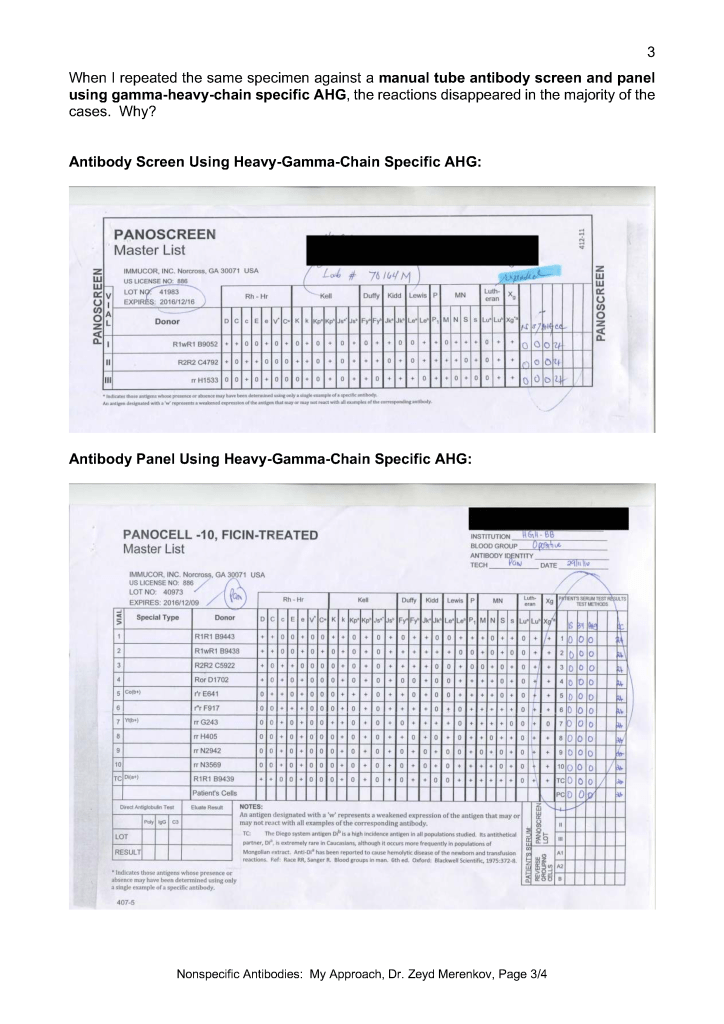
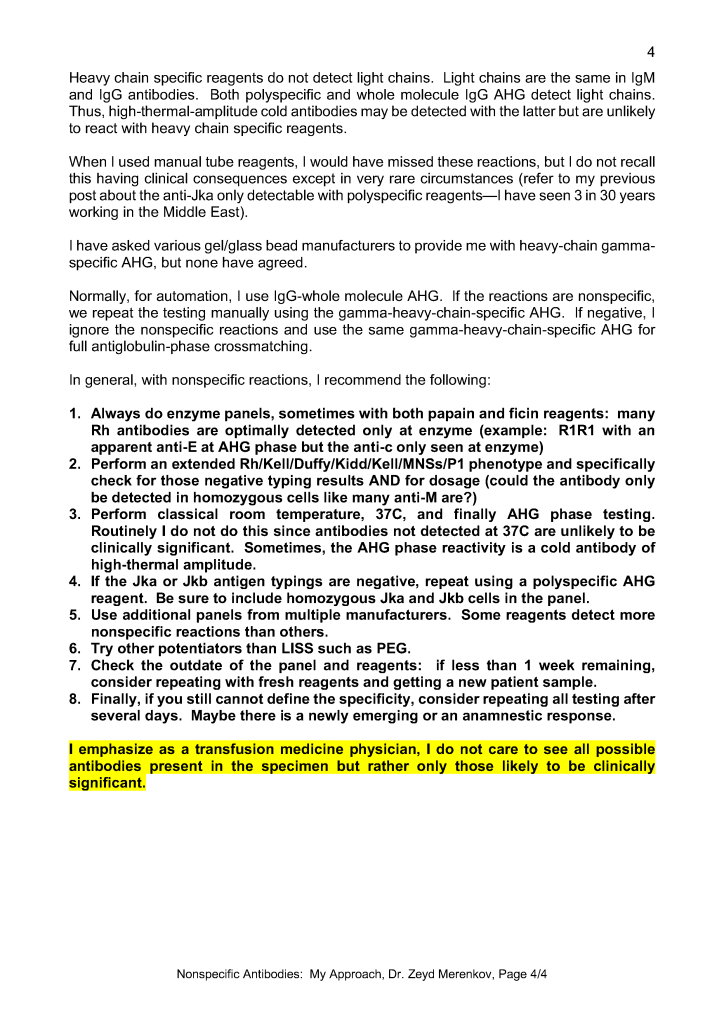
Donor ABO/D typing, antibody screening, antibody identification, ABO antibody titration


If you get nonspecific reactions in your antibody workup, always check:
In the Middle East and other locations with extreme environmental conditions, some reagents, especially antisera and reagent red cells may be suboptimal for use near their expiration date. Likewise, an old specimen may show nonspecific reactions due to bacterial contamination.
My advice: Consider repeating the testing with fresh reagents and a fresh specimen. If there is an emerging antibody, it may be stronger in the new specimen and less likely that contamination is affecting the results.
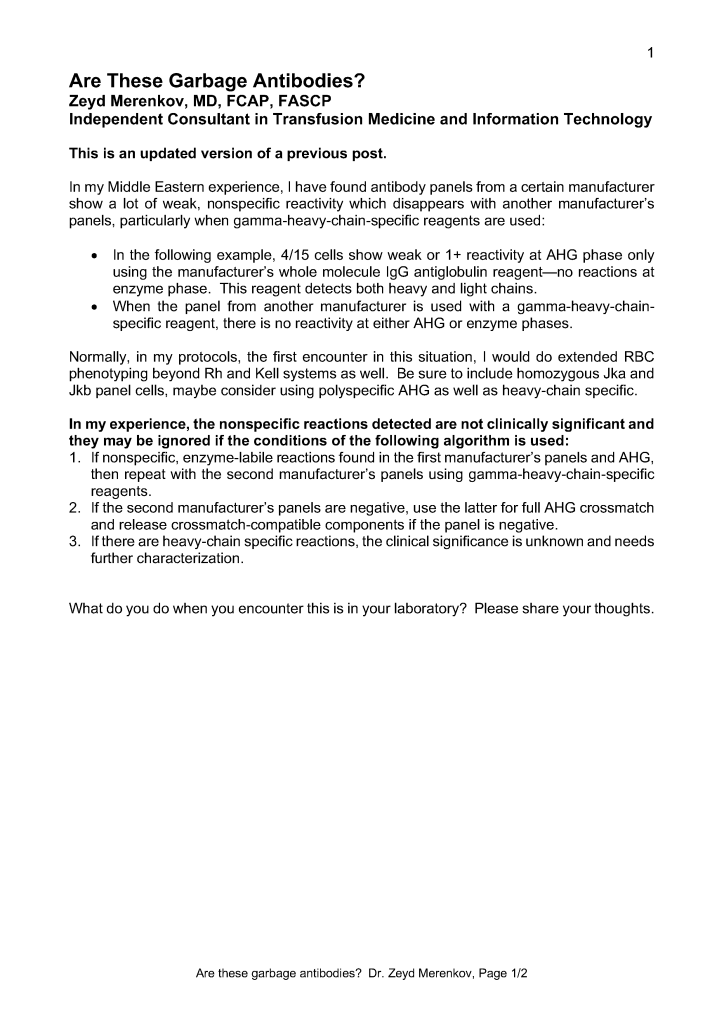
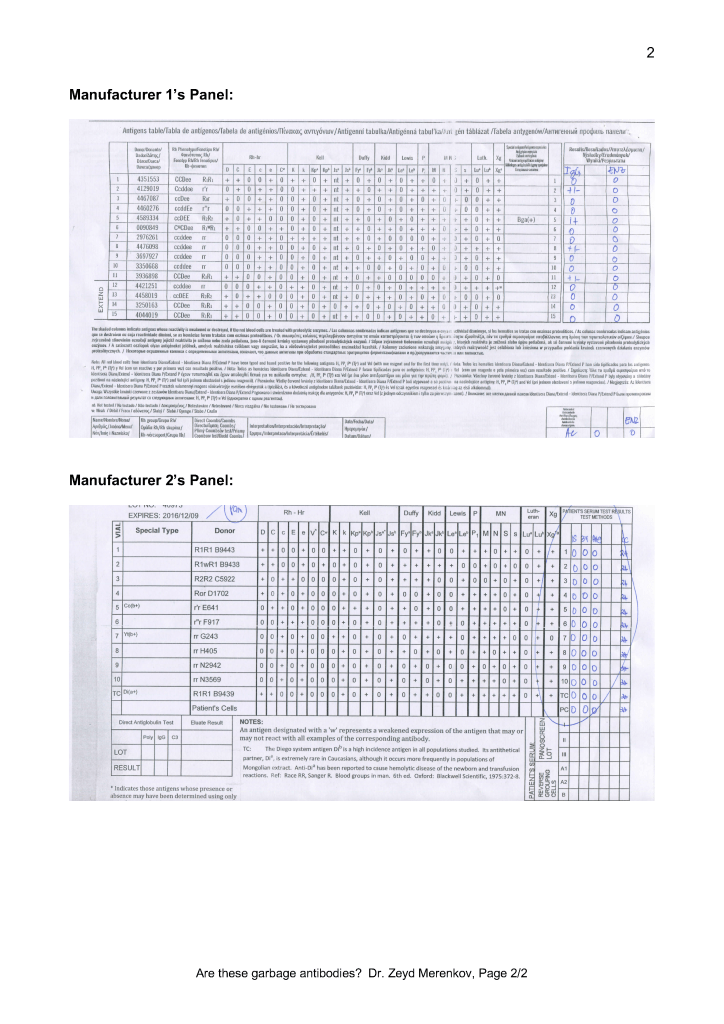
The following antibody panels show how different the reactions are with a new specimen and fresh reagents versus the original workup, and how much easier it is to evaluate then.
Original specimen with antibody panel one week before expiry:

Repeating the workup with new antibody panel (five weeks until expiration) and a fresh specimen:


In my experience in the Middle East, not all staff have external credentials. Often there are high-level technical staff assuming roles that would not be permitted to them if they lacked such qualifications in other countries. How do you have your uncredentialed staff assess someone with an internationally recognized qualification? How can you minimize bias in the process? This is my approach.