Policy: Division Head Transfusion Medicine Role in Policy Making

Principle:

The Division Head, Transfusion Medicine and Blood Banks, is responsible for all aspects of transfusion medicine at HMC for the State of Qatar.  The following policy documents some of those roles.

Policy:

  1. The Division Head, Transfusion Medicine HTM, serves as a member of the Corporate Transfusion Committee
  2. The HTM through the CTC establishes criteria for transfusion of blood components and passes these through the HMC corporate process for establishing official guidelines.
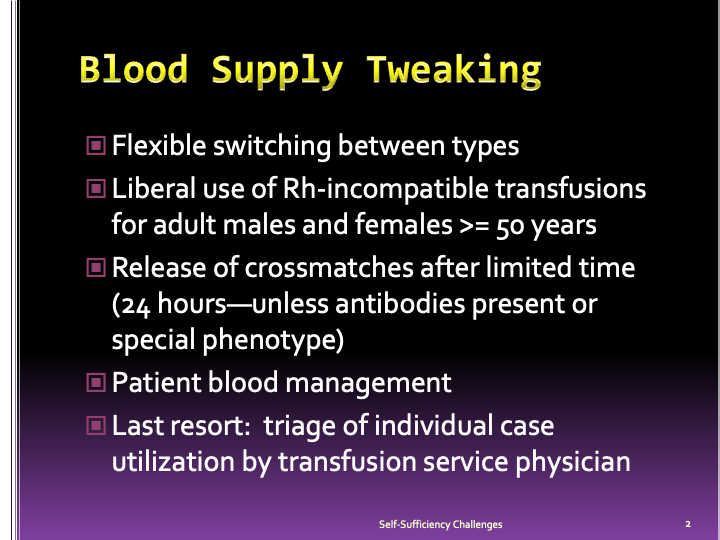
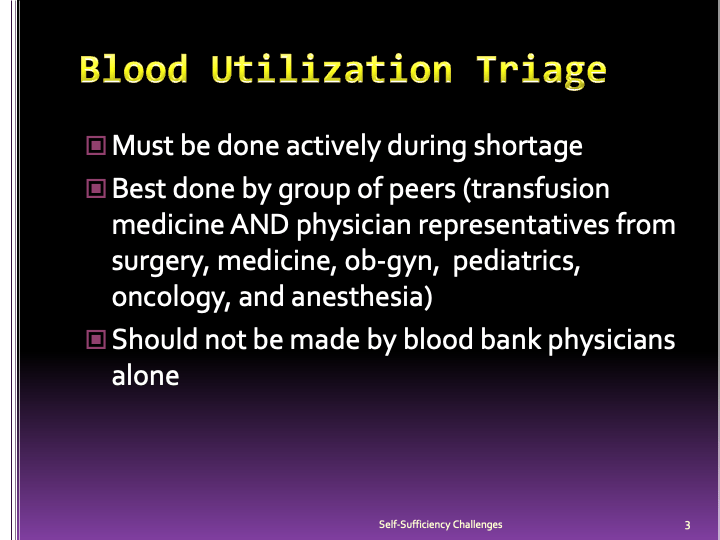
  3. The HTM reviews blood component requests, especially in times of shortage to triage in conjunction with the Medical Director and Chairperson, DPLM
  4. The HTM establishes transfusion practices through the interim policies, which are in turn used to prepare processes and procedures through corporate transfusion medicine.
  5. The HTM serves as Project Manager for the Medinfo Hematos IIG computer system and prepares policies, processes, and procedures for Transfusion Laboratory Information Systems.

References:

Standards for Blood Banks and Transfusion Services, Current Edition AABB, Bethesda, MD, USA

Building Donor Center Software Processes: Donor Physical Examination and Adverse Reactions

Donor physical examination, along with the donor questionnaire, are important both for donor and patient safety.  In general:

Is it safe for the donor to donate?

Is it safe for the patient to receive the blood even if it is safe for the donor to donate.

Any donor who does not feel well must not donate.  This may be the single most important step in ensuring a safe blood supply.

The donor physical examination includes the vital signs (blood pressure, pulse, temperature, heart rate, and temperature).  I have attached a sample set of criteria for review.  All are user-definable.  Note how the arm examination is also included (looking for scarring, skin lesions, etc.)

For all types of donations, there may be adverse reactions.  These must be documented in the record along with the disposition of the donation.  Will the donor need an extended deferral if the RBCs in the apheresis run are not returned?  This can be built from the reaction documentation.  Note the following sample table of reactions.

To Be Continued

Building Donor Center Processes: Setting Deferral Intervals between Donation Types

Donation can be whole blood or apheresis-based.  The sex and age for each donation type is specified.  At HMC, we did not accept females for platelet or plasma donations, so the starting age is listed as 99 years.  Otherwise, in accordance with Qatari law, the starting age for donation is 18.  All these parameters are user-definable, and a transfusion medicine physician can override the rules if necessary.

For each and every combination of donations, the deferral interval must be specified.  Examples follow.  The temporary deferral period is in days:

Previous donation whole blood, current donation whole blood:  56

Previous donor platelets, current donation whole blood:  2

Previous donation whole blood, current donation platelets:  56

Also note how for each possible combination there is an entry for male AND female.  Females are restricted to whole blood donation and only RBCs will be made from the collection.

If there is a collection incident and the apheresis procedure is not completed, the interval will be set to 56 days.  This will be covered in the post on donor adverse effect reporting.

To Be Continued:

Opinion: Selecting a Pathogen Inactivation System

Transfusion-transmitted infectious disease are a continuing threat.  Despite donor infectious marker testing and new donor questioning, there are many threats which are not addressed by these measures.  Also new pathogens are being identified for which there are no tests or specific donor questions available.  How can we handle these new threats?
Pathogen inactivation can significantly reduce infectious agents in blood components, although the degree varies depends on the agent.  Theoretically any agent with nucleic acid—RNA or DNA is affected.  The only class of agents not affected at all are prions, which have NO nucleic acid at all.

In general, a photoactive agent is added to the blood component which binds to the nucleic acid.  Photoactive agents include riboflavin, psoralen dyes, and methylene blue.  Then the component is irradiated, the time proportional to the volume of the unit.

The component is then exposed to ultraviolet light to photoactivate it, which disrupts the DNA and RNA present, including in the white cells.  Thus, NO irradiation or bacterial culture is required.
Here are my questions to consider when selecting a pathogen inactivation system:

Targets?  Platelets vs plasma vs whole blood?

Methylene may be used for plasma, but riboflavin or psoralens may be used for platelets or plasma.  Whole blood inactivation with riboflavin is CE-approved.

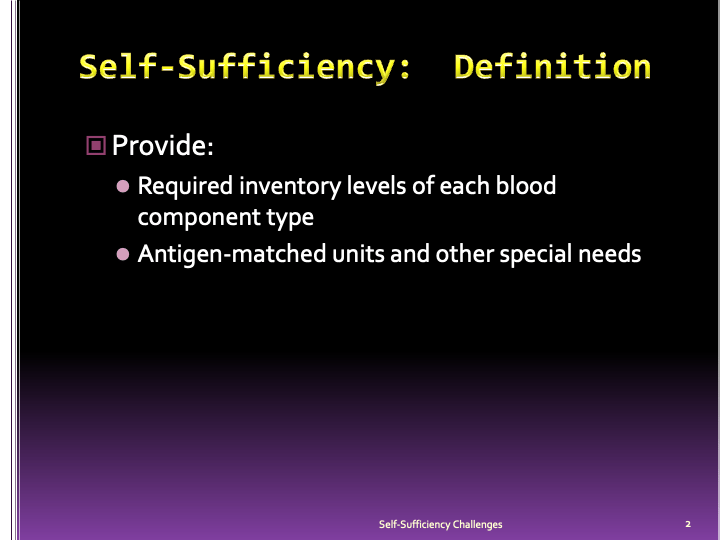
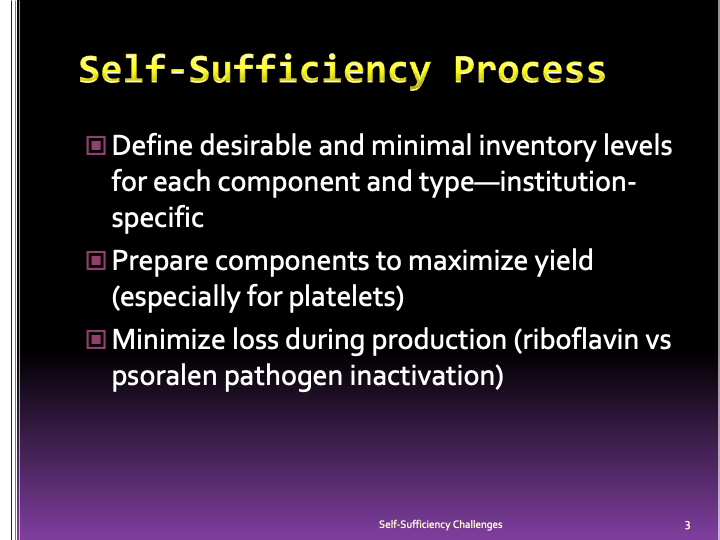
Photoactive dye:  Is it riboflavin vs psoralen vs methylene based?

Riboflavin is vitamin B2—the amount used is small and does not need to be removed whereas the psoralen must be removed for clinical use.

Does the photoactive material need to be removed before transfusion?

You can immediately use the riboflavin-treated component but the psoralen must be removed before transfusion—this may take 6 or 20 hours depending on the licensing of the product.

What is the loss of platelets or coagulation factors after treatment?

With treatment by all methods, there is some loss of platelets and coagulation factors.  The platelet loss may be greater in psoralen-based methods and require additional components be added to the pool to reach the desired dose.  Likewise, plateletpheresis components treated with psoralen may require a recalibration of the donor apheresis equipment to collect more platelets per dose to compensate.  There may be some RBC loss additionally in whole blood pathogen inactivation.

What is the efficacy of pathogen reduction for the infectious agents, particularly the ones in your region?

Example:  How well does the treatment handle local agents like Hepatitis E?  Psoralen agents may be less effective than riboflavin for this agent.

Does it work with platelet additive solution PAS?

There are minimum and maximum volumes for pathogen inactivation set by the manufacturer.  Can you get sufficient yields within these volumes?

How good is the data management system?  Can it be integrated with your blood bank computer system?

Can the equipment be integrated with your system?  This is important to set rules and enforce good manufacturing processes GMP.

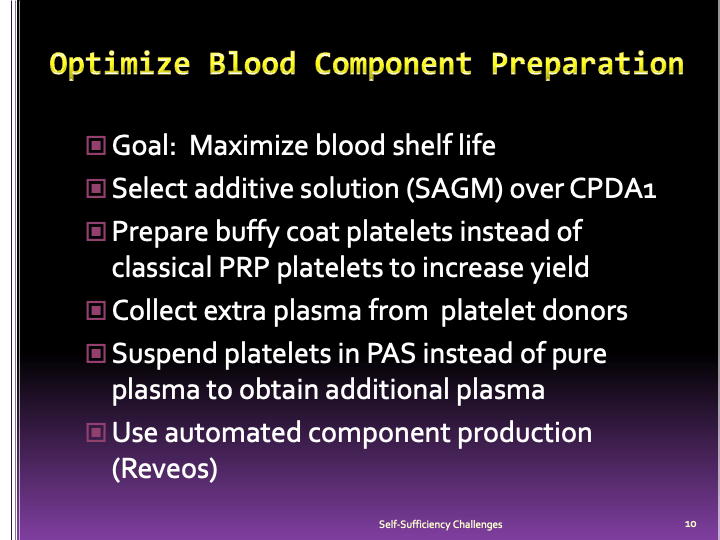
Does it work well with an automated blood component production system?

Such automated systems like the Reveos can free up personnel for pathogen inactivation.  Can the volumes produced be handled effectively by the pathogen-inactivation method?  Do the timings for separation of components work synergistically with the pathogen inactivation method?

Vendor issues:  how well will the local agent provide support?  Is someone else in your country or region using the system?

You need an experienced vendor to provide optimal support.