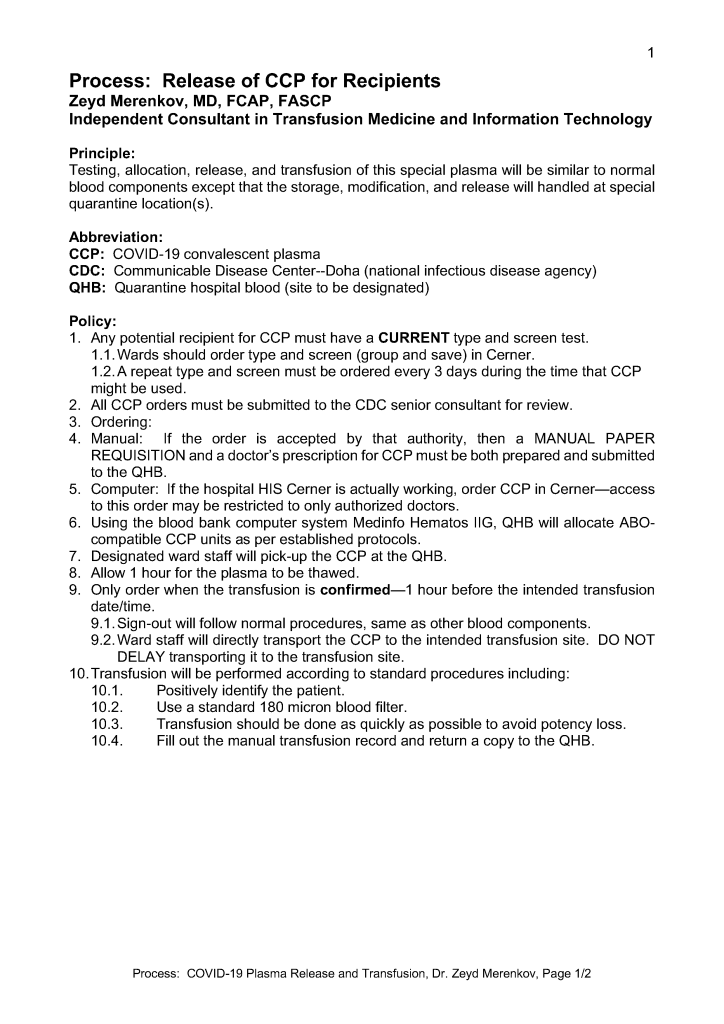
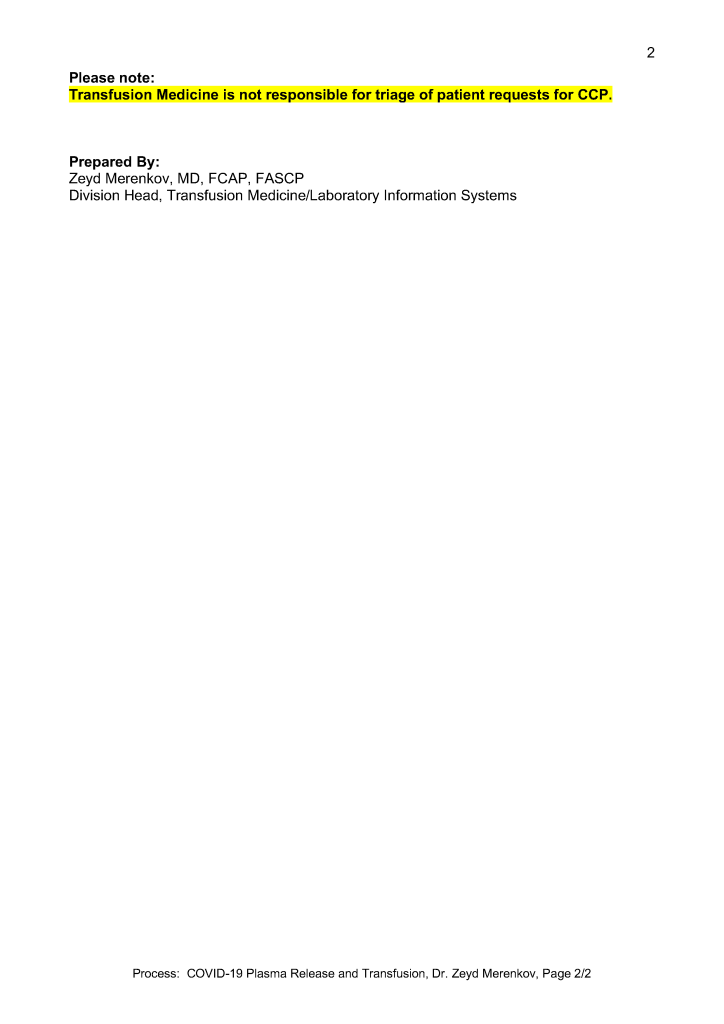

Includes manual and computer processes for donor, patient, and IT
Principle:
The Division Head, Transfusion Medicine and Blood Banks, is responsible for all aspects of transfusion medicine at HMC for the State of Qatar. The following policy documents some of those roles.
Policy:
References:
Standards for Blood Banks and Transfusion Services, Current Edition AABB, Bethesda, MD, USA
I anticipate that there are several innovations coming or in the process of coming to mainstream blood component production and software. Some of these I have already addressed in some of my previous posts:
Pathogen inactivation: We have had this for over a decade. However, with new emerging pathogens, this will become more important so I expect it will be adopted in many centers where it is not currently being used. I expect we will close the loop and pathogen-inactivated RBCs will be available so all components will be treated. Still, the first-generation pathogen-inactivated RBCs may have reduced shelf life compared to regular, untreated units.
Automated component production: Although this is expensive, it does provide excellent GMP production. It is fast and may provide higher yields, especially for platelets. I expect more centers will adopt this technology, especially in combination with pathogen inactivation.
Blood bank computer software: This software must be considered as dynamically changing, and considerable resources are needed to keep in compliance with ever-changing international regulations and the latest epidemiologic data. Production rules can be strictly and mercilessly enforced by a dedicated blood bank computer software. It can also ensure that the final ISBT label is not applied unless all the production rules (registration, collection, processing, and testing) are met. Manual processing is extremely risky nowadays with all the parameters to be monitored.
Patient Blood Management: Current blood bank software does not adequately address the need for prospective review of component orders. I expect that collaboration will occur between laboratory and blood bank software vendors to fill this gap.
Refrigerated platelets: The pendulum swings back to this component which was used over 40 years ago. Refrigerated platelets suspended in additive solution may be effective up to 14 days for hemostasis in the trauma setting. These platelets are activated so standard 20-24C stored platelets may be preferred for prophylactic transfusions.
Low-titer group A universal plasma: This is already available, but its use will increase because of the low numbers of group AB units available and increased demand. This includes its production for COVID convalescent plasma. Your transfusion medical director must decide what “low titer” means. Also you need a robust way of performing anti-B titers, this may require use of an immunohematology analyzer with titration built-in.
Low titer group O whole blood: Use of this product may reduce the need for components in massive transfusion settings but it requires performing anti-A and anti-B titers on large numbers of units. Your transfusion medical director must decide what “low titer” means. Also you need a robust way of performing anti-A and anti-B titers, this may require use of an immunohematology analyzer with titration built-in. Also, you must decide whether to leukodeplete the whole blood units: few whole blood filters are platelet-sparing.
Principle:
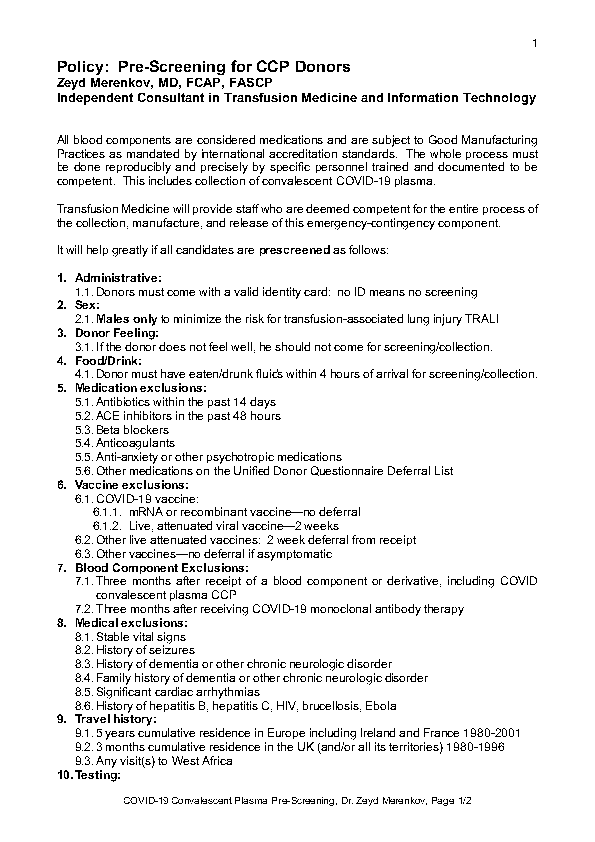
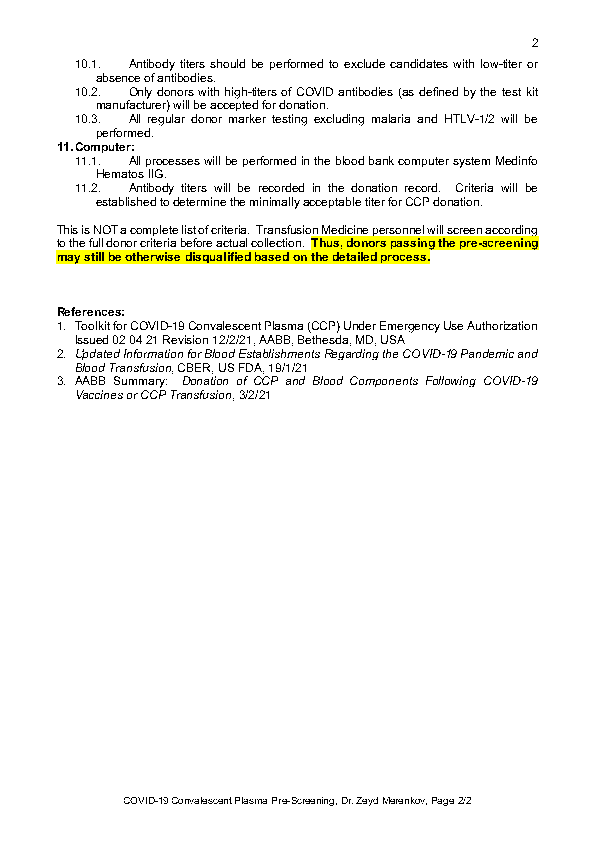
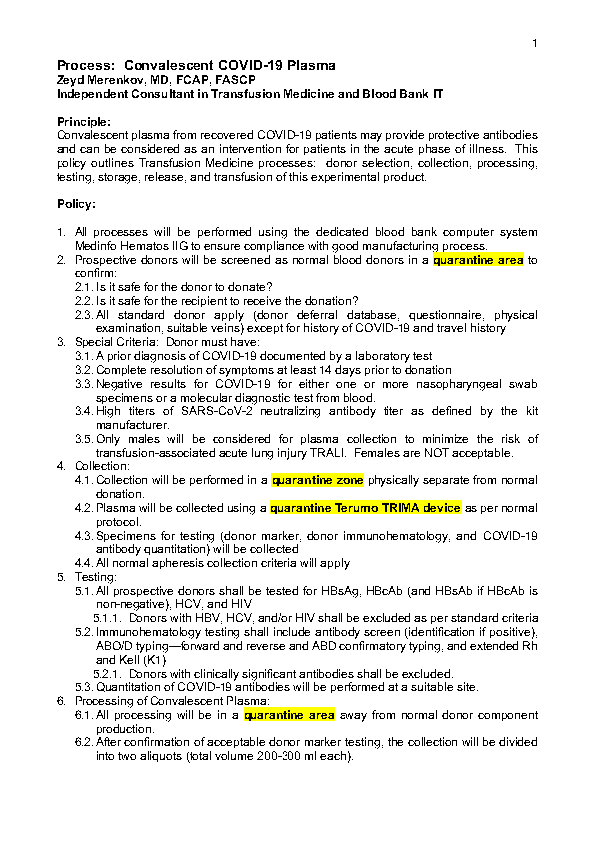
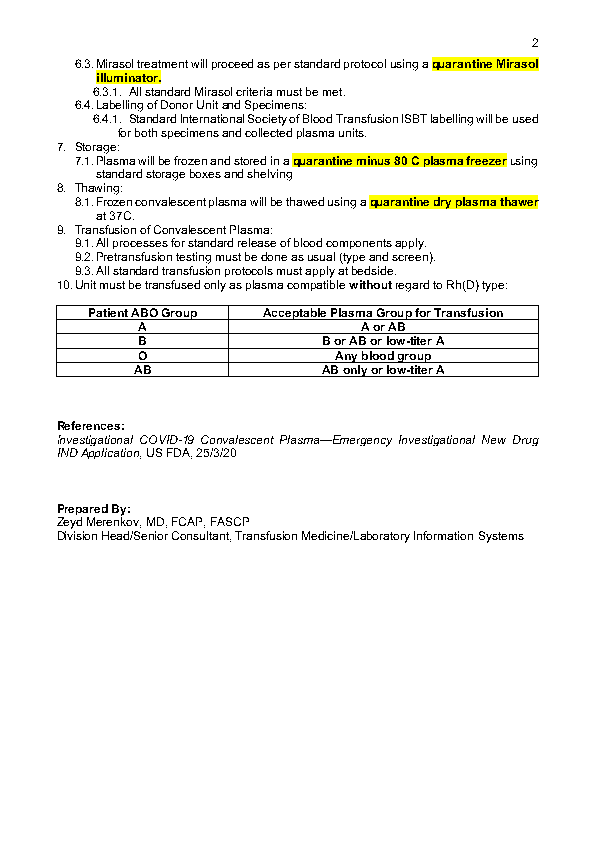
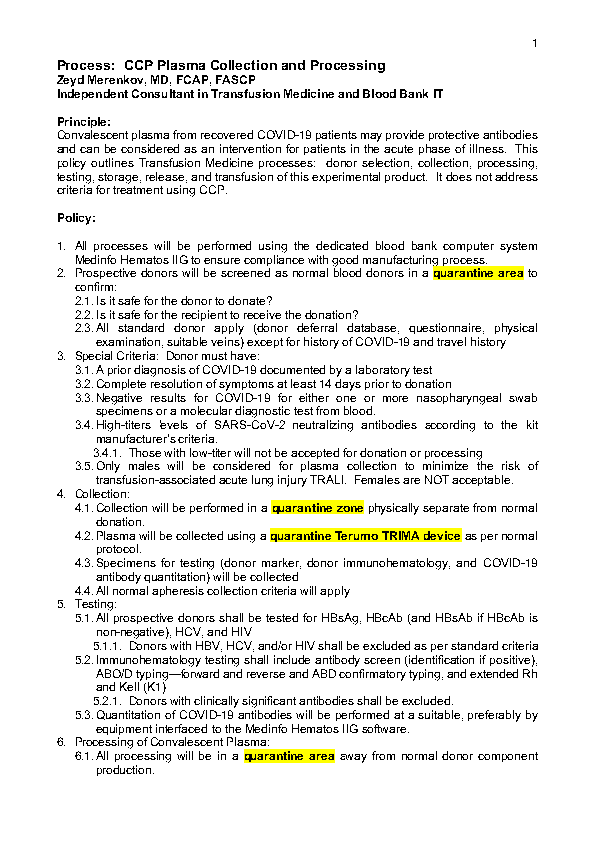
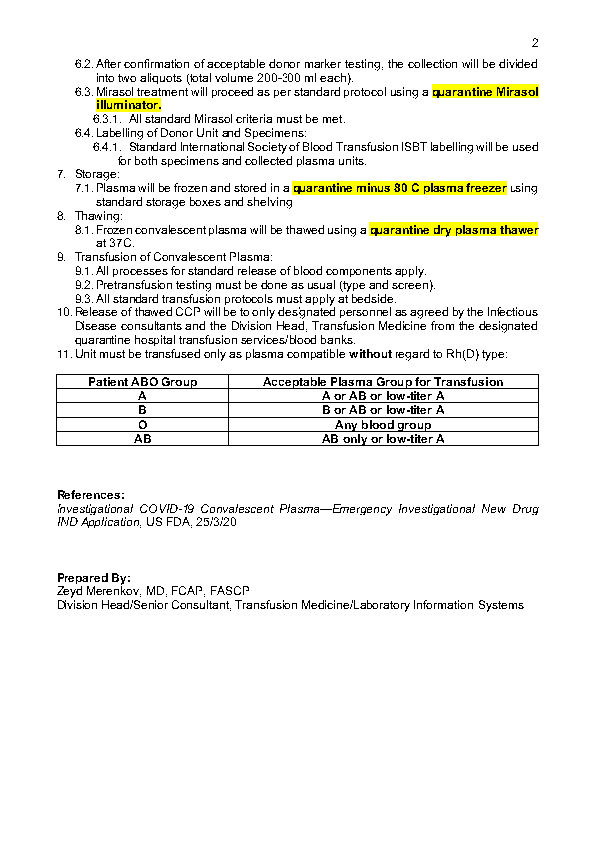
Donor criteria for COVID convalescent plasma collection have been updated by the US FDA. This policy has adapted them to our practice setting.
Policy:
Reference:
Regulatory Update: FDA Officials Provide Insight on High-Titer CCP, Donor Eligibility Following Vaccination, 9/2/21, AABB, Bethesda, MD, USA
Principle:
This is the latest update on donor qualifications during the COVID-19 pandemic and addresses issues about COVID-19 vaccination, COVID convalescent plasma use and donation, return of donors into the donor pool after COVID-19 vaccination. All of this information is subject to change as new regulations are released.
Policy:
References:
 Dr. Zeyd Merenkov